
31 species in Moray eel
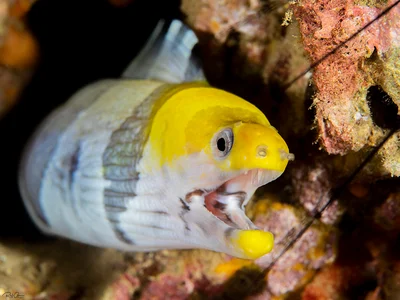
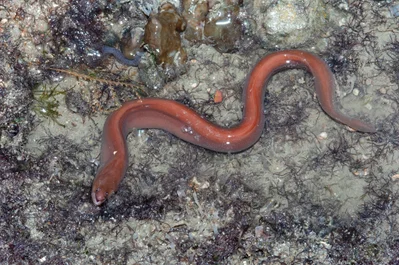
Echidna
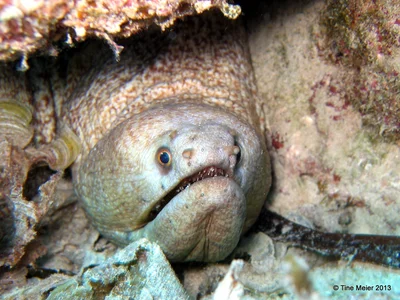
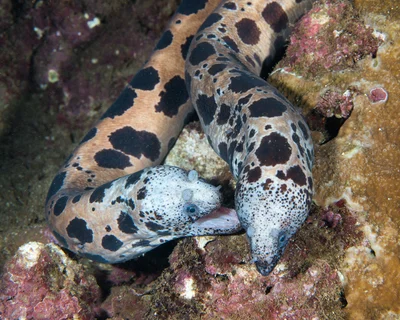
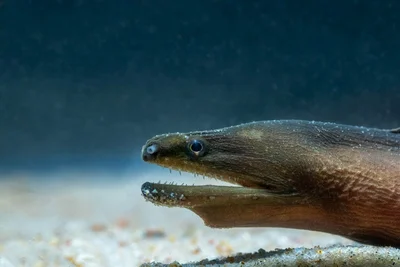
2The crushers. In place of fangs the jaws carry short blunt teeth, molar-like across the roof of the mouth, and the diet is crabs and shrimps rather than fish. That changes where you meet them: they work rubble and shallow reef flat instead of waiting head-out in a hole.
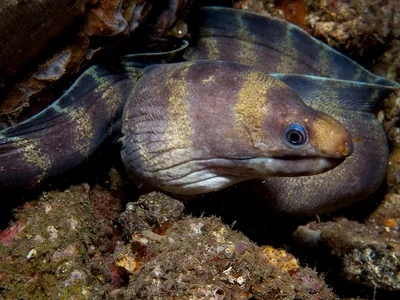
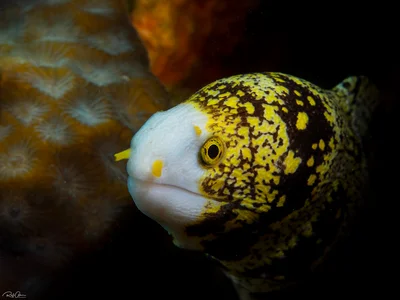
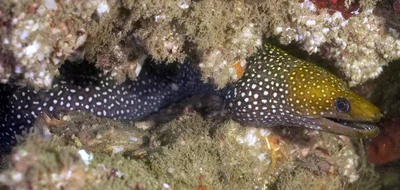
Enchelycore
2The hook-jaws. The jaws are slender and strongly arched and do not close completely, so the fangs stay in view with the mouth shut. It is a grip built to hold a fish that is already struggling, not to crush anything.
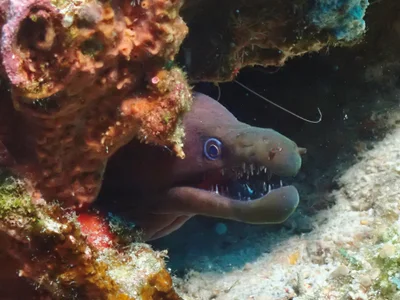
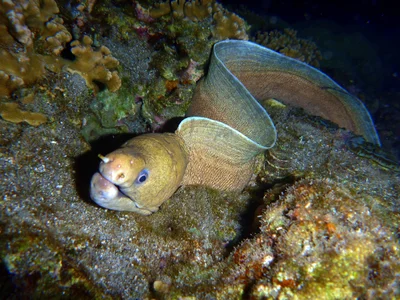
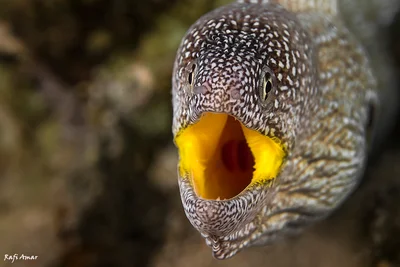
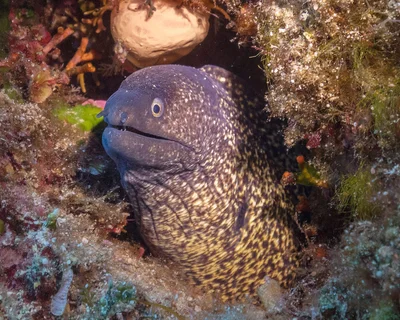
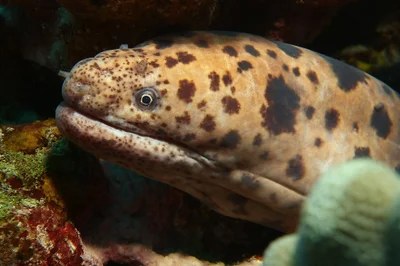
Gymnothorax
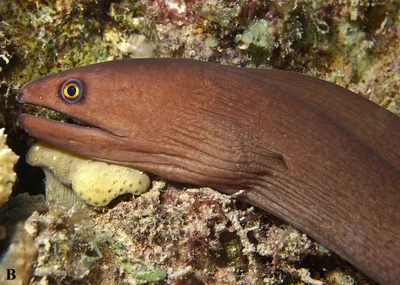
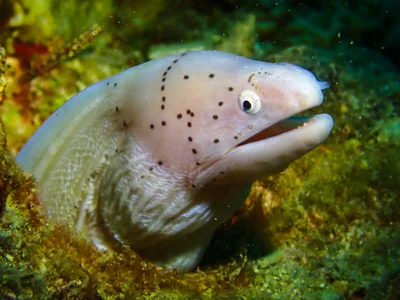
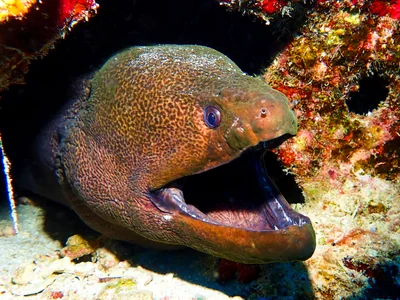
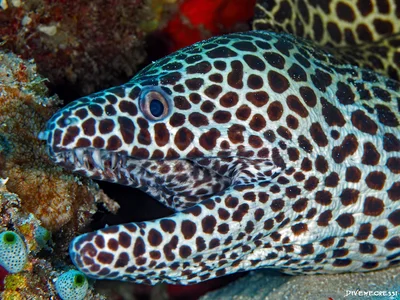
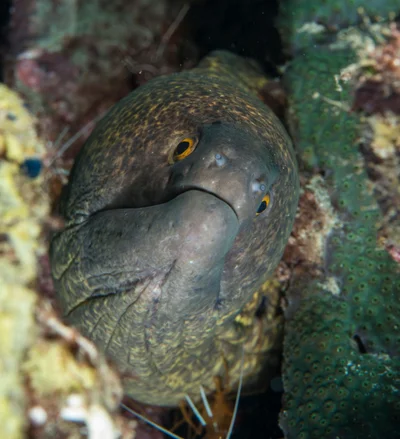
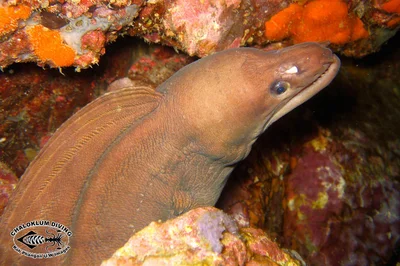
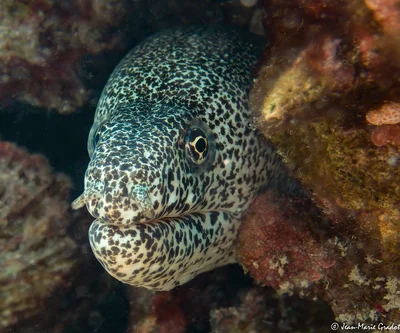
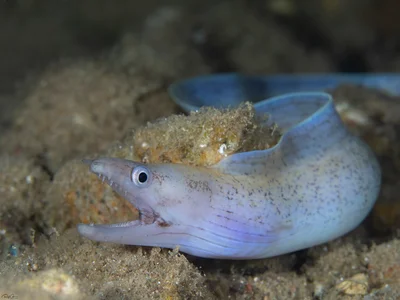
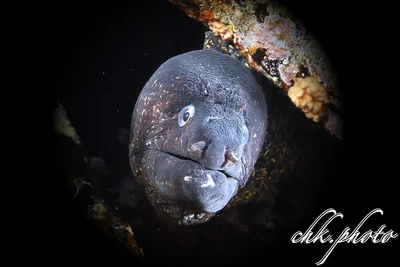
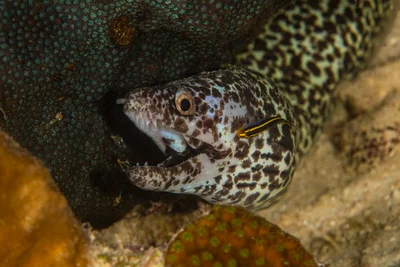
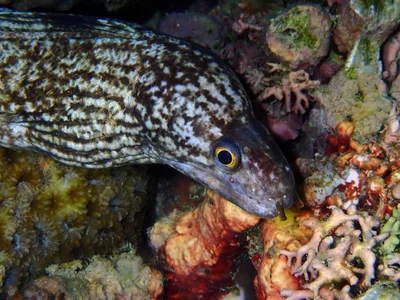
17The default moray, and the one most of this page belongs to: over a hundred species worldwide, and where an eel is filed when nothing more specific fits. What they share is the dentition - long backward-curving fangs for holding fish and octopus. Pointed teeth on a large moray almost always means this genus.


Uropterygius
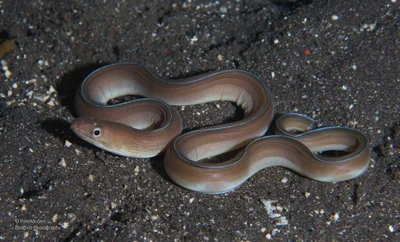
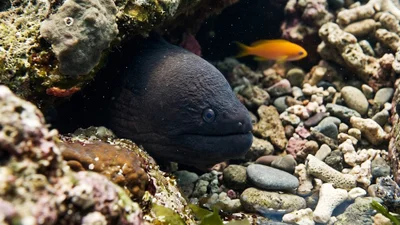
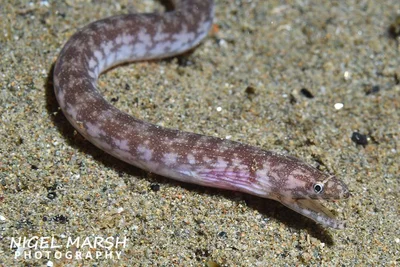
6Named for what they barely have. The dorsal and anal fins are reduced to a low ridge around the tail tip, so the animal reads as a snake with no fin at all. They live inside rubble and dead coral rather than in open holes, which is why most are recorded by someone turning a rock over rather than by a diver seeing one swim.
Other genera
4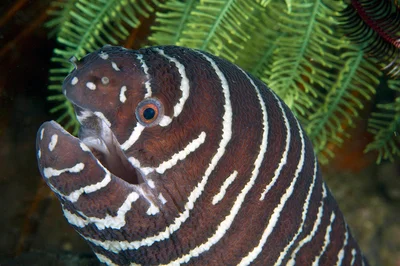
Other eel-like groups
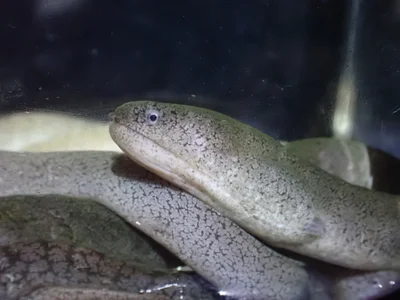
Similar silhouette underwater - worth a look if this was not your animal.


Last Update: August 23, 2026