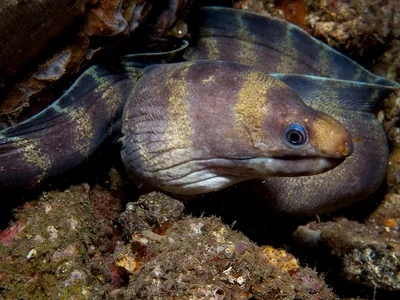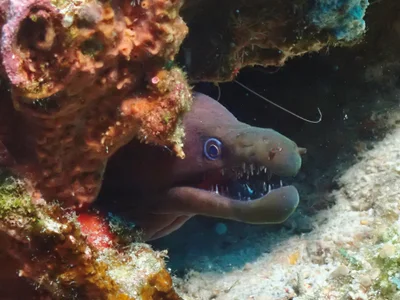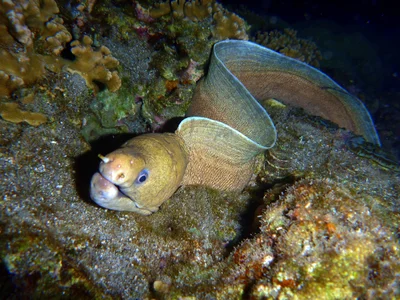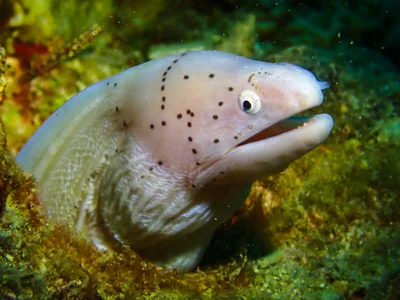
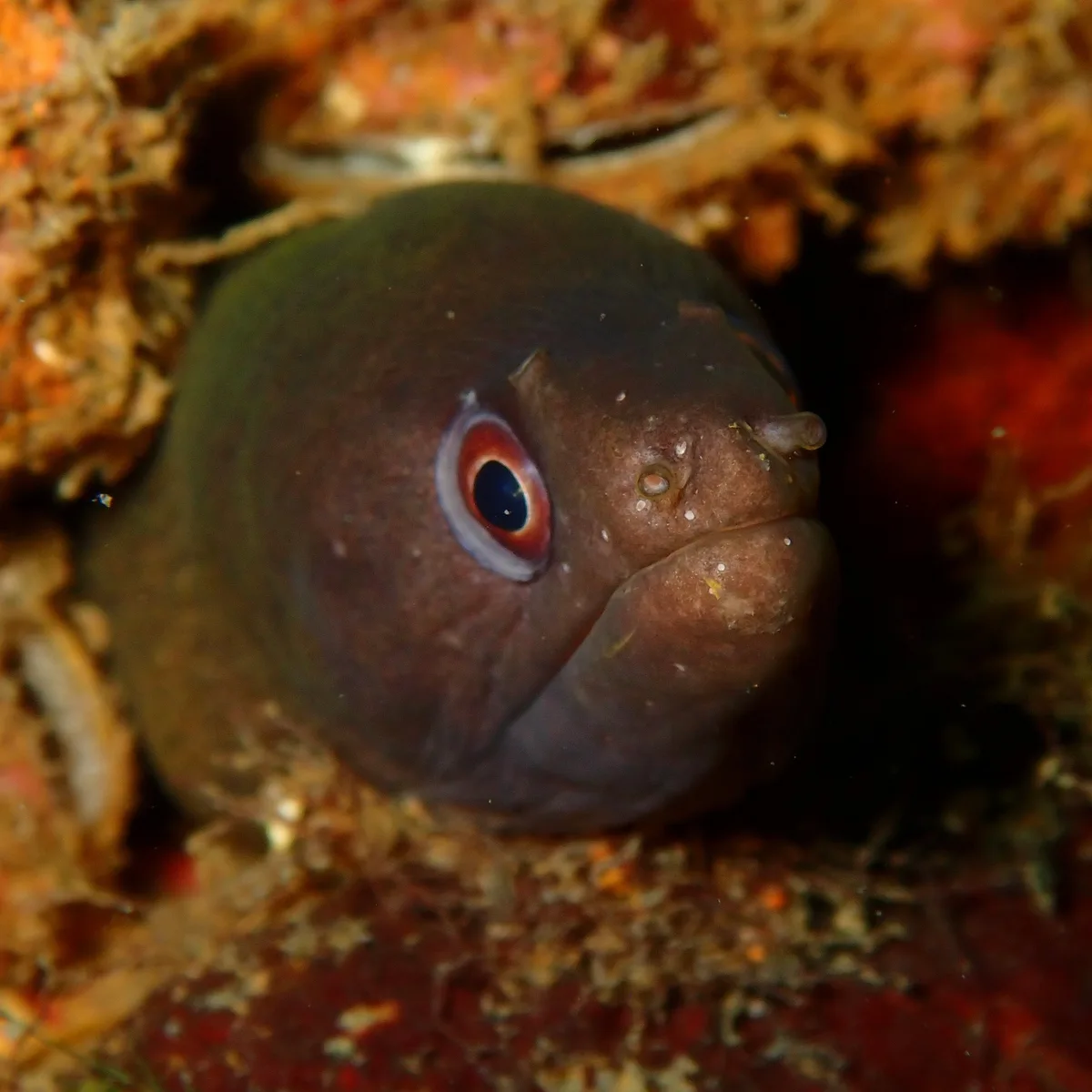
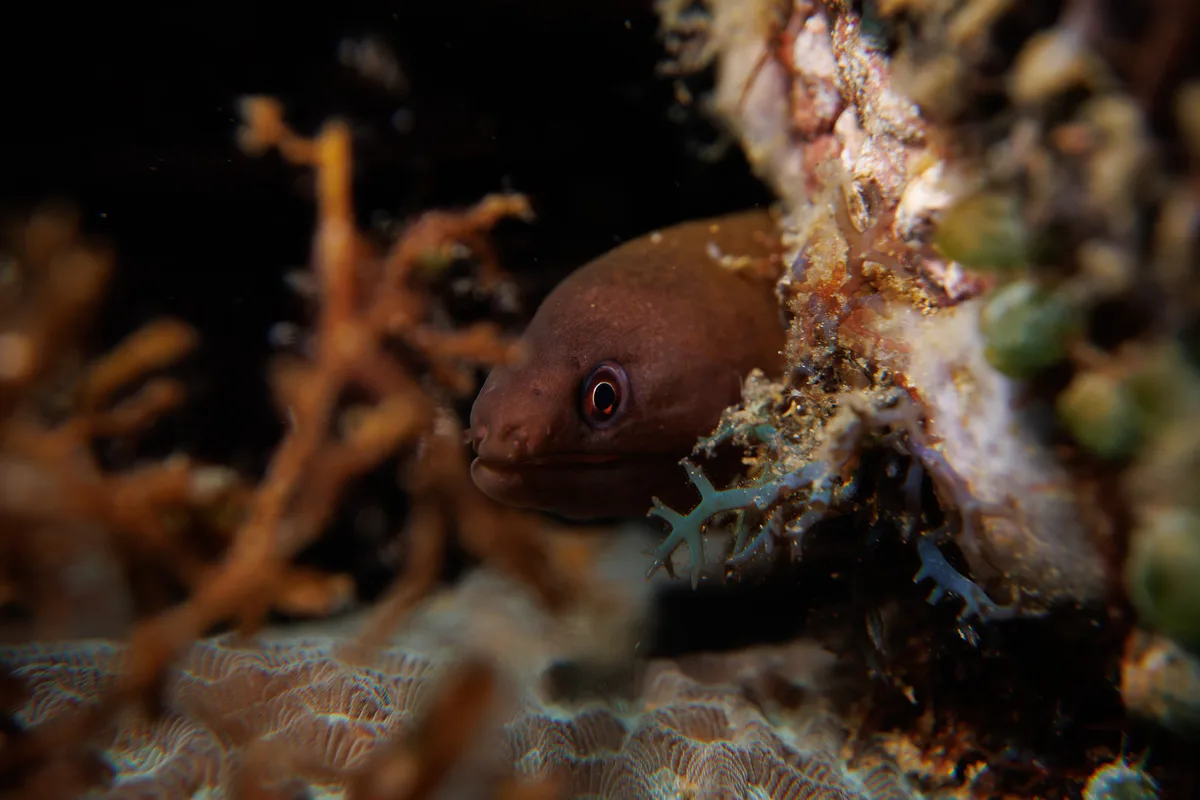
Start with the question everyone asks, because this is a good animal to answer it on.
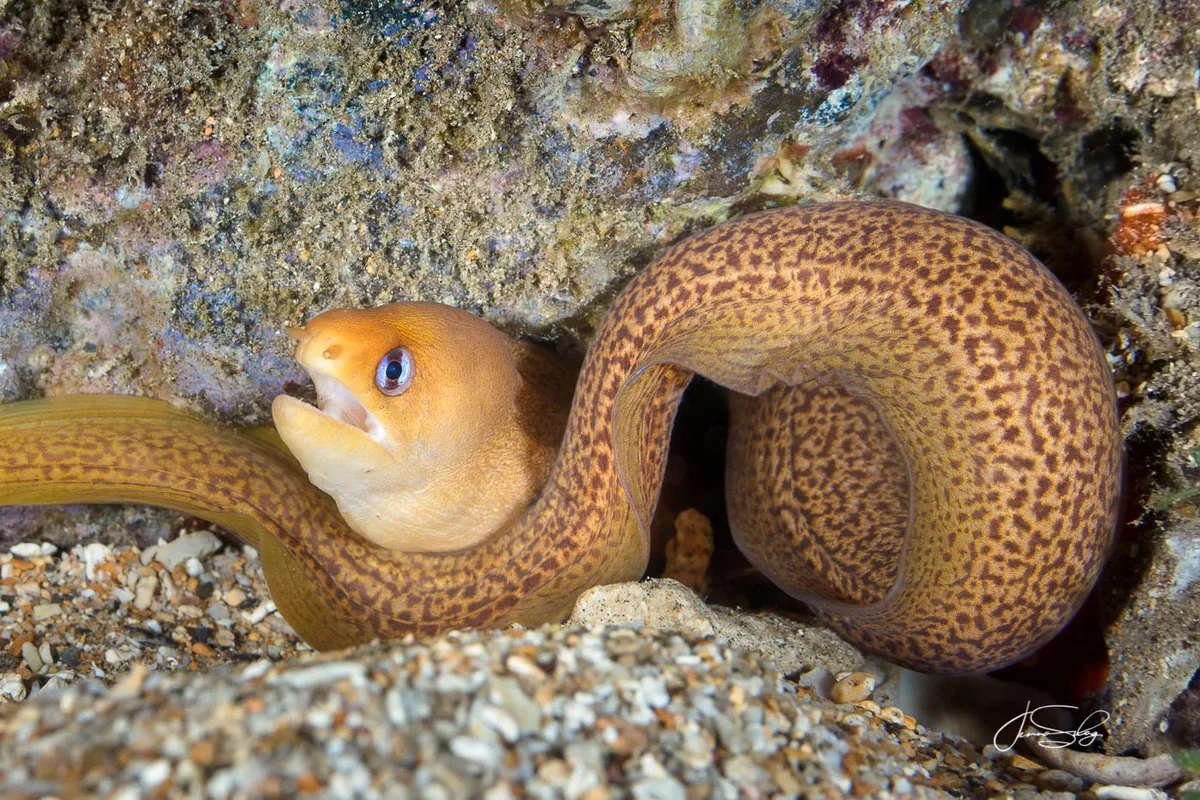
A moray holding its mouth open at you is not threatening you. It has no gill covers to pump water with, so it has to open and close its jaws continuously to drive water over the gills. The gape is breathing. A moray that means it pulls its head back into the hole first, in an S, the way a snake does.
Morays bite two kinds of people: those who put a hand into a hole they cannot see into, and those who hand-feed. The second is the one that puts divers in clinics, because a fed moray learns to come out at the sight of a wetsuit and its eyesight is poor enough that it cannot tell a finger from the sausage that came before it.
The damage is not about force. The teeth point backward, so the animal cannot easily let go and tends to pull back with the hand still attached, and the wound is a ragged puncture full of the bacteria that live in a fish's mouth. Moray bites get infected as a matter of course. Wash it out, do not close it, and see a doctor.
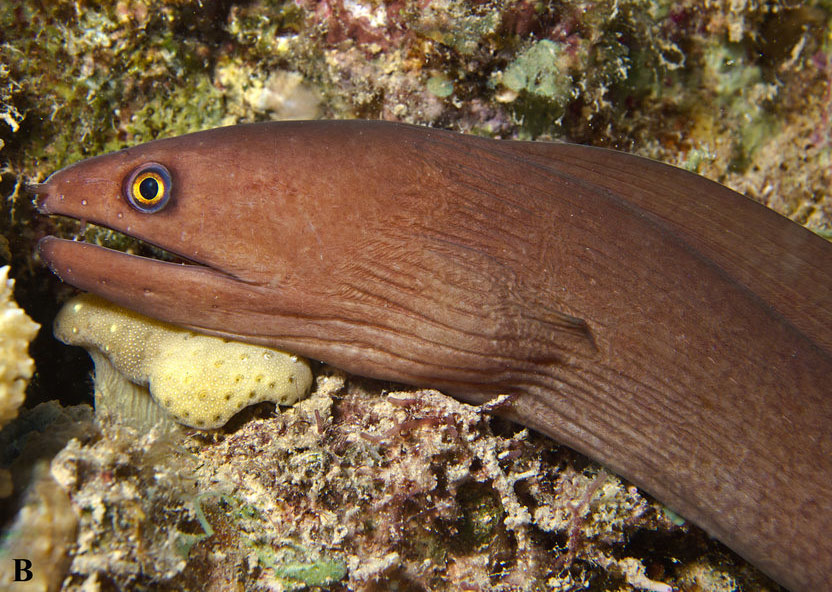
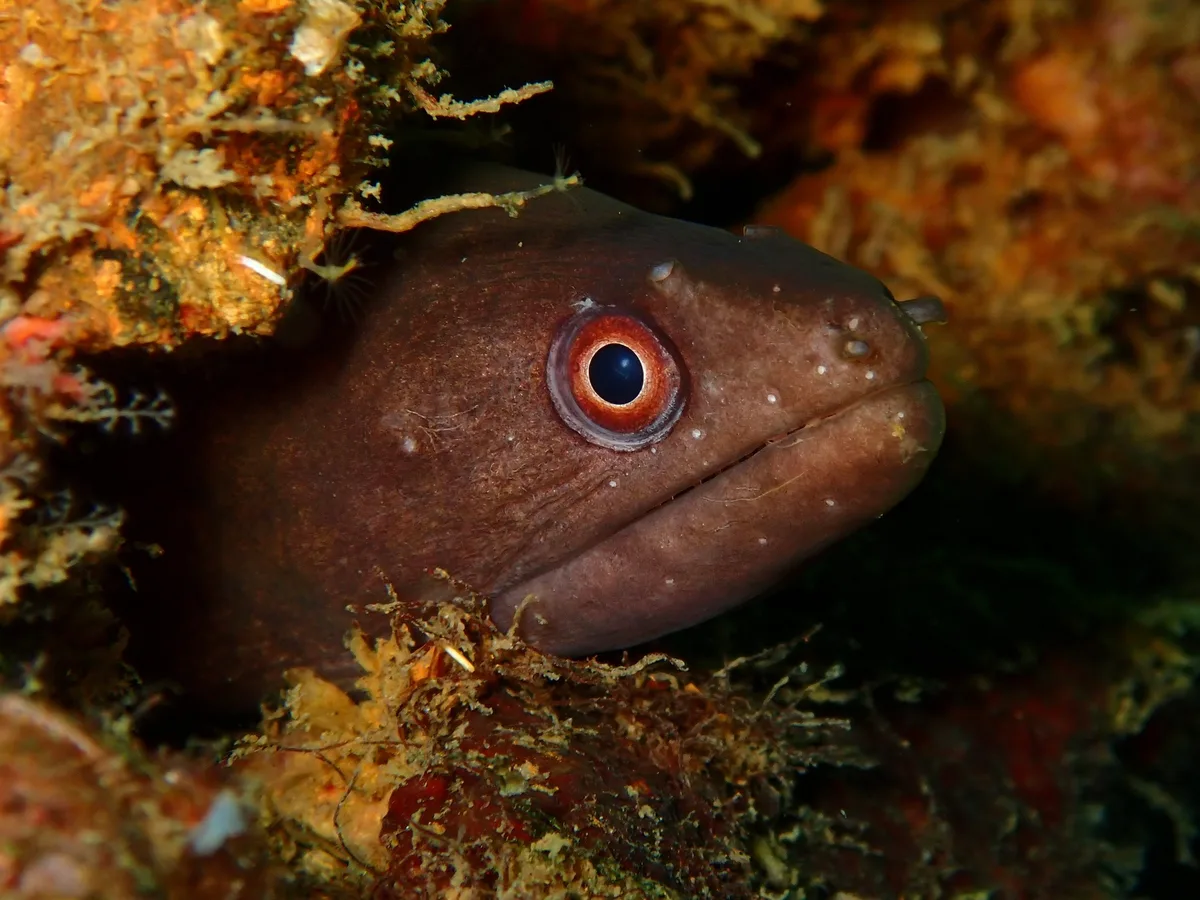
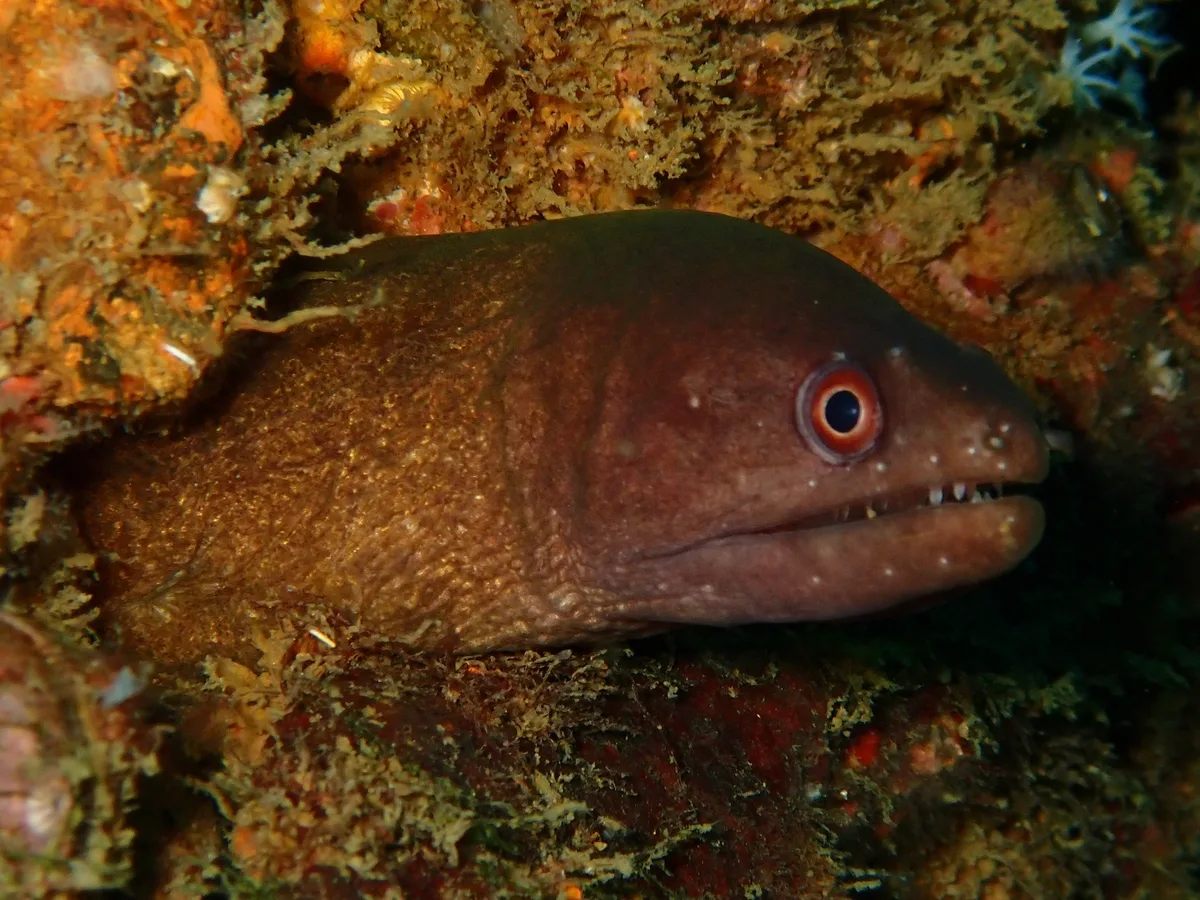
This particular moray is thirty centimeters of shy brown eel that hides in coral rubble and is barely ever seen whole. It could not do serious harm if it tried.
The genus. Gymnothorax Bloch 1795 - gymnós (bare or naked) + thṓrax (breast or chest). ETYFish
The species. Gymnothorax pindae Smith 1962 - of Pinda. ETYFish
- small brown moray, light brown to yellowish with faint darker mottling
- pale eye standing out against the head
- usually only the head showing, in rubble or under a rock
- up to 34 cm
Why it's threatened
There are no major threats to this species, although it may be impacted by coastal development and habitat loss in some parts of its range.
Threat classification from the IUCN Red List.