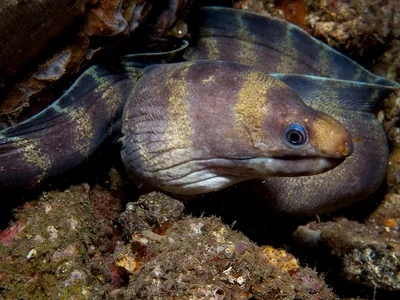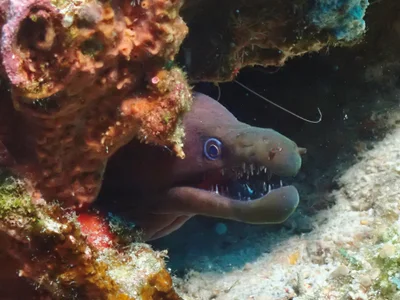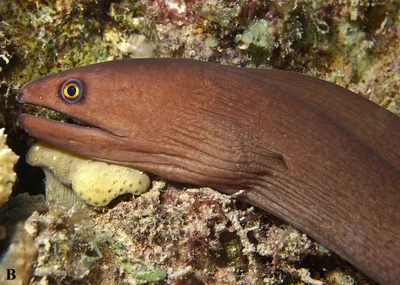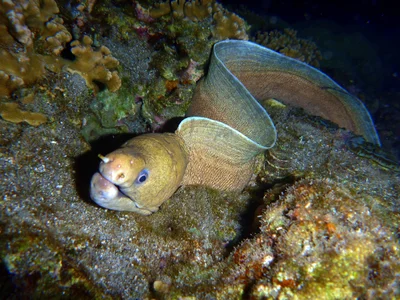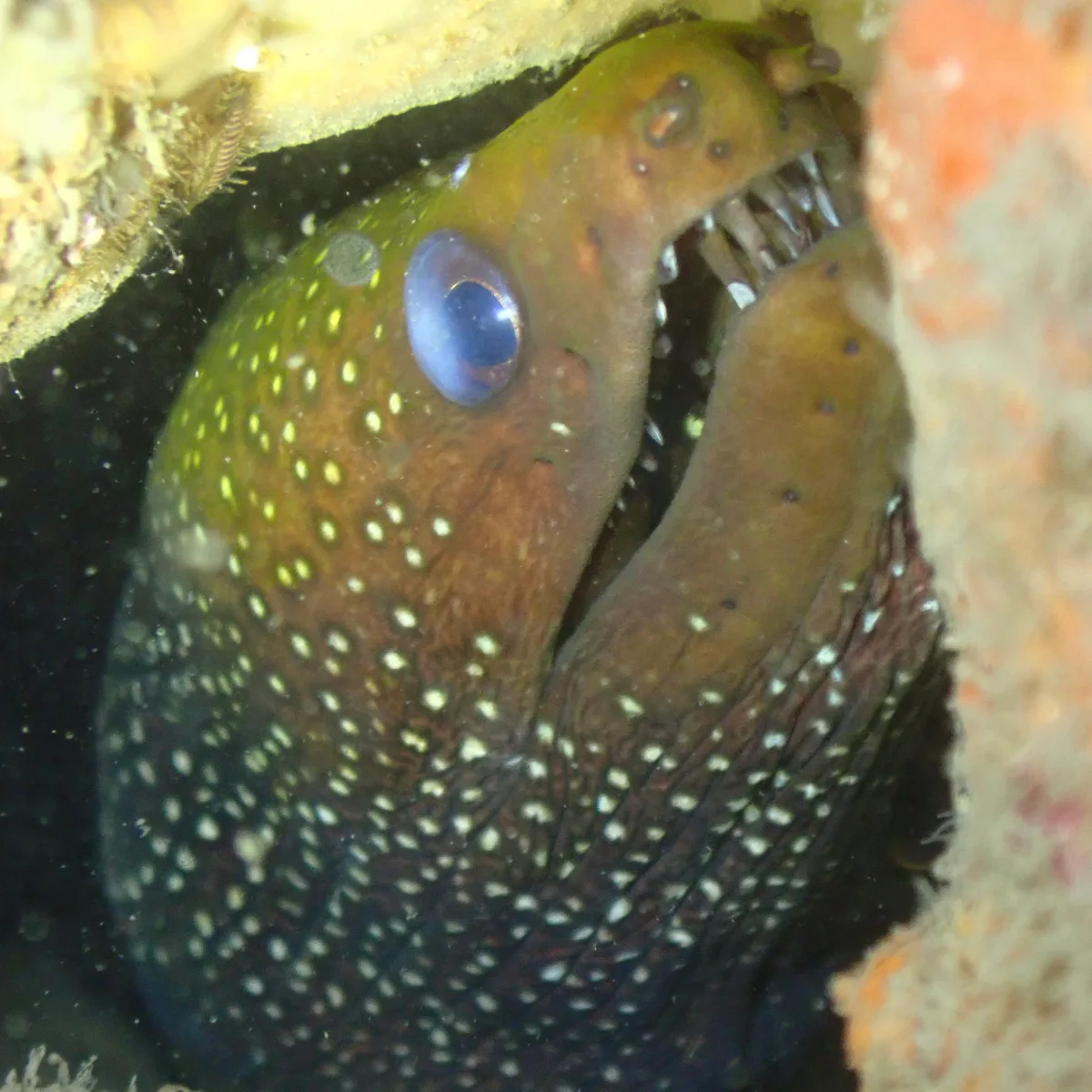
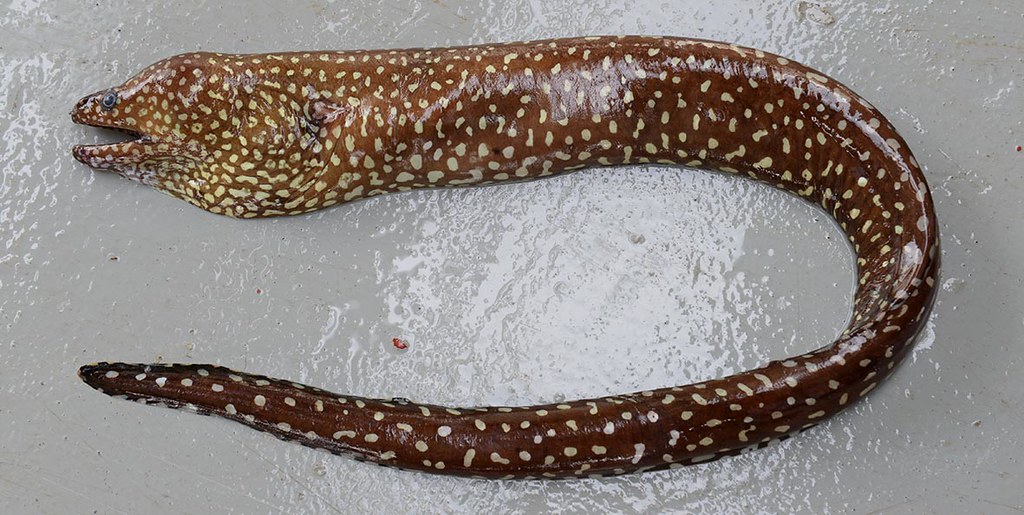
The spots are a name badge. In spotted morays the arrangement of markings on the head and forebody is unique to the individual and stable for years, so a photograph taken this season can be matched against one from three seasons ago and the same animal recognized.
That sounds like a curiosity and it is actually a research method. Morays are impossible to count by the usual means: you cannot survey an animal that spends the day inside rock, and tagging an eel that can back out of a grip is a poor idea. Photographing faces works. It is how residency has been established for several moray species, and the answer is that a moray holds one hole for years, which is not what anyone assumed about an animal with no territory to defend and no visible reason to stay.
The same trick works on sharks, manta rays and whale sharks, for the same reason: a natural pattern that does not change is better than any tag anyone can attach.
This one is a dark moray under white speckling, up to ninety centimeters, described in 1801 and common on shallow reef here. If you photograph its head, you can find the same eel again.
The genus. Gymnothorax Bloch 1795 - gymnós (bare or naked) + thṓrax (breast or chest). ETYFish
- dark brown body scattered with small white spots
- spots smaller and denser on the head
- up to 90 cm
Why it's threatened
Threats to this species are unknown.
Threat classification from the IUCN Red List.