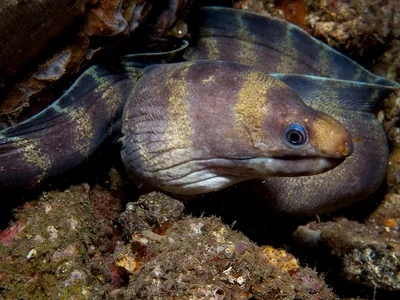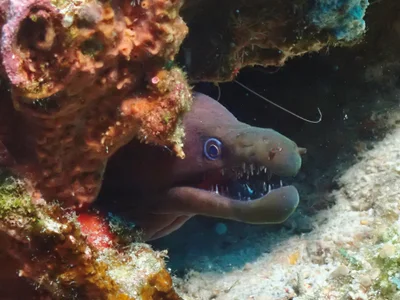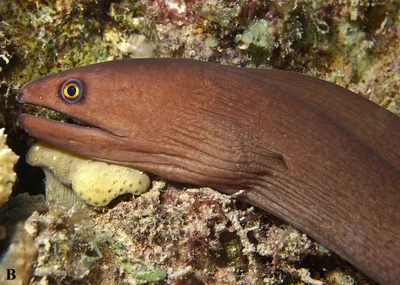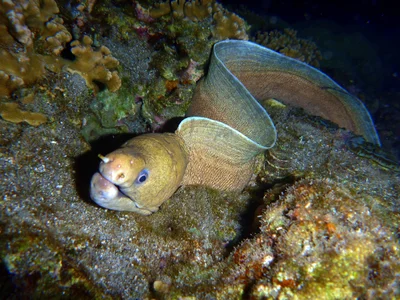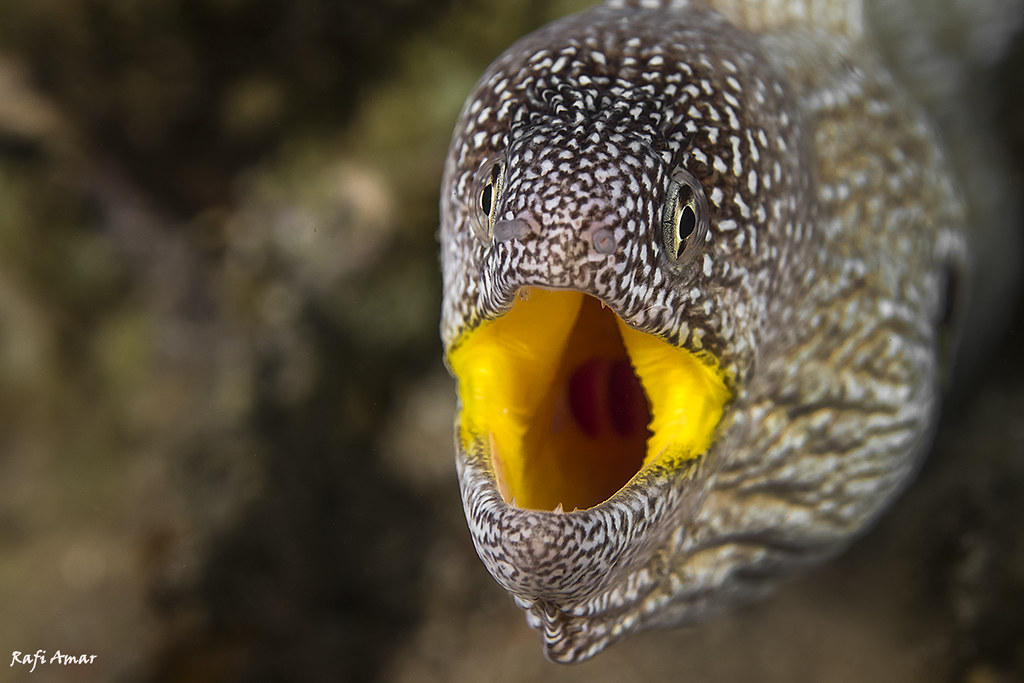

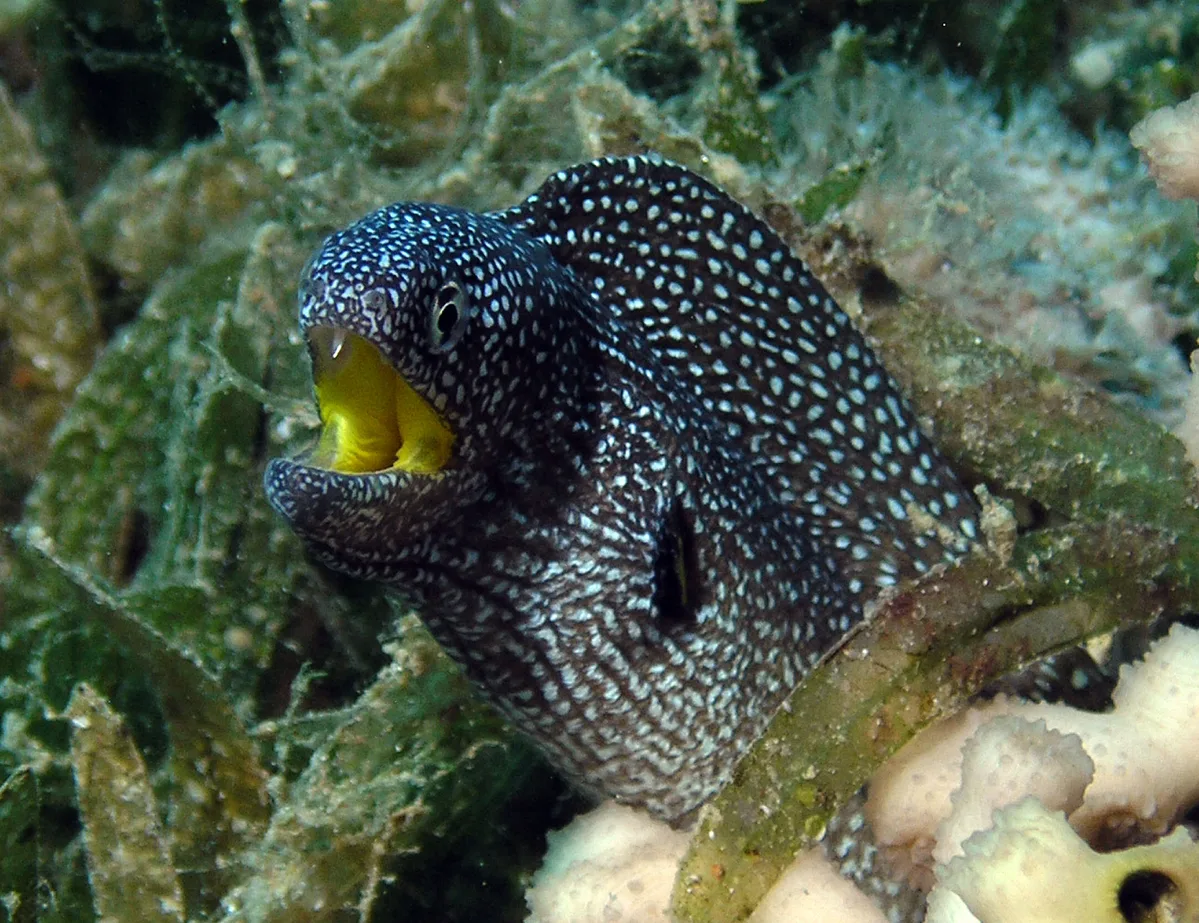
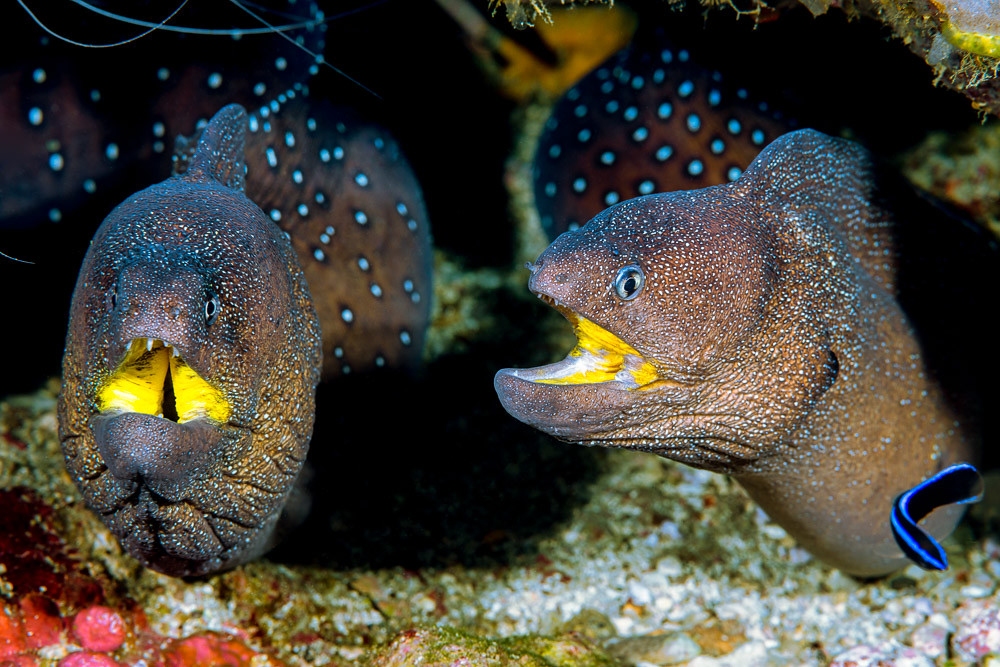
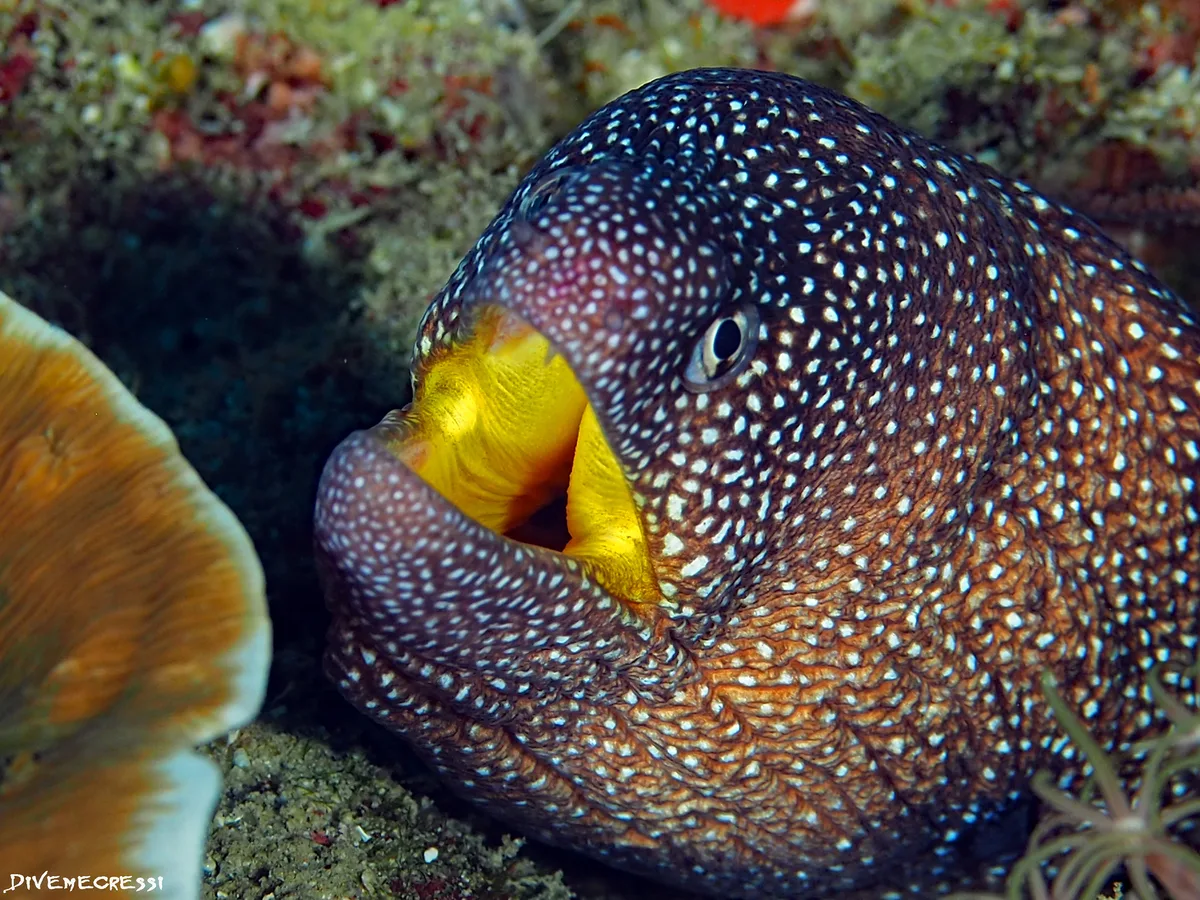
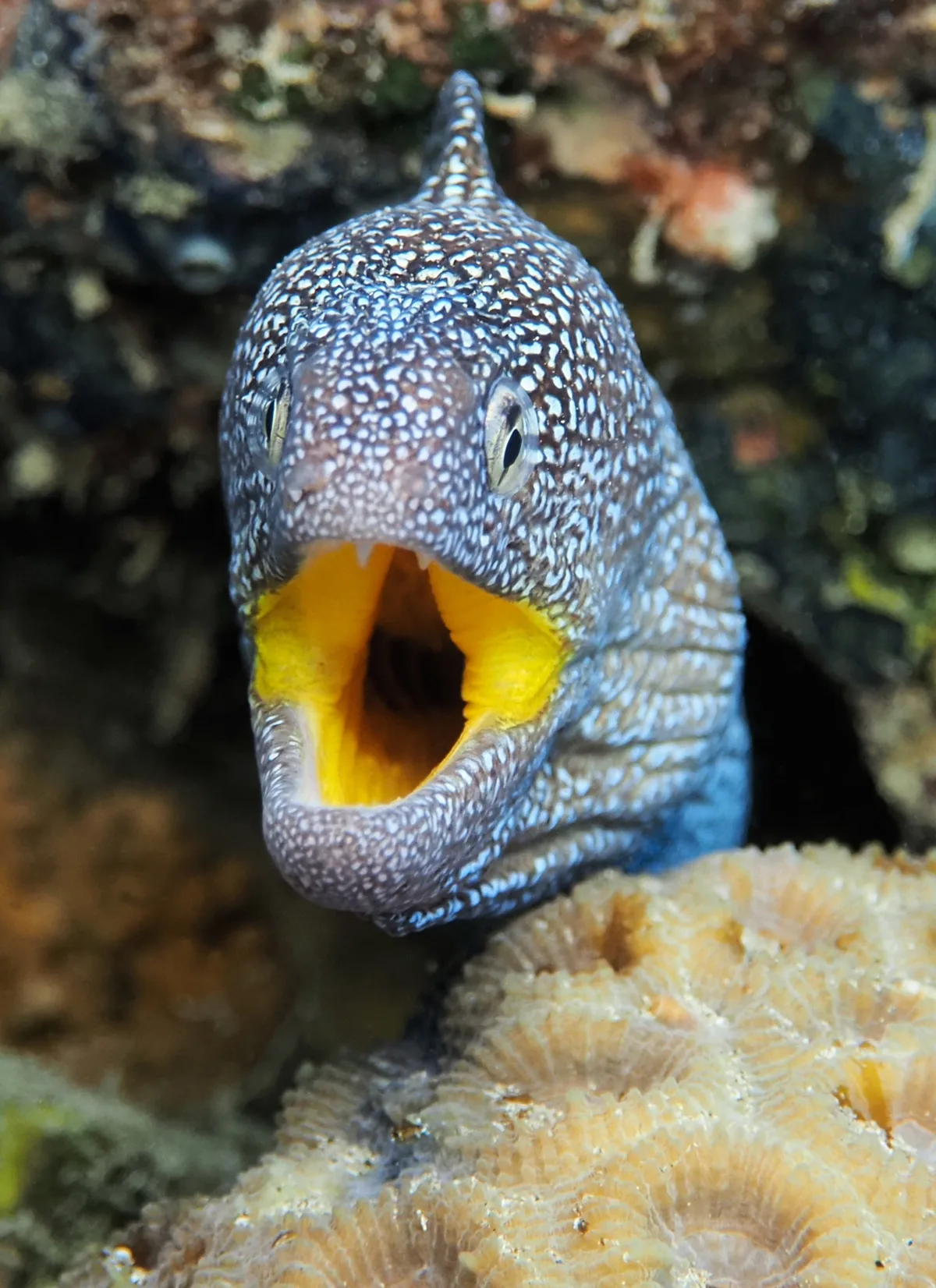
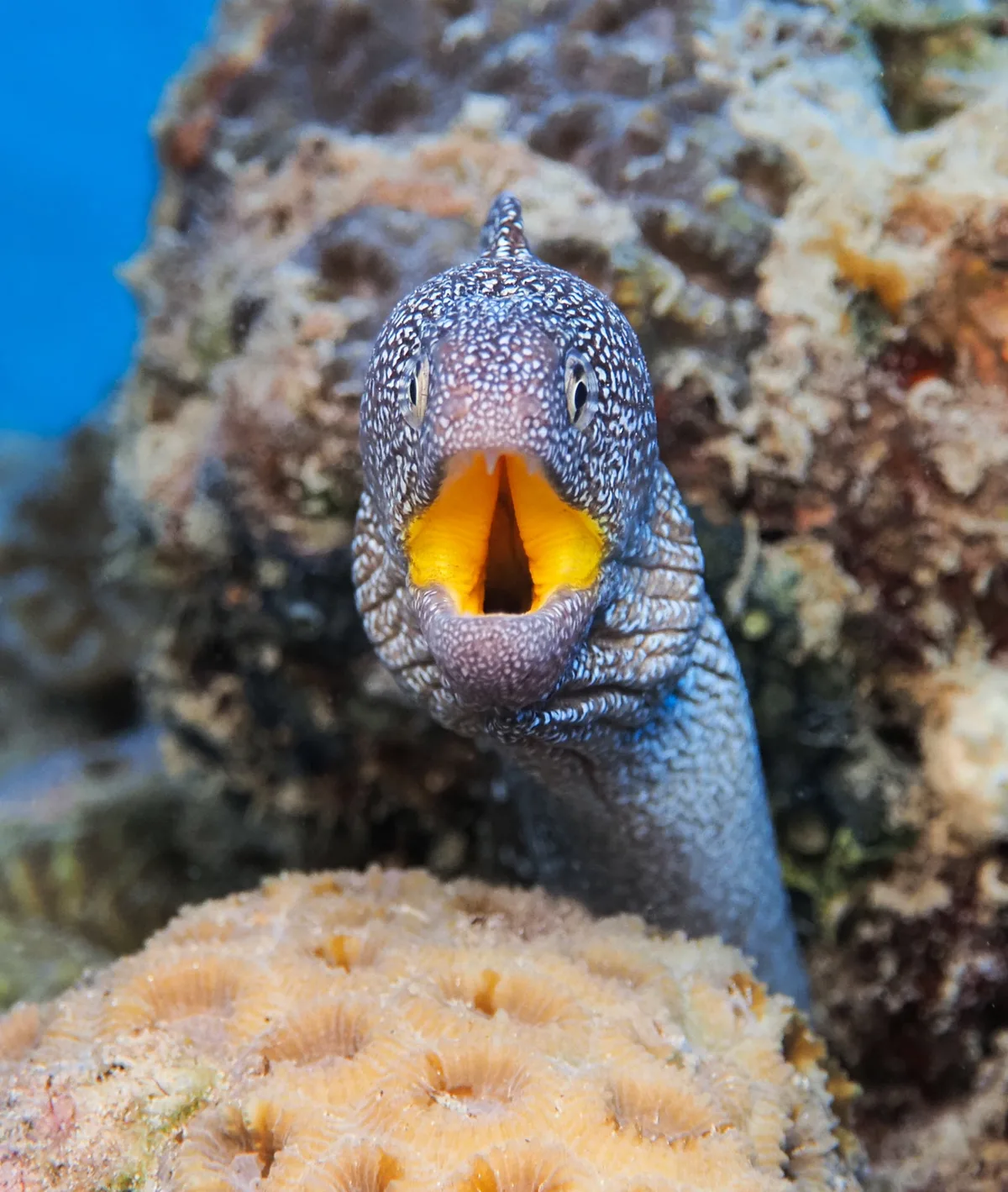
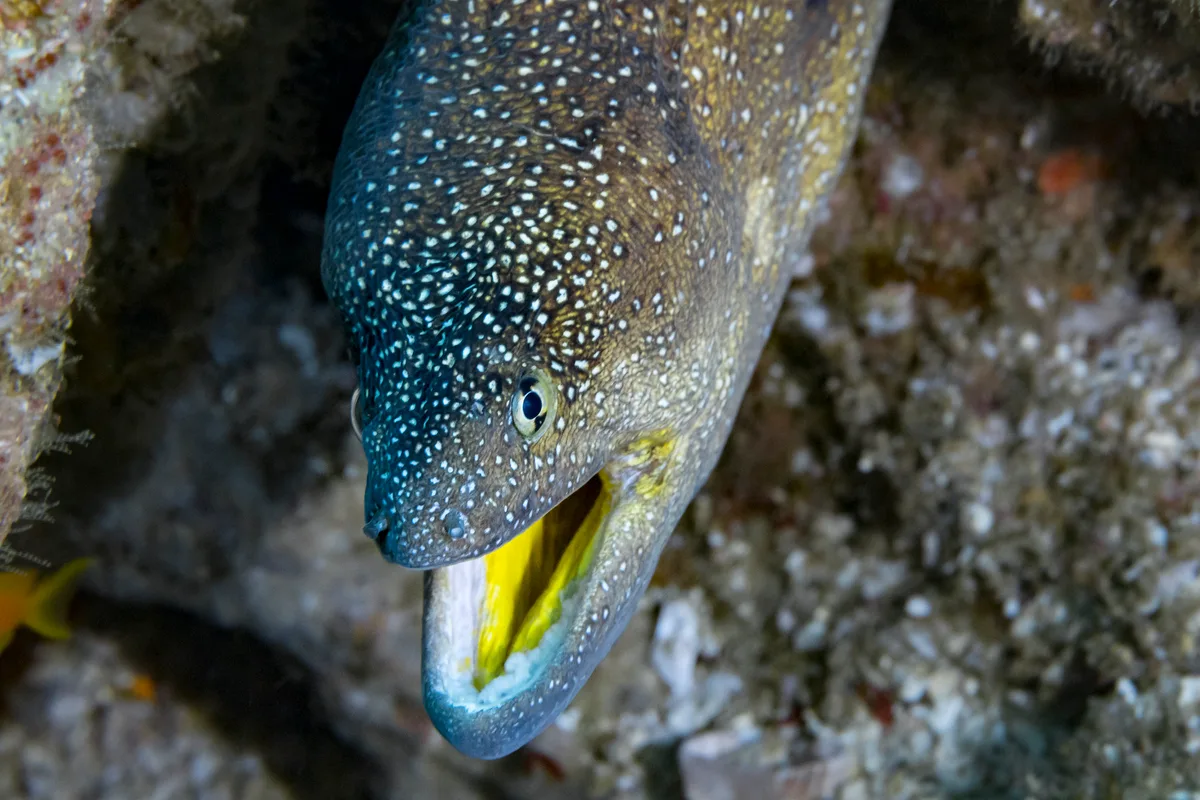
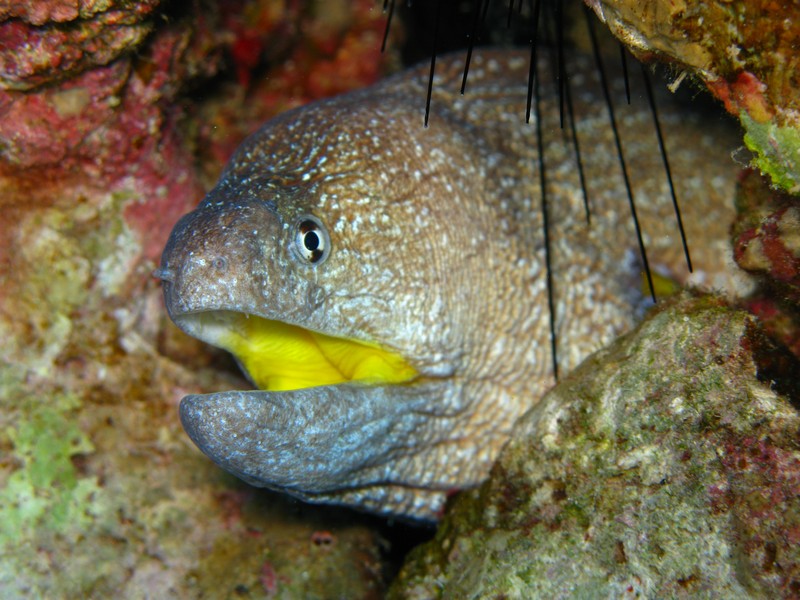
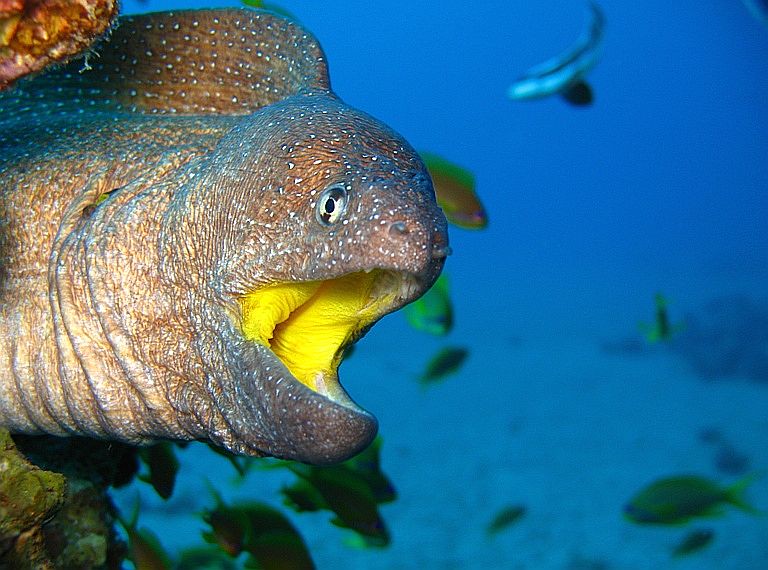
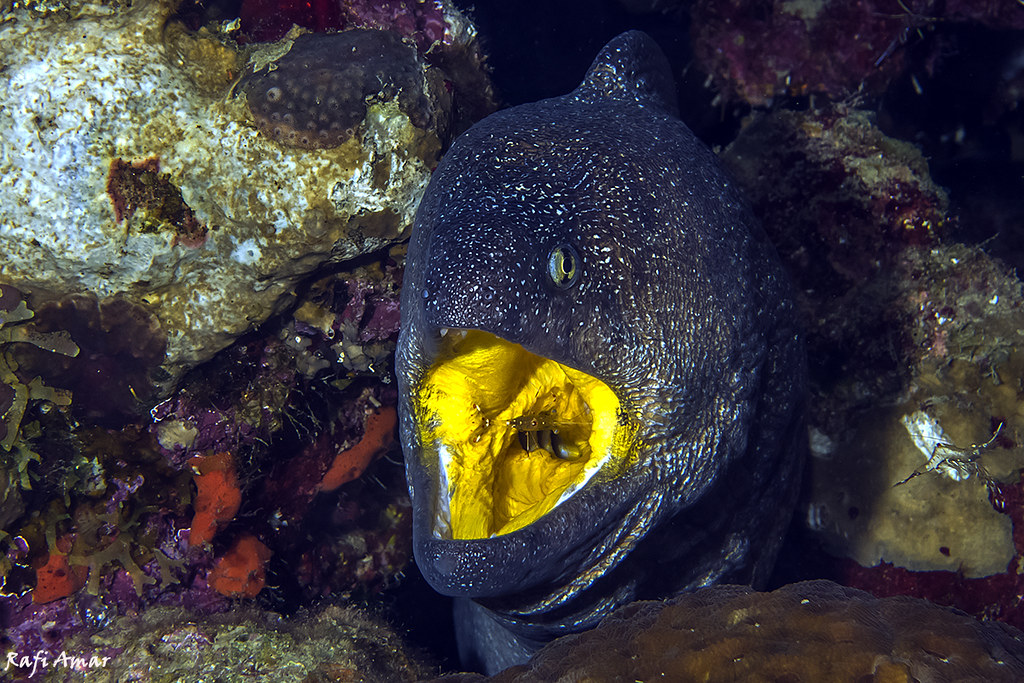
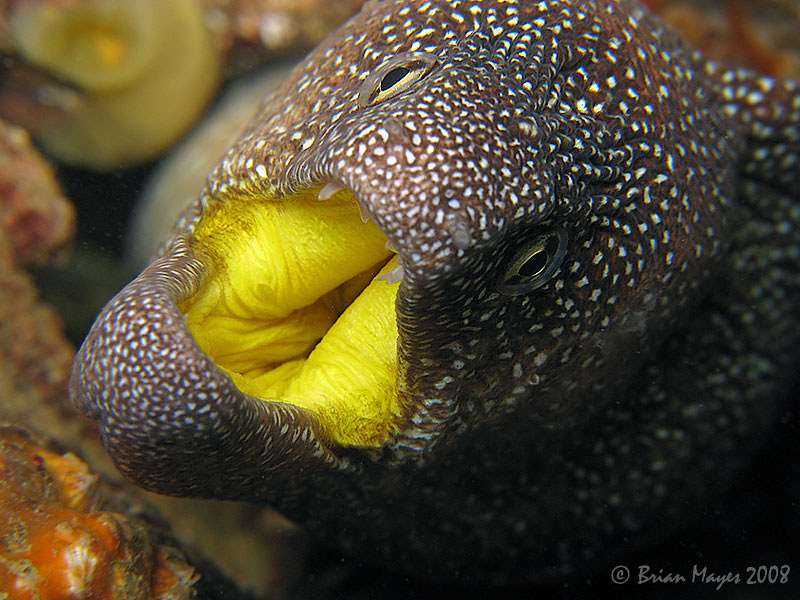
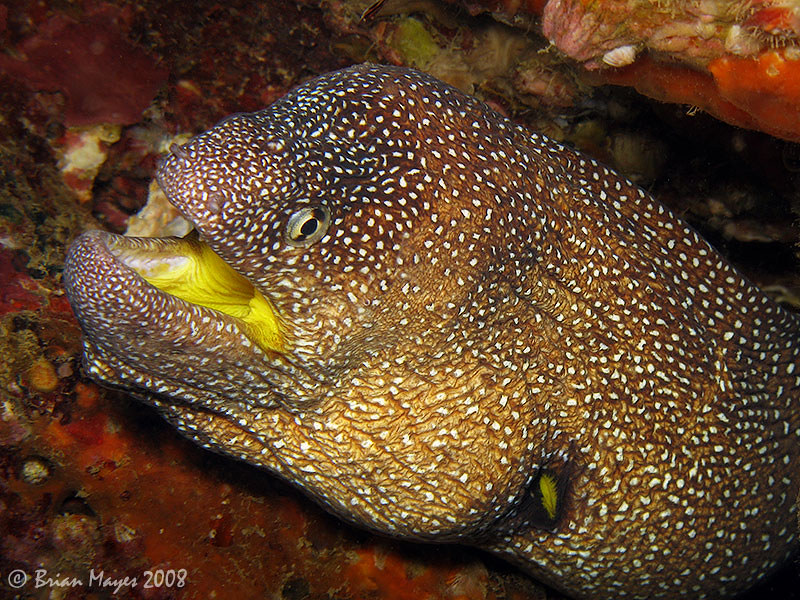
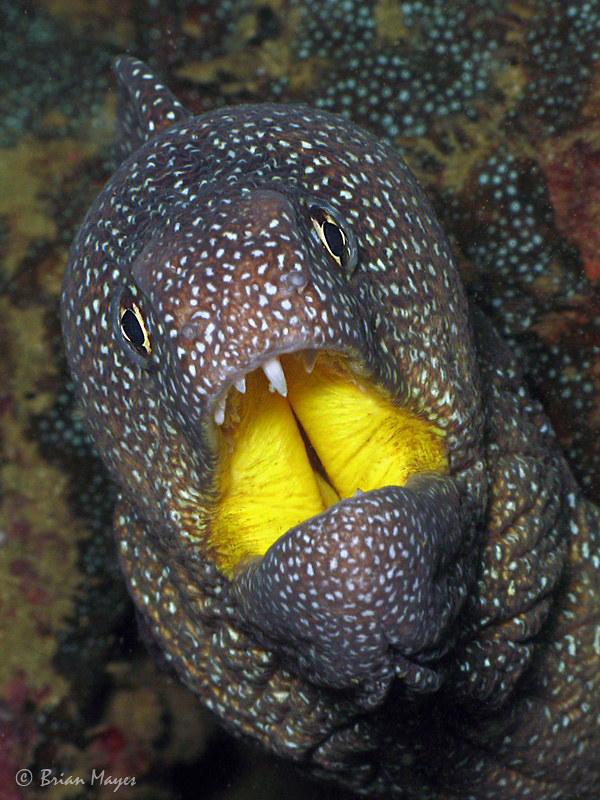
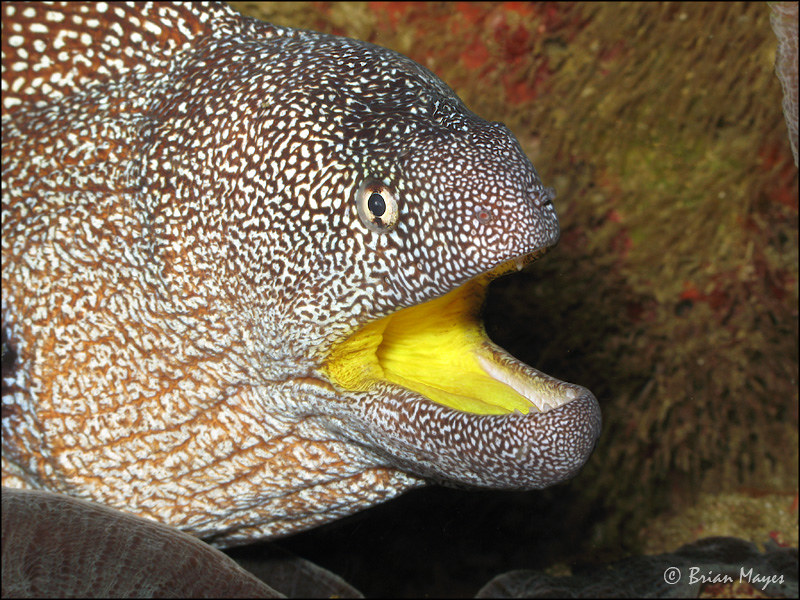
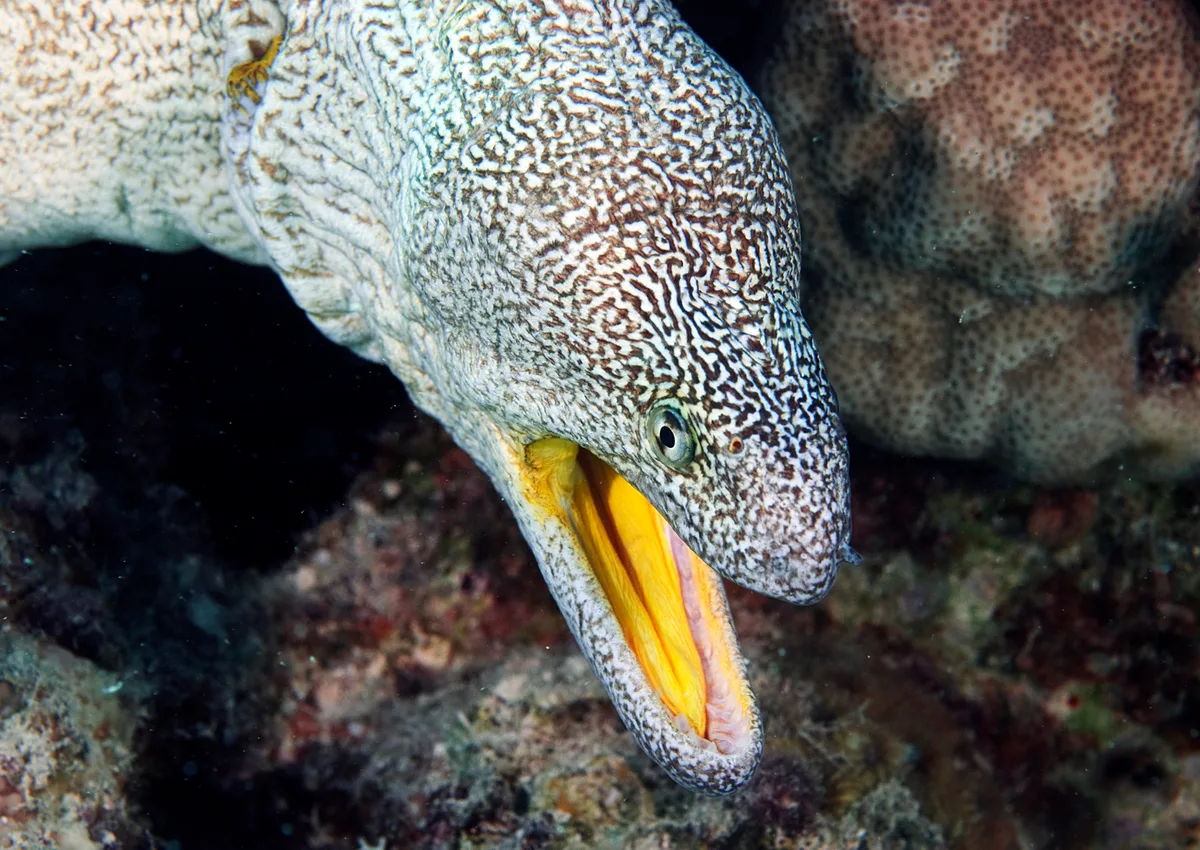
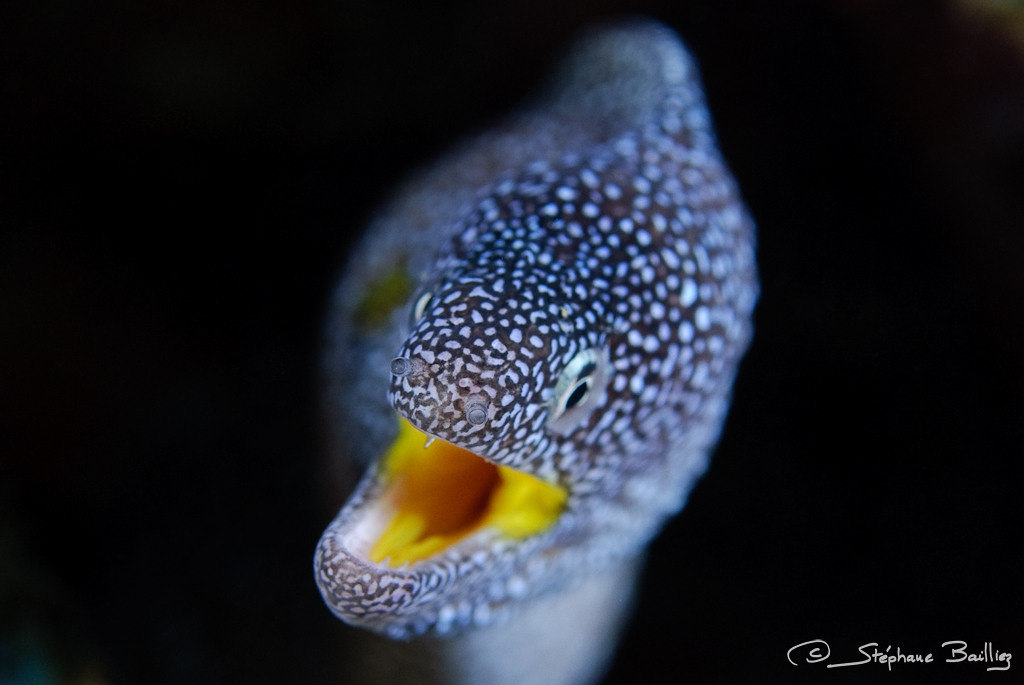
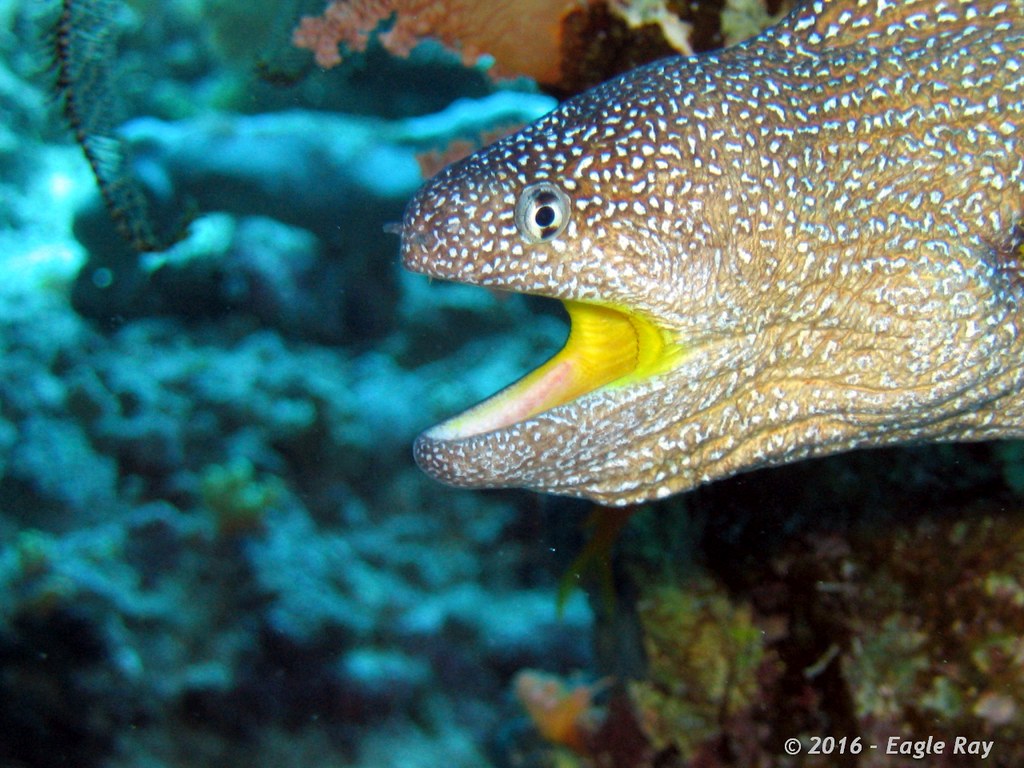
A big spotted moray with a bright yellow mouth, and the yellow is visible constantly - morays have to open and close their jaws to pump water over the gills, so the color flashes with every breath.
The interesting part is on the outside. The skin mucus of this species is toxic: it carries a hemolytic compound strong enough to be studied as a defense against predators and parasites, and handling one leaves an irritation that is not just slime. It is one of the few morays with a documented chemical defense on top of the teeth.
Eating it is worse. This is one of the morays repeatedly implicated in serious poisoning, which is why FishBase carries the flat warning that it is poisonous to eat - the flag here means exactly that.
Nearly two meters (6 ft) and recorded down to 271 m. On a wall it is a head in a hole, watching, and the yellow mouth is what names it.
The genus. Gymnothorax Bloch 1795 - gymnós (bare or naked) + thṓrax (breast or chest). ETYFish
The species. Gymnothorax nudivomer (Günther 1867) - nudus (L.). ETYFish
- dark brown body covered in small pale yellow spots
- inside of the mouth bright yellow, obvious every time it breathes
- large and heavy-bodied, usually deeper than 15 m
- length up to 180 cm
Why it's threatened
There are no major threats known to this species.
Threat classification from the IUCN Red List.