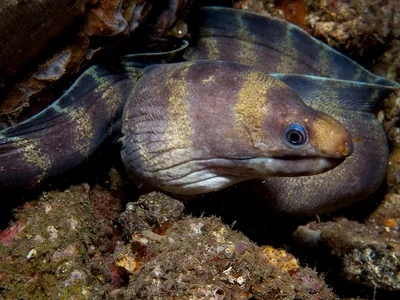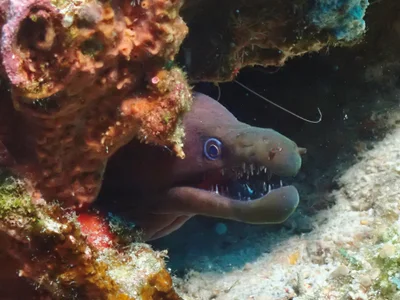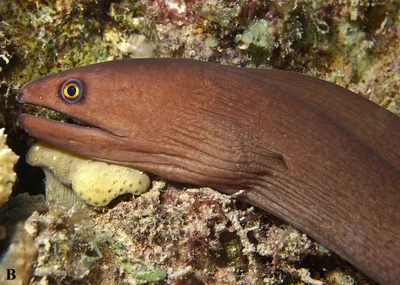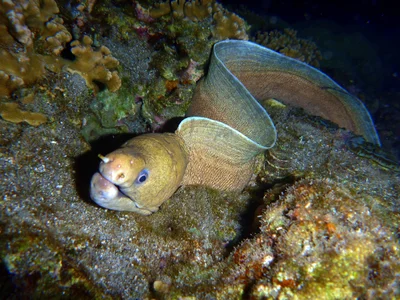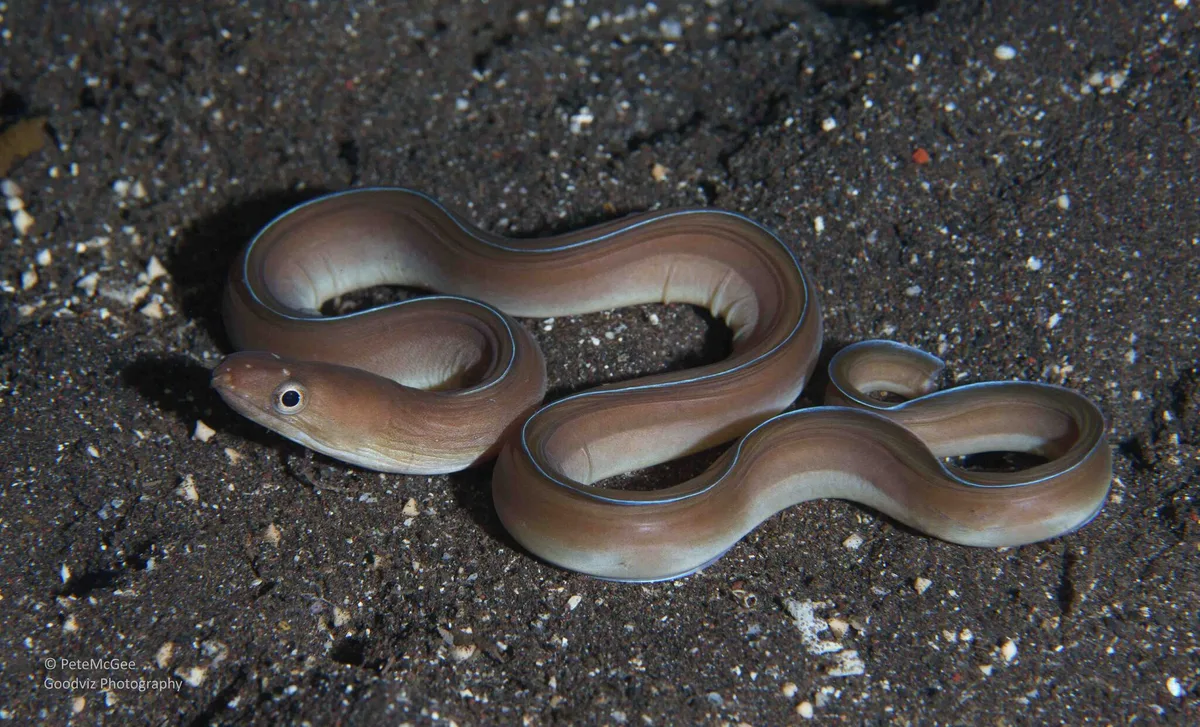
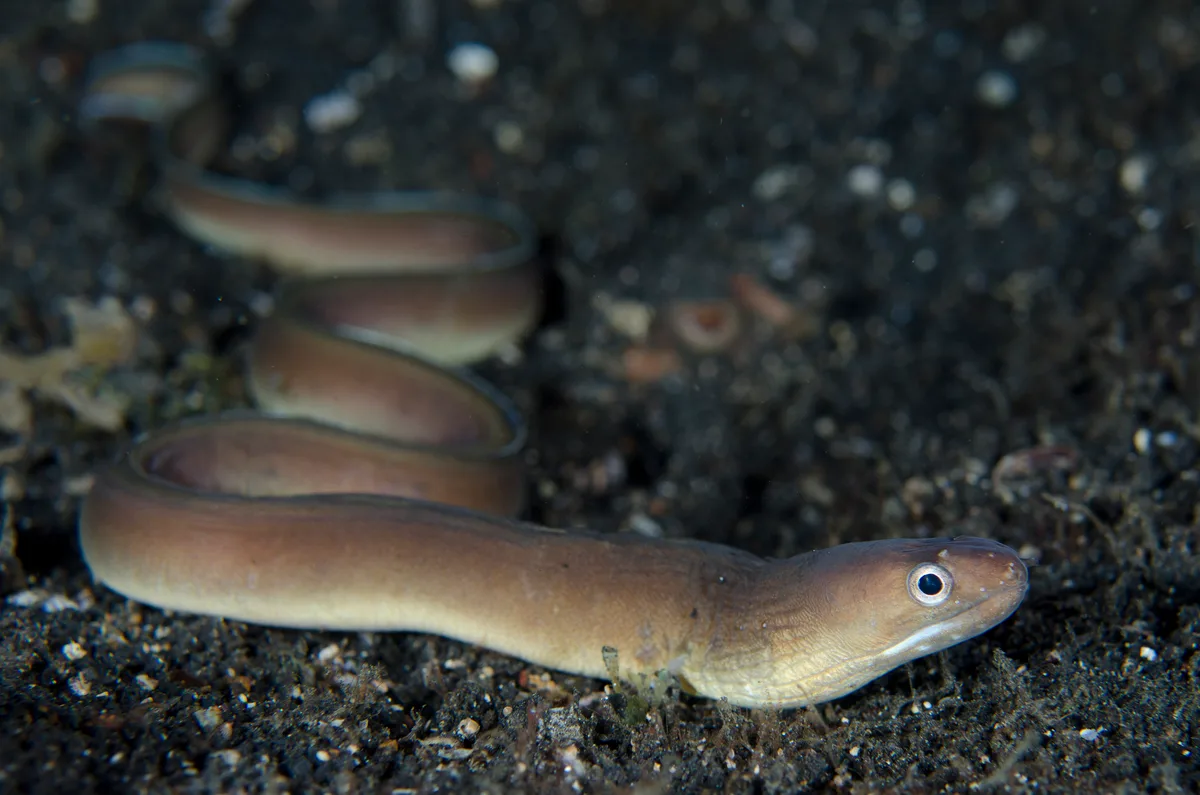
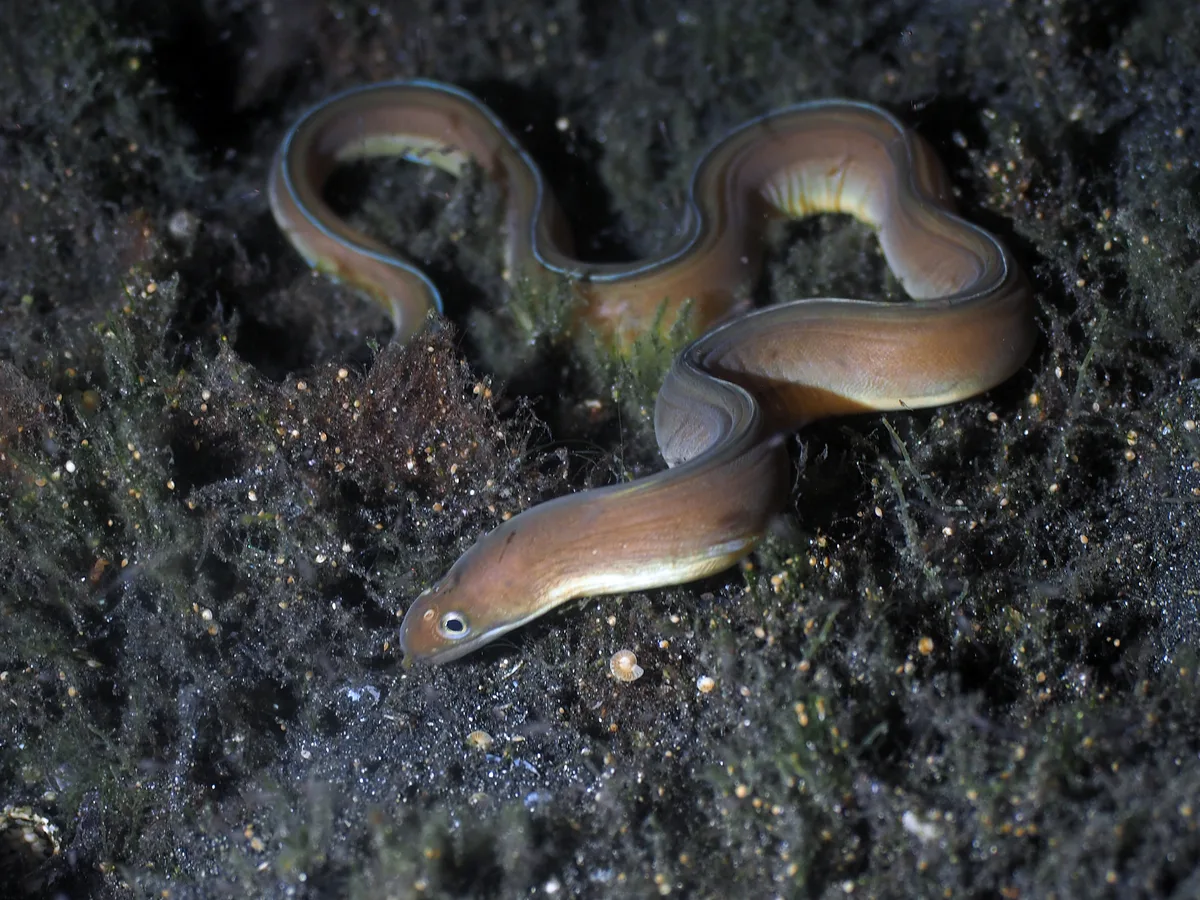
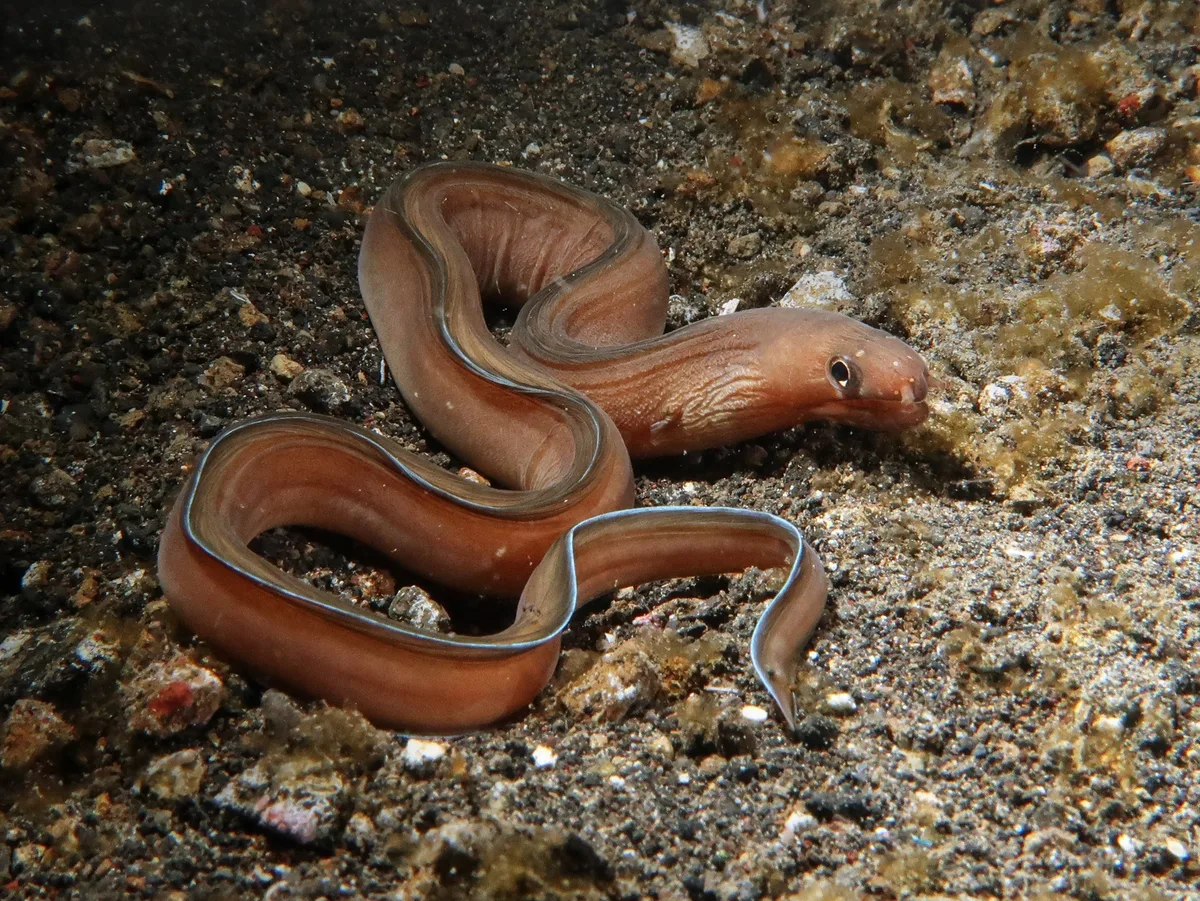
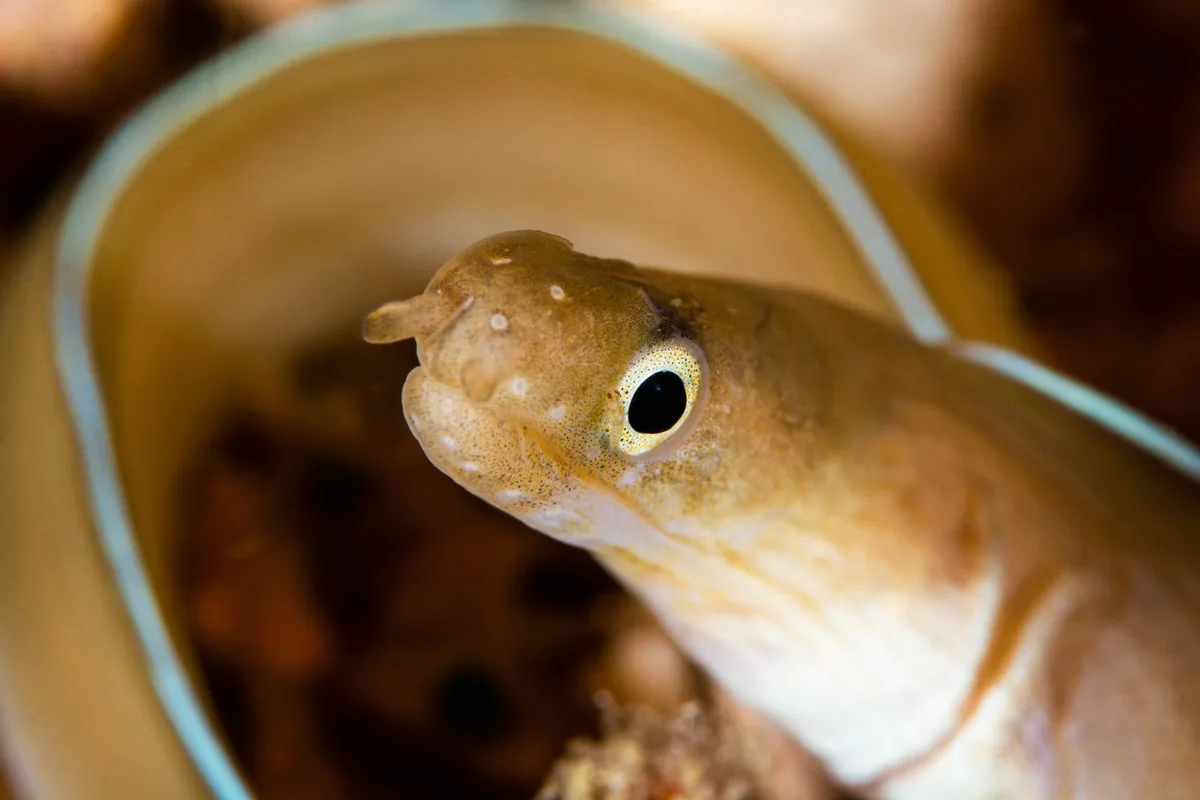
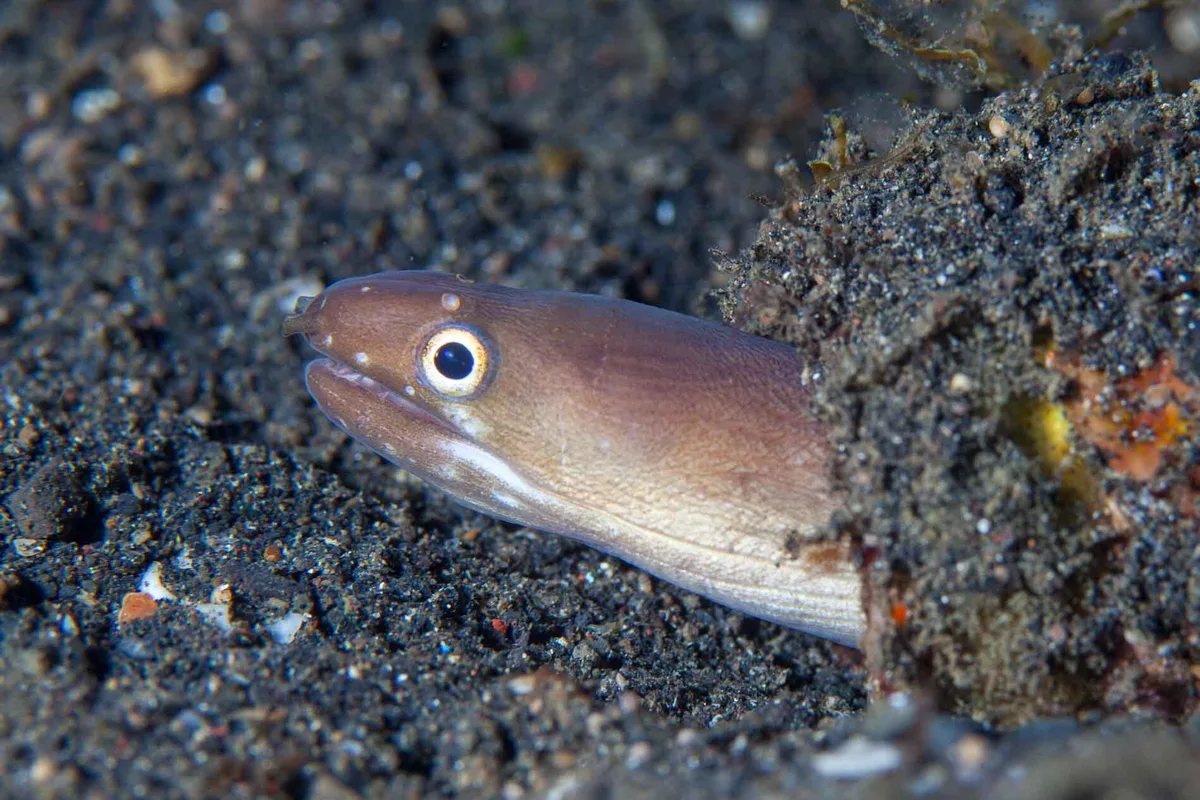
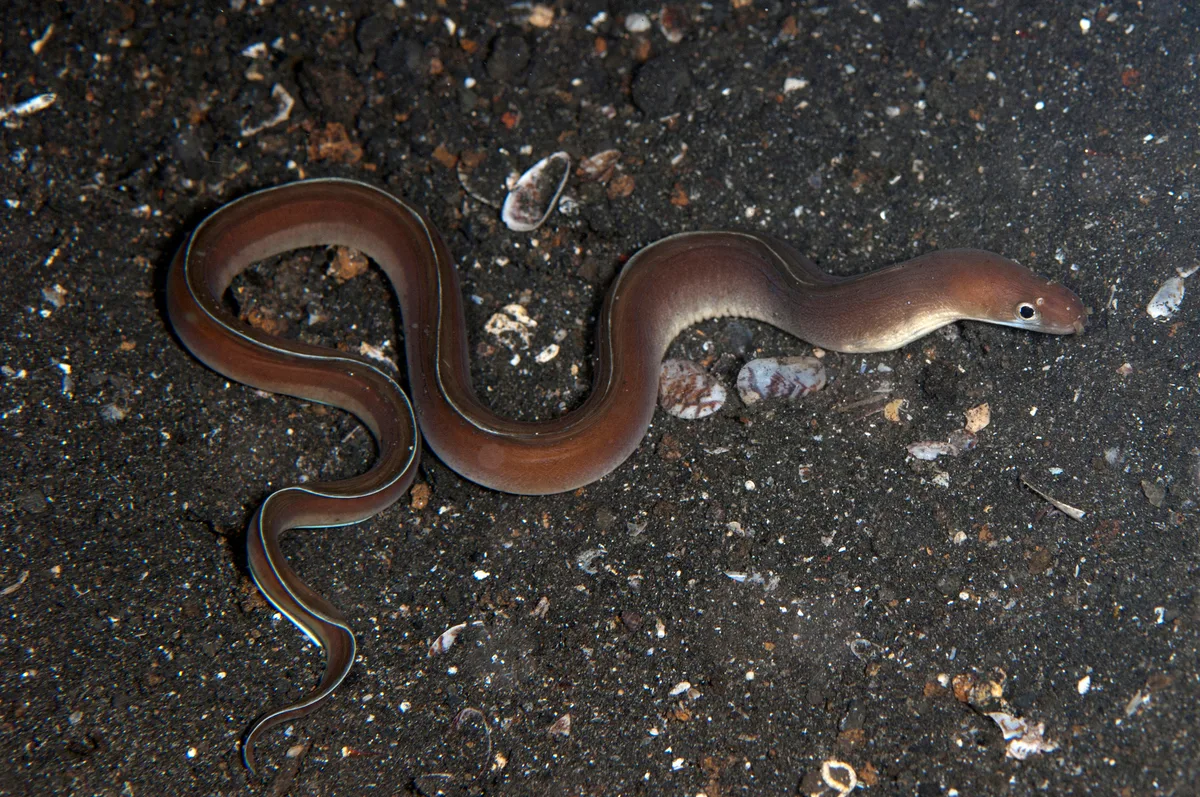
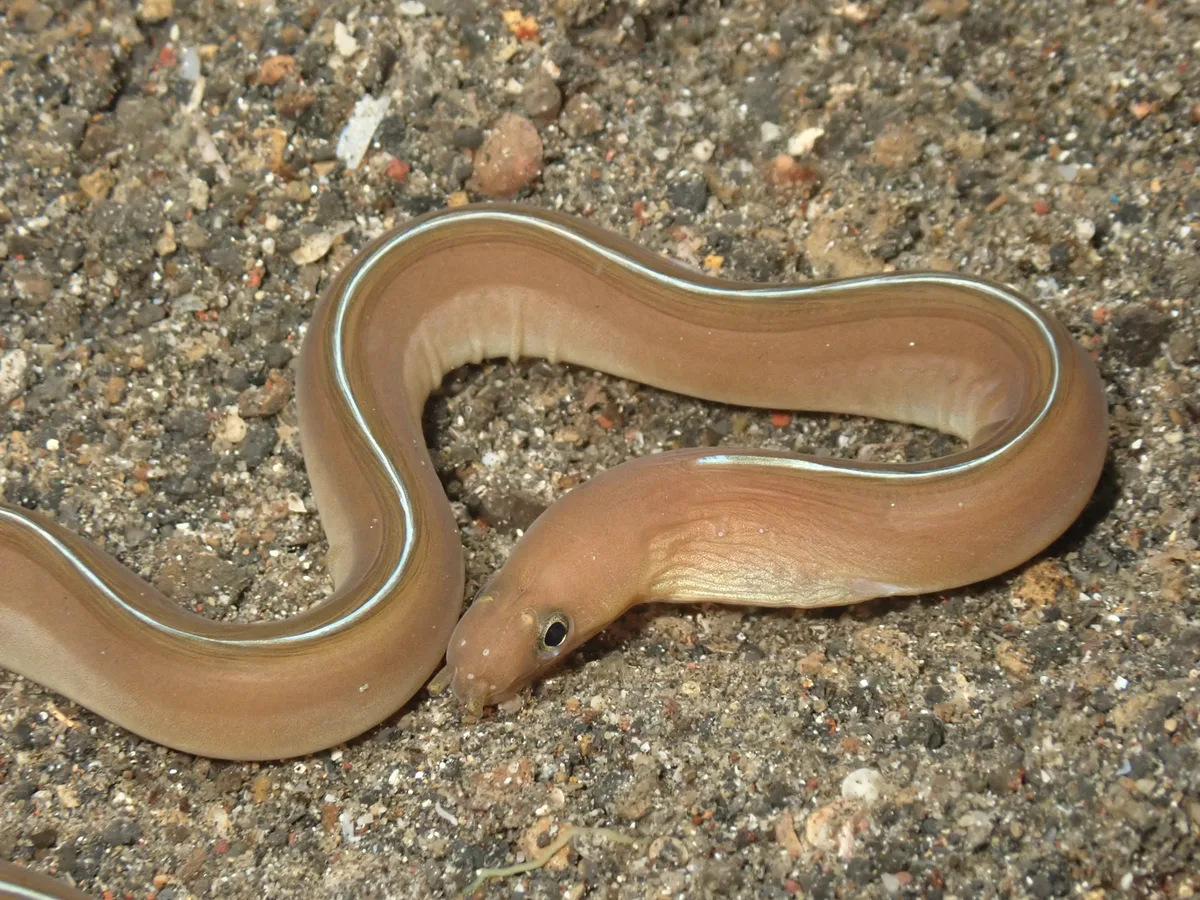
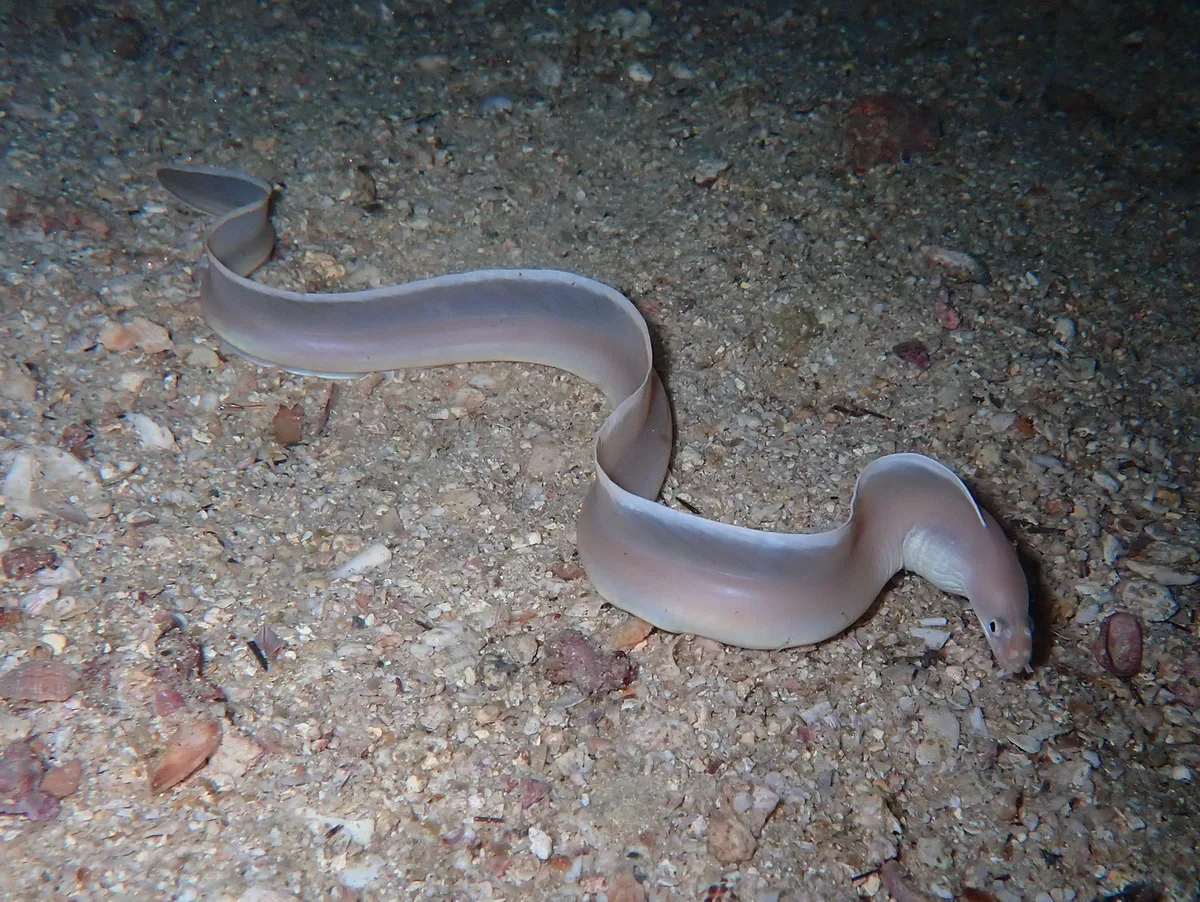
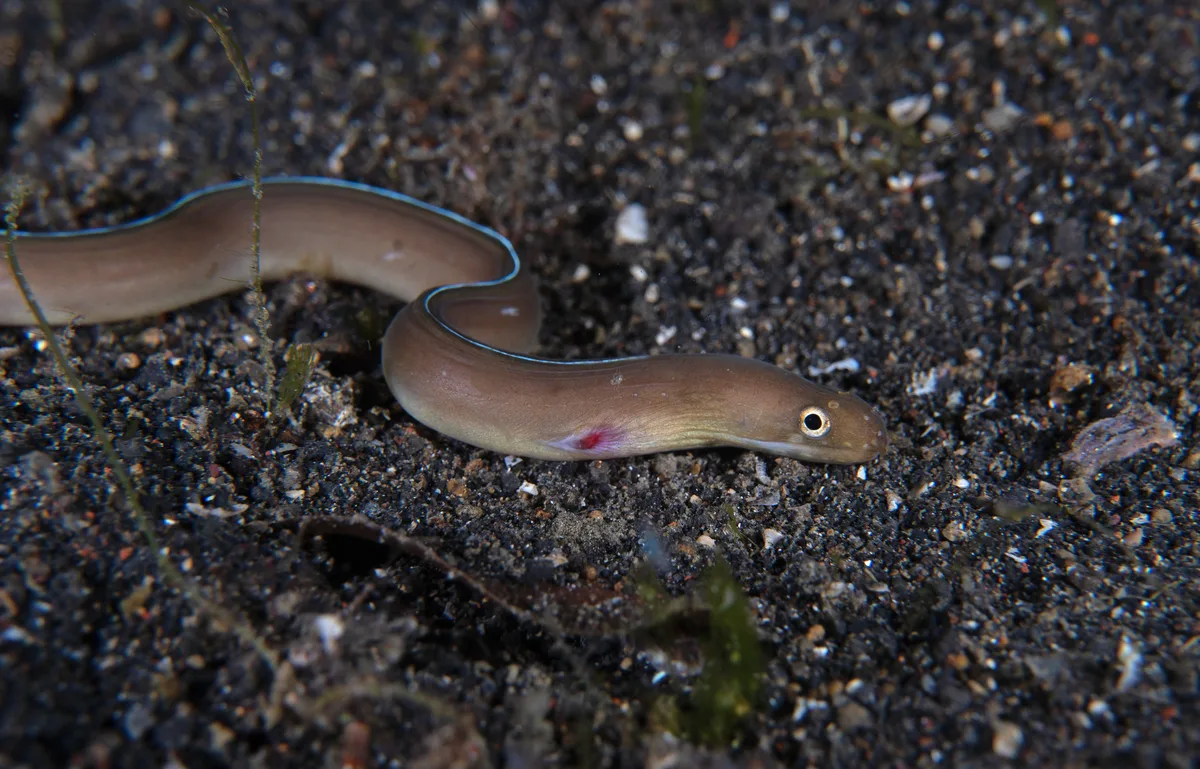
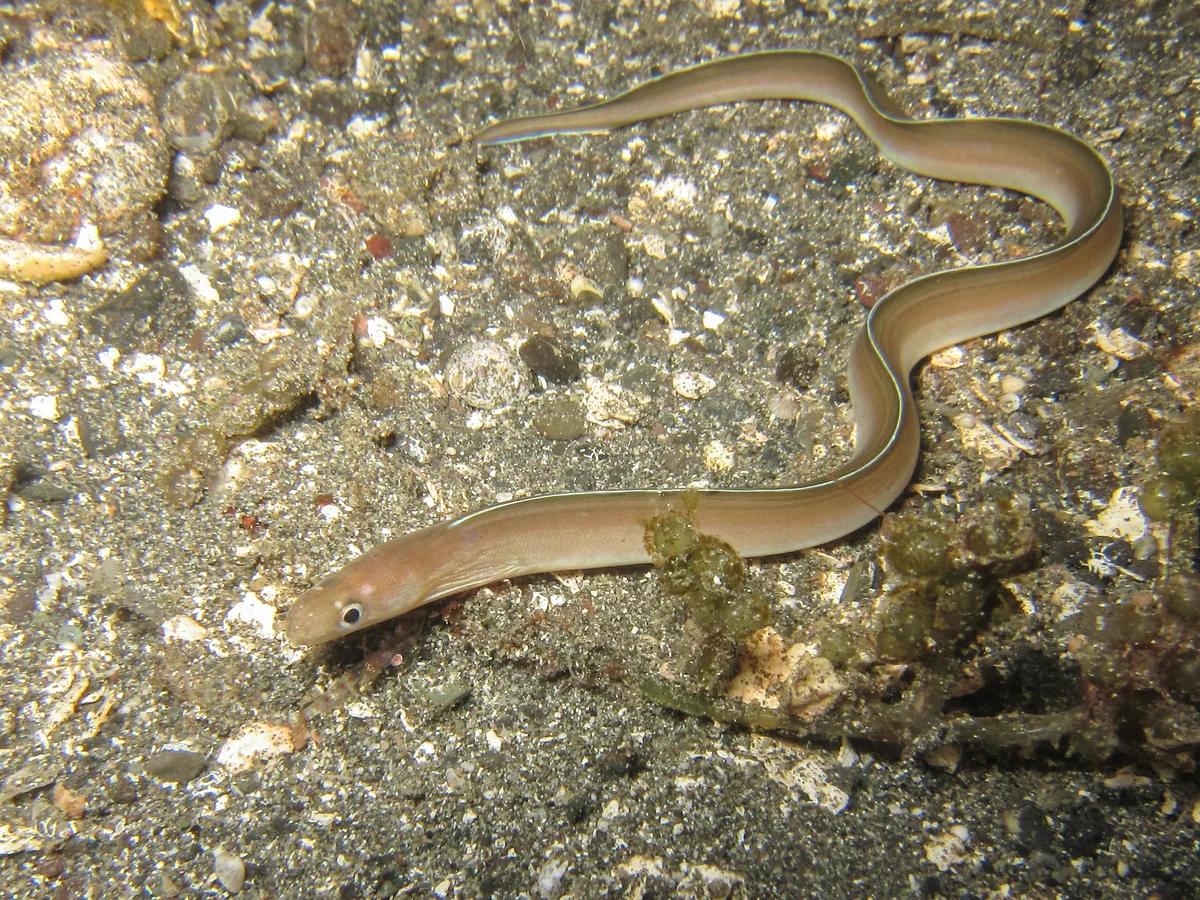
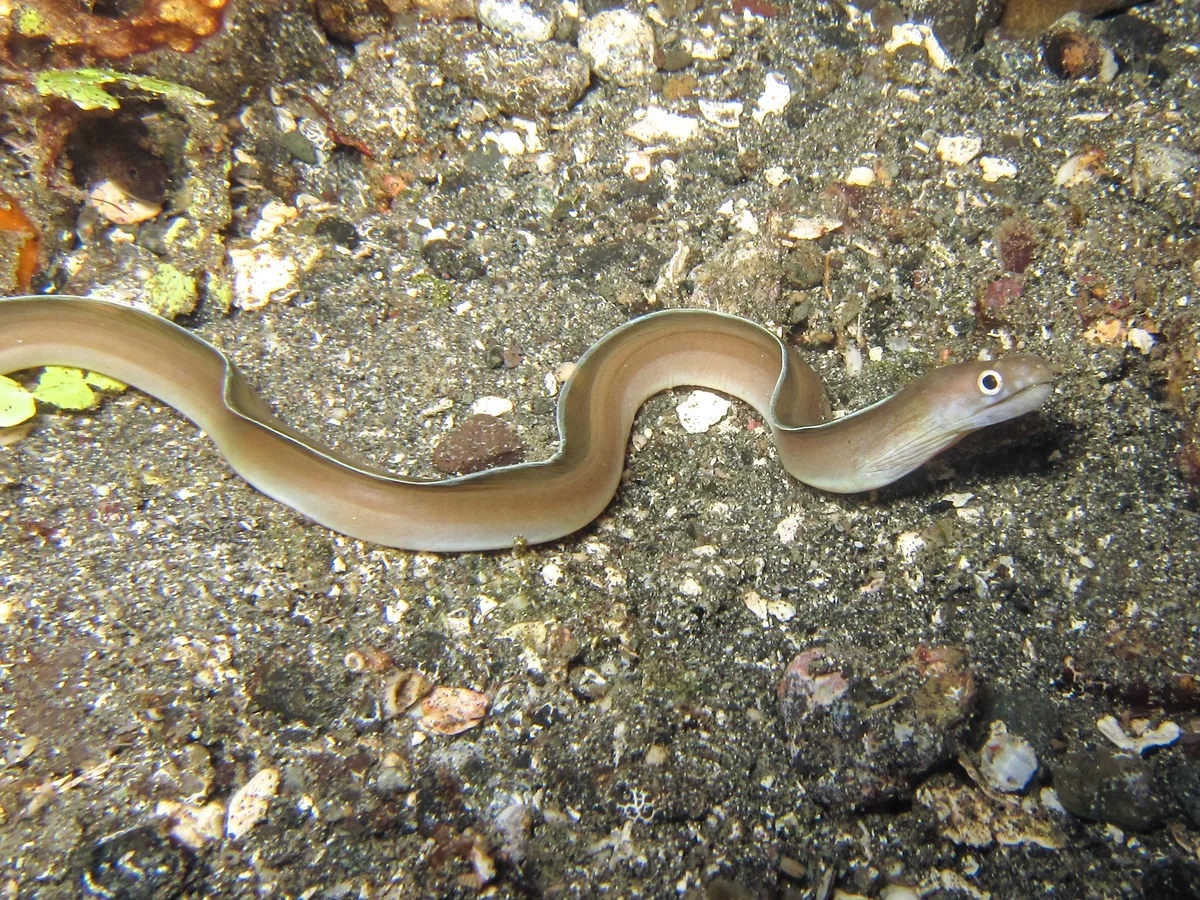
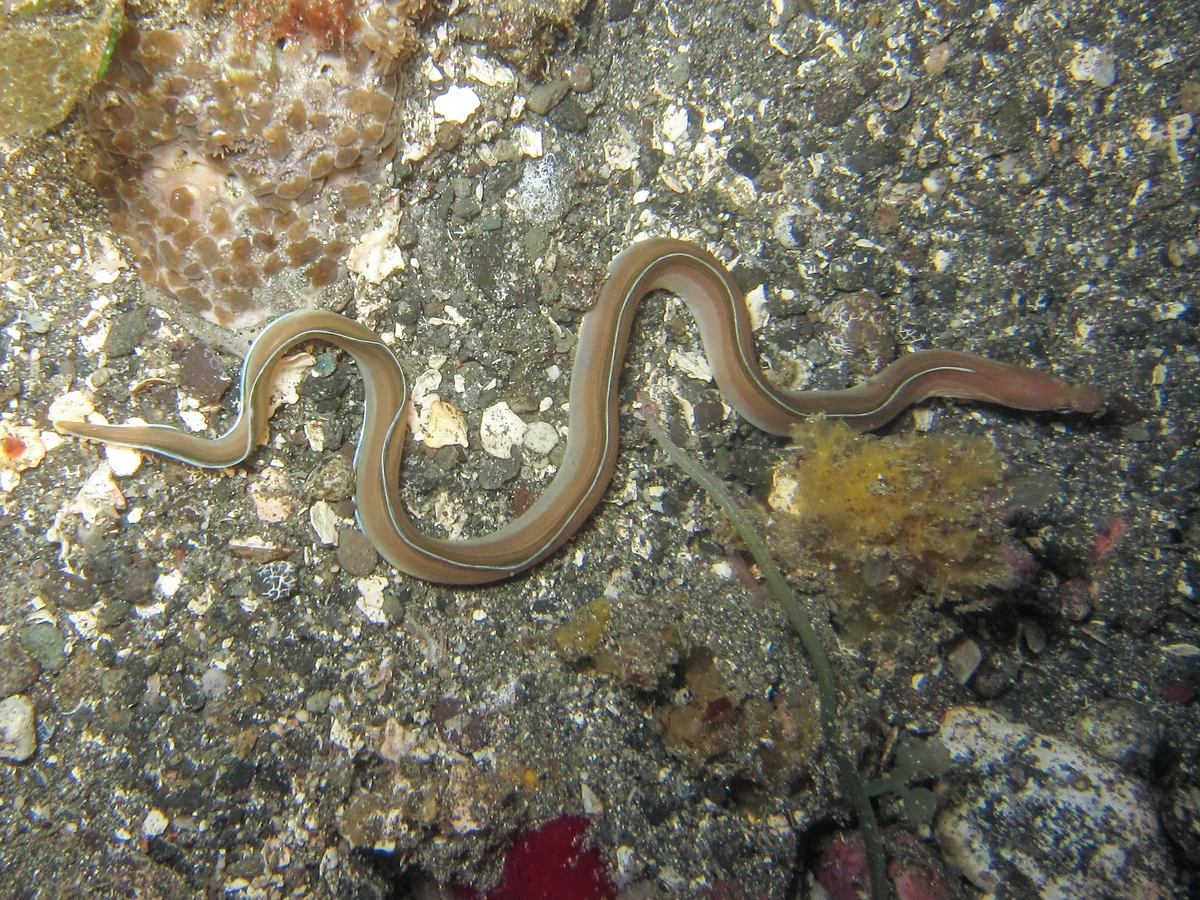
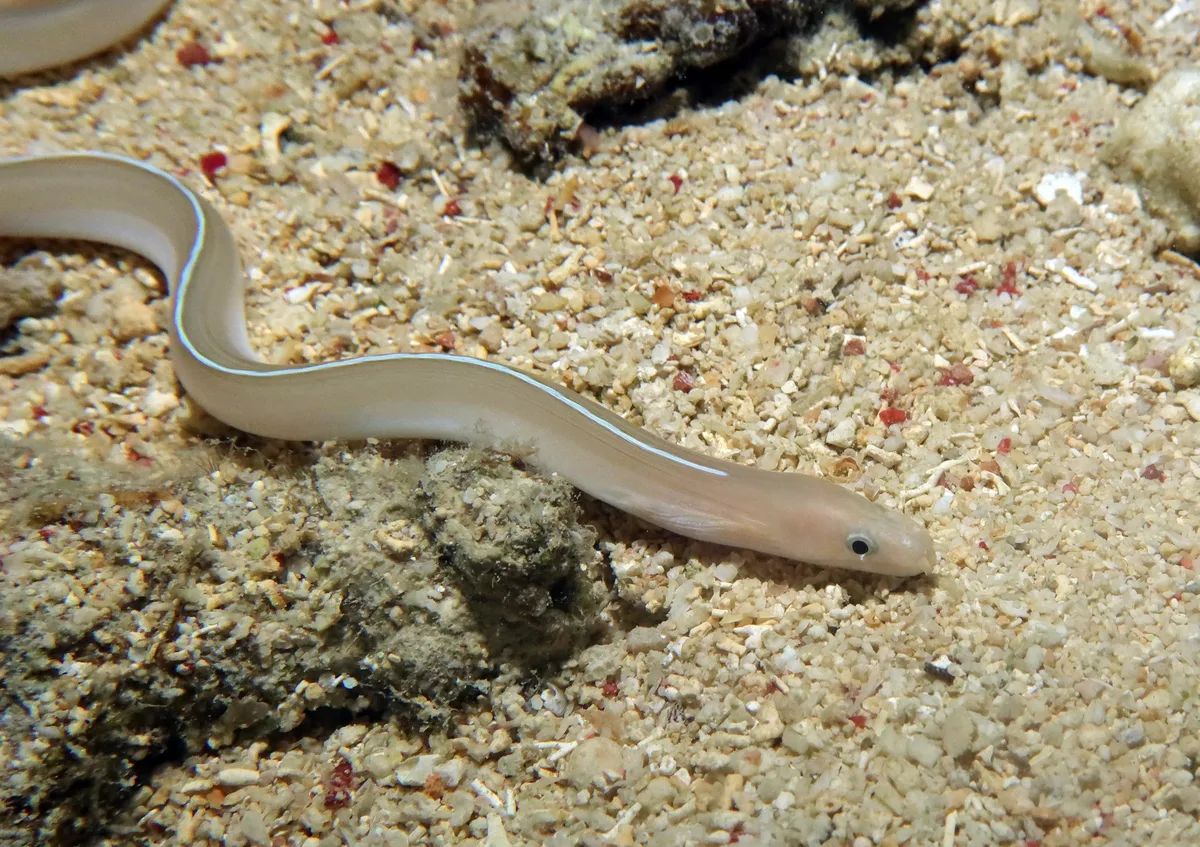
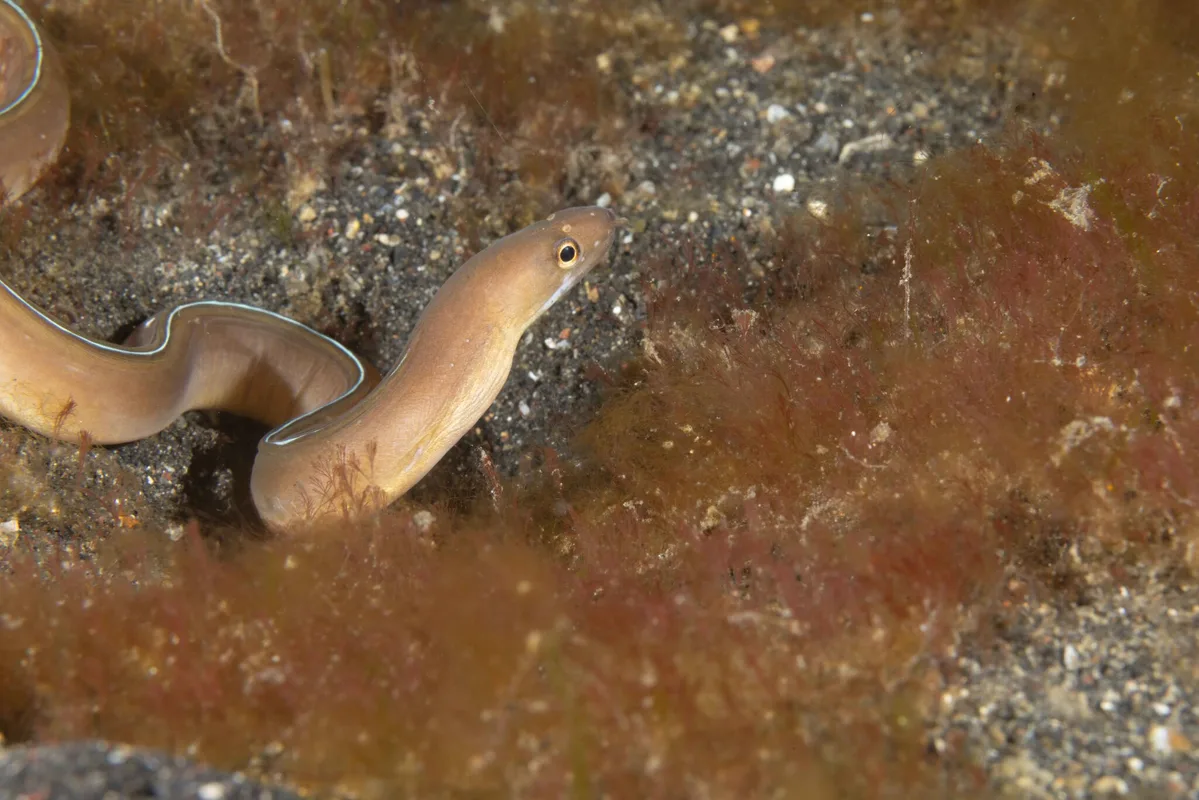
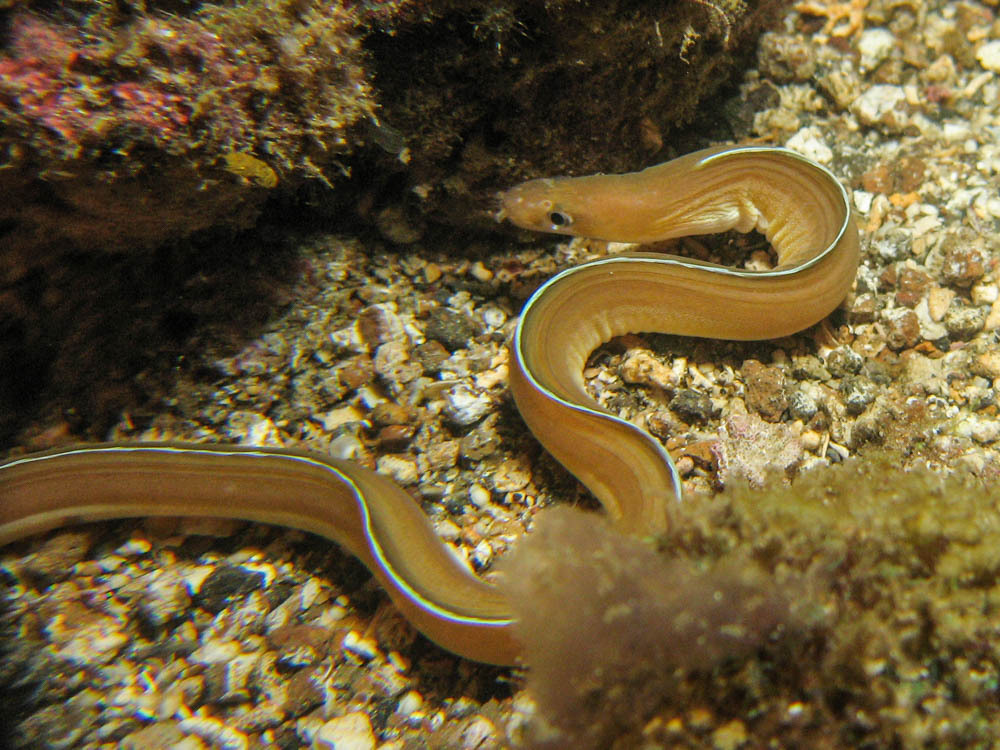
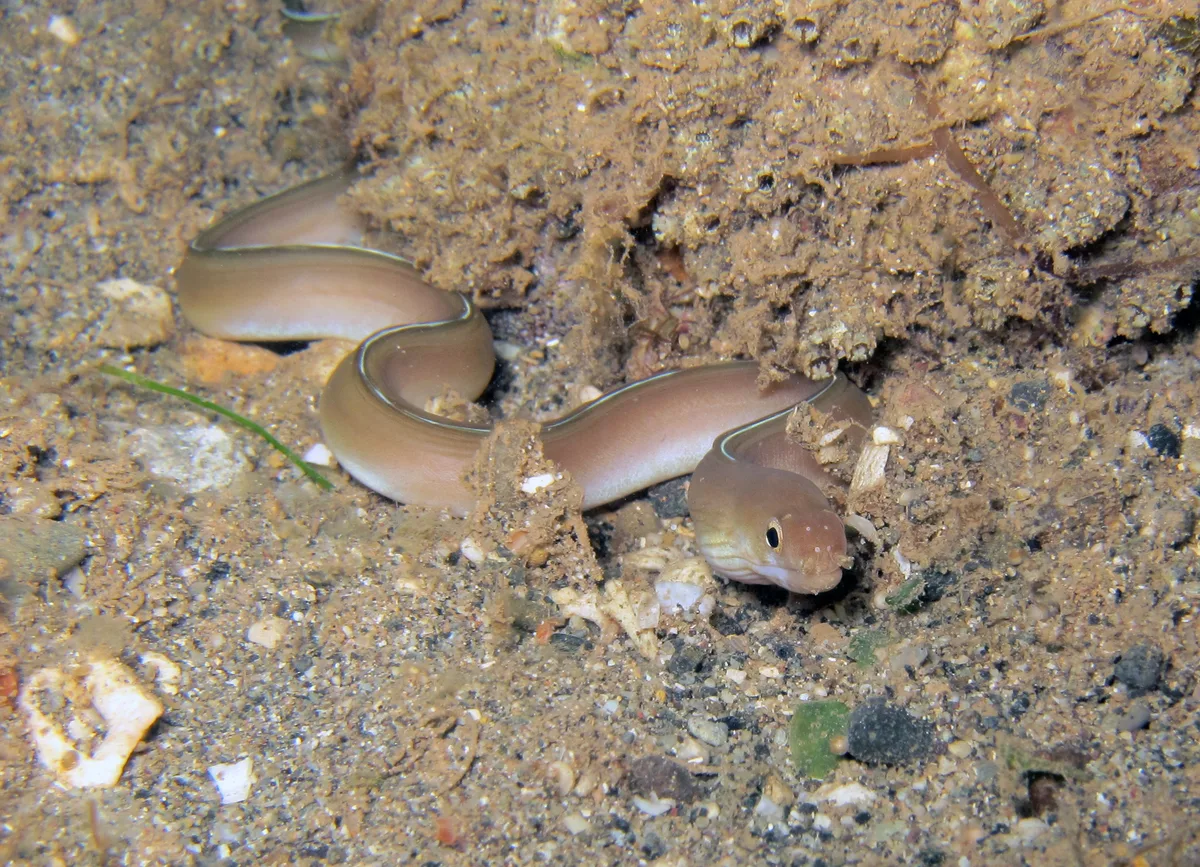
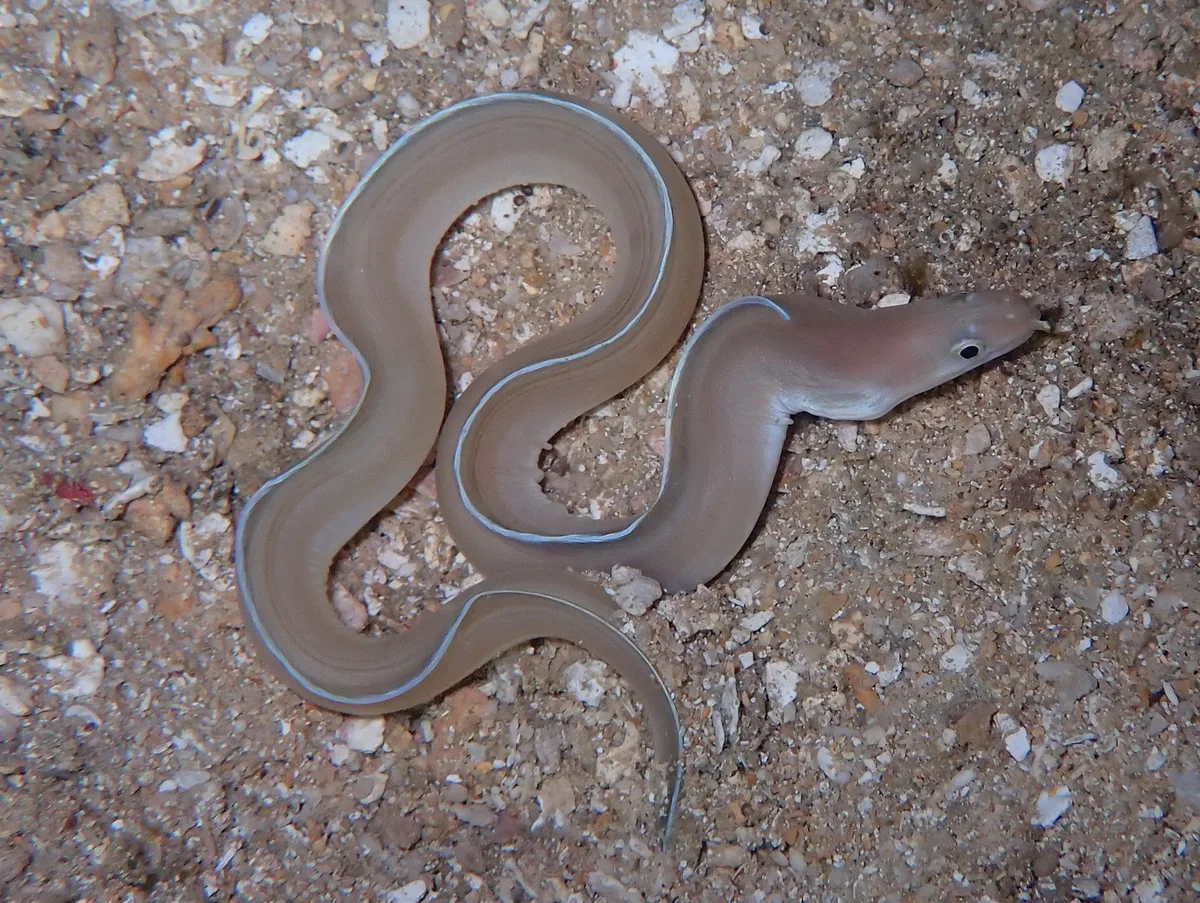
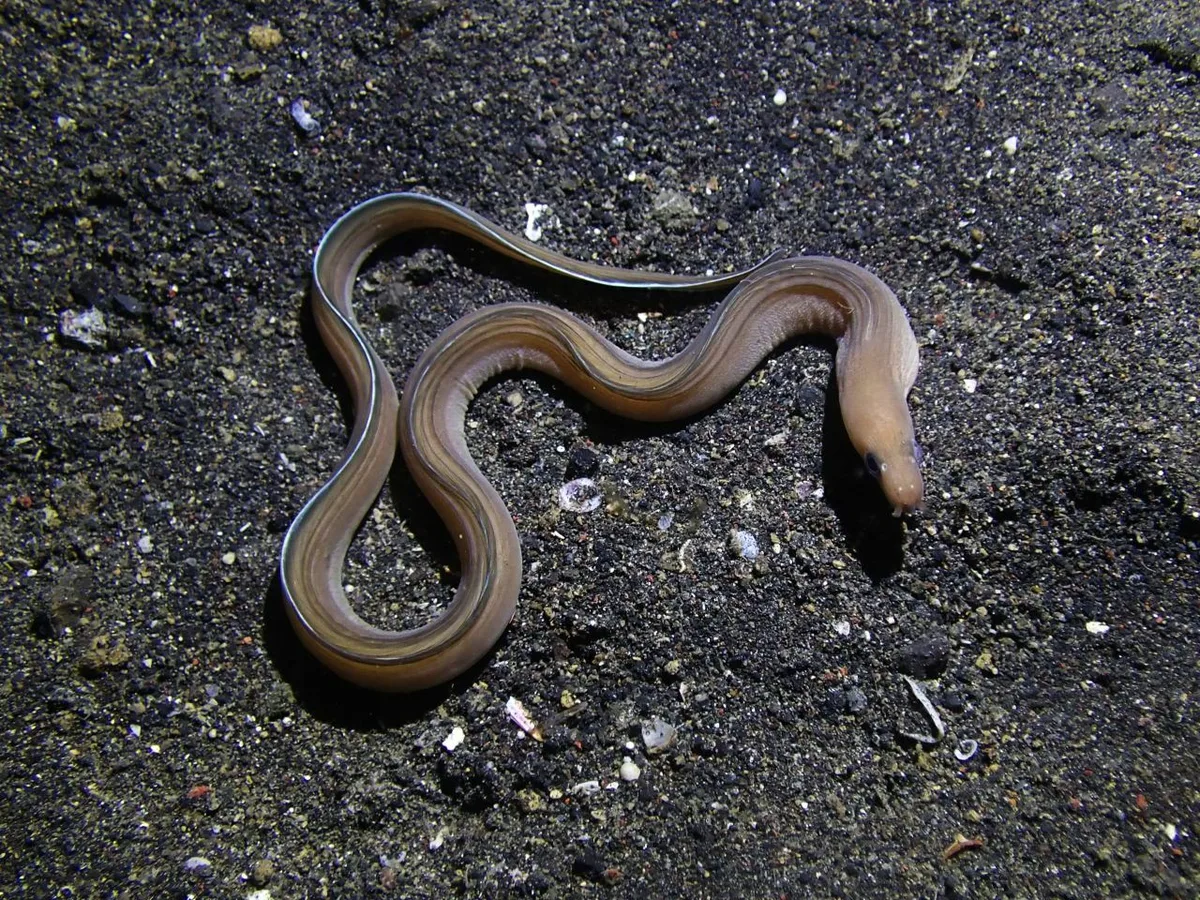
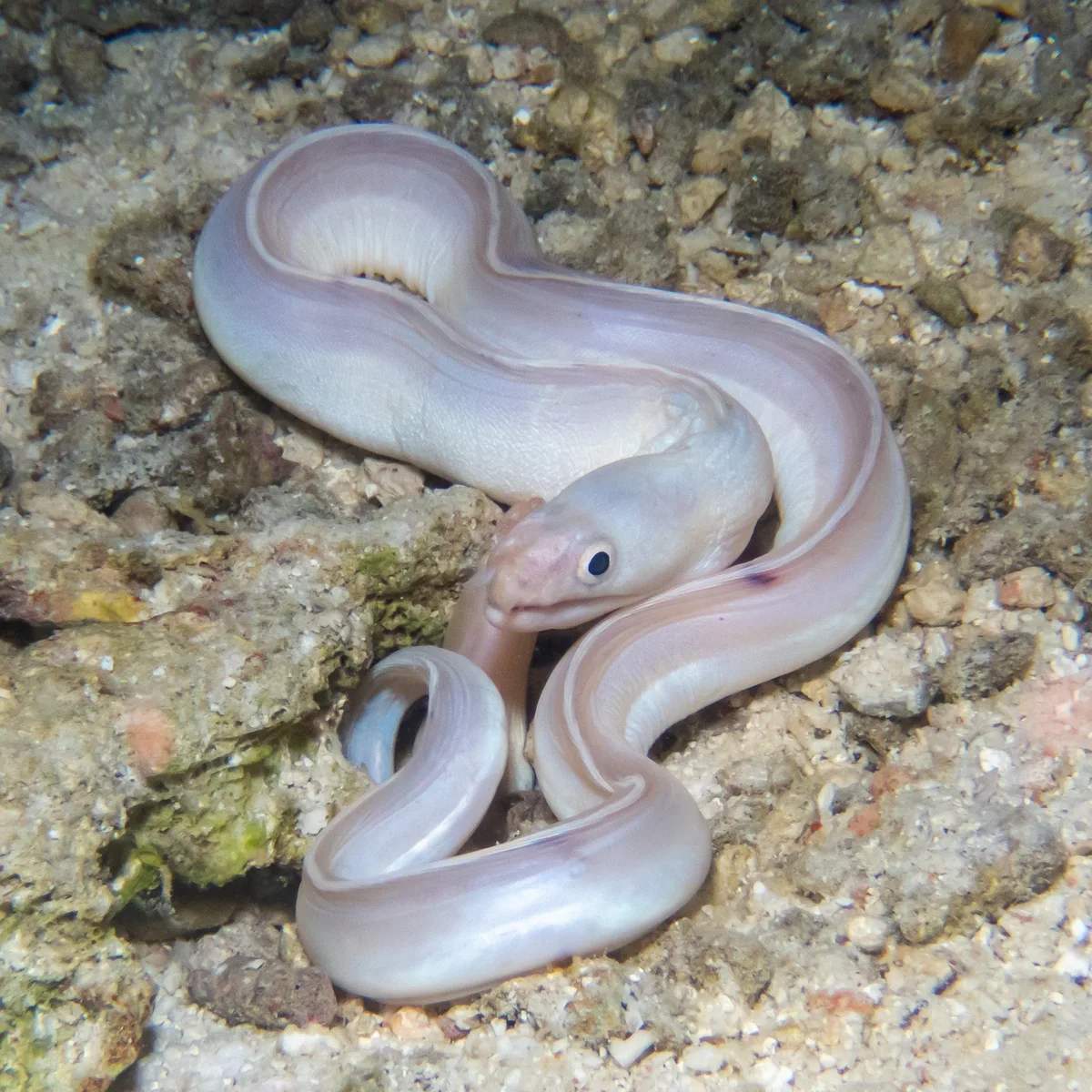
A moray reverses as easily as it advances. Watch one leave a hole and go back into it: there is no turning, no fumbling for the entrance. It runs the wave along its body the other way and goes in tail first at the same speed it came out.
That is what the fin arrangement is for. A moray has no pectoral fins and no pelvic fins at all, and a single fin runs as a low ridge from behind the head, around the tail, and back along the underside, effectively turning the whole animal into one long undulating surface with no leading end. Nothing sticks out to catch on rock, and the wave works in either direction.
It is the reason a moray in a crevice is unreachable. It does not need to be able to turn around in there, so the hole can be exactly as wide as the eel and no wider.
This one is a small, pale, faintly mottled species that disappears against rubble, which is presumably how it came by a name that means apparition. It is rarely recorded, and like most of the small morays here that probably says more about how hard they are to find than about how many there are.
The genus. Gymnothorax Bloch 1795 - gymnós (bare or naked) + thṓrax (breast or chest). ETYFish
- pale grayish-brown with faint darker mottling, easily lost against rubble
- small head, small eye
- up to 46 cm
Why it's threatened
There are no major threats known to this species, although it may be impacted by coastal development and habitat degradation in some parts of its range.
Threat classification from the IUCN Red List.