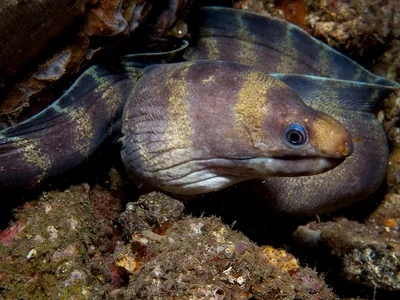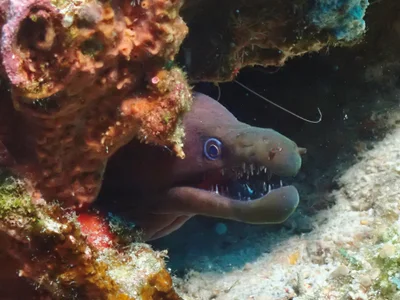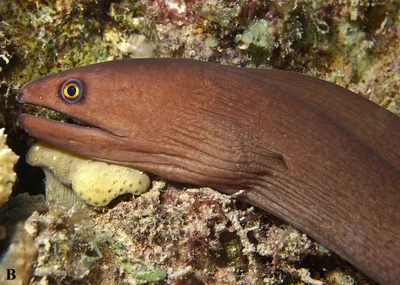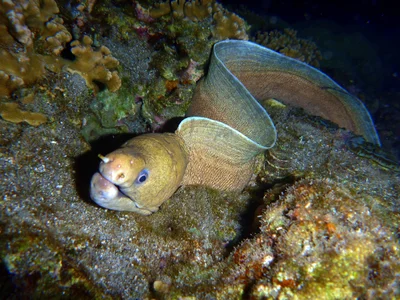
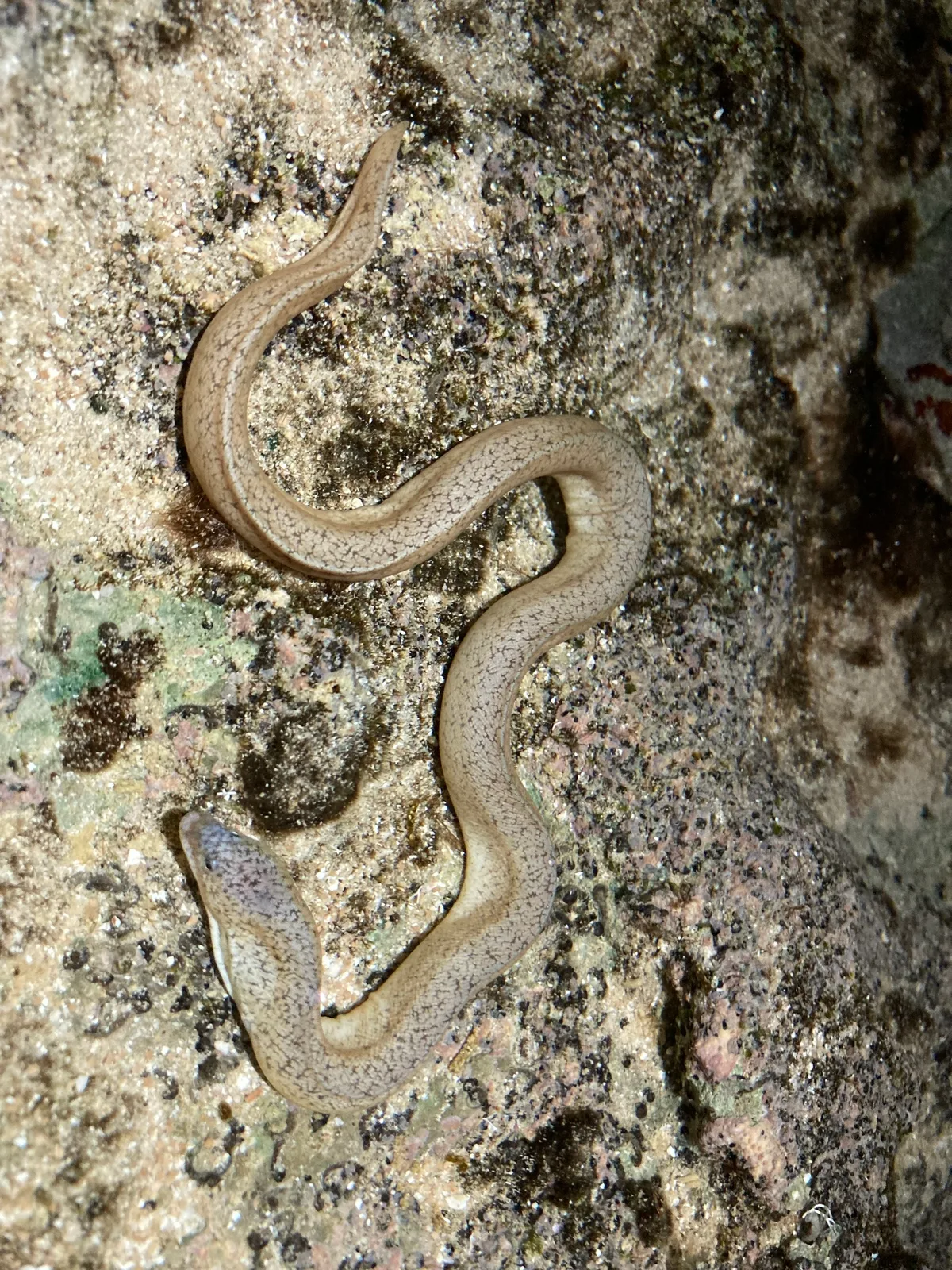
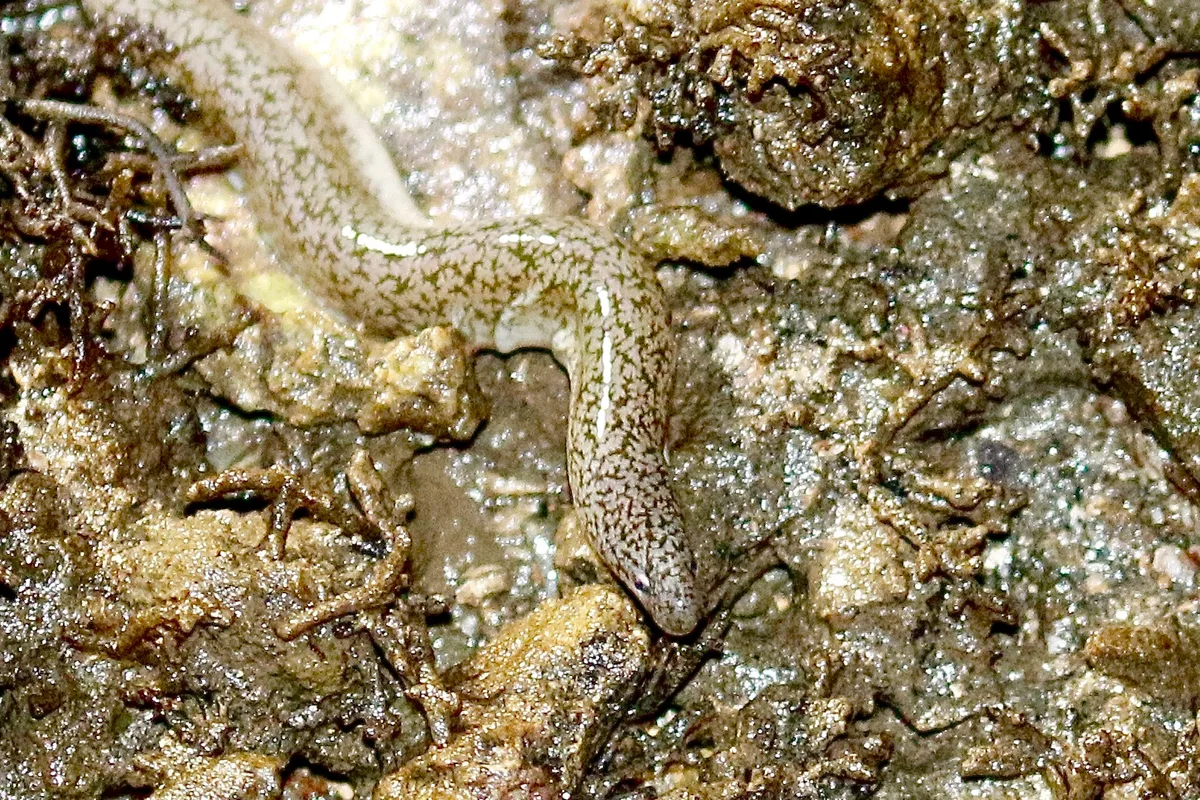
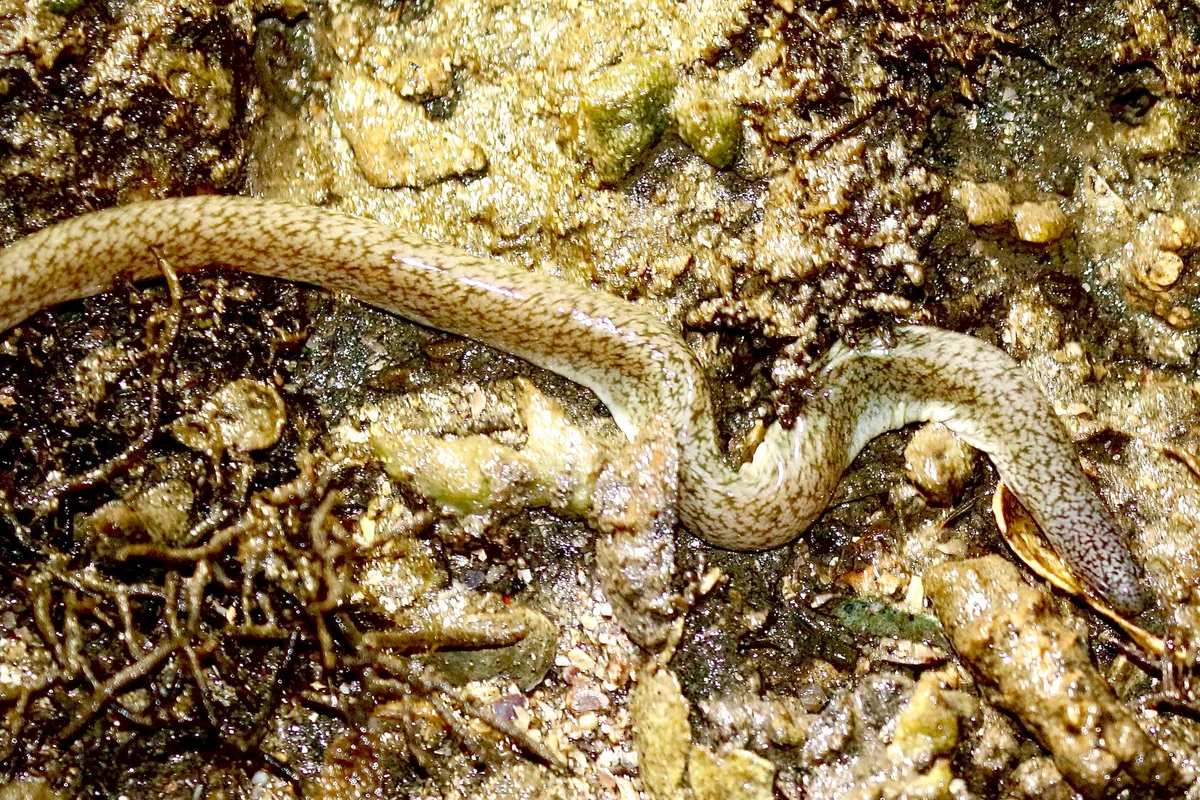
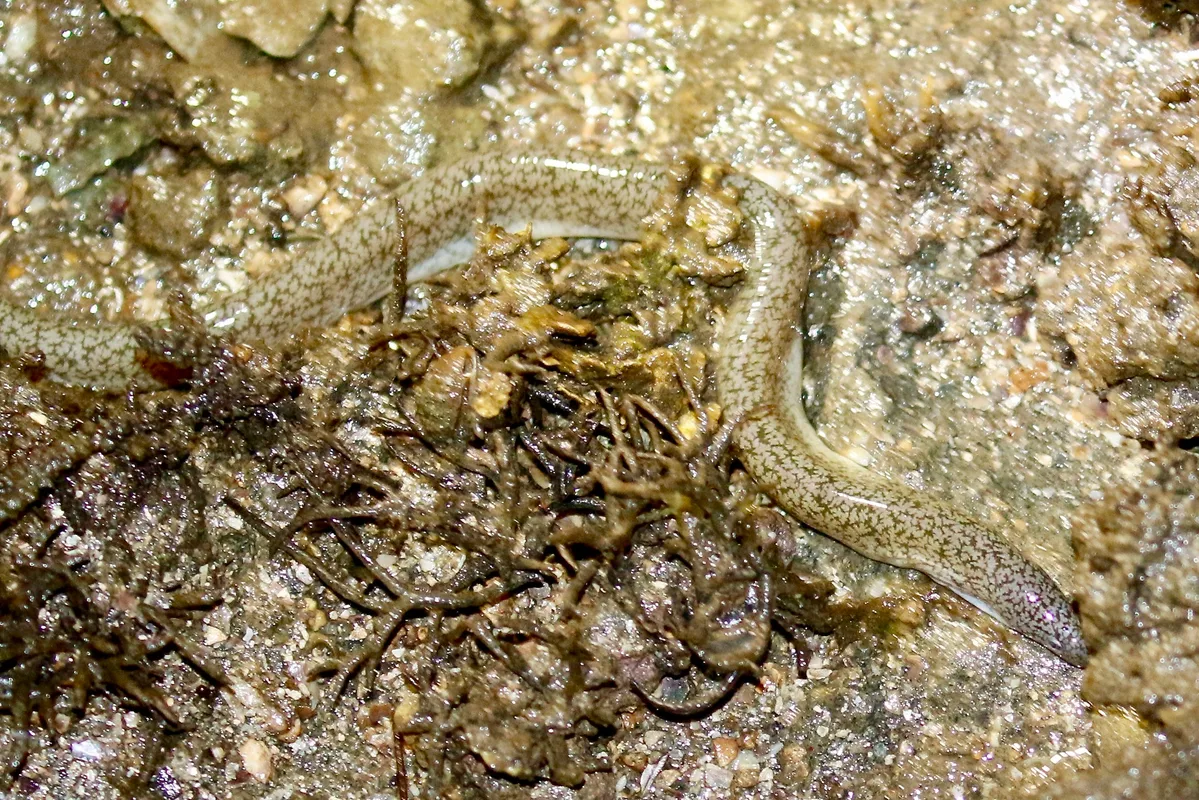
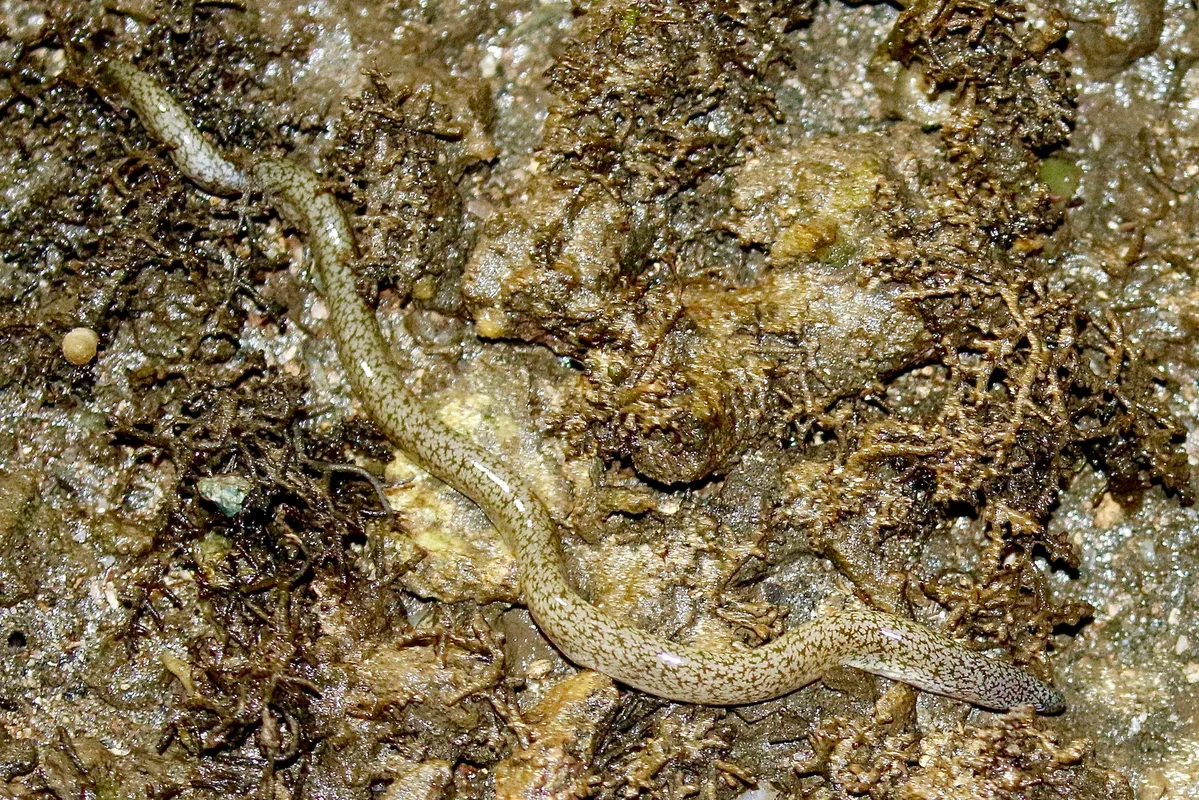
Nearly every one of these small burrowing morays is listed as rare, and the label is mostly an artifact of how they get found.
You cannot survey an animal that never leaves the inside of the reef. It is not shy, it is not scarce in any way anyone has demonstrated, it is simply never in view. Almost all the specimens in collections came out of two situations: rubble broken apart by hand, and chemical collecting stations, where a small enclosed patch of reef is treated with an anaesthetic and everything hidden in it comes out. Do that on a reef flat and the number of eels that emerge from a few square meters is routinely startling to the people doing it.
So rare, in this group, means undetectable rather than uncommon. It is worth keeping in mind whenever a small cryptic animal carries the label.
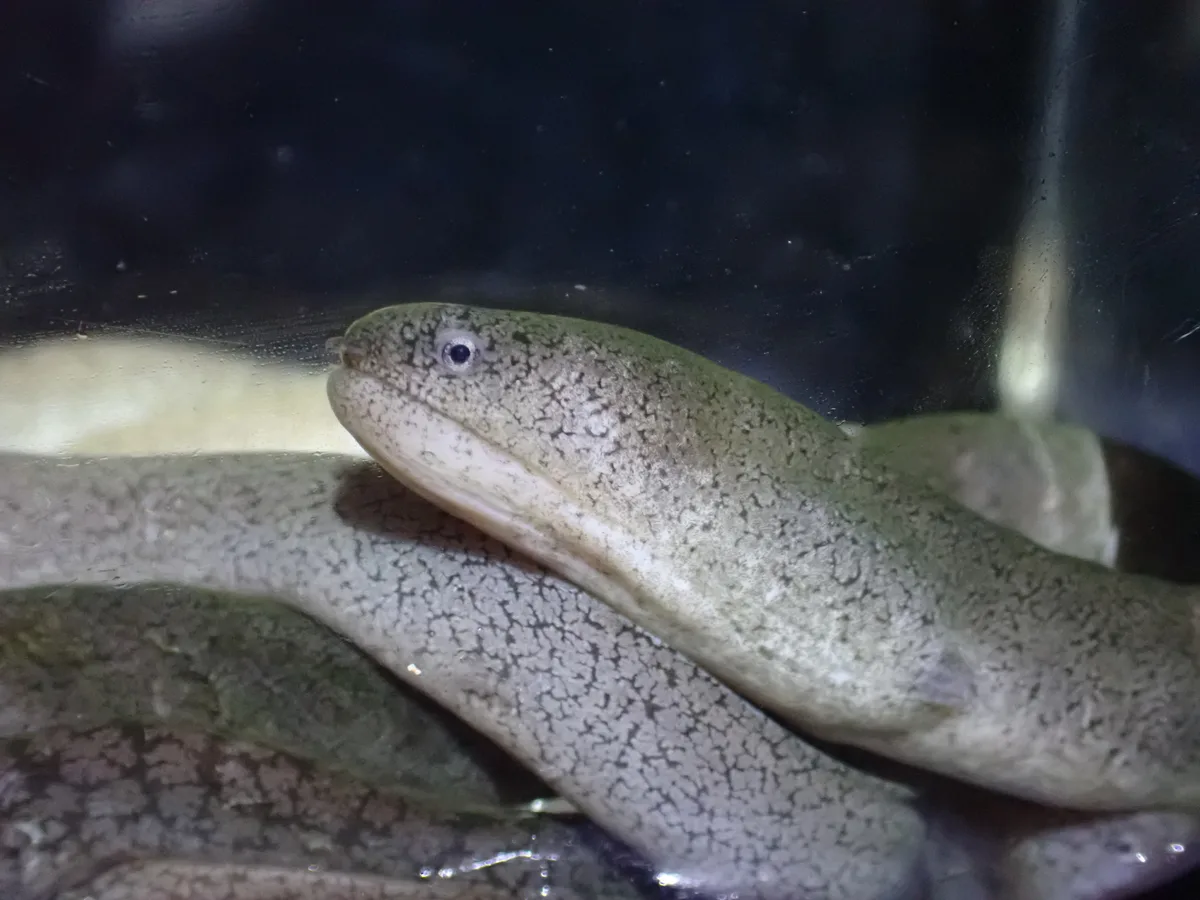
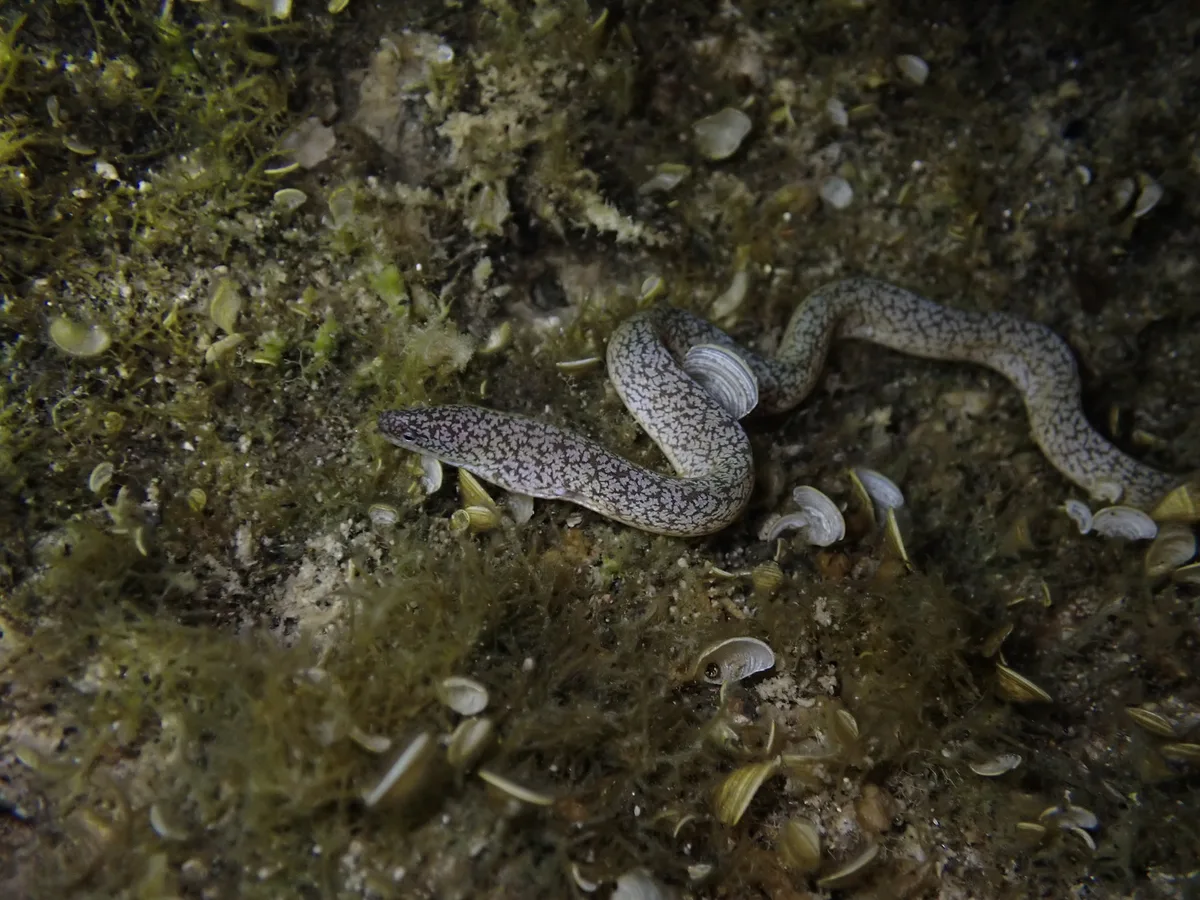
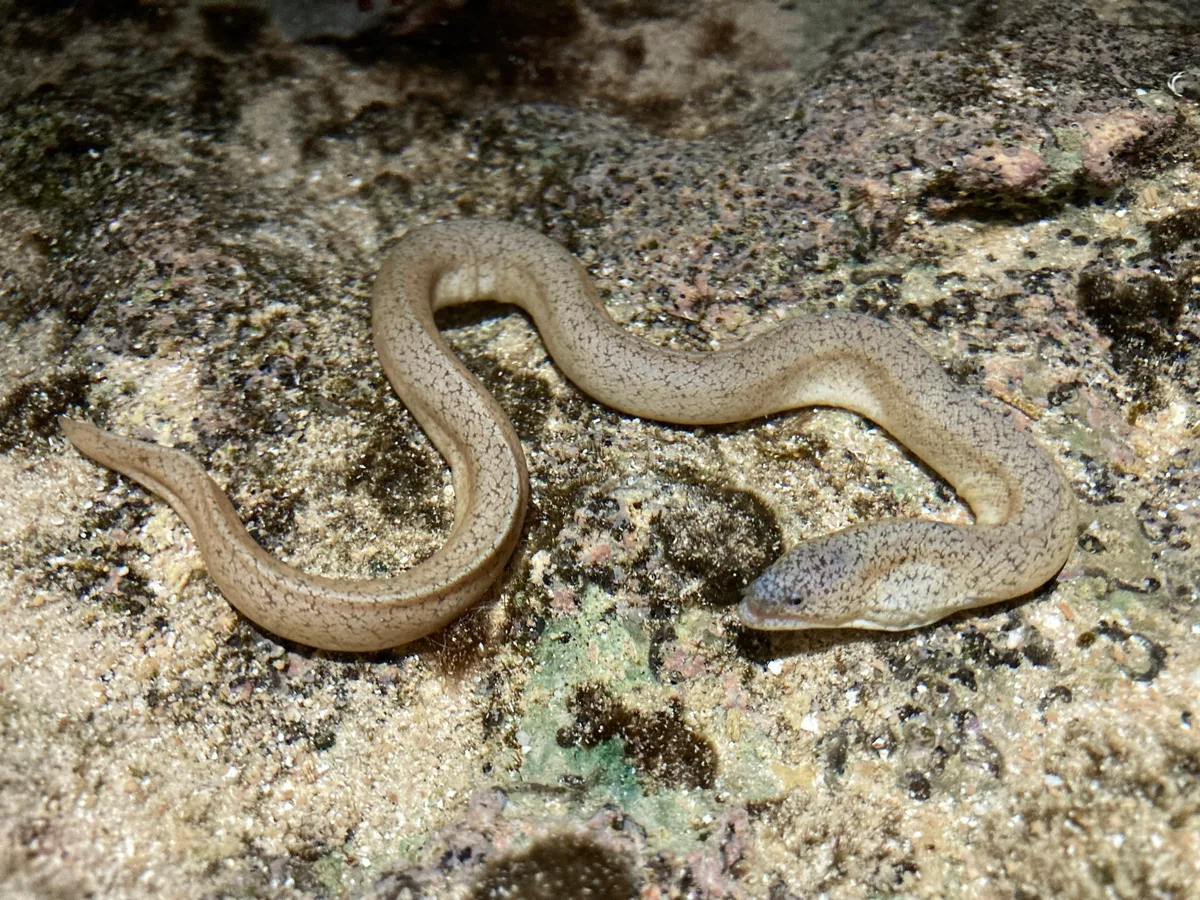
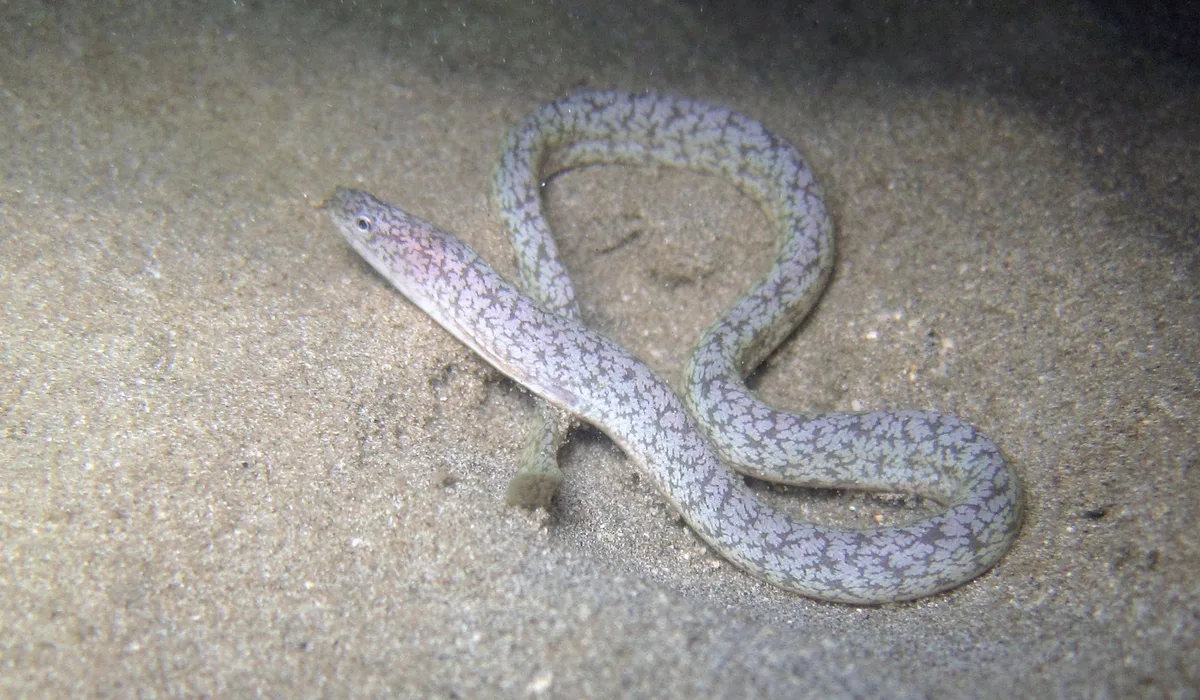
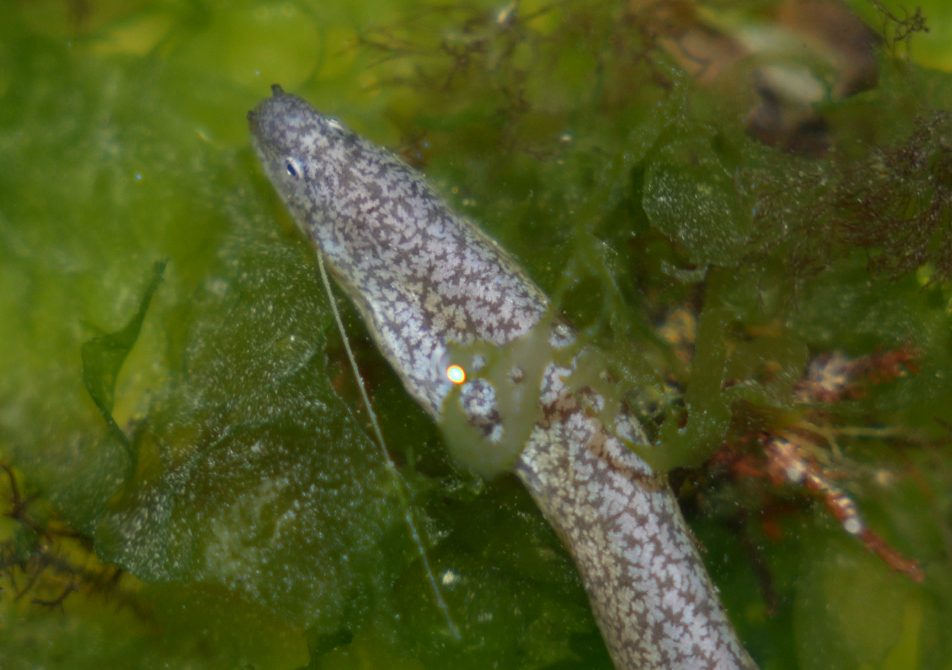
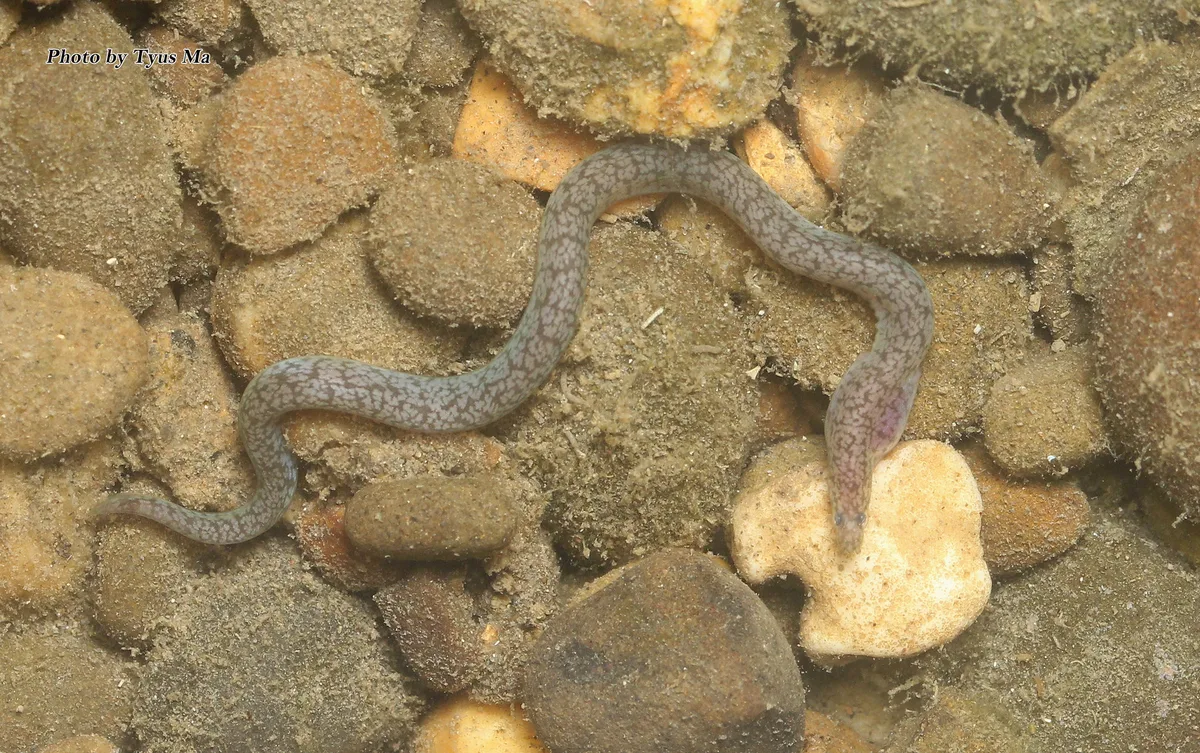
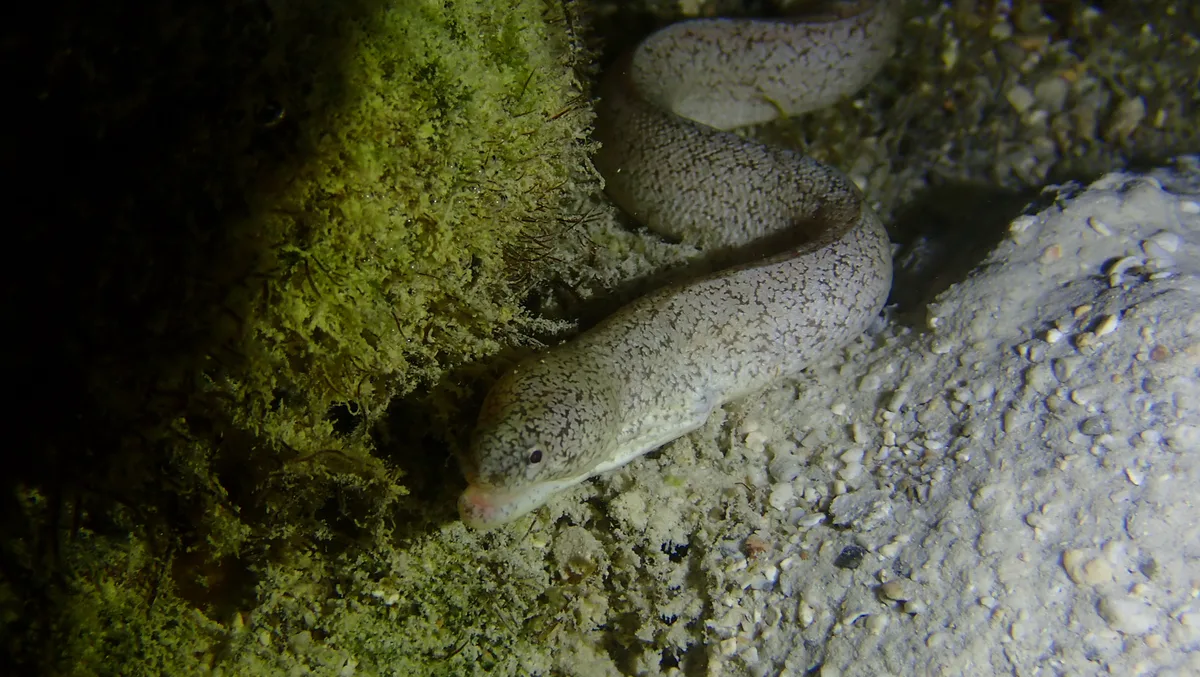
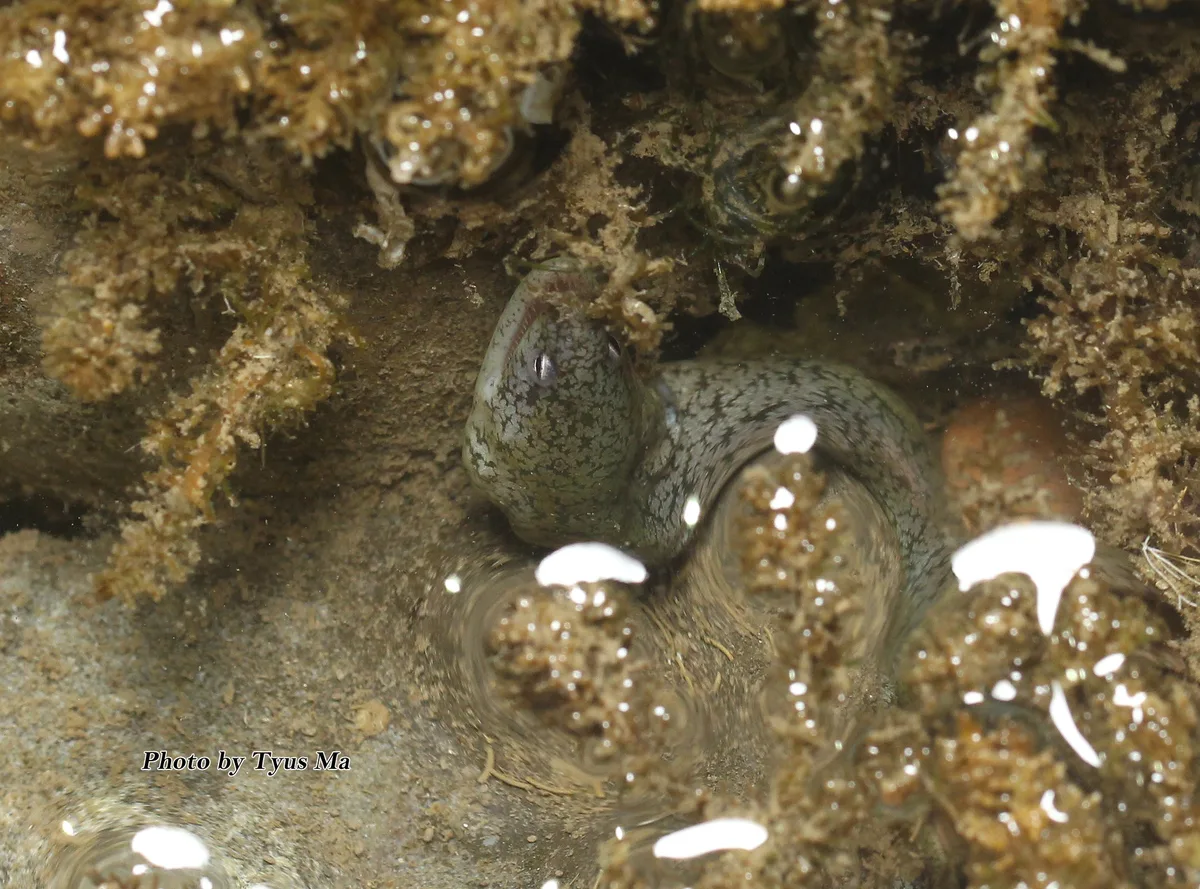
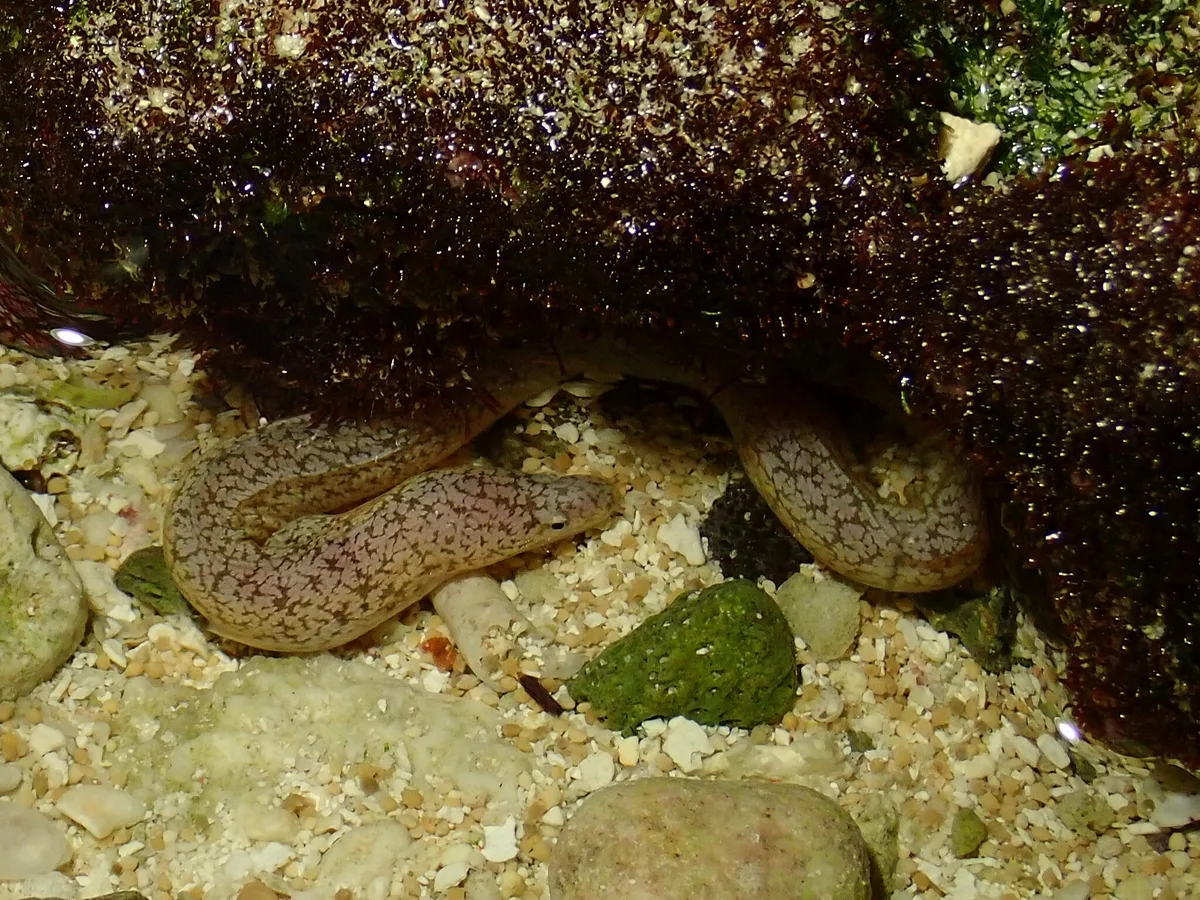
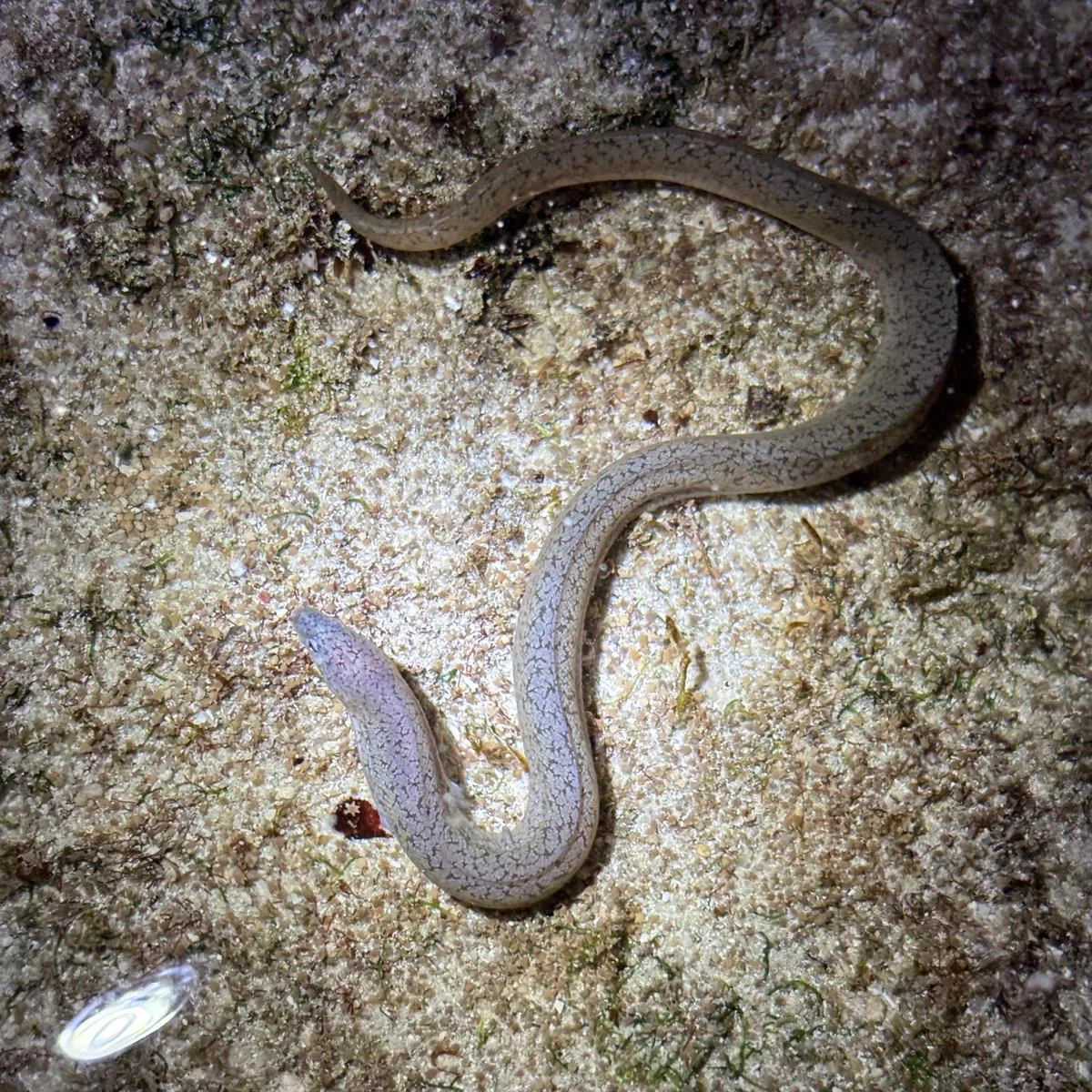
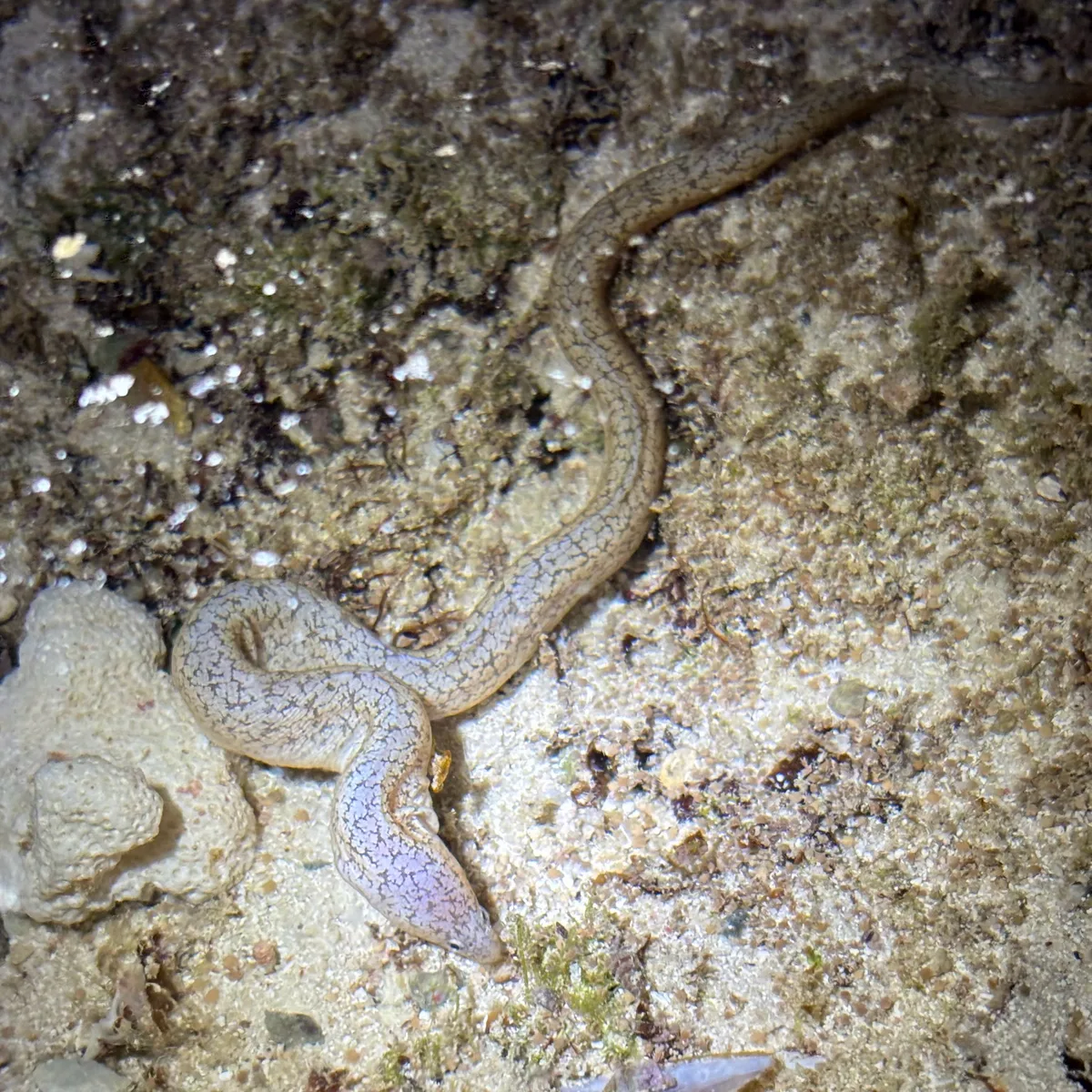
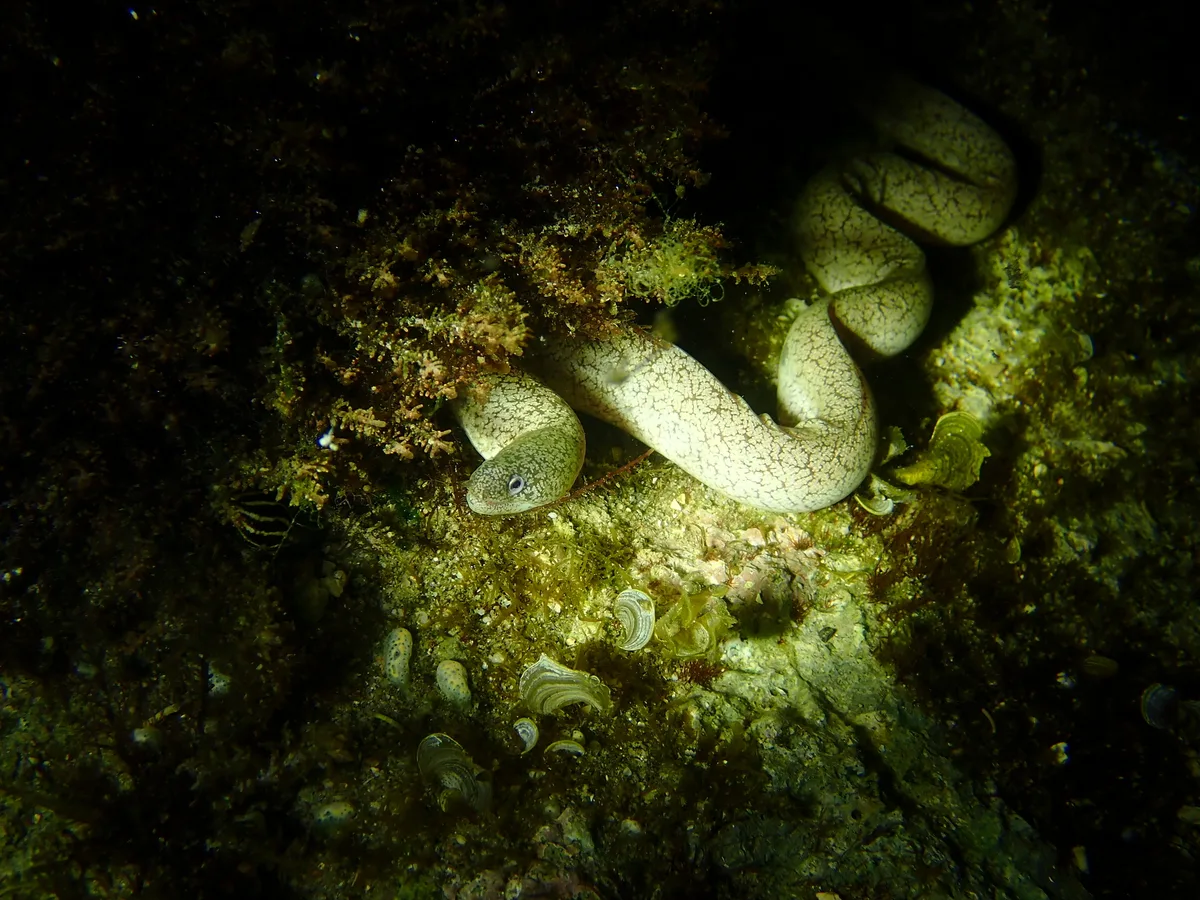
This is one of the smallest of them, under forty centimeters, plain brown, with fins reduced almost to nothing, living in rubble and under rocks in water shallow enough to wade.
The genus. Uropterygius Rüppell 1838 - uro (tail). ETYFish
The species. Uropterygius micropterus (Bleeker 1852) - small-finned. ETYFish
- small plain brown eel, under 40 cm
- fins so reduced that the body looks finless
- in rubble and under rock in very shallow water
- up to 37 cm
Why it's threatened
There are no major threats known to this species. However, it may be impacted by coastal development and habitat degradation in some parts of its range.
Threat classification from the IUCN Red List.