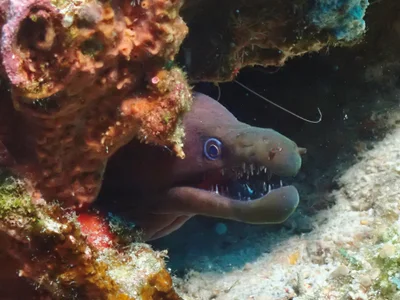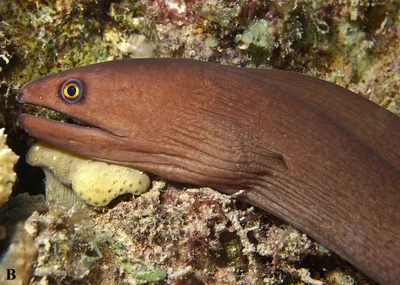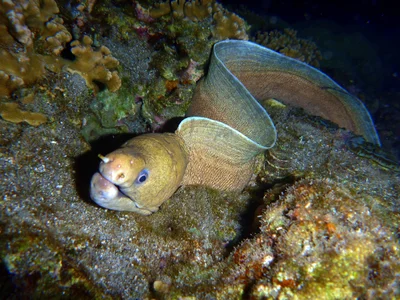
Open a moray's mouth and you expect fangs. This one has pebbles.
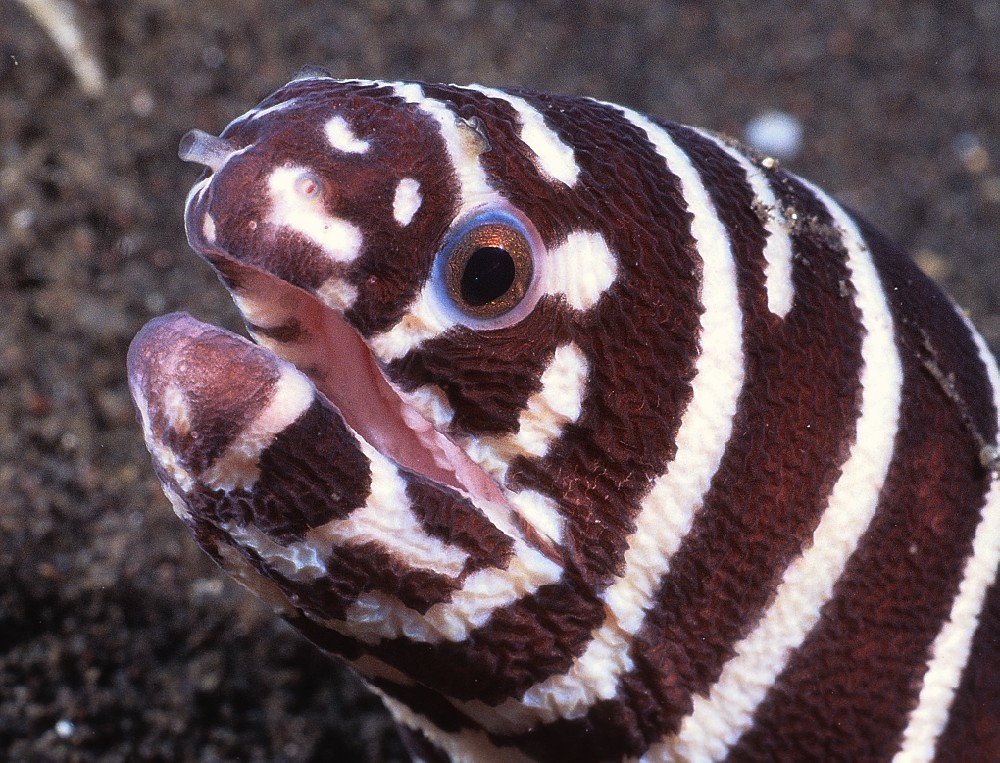
The zebra moray gave up the family's long recurved teeth entirely and replaced them with low, blunt, rounded plates, packed across the jaws and the roof of the mouth like a cobbled floor. It is a crushing mill, and it exists because this eel does not chase fish. It eats crabs, and it deals with them the way a hammer deals with a nut: take hold, crush the shell, work out the contents. The bite that makes other morays dangerous is simply not present here.
Everything else follows from that. It is slow, it is placid, it spends the day jammed so far into a crevice that most sightings are of a striped tail, and it hunts at night by pushing its head into holes and feeling for shells.
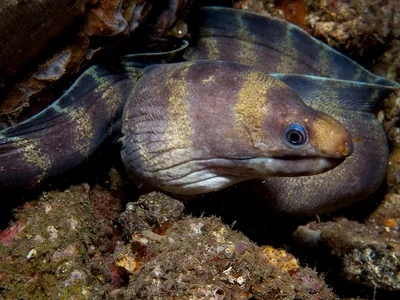
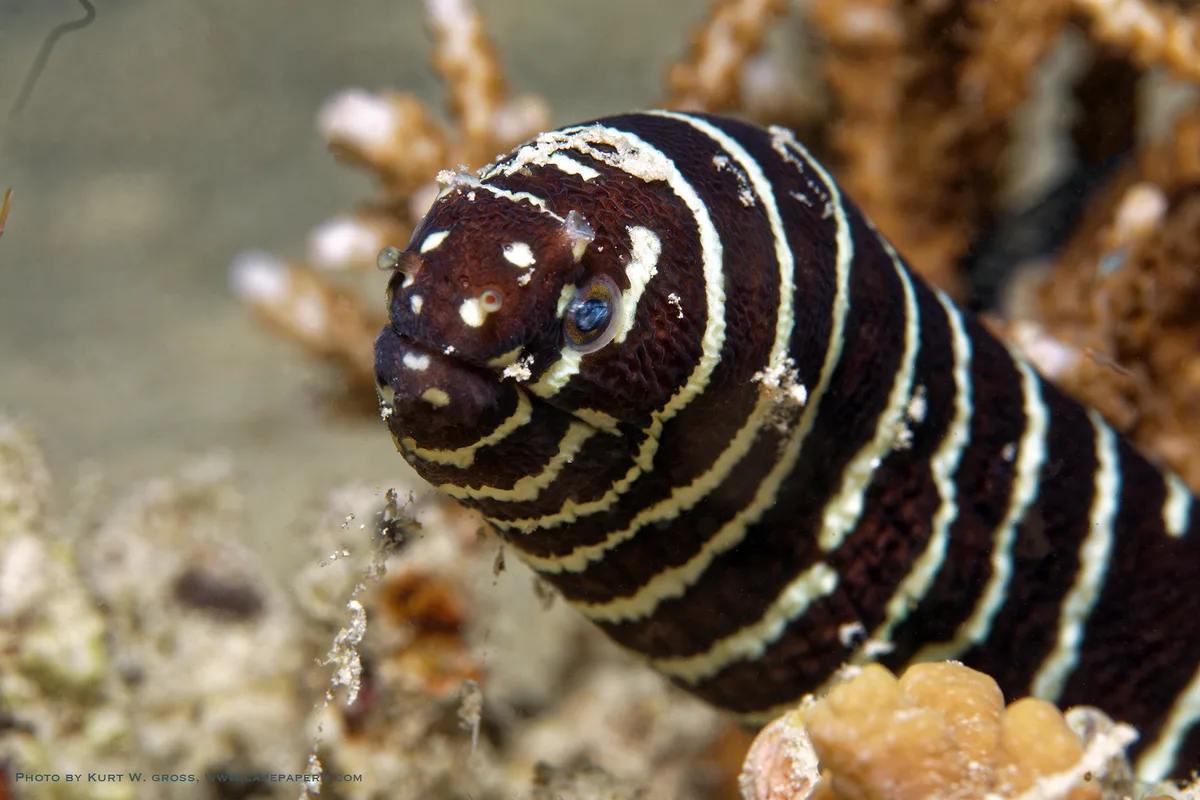
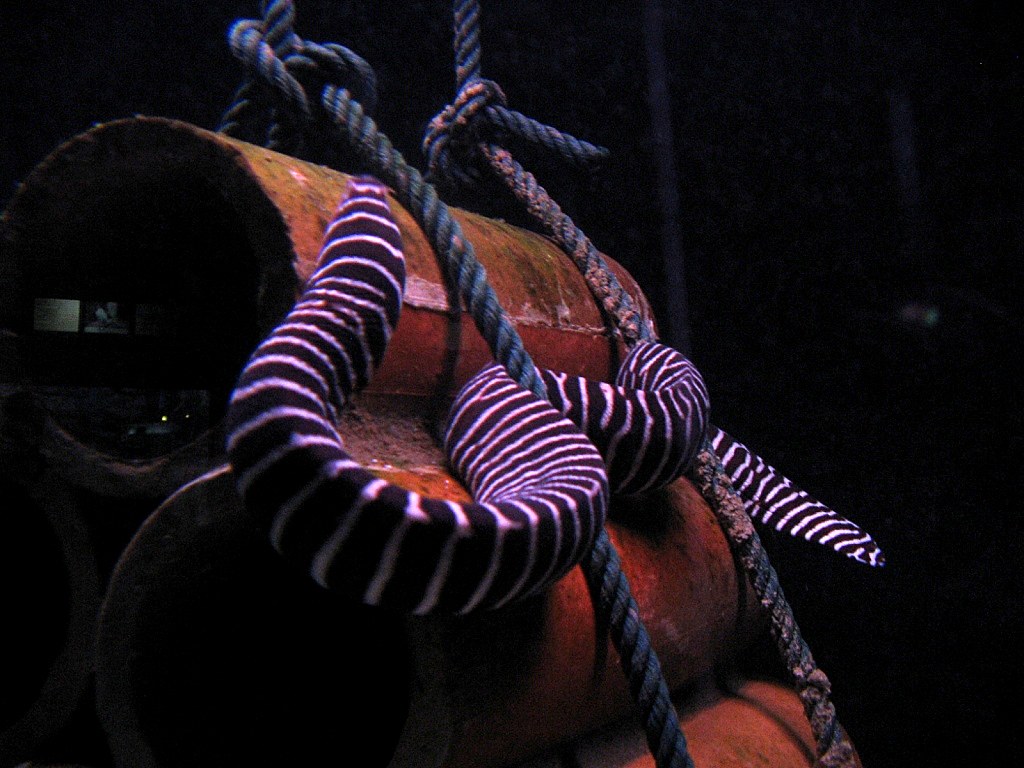
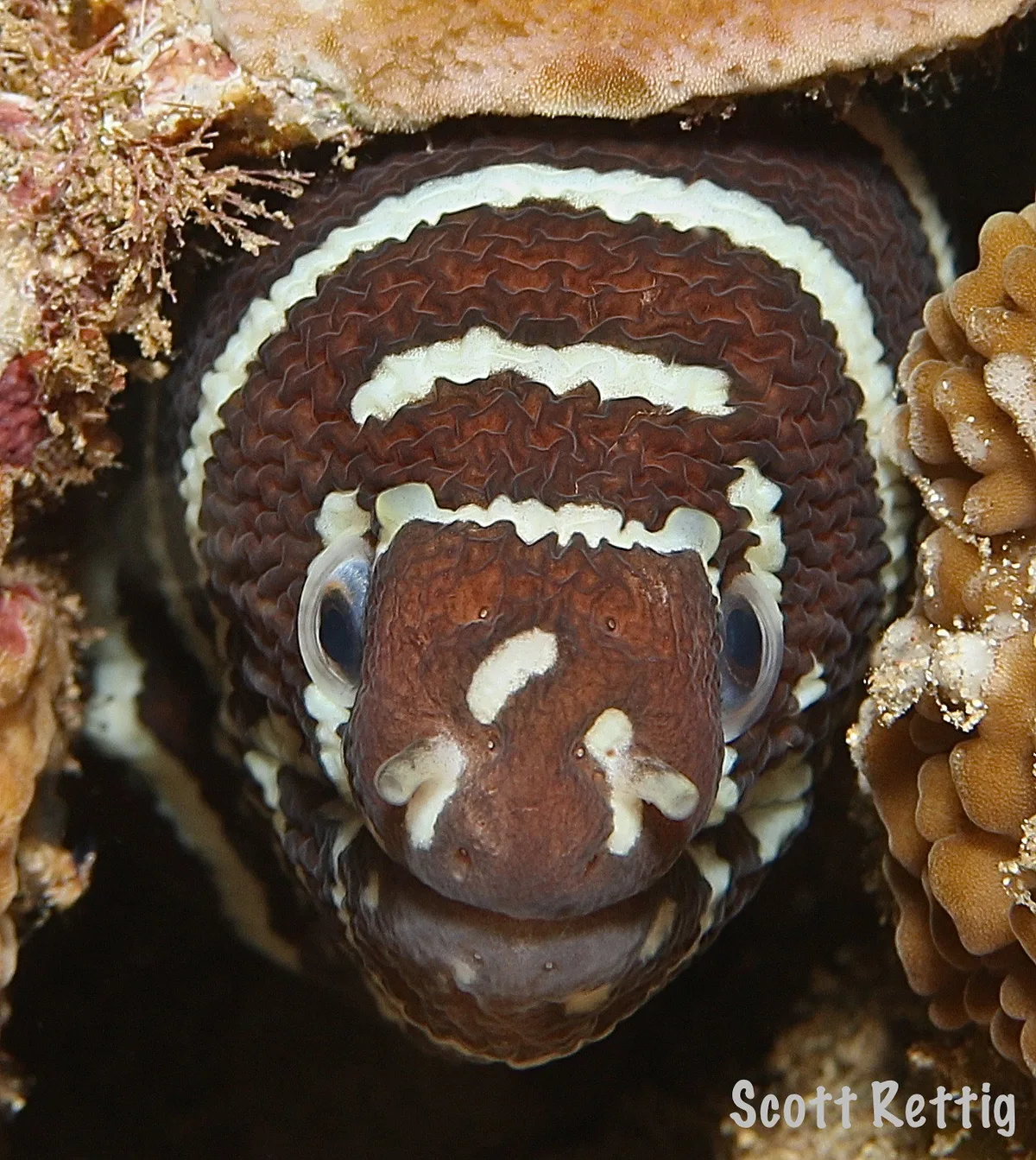
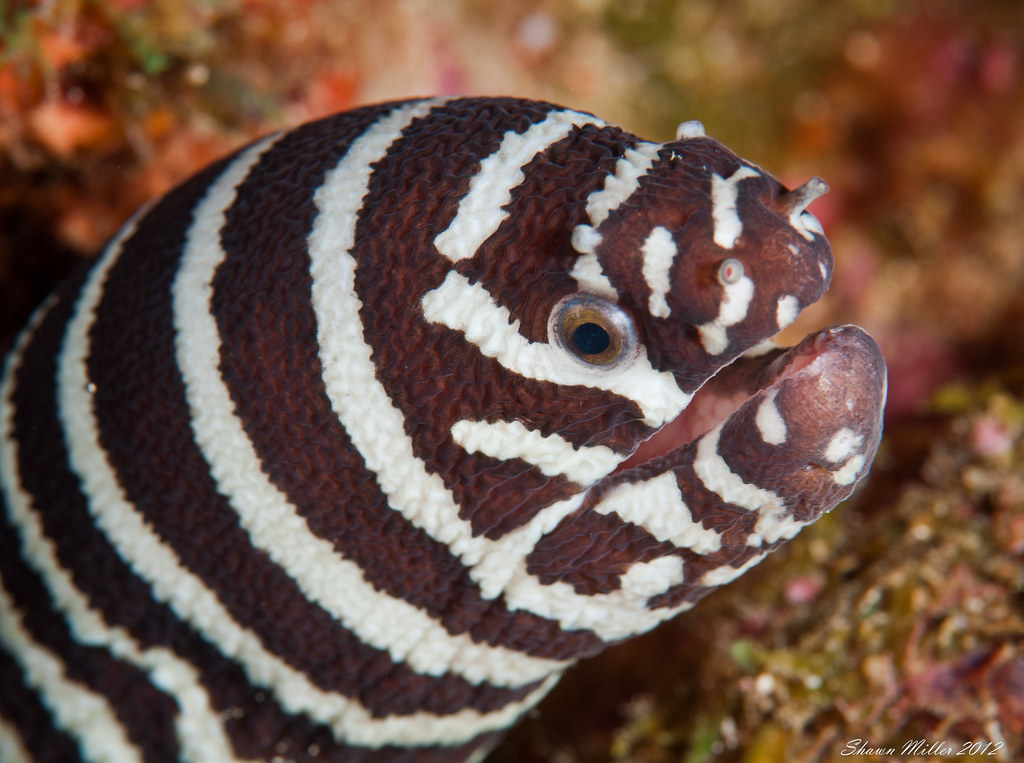
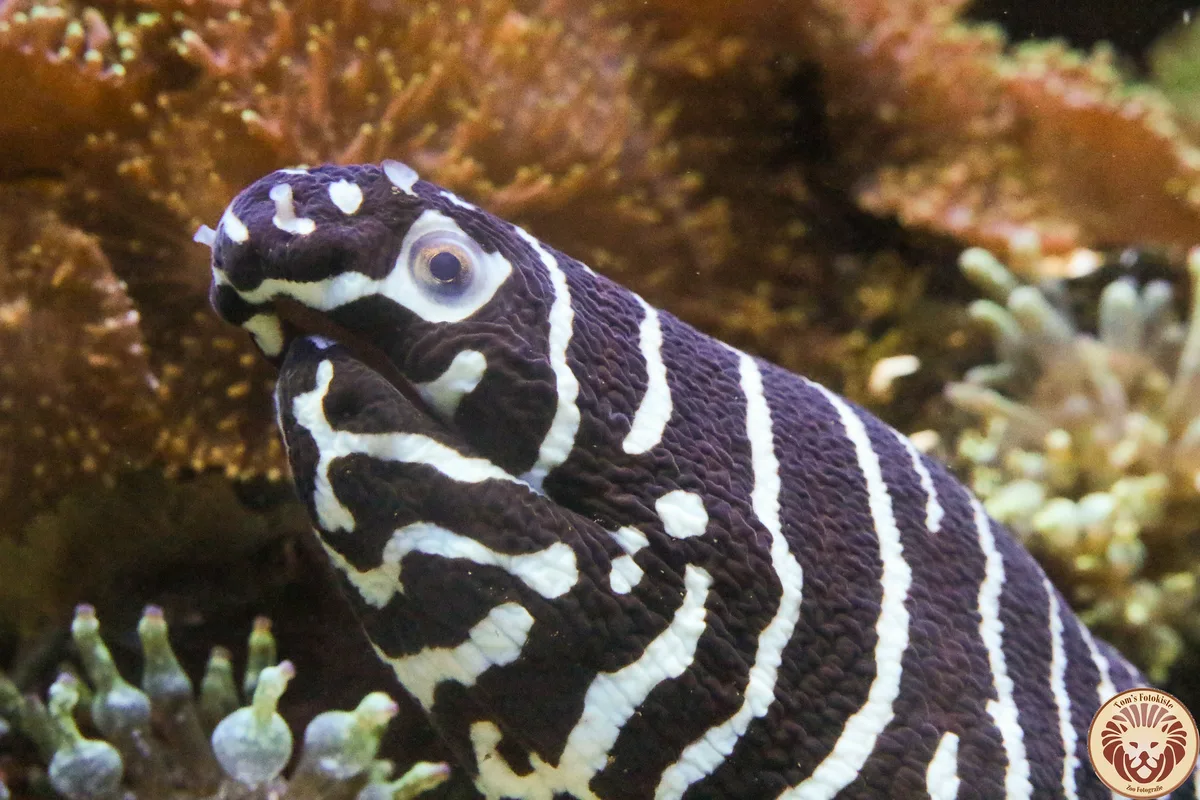
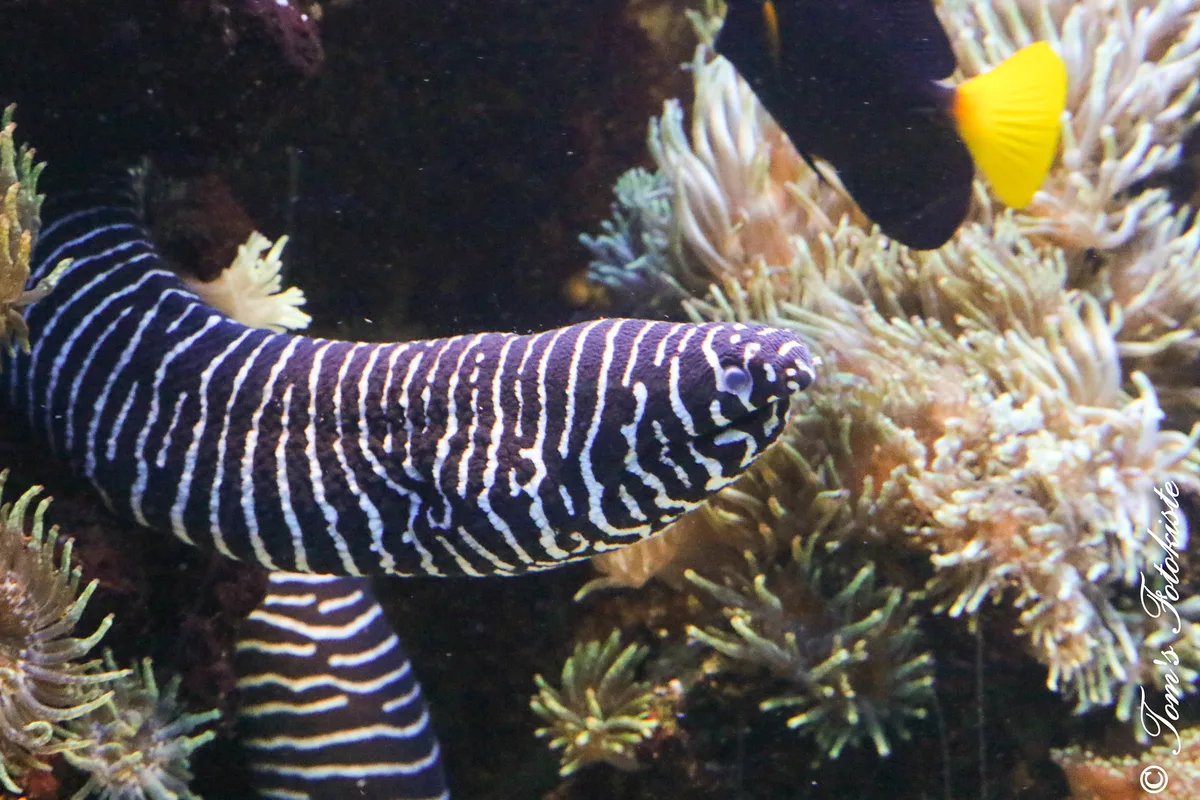
The pattern is the best in the family: dozens of narrow pale rings on near-black, running the whole length and continuing onto the head, where every other banded moray here goes plain. There is nothing else it can be confused with.
At a meter and a half it is also one of the larger morays on this coast, which makes the harmlessness slightly comic.
The genus. Gymnomuraena Lacepède 1803 - gymnós (bare or naked). ETYFish
- dark brown to black with dozens of narrow white to yellow rings around the body
- rings continue right onto the head, unlike any other moray here
- blunt rounded snout with no visible fangs
- up to 150 cm
Why it's threatened
Threat classification from the IUCN Red List.