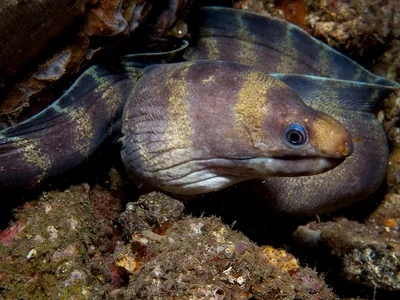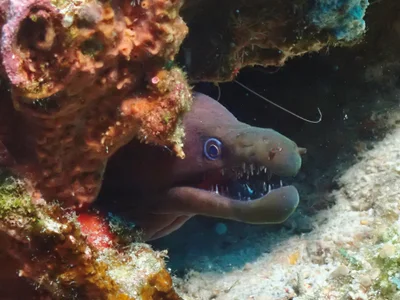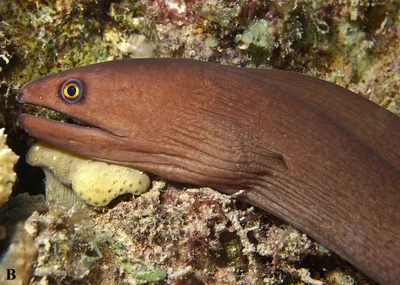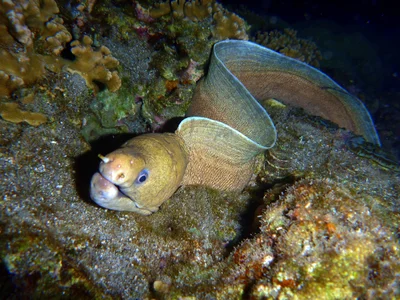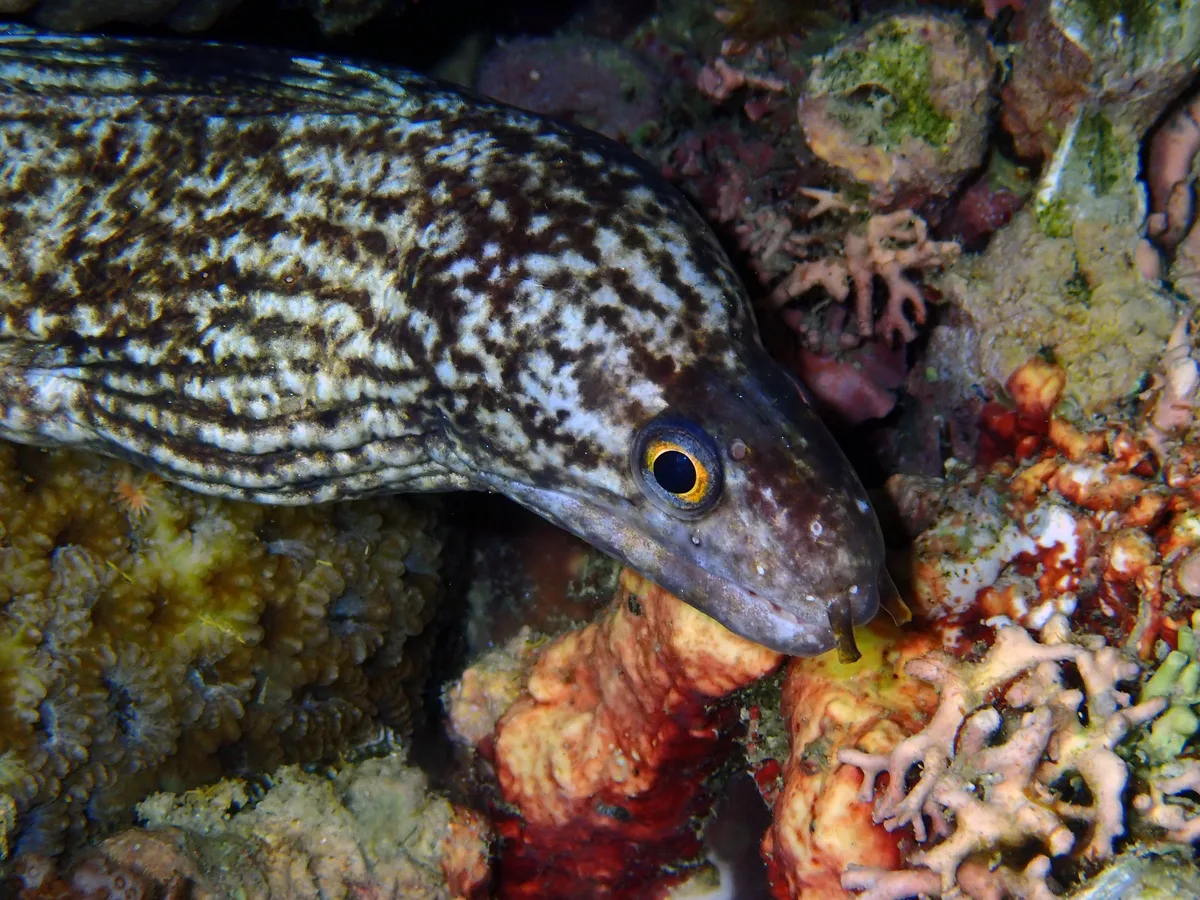
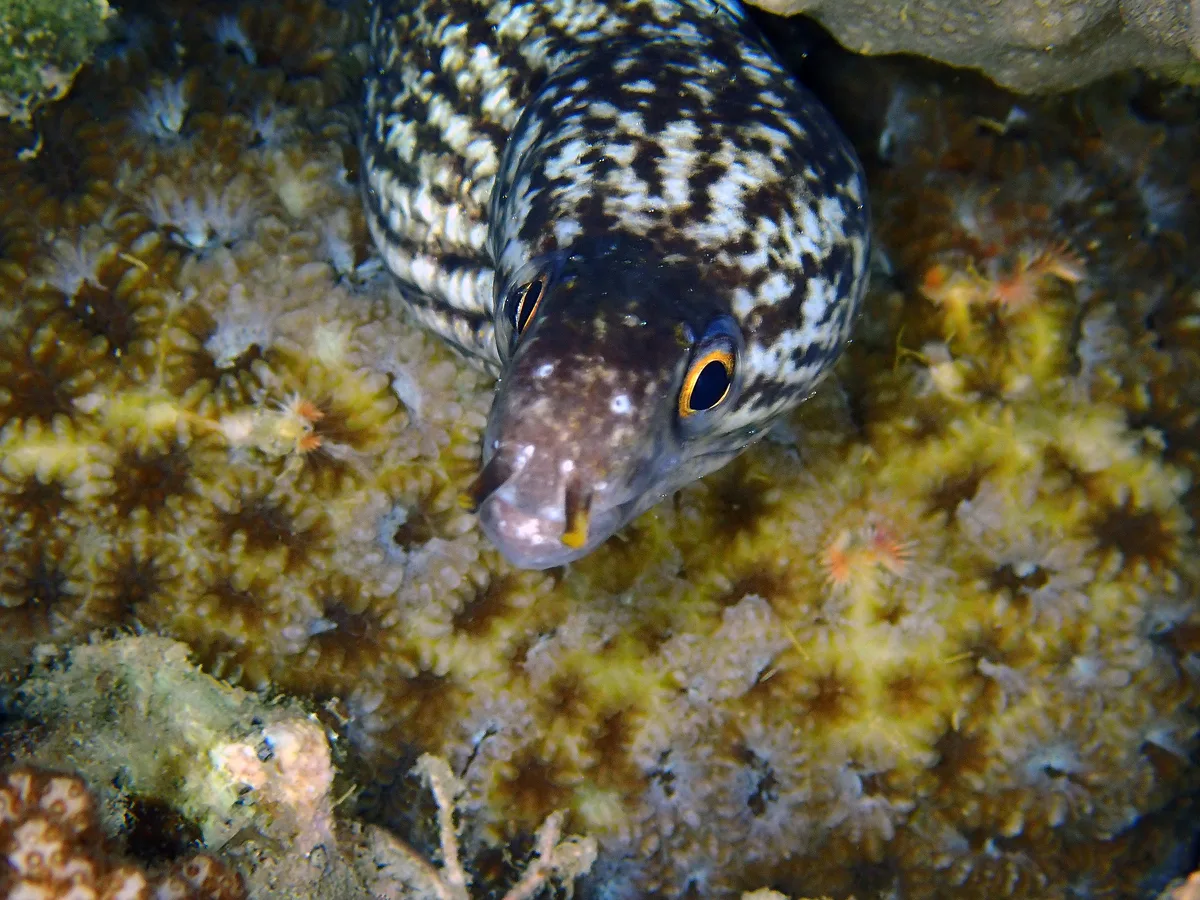
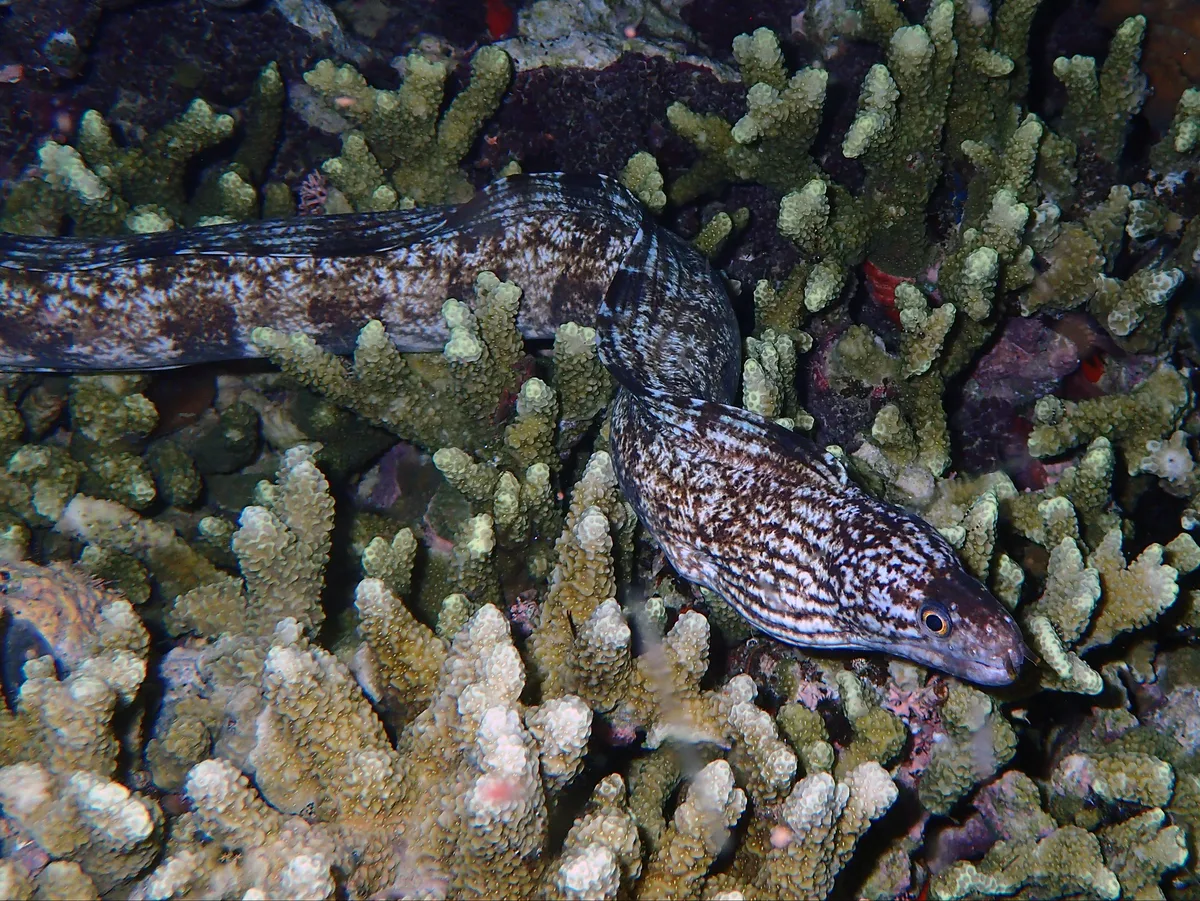
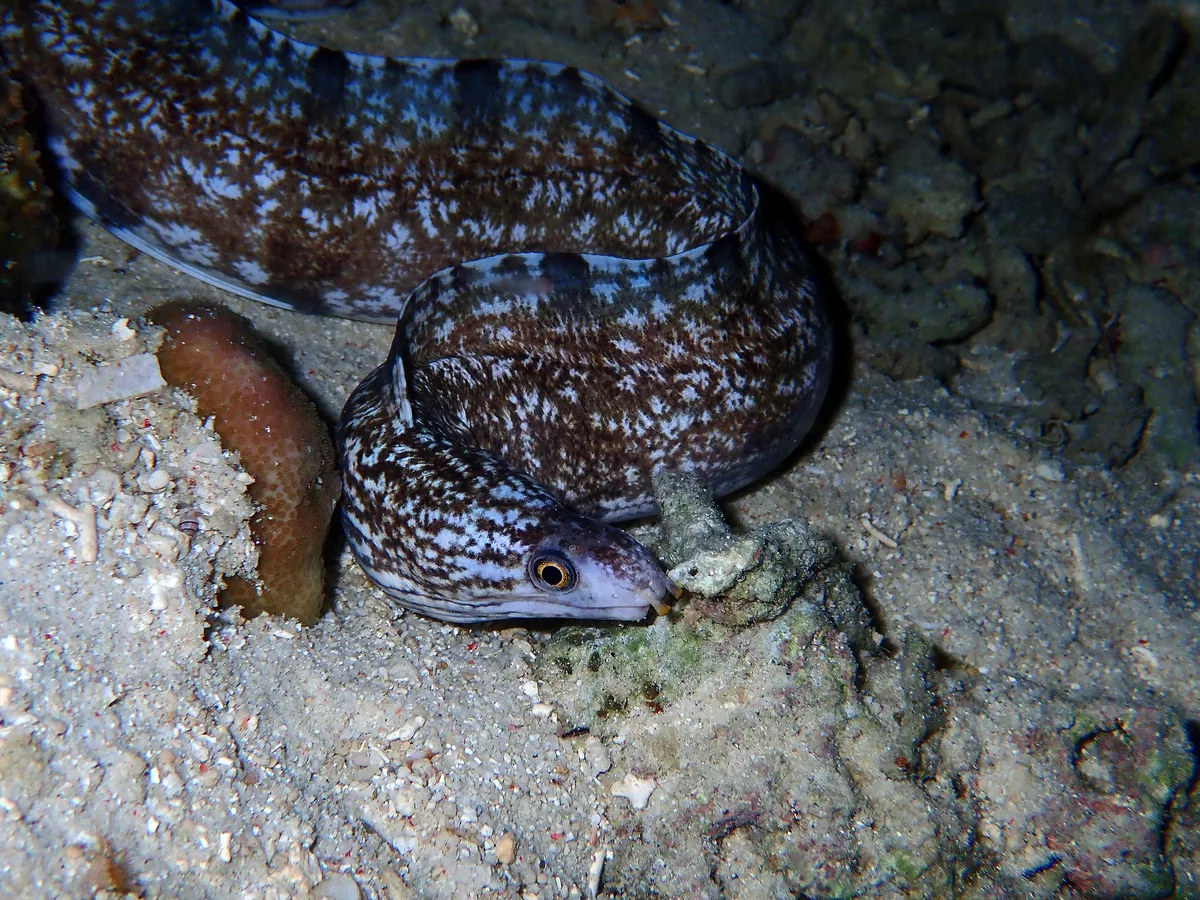
A slim netted moray of silty bottom and turbid water, sixty centimeters (24 in), and one that most divers here have never seen because it lives where nobody dives.
It prefers soft bottom near reef rather than the reef itself, and it is regularly taken by trawlers - which is how most records of it exist at all. The pattern is a coarse dark net on pale ground, more open than the fine honeycomb of its larger relative, and the two are easy to separate once seen side by side.
Morays have no pectoral fins and no scales. The skin is bare and coated in thick mucus, and the whole animal is built as a muscle that can push into a hole and hold there against anything trying to pull it out.
It hunts small fish and crustaceans at night, and spends the day out of sight. The danger flag is the family's - teeth and a bite that does not let go - not aggression.
The genus. Gymnothorax Bloch 1795 - gymnós (bare or naked) + thṓrax (breast or chest). ETYFish
- pale body with a dark brown net pattern of irregular meshes
- pattern coarser and more open than in the honeycomb moray
- smaller and slimmer than most reef morays
- length up to 60 cm
Why it's threatened
Threat classification from the IUCN Red List.