
Sea turtlesChelonioidea
A female sea turtle lays her eggs on the beach where she hatched. Between those two events lie decades and, in some populations, an ocean crossed twice, and she still comes back to the same short stretch of sand. The genetics settled the argument before anyone could follow an animal that far: turtles nesting on beaches a modest distance apart belong to stocks that stay distinct, generation after generation.
She finds it magnetically. The Earth's field varies along a coastline in a way that gives each stretch a signature, hatchlings appear to record the signature of their own beach as they leave it, and adults use the field as compass and map together. Turtles held inside magnetic coils will swim in a new direction when the field around them is set to match a coast hundreds of kilometers from where they are.
The sex of a turtle is decided by temperature, not by chromosomes. Eggs in cooler sand come out male, eggs in warmer sand come out female, and the entire switch happens across a narrow band of a couple of degrees during the middle third of incubation. It is a design with no slack in it. At some of the world's major rookeries, warming beaches now produce clutches that are almost entirely female, and shade, rainfall and how deep a female digs have become the things that decide the next generation.
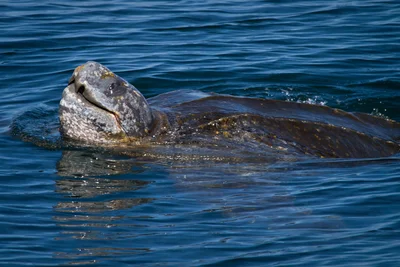
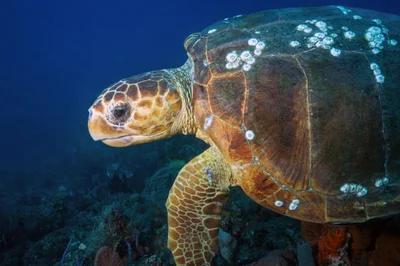
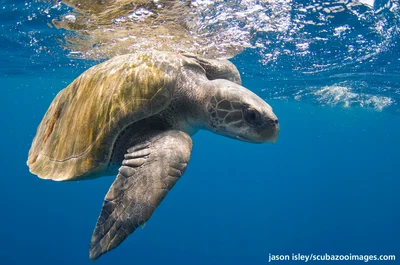
Nothing on a sea turtle pulls in. The shell is fused to a body built for distance swimming, the flippers do not fold away and the head cannot be withdrawn, so the defense is armor, size and a steady exit rather than hiding. They breathe air, but a resting turtle wedged under a ledge spends so little oxygen that it can stay down for hours.
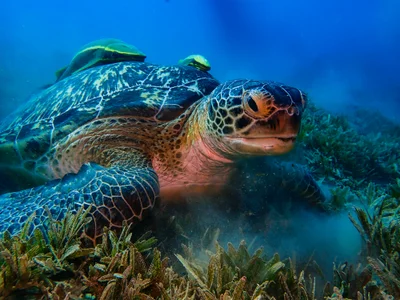
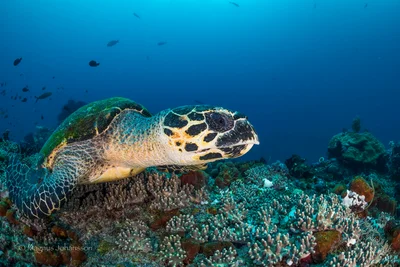
Green turtles and hawksbills are the two you meet here, and they live differently: the green grazes seagrass in shallow bays, the hawksbill works reef walls and pulls sponges apart. Nesting on this coast is concentrated on a small number of quiet islands and undeveloped beaches, which is the part of a turtle's life that people affect most and see least.
- large, hard, dome-shaped or flattened carapace
- large paddle-like flippers, head and limbs cannot retract
- surfacing to breathe regularly, remaining submerged for long periods
- often resting motionless on reef ledges or sand patches
5 species in Sea turtles
Elsewhere in the catalogue
Nearby in the catalogue.



Last Update: August 23, 2026