
Invertebrate
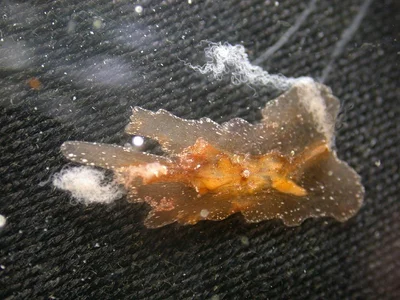
Invertebrate is a word for everything that is not us. It carries no biological content at all: it sorts animals by a bone they do not have, in the way that non-elephant would sort animals by a trunk they do not have. What it gathers up is more than thirty phyla, which is to say more than thirty fundamentally different ways of building an animal, sharing nothing except the absence.
The distances inside the category are enormous. A sponge, which has no organs and not one nerve cell, and an octopus, which solves puzzles and recognizes individual people, are filed together here. The gap between those two is far wider than the gap between a shark and a human, and yet the shark and the human end up on opposite sides of the line while the sponge and the octopus stay together. Vertebrates are one subgroup inside a single phylum, and nearly every animal species alive sits on the other side of the line.
With no frame inside the body, support had to be solved some other way, and each answer became a whole lineage. Anemones and worms use water: fluid held under pressure inside a muscular wall, which is why an anemone can stand up when full and slump when empty. Molluscs grow a shell from the outside, laid down by a sheet of tissue. Arthropods wear a jointed suit that has to be climbed out of and rebuilt every time the animal grows. Echinoderms carry a mesh of calcite plates under the skin.
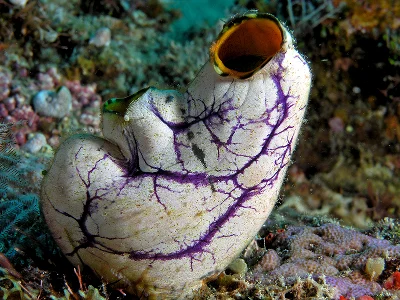
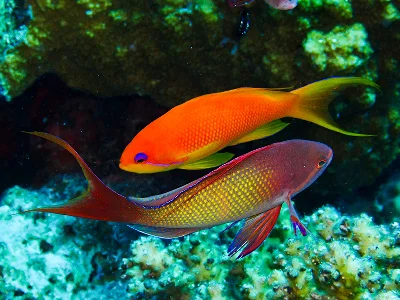
On a reef the invertebrates are not the wildlife. They are the place. The rock itself is a skeleton, the color on the wall is animals, much of the sand is animals ground down, and the fish everybody comes to look at are moving through a structure that invertebrates built and are still building around them.
- highly diverse body shapes and symmetries
- absence of fins, scales, or fish-like head and tail
- body often soft, colonial, or with visible external hard parts
Browse by category



Related groups
Nearby in the catalogue.



Last Update: August 23, 2026