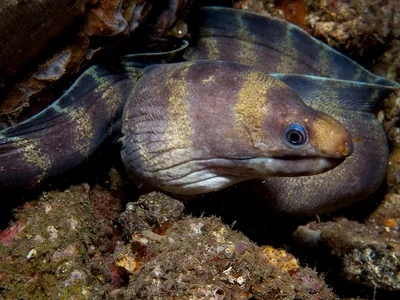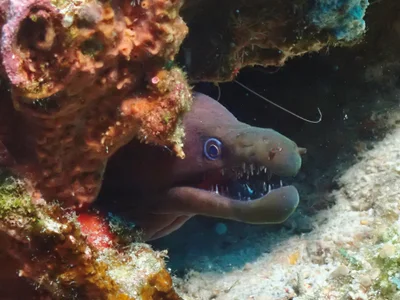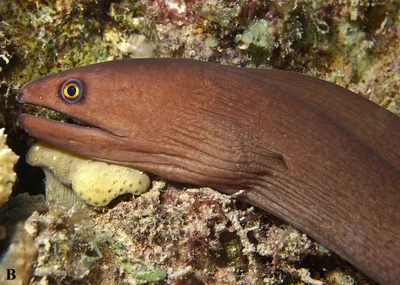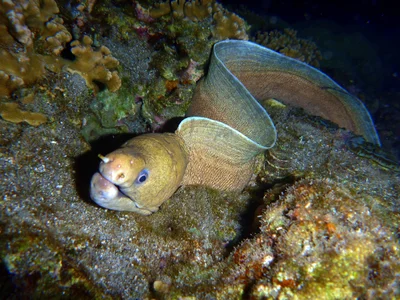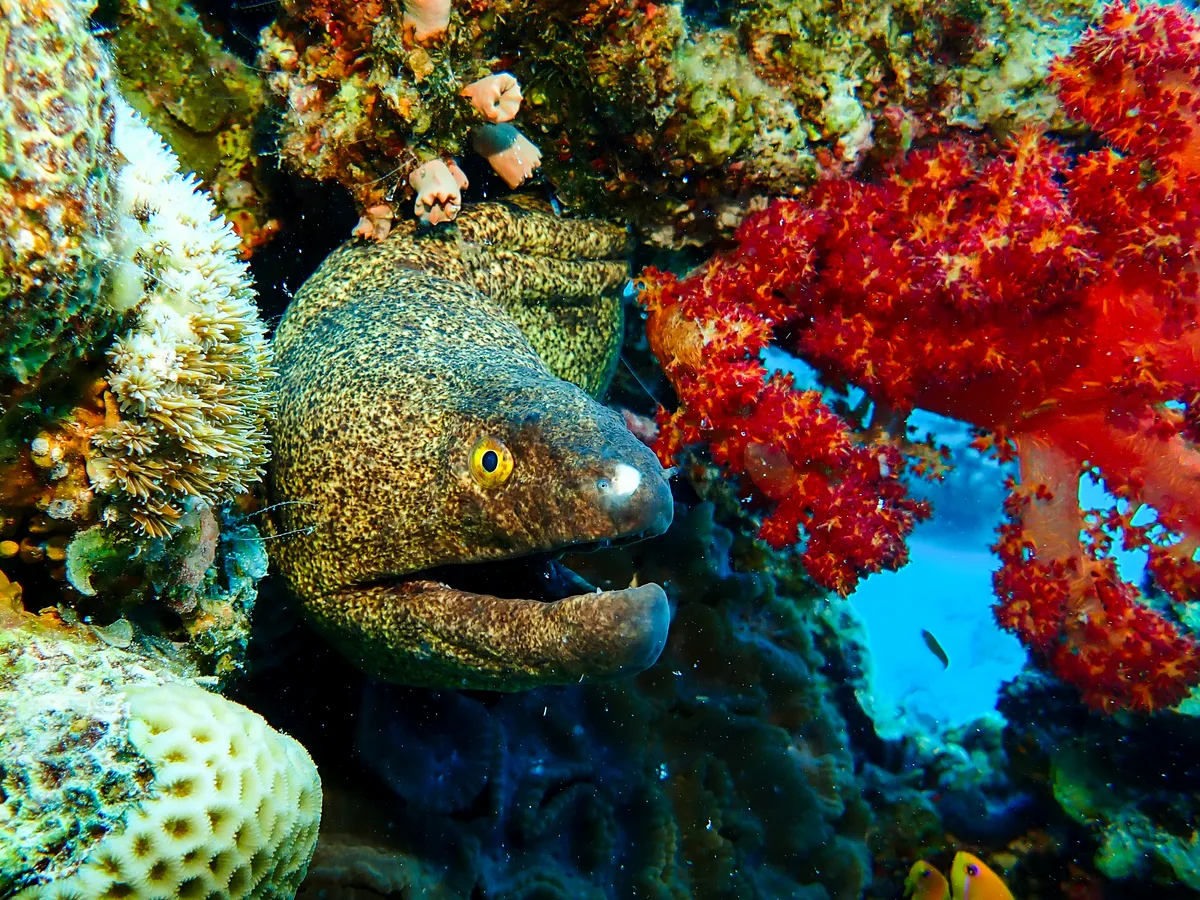
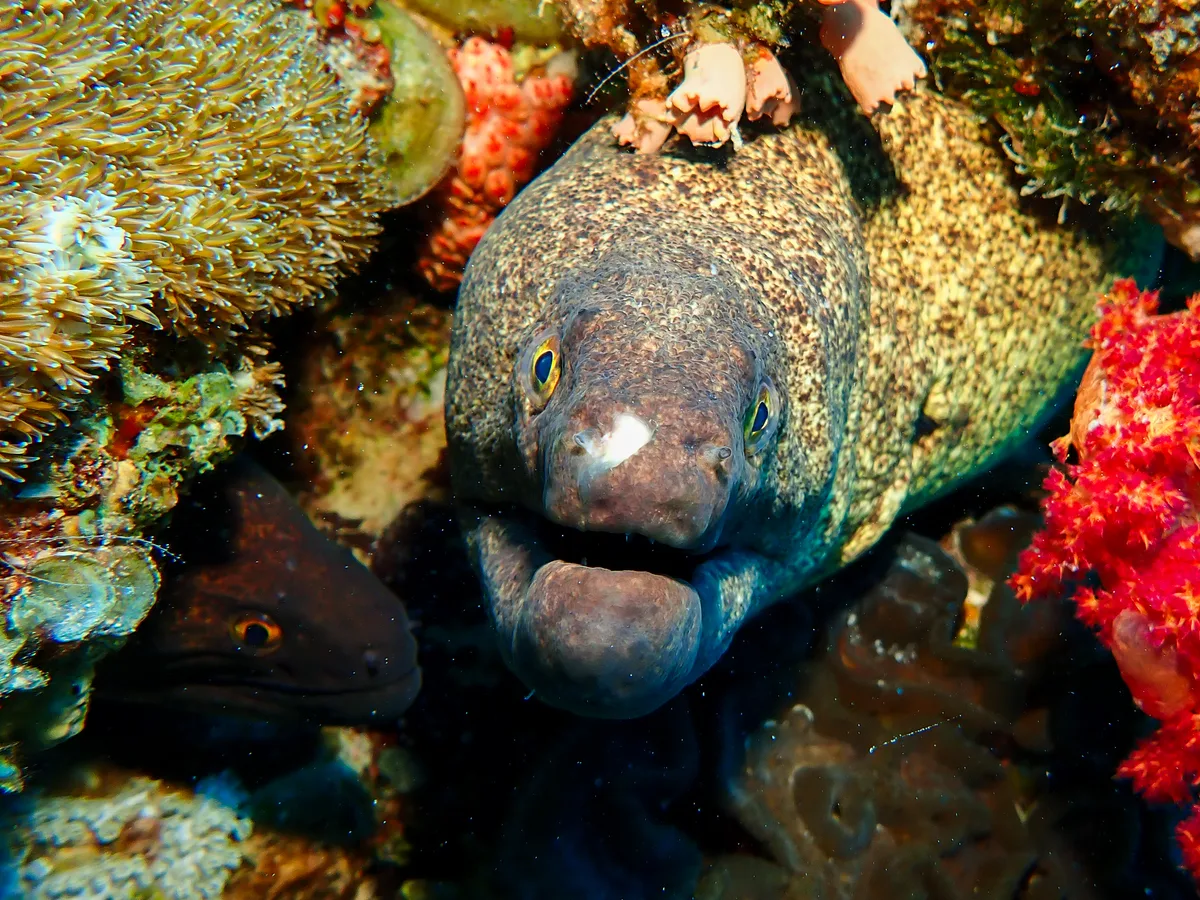
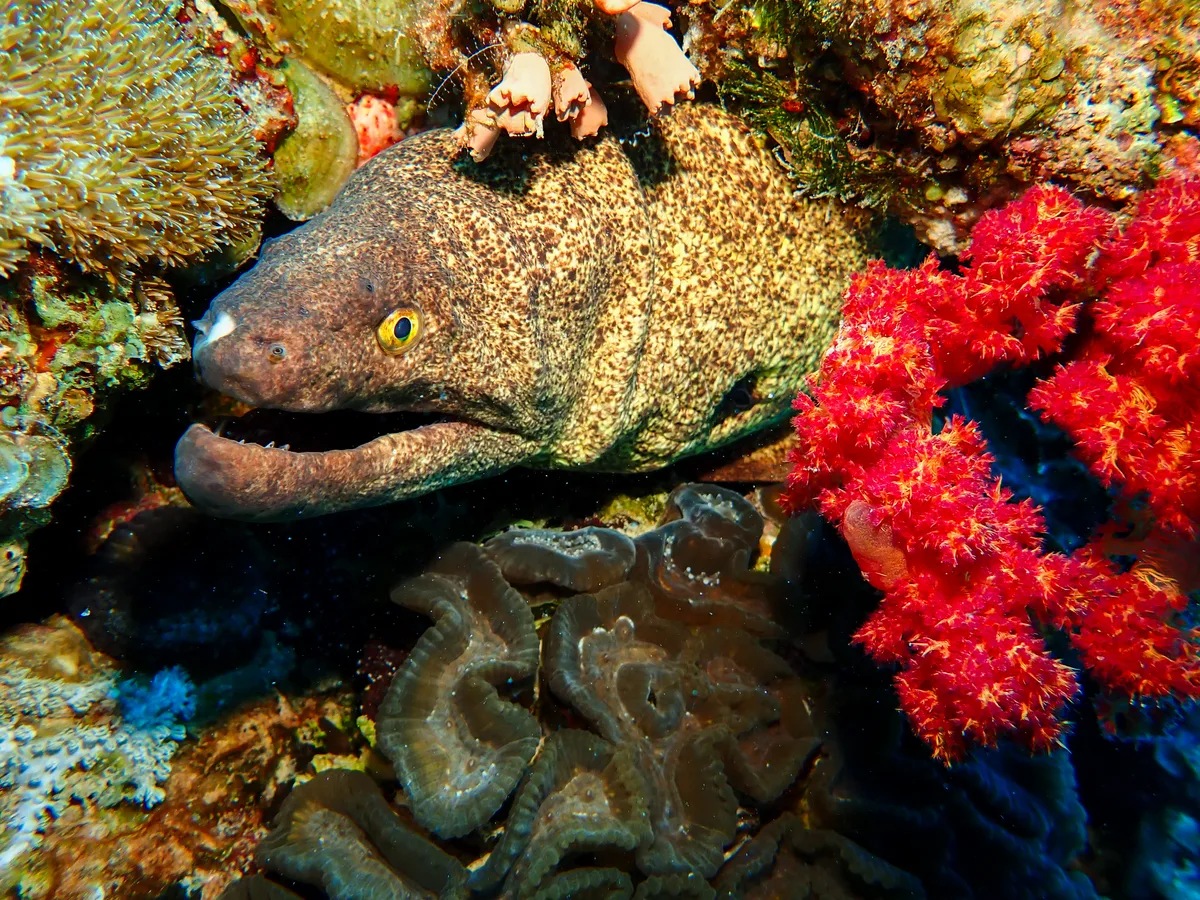
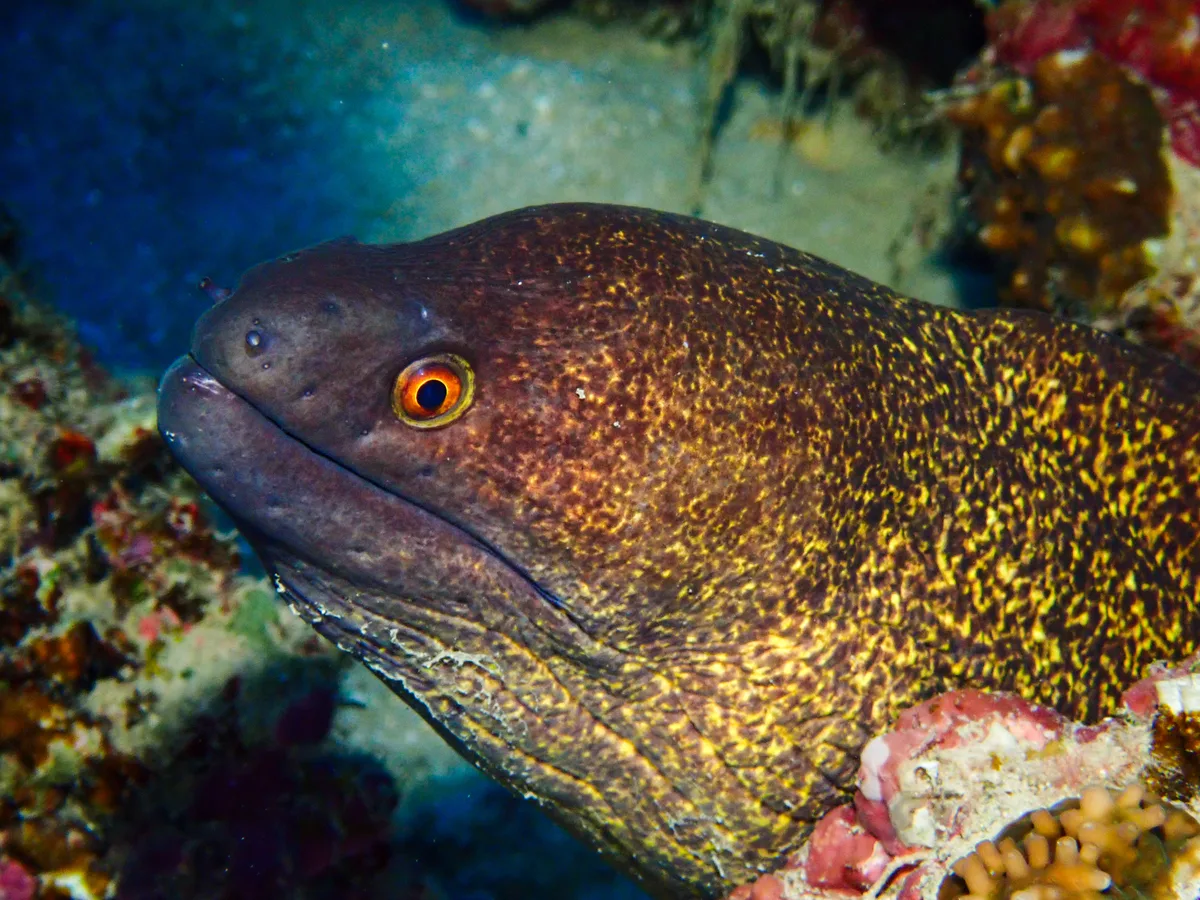
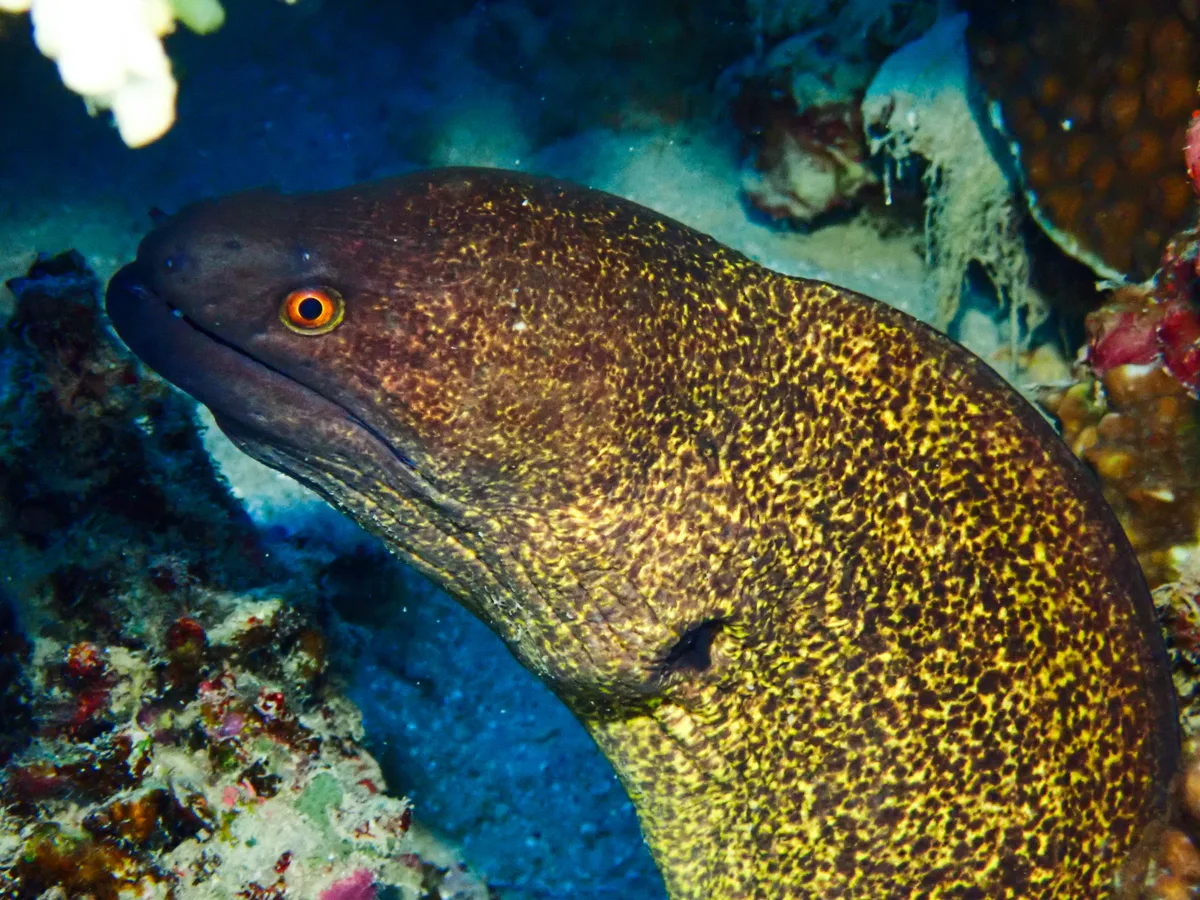
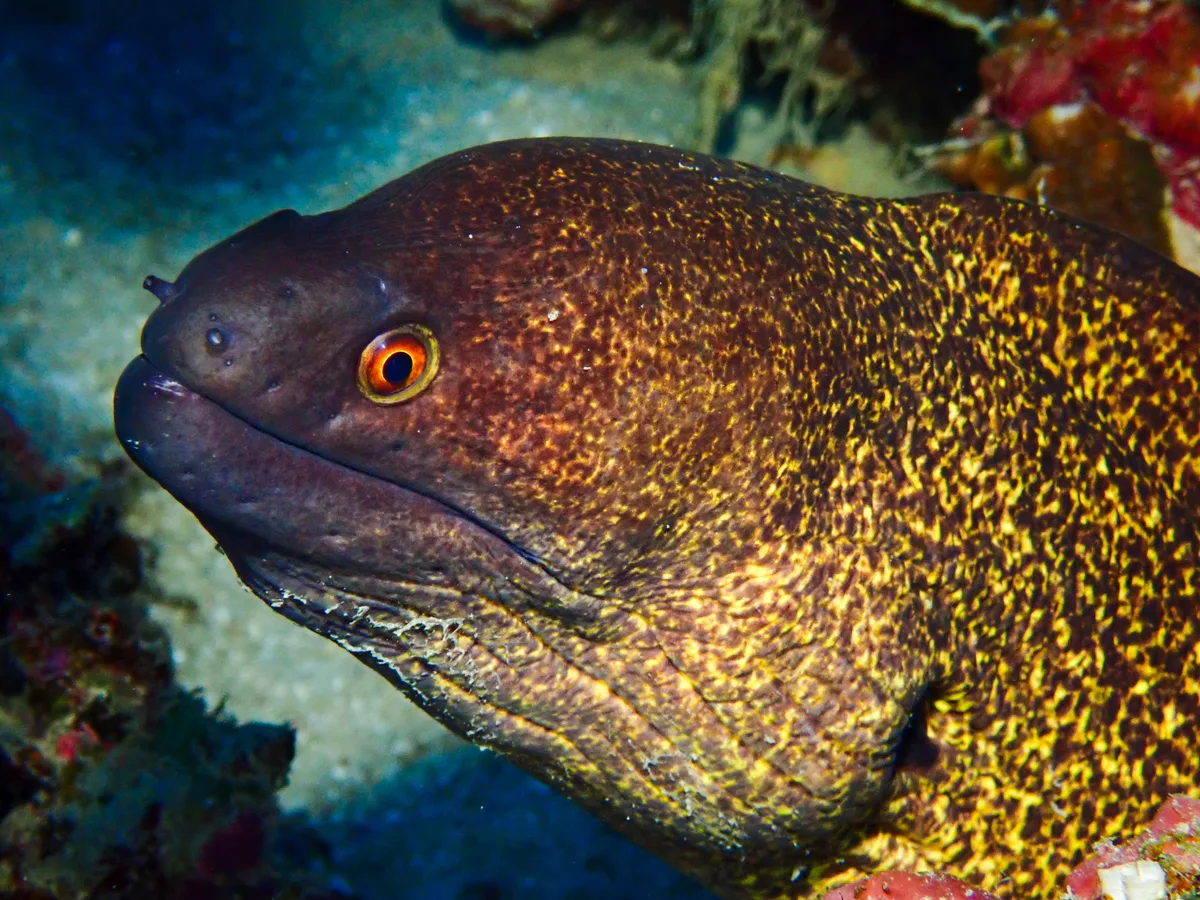
A heavy mottled moray to 2.4 m (8 ft), marbled brown and yellow with a fine dark speckle and a yellow-green edge to the fin along the back. The dark blotch around the gill opening is the field mark that separates it from the other big morays here.
It ties itself in knots, and it is not a metaphor. Morays have no limbs and cannot brace against anything, so to tear a piece off prey too large to swallow, the eel passes its own tail through a loop and pulls the head back through it, using the knot as a purchase point. The same maneuver gets it out of a grip and helps it back out of a hole.
Hunting is by smell in the dark, with tubular nostrils that sample water continuously, and the throat carries the family's second set of jaws that reach forward to drag prey down.
It is one of the species most often implicated in serious ciguatera poisoning, and large individuals in particular should never be eaten - the toxin concentrates up the reef food chain and this eel sits near the top of it.
The genus. Gymnothorax Bloch 1795 - gymnós (bare or naked) + thṓrax (breast or chest). ETYFish
The species. Gymnothorax flavimarginatus (Rüppell 1830) - flavus (yellow) + marginatus (bordered). ETYFish
- mottled brown and yellow body with a fine dark speckling, like marbling
- yellow-green margin along the dorsal fin, clearest near the tail
- dark patch around the gill opening
- length up to 2.4 m
Why it's threatened
There are no major threats known to affect this species.
Threat classification from the IUCN Red List.