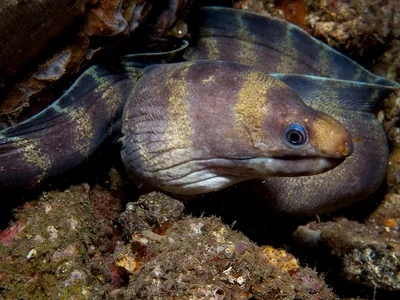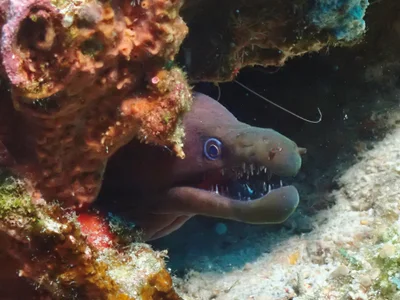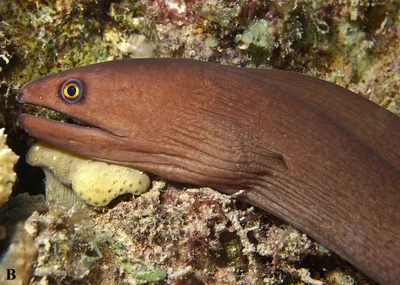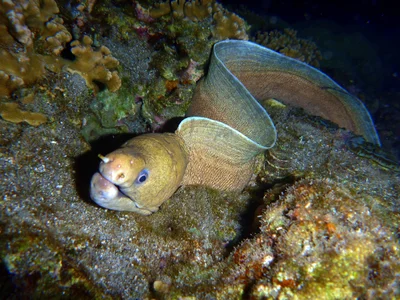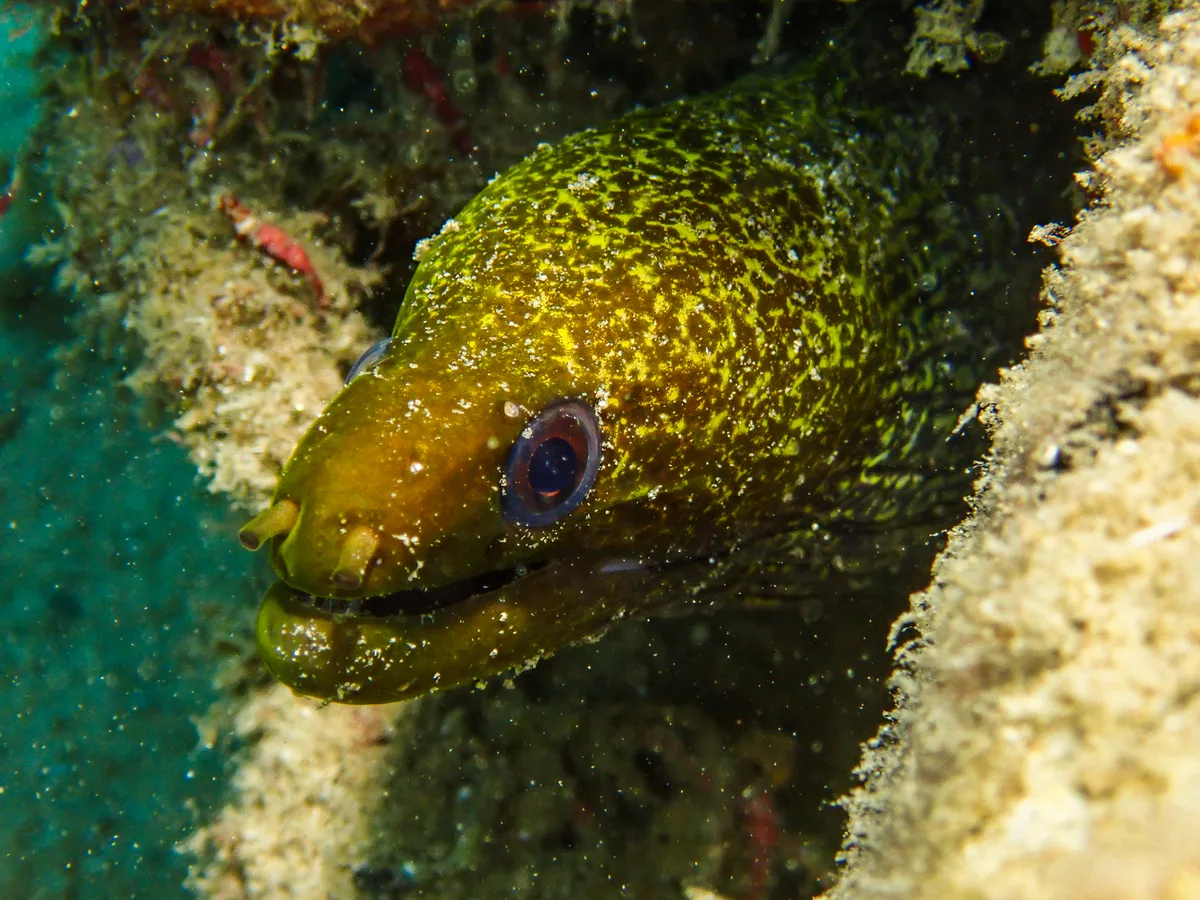
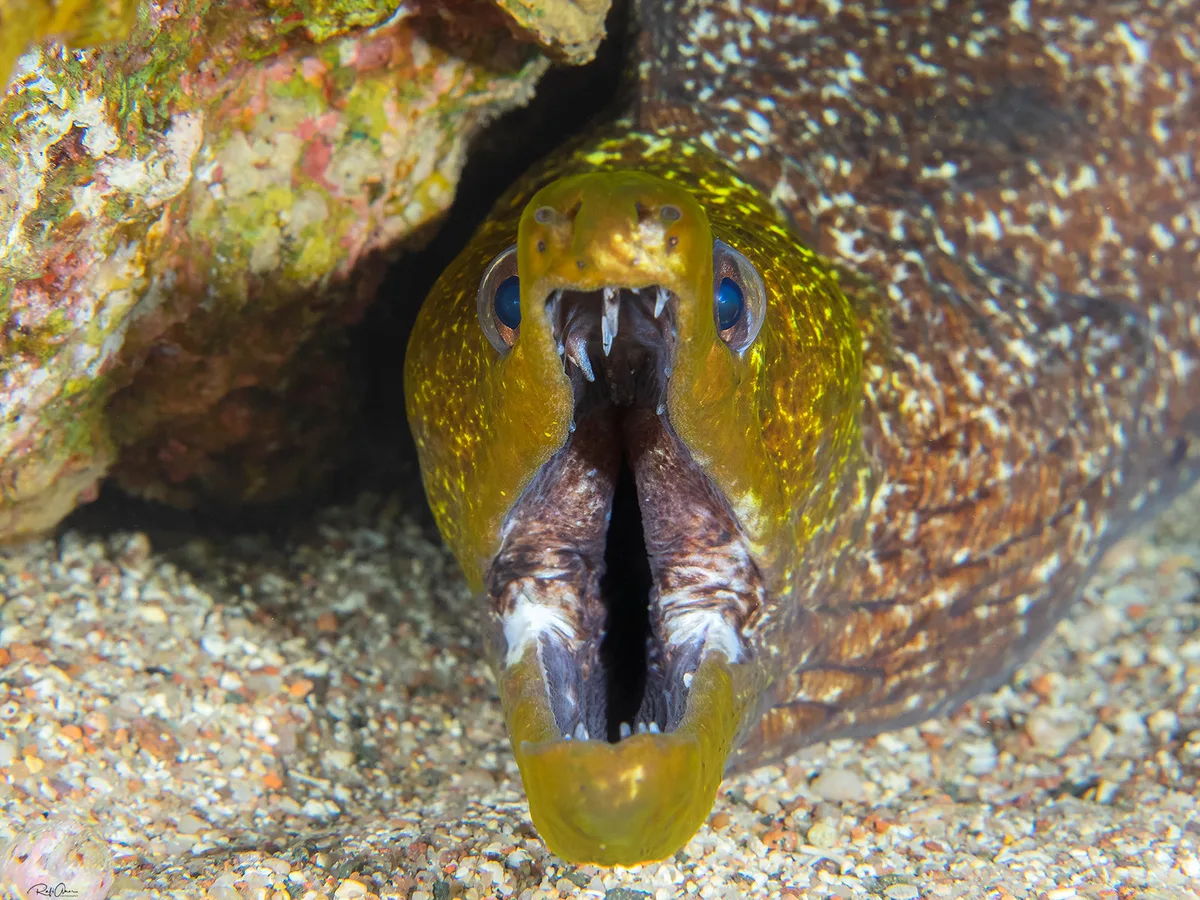
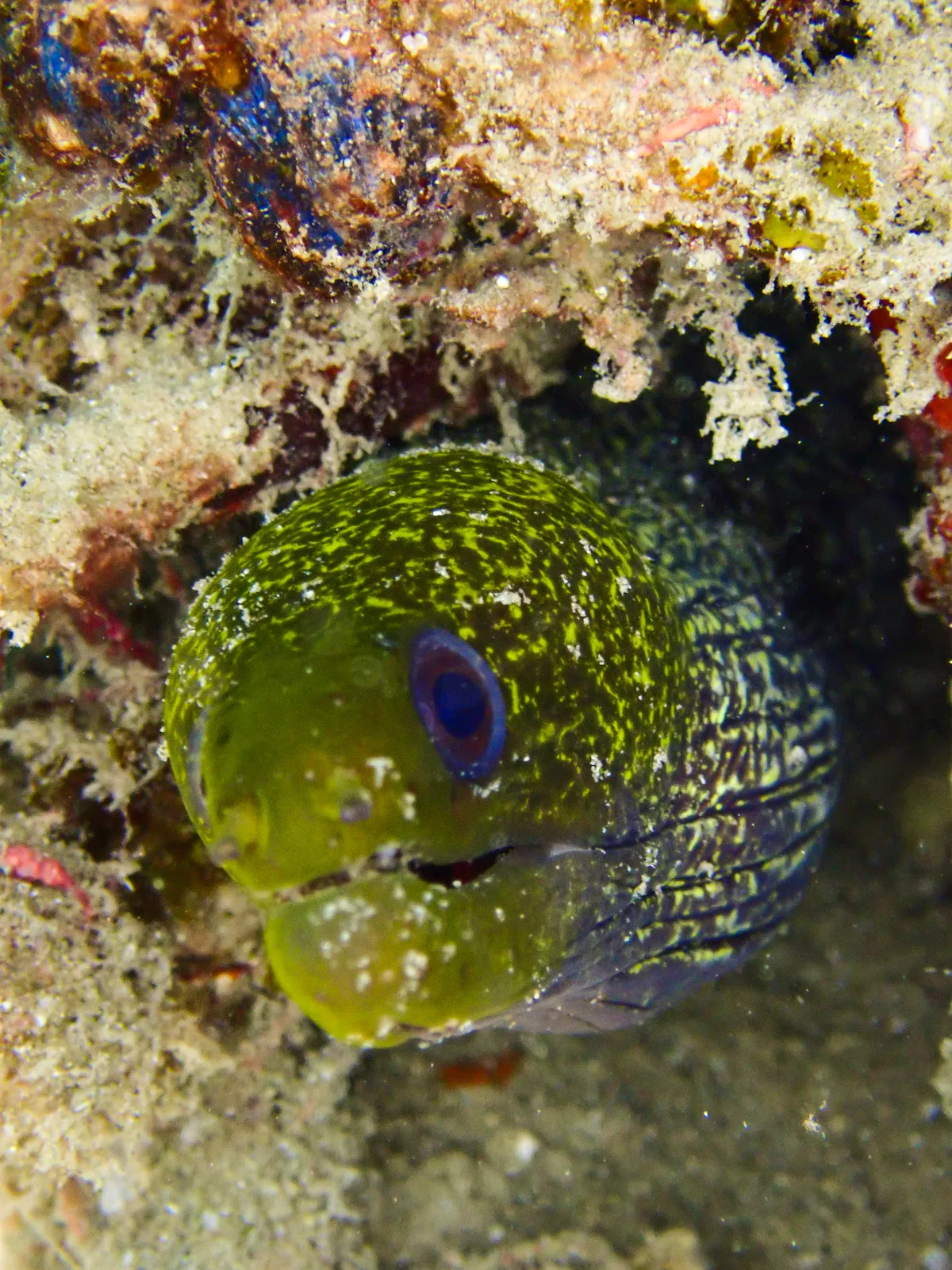
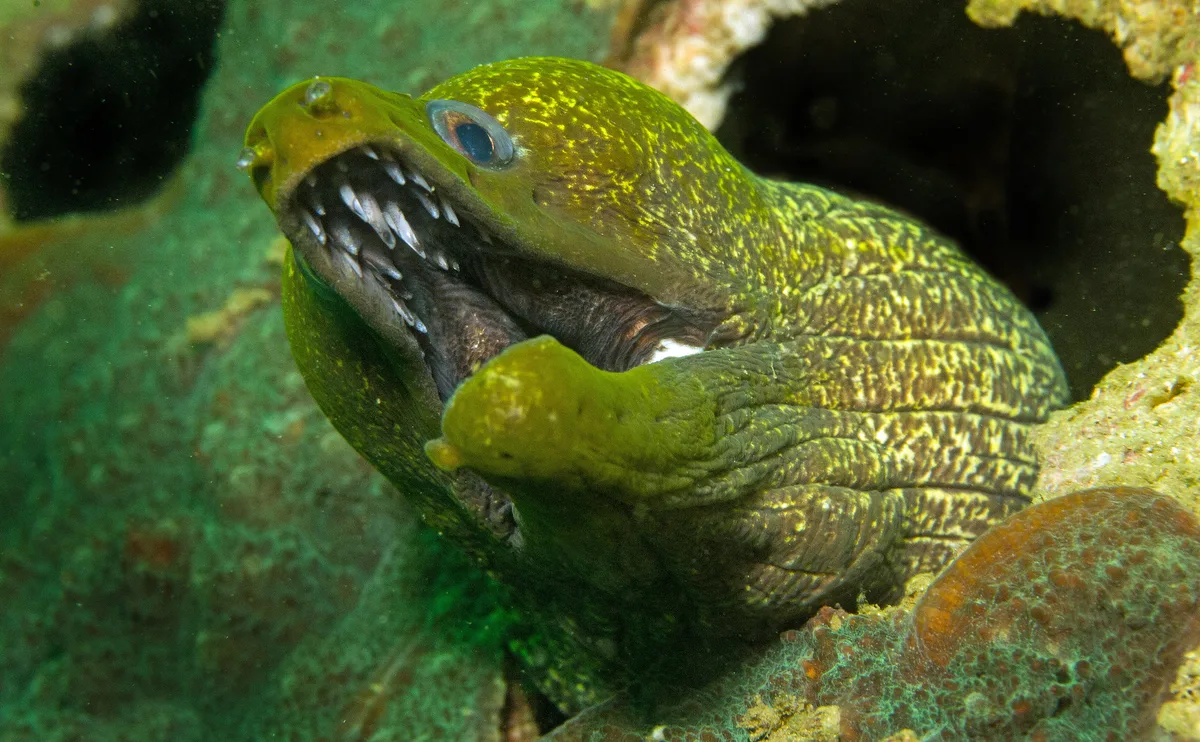
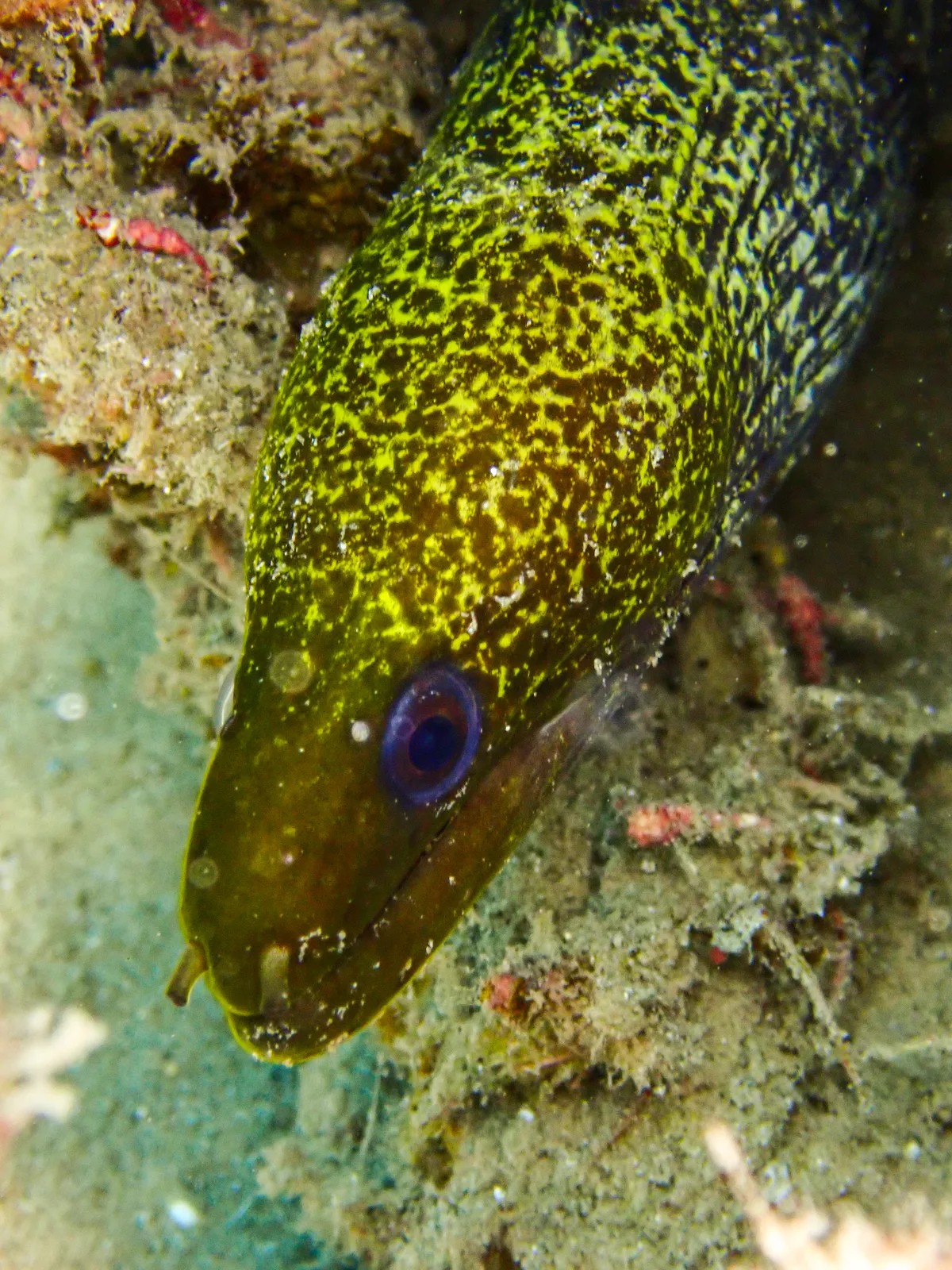
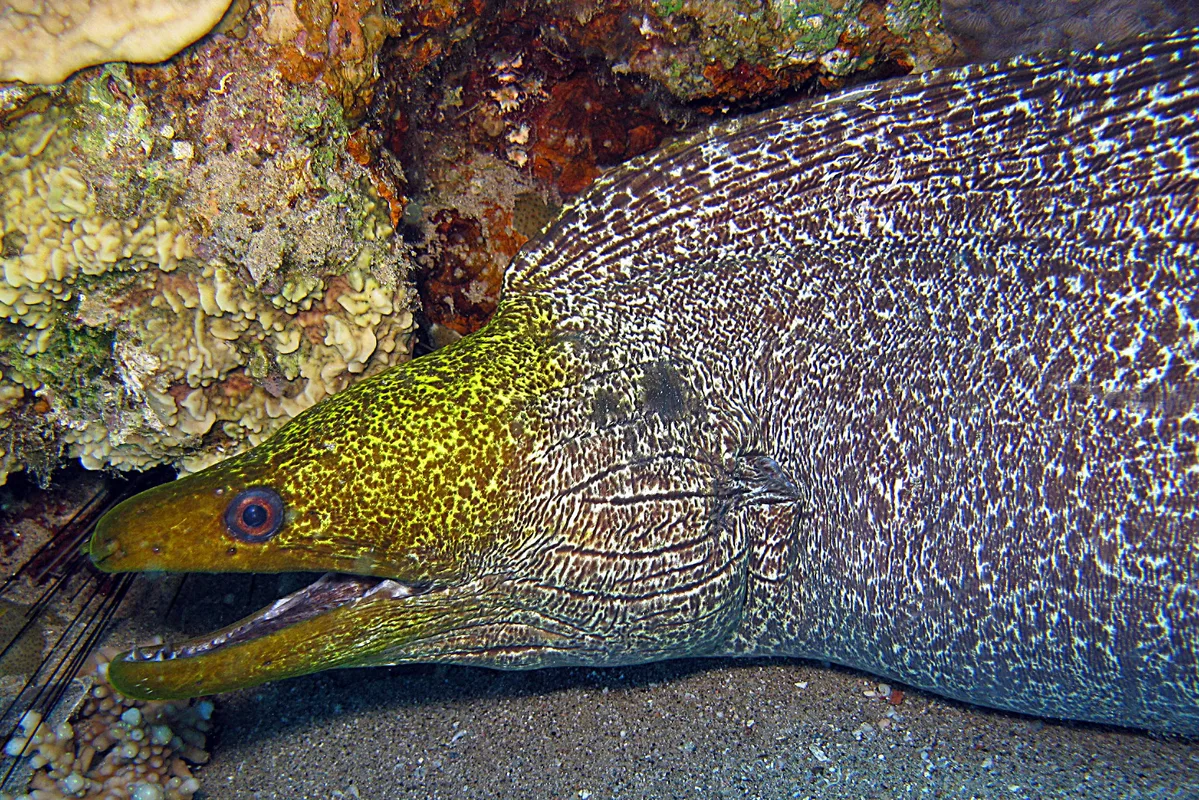
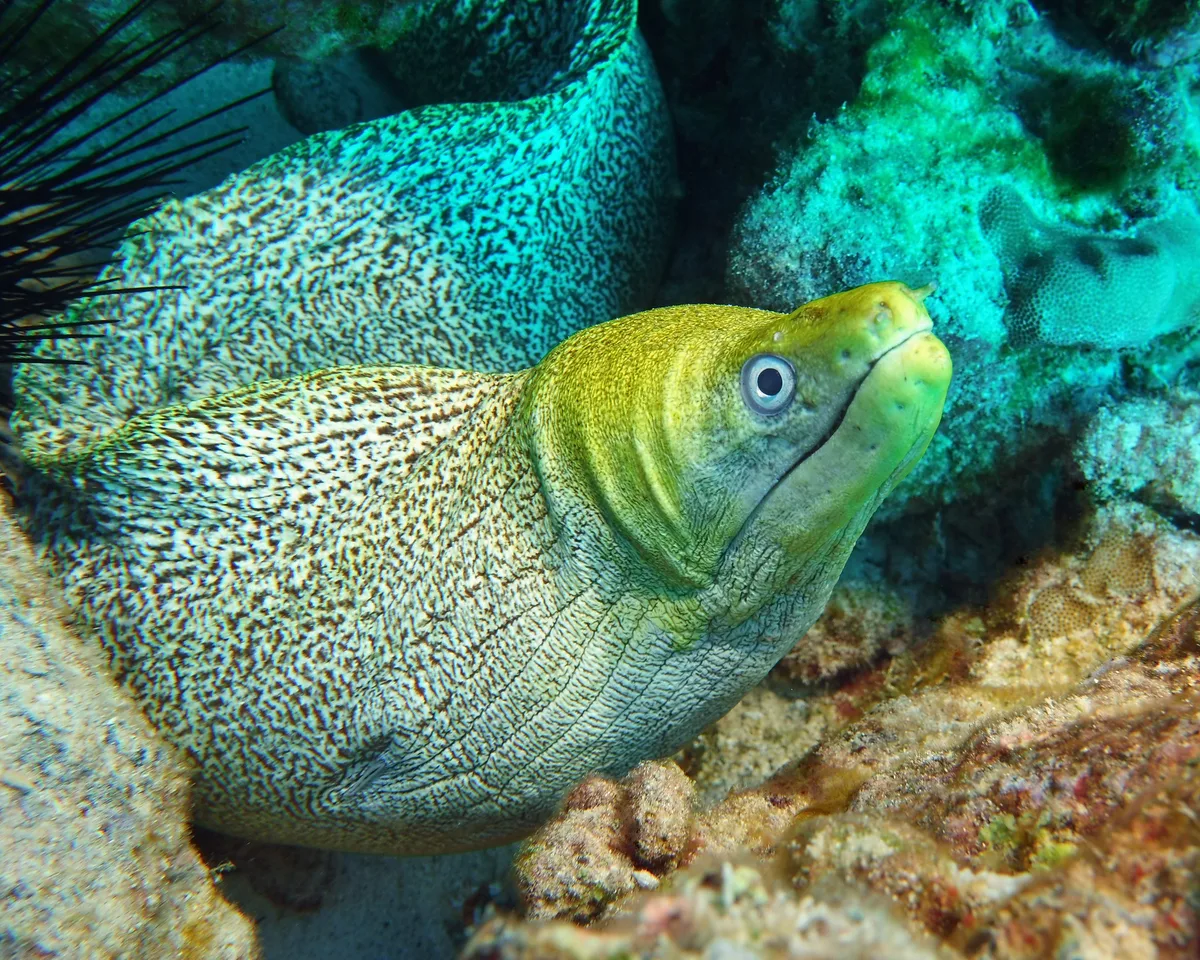
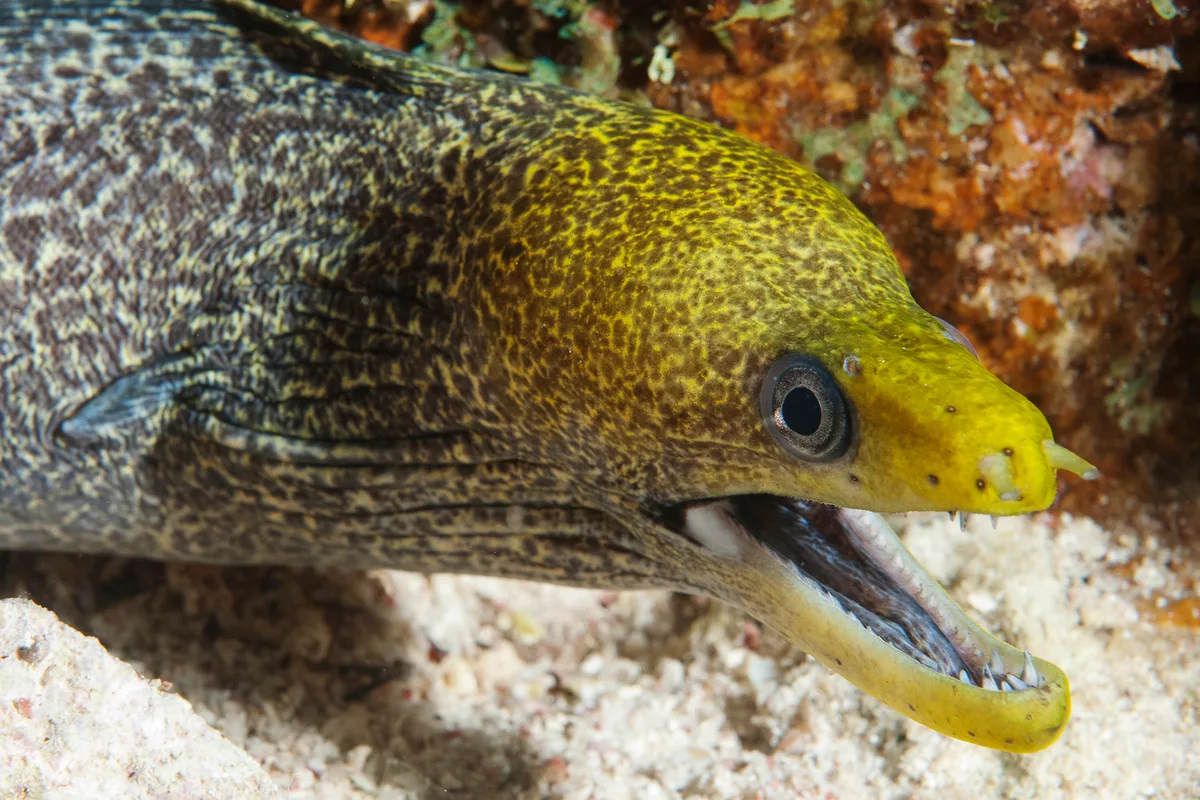
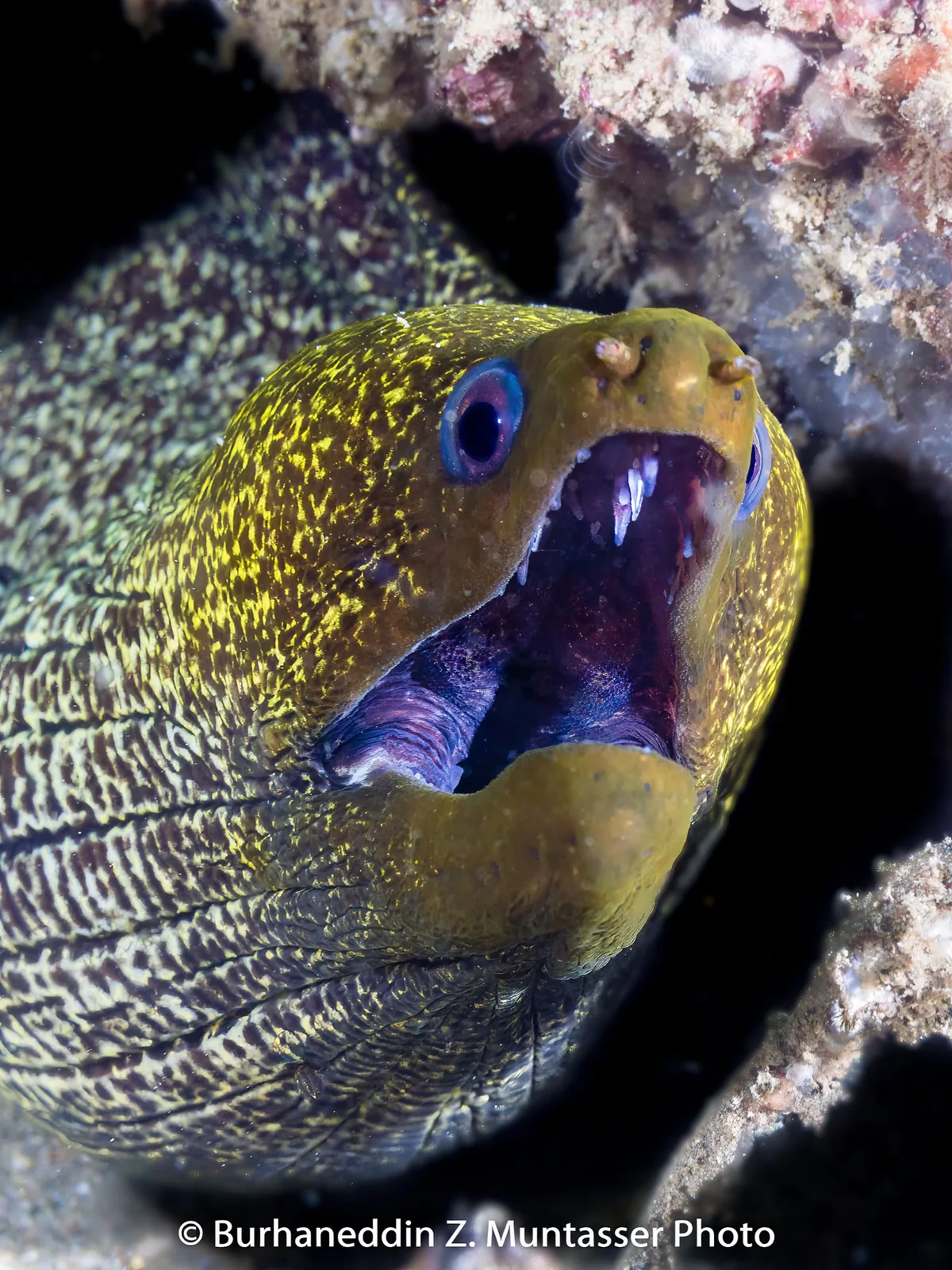
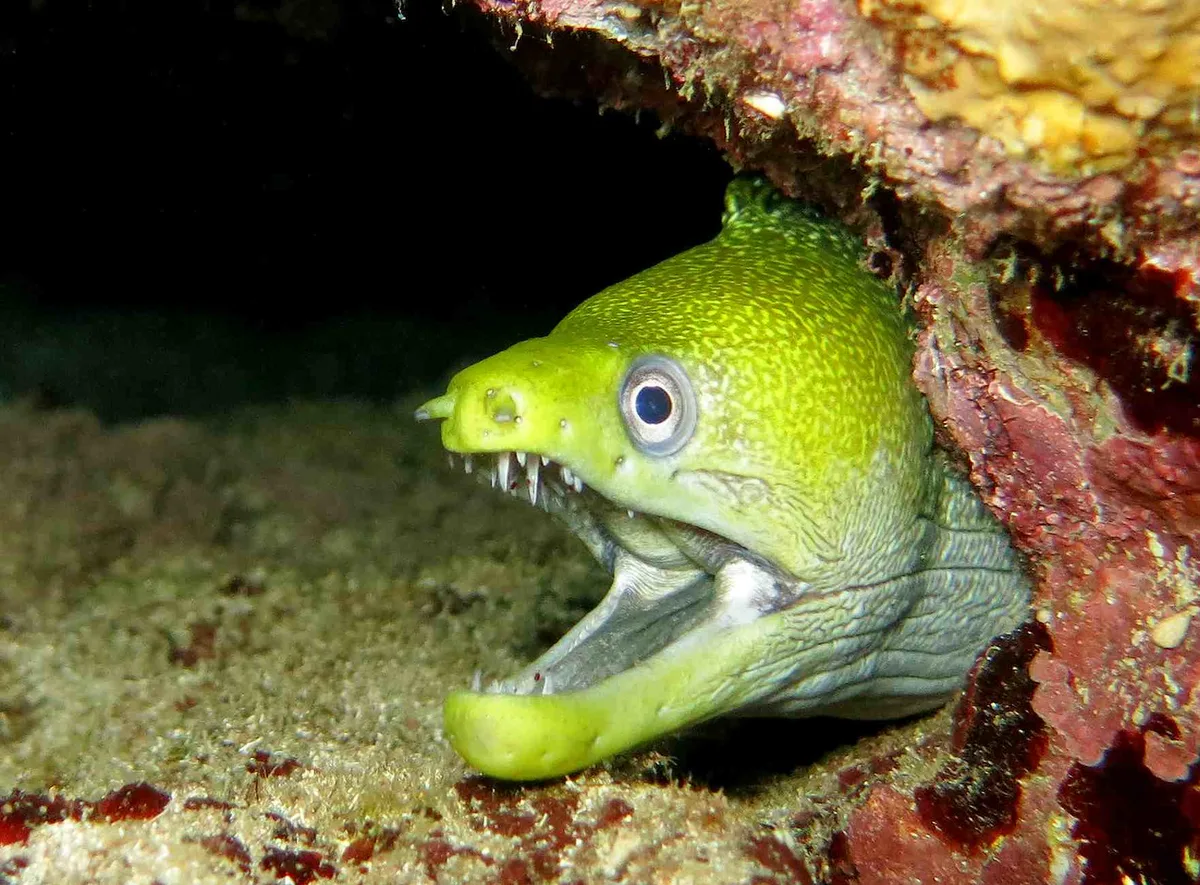
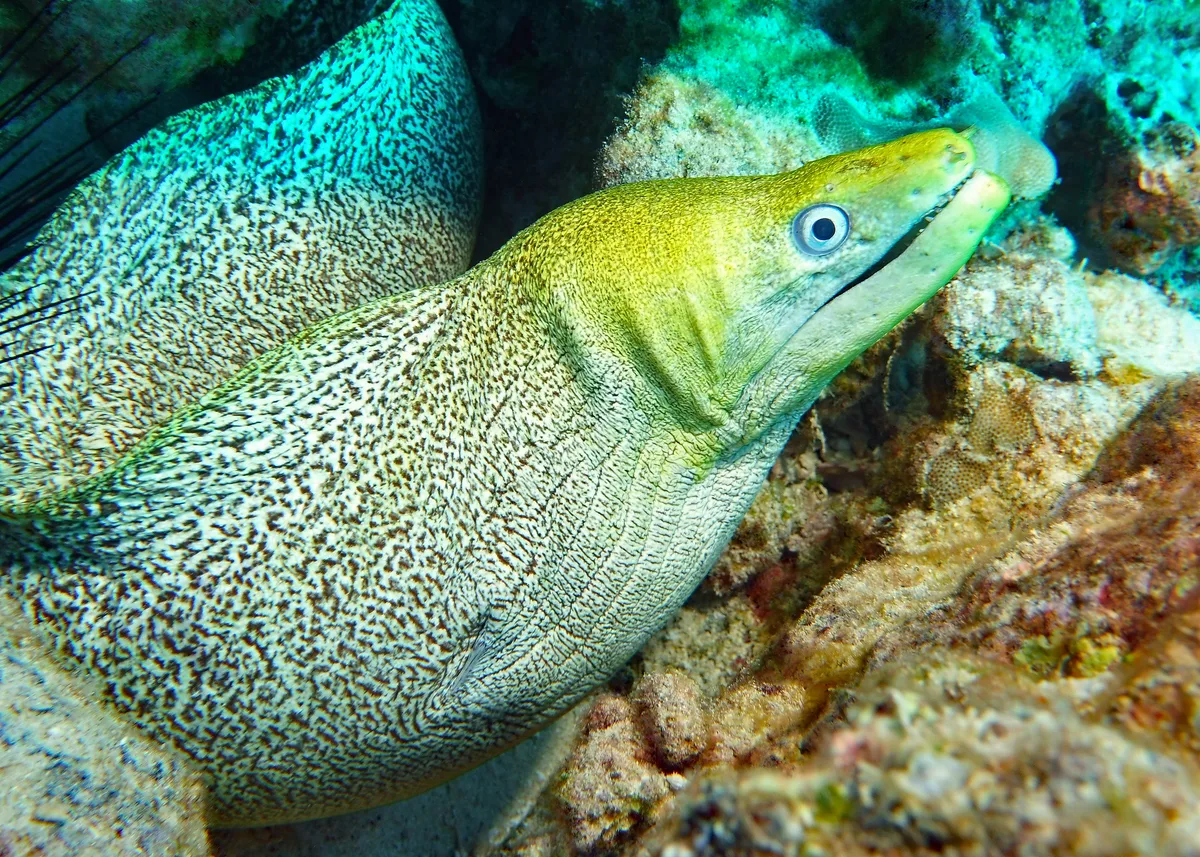
A meter and a half (5 ft) of dark moray under a pale green net, with jaws that do not quite close over the teeth - and the one member of the family that has earned a reputation.
Most morays are shy animals that bite hands put into holes. This one is genuinely bad-tempered: it will leave its hole, it will advance on a diver who crowds it, and a disproportionate share of serious moray injuries on record involve this species. That is not a reason to fear the family - it is a reason to know which one you are looking at.
It hunts fish, octopus and crustaceans at night, and it is one of the morays known to hunt cooperatively with groupers, which sits oddly with the temper.
The teeth are long, thin and angled backwards, and the jaw cannot close over them because they are too long - the fish is built to hold rather than to cut. Large individuals in some regions carry ciguatoxins, which is the second flag.
The genus. Gymnothorax Bloch 1795 - gymnós (bare or naked) + thṓrax (breast or chest). ETYFish
- dark body with a fine pale yellow-green marbled network
- greenish-yellow head, often brighter than the body
- long narrow jaws that do not close fully over the teeth
- length up to 150 cm
Why it's threatened
Gymnothorax undulatus may be affected by habitat modification and degradation in parts of its range. However, due to its wide range, it is not believed to have any universal major threats affecting it.
Threat classification from the IUCN Red List.