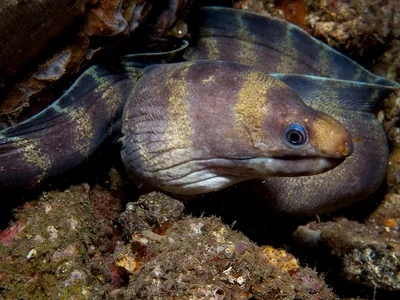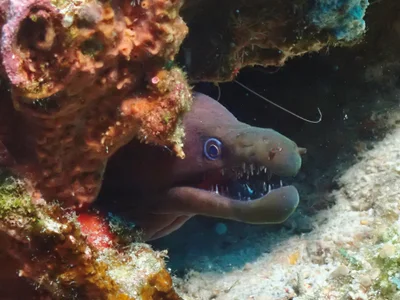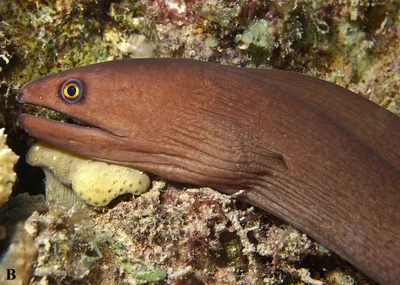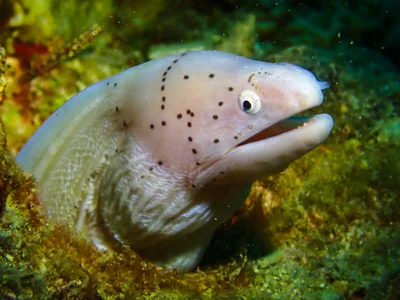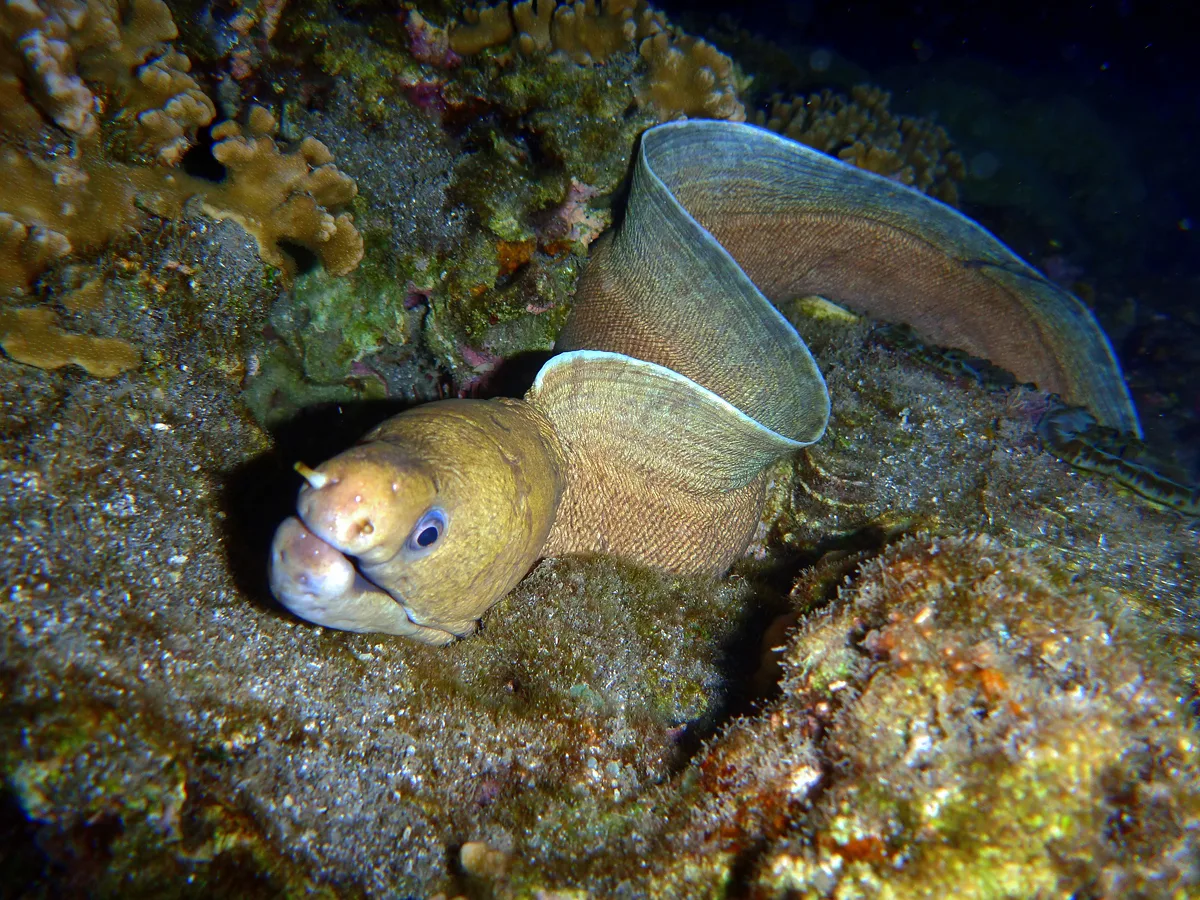
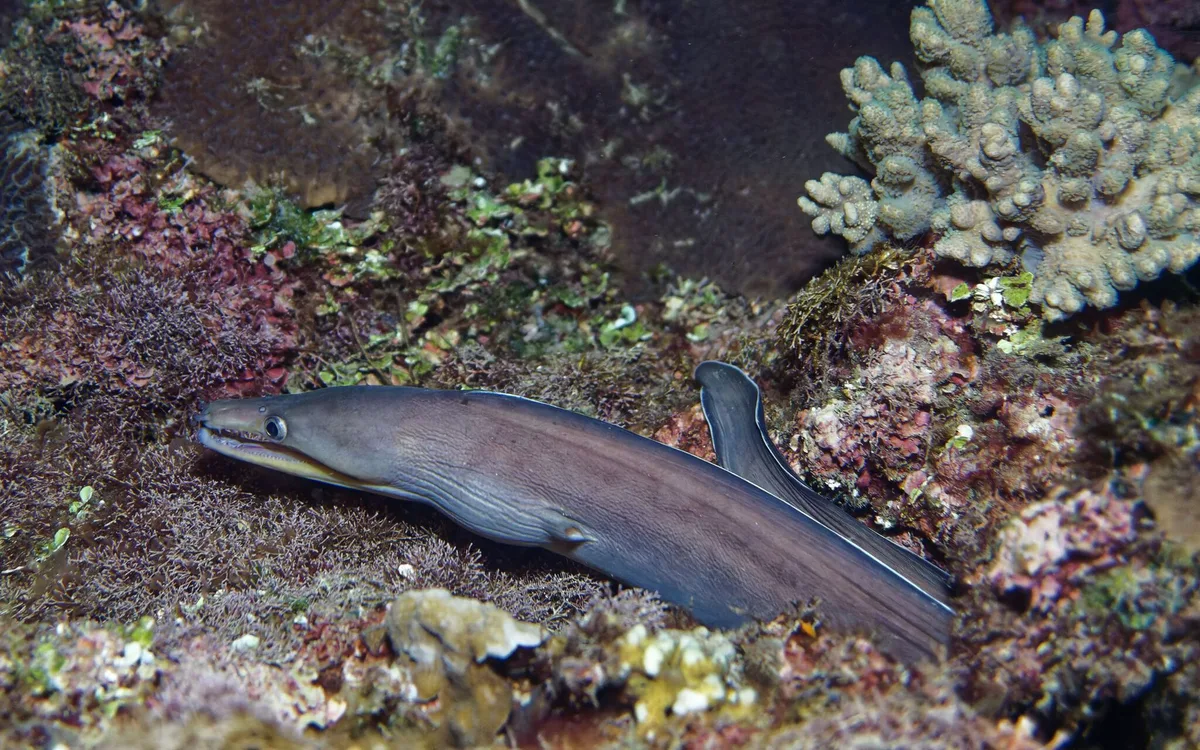
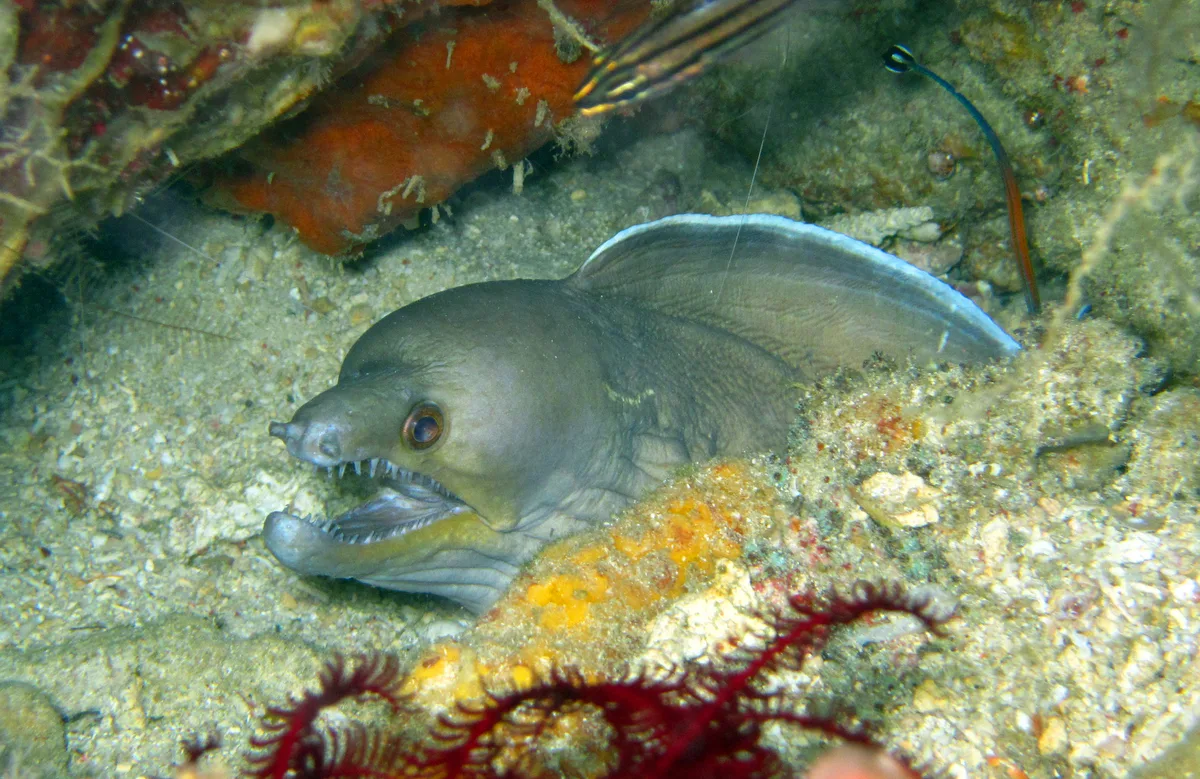
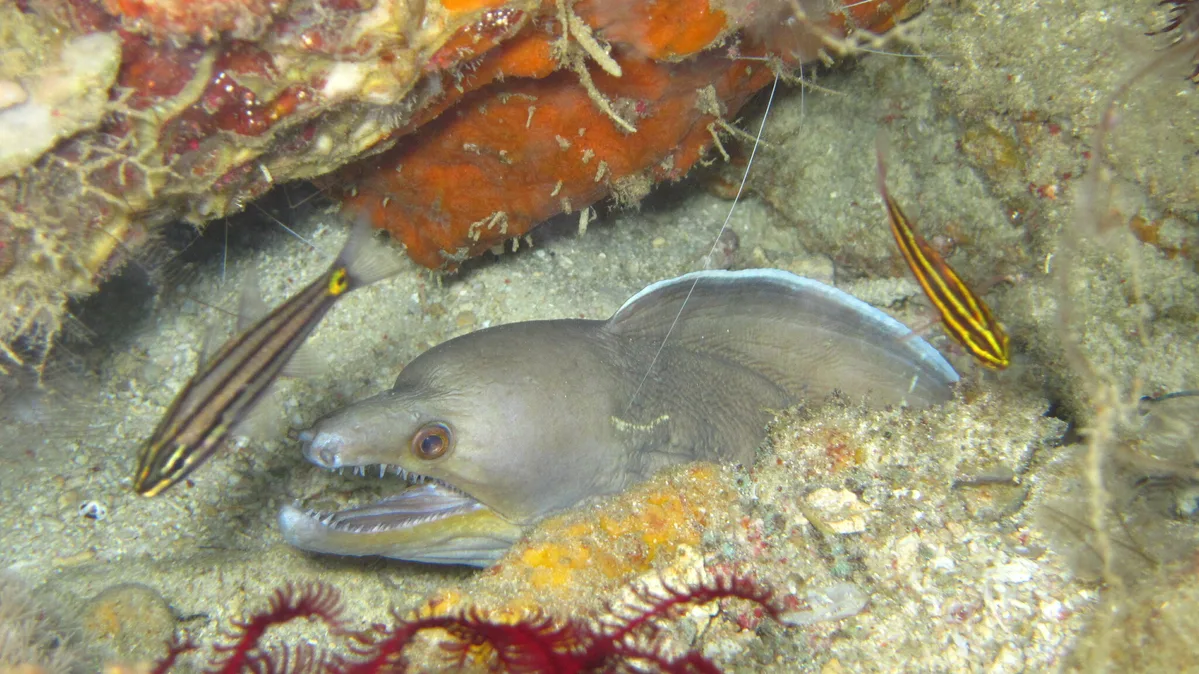
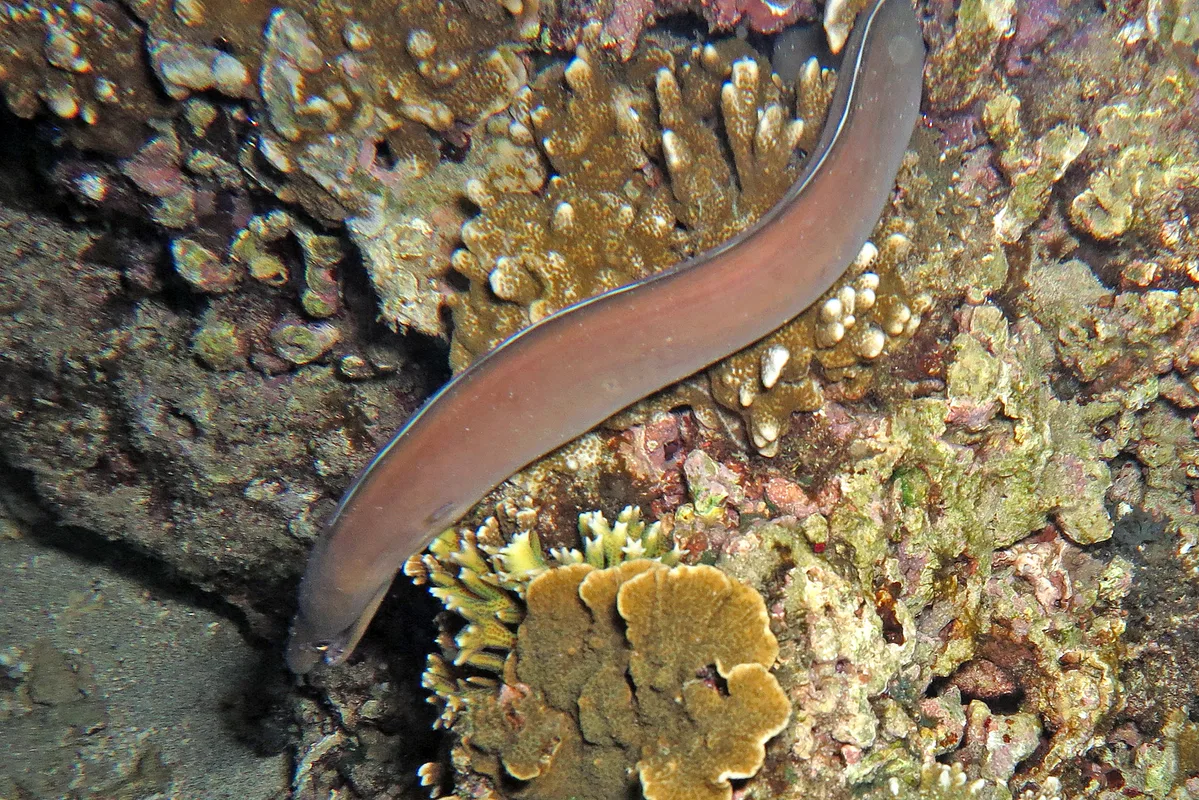
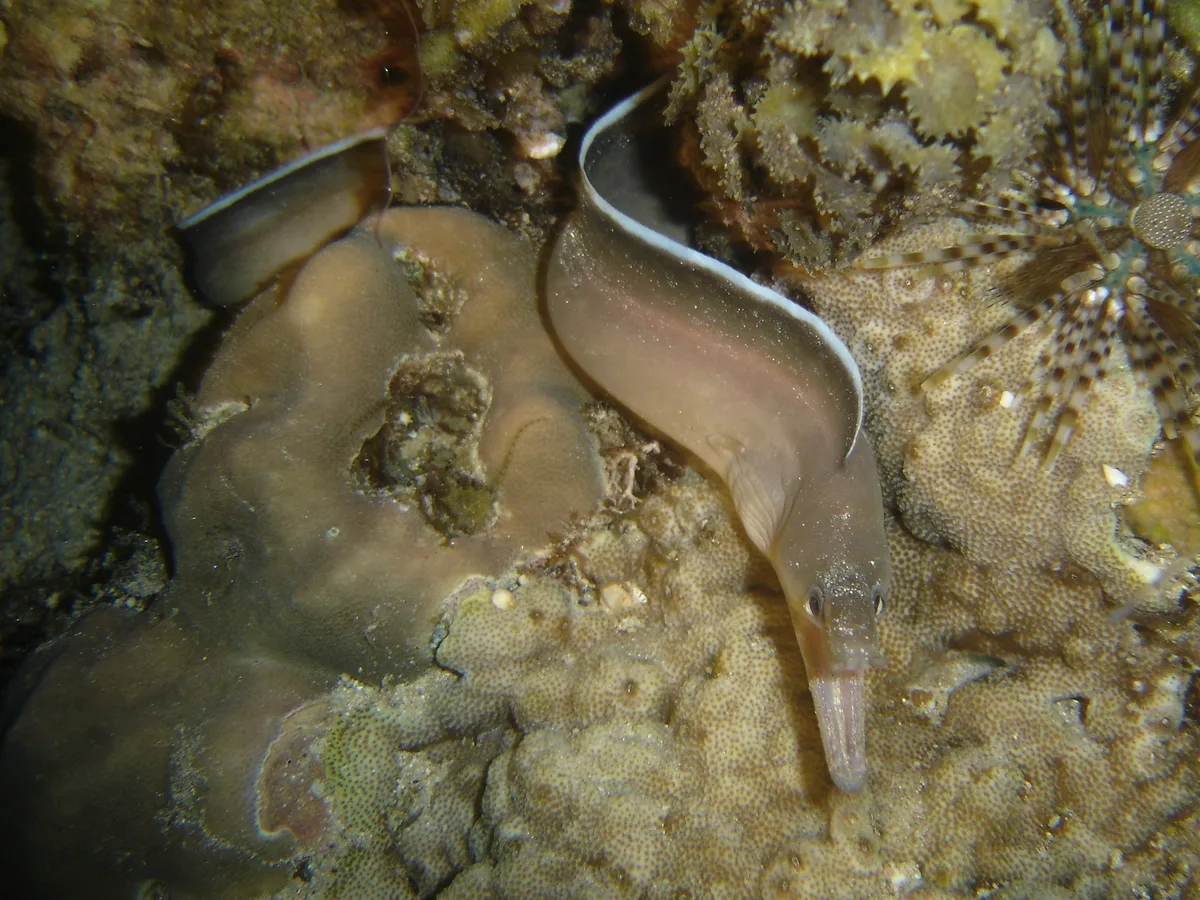
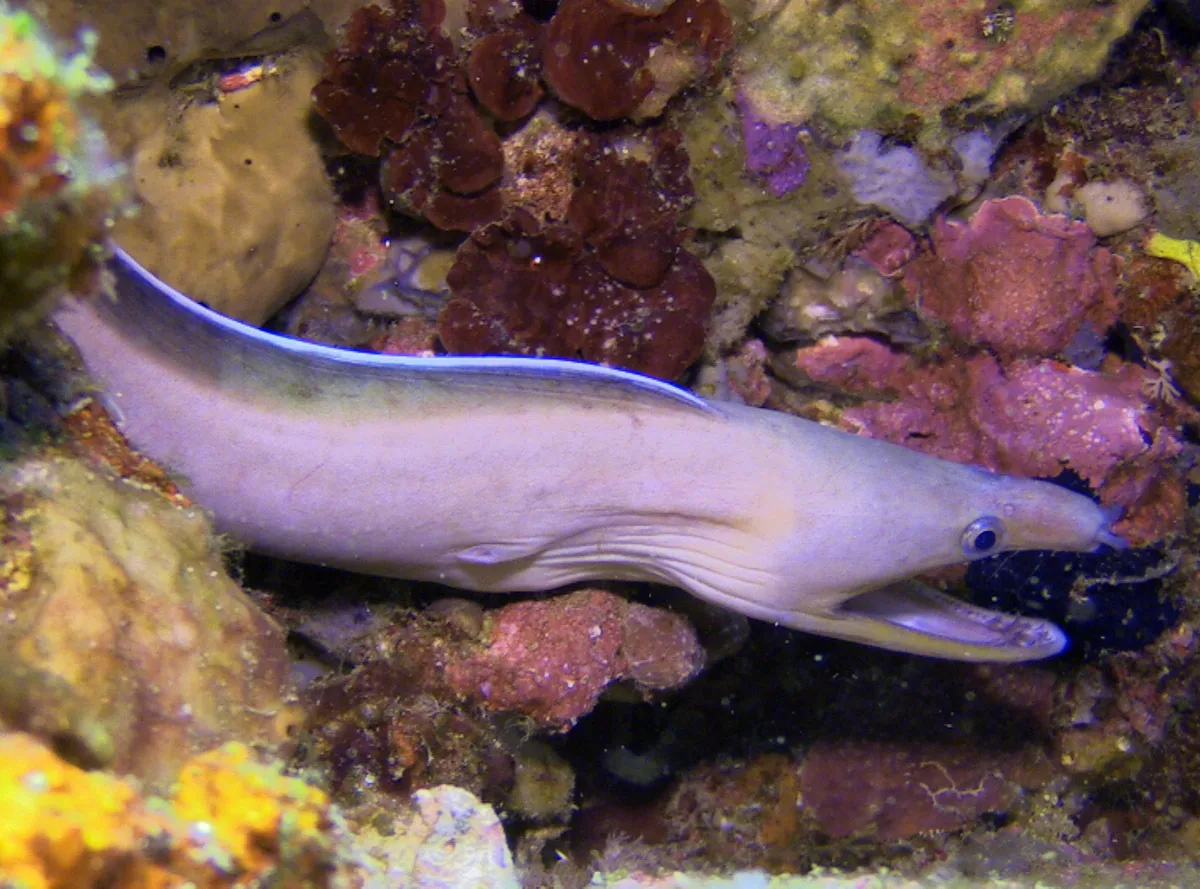
Look at the tip of a moray's snout and you will find two short tubes sticking forward. They are nostrils, and in this species they are drawn out into pronounced funnels, which is what the name is about.
The arrangement is a working nose and it is worth understanding. Water enters through the front tubes, passes over a folded sheet of sensory tissue inside the head, and leaves through a second pair of openings near the eyes. The flow is continuous, driven by the same jaw pumping that moves water over the gills, so a moray sitting in a hole with its mouth working is not just breathing - it is smelling, constantly, on a running current.
That is the sense the animal actually lives by. Moray eyesight is poor, and experiments have shown they can find food by scent alone in complete darkness while ignoring it in plain view. The tubes at the front are a design for sampling water ahead of the head before the head commits to a hole.
This is a large, pale, rarely recorded moray with the curved unclosing jaws of its genus, and it goes deeper than most of the shallow species here.
The genus. Enchelycore Kaup 1856 - énchelys (eel) + core (pupil of eye). ETYFish
The species. Enchelycore schismatorhynchus (Bleeker 1853) - schísmatōs (σχίσματος). ETYFish
- front nostrils drawn out into long tubes at the tip of the snout
- jaws curved so the mouth does not fully close, teeth in view
- pale to yellowish body, sometimes with dark mottling
- up to 120 cm