
Seagrass
A seagrass meadow is usually not a great many plants. It is a few plants, repeated. Seagrass spreads mainly by rhizome, a stem that creeps sideways under the sand and sends up new shoots as it goes, so a bed covering a large stretch of bay can be a handful of individuals cloned across it, genetically identical and physically connected below the surface. Clones of this kind are among the oldest living things anyone has managed to date.
That mat of rhizome and root is why a meadow matters out of proportion to its size. It binds sand that would otherwise move with every storm, and it slows the water passing through the blades enough that suspended silt drops out of it. A meadow does not sit on the seabed so much as build it, raising and holding ground that would otherwise be shifting sand.
Below the first centimeter or so, the sediment under a meadow is black and has no oxygen in it, and the plant lives there anyway by pumping oxygen down from its leaves through the stem to the roots. A little leaks out around each root tip, keeping a thin oxidized halo in mud that would otherwise poison the plant with sulfide. When water gets too warm and too still, that balance tips and meadows begin to die from underneath.
They flower underwater, and the pollen had to be rebuilt for it. A land plant makes small round grains that travel on air; a seagrass makes some of the longest pollen in the world, thread-like filaments released in sticky strands that tangle around anything they touch, which is the only way a grain finds a target in moving water. Some of it also travels by courier, on small animals working the flowers, which the species pages here go into.
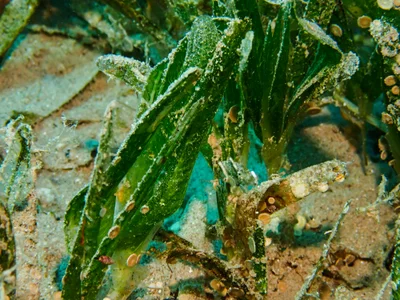
On this coast the dense stands are mostly Thalassodendron ciliatum, stiff-bladed and tall, growing in sheltered sandy bays and on shallow flats. They are where the dugongs are and where green turtles feed, and they hold a great many reef fish through the stage of life when they are too small to survive out on the reef.
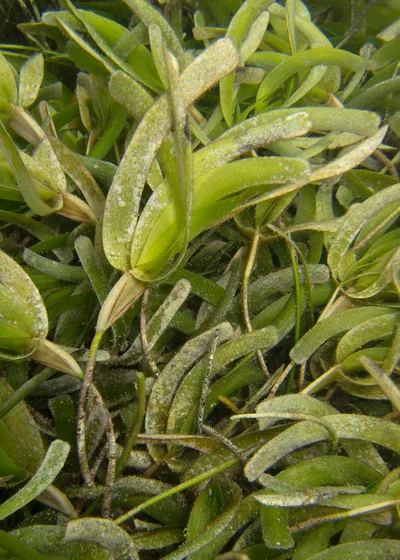
- plant with long, strap-like or ribbon-like green leaves
- forms dense underwater meadows or patches
- leaves anchored to soft sand or muddy bottom
- leaves gently swaying with water currents
2 species in Seagrass
Other groups in Sea plants
Nearby in the catalogue.


Last Update: August 23, 2026