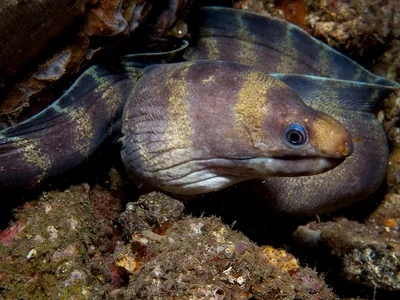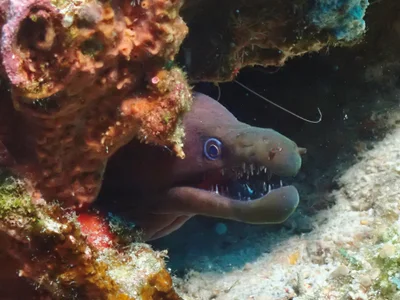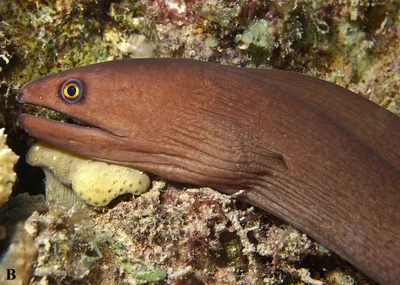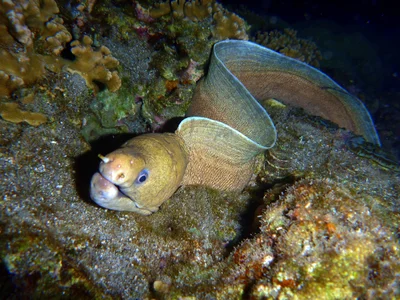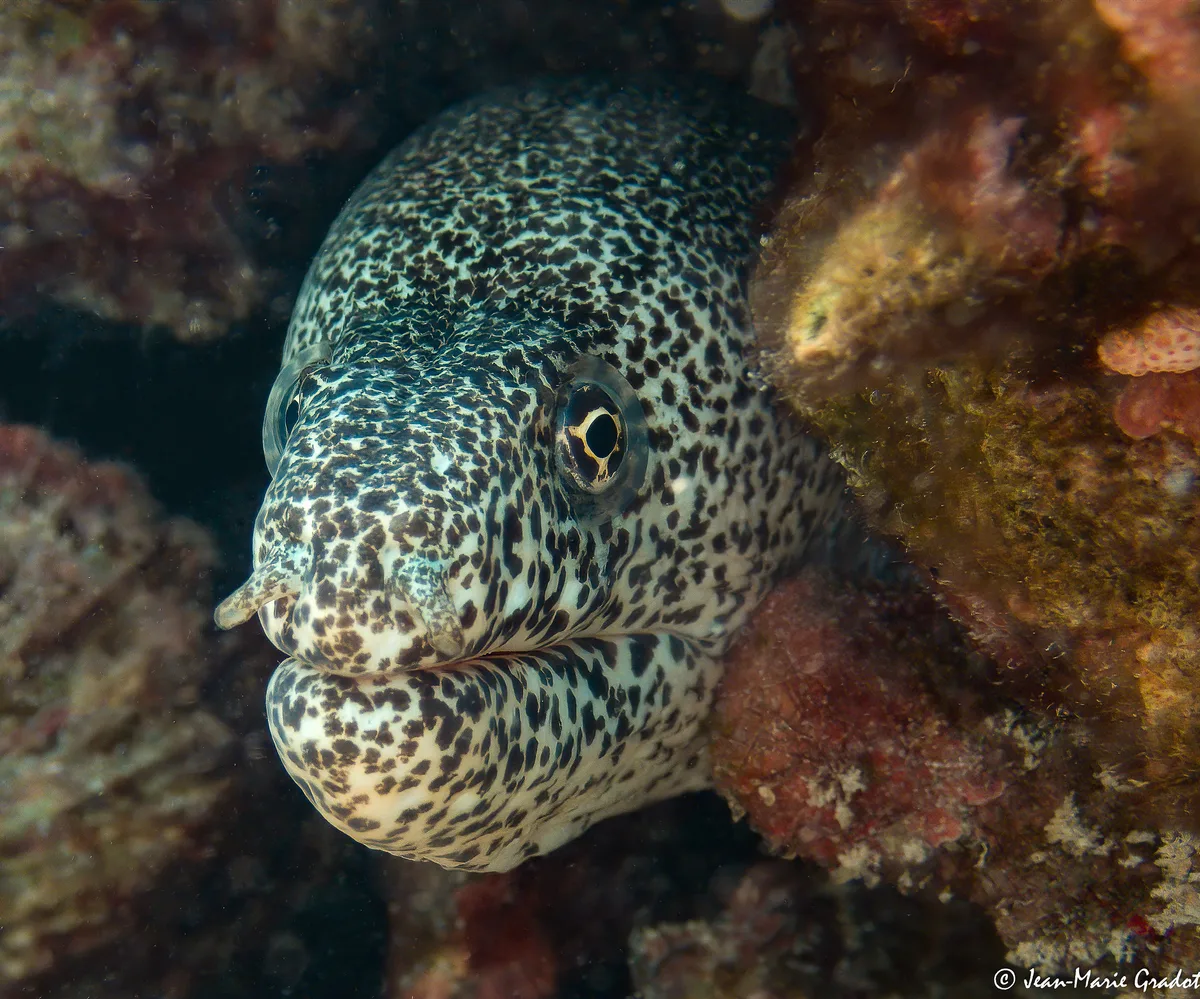
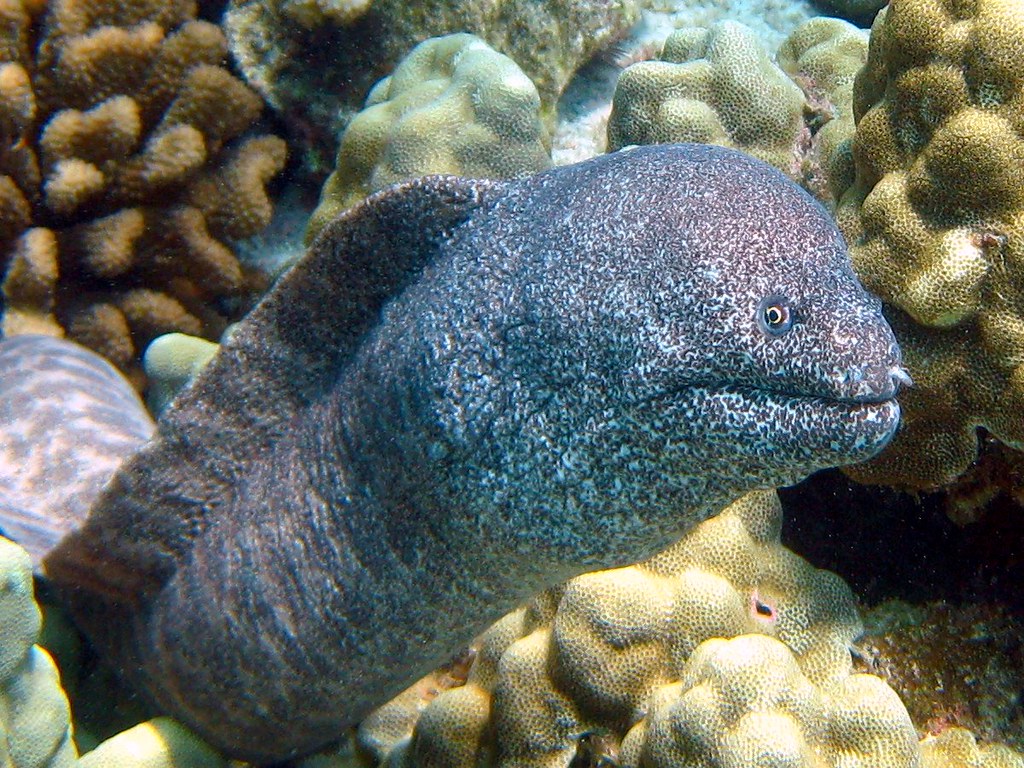
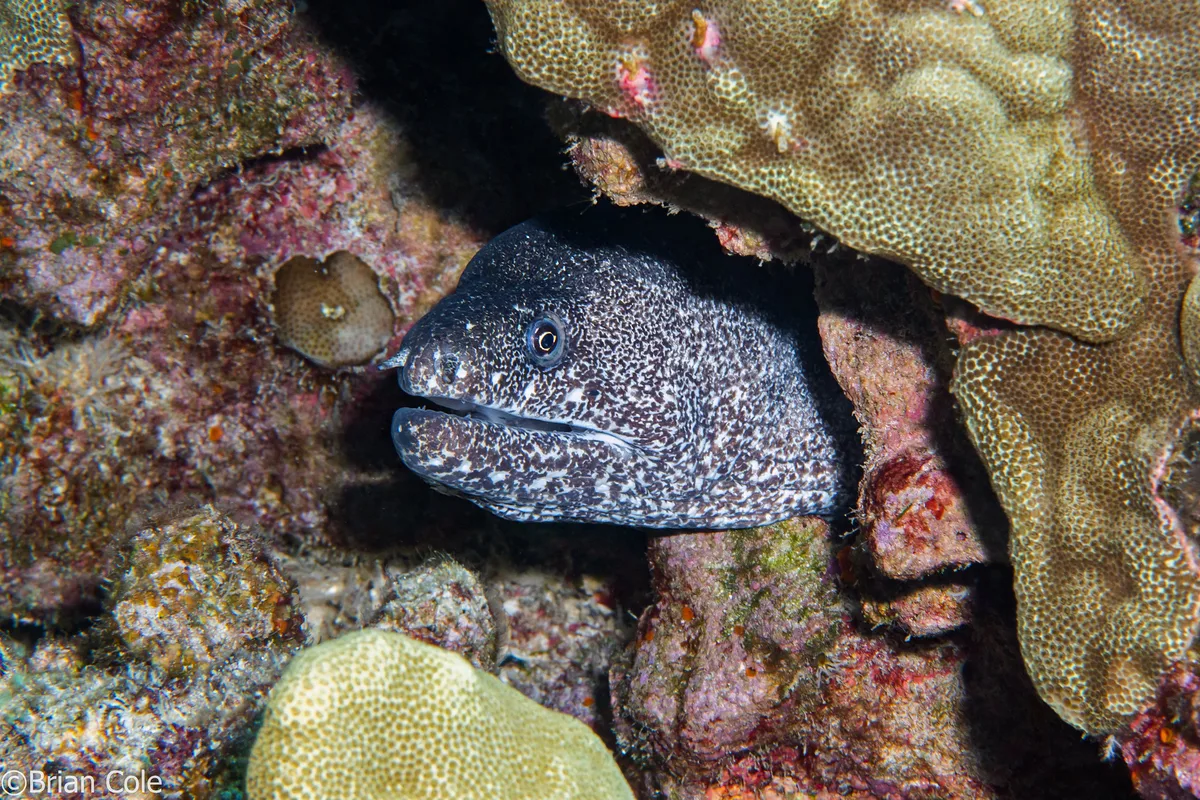
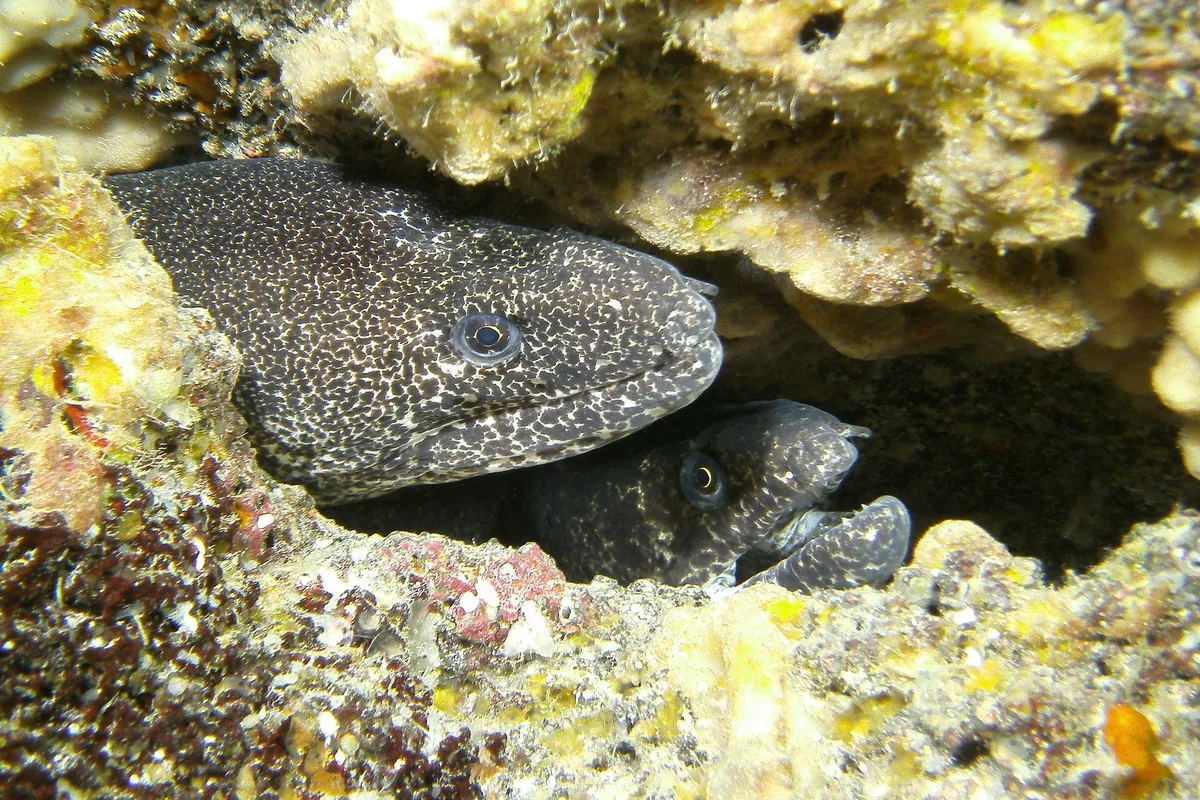
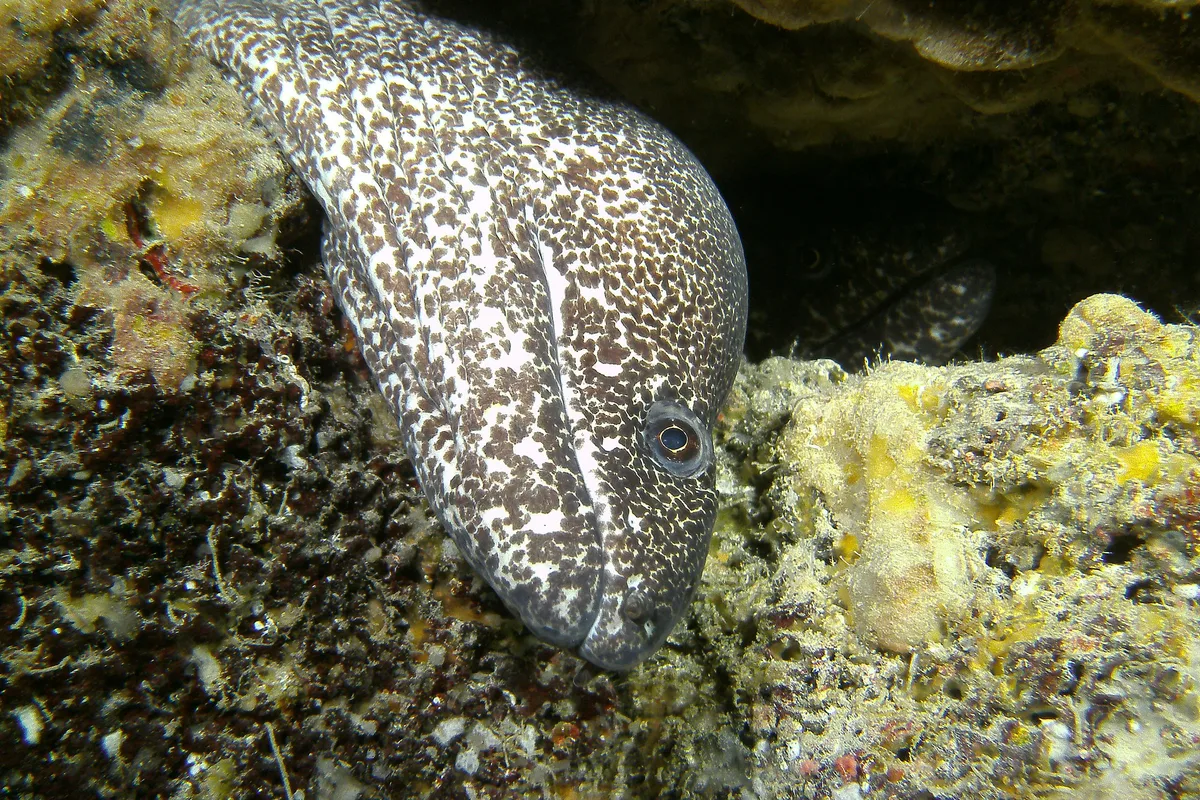
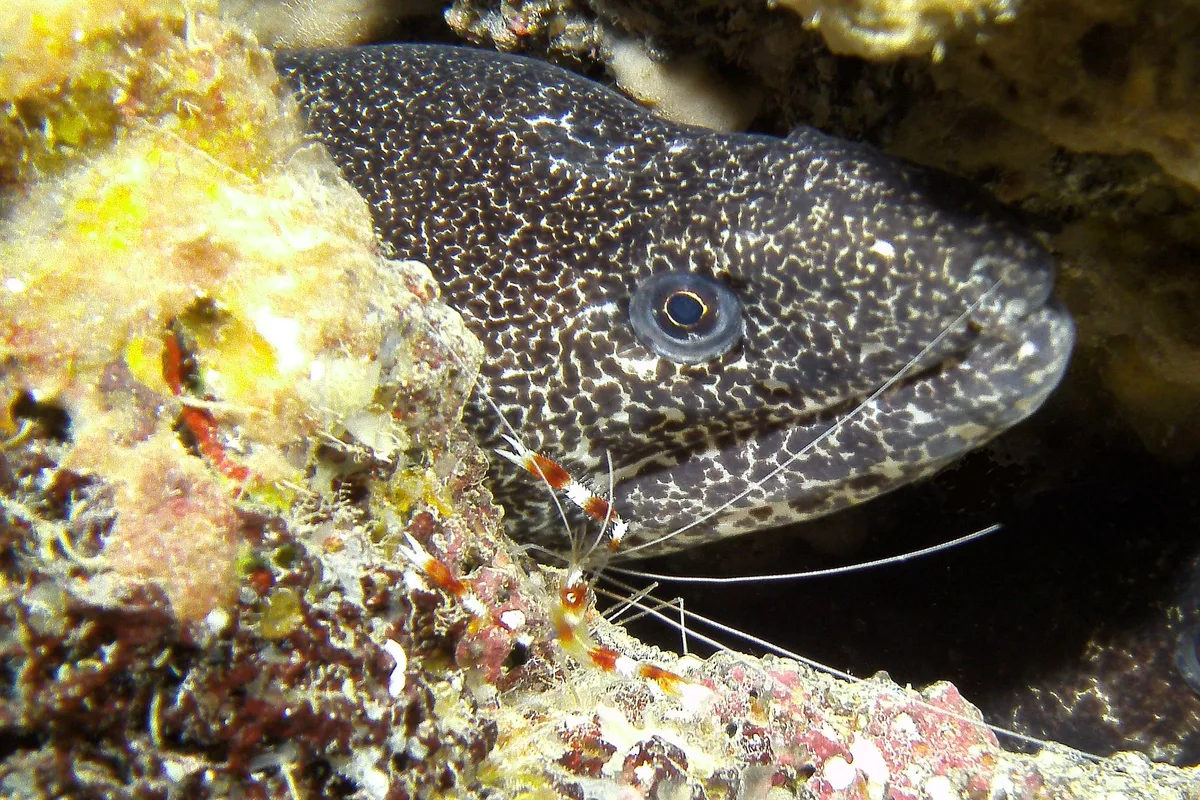
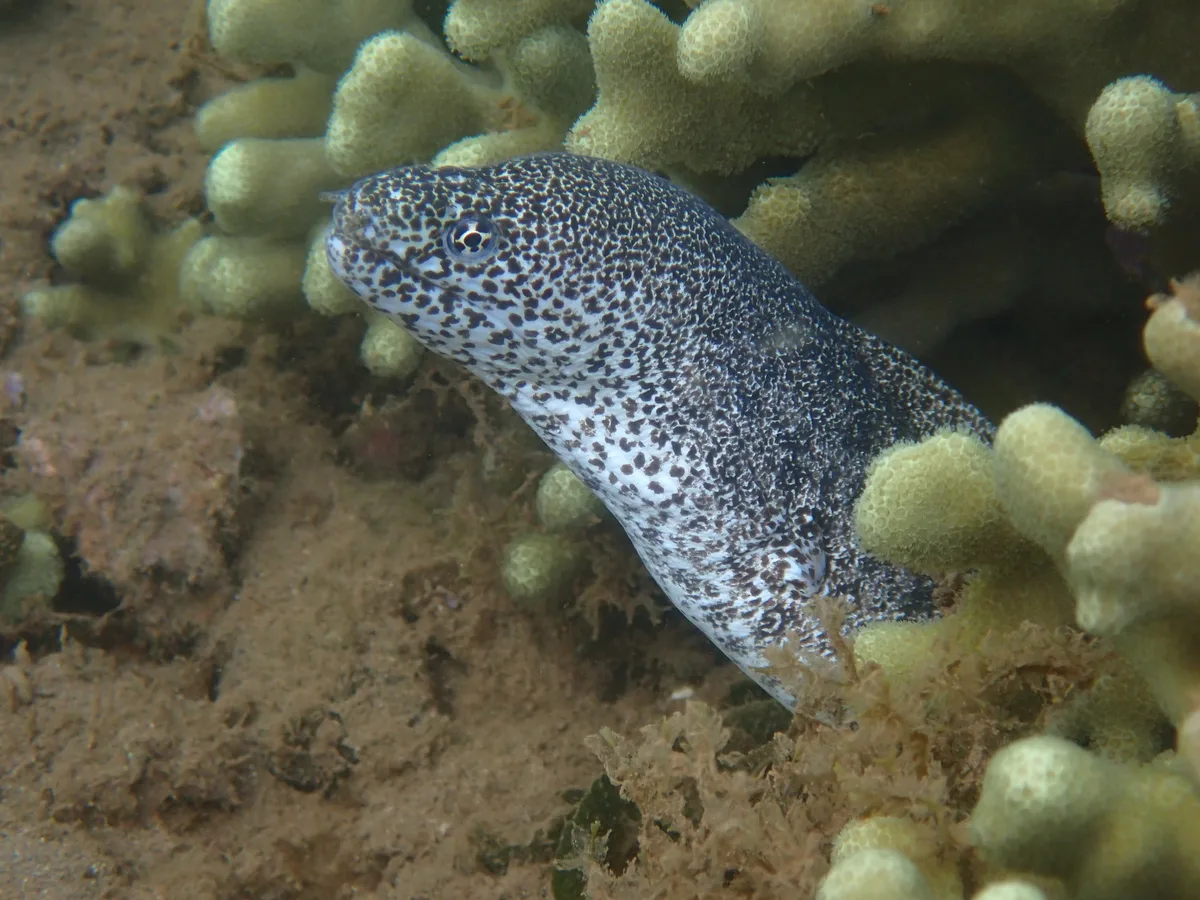
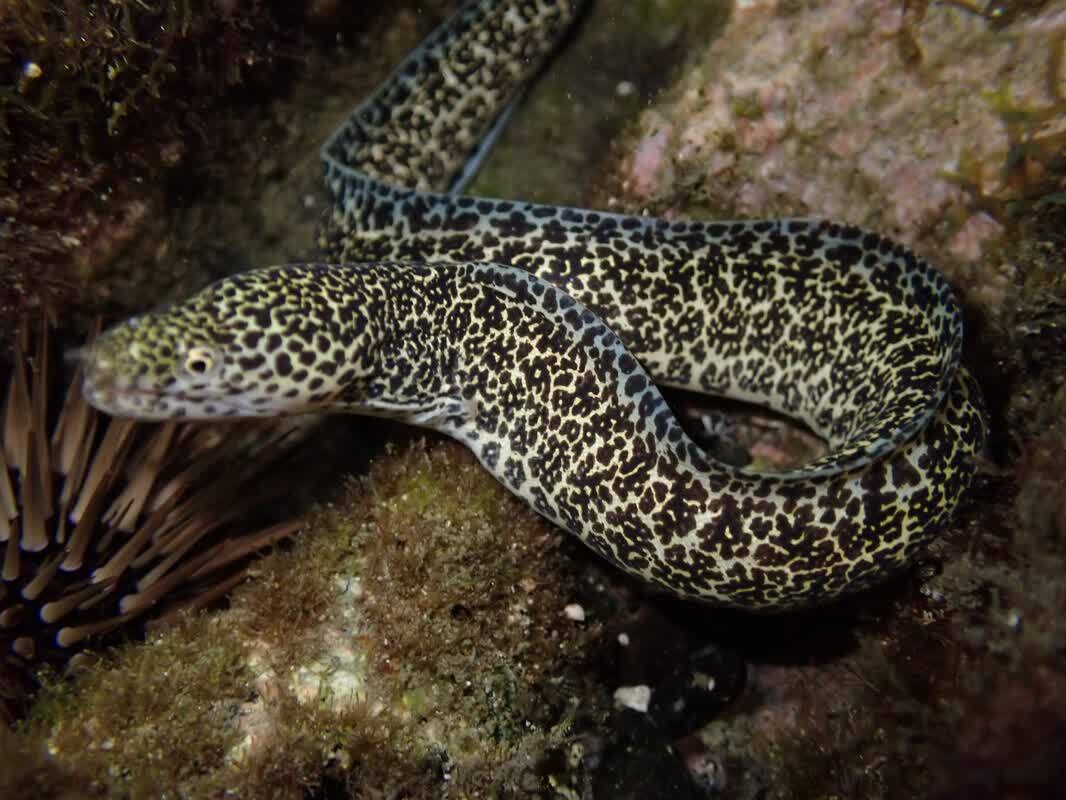
A pale moray peppered in fine dark spots, living in the shallowest water of any eel here - reef flats, intertidal rock, and the last few centimeters at the edge.
It hunts crabs, and it does it out of the sea. This species has been recorded leaving the water entirely to chase crabs across wet rock, wriggling over the surface for a meter or more and returning with the catch - behavior it can afford because a moray takes oxygen through its skin and can hold water in its gills. A fish going ashore after prey is not something most people expect to see on a reef flat.
Underwater it is a daytime hunter, which is also unusual for the family, working shallow rubble in the open rather than waiting inside a hole.
One and a half meters (4.6 ft) at its largest. Like the others it has a second set of jaws in the throat that reach forward to drag prey down. Ciguatoxins have been reported from large individuals, which is the flag - and the bite is the reason for the other one.
The genus. Gymnothorax Bloch 1795 - gymnós (bare or naked) + thṓrax (breast or chest). ETYFish
- pale body densely peppered with small dark spots that never join into a network
- blunt short snout, small eye
- in very shallow water, often on the reef flat at low tide
- length up to 140 cm
Why it's threatened
There are no major threats known to affect this species.
Threat classification from the IUCN Red List.