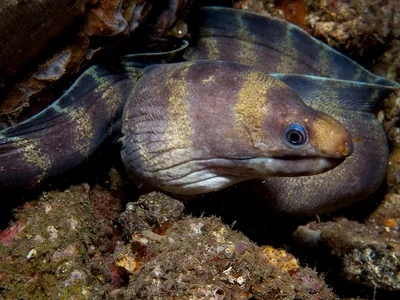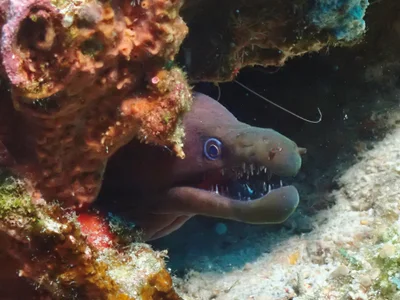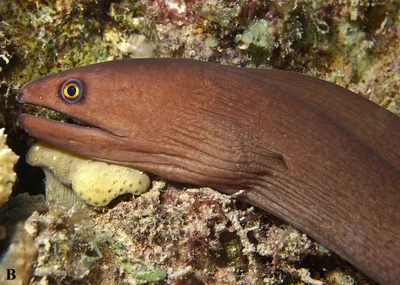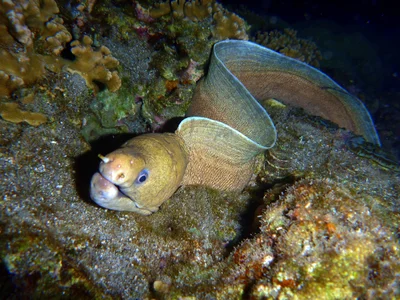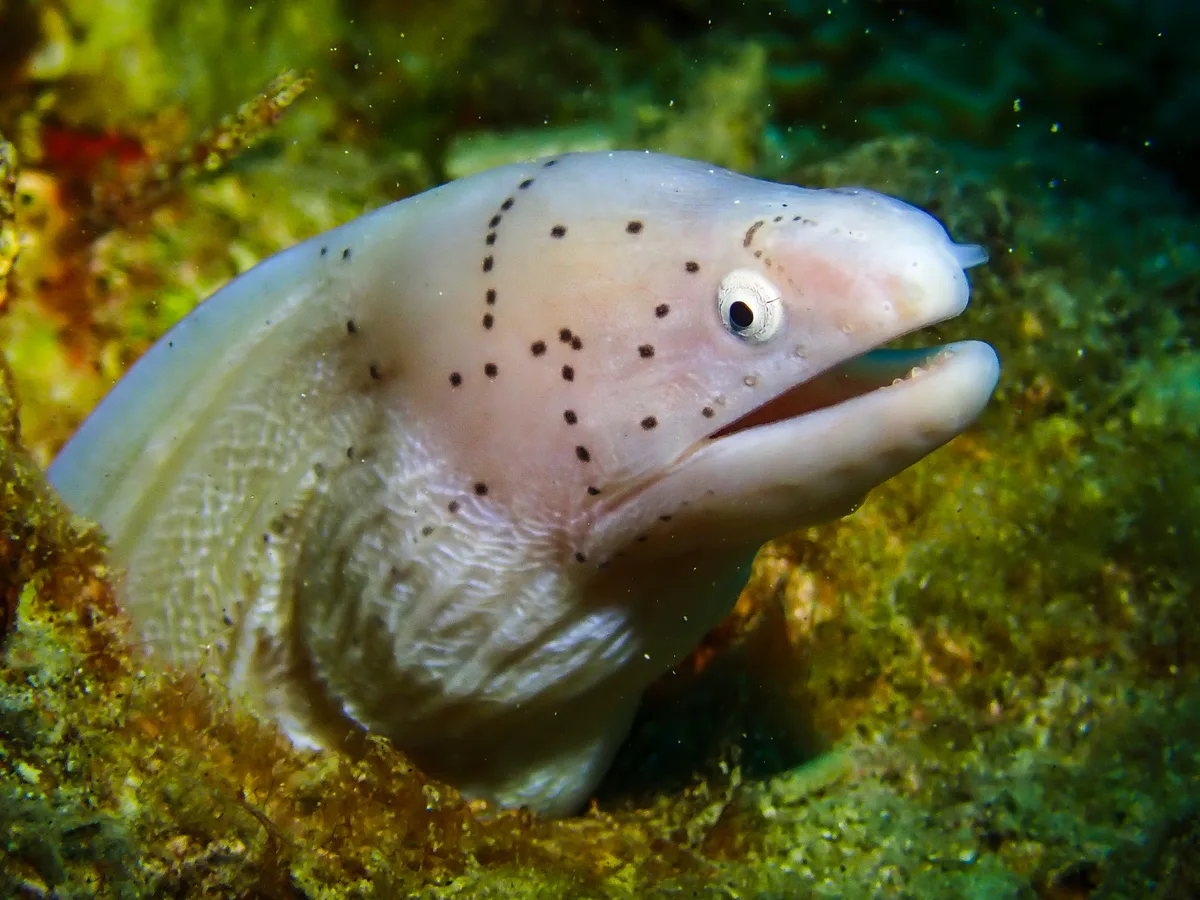
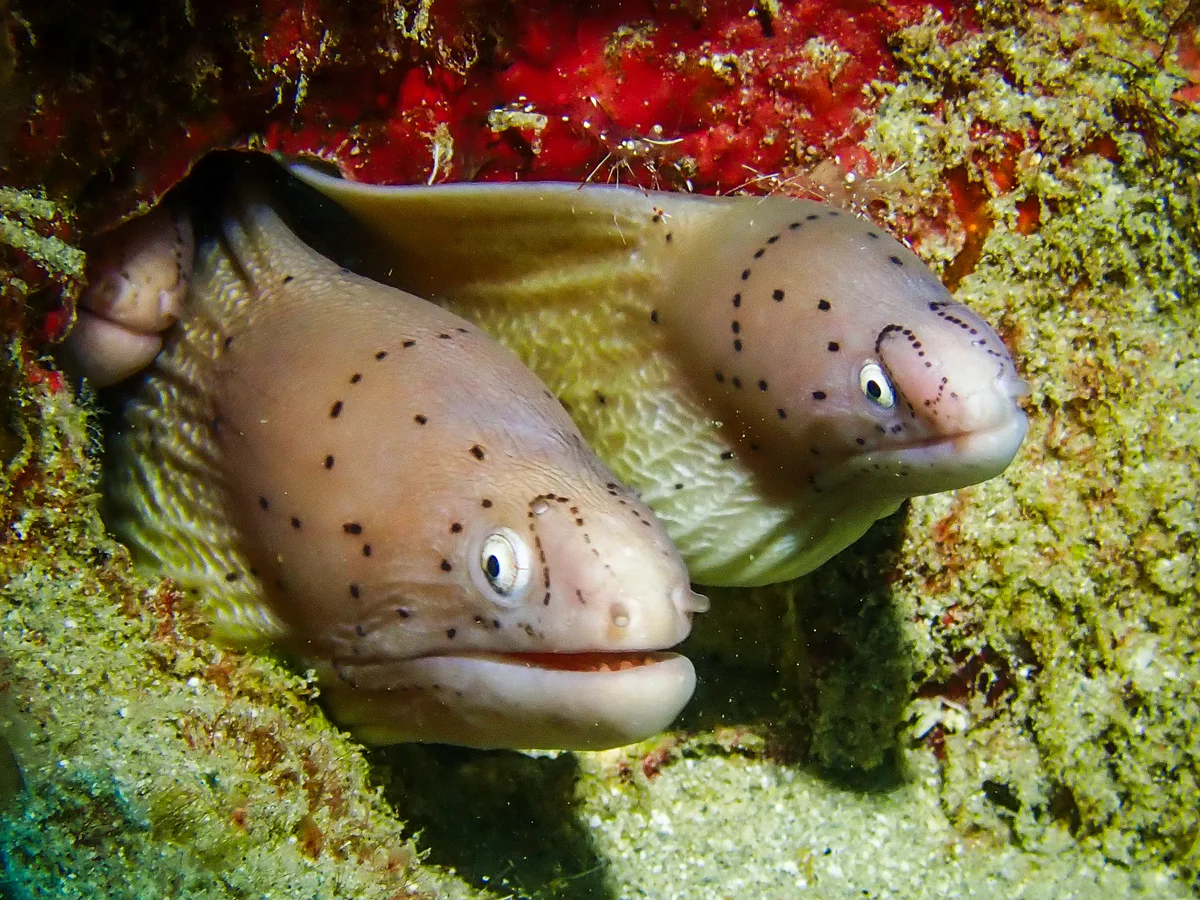
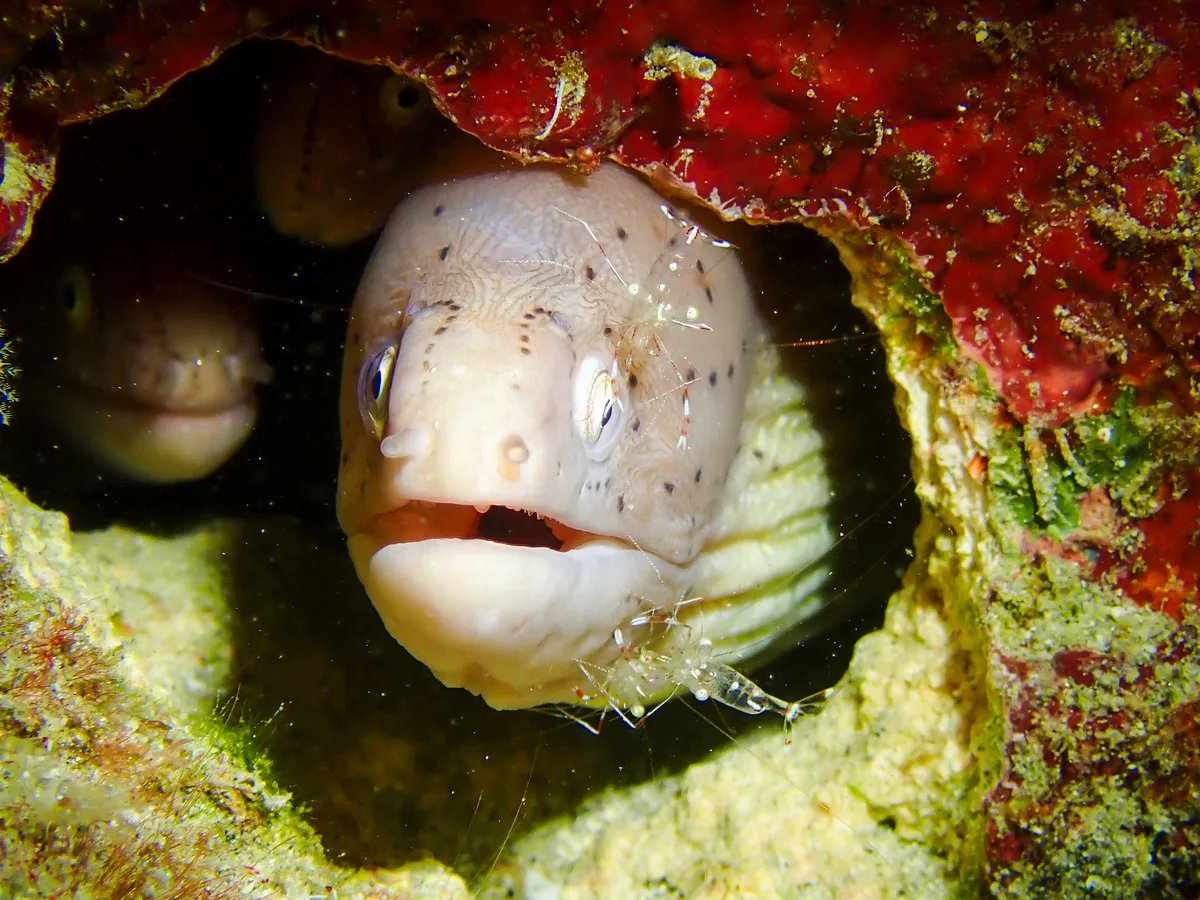
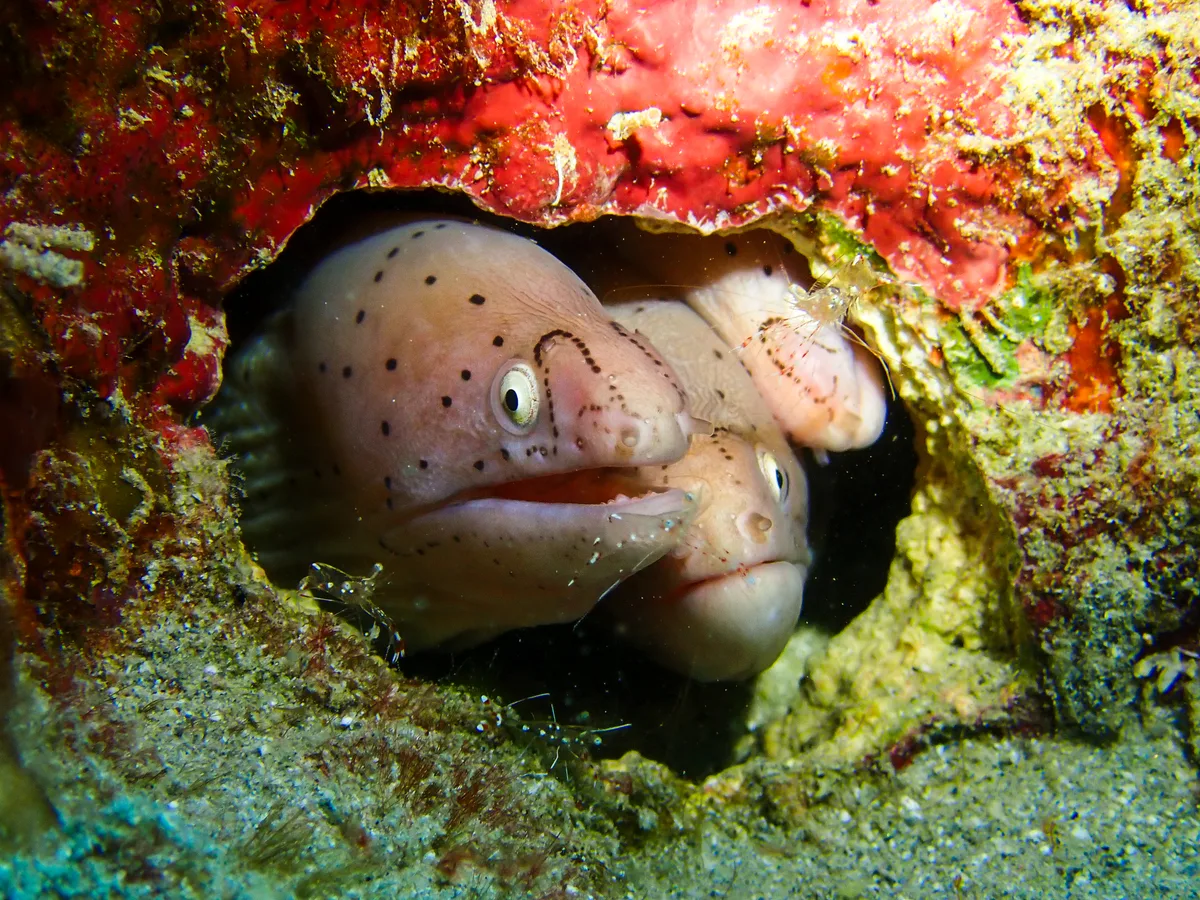
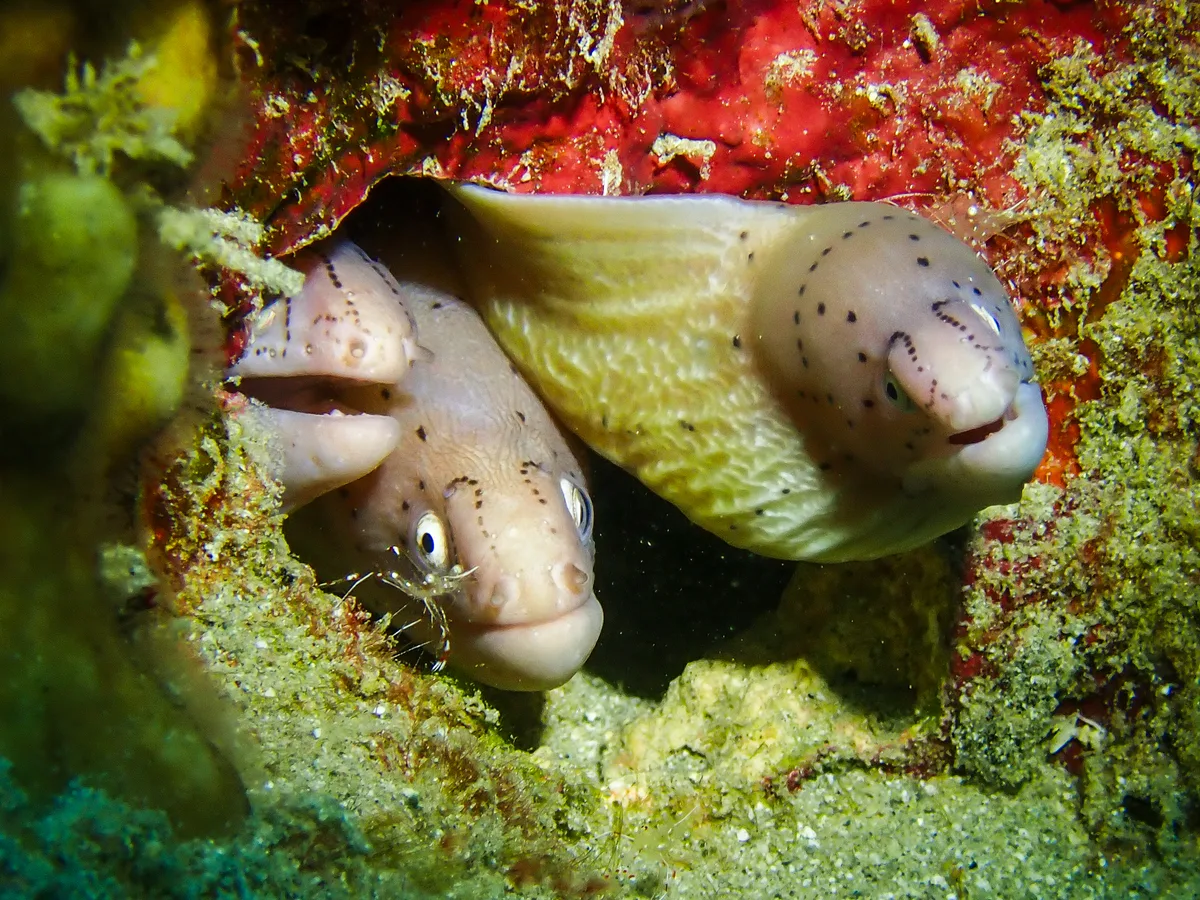
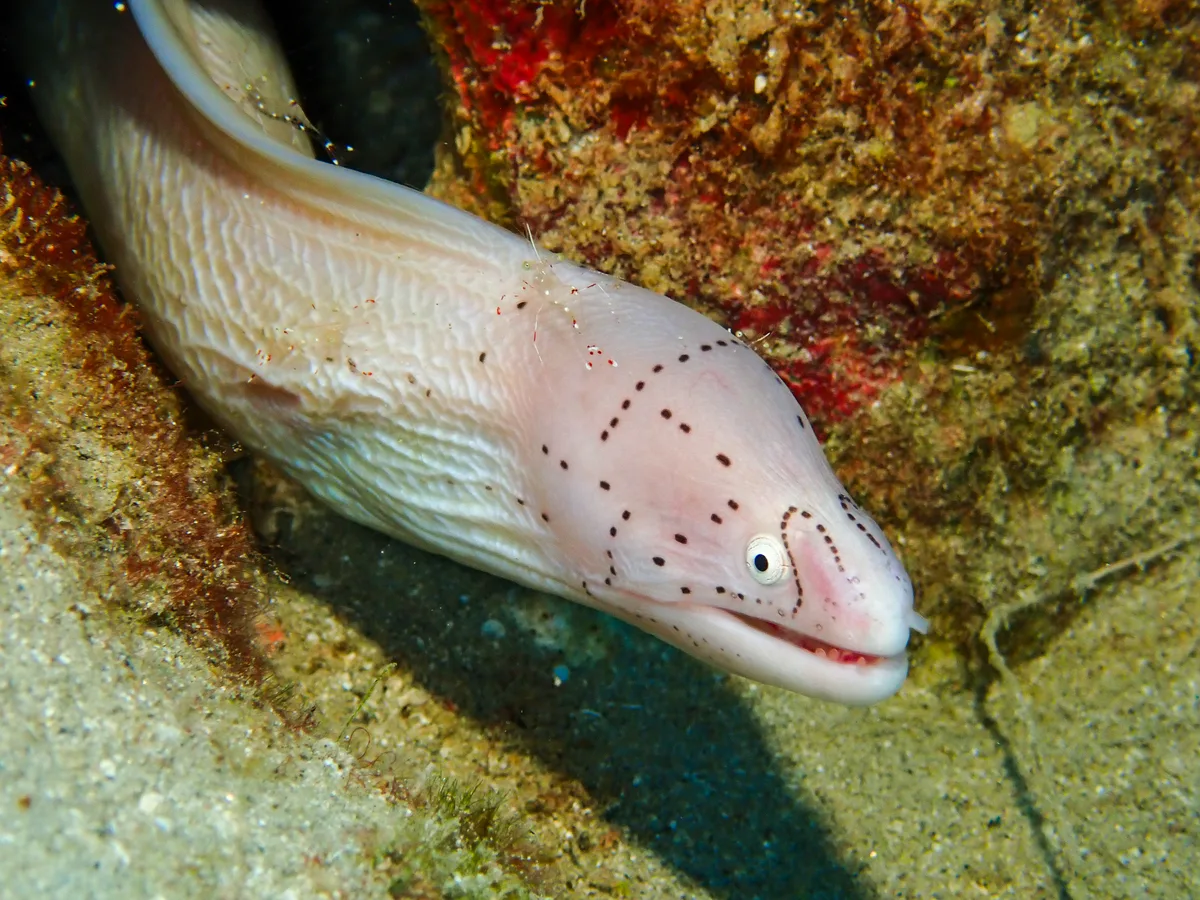
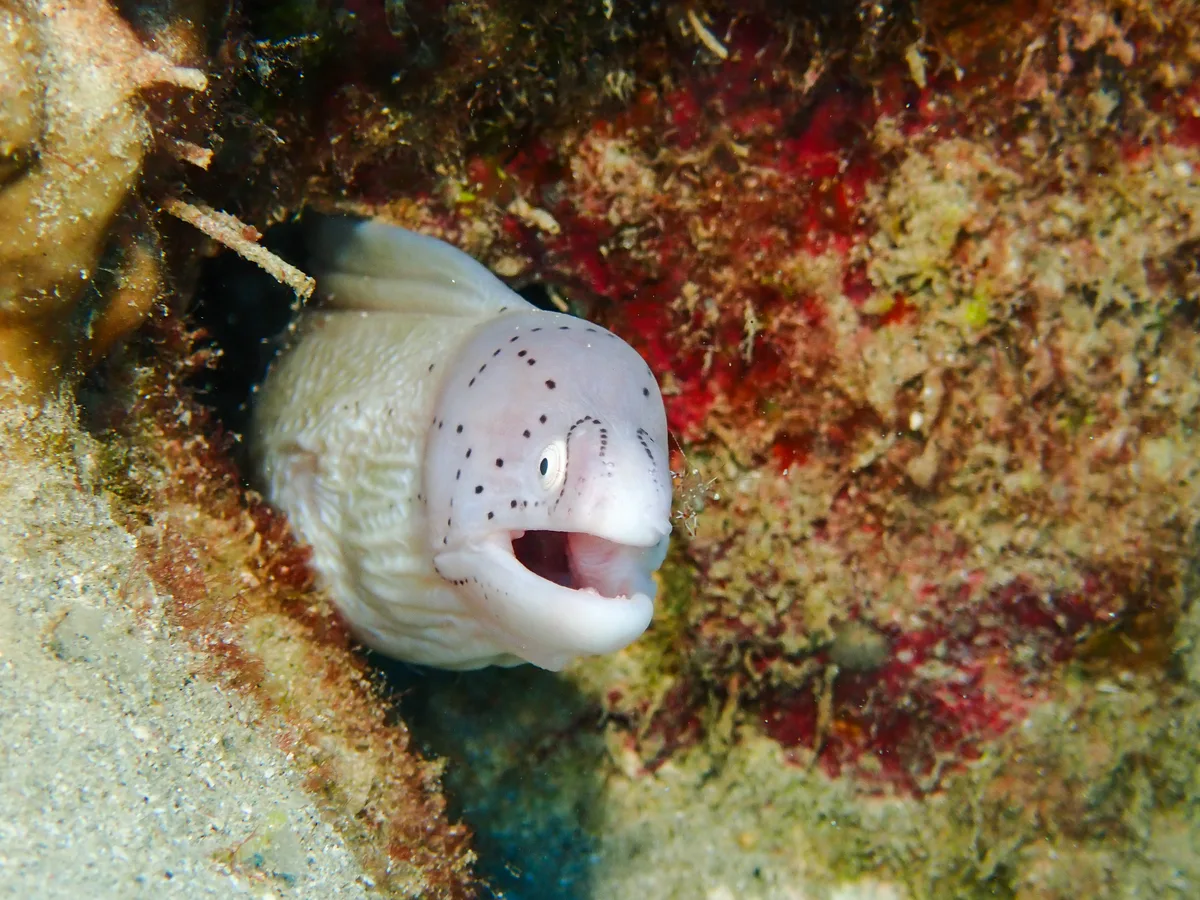
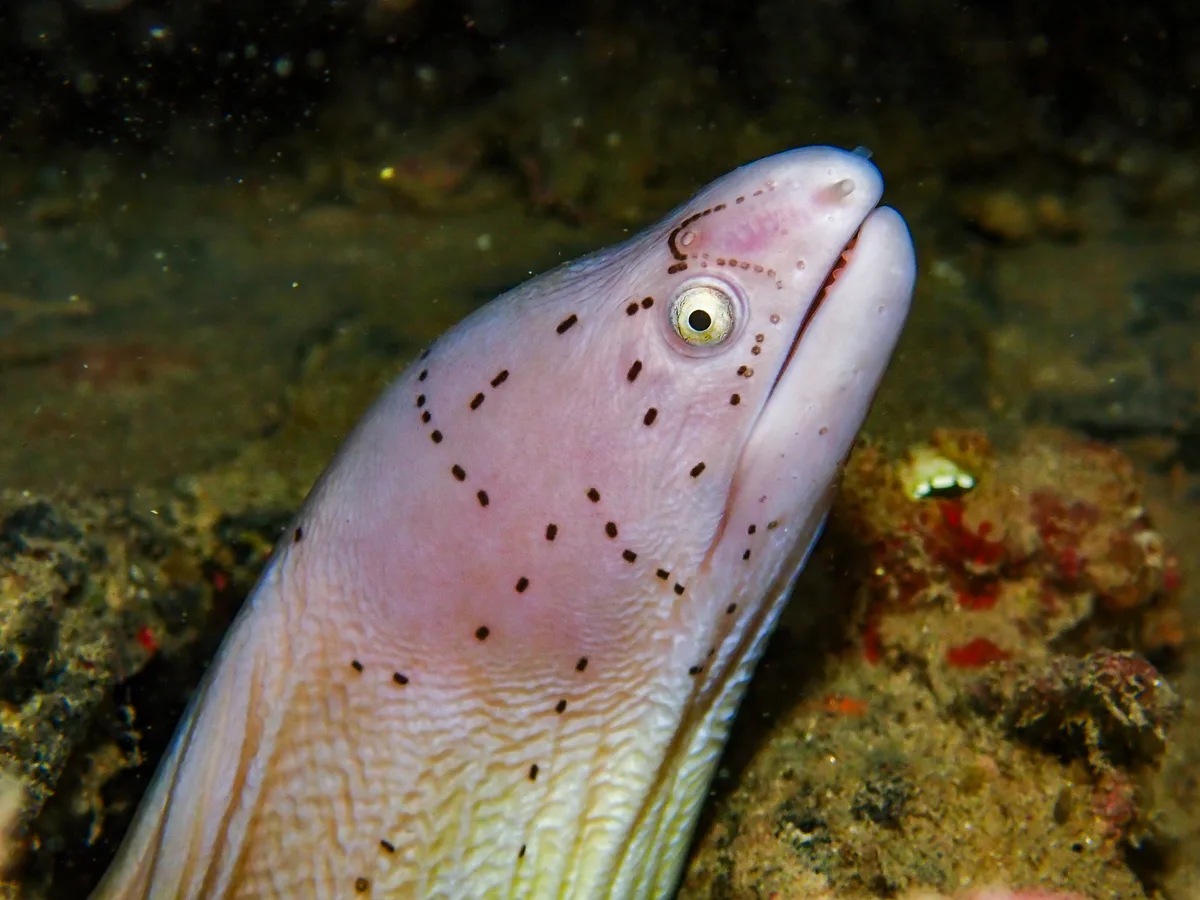
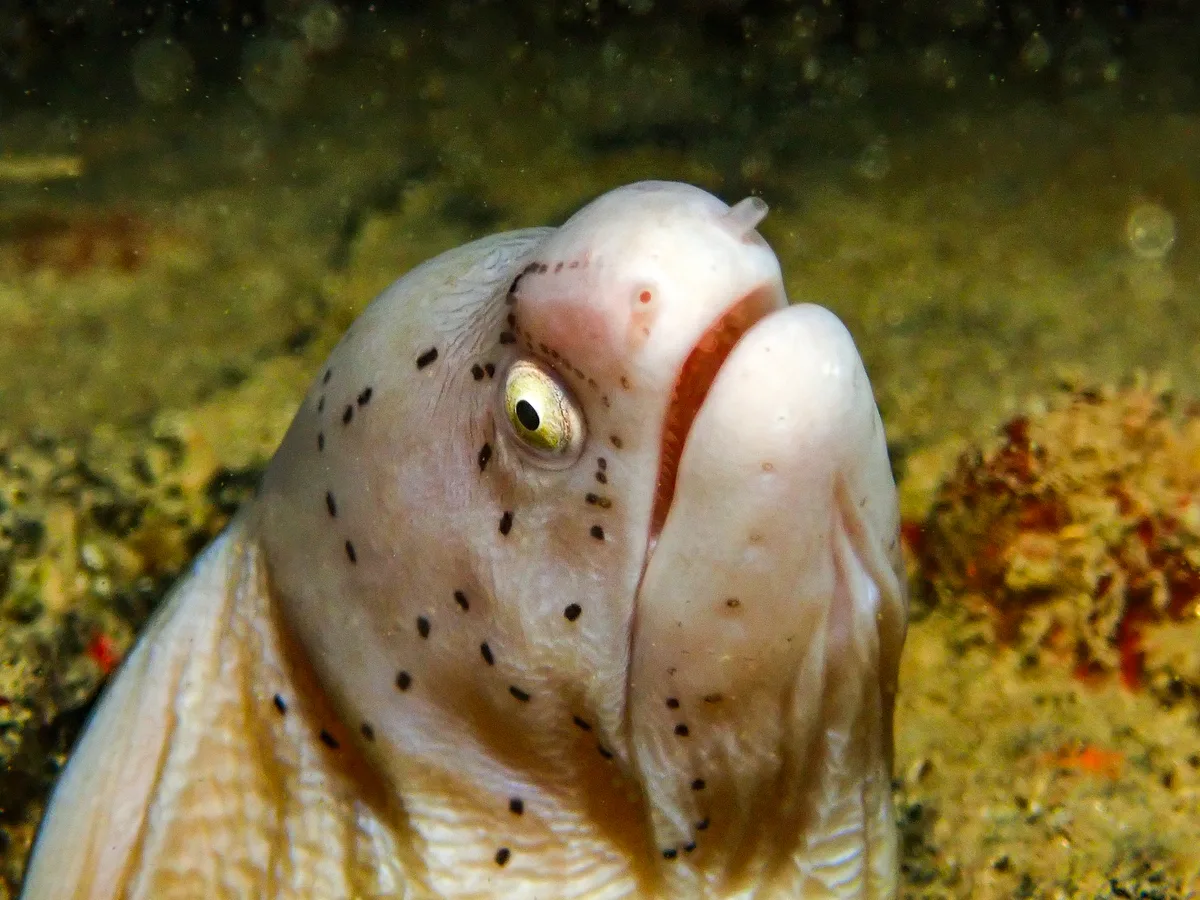
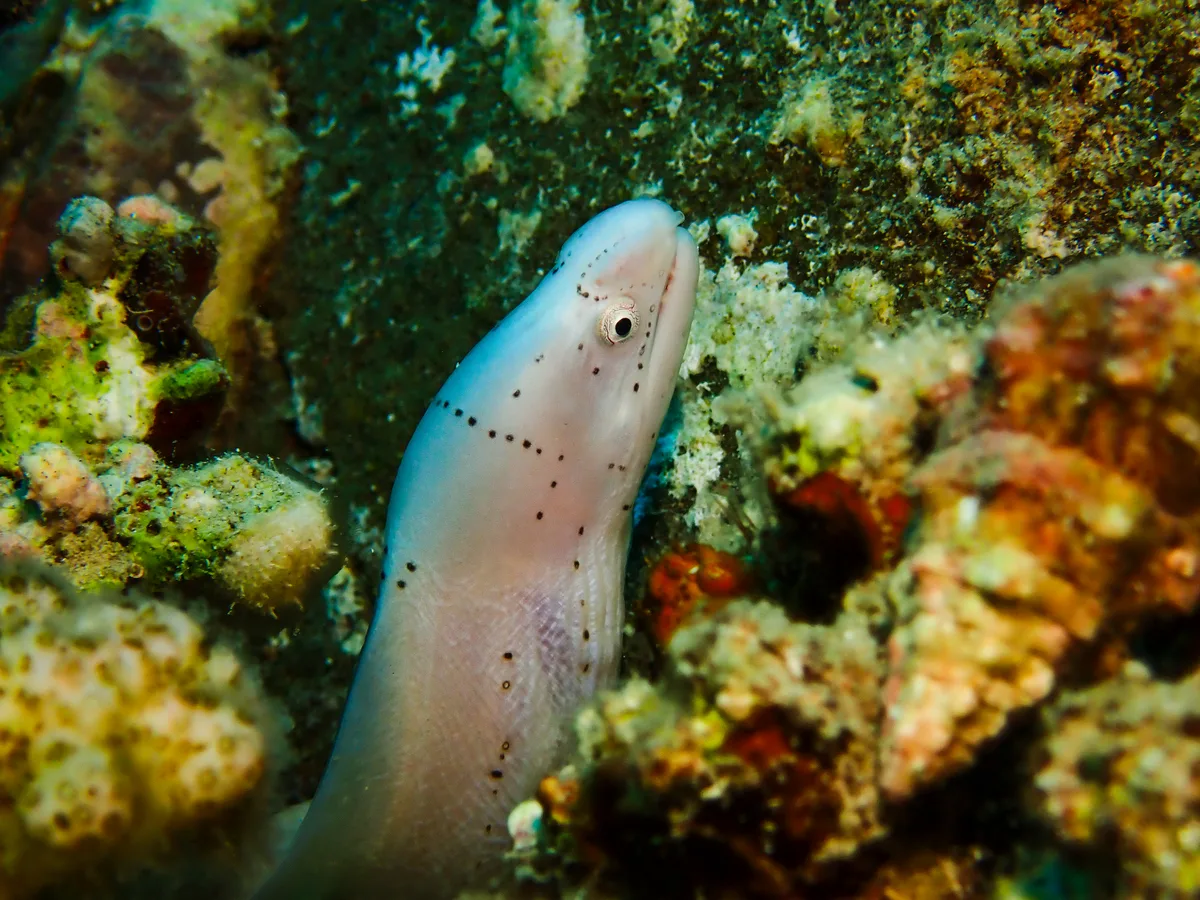
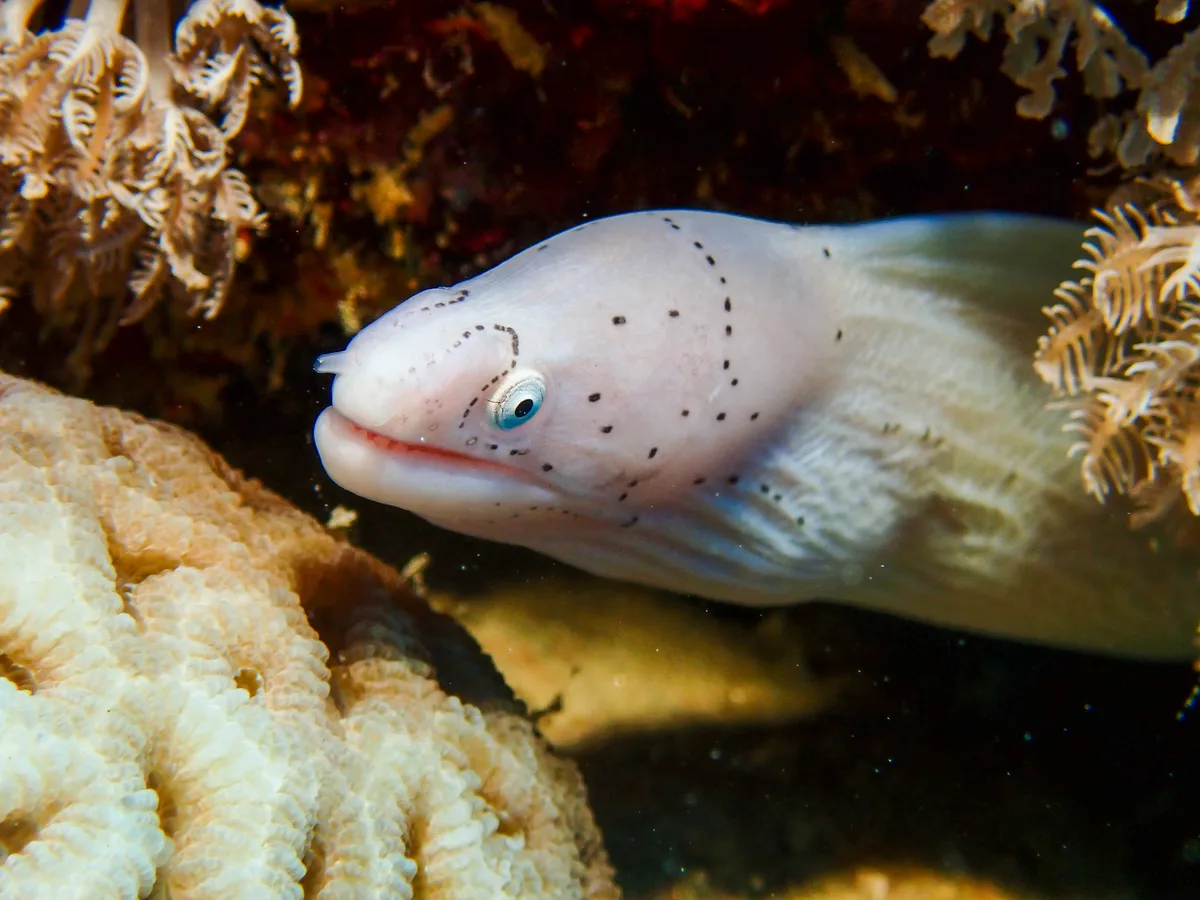
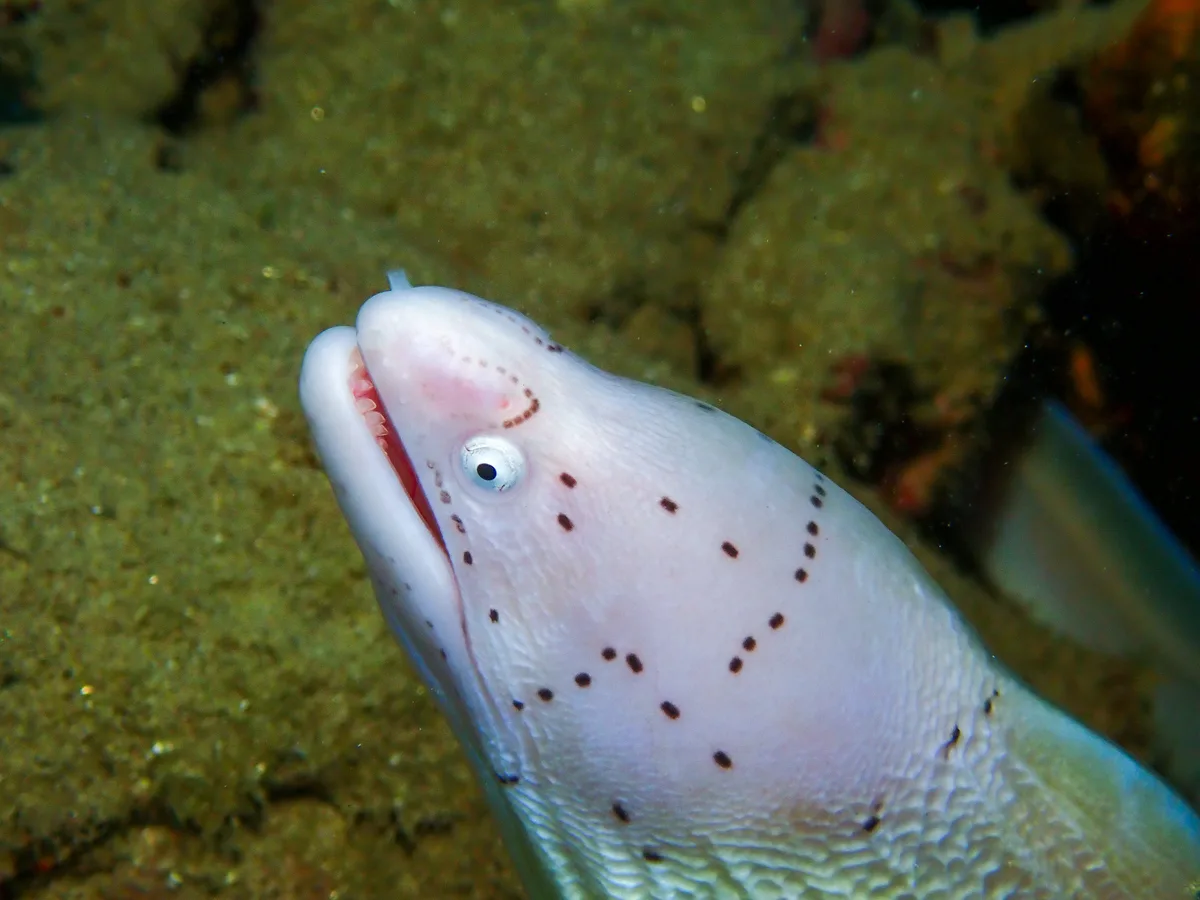
A small pale moray, lilac-gray under a dense stipple of dark dots, with the marks on the head lining up into rows. That is where the name comes from.
The interesting thing about morays is what they do when they catch something too big to swallow whole. They have no limbs, no claws, and a head too narrow to shake prey apart. So they tie themselves in a knot. The eel loops its own tail into an overhand knot, slides the loop forward along the body until it presses against the prey, and then hauls its head backward through the loop. The knot gives it the bracing that a bigger animal gets from a paw, and the chunk comes away. The same trick runs in reverse to pull itself out of a grip, which is why a moray that has taken hold of a spear is so hard to get back.
At 65 cm this is one of the small ones, and it lives shallow - rubble, rock and reef edge from a meter down. It hunts after dark, mostly small fish and crustaceans, and spends the day with its head out of a hole and its jaws working, which is breathing rather than threat.
The genus. Gymnothorax Bloch 1795 - gymnós (bare or naked) + thṓrax (breast or chest). ETYFish
- pale lilac-gray body under a dense stipple of fine dark dots
- head marked with lines of black dots rather than scattered ones
- no pectoral or pelvic fins; the dorsal fin runs from behind the head to the tail
- shallow rubble and rock rather than deep reef
- up to 65 cm
Why it's threatened
There are no major threats known to Gymnothorax griseus, although it may be impacted by habitat loss and coastal development in parts of its range.
Threat classification from the IUCN Red List.