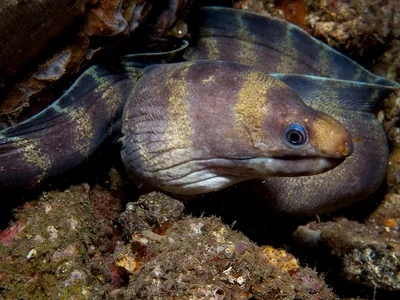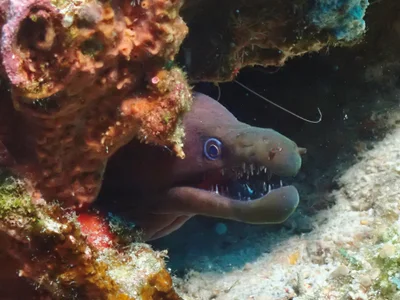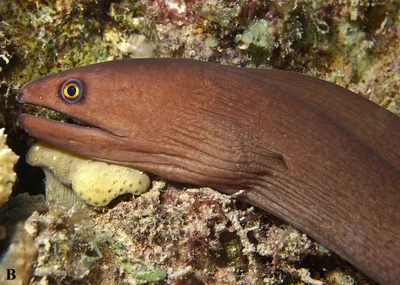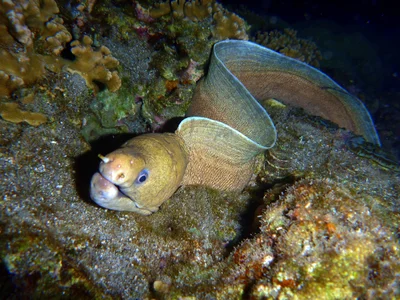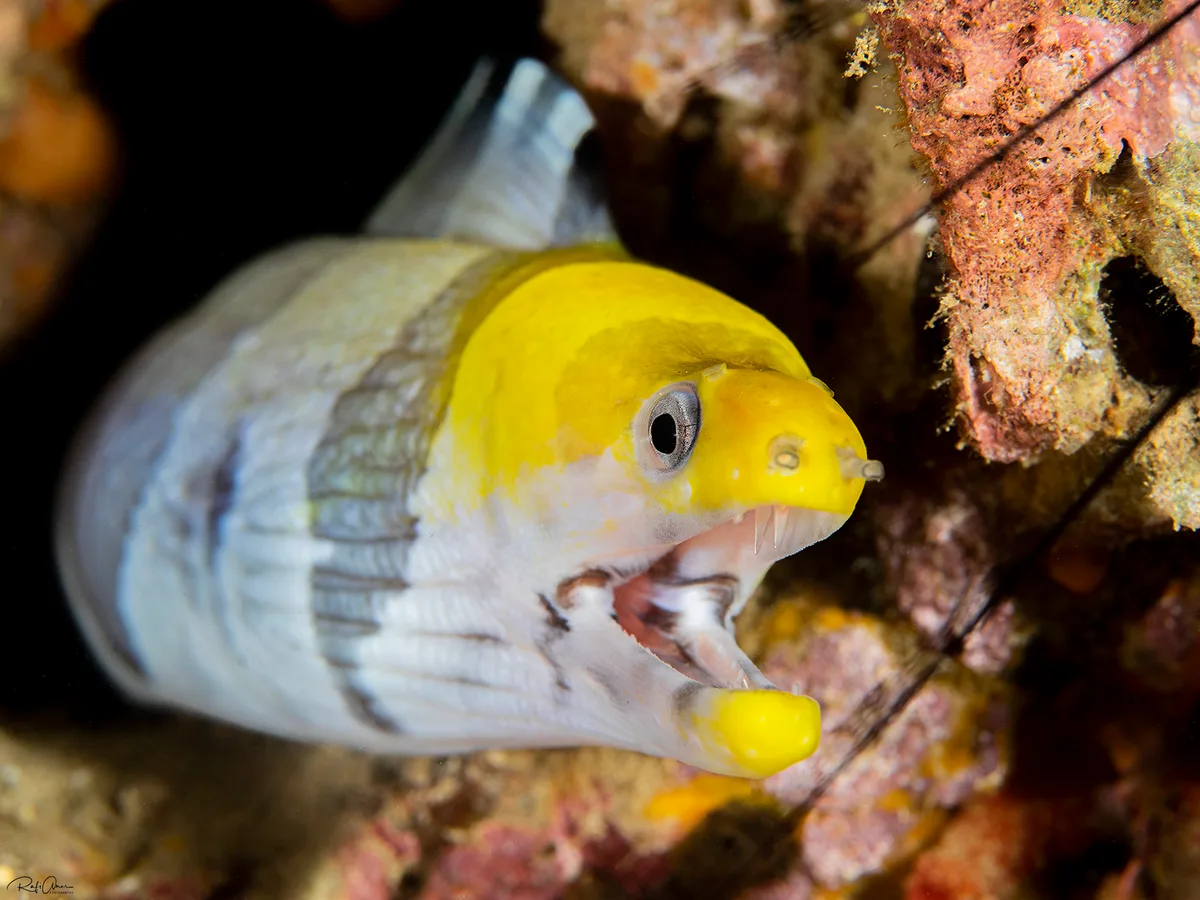
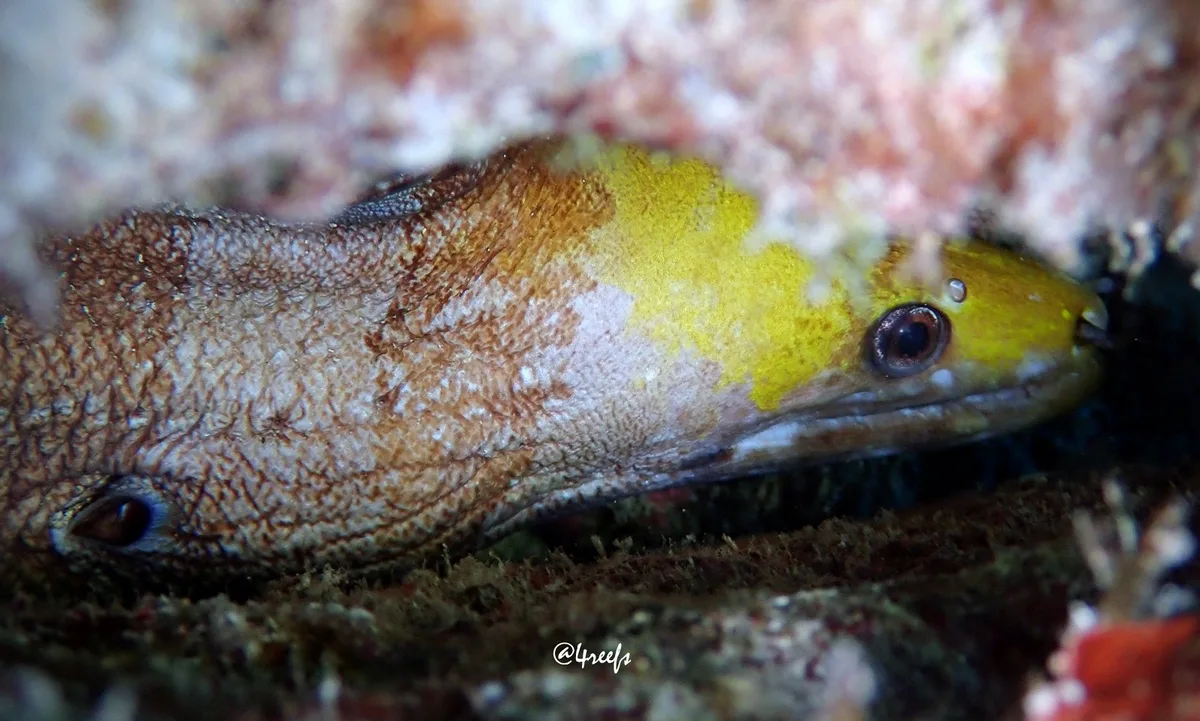
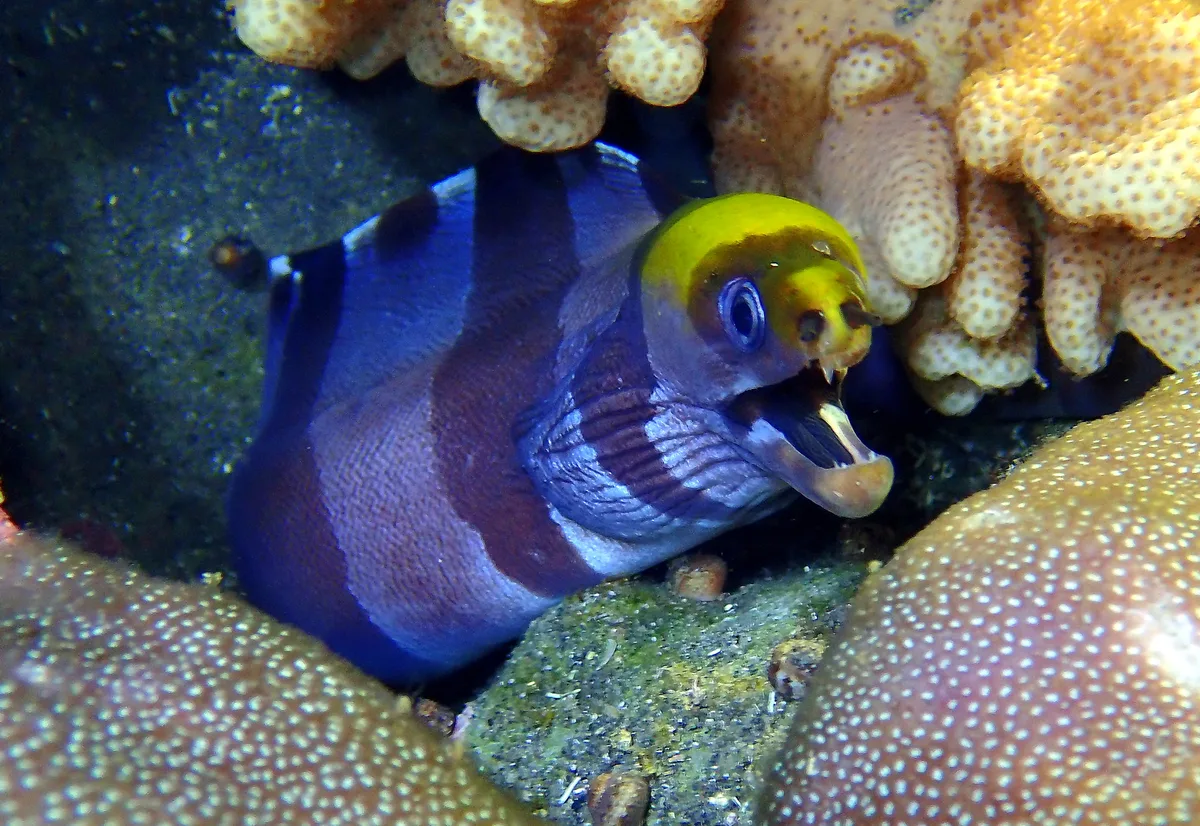
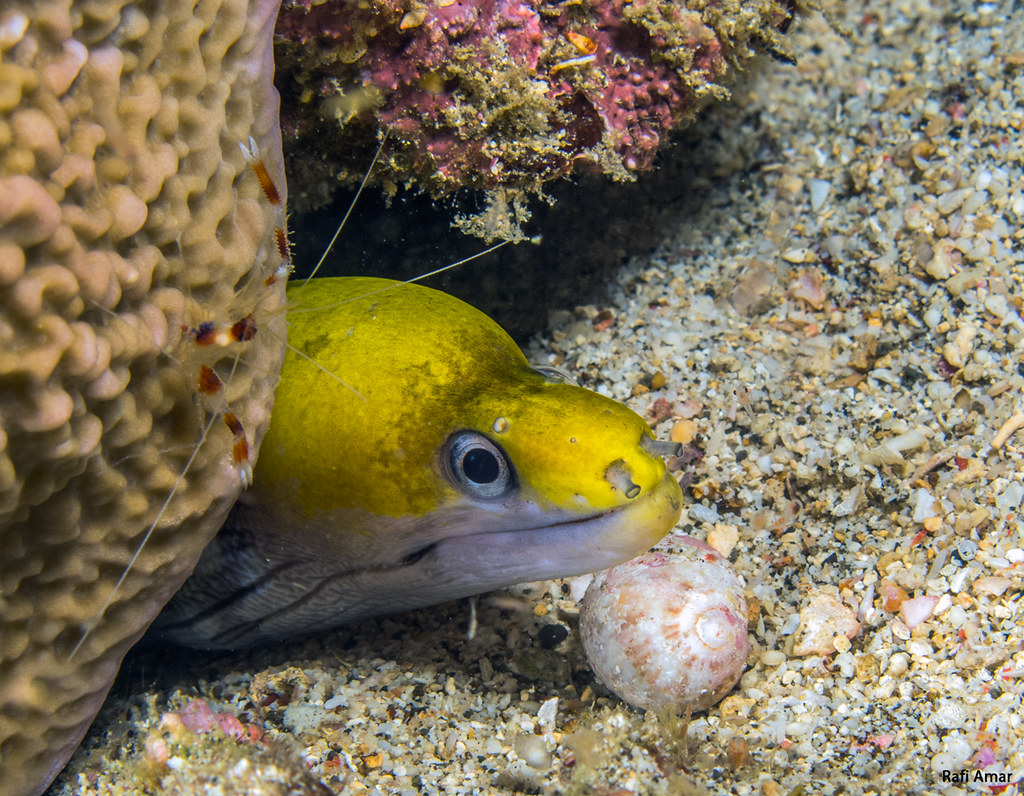
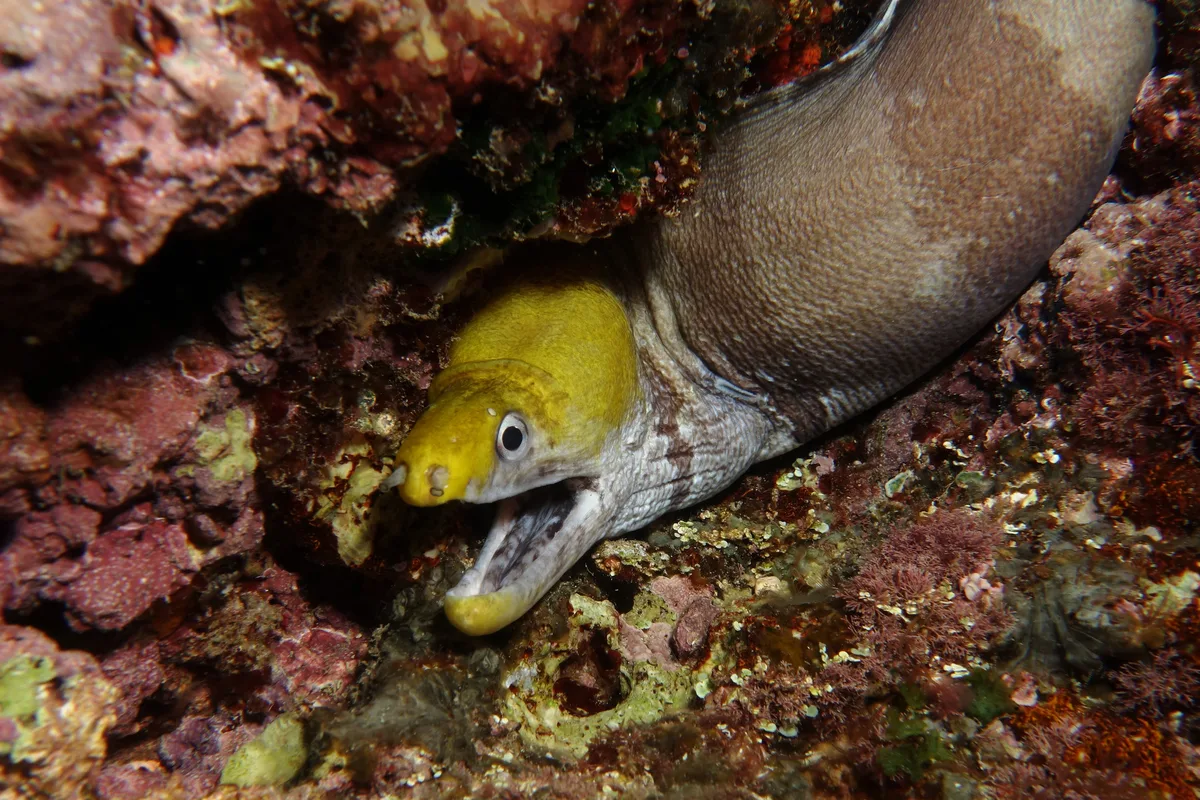
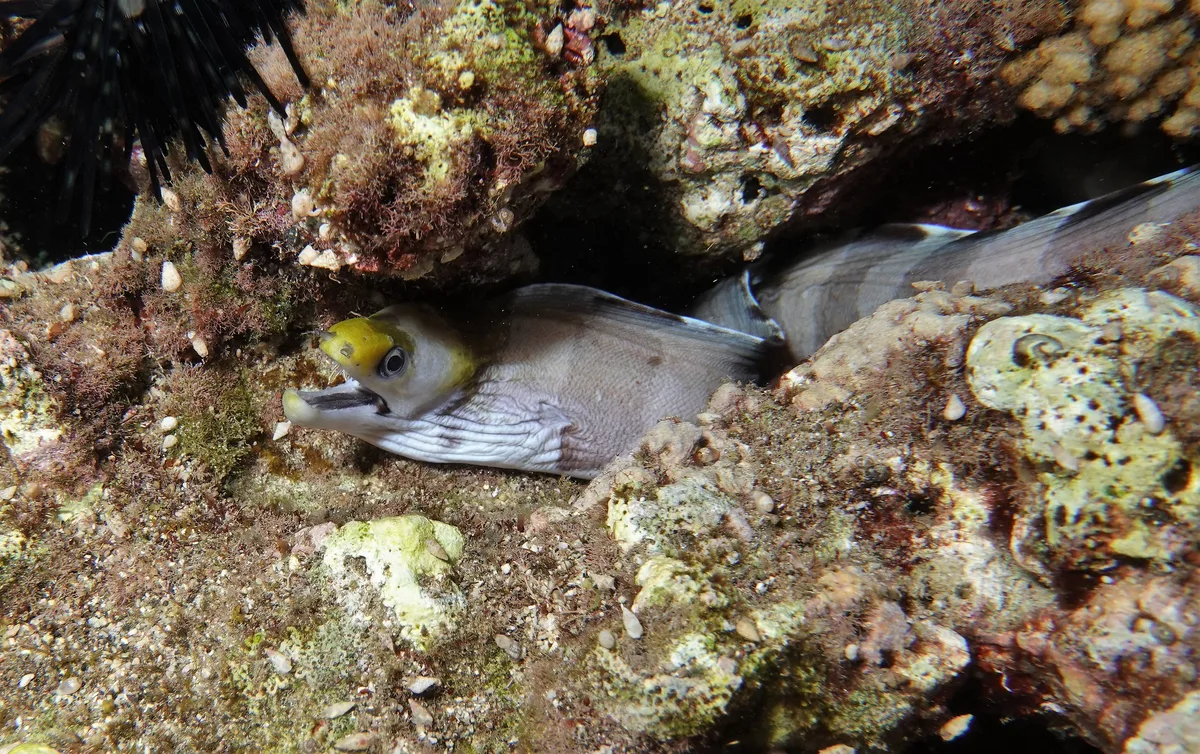
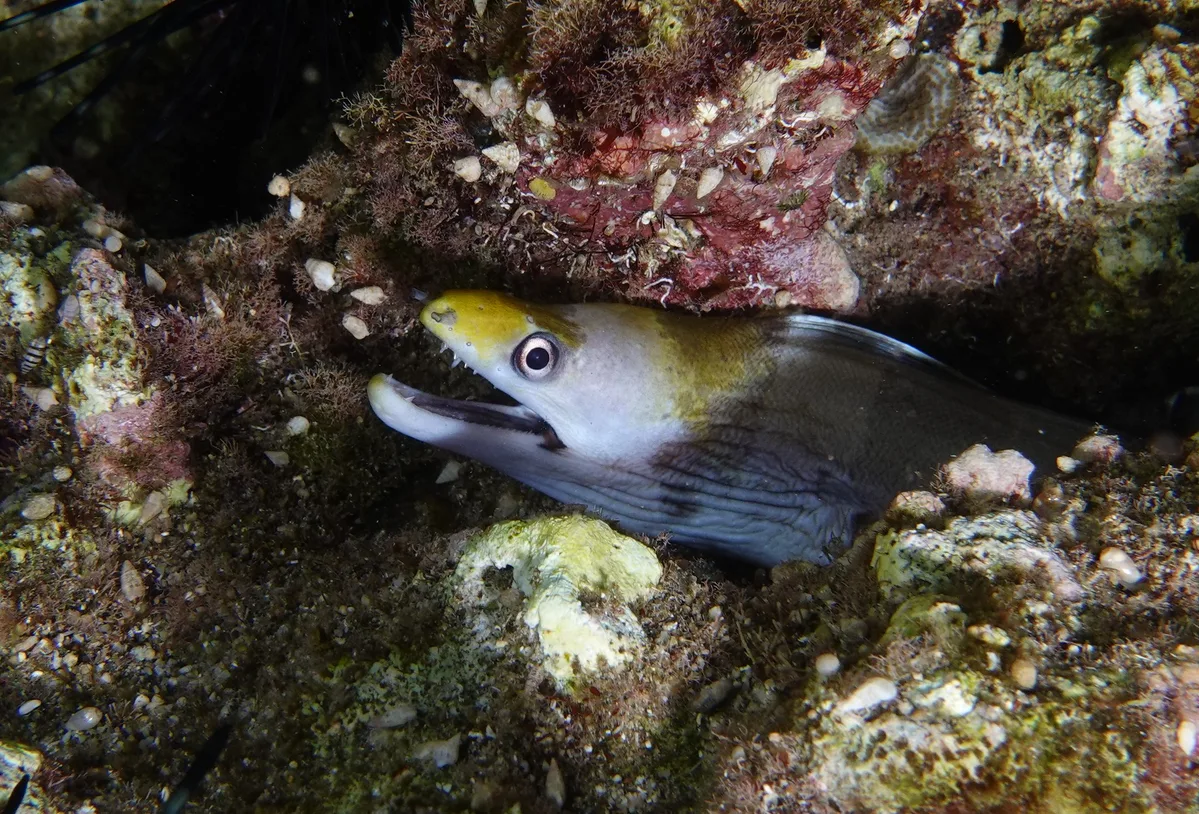
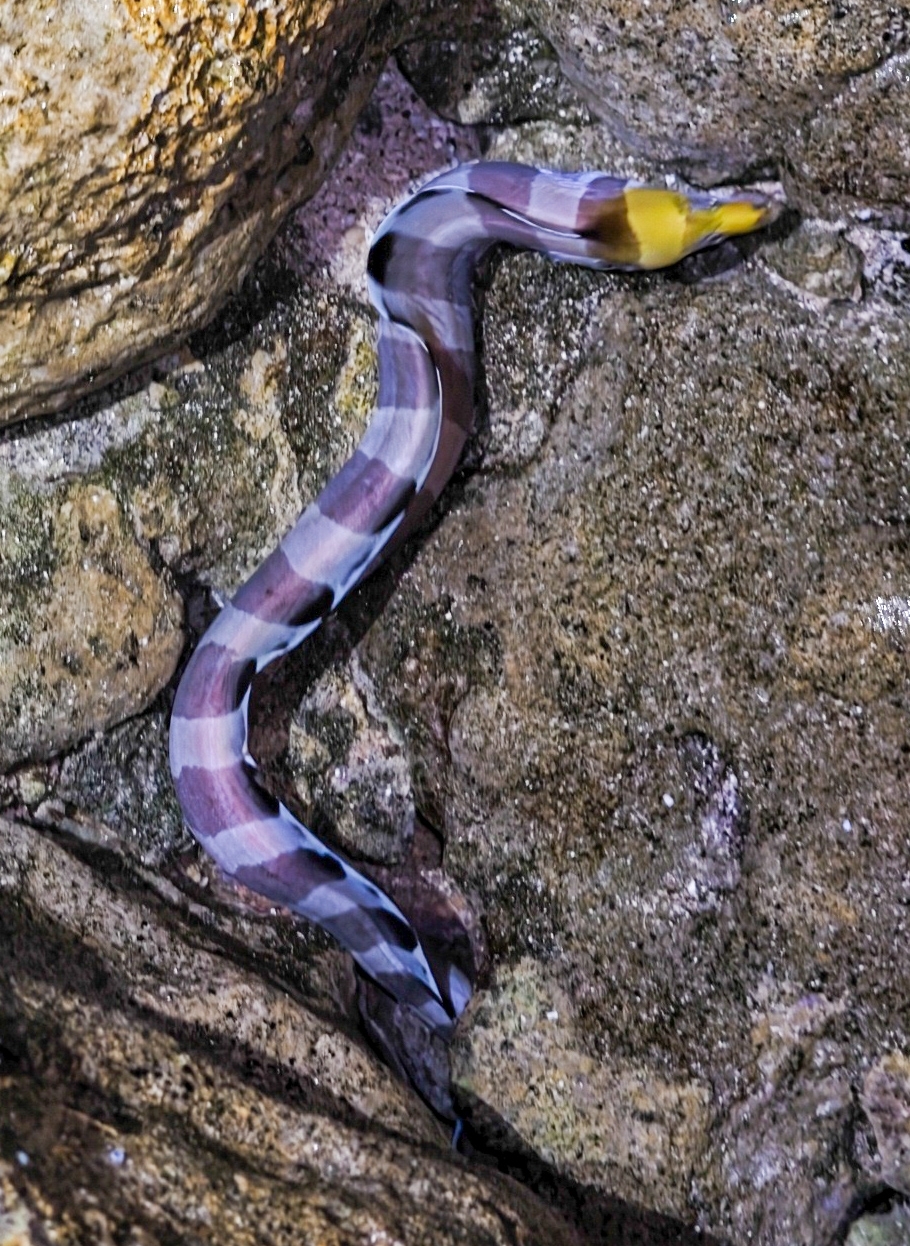
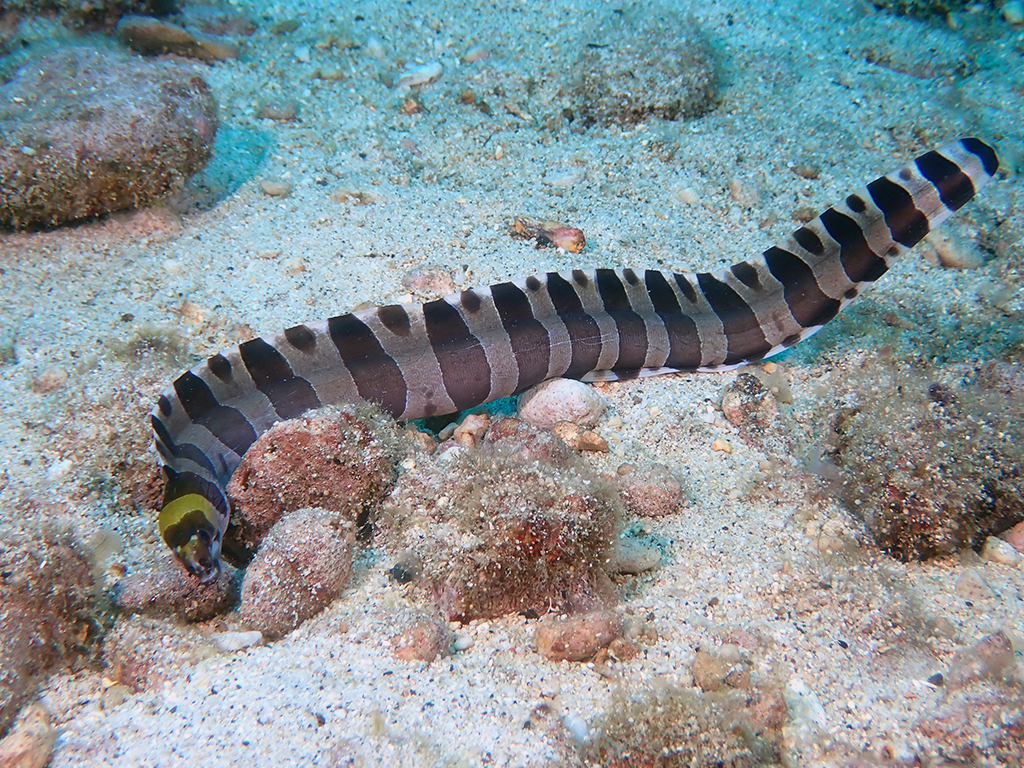
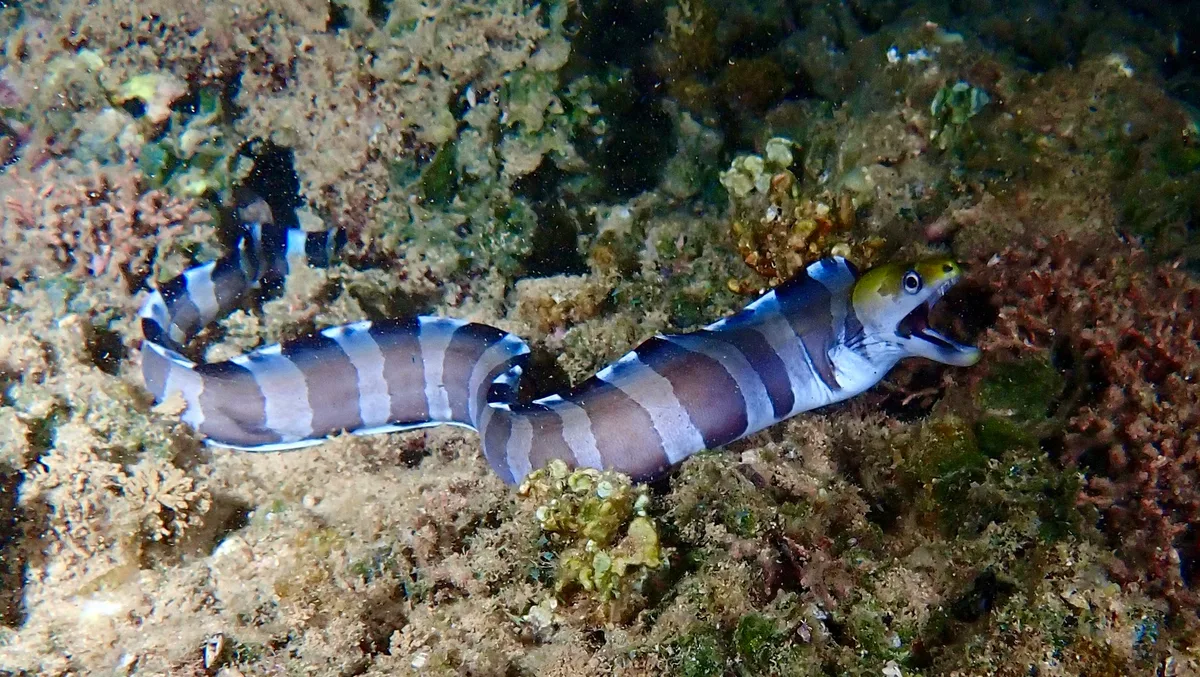
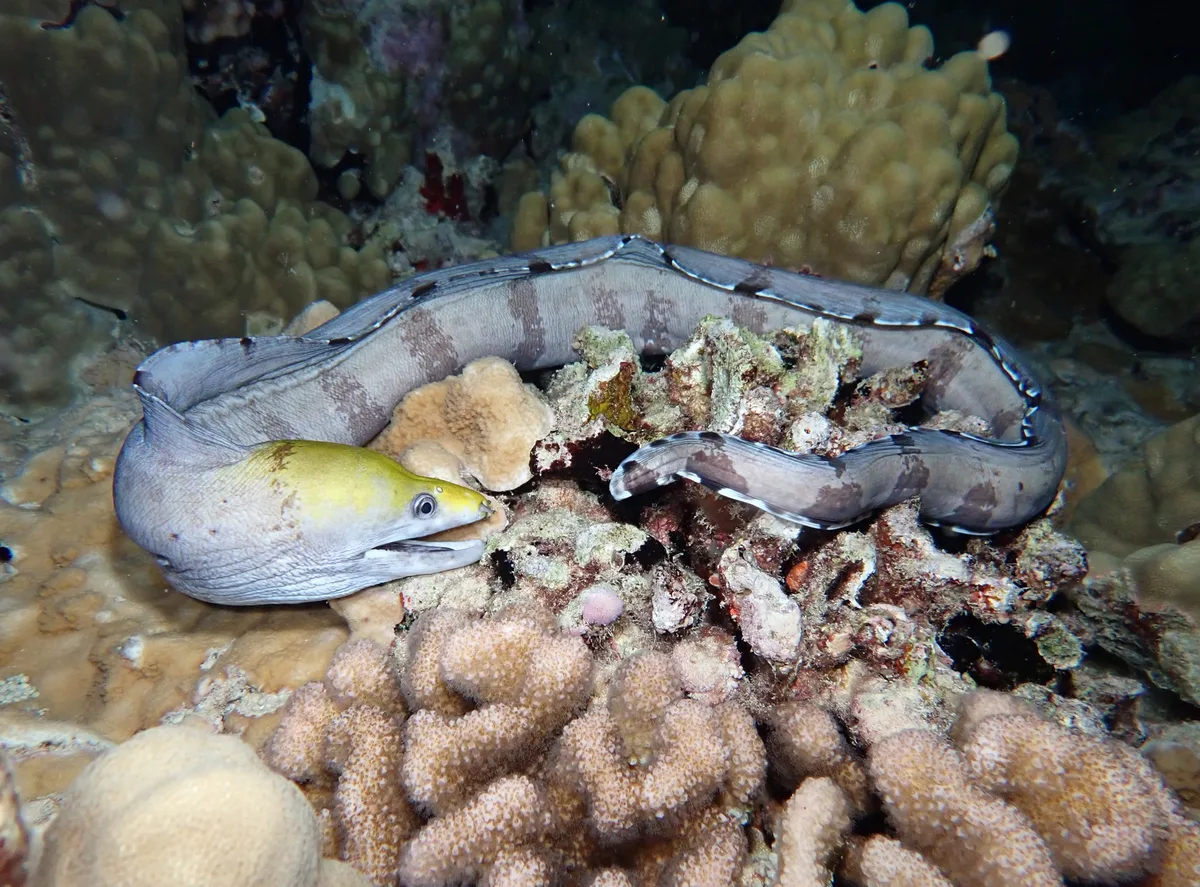
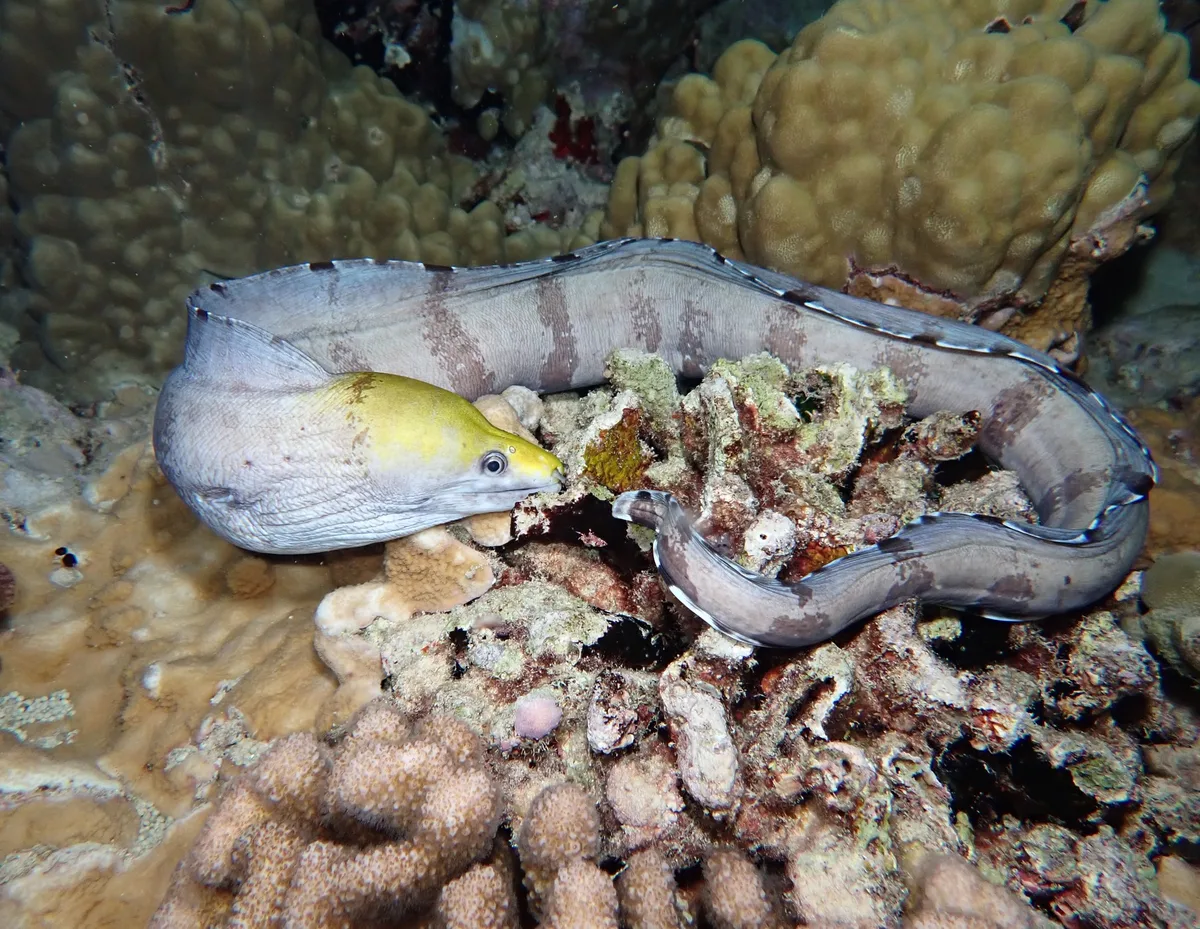
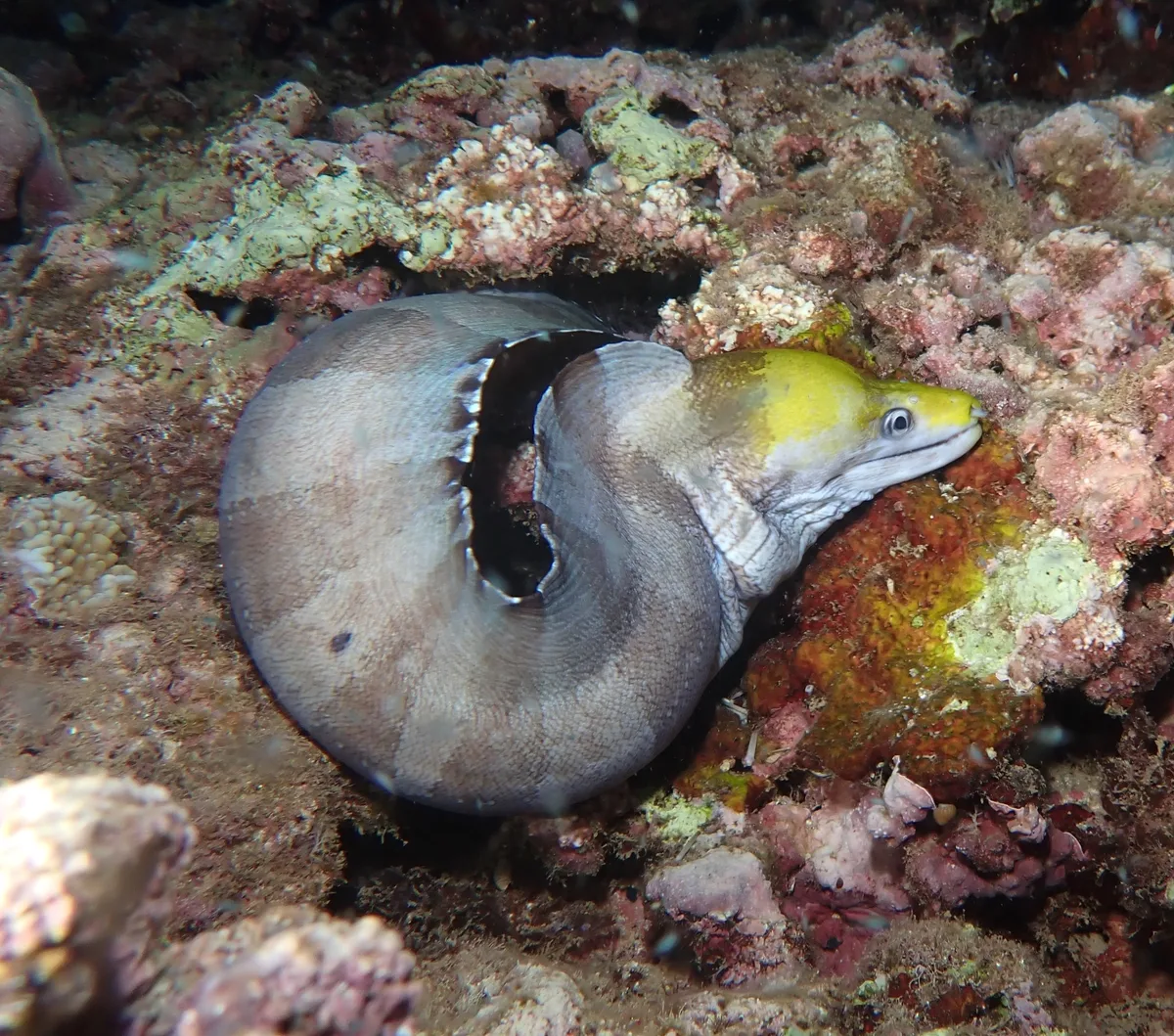
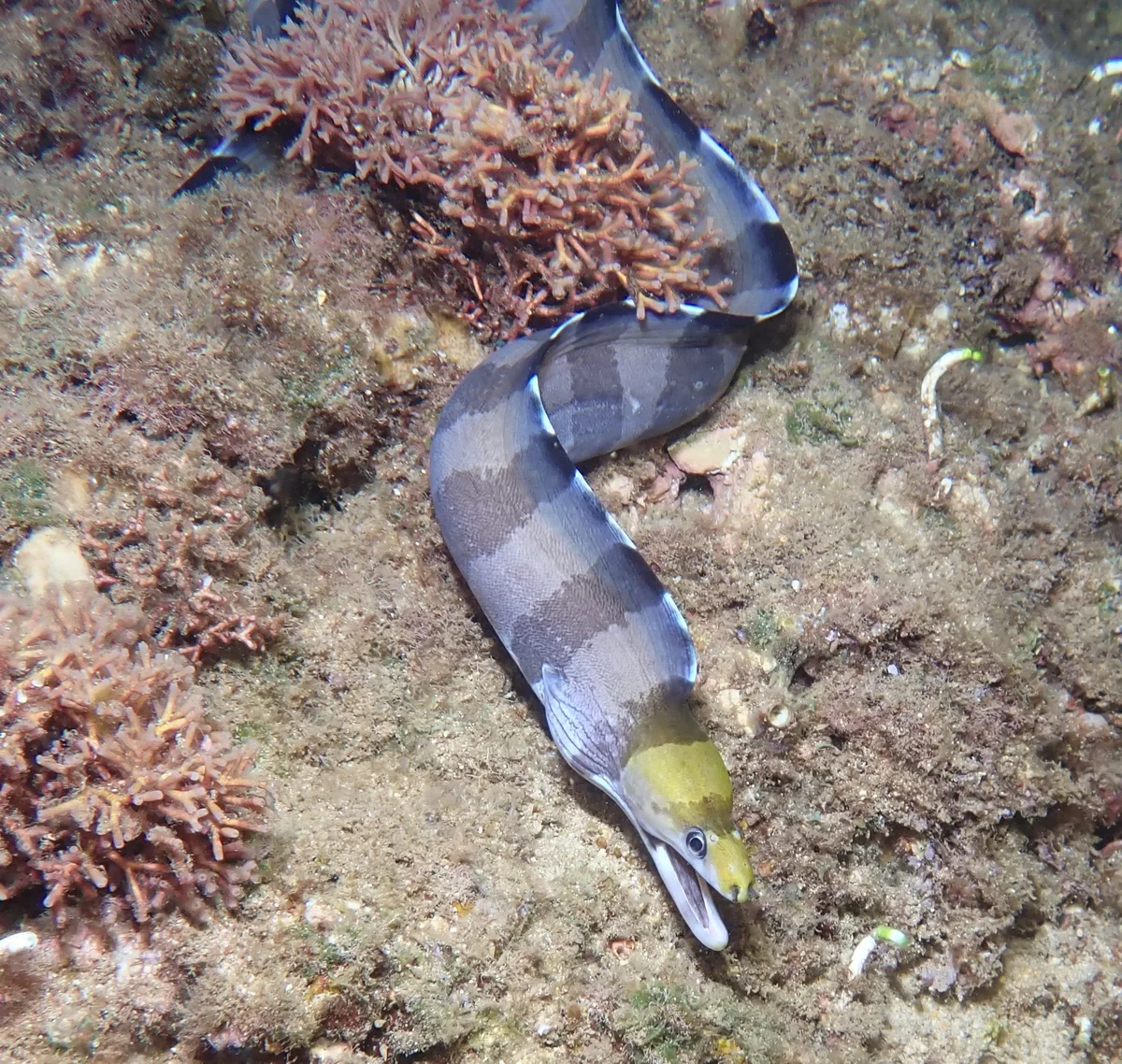
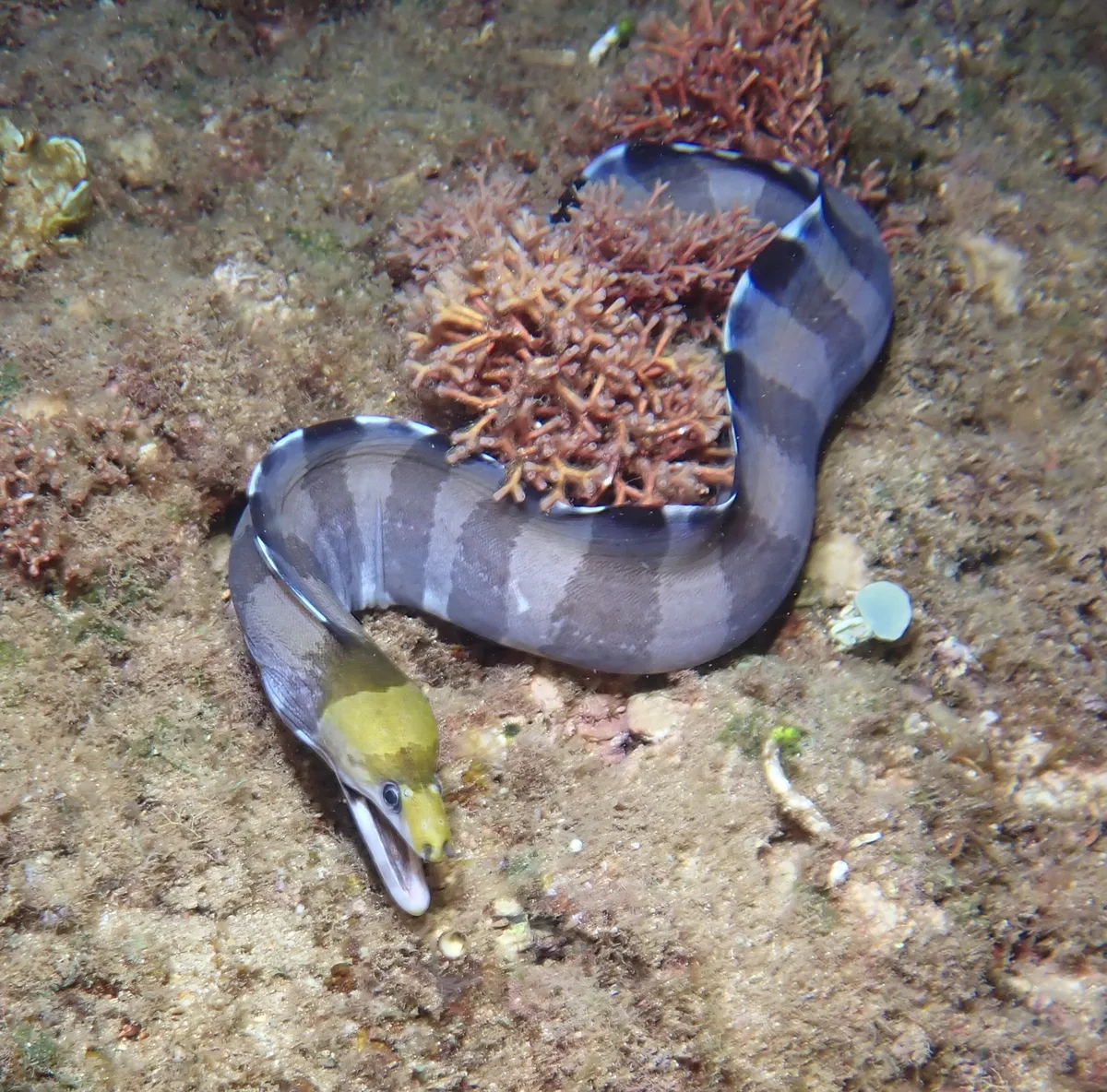
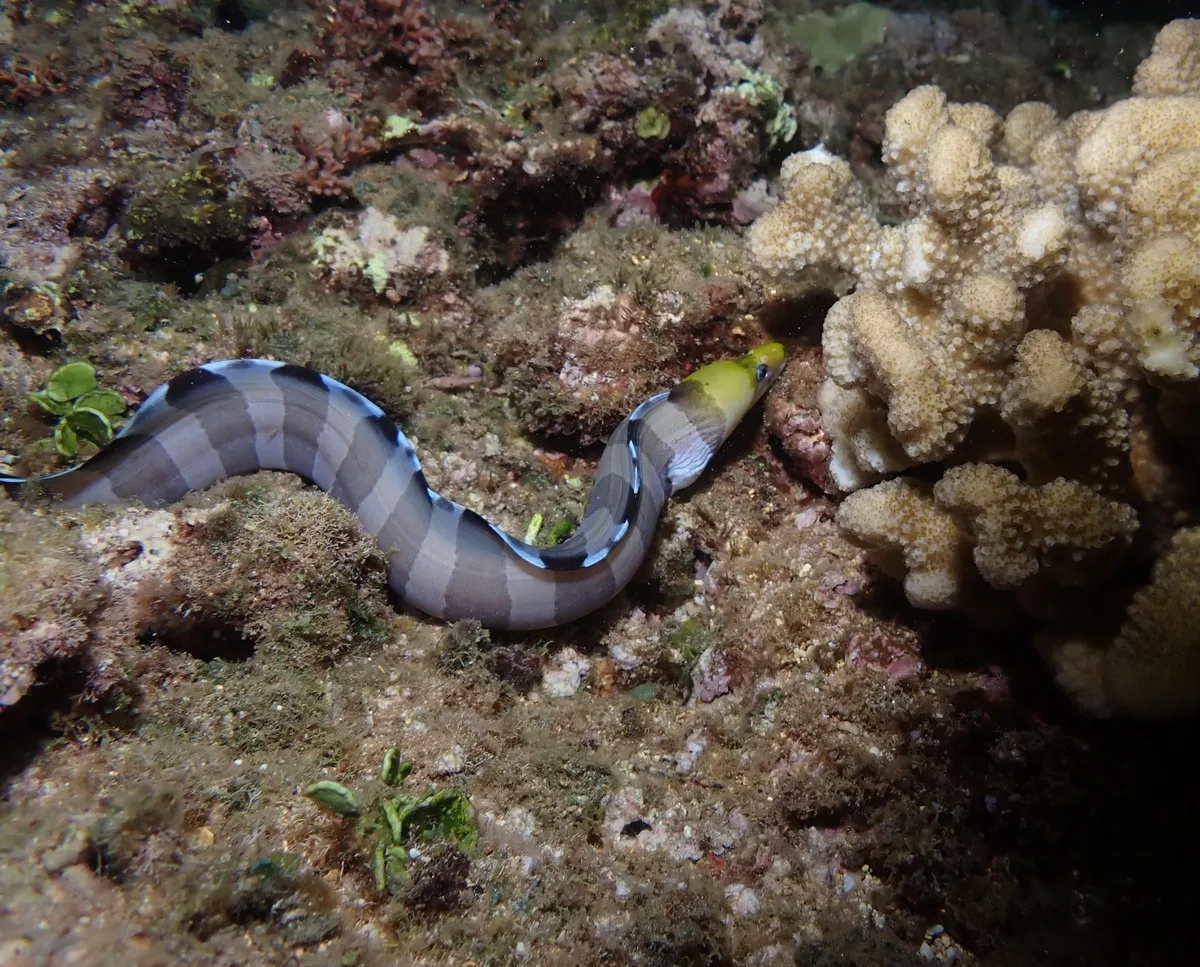
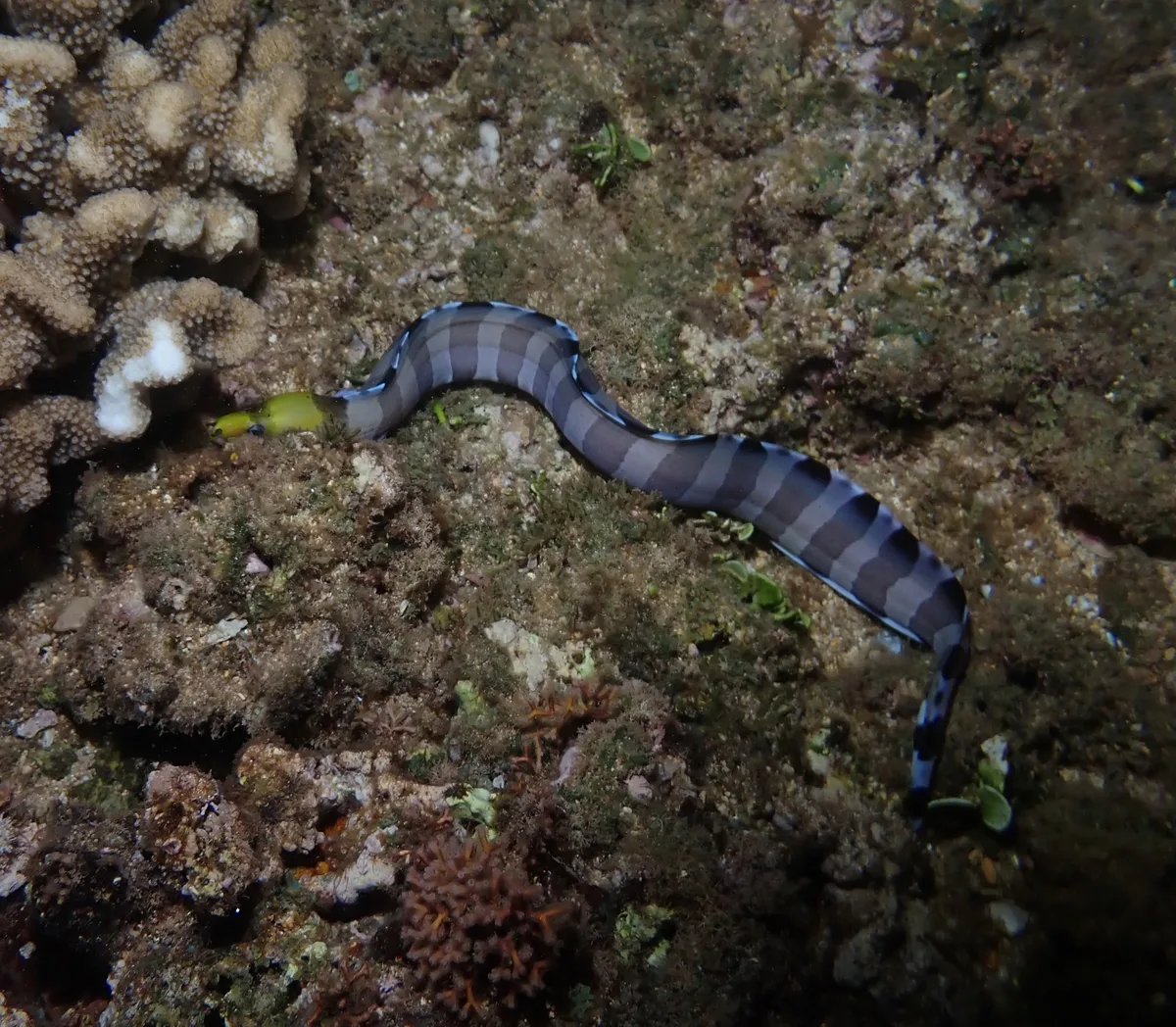
A common shallow moray with a pale yellowish head and blotched body, filling a hole in a coral head with its jaws working.
It has a second set of jaws in its throat, and they move. Most fish feed by suction - the mouth opens and water carries the prey in - but an eel wedged in a hole cannot generate that flow. So the pharyngeal jaws, which in other fish sit still and grind, are mounted on long muscles that launch them forward into the mouth, grip the prey and haul it back down the throat. It is a ratchet, it works with no water movement at all, and it was only filmed for the first time in 2007.
That mechanism is why a moray bite is hard to escape: the animal is not holding on with the front teeth alone.
Eighty centimeters (32 in). It hunts small fish and octopus at night among coral. The danger flag is about hands in holes and about spearfishing - nothing here has any interest in a diver who keeps their fingers to themselves.
The genus. Gymnothorax Bloch 1795 - gymnós (bare or naked) + thṓrax (breast or chest). ETYFish
The species. Gymnothorax rueppelliae (McClelland 1844) - Honours German explorer-naturalist Eduard Rüppell. ETYFish
- brown body with pale-edged dark blotches in irregular rows
- yellow-brown head, paler than the body
- small eye set well forward on a short snout
- length up to 80 cm
Why it's threatened
Threat classification from the IUCN Red List.