
47 species in Cardinals
Apogon
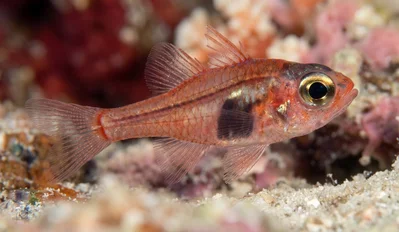
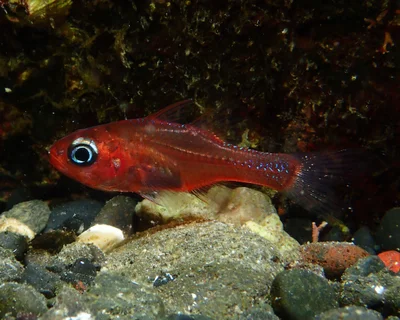
5What the split left behind. The species still here are one kind of animal: small, plain red or pink, unmarked or nearly so, and pressed deep into caves, crevices and rubble by day. A cardinalfish that is red, patternless and inside the reef rather than hanging in front of it is usually one of these.

Apogonichthyoides
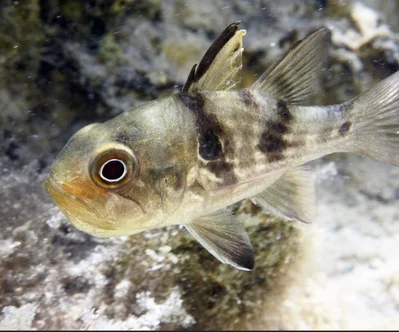
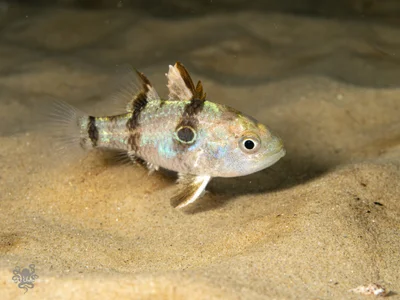
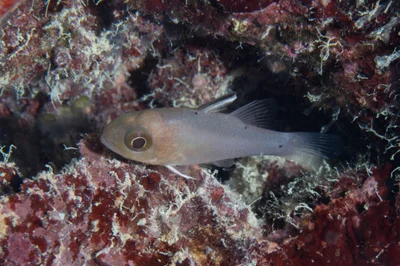
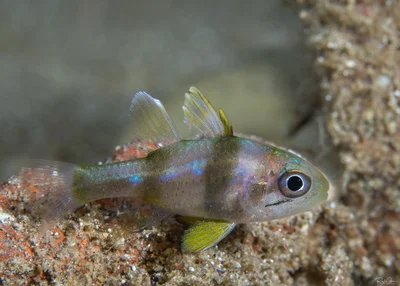
4Deep-bodied, brown and solitary, each with a dark bar through the eye and a blotch or a ringed ocellus on the side or at the tail base. They work low over rubble and silt rather than over coral, and they are not found in the packed shoals the family is known for.
Cheilodipterus
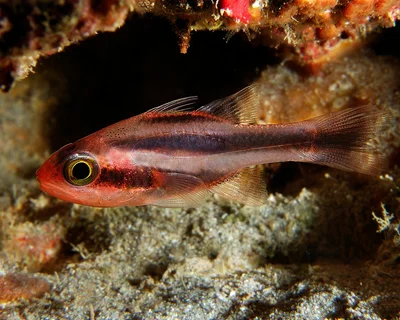
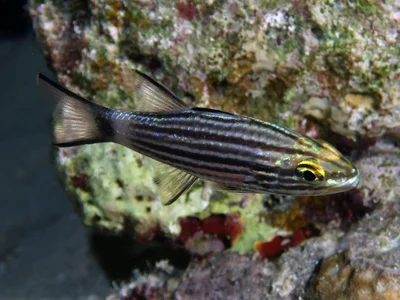
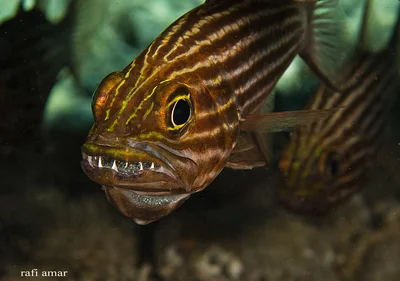
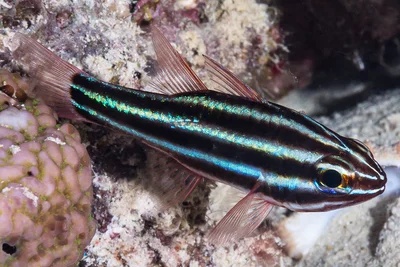
5The only cardinalfishes with true canines. Every other genus in the family works with small teeth; these carry proper fangs in both jaws and take fish where their relatives take plankton. Bold dark stripes running the length of the body, and usually a spot at the tail base.
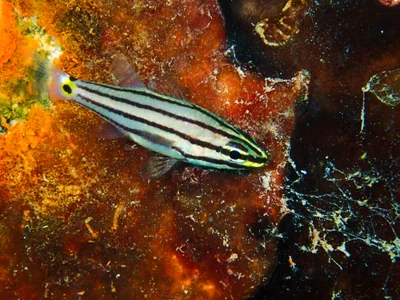
Fowleria
5Identified by a false eye on the gill cover. Most of the genus carries a dark ocellus there, which is the quickest way to place a small mottled cardinalfish that otherwise offers nothing to work with. Stout, cryptic animals of rubble and weed rather than of schools.
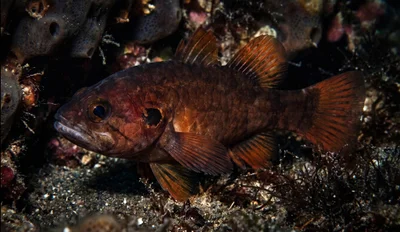

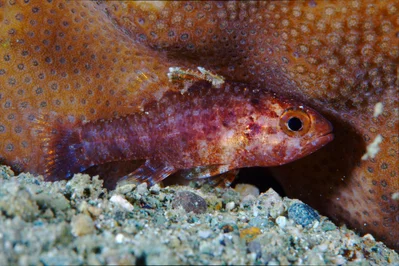
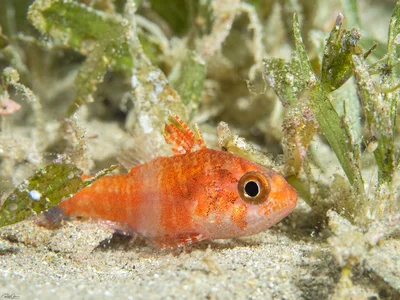
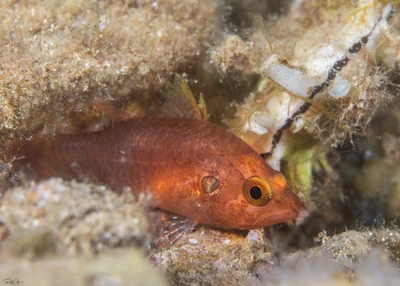
Nectamia
3Small groups living inside branching coral, and the tail base is where the identification sits: a ring or a saddle around it rather than the round spot the rest of the family uses. Another genus pulled back out of Apogon.

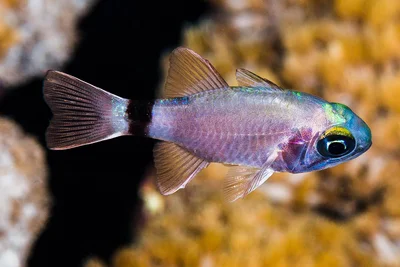
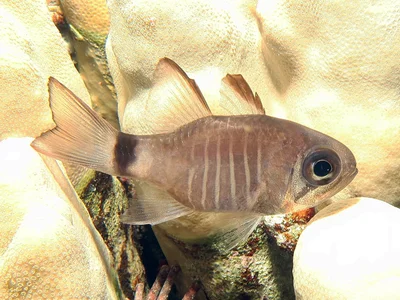
Ostorhinchus
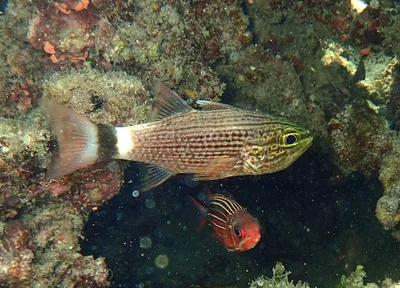
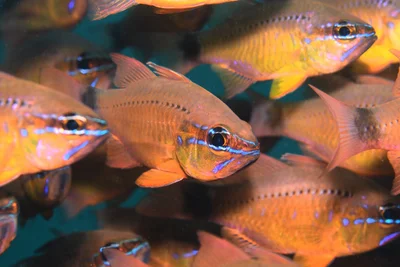
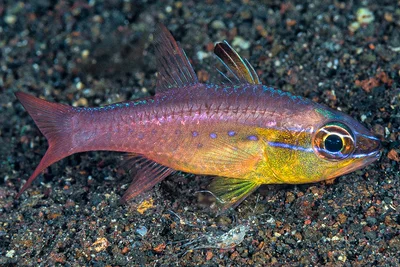
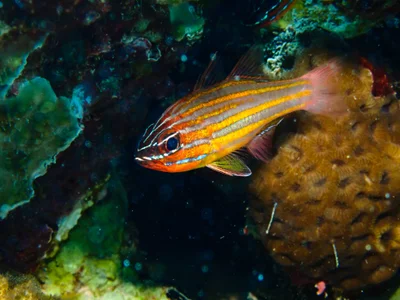
7The genus most of this page belongs to, and it barely existed until 2014: a molecular revision raised it from a subgenus and moved the bulk of the Indo-Pacific species out of Apogon into it. Dive guides, older books and most photo sites are still a generation behind, so expect to meet the same fish filed under Apogon everywhere else.
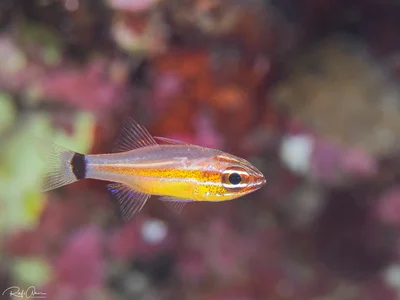

Pristiapogon
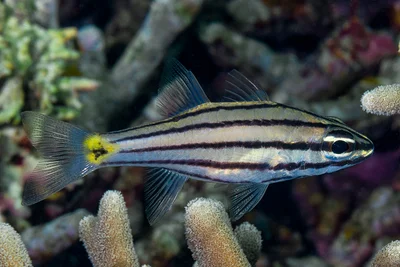
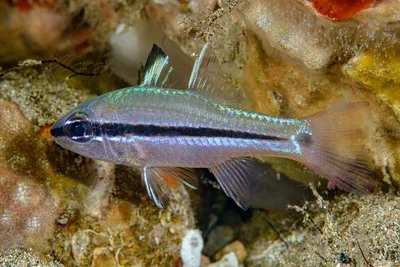
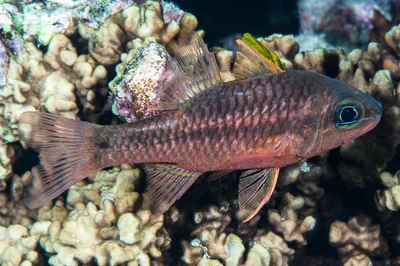
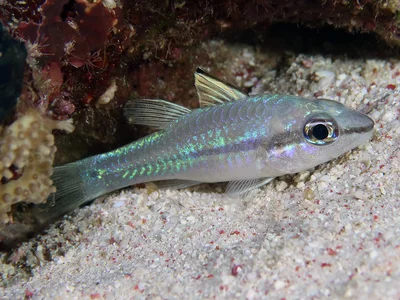
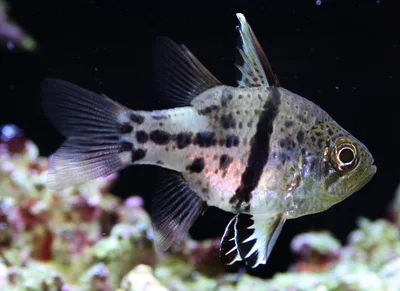
3Named for a saw. The preopercle - the bone along the rear edge of the cheek - is serrated on both its margin and its ridge, and that is the character the genus is built on. It is also the one thing here you will never see underwater; in a photograph you work from the seven dorsal spines and the stripe through the eye instead.
Rhabdamia
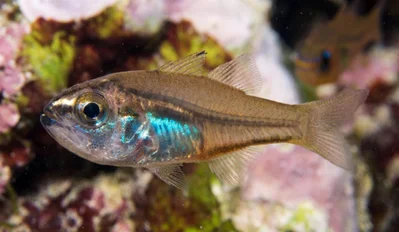
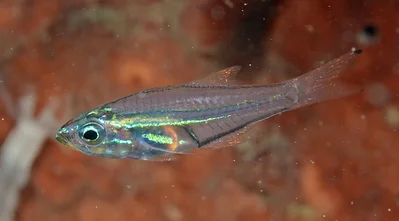
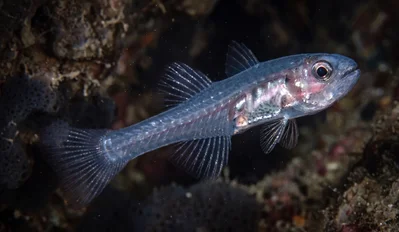
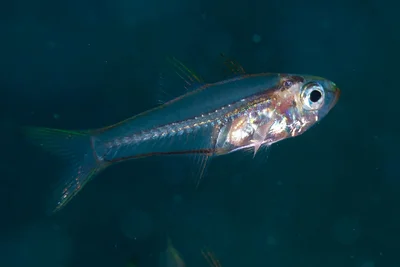
2The glass cardinalfishes. The body is translucent enough to show the spine and the gut through it, and they hang in dense schools, sometimes hundreds at a time, out over coral heads in open water - the opposite of the family habit of sitting still under a ledge.
Taeniamia
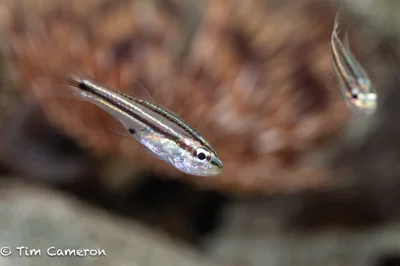
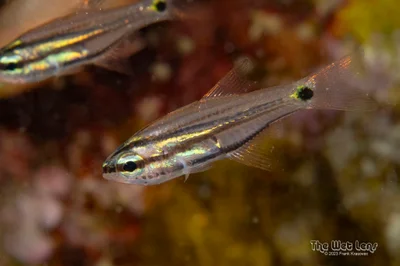
2Translucent fish ruled with fine lines along the body, in shoals that hold almost motionless through the day. Older books and photo archives file them under Archamia.

Other genera
11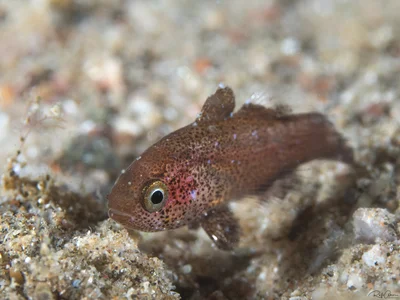
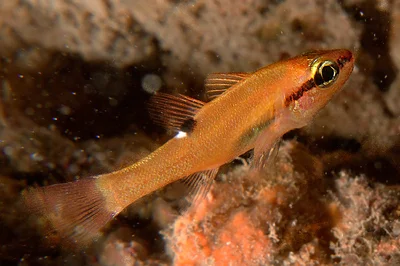
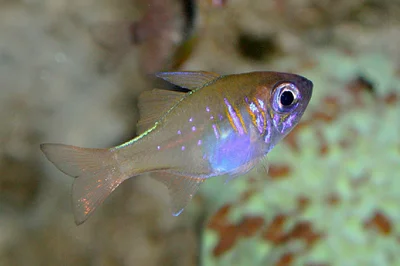
Other oval-bodied groups
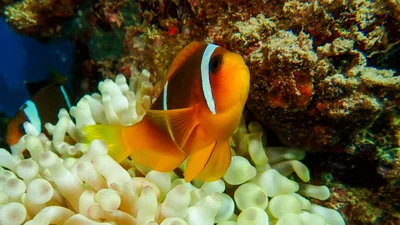
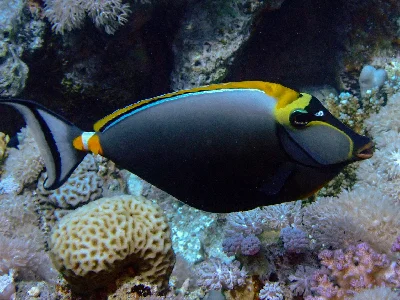
Similar silhouette underwater - worth a look if this was not your animal.



Last Update: August 23, 2026