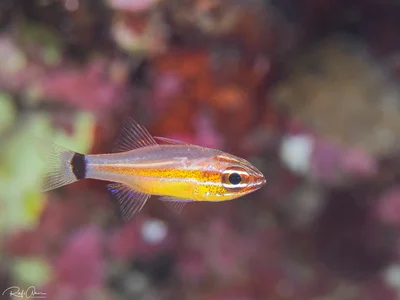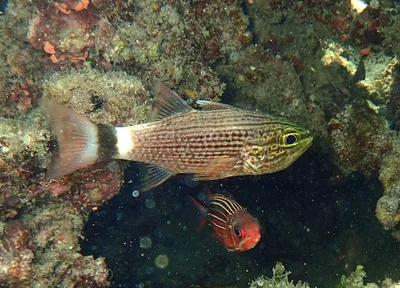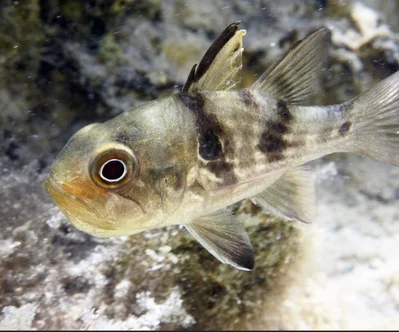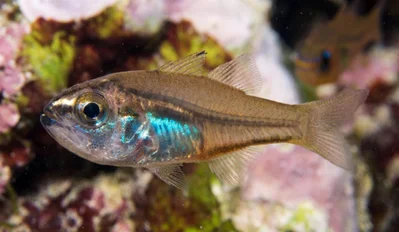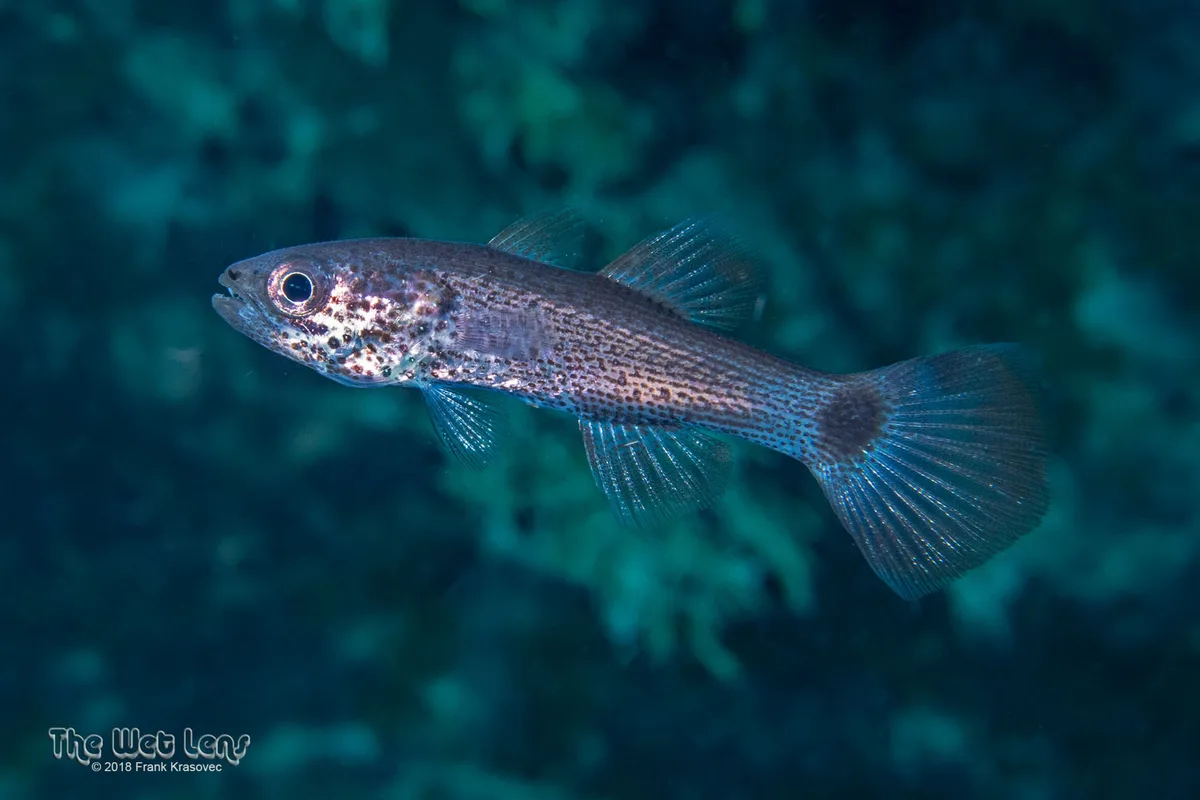
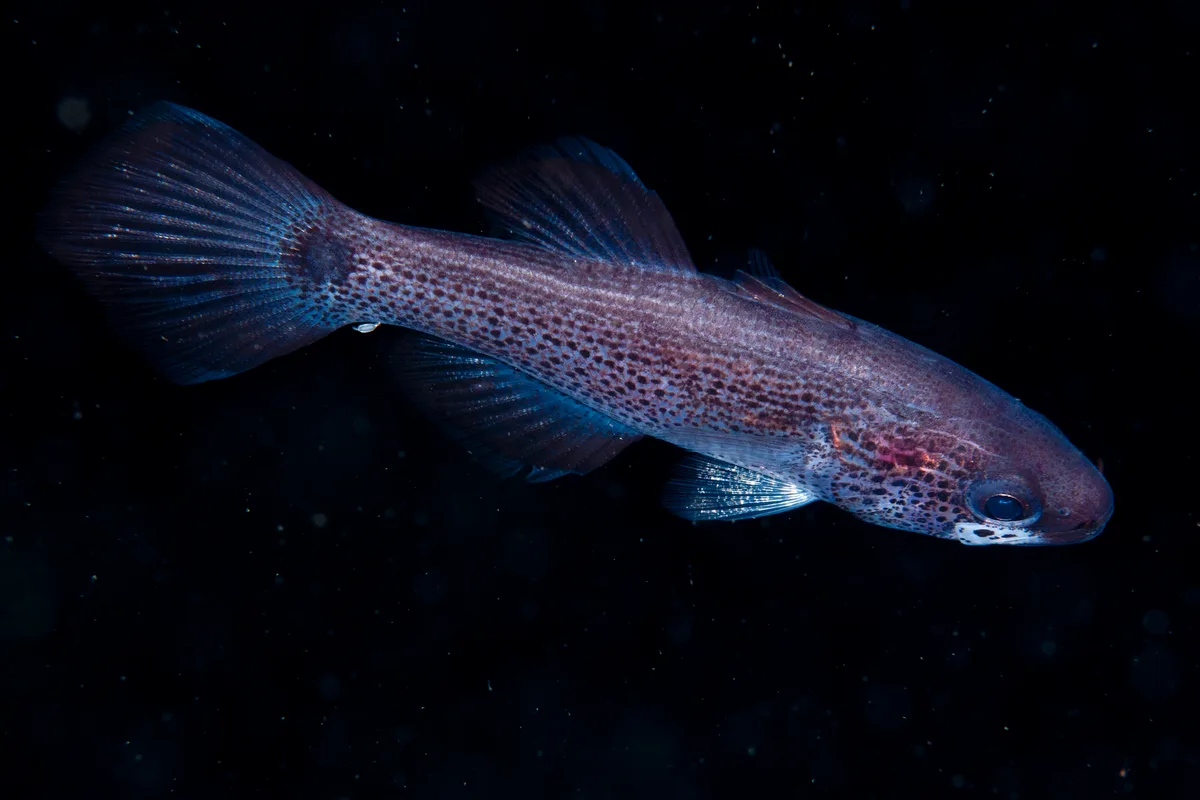
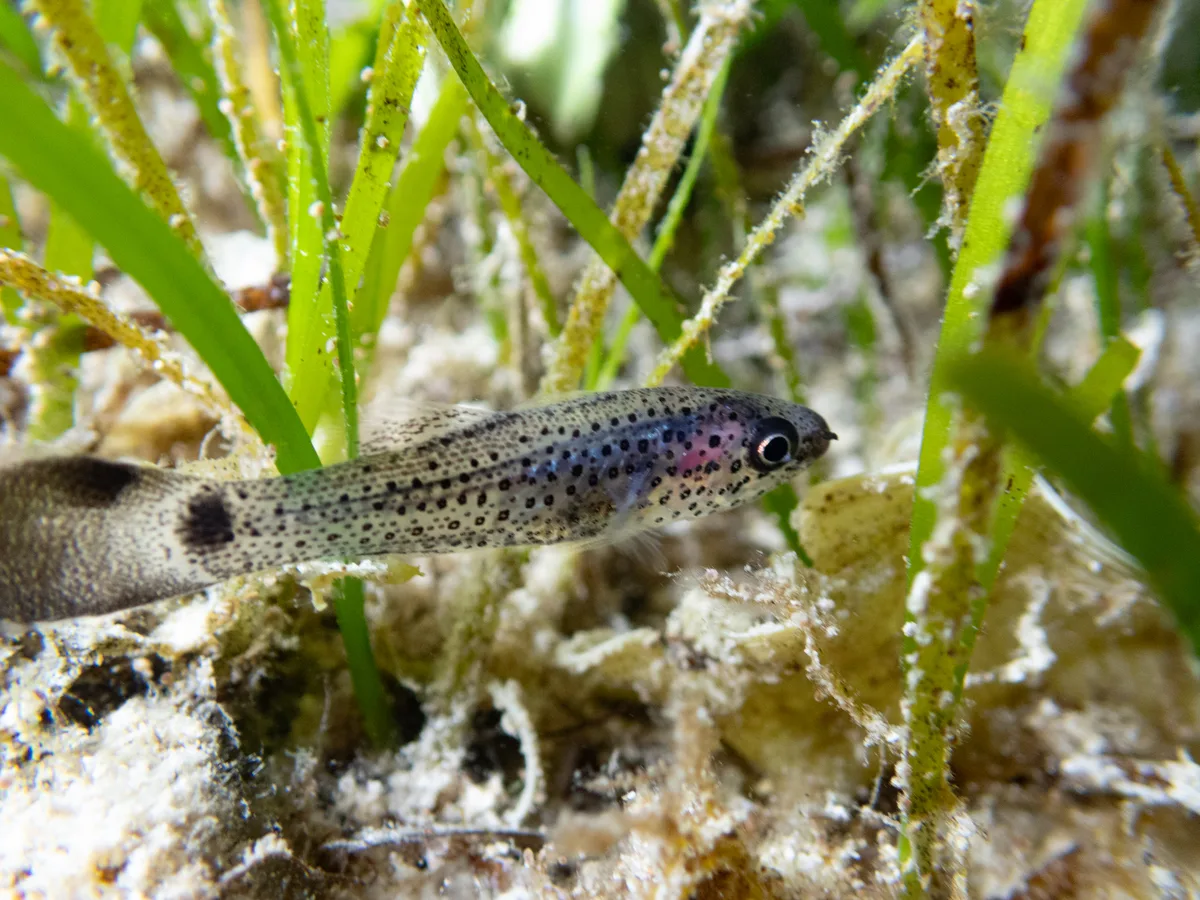
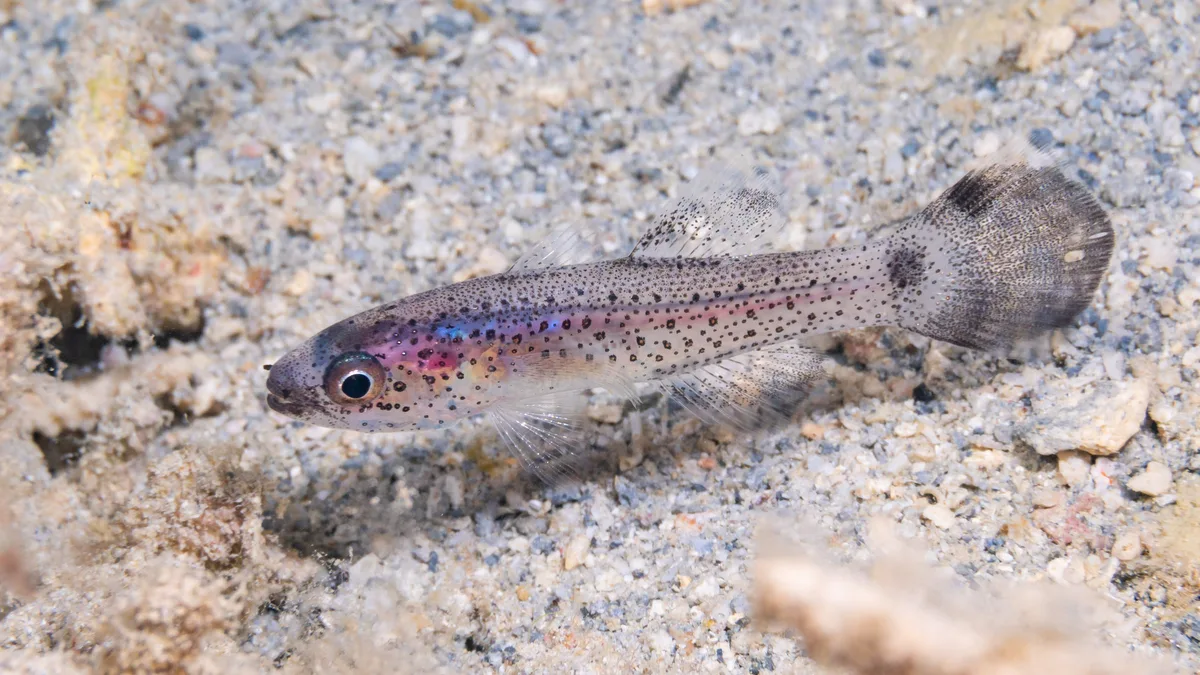
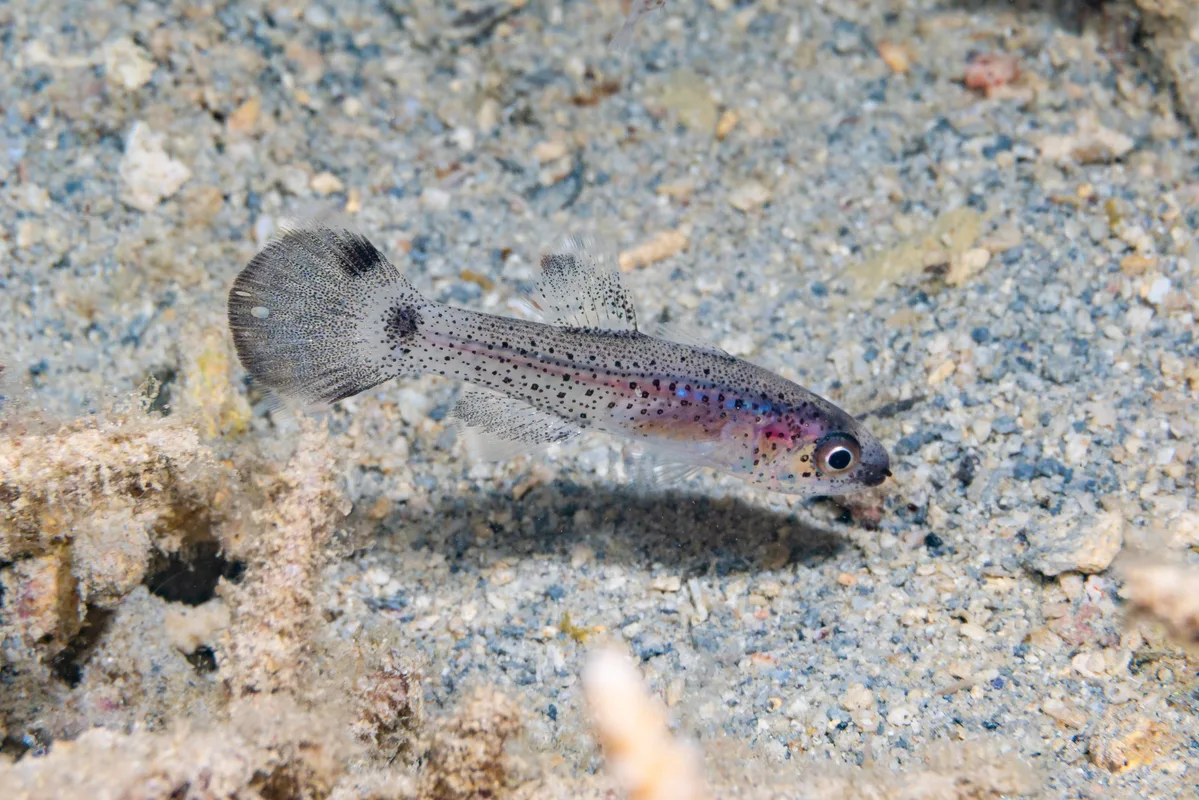
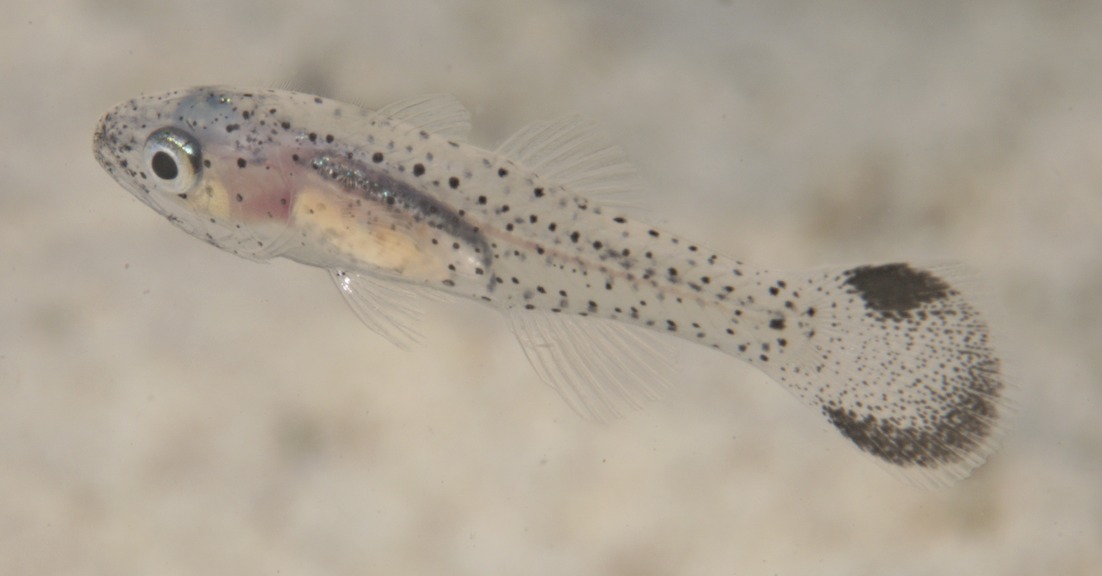
The name is about the texture. These are soft, loose-bodied fish with flabby flesh, thin skin and none of the firm muscular build of a cardinalfish that spends its life holding station in current.
That is what happens when an animal stops needing to swim. This one lives inside the reef: caves, crevices, the spaces under rubble, moving short distances over the bottom at night and never crossing open water at speed. Muscle is expensive tissue to build and to keep, and a fish that does not sprint can put the savings elsewhere. The same softness turns up again and again in animals that live in holes.
The cost is that it is helpless in the open. A gelatinous cardinalfish flushed out of cover in daylight is one of the easier meals on the reef, which is why it does not come out.
At eleven centimeters it is a decent-sized fish that almost no diver has seen, pale, unpatterned and blunt, working the bottom in the dark and back inside the rock before the light returns.
The genus. Pseudamia Bleeker 1865 - pseudo- (false). ETYFish
- soft, flabby, pale body with no obvious pattern
- rounded tail and a large mouth
- deep in a crevice by day, out over rubble at night
- up to 11 cm
Why it's threatened
This species is a component of the marine ornamental trade, but the potential impact is unknown.
Threat classification from the IUCN Red List.