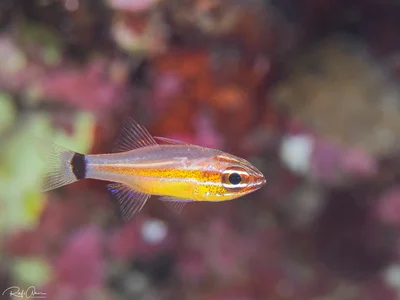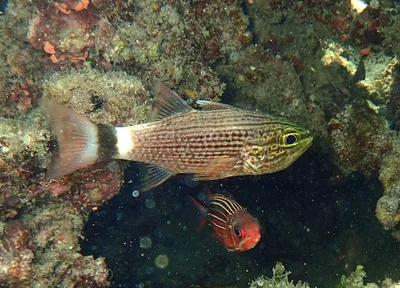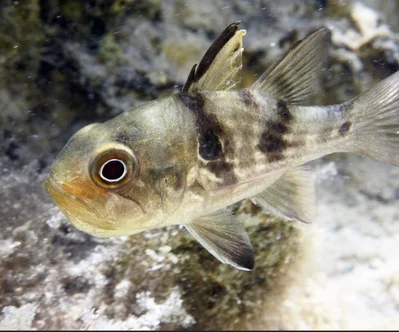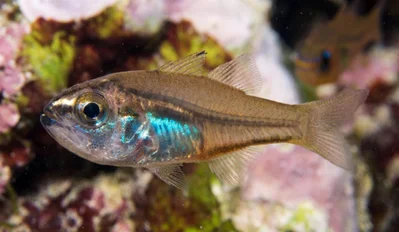
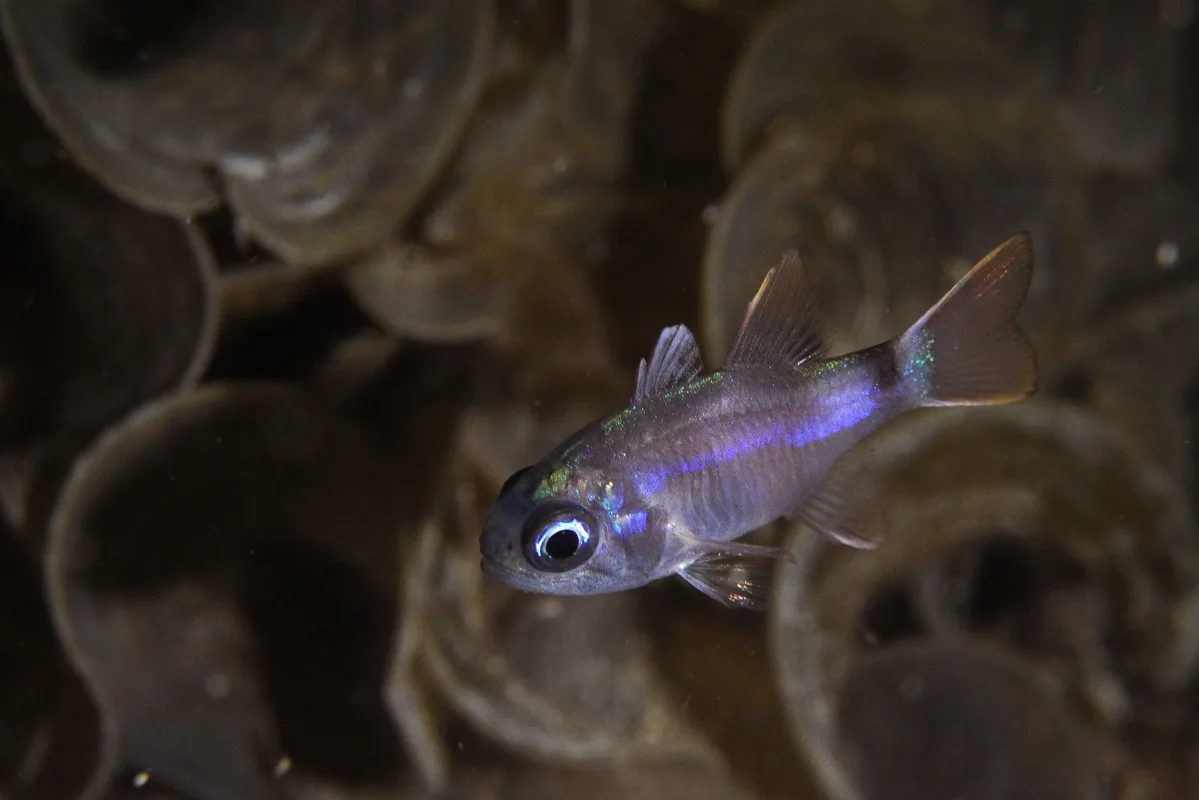
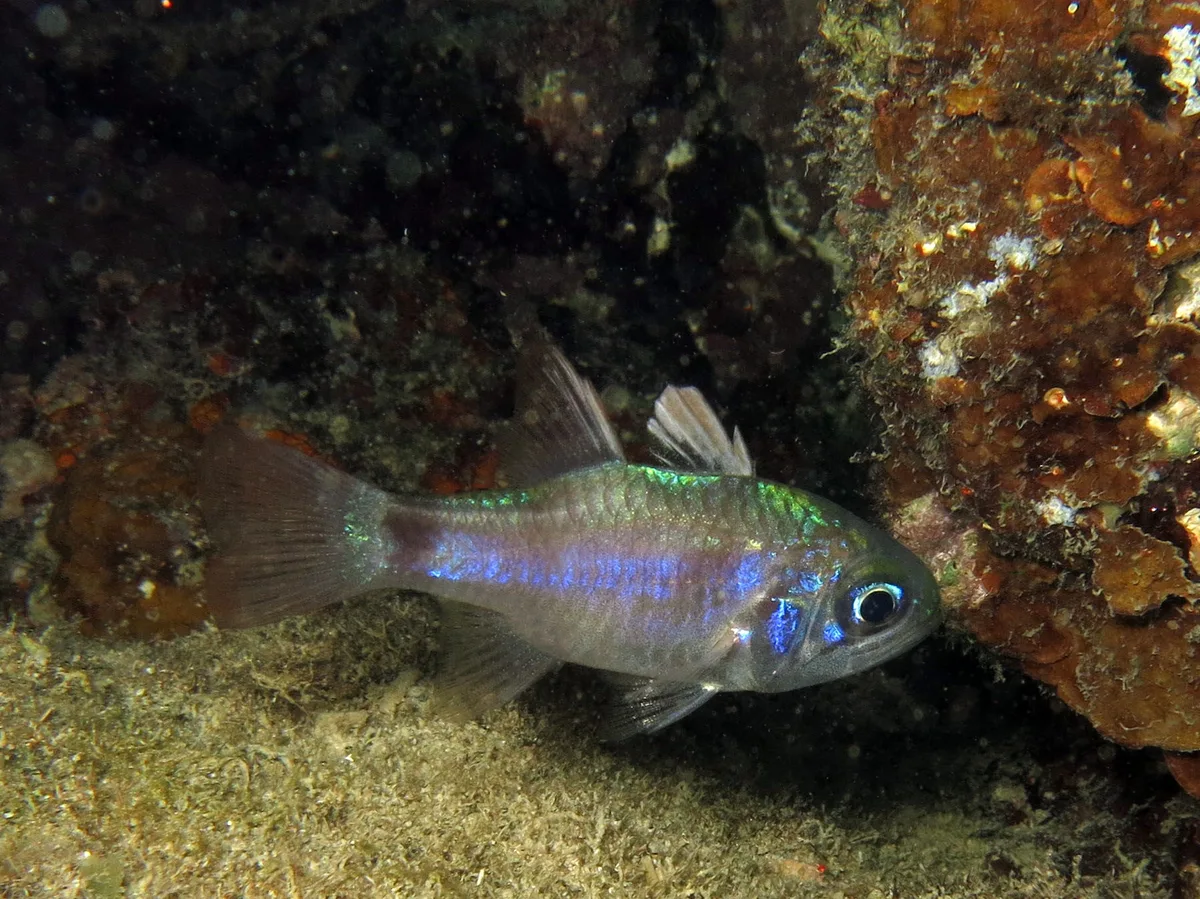
Brown Cardinalfish
Fishes · Bony fishes · Cardinals

Brown Cardinalfish

Nectamia fusca (Quoy & Gaimard, 1825)
syn. Apogon fuscus, Apogon guamensis, Apogon nubilus, Apogon ocellatus, Apogon spongicolus, Ostorhinchus nubilus +2 more
11.2 cm1-20 mLeast Concern
745

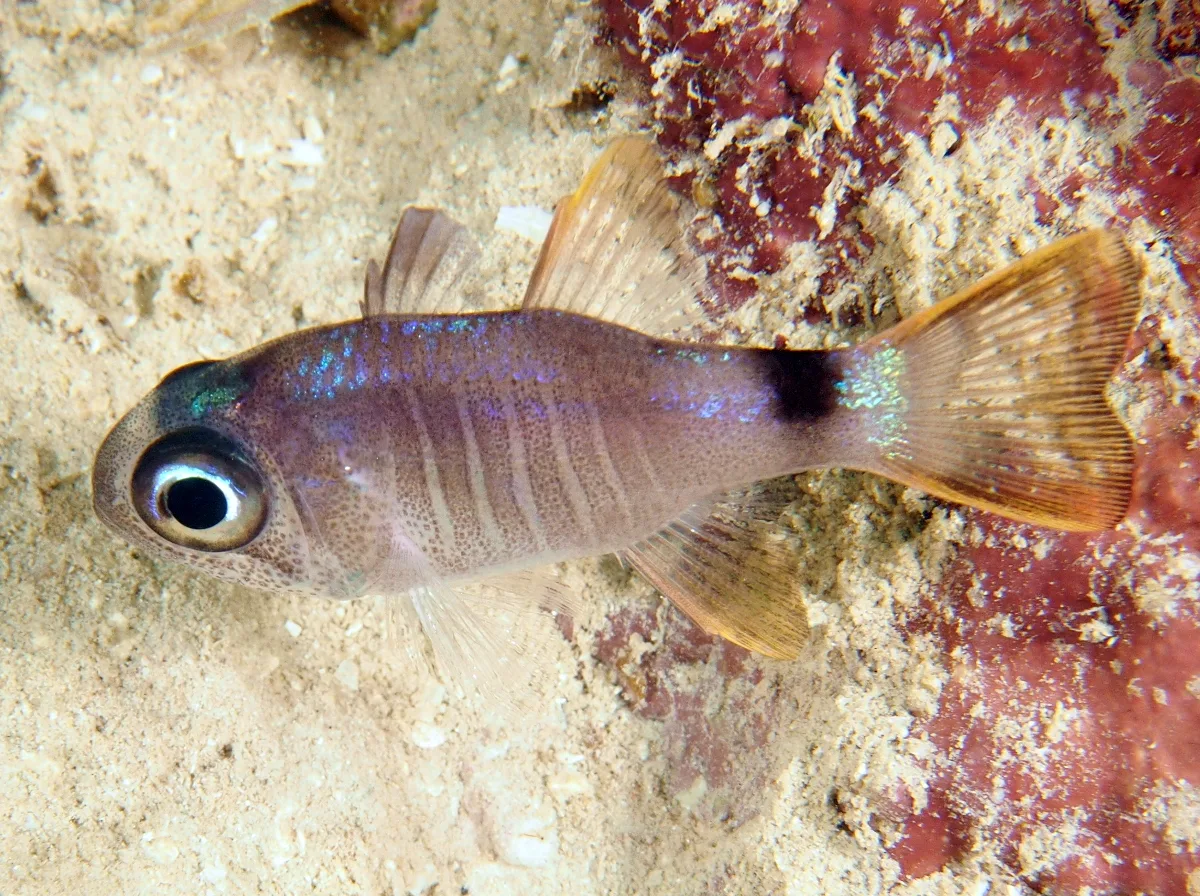
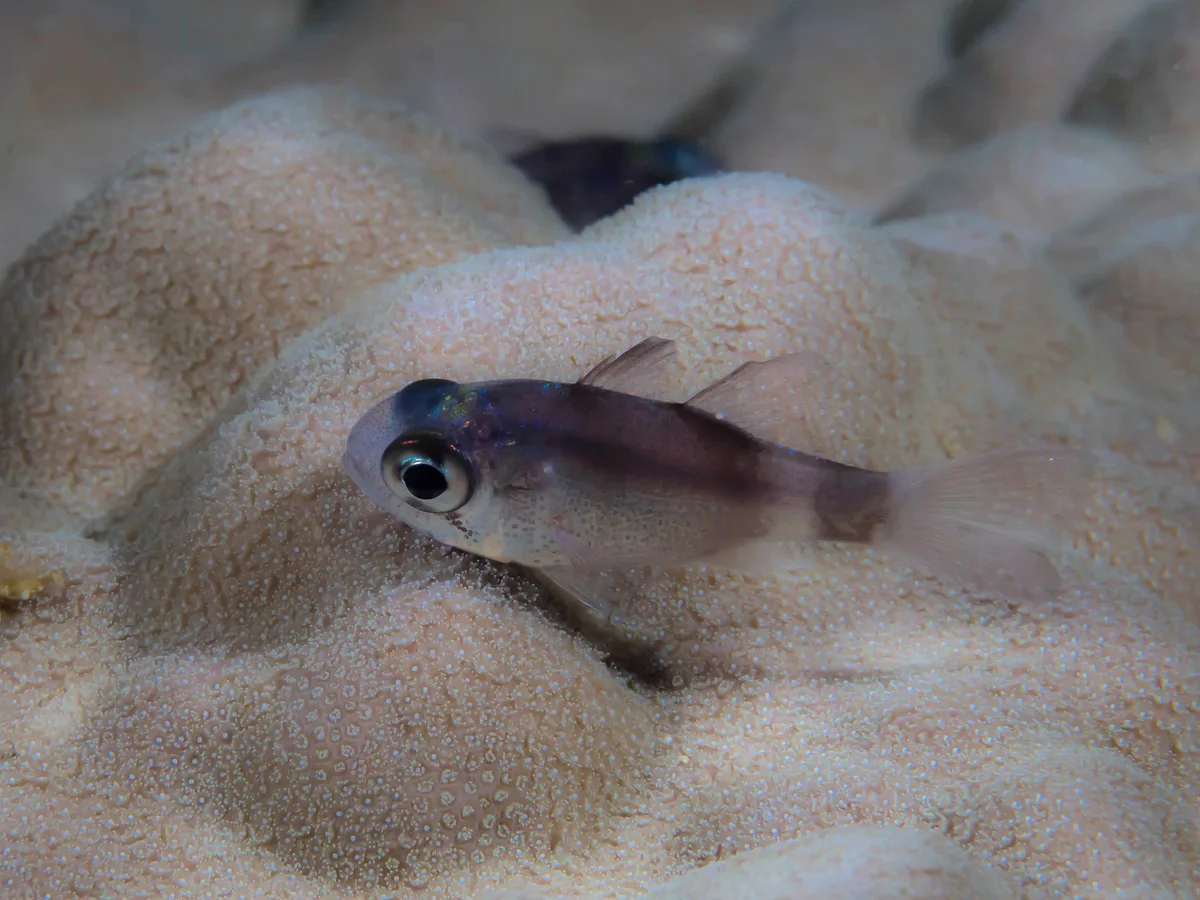
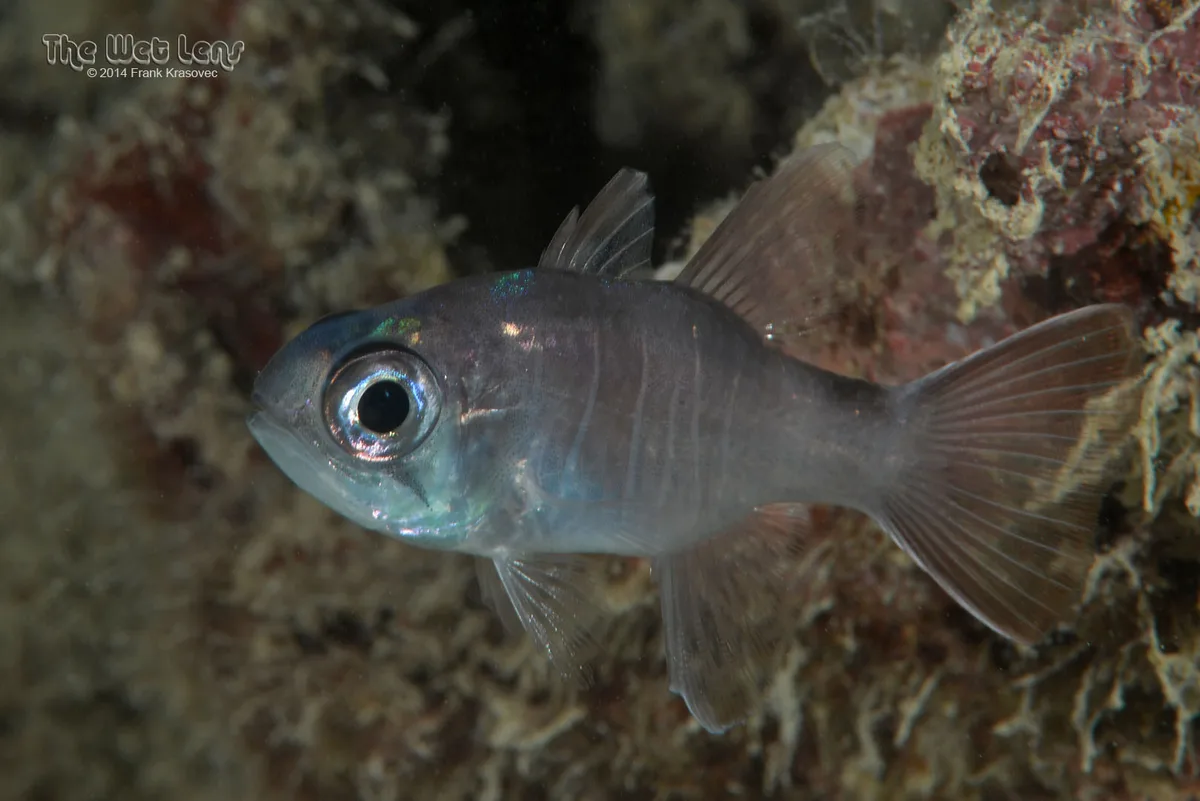
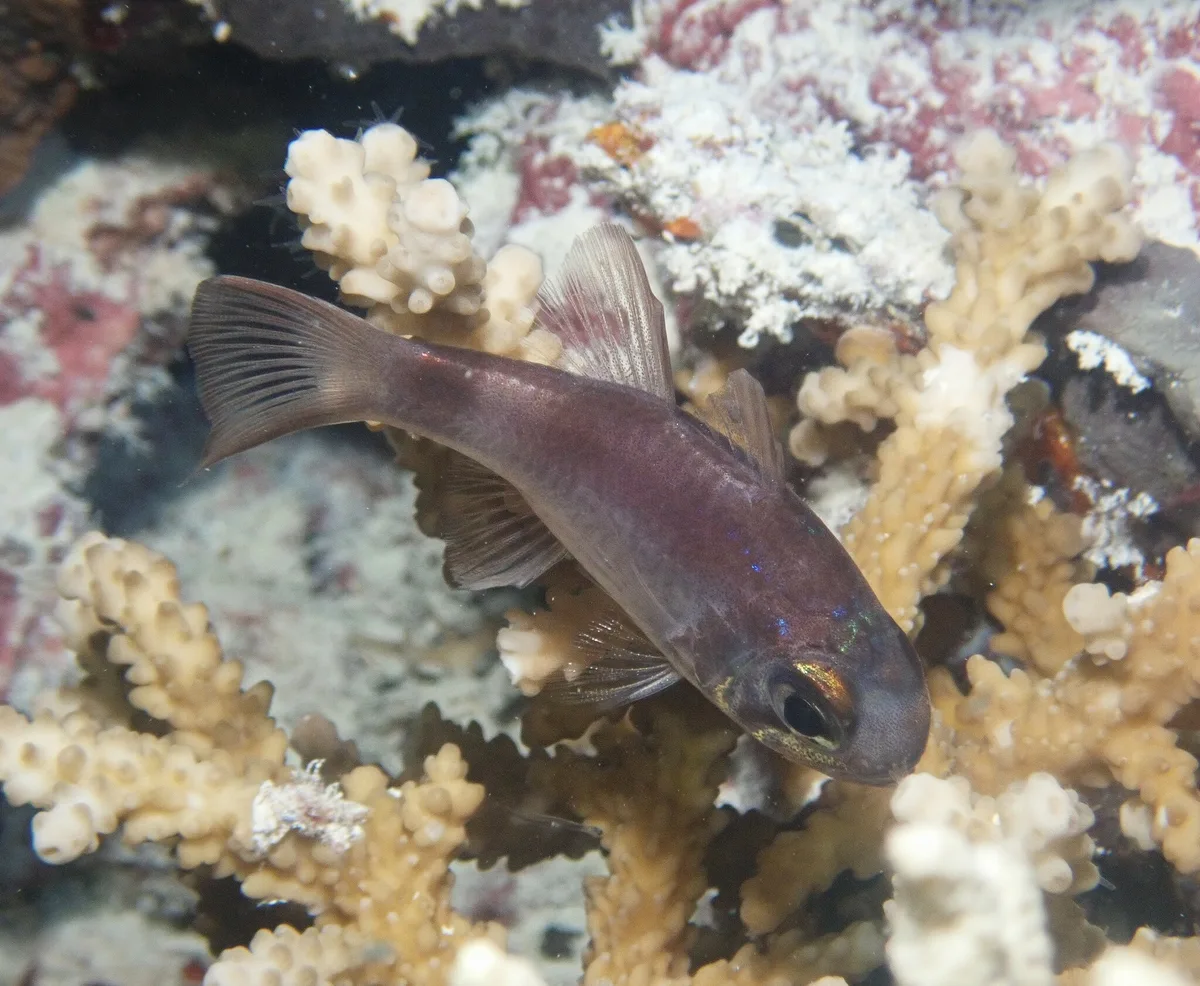
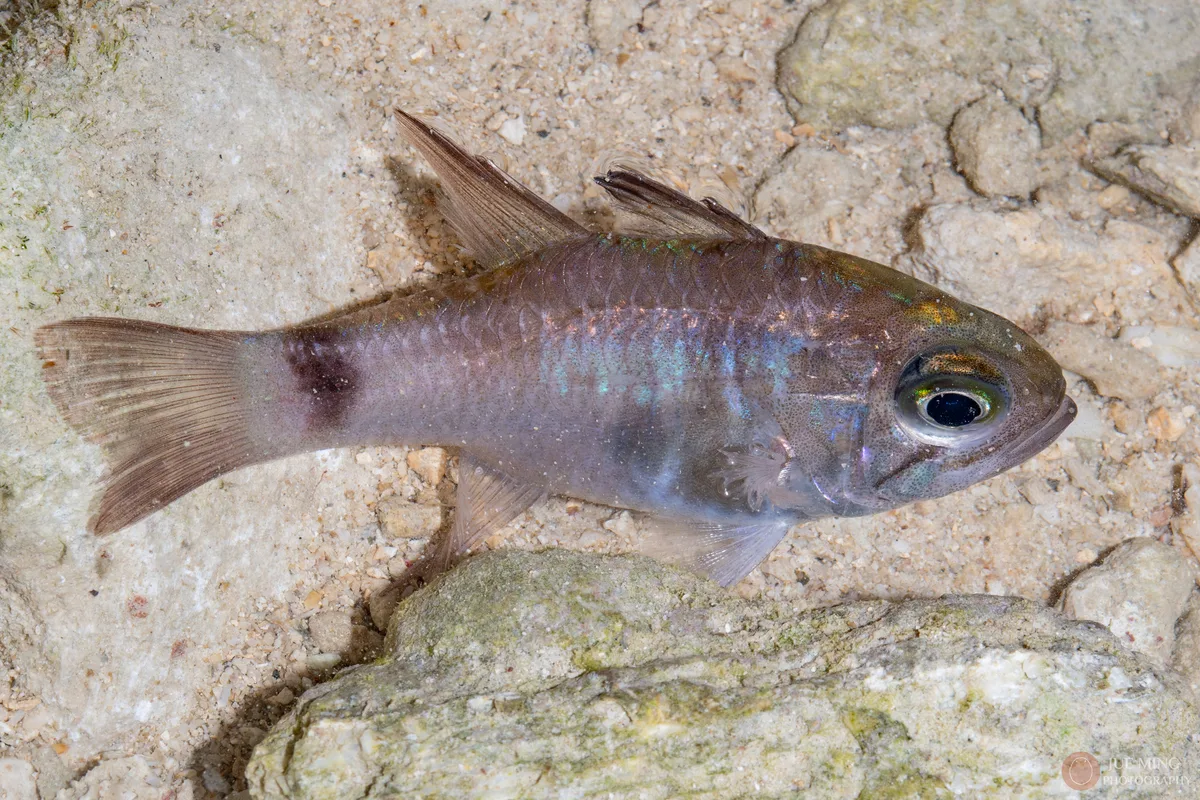
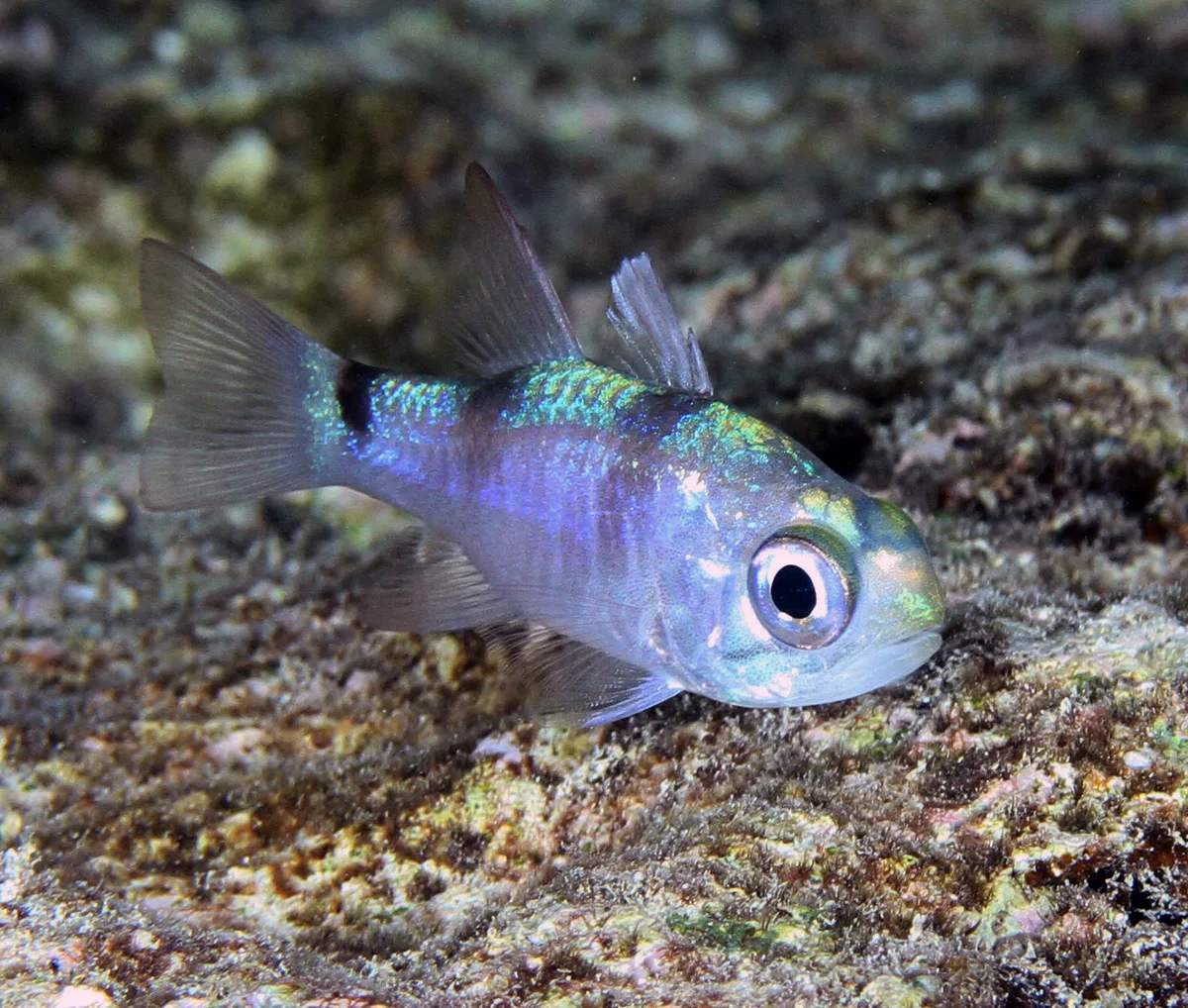
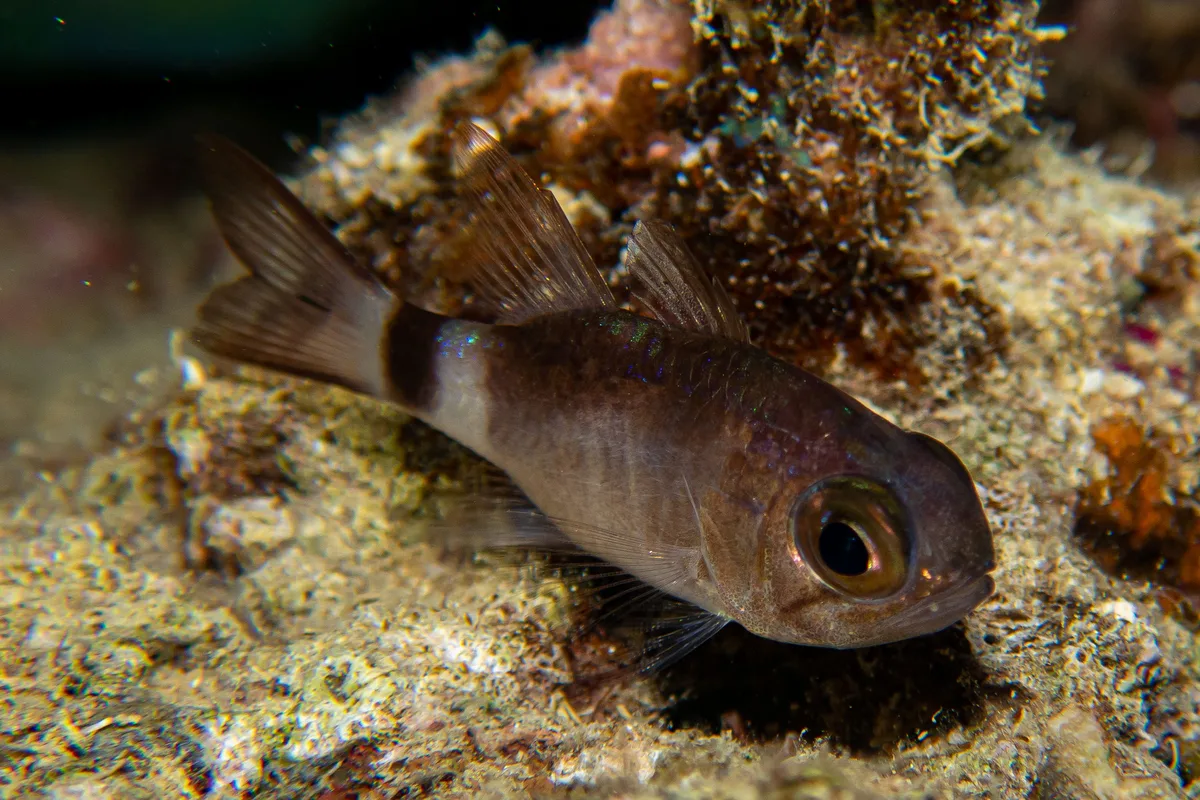
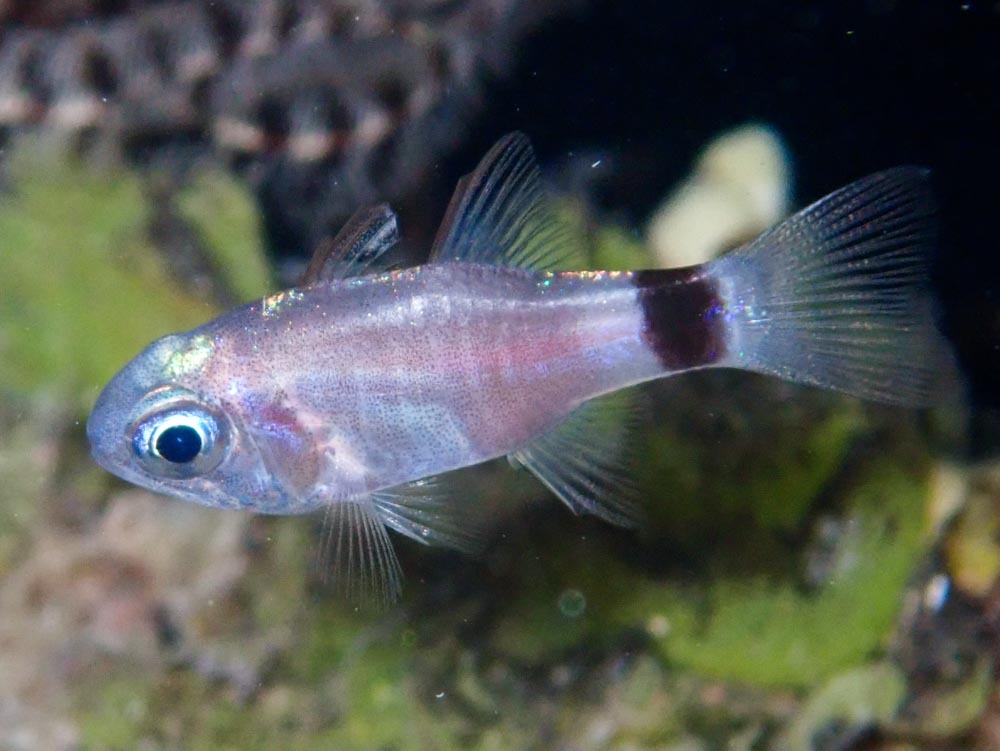
Nectamia fusca, also referred to as the Ghost Cardinalfish or Brown Cardinalfish, is a marine species indigenous to the 🇮🇳 Indian and 🌊 Pacific Oceans. This tropical, reef-associated fish is typically found at depths ranging from 1 to 20 meters and can reach a maximum length of 11.2 centimeters.

The species is prevalently observed in reef flats and shallow lagoons, where it seeks refuge during daylight hours within Acropora thickets, various corals, and in crevices and holes. Nectamia fusca demonstrates nocturnal behavior, foraging at night on free-swimming invertebrates. Additionally, it inhabits shelteundefinedward slopes at similar depths. Its diet primarily consists of small fishes and benthic invertebrates, such as alpheid and penaeid shrimps, isopods, copepods, crab larvae, and polychaete worms. The fish typically forages within a close proximity of 1 to 2 meters from its cover.

Nectamia fusca is known for its unique breeding behavior as a mouthbrooder and exhibits distinct pairing during courtship and spawning.

Geographically, this species is distributed throughout the Indo-Pacific region, recorded in the 🌊 Red Sea and 🌊 Indian Ocean, with the exception of areas such as the 🇸🇨 Seychelles, Chagos (🇮🇴 British Indian Ocean Territory) Archipelago, Cargados Carajos, 🇲🇺 Mauritius, and Rodrigues. Its range extends north to 🇯🇵 Japan, south to 🇦🇺 Australia, and across the Western Pacific to the 🇹🇴 Tonga Islands, 🇼🇸 Samoa, and the Phoenix and 🇲🇭 Marshall Islands.

Why it's threatened

Nectamia fusca is of no known commercial interest as a food source, or for the aquarium trade. It maybe impacted by localised threats such as cyanide fishing, coral bleaching, Crown of Thorns starfish invasions, and habitat degradation associated with tourism. However, due to the localised nature of these threats, these are not thought to be causing a significant decline in the population size of this species at present.

Threat classification from the IUCN Red List.

Comments

Please, sign in to leave a comment

Continue with a social account — yours will be created automatically.

No comments yet — be the first.

Last Update: June 28, 2026