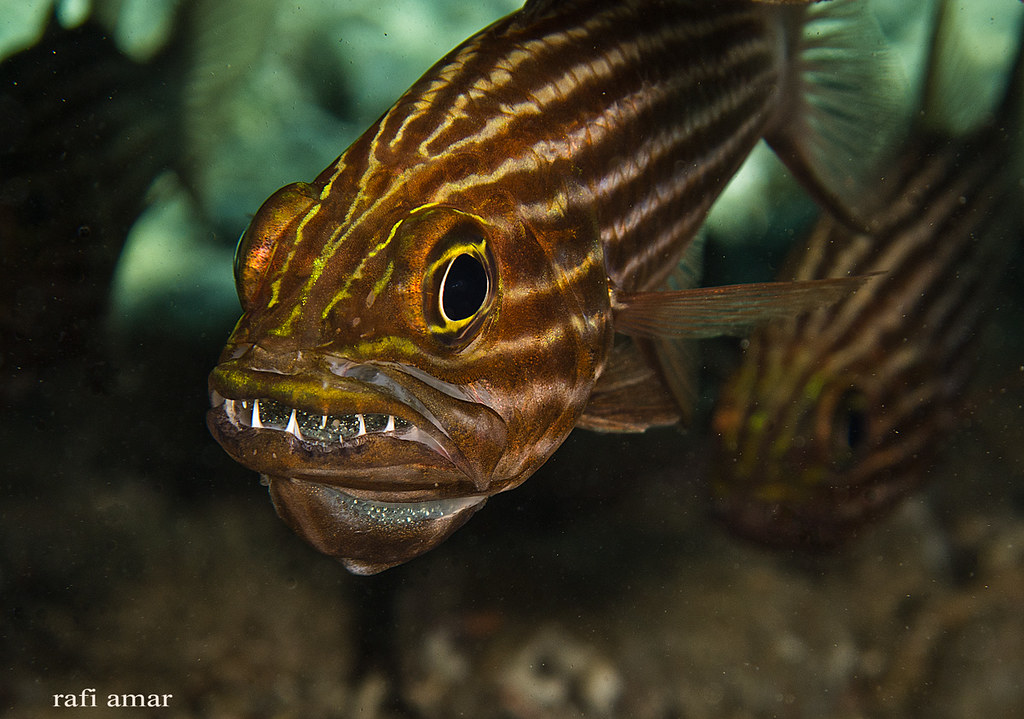
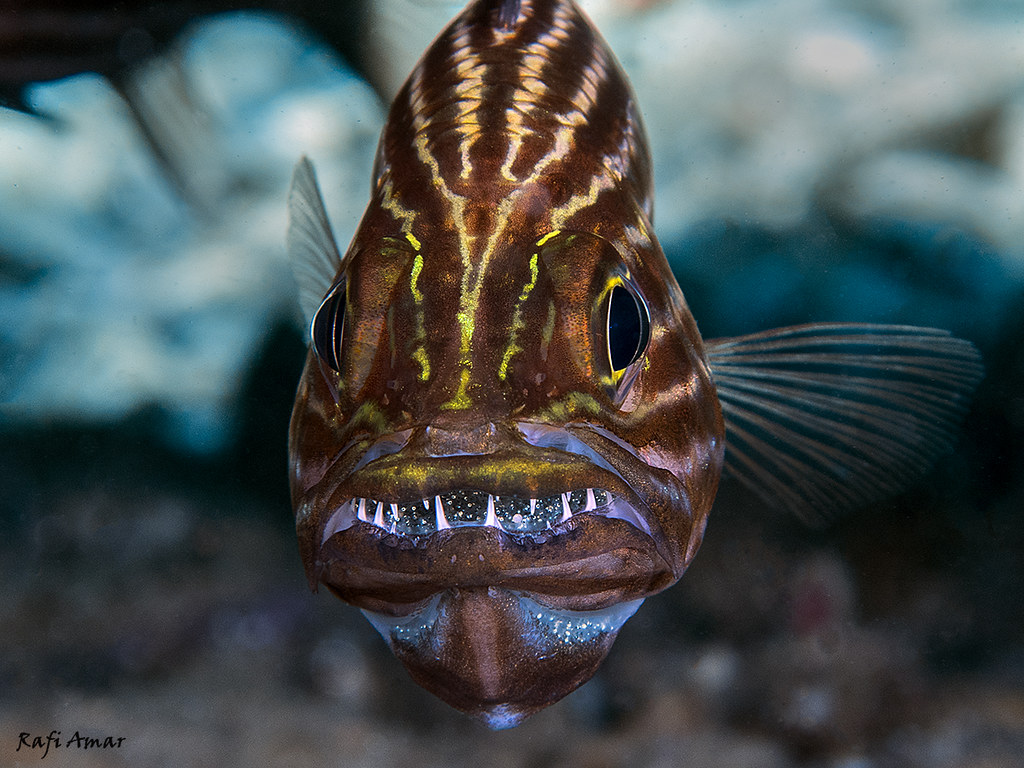
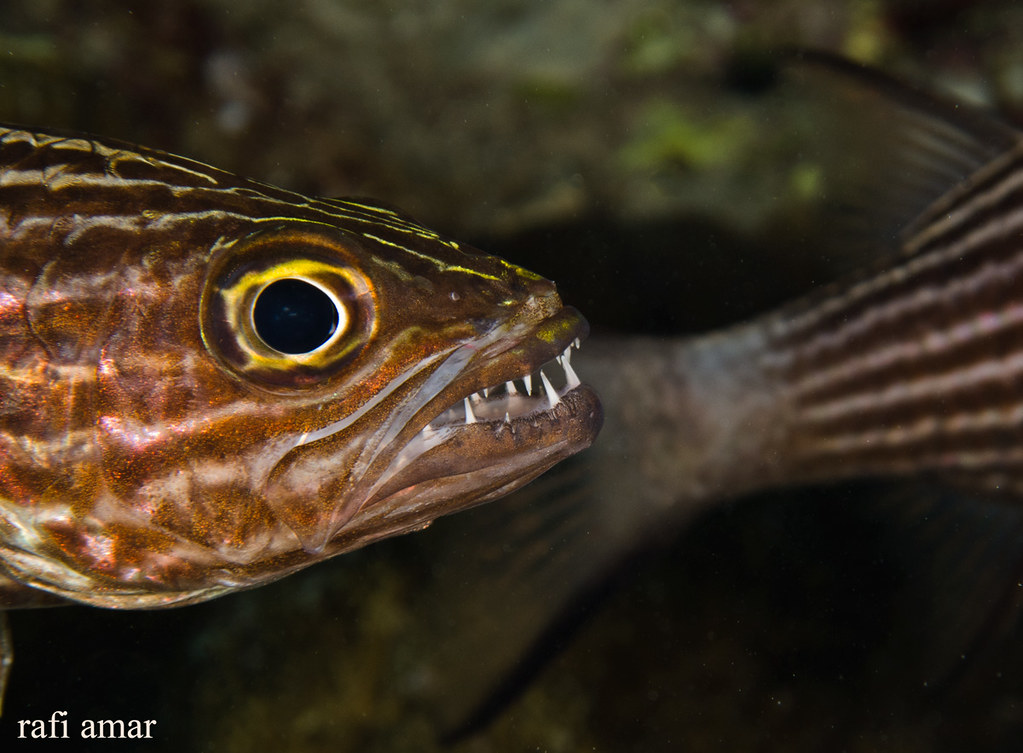
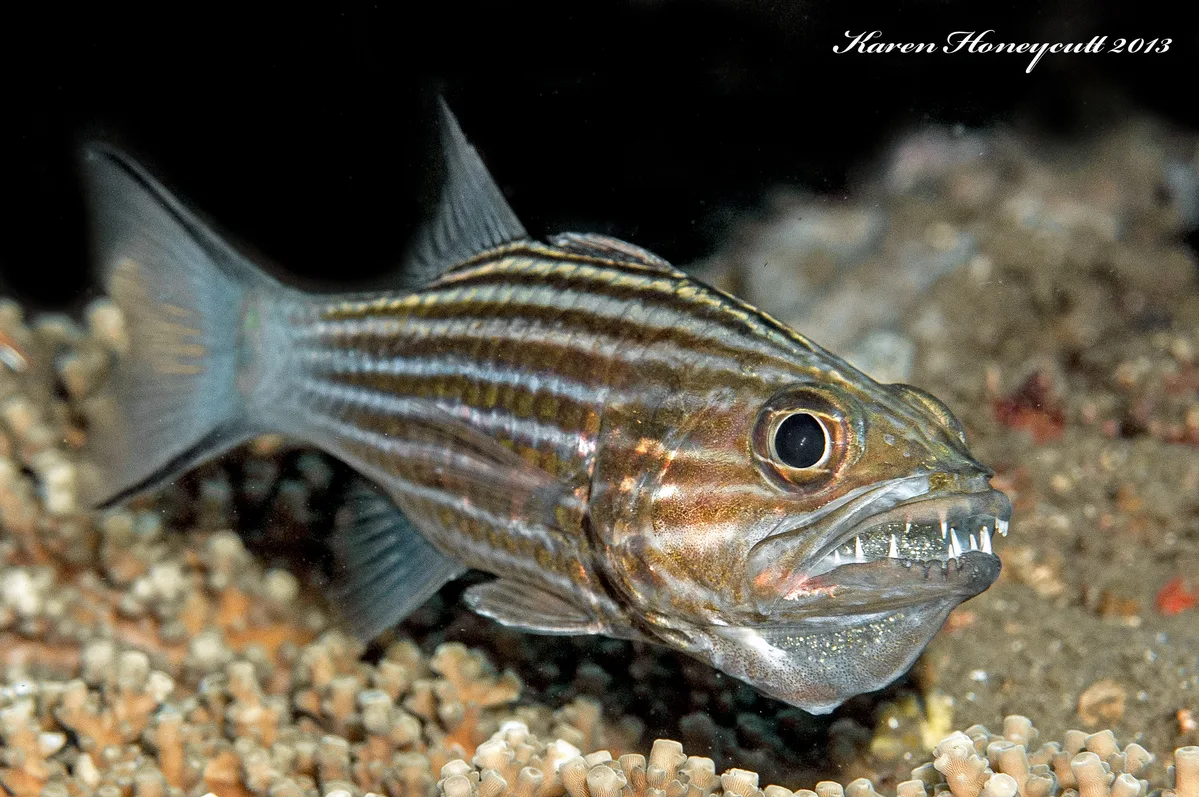
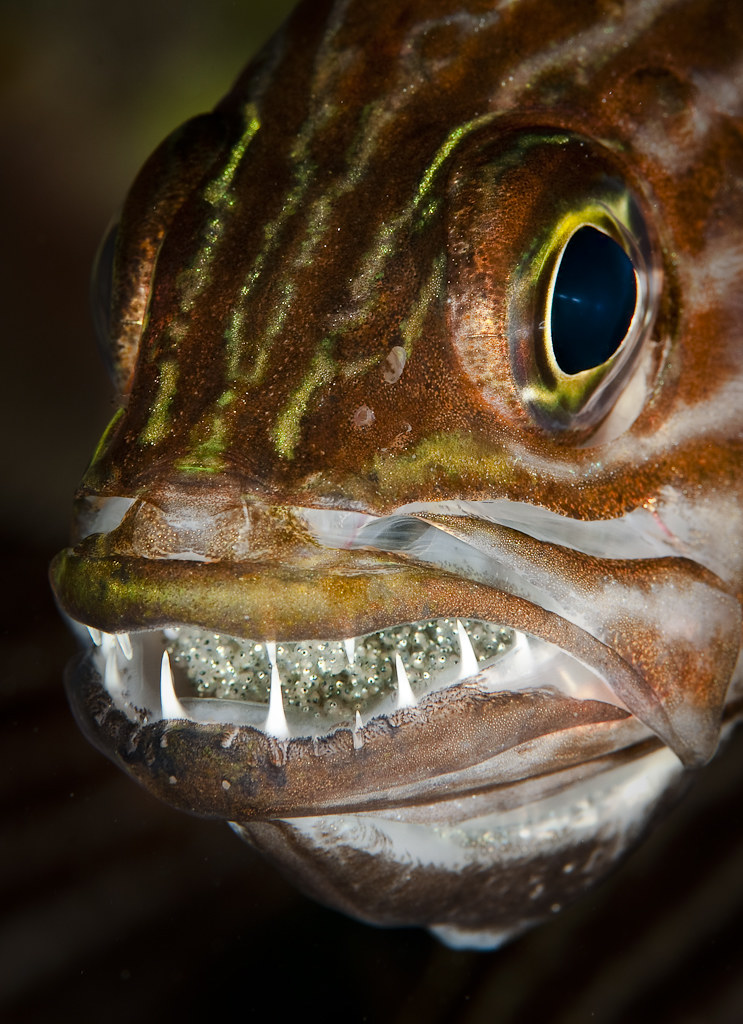
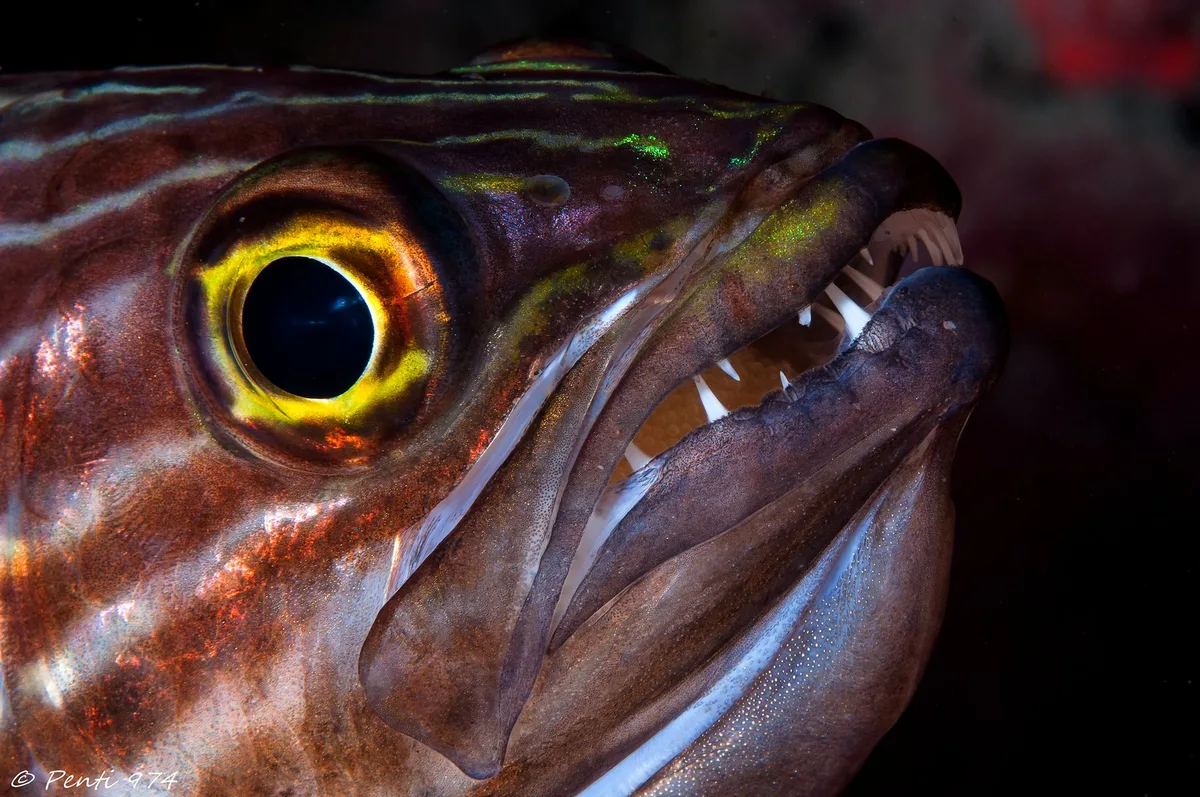
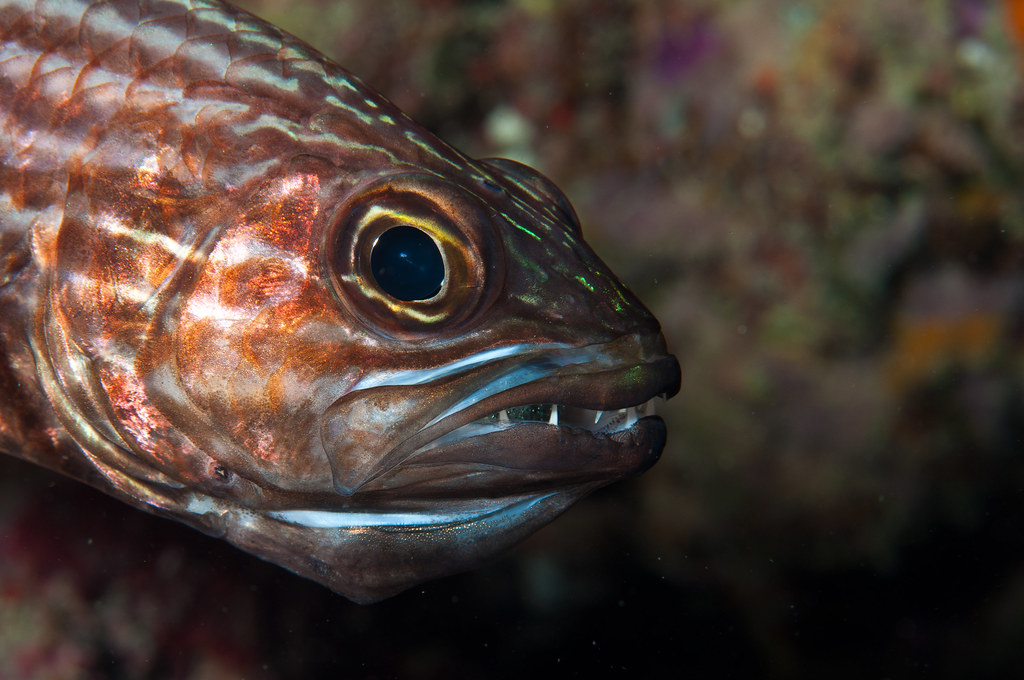
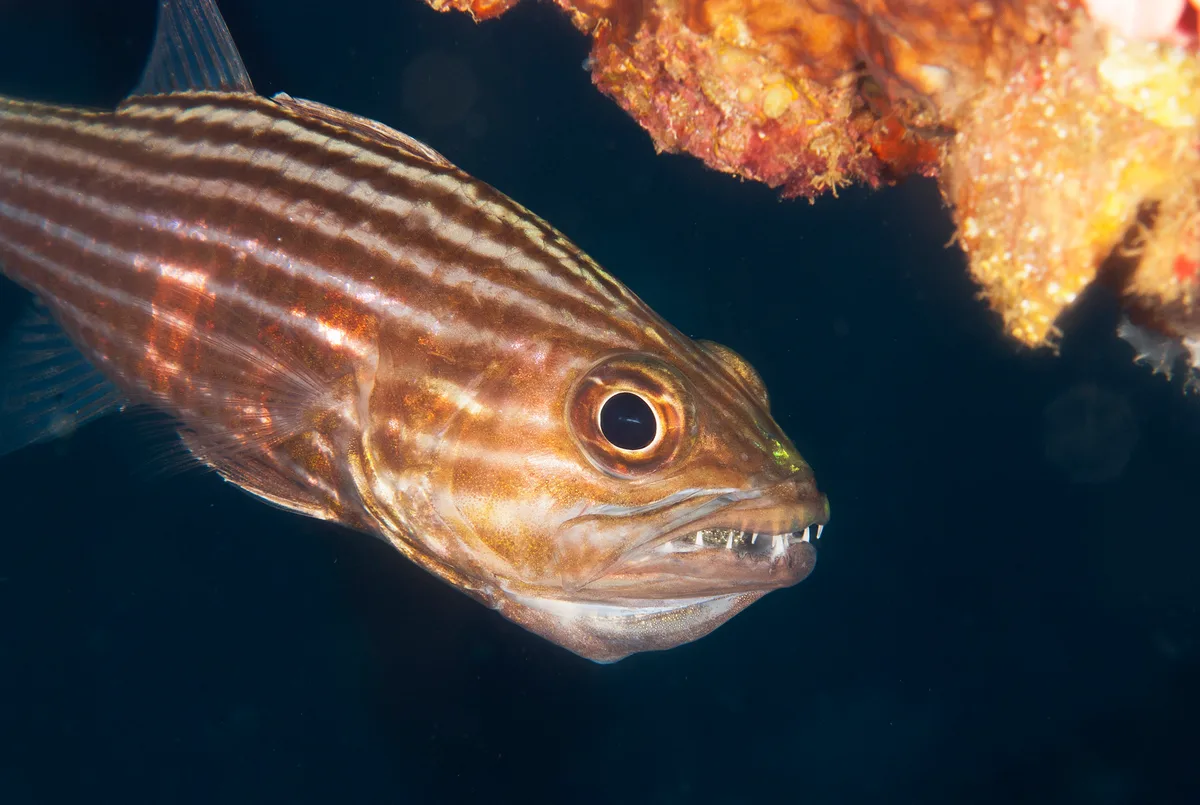
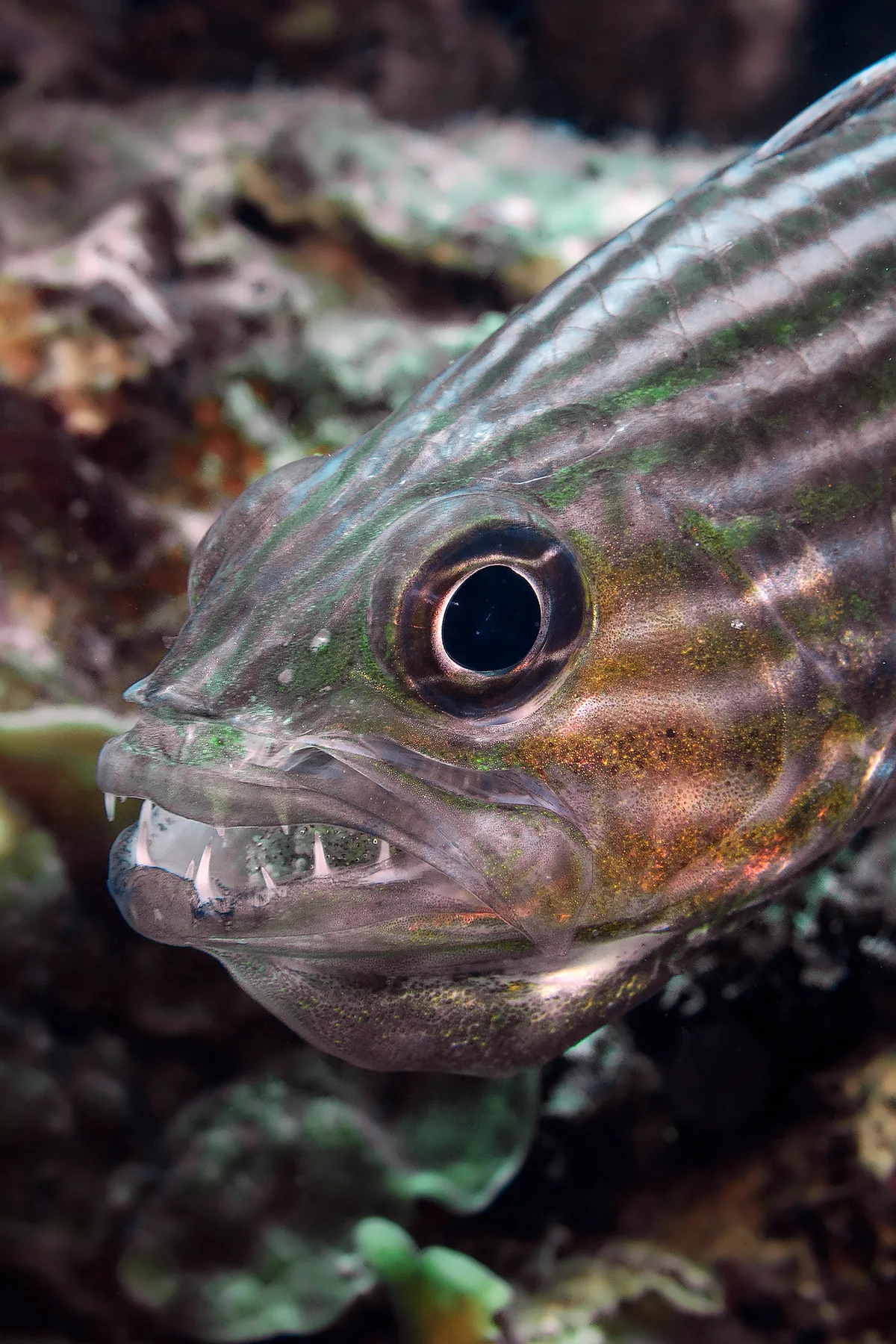
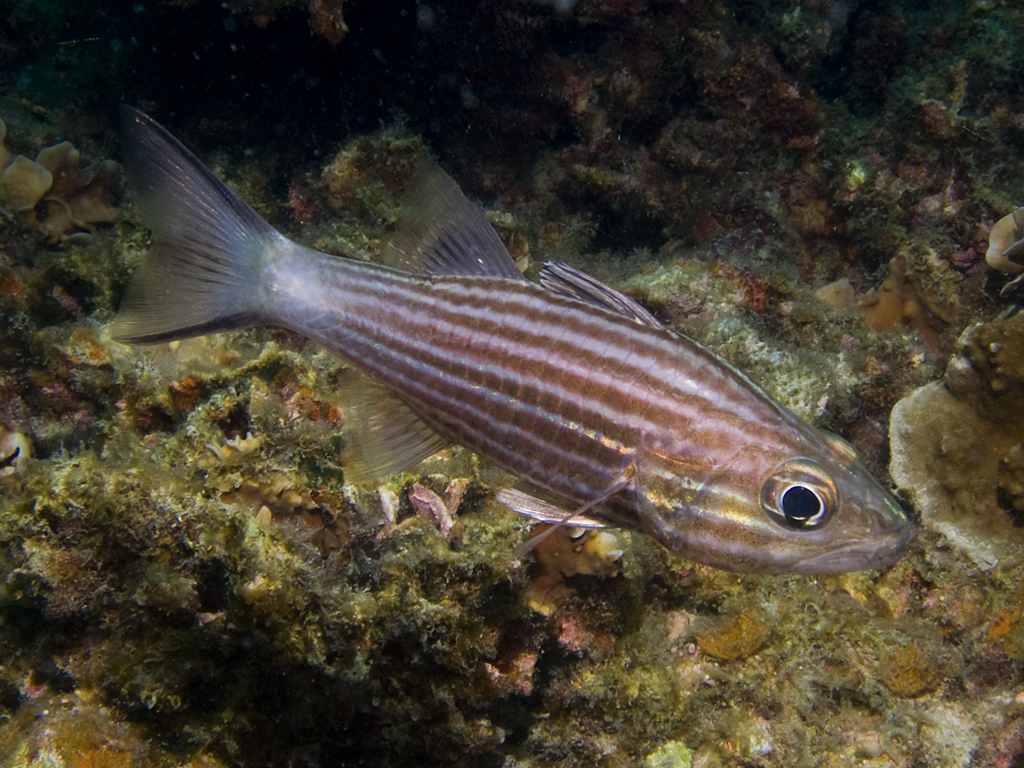
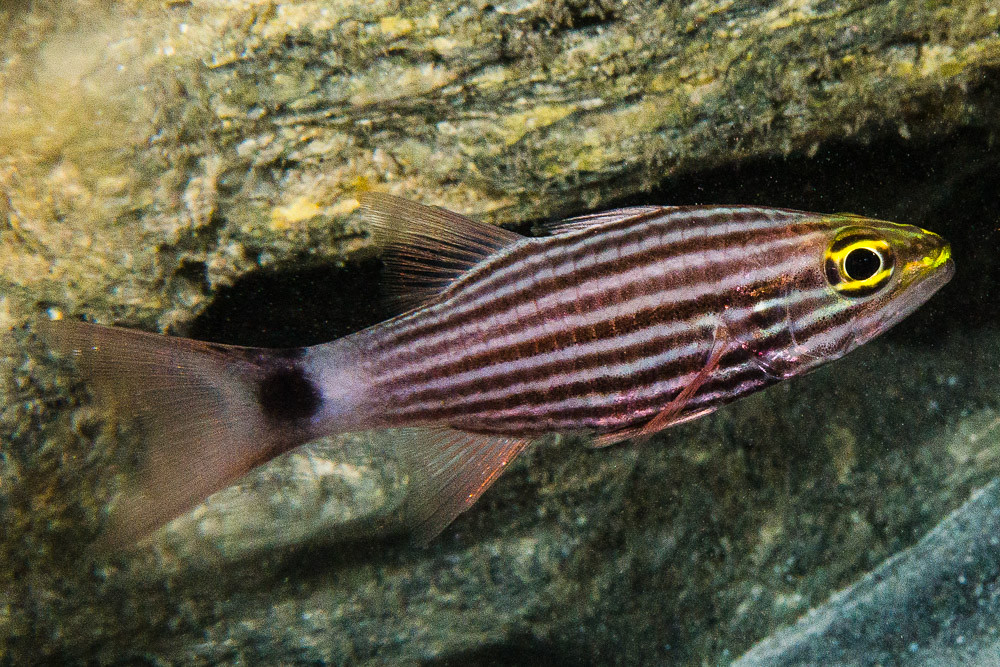
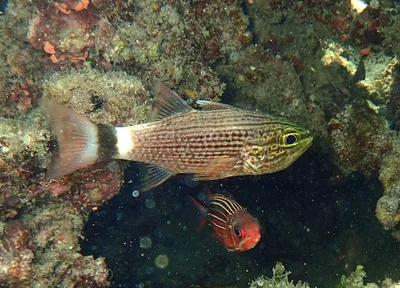
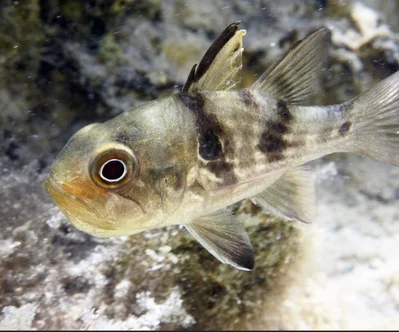
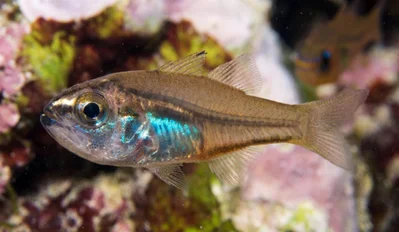
Twenty-five centimeters (10 in) - the largest cardinalfish here and the one with teeth. Most of the family picks plankton and small crustaceans out of the dark; this one eats fish, and the canines in the front of its jaw are visible when it opens up.
It hangs in the mouth of a cave through the day, usually alone or in twos, and hunts at night along the reef. Its own juveniles shelter among urchin spines, like other cardinalfish, which puts them in the same refuge as their eventual prey.
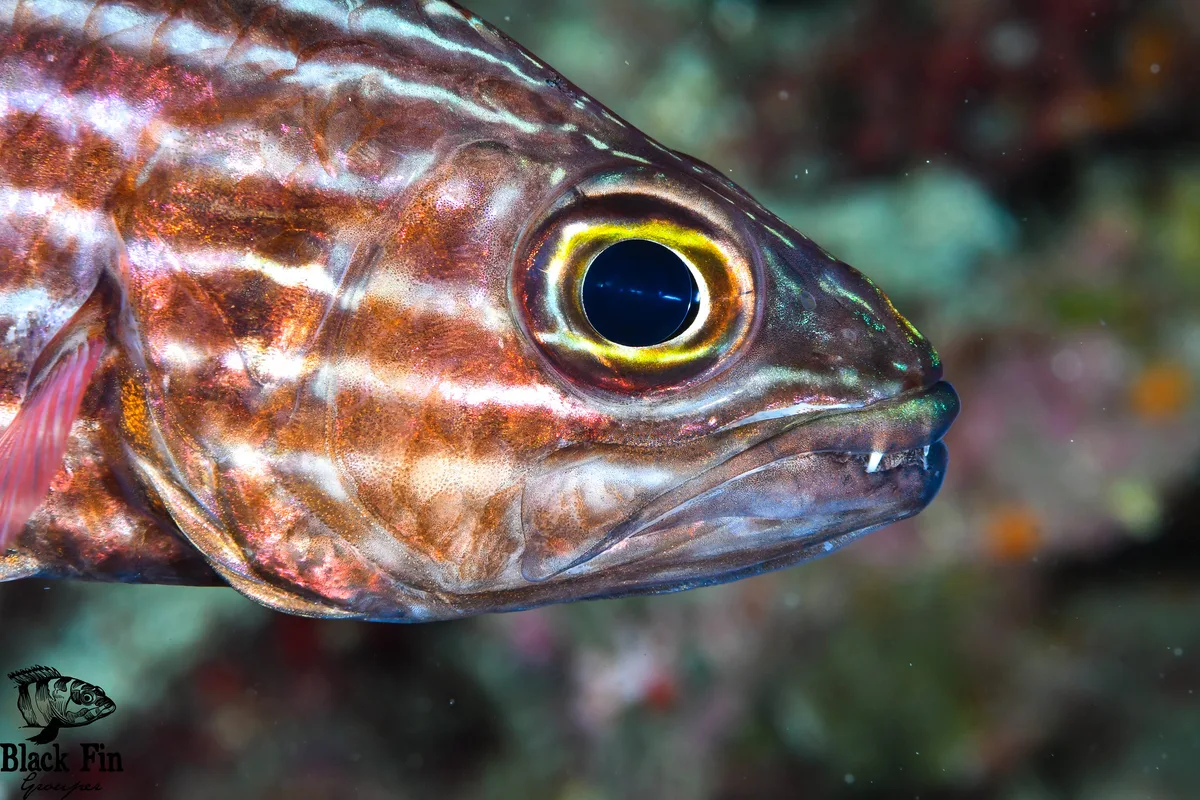
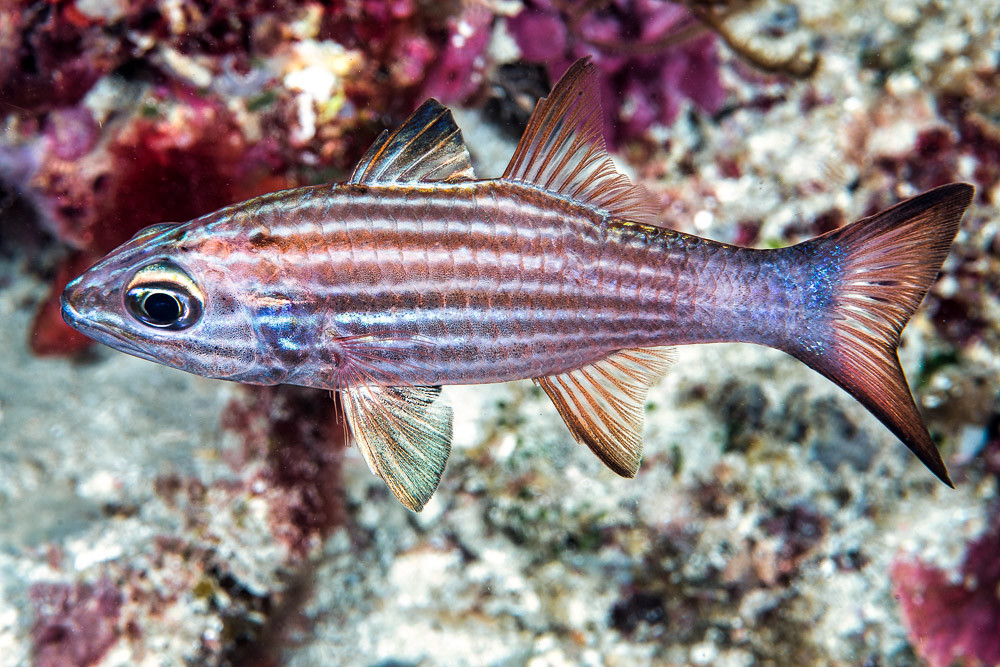
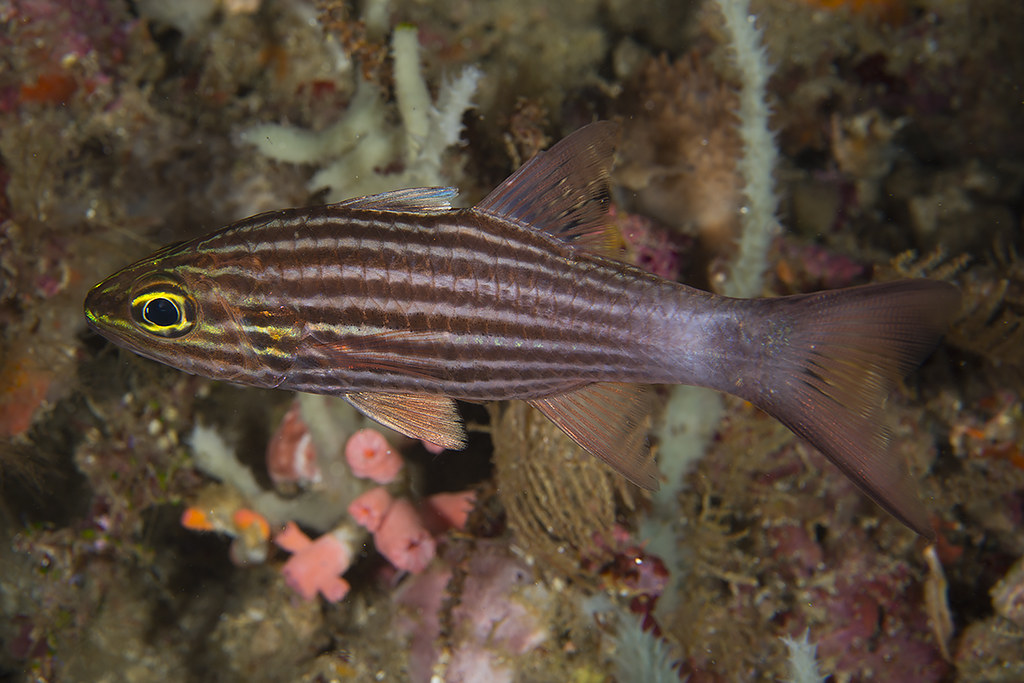
The stripes fade with age. A young fish is boldly lined and a big adult is nearly plain, which is why the two get identified as different species by people working from photographs.
And like the rest of the family, the male broods the clutch in his mouth. In a fish that eats other fish, holding a mouthful of eggs for a week without swallowing them is a piece of self-control worth appreciating.
The species.Cheilodipterus macrodon (Lacepède 1802) - macro- (long or large) + odon (tooth). ETYFish
How to recognise it
large pale cardinalfish with faint dark stripes fading in adults
obvious canine teeth, visible when the mouth is open
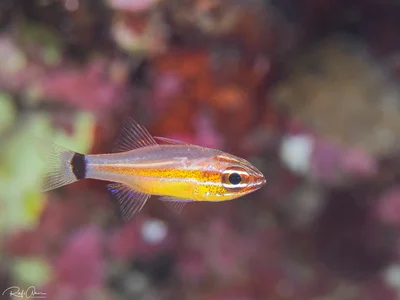
black spot on the tail base, ringed in white in young fish
length up to 25 cm
Why it's threatened
Residential & commercial development
Housing & urban areas · Commercial & industrial areas · Tourism & recreation areas
Human intrusions & disturbance
Work & other activities
Other
Other threat
In the Persian Gulf, substantial sea bottom dredging, resulting in changes of water flow and sedimentation rates, for industrial, infrastructure-based, and residential and tourism development along the coast have caused deterioration in most benthic habitats (Sheppard et al. 2010). It is not known whether or not Cheilodipterus macrodon is directly affected by this coastal development, but due to the large-scale of coastal development throughout the Persian Gulf and given Cheilodipterusmacrodon's habitat preferences, its likely Cheilodipterusmacrodon is impacted negatively in some parts of the region.
Threat classification from the IUCN Red List.
Comments
Please, sign in to leave a comment
Continue with a social account - yours will be created automatically.