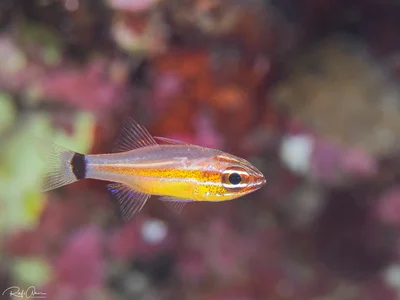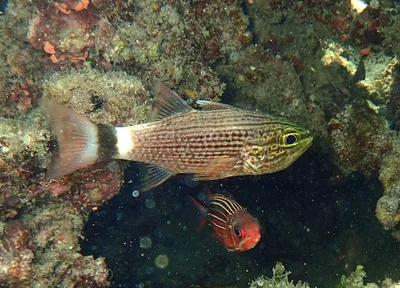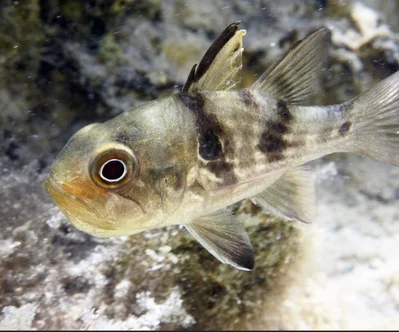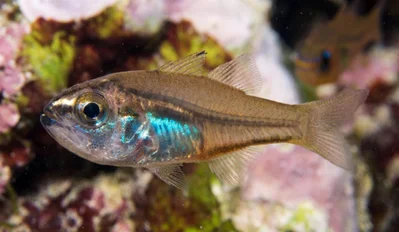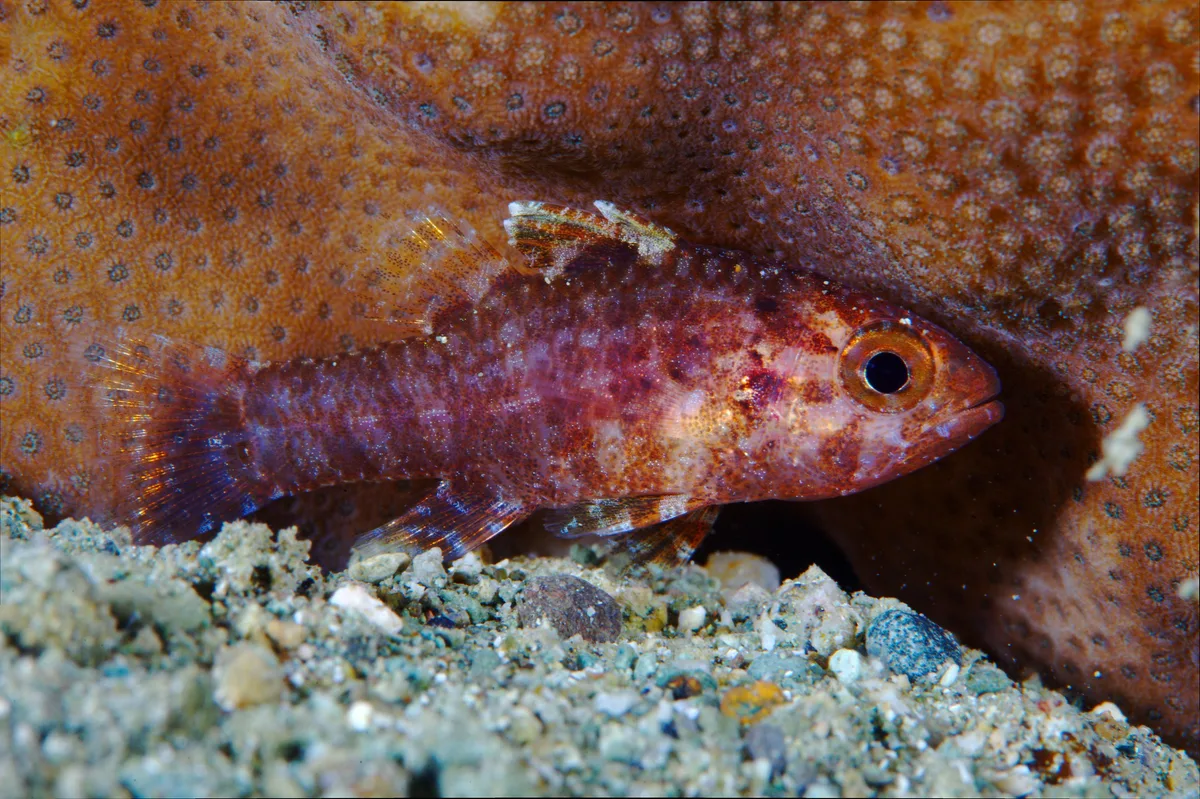
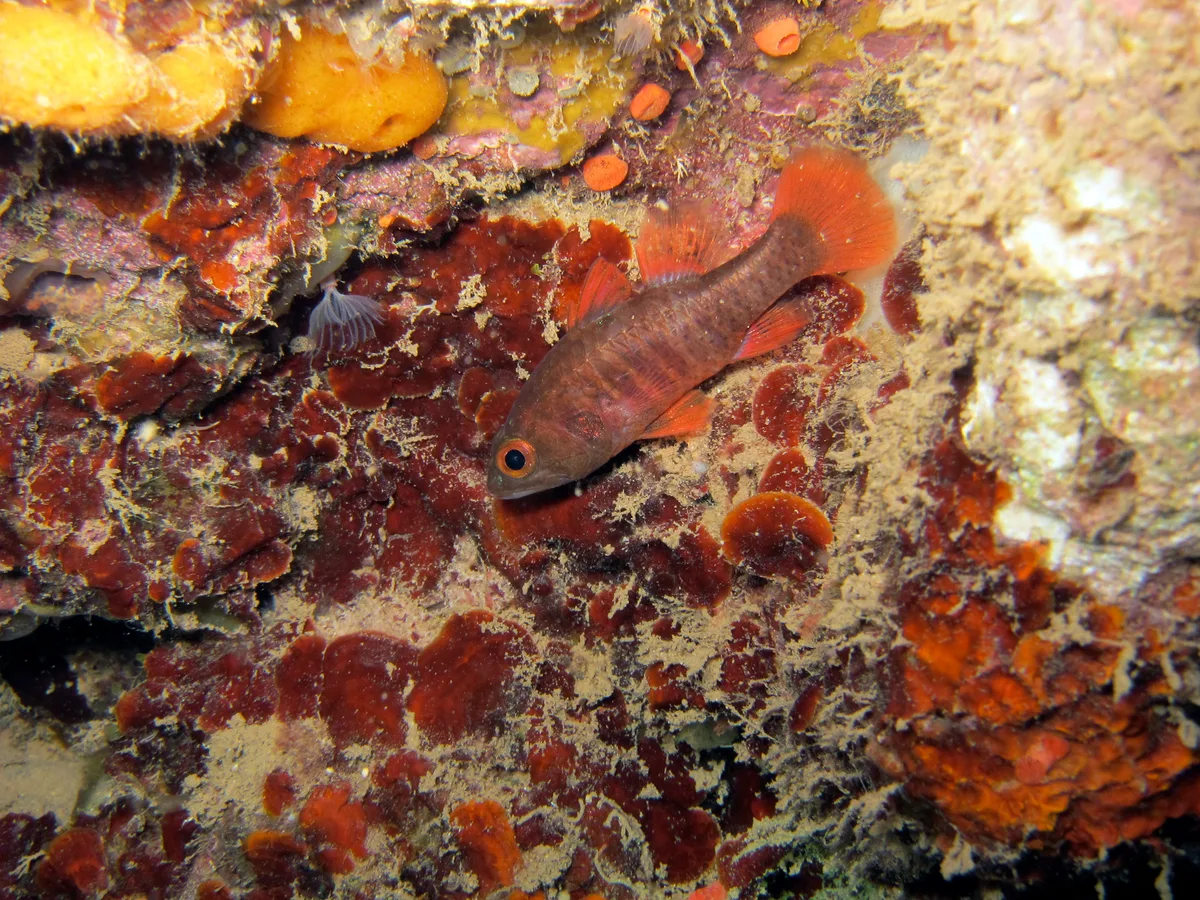
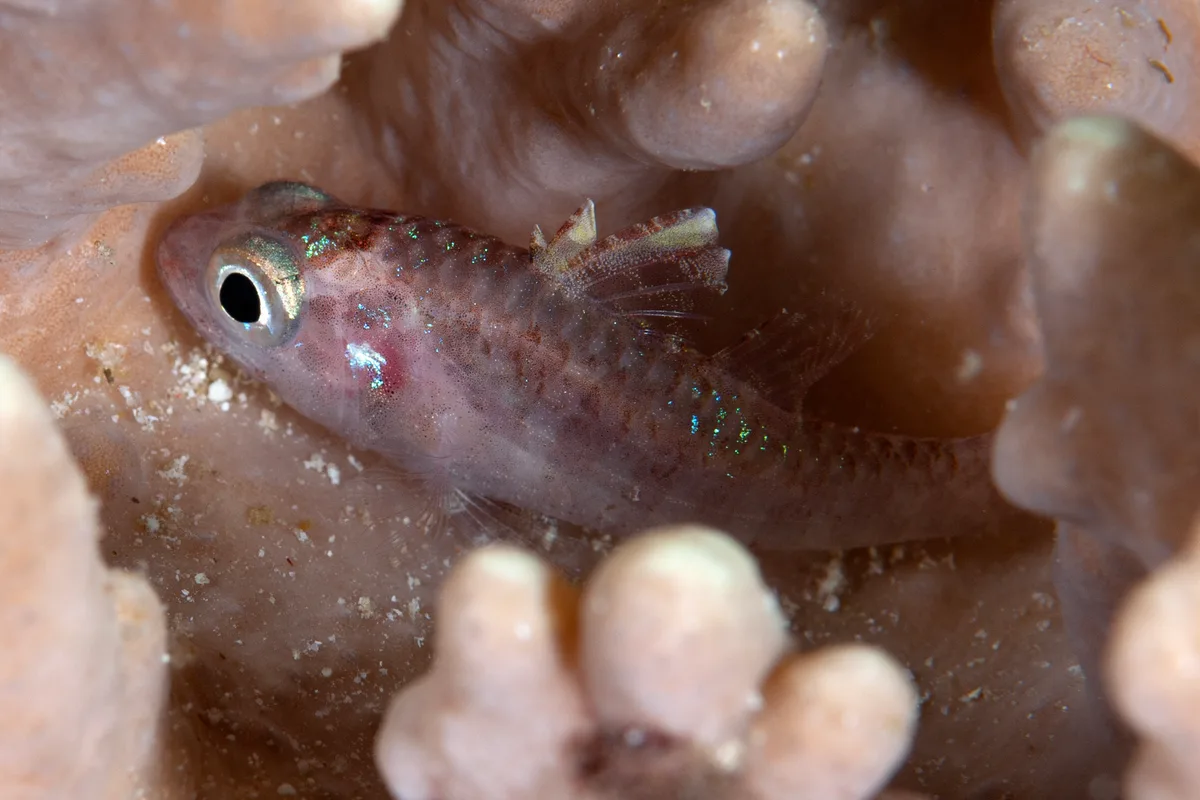
The pattern has nothing regular in it, and that is the design.
A repeating pattern - stripes, bars, evenly spaced spots - is easy for an eye to pick out, because brains are built to find regularity and a regular thing against an irregular background announces itself. Marbling does the opposite: irregular blotches at several different scales, with no repeating unit, match the statistical texture of rubble and dead coral rather than any particular piece of it. The fish is not imitating a specific rock. It is imitating rockiness.
That is why so many bottom-sitting ambushers converge on marbling - scorpionfish, flatheads, toadfish, these cardinalfish - while the fish that shoal in open water go for hard geometric patterns instead. The background dictates the answer.
It works only while the animal is still. Motion breaks any camouflage, which is why a marbled fish holds position long past the point at which a striped one would have moved, and why the way to find one is to watch a patch of rubble rather than to scan the reef.
Seven and a half centimeters, on rubble and seagrass, out at night.
- irregular marbled brown and cream with no repeating element
- ocellus on the gill cover
- sits still on the bottom, in cover
- up to 7.5 cm
Why it's threatened
There are no known major threats.
Threat classification from the IUCN Red List.