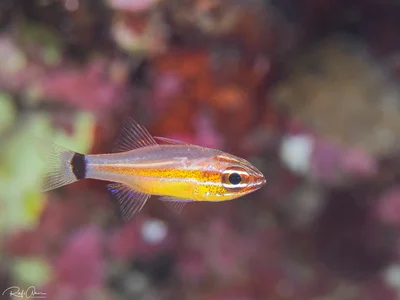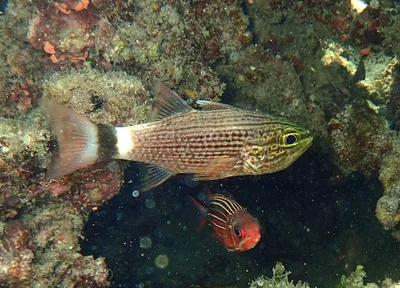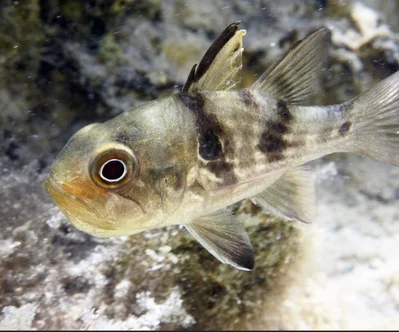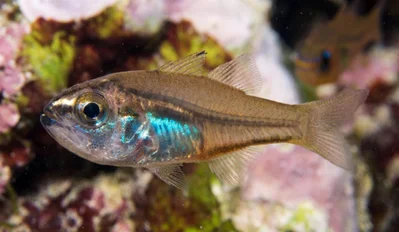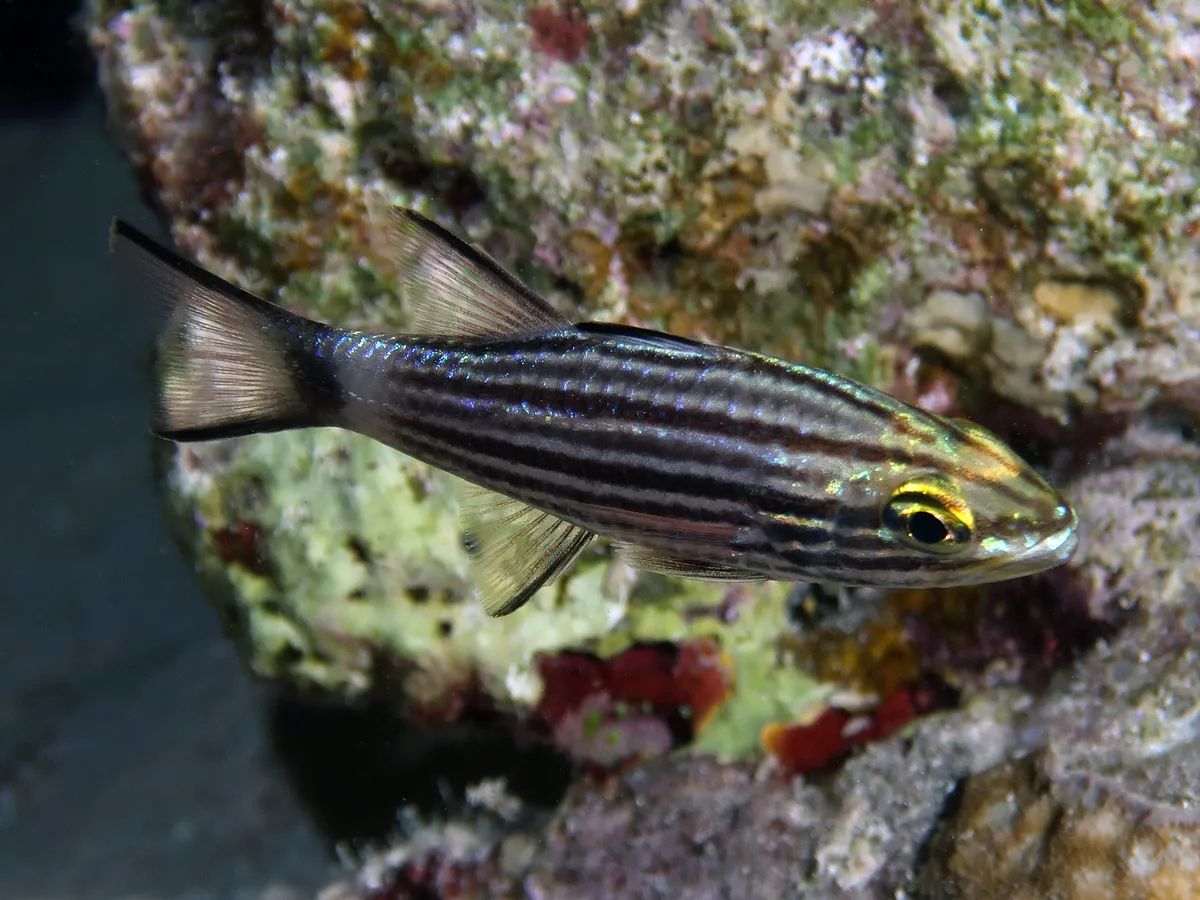
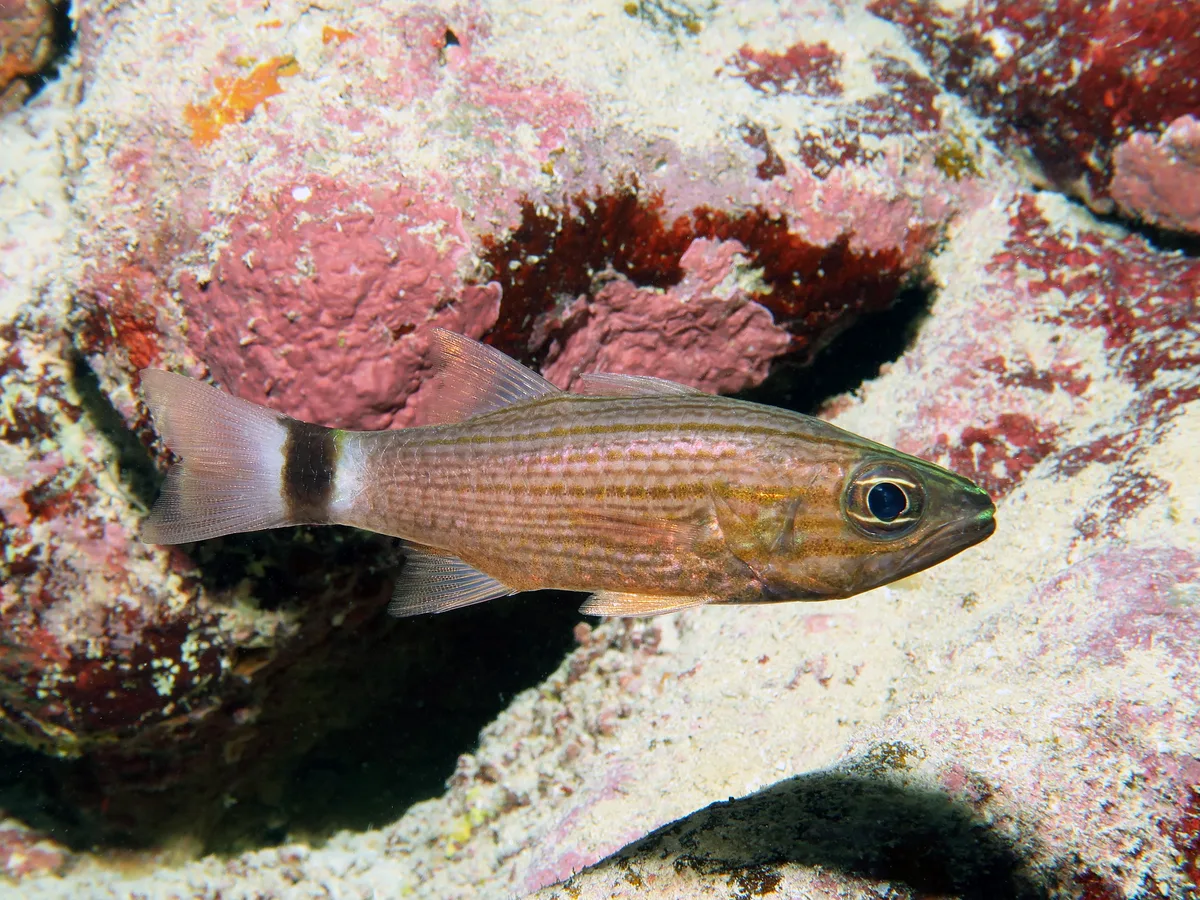
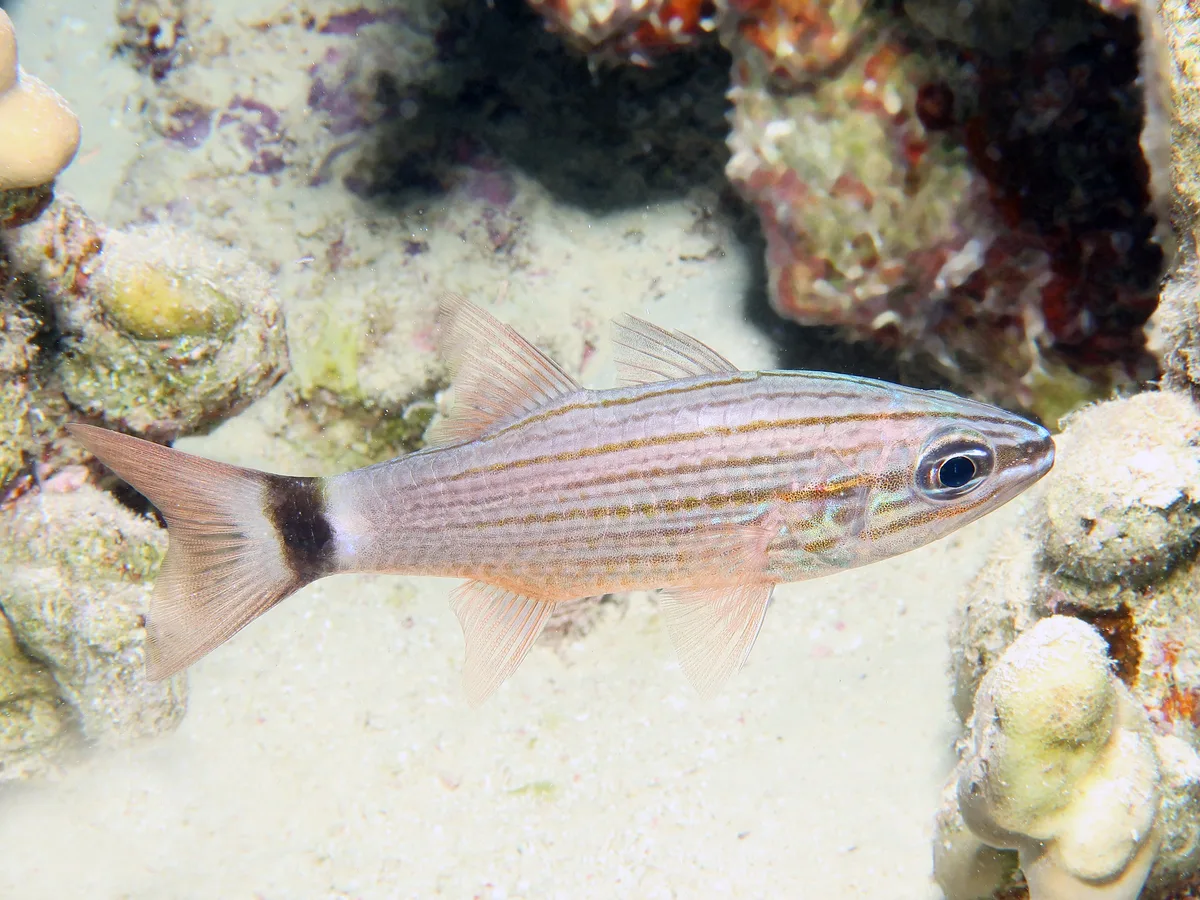
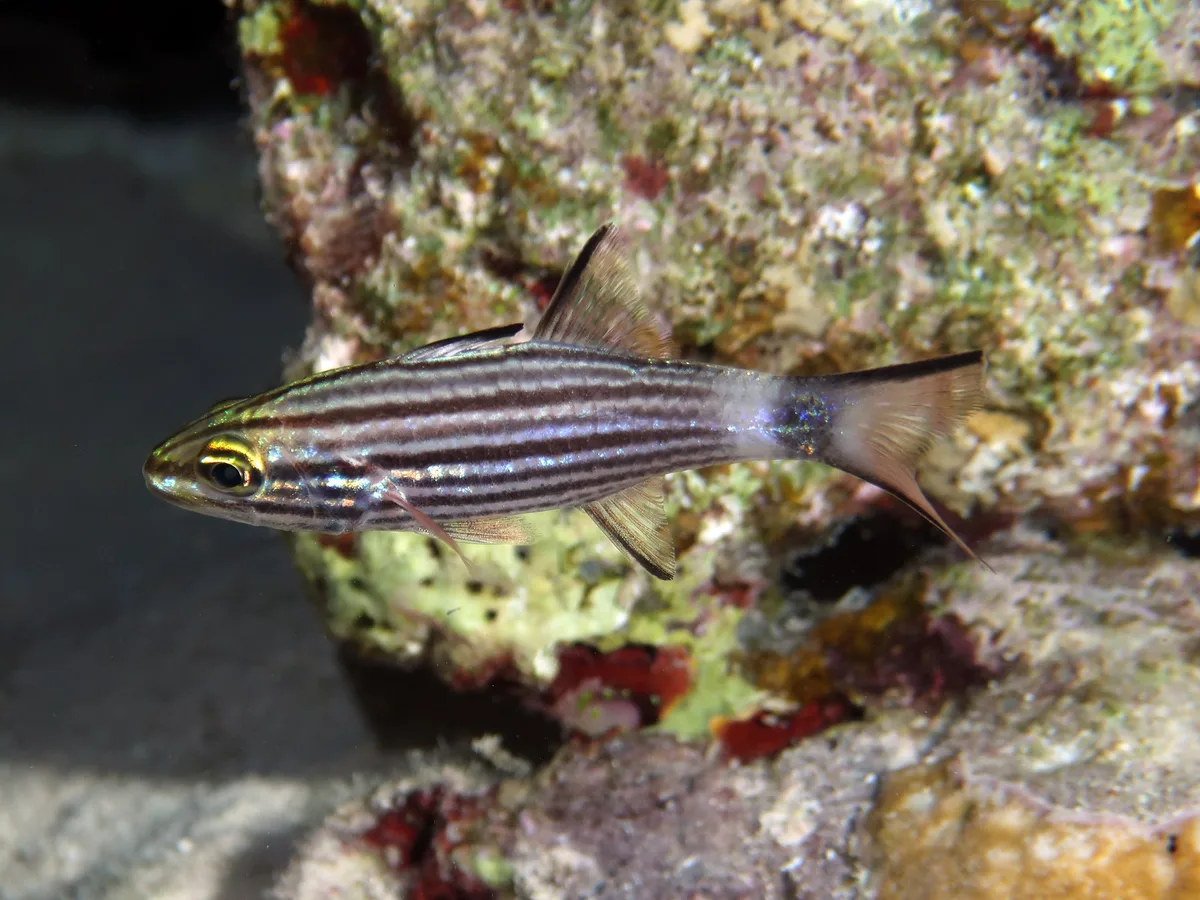
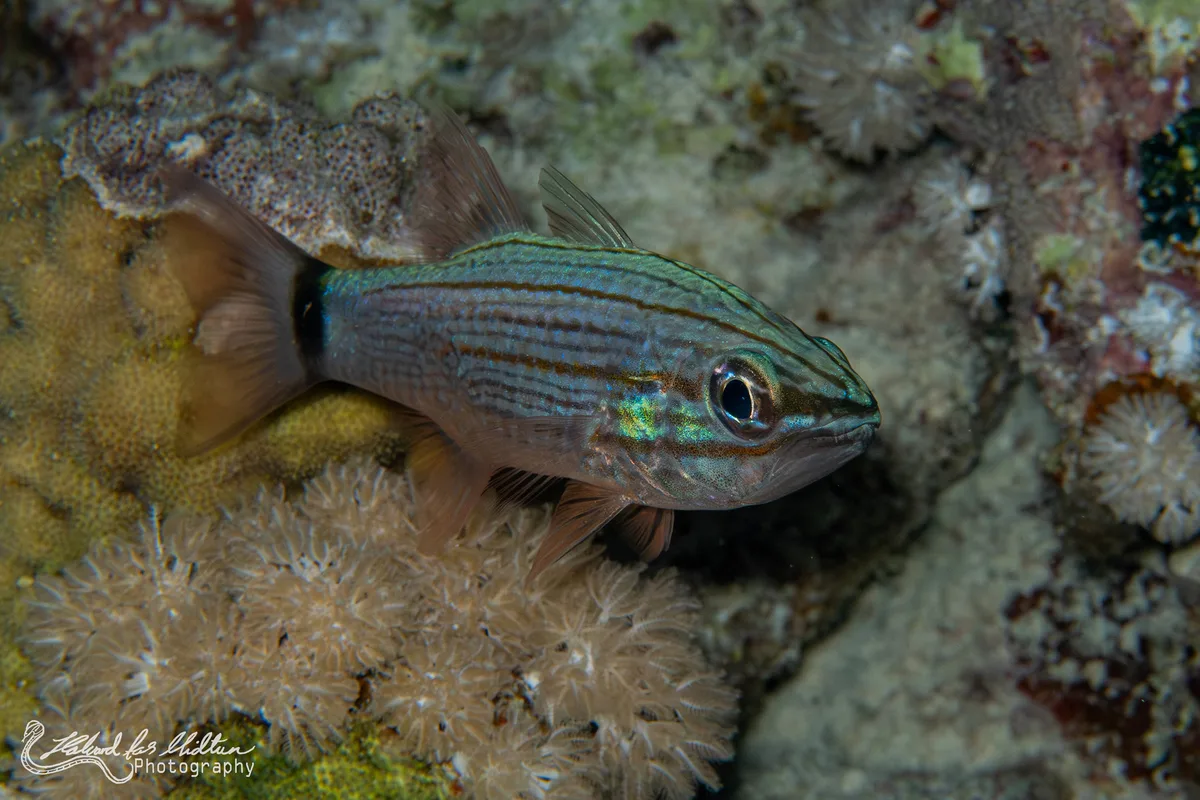
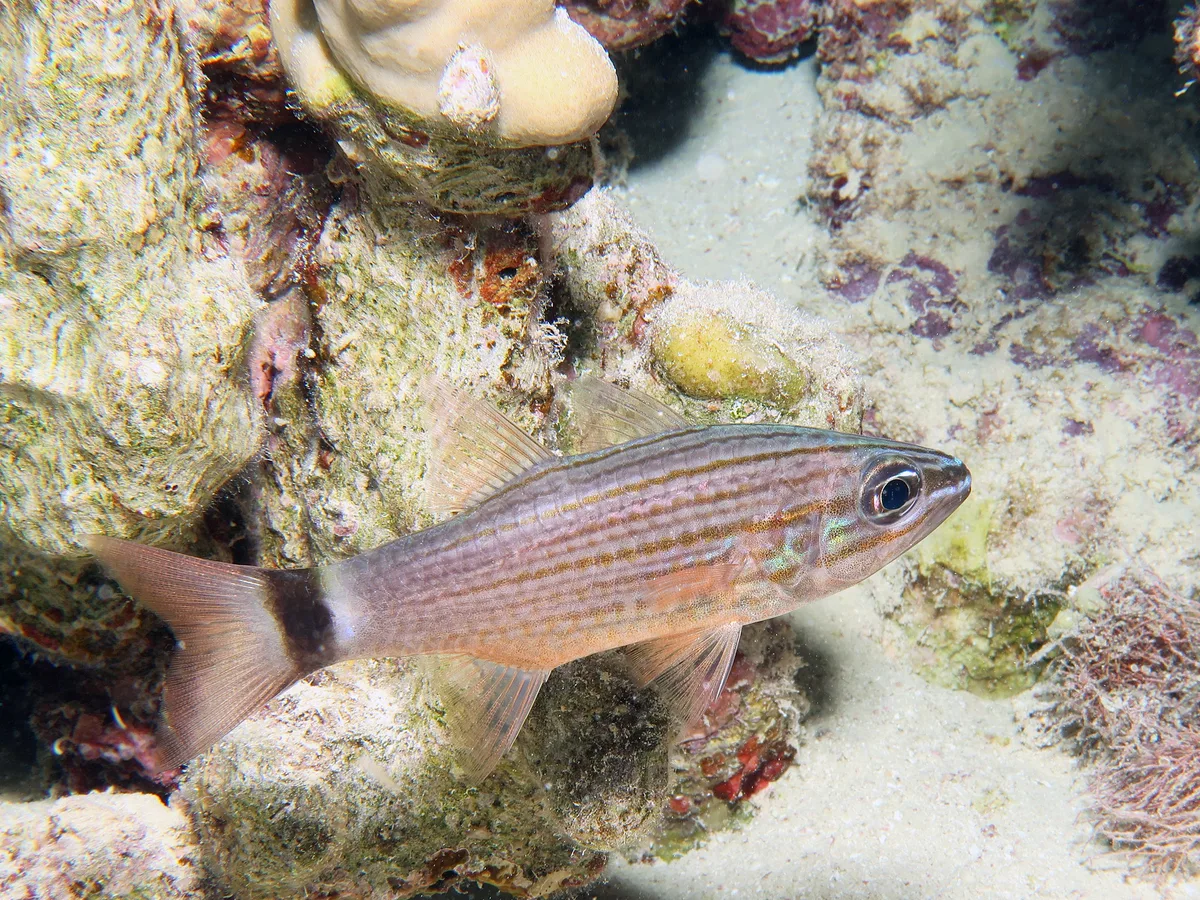
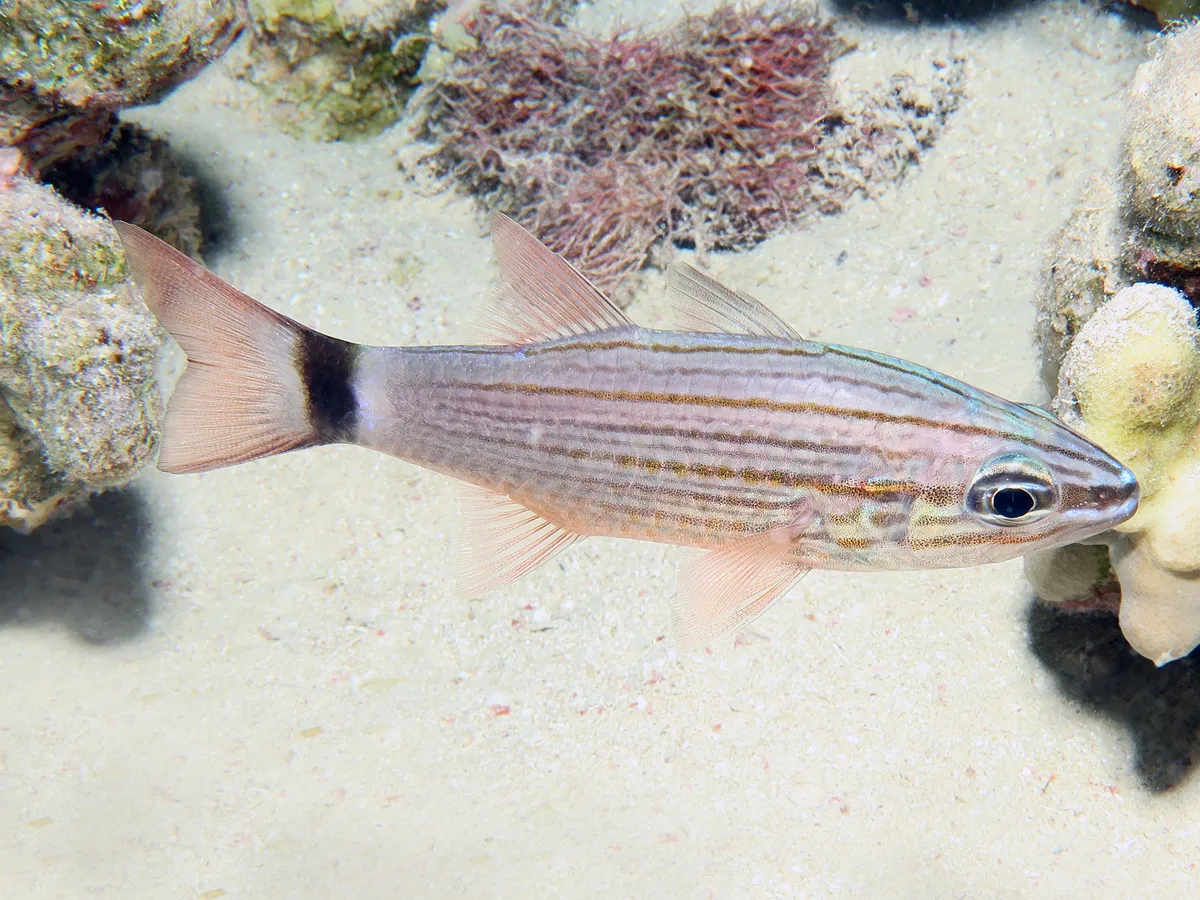
This one has teeth, which sets it apart in a family that mostly does not.
Most cardinalfish take zooplankton and small crustaceans and have jaws to match: fine, unremarkable, built for grabbing rather than holding. Cheilodipterus has canines, visible ones, and uses them - the genus takes small fish as a serious part of its diet, and a twelve-centimeter cardinalfish with real teeth is a meaningful predator on a reef where a large fraction of the residents are under five centimeters.
That also creates a problem the genus has solved twice over. Several Cheilodipterus species are close mimics of harmless striped cardinalfish, which lets a predator move among prey that has already decided it is not dangerous. Whether this species does it is not settled, but the family resemblance is not accidental.
It sits by day near coral heads and branching colonies, striped and unhurried, and hunts at night.
And for all that, it broods its eggs in its mouth like every other cardinalfish here, which means a fish with a mouthful of canines spends part of each season unable to use them at all.
The genus. Cheilodipterus Lacepède 1801 - cheī́los (lip) + di- (two). ETYFish
The species. Cheilodipterus lachneri Klausewitz 1959 - Honours Ernest A. Lachner. ETYFish
- pale body with several dark lengthwise stripes
- visible canine teeth in the jaws, unusual for a cardinalfish
- yellowish tail base with a dark spot
- up to 12 cm