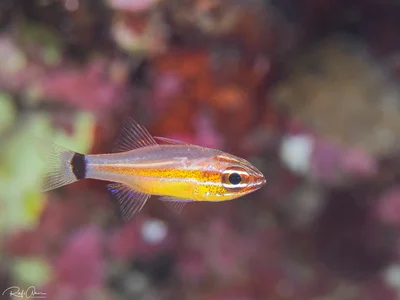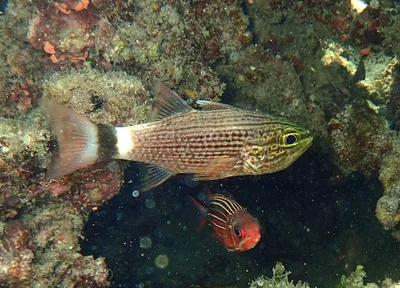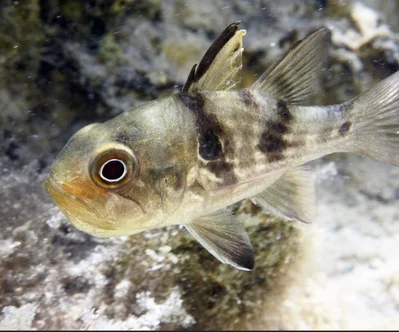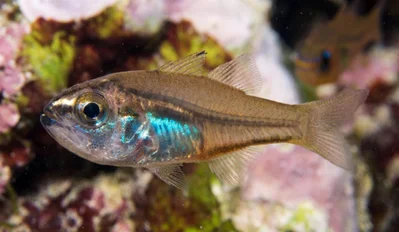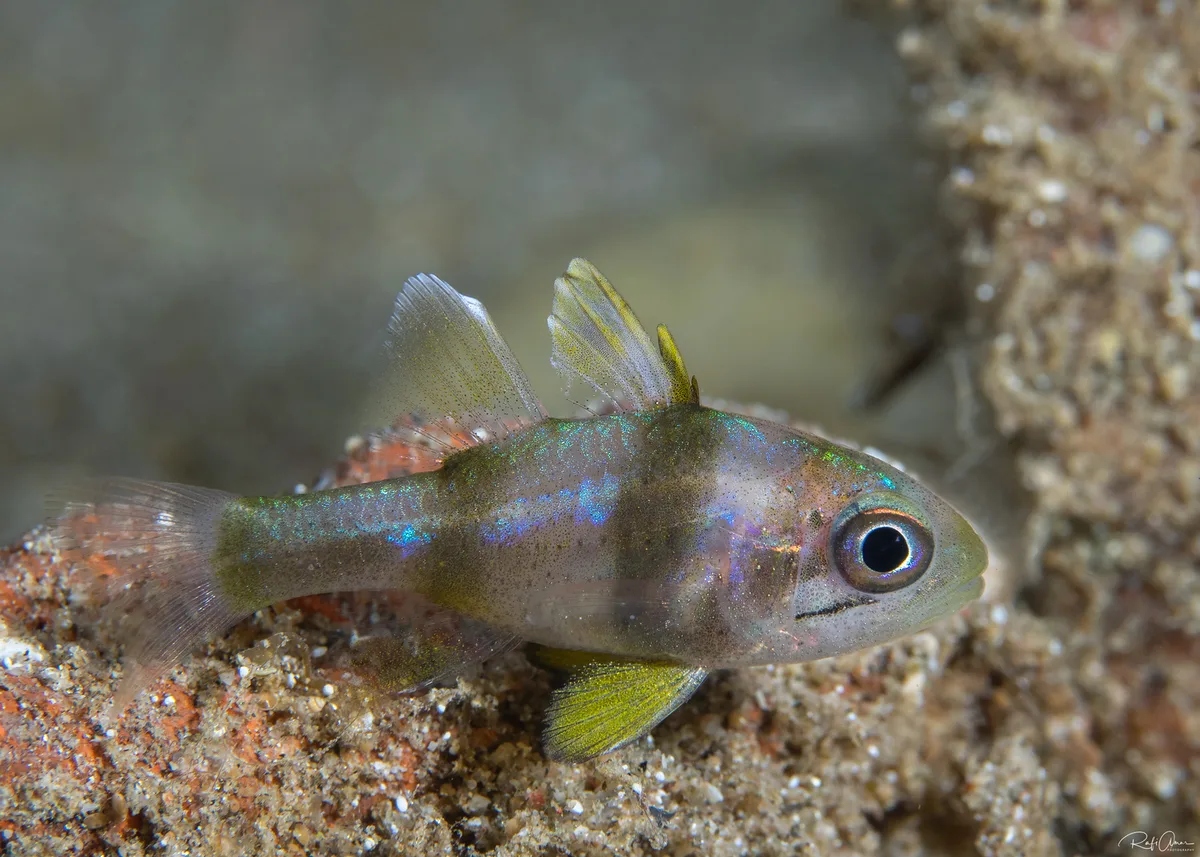
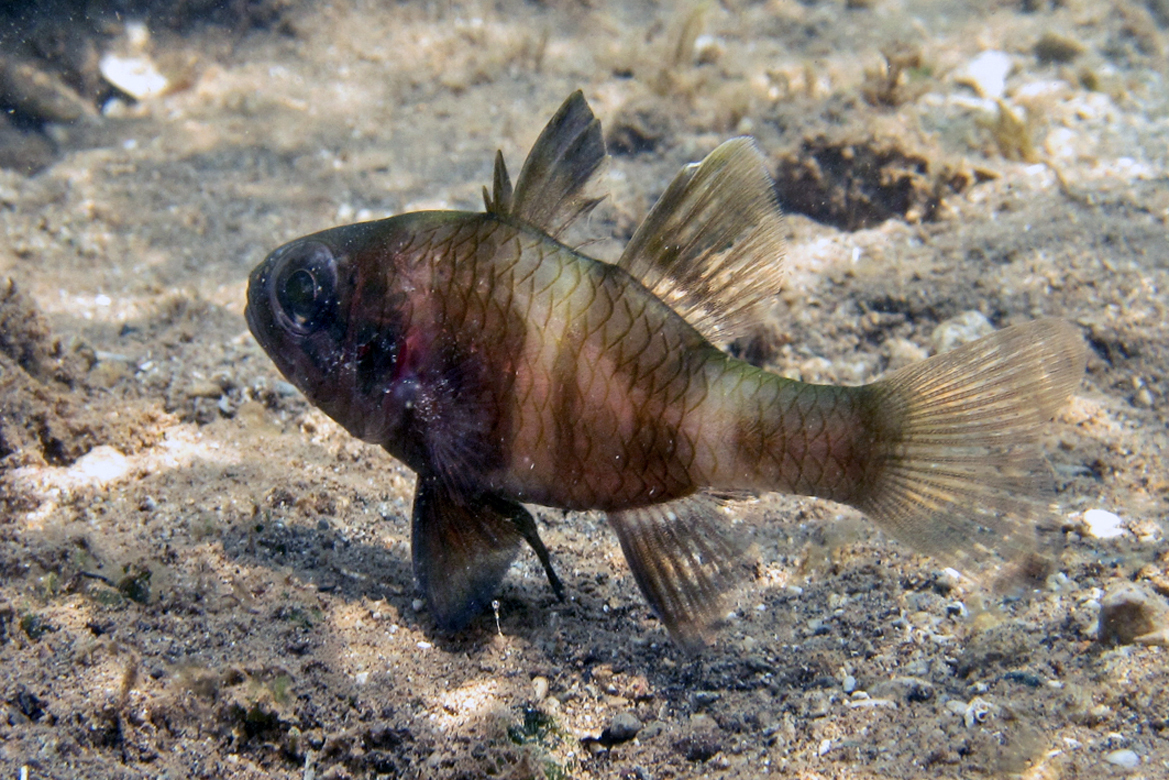
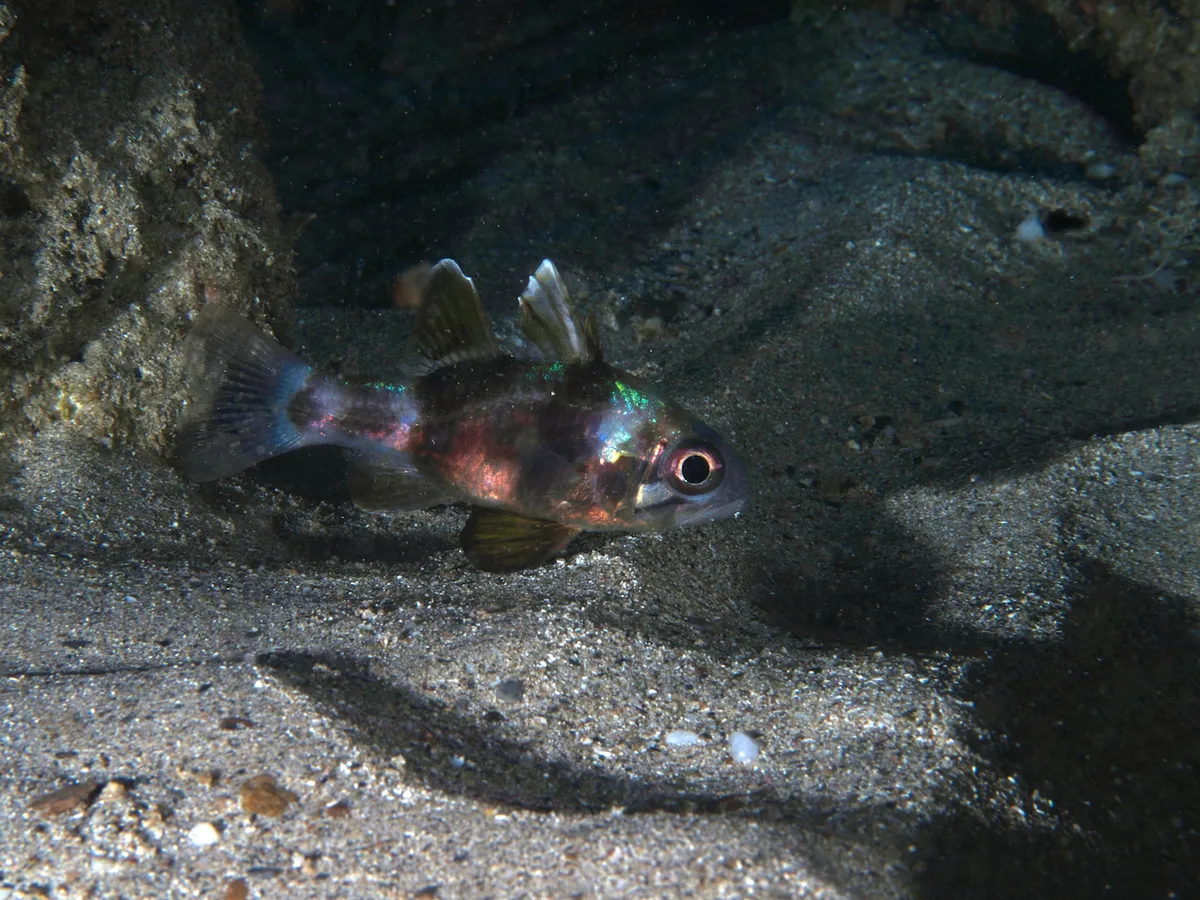
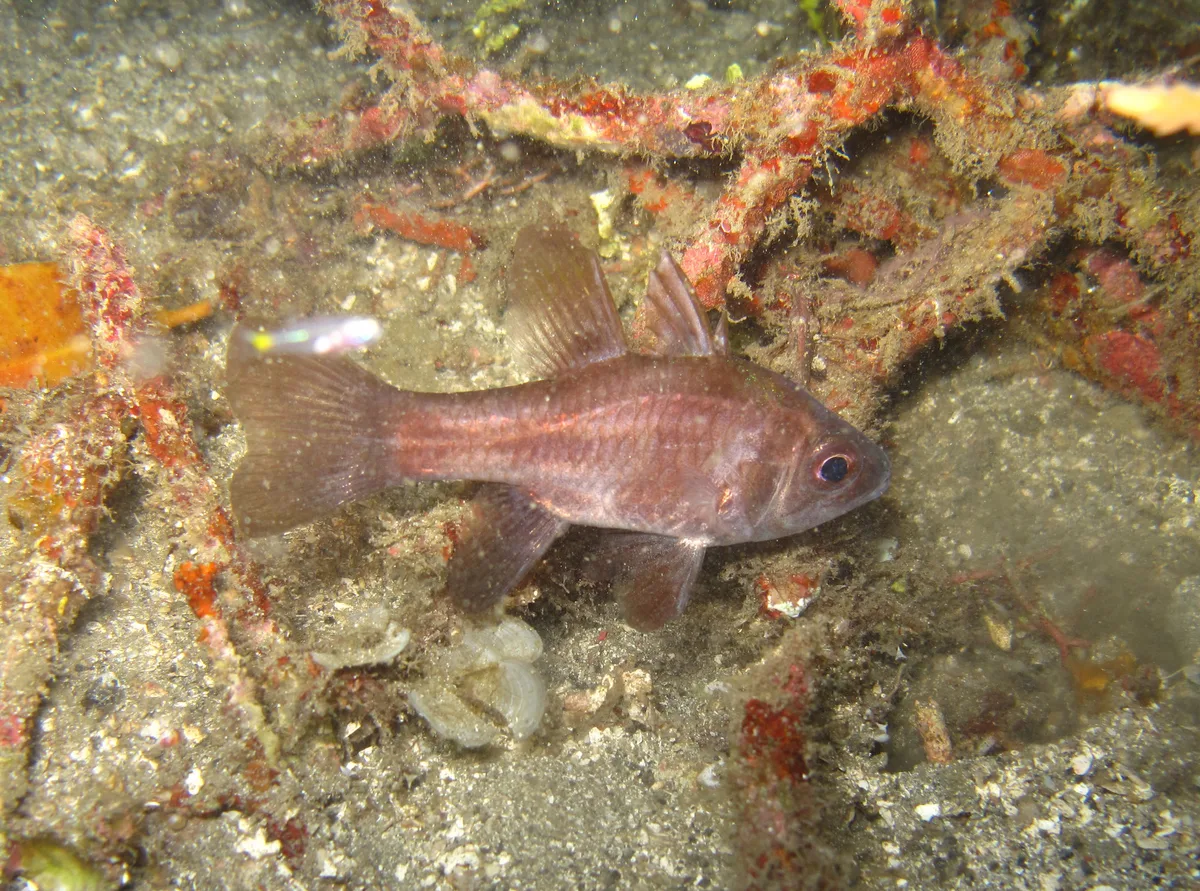
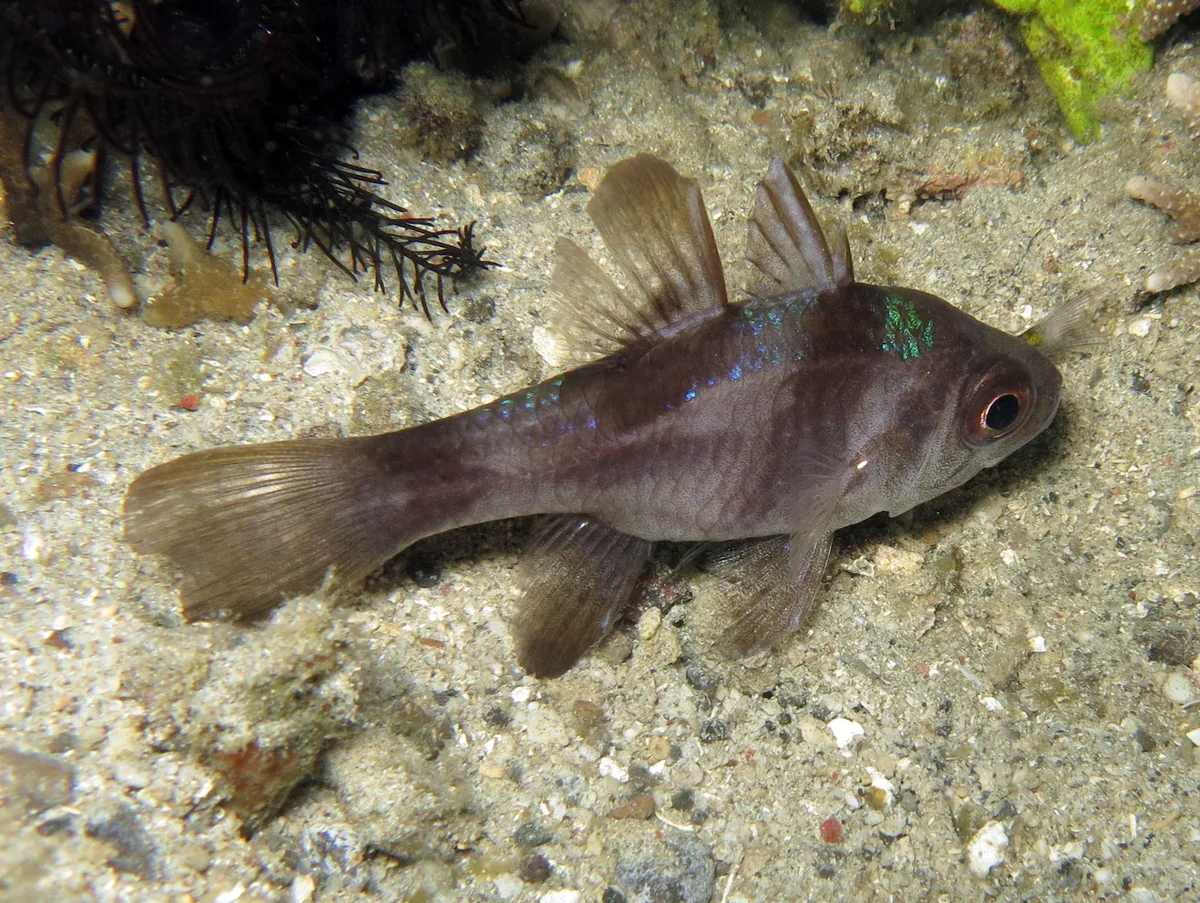
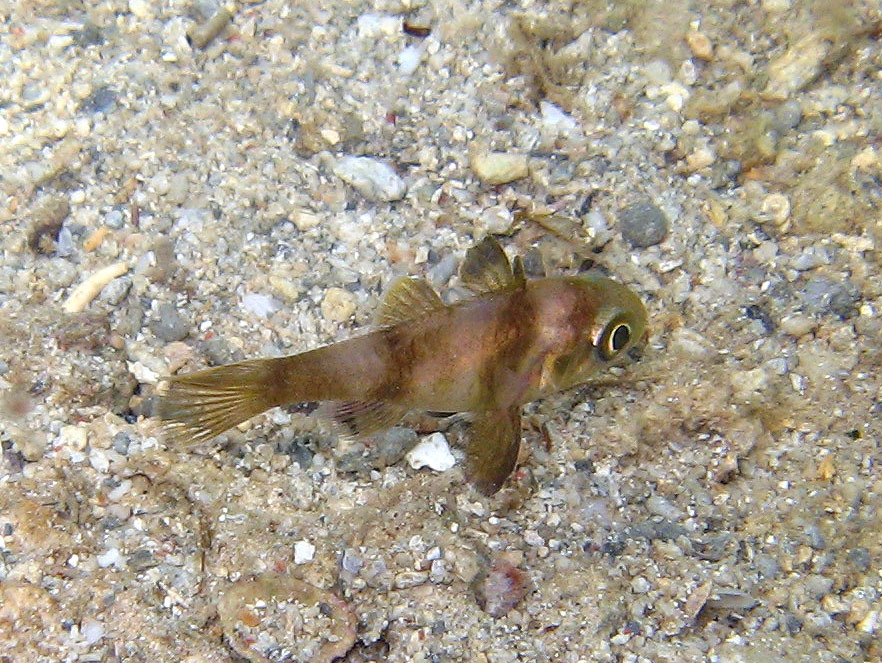
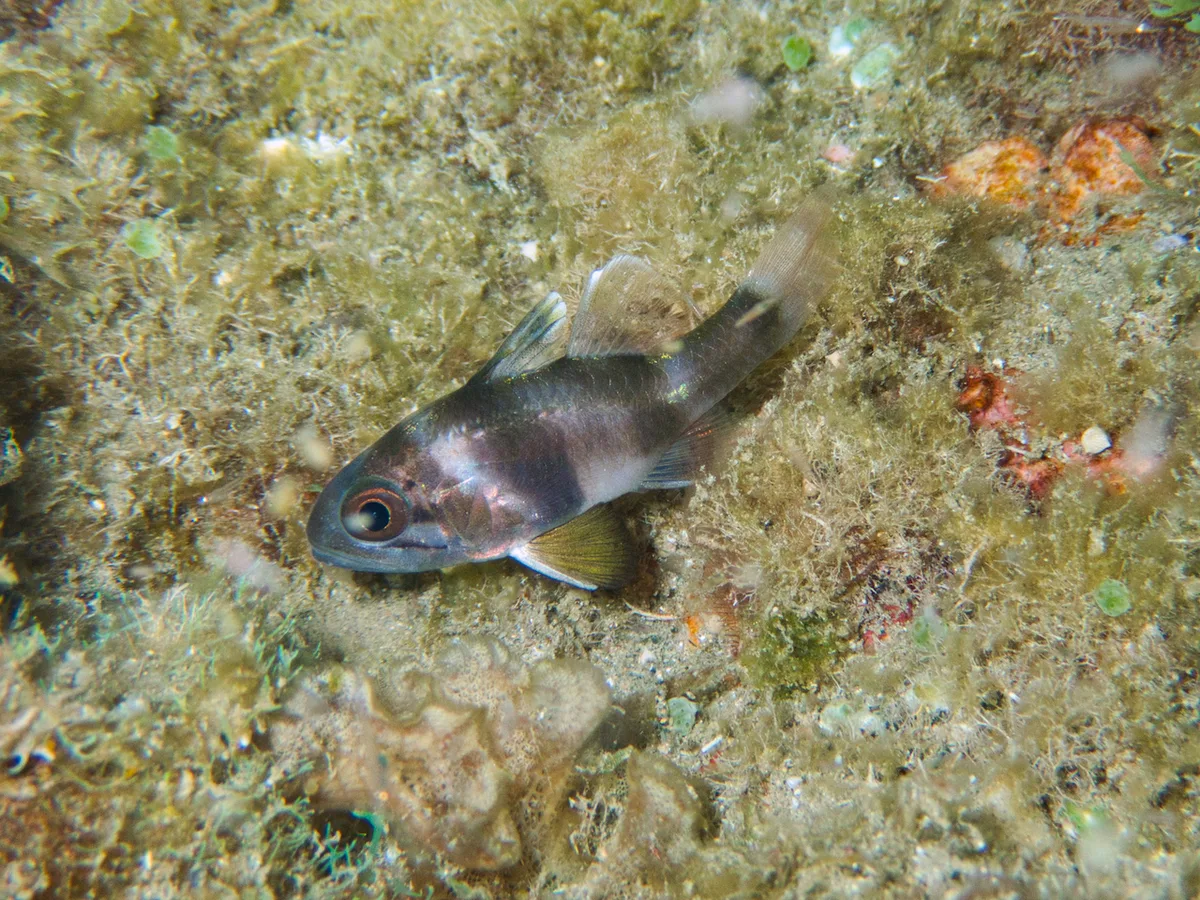
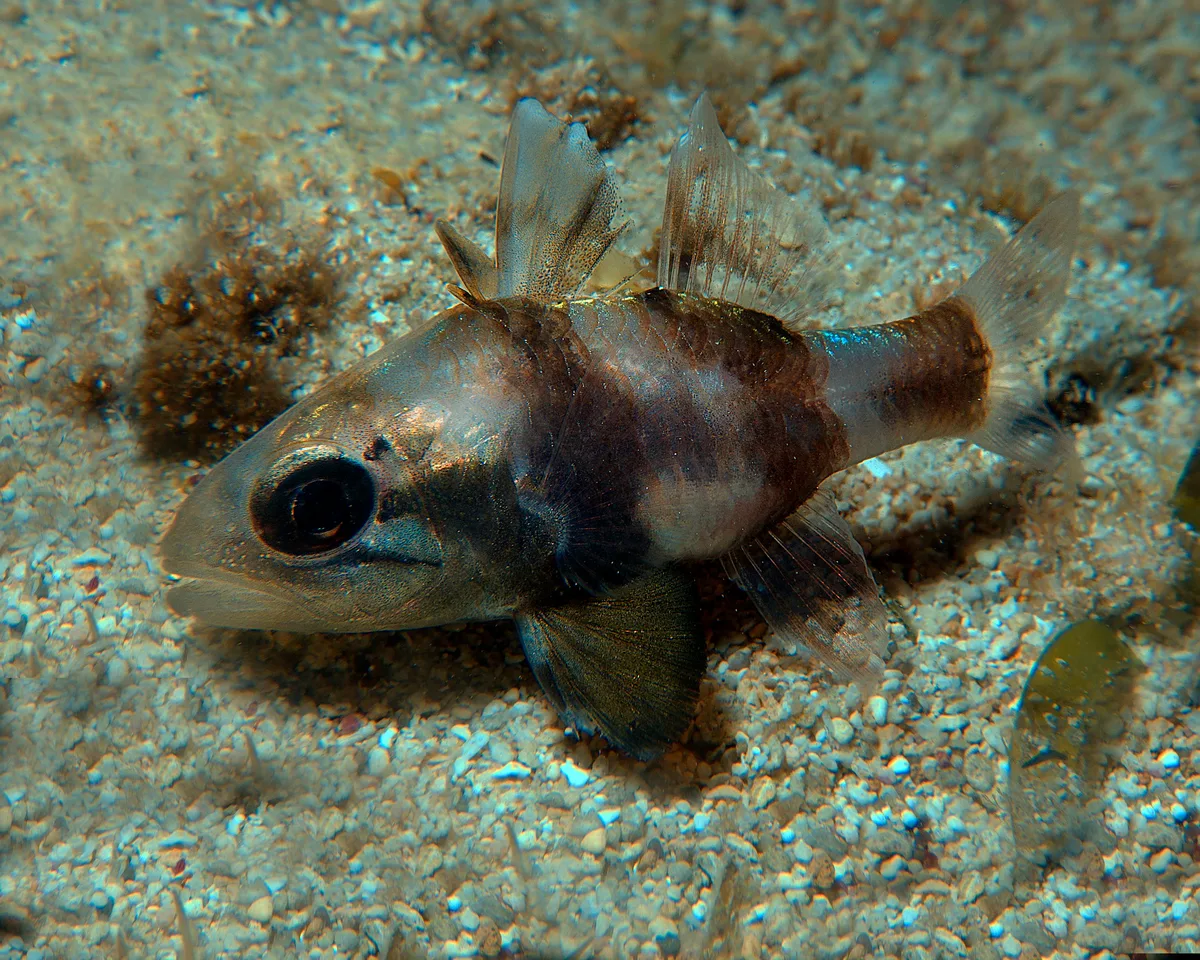
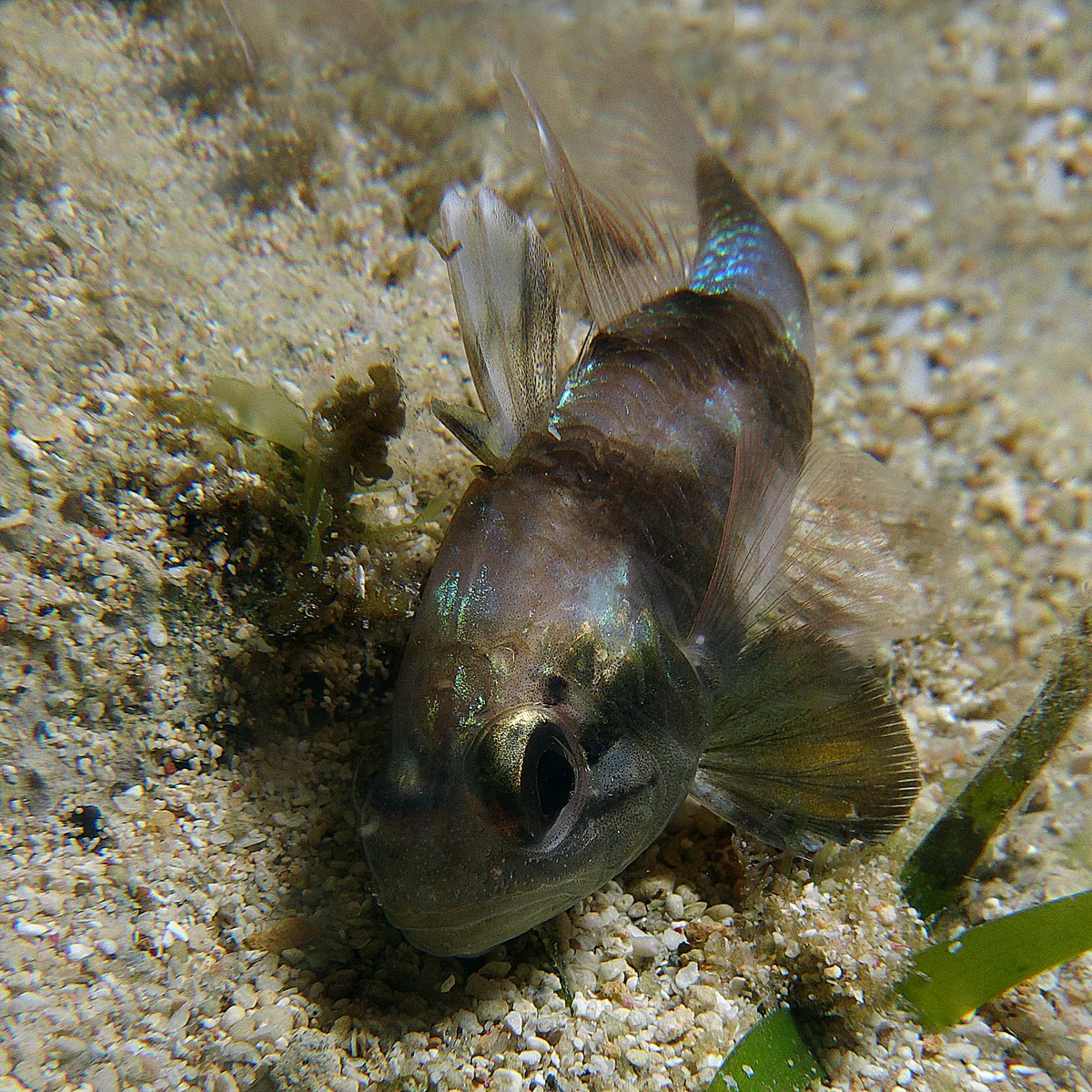
Two dark marks, one through the eye and one at the base of the tail, and they work as a pair.
The front bar hides the eye. The rear one supplies a false one. Between them they move the apparent head of the fish to the wrong end, and a predator that reads the animal from a distance and strikes at what it takes to be the front gets the tail, while the fish accelerates in the opposite direction. It is a two-part deception and it is common enough on this reef to be worth recognizing as a design rather than a coincidence: butterflyfish do it, damselfish do it, several cardinalfish do it.
The test of whether it works is what happens to fins. Where researchers have looked at damage on wild fish, tail fins carry far more strike marks than heads, which is roughly what you would expect if a large share of attacks are being aimed at the wrong end on purpose.
This is a solitary, deep-bodied brown cardinalfish of sheltered rubble and seagrass, out at night for small crustaceans, with the male brooding the eggs.
- deep-bodied brown fish with a dark bar through the eye
- second dark bar or blotch at the tail base
- solitary, low over rubble
- up to 9 cm
Why it's threatened
There are no known major threats.
Threat classification from the IUCN Red List.