Seagrass is not seaweed. It is a flowering plant that went back into the sea: it has roots, it has veins, it flowers and it sets seed underwater, and its ancestors were land plants that had already left the ocean once.
What it builds is the most productive habitat on this coast and the least photographed. A seagrass meadow holds sediment in place, takes carbon out of the water at a rate per hectare that outpaces forest, and shelters a fauna almost entirely separate from the reef next door: pipefish, small cardinalfish, juvenile emperors and rabbitfish, sea hares, and the turtles and dugongs that graze the meadow itself.
It is also the habitat that gets dredged first, because a meadow looks like empty bottom to anyone planning a marina.
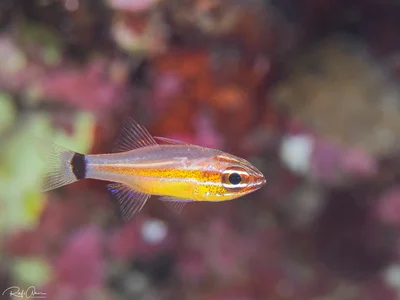
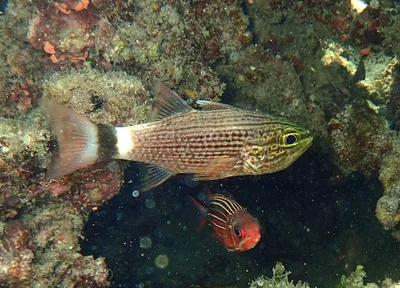
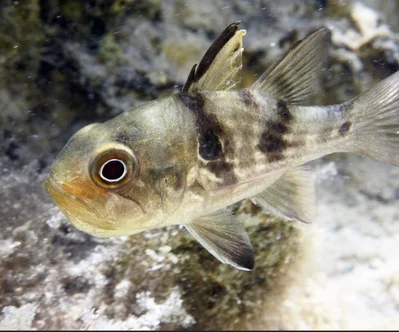
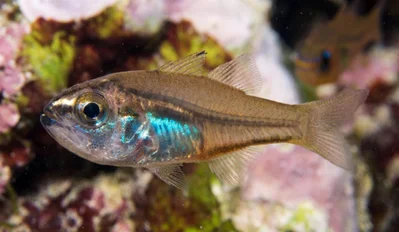
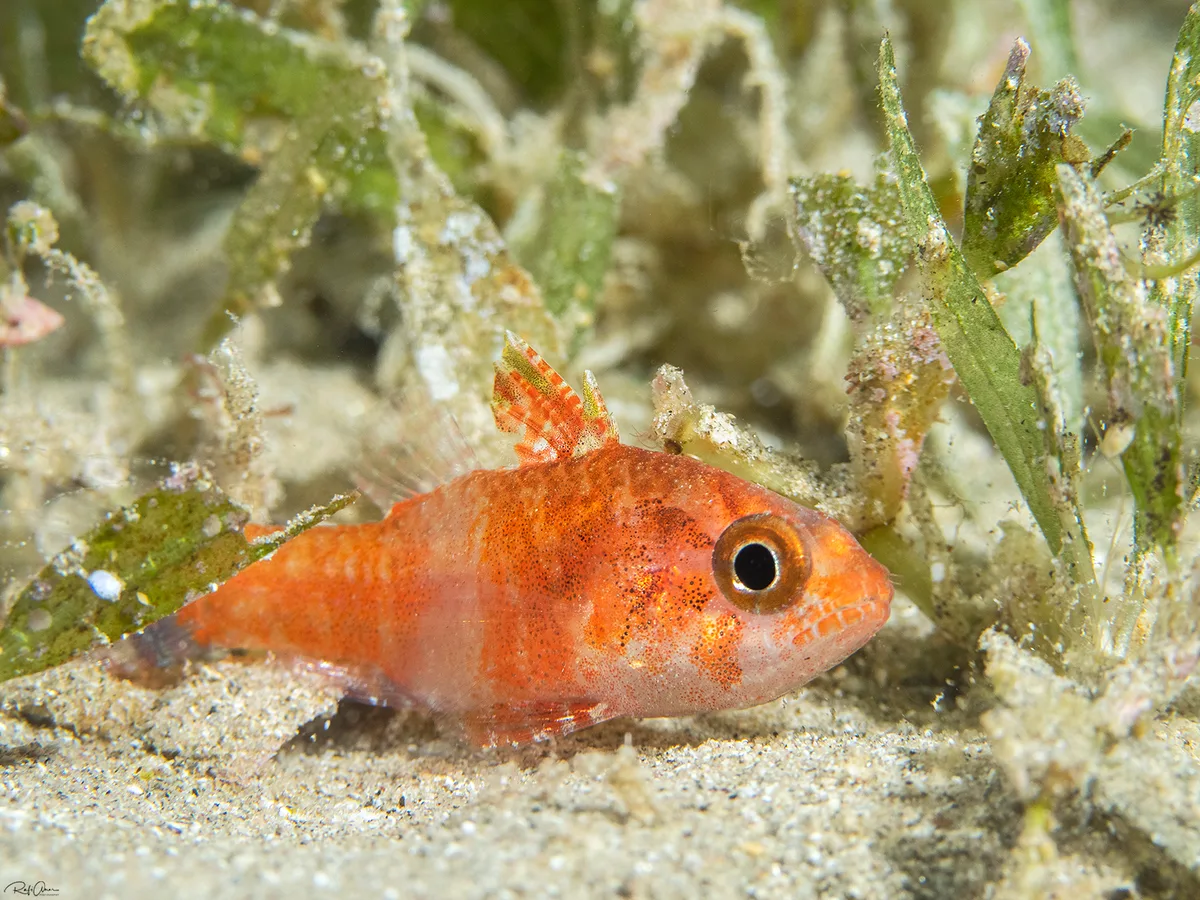
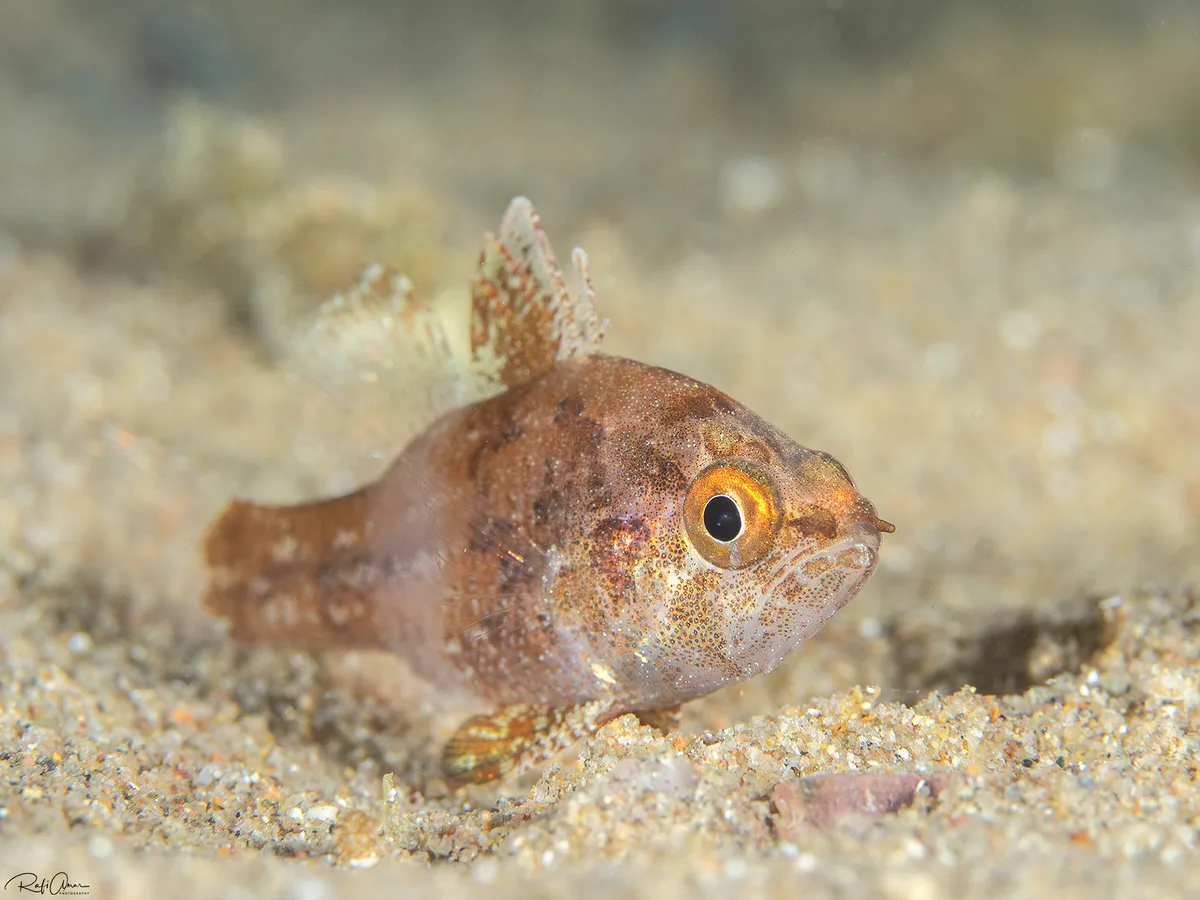
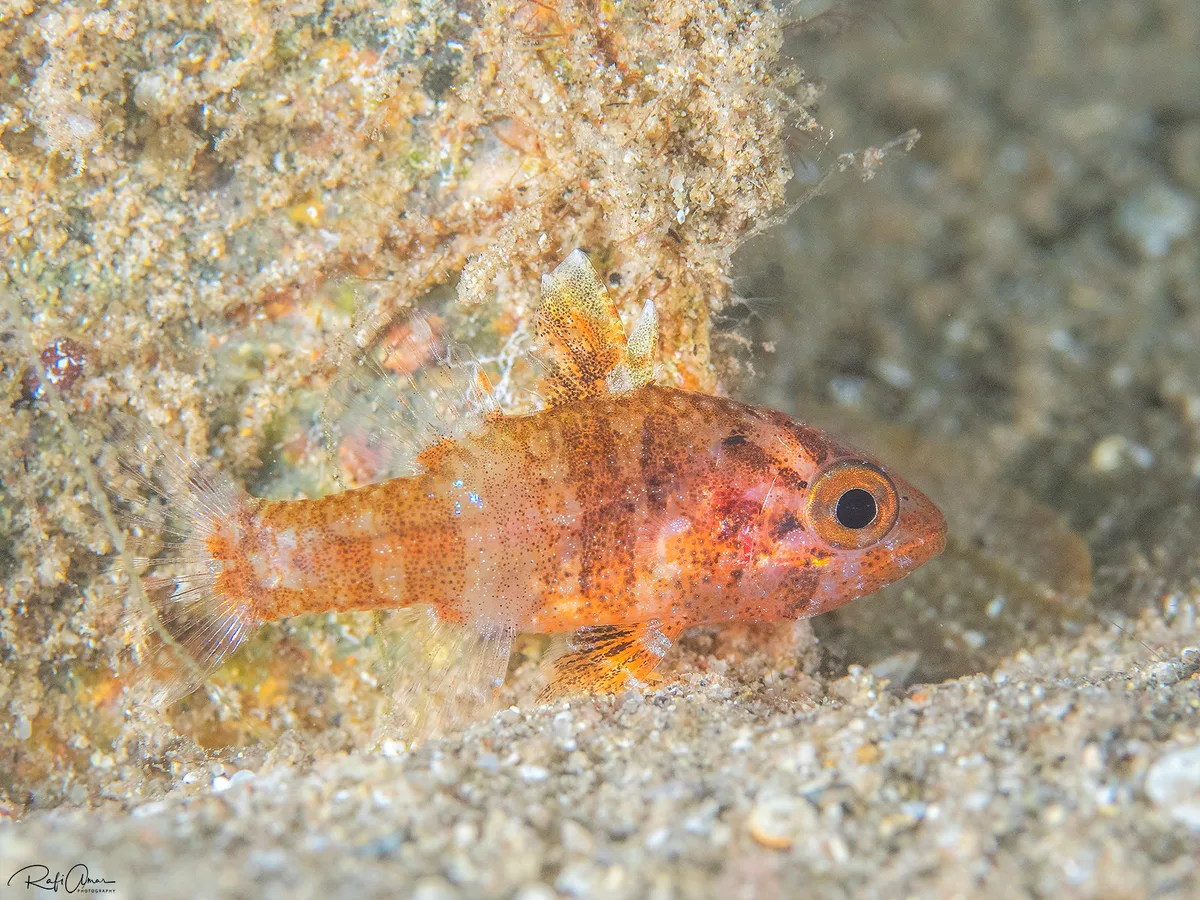
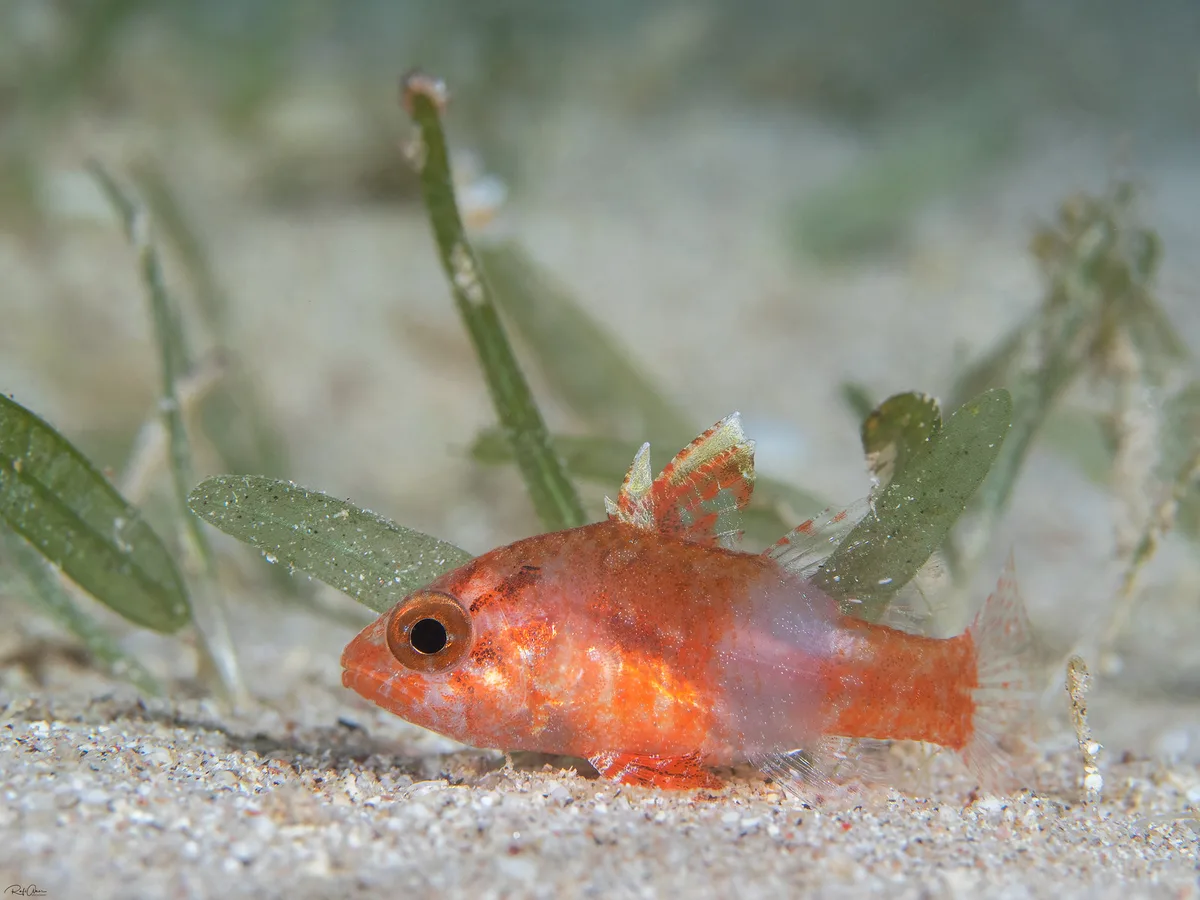
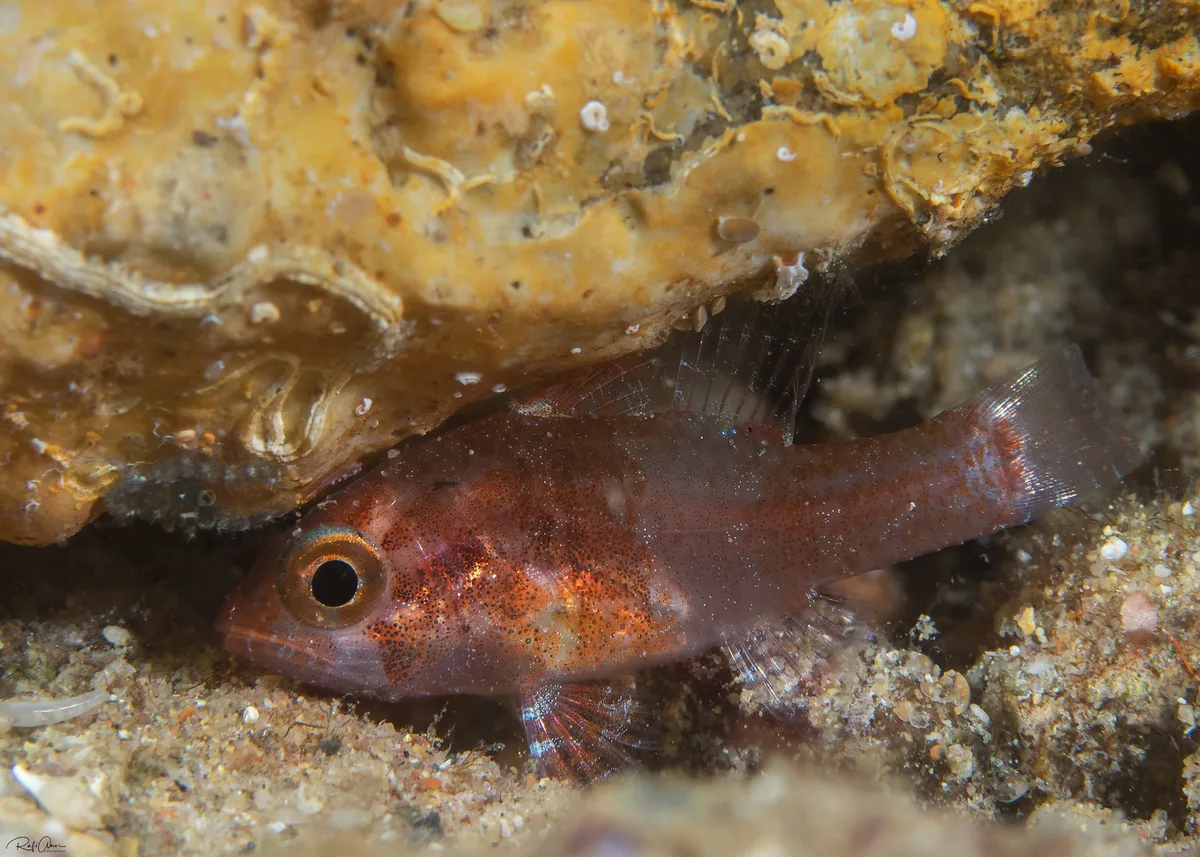
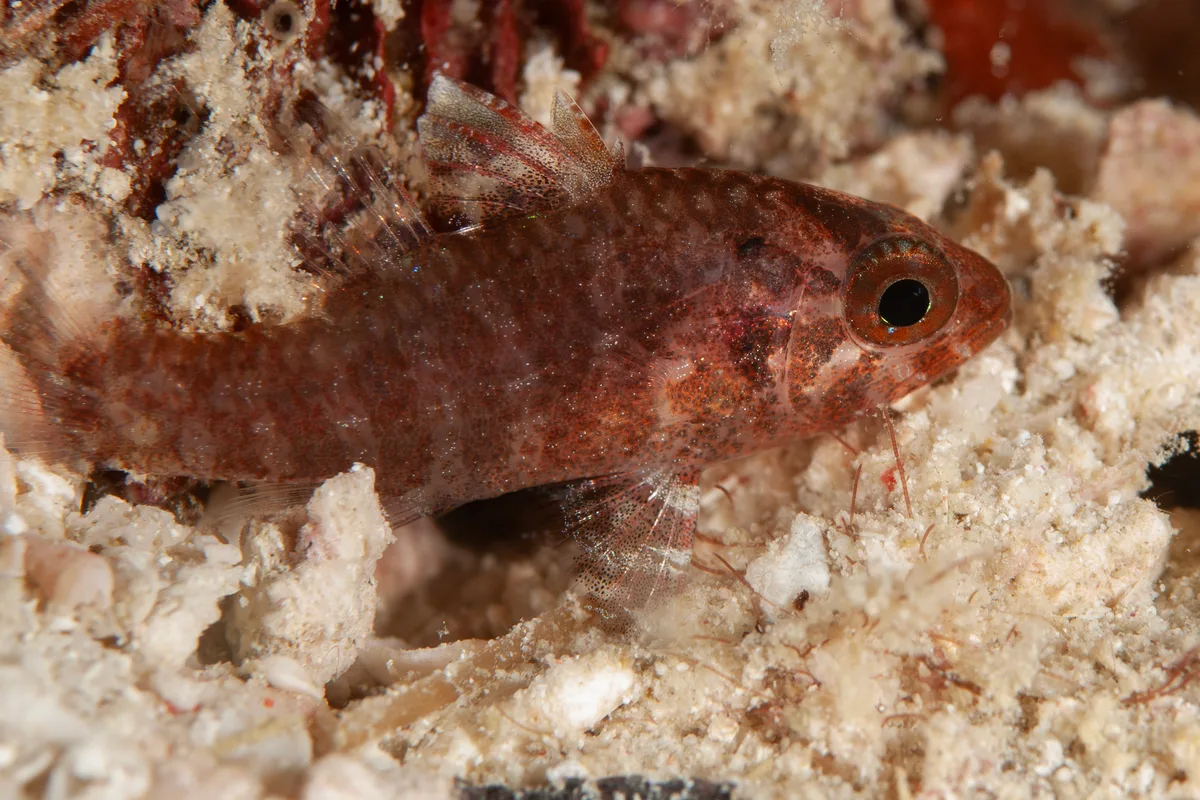
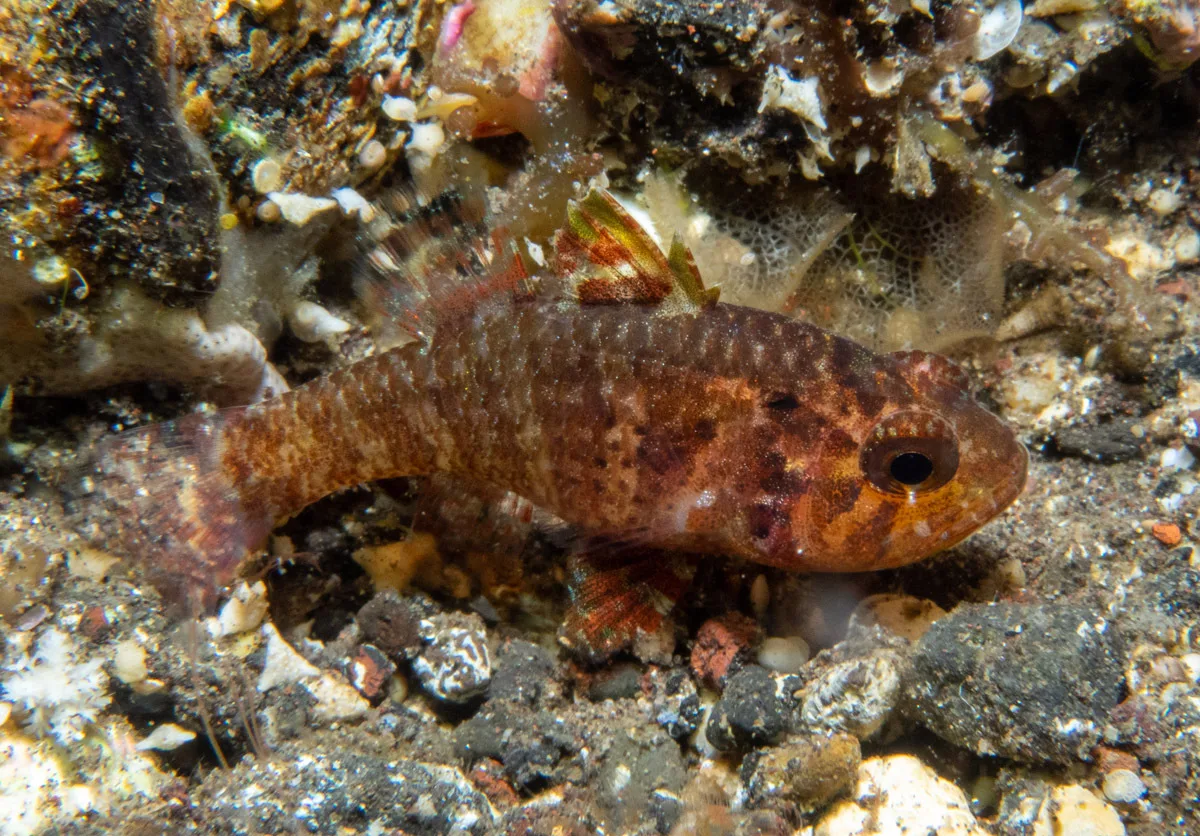
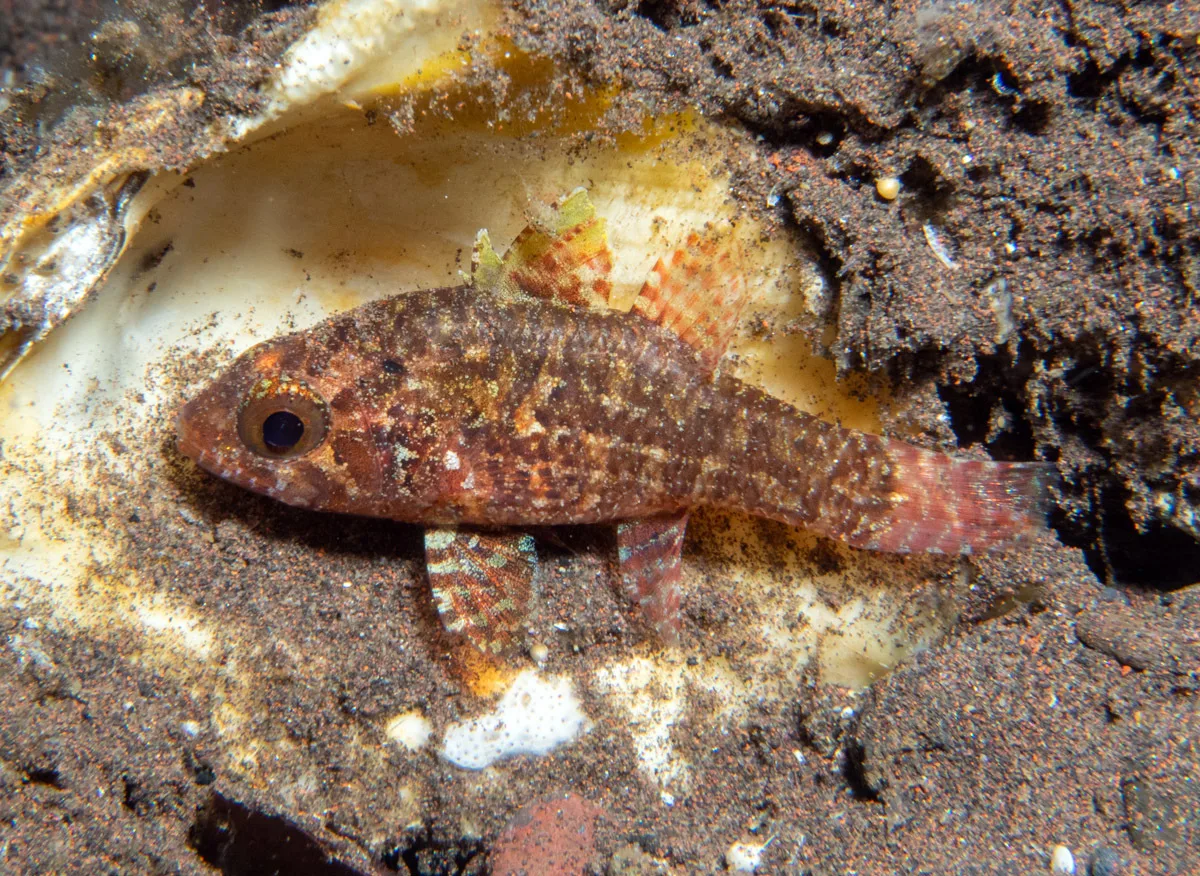
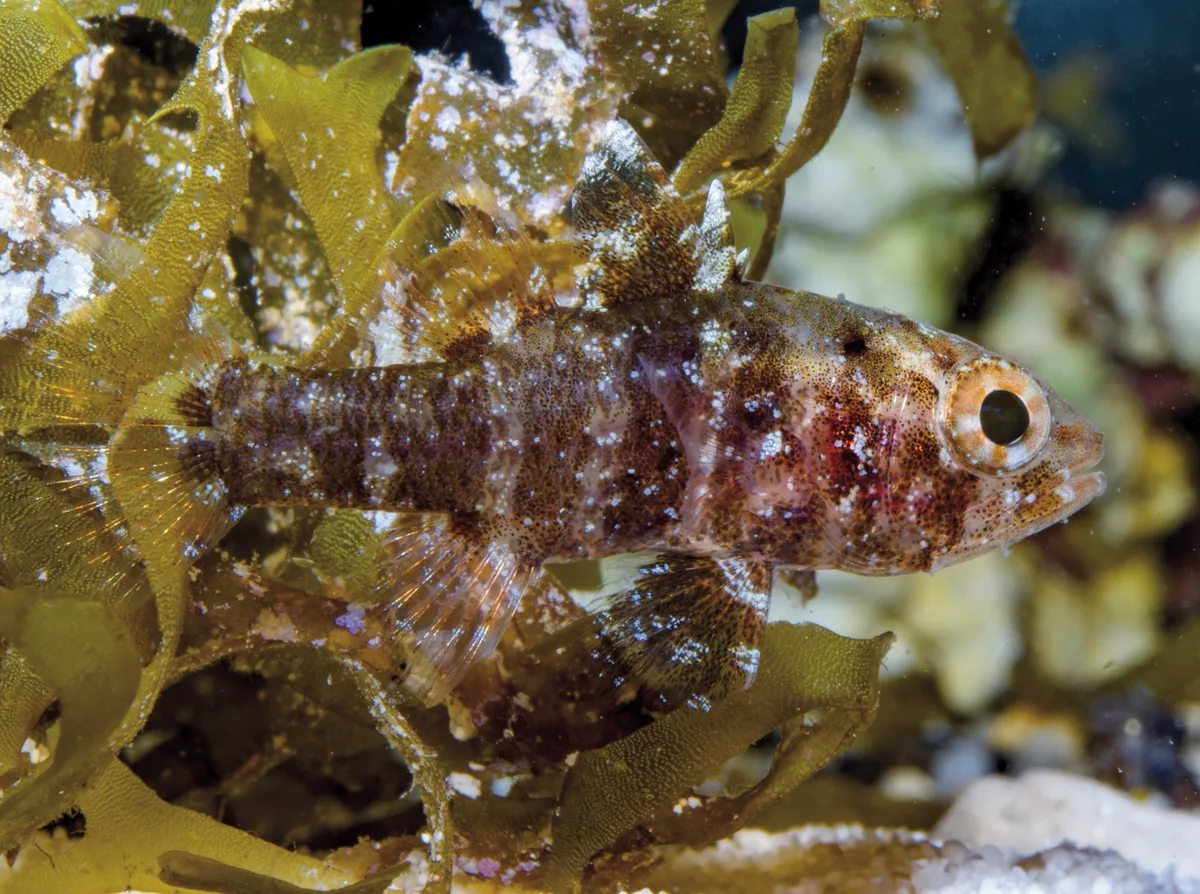
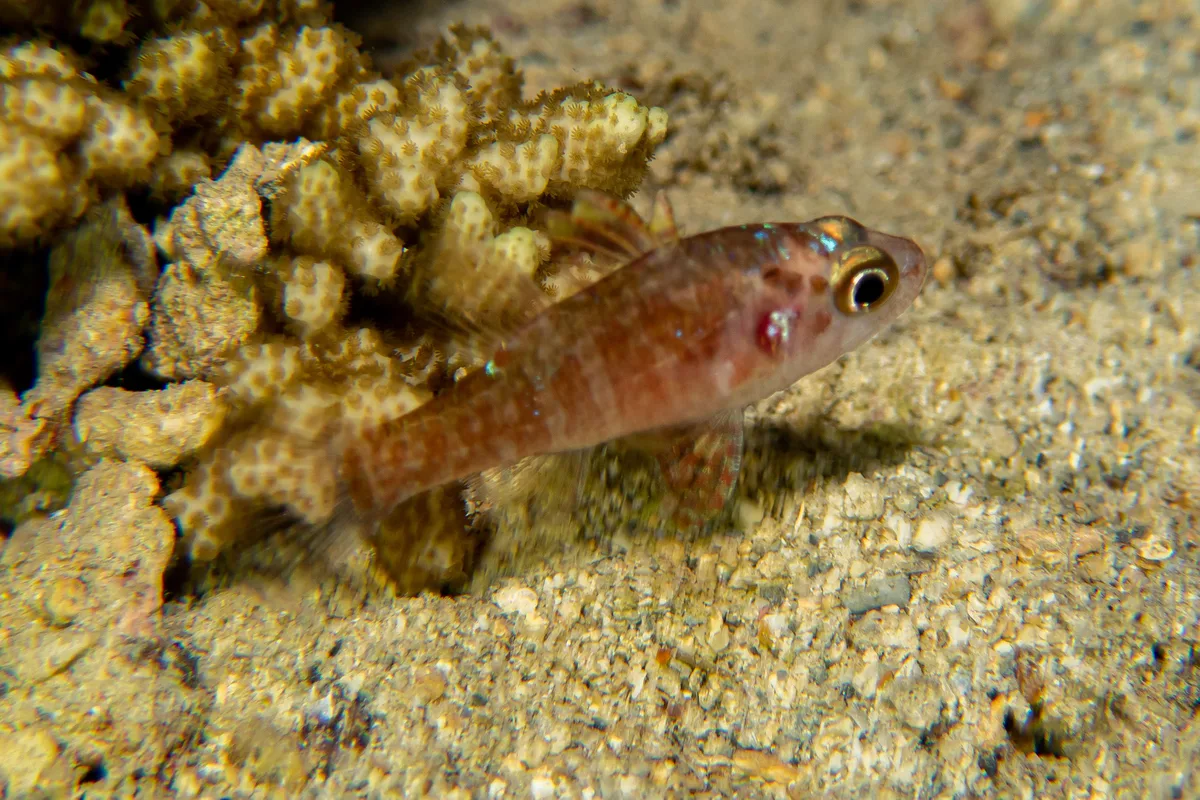
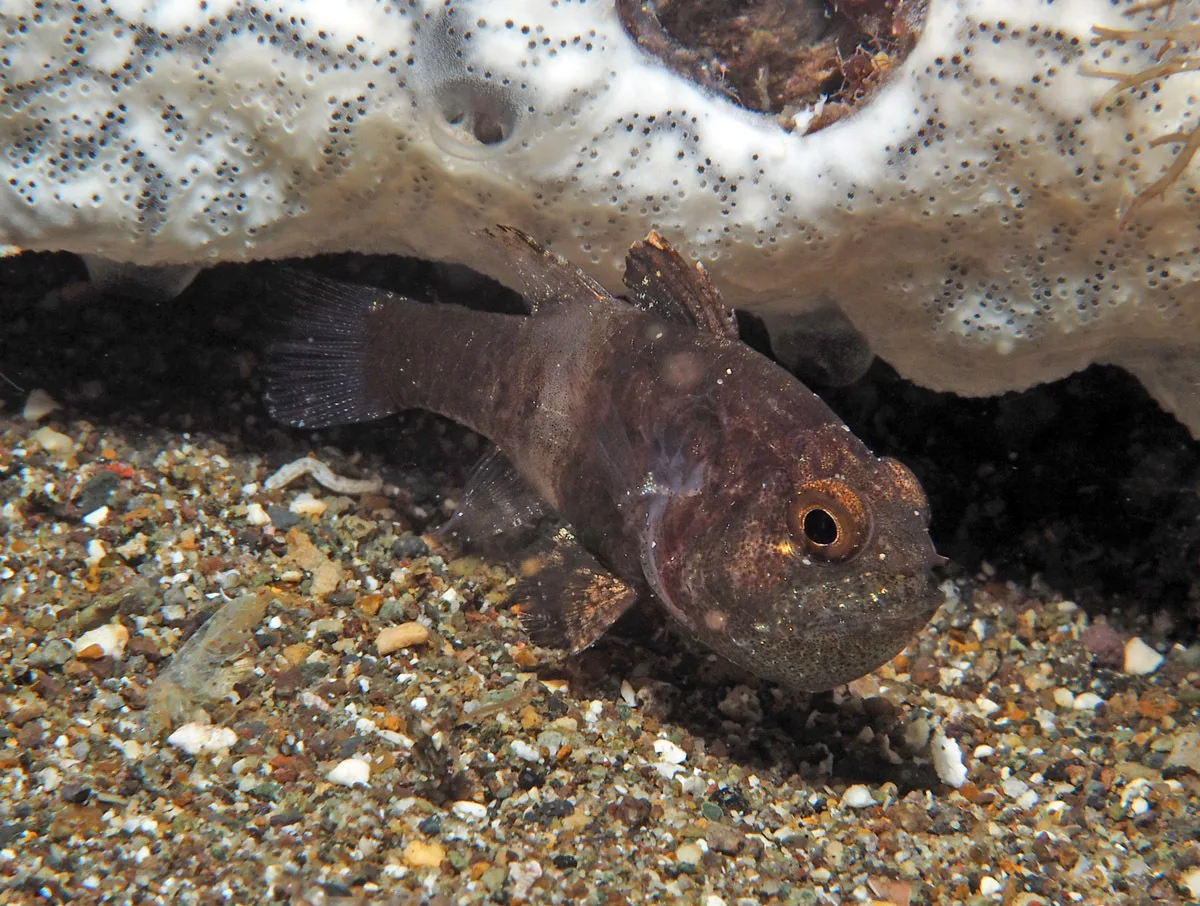
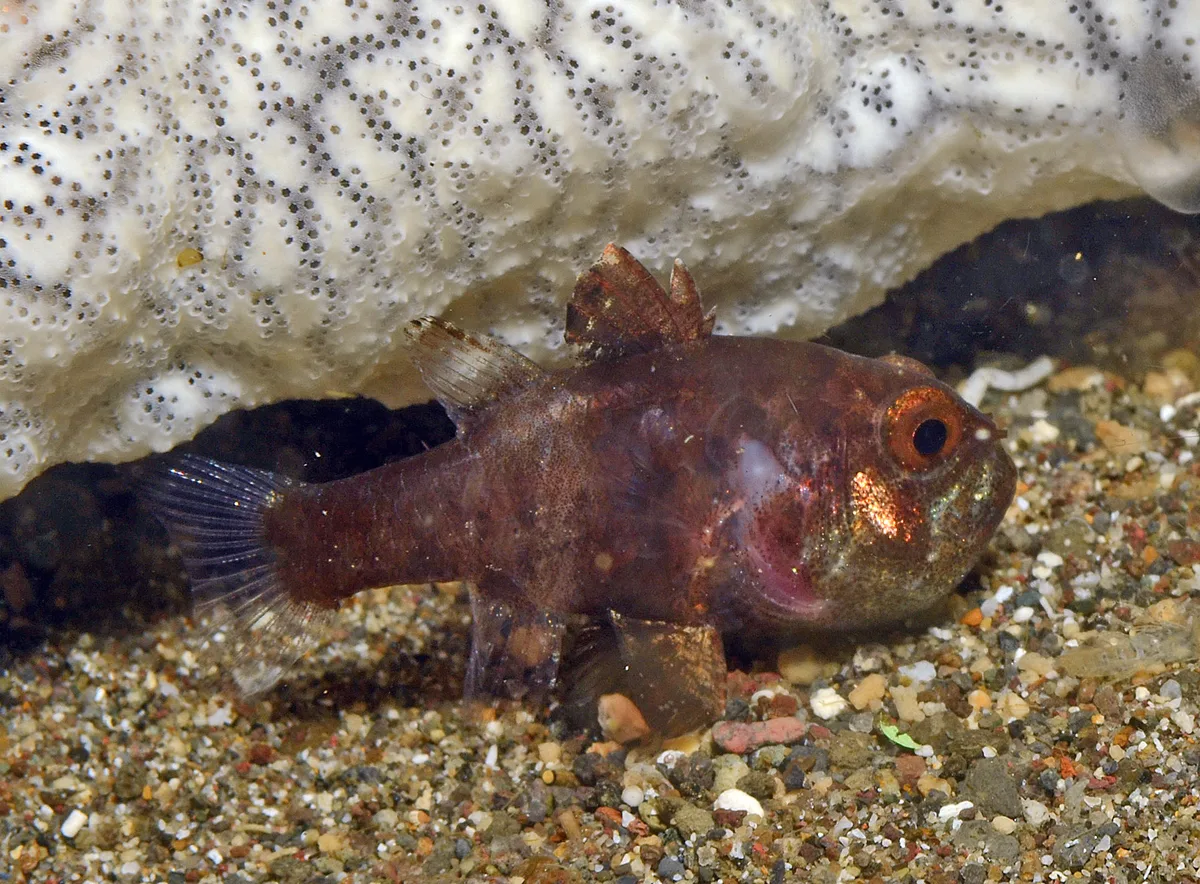
This cardinalfish is one of the residents, a five-centimeter mottled brown fish that spends the day among the blades and comes out at night for small crustaceans. Nobody dives seagrass on purpose, which is roughly why nobody has photographed it.
The species. Fowleria vaiulae (Jordan & Seale 1906) - Honours Vaiula. ETYFish
- small mottled brown fish with dark speckling
- ocellus on the gill cover
- in seagrass rather than on coral
- up to 5 cm