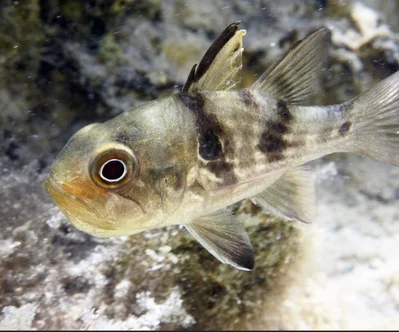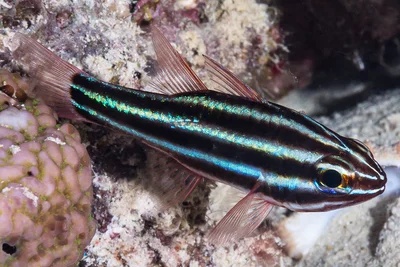
The male opens his mouth and the family's investment ends there.
After a week or two of carrying, fanning and not eating, a brooding cardinalfish releases a cloud of newly hatched larvae into the water at night, and from that moment the parents have nothing further to do with them. The larvae are a few millimeters long, transparent, and immediately part of the plankton, where they will spend somewhere between two and six weeks drifting before settling onto a reef.
That pelagic phase is the part nobody sees and it decides almost everything. It determines how far a species can spread and how quickly a damaged reef gets repopulated, and it is where the overwhelming majority of every generation dies. A pair that produces several hundred eggs a season is doing well if two of them survive to breed.
Which puts the male's week of starvation in context. Mouthbrooding does not make the odds good. It makes them survivable, by getting a few hundred larvae to the plankton instead of a few dozen.
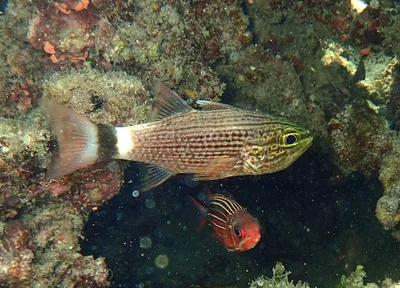
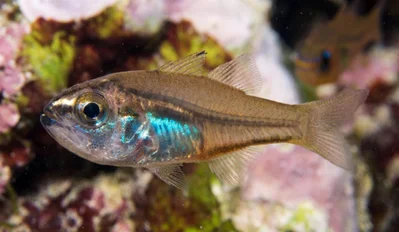
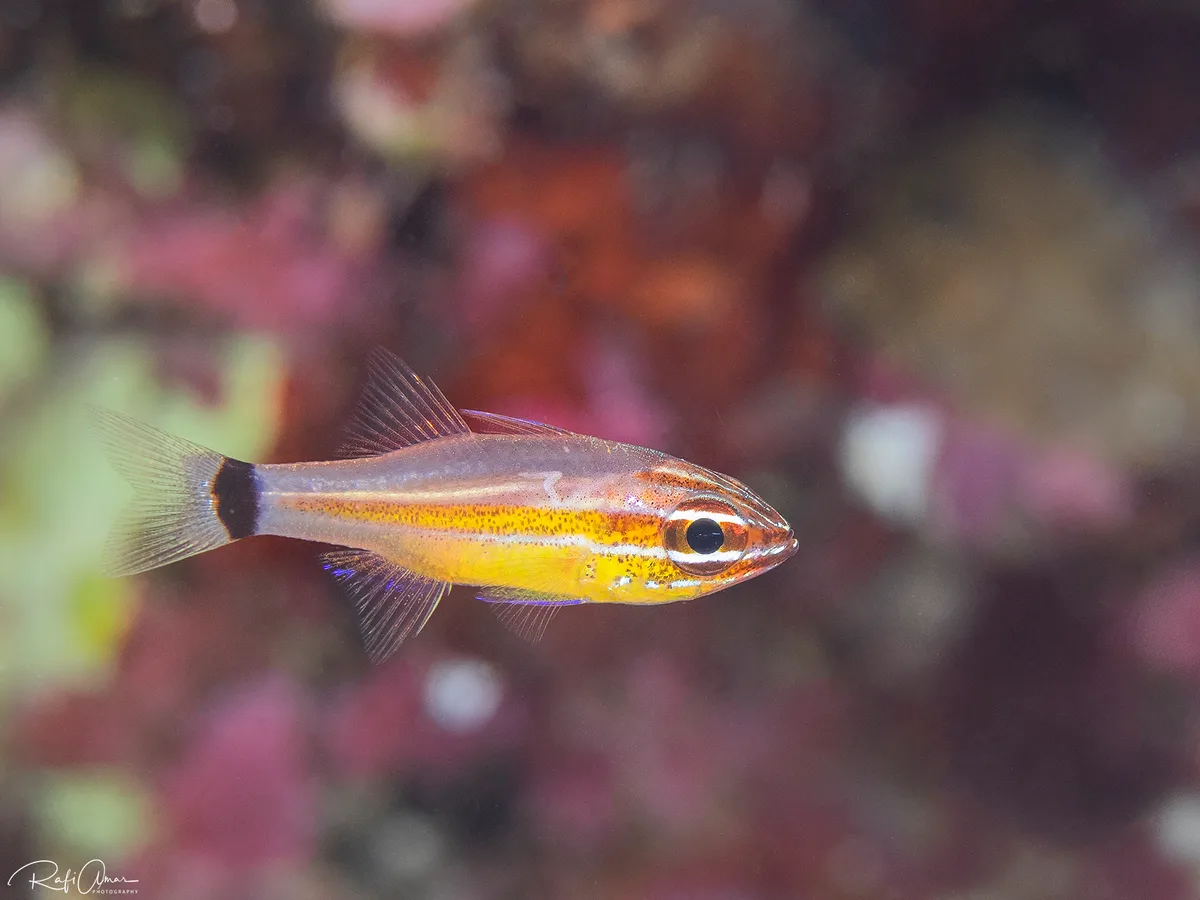
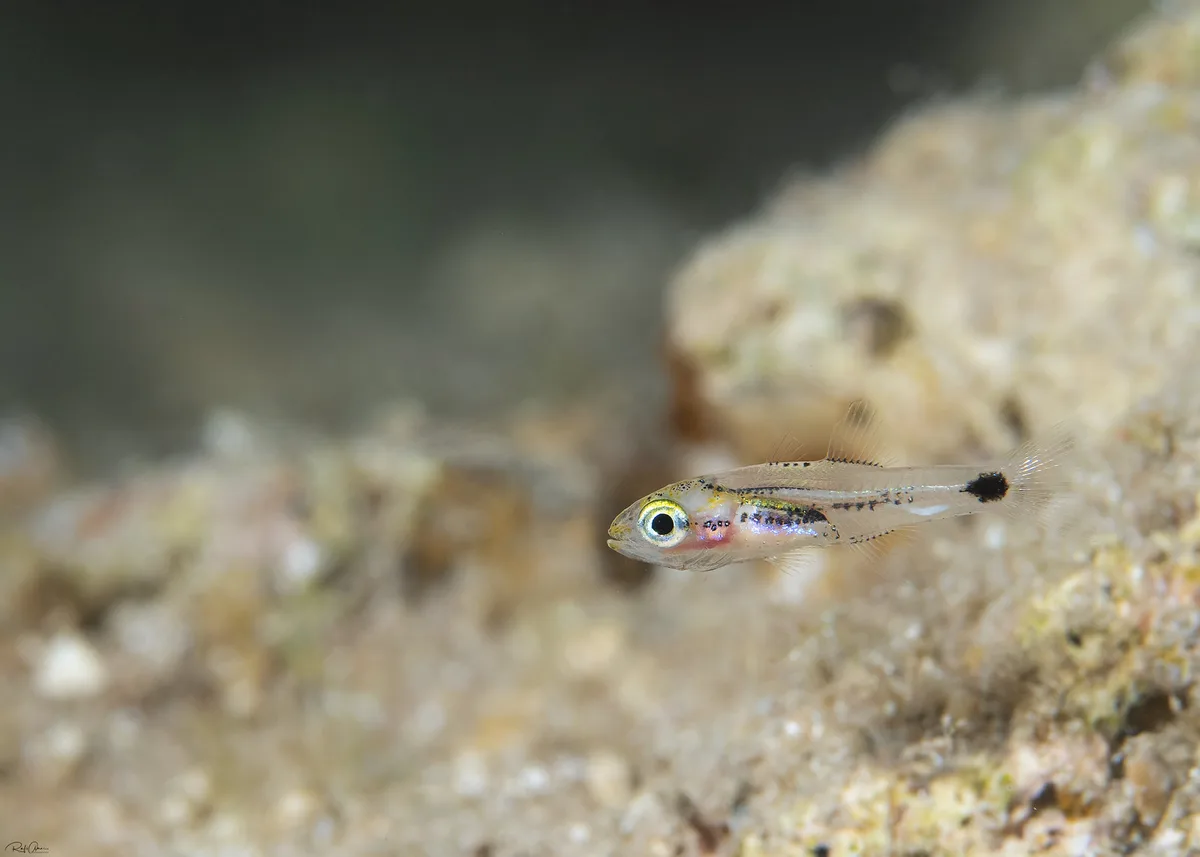
This one is four centimeters, translucent, with a dark band around the tail base that gives it its name.
The genus. Ostorhinchus Lacepède 1802 - osteo- (bone) + rhynchus (snout). ETYFish
The species. Ostorhinchus pselion (Randall, Fraser & Lachner 1990) - psélion (ψέλιον). ETYFish
- small translucent fish with a dark band around the tail base like an anklet
- fine dark line through the eye
- up to 4 cm