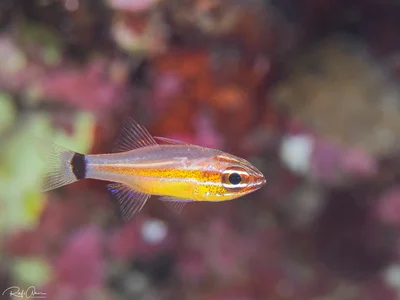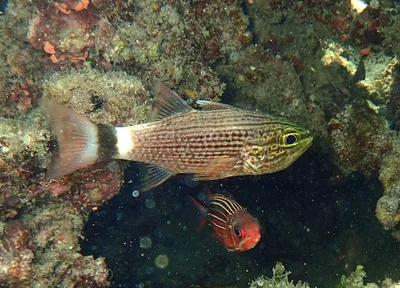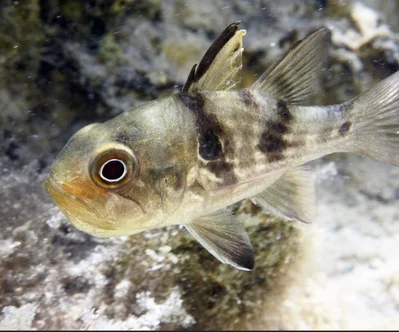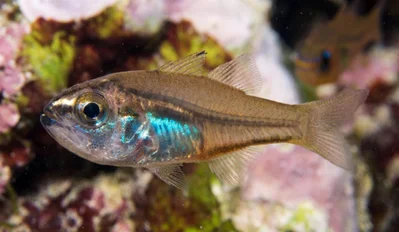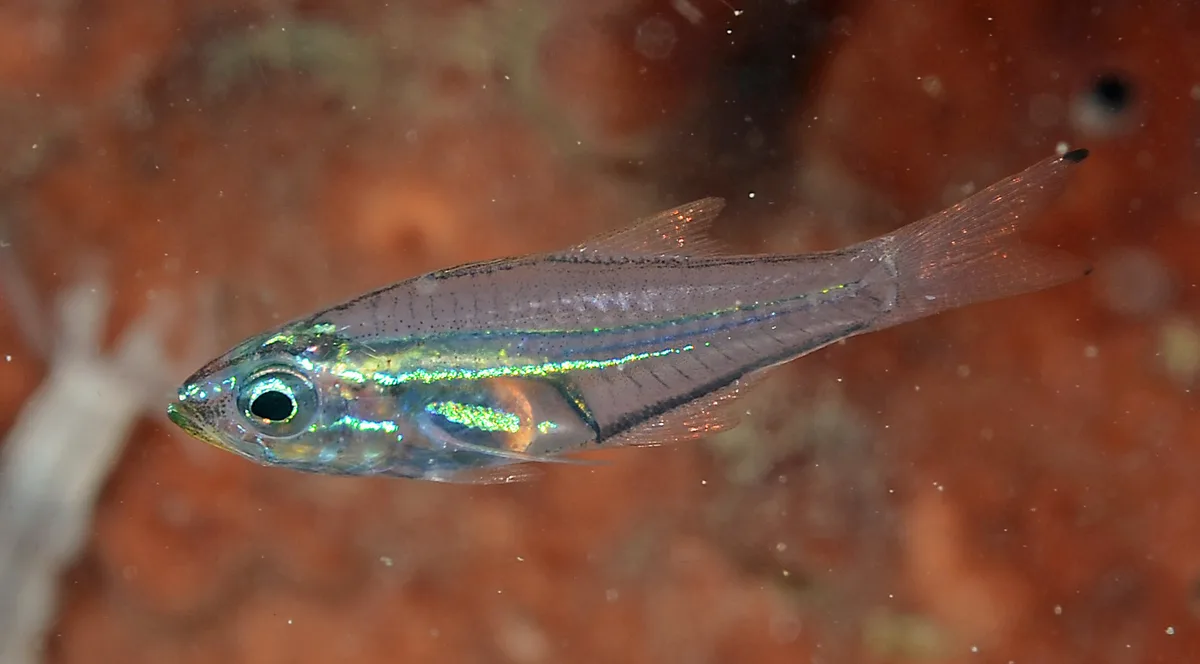
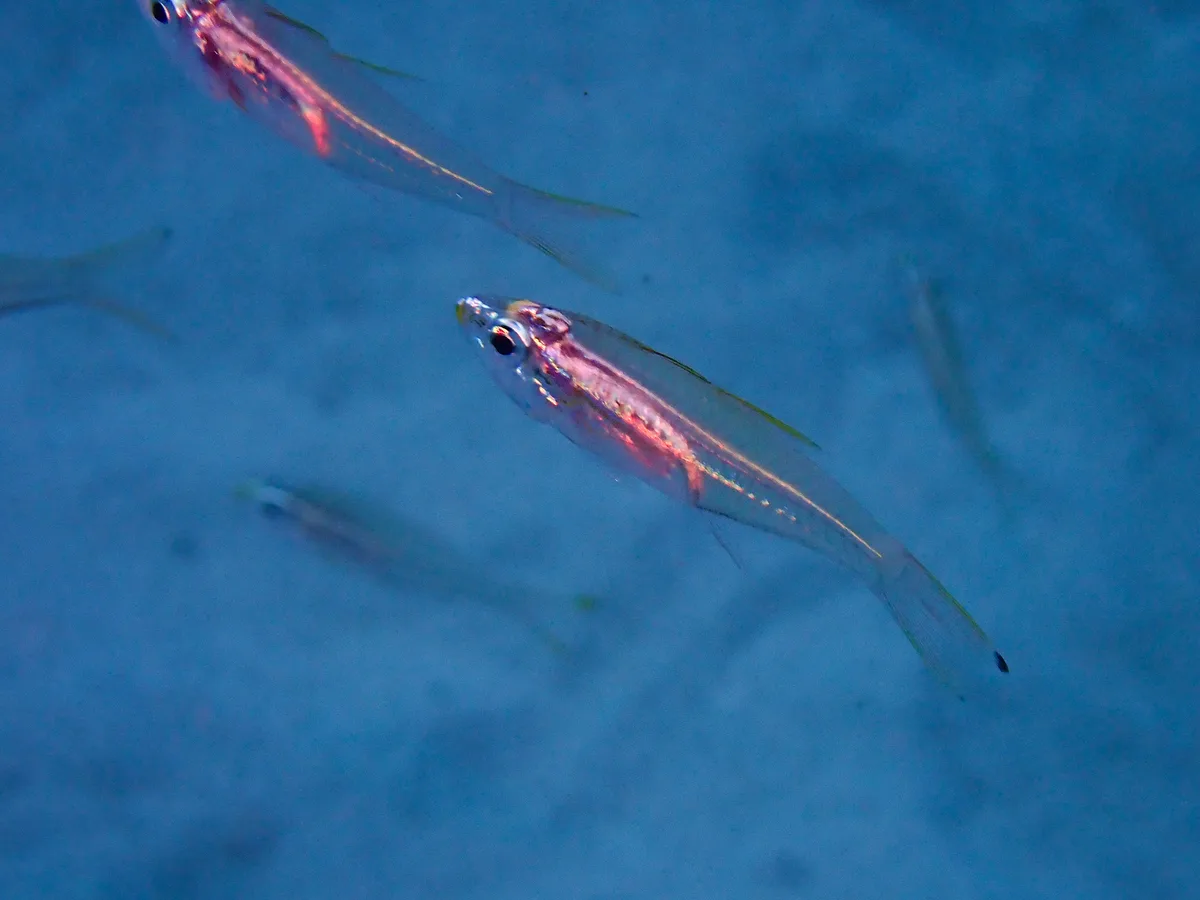
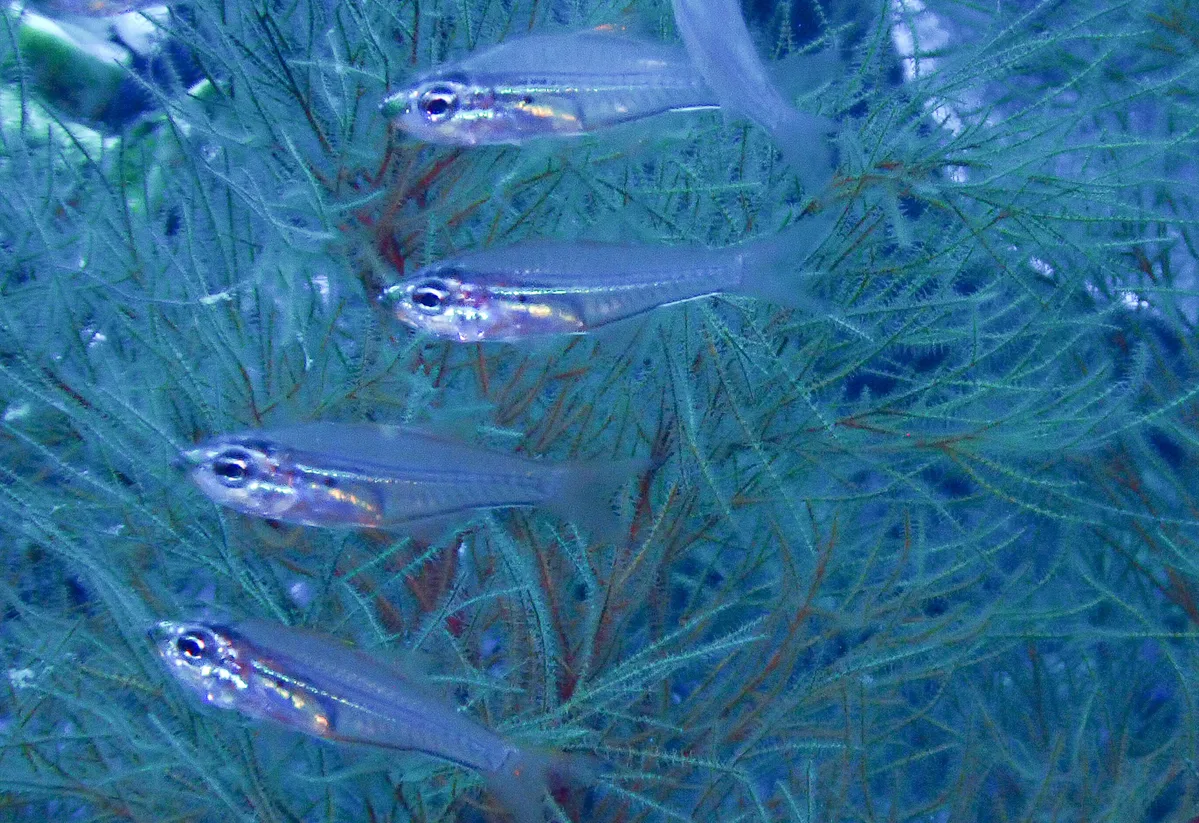
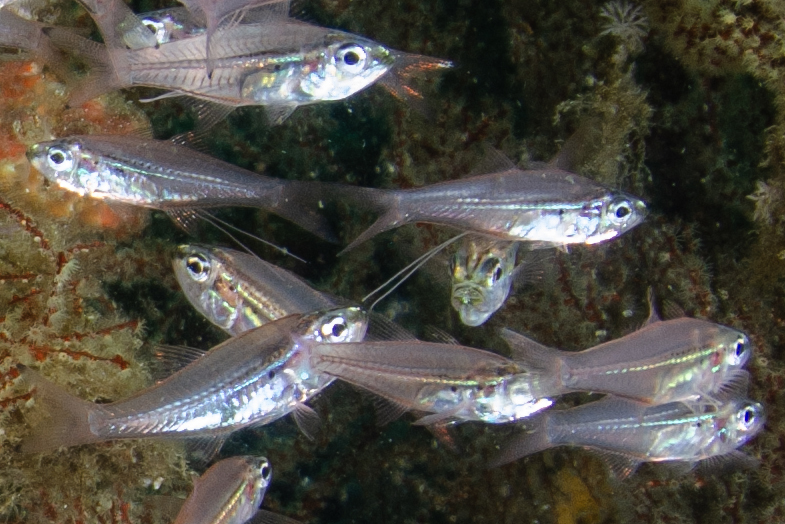
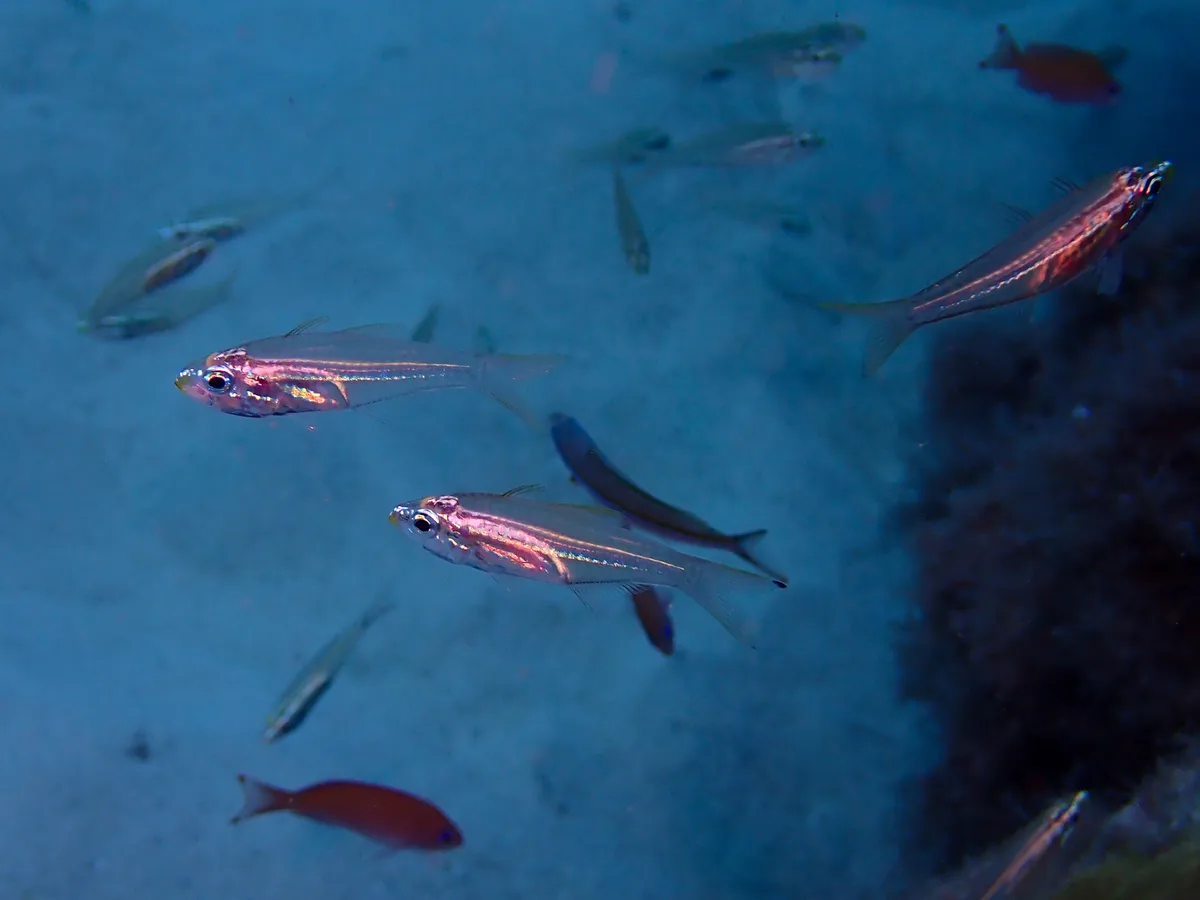
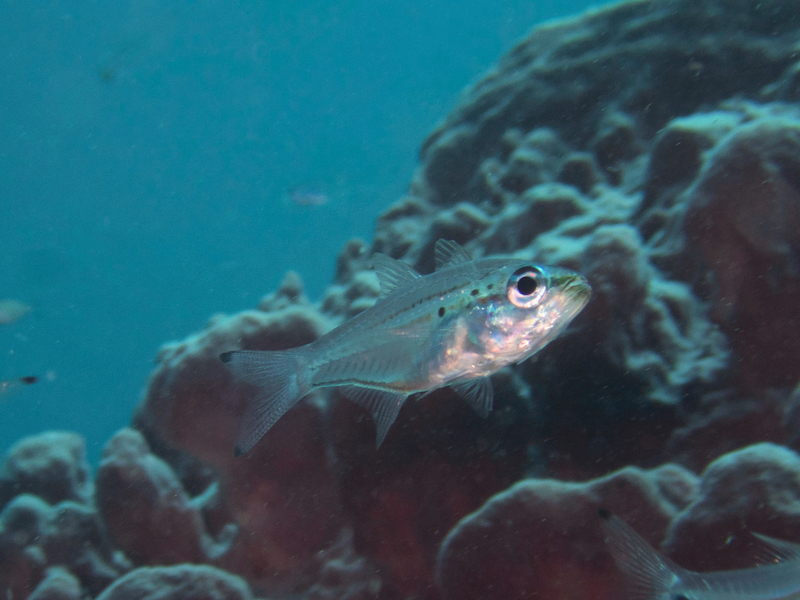
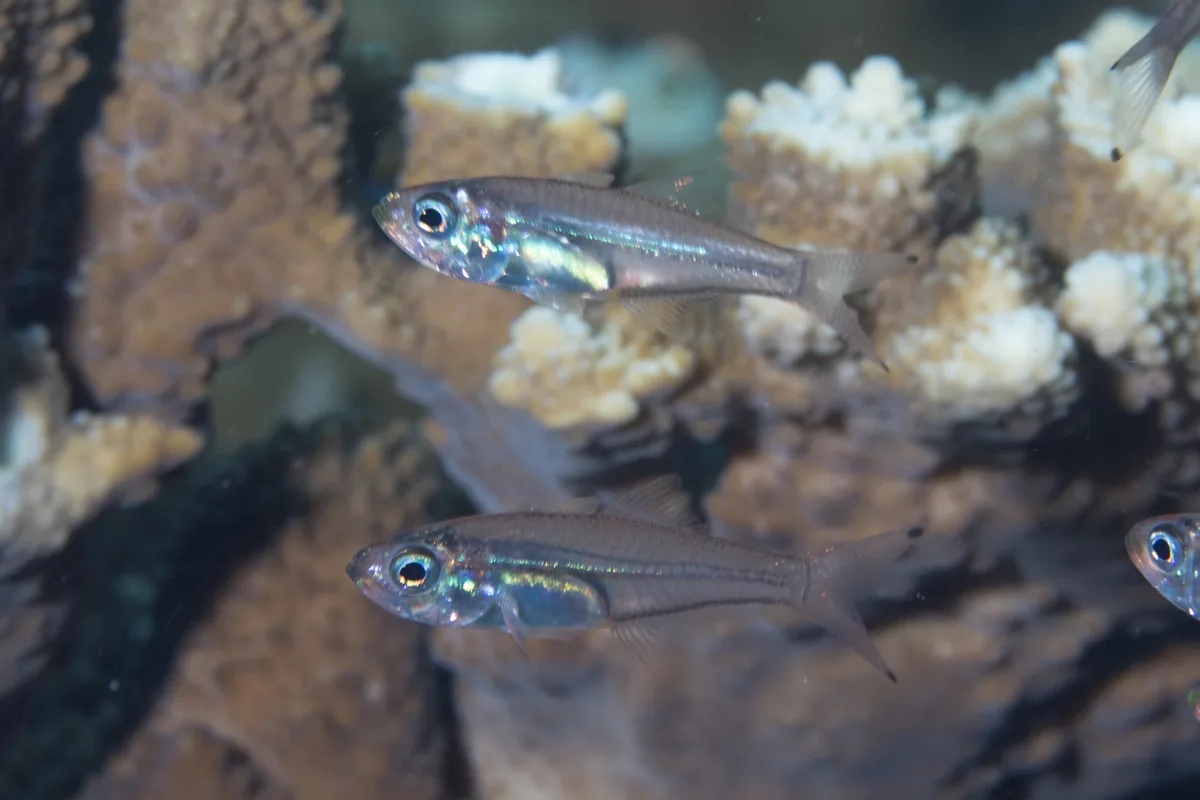
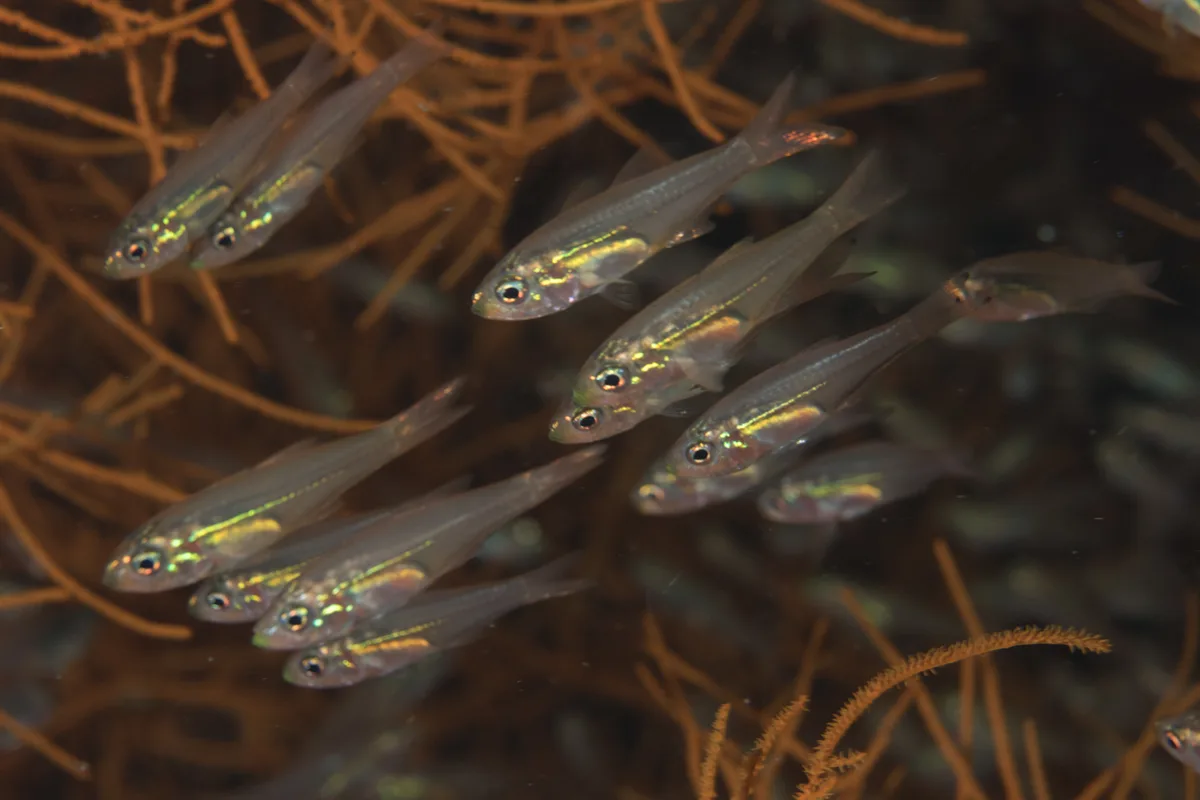
You can see the spine through it. These fish are transparent enough that what registers underwater is a shimmer and a set of eyes, and the school reads as a disturbance in the water rather than as animals.
Transparency is the best camouflage there is and almost nothing on the reef can use it. It requires tissue with no pigment and a refractive index close to seawater, which rules out bone, muscle in quantity, and any organ that has to be dense. What is left is small and thin, which is why transparent animals are overwhelmingly larvae, jellies, and small midwater fish. It also only works against open water: put a transparent fish on a coral head and it becomes visible as a distortion.
So the strategy comes with a place attached. These cardinalfish hang in the water column over the reef in dense schools, and their defense is that from any angle there is very little to see and a great many of them.
The eyes are the giveaway. Vision needs pigment, so eyes cannot be made transparent, and a school of these at range looks like a cloud of floating black dots.
The genus. Rhabdamia Weber 1909 - rhábdos (rod). ETYFish
The species. Rhabdamia spilota Allen & Kuiter 1994 - from spilōtós (σπιλωτός). ETYFish
- almost completely transparent, with the spine and gut visible through the body
- small dark spot on the tail base
- in dense schools, sometimes hundreds, hanging over coral
- up to 6 cm
Why it's threatened
There are no known major threats.
Threat classification from the IUCN Red List.