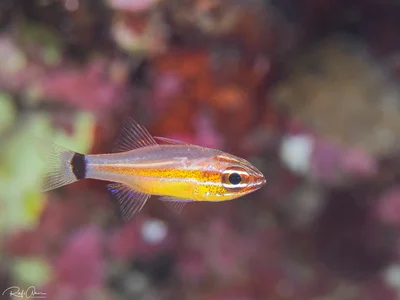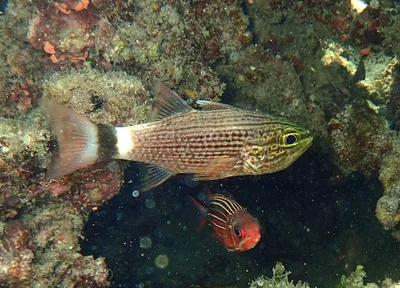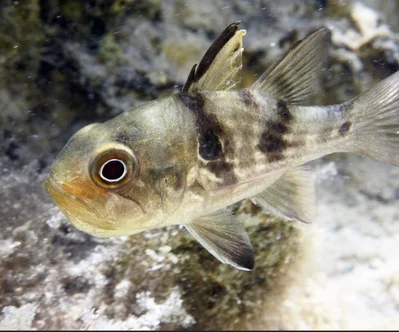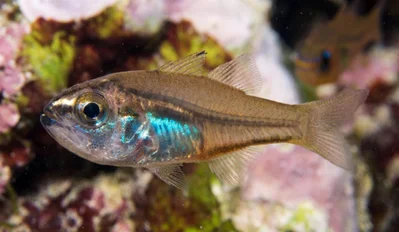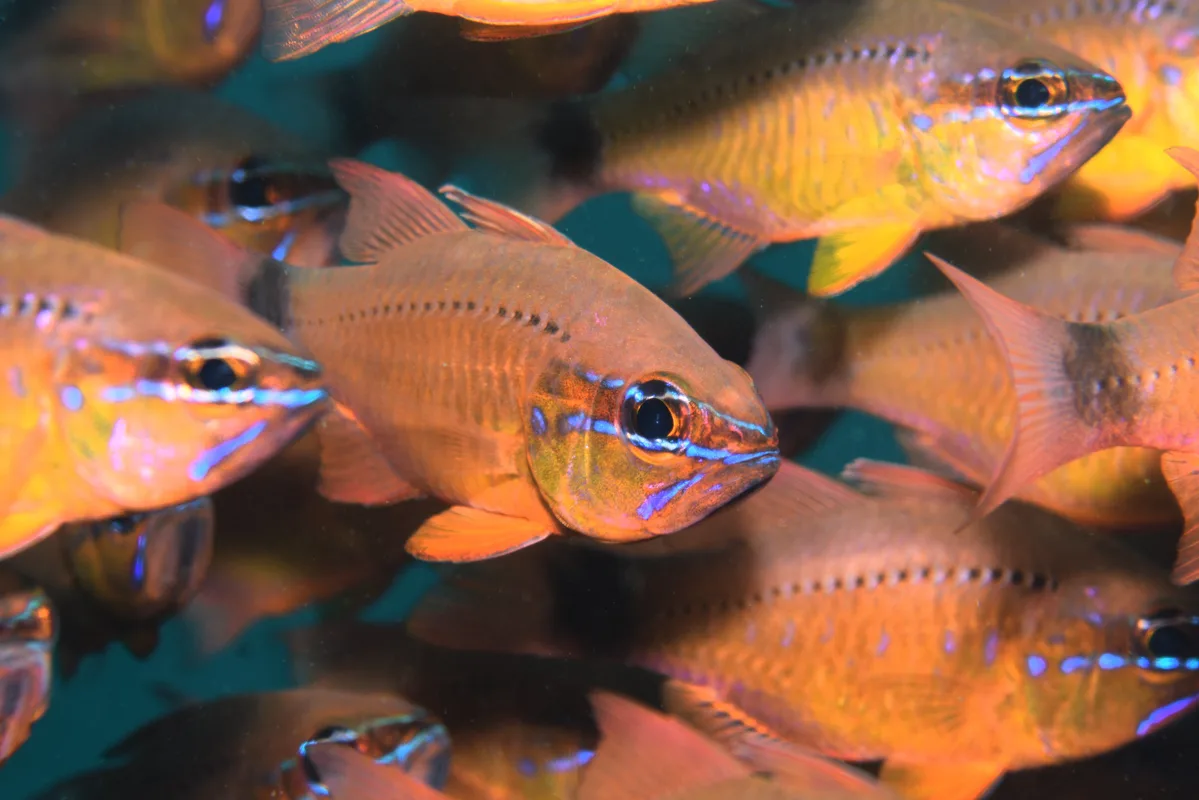
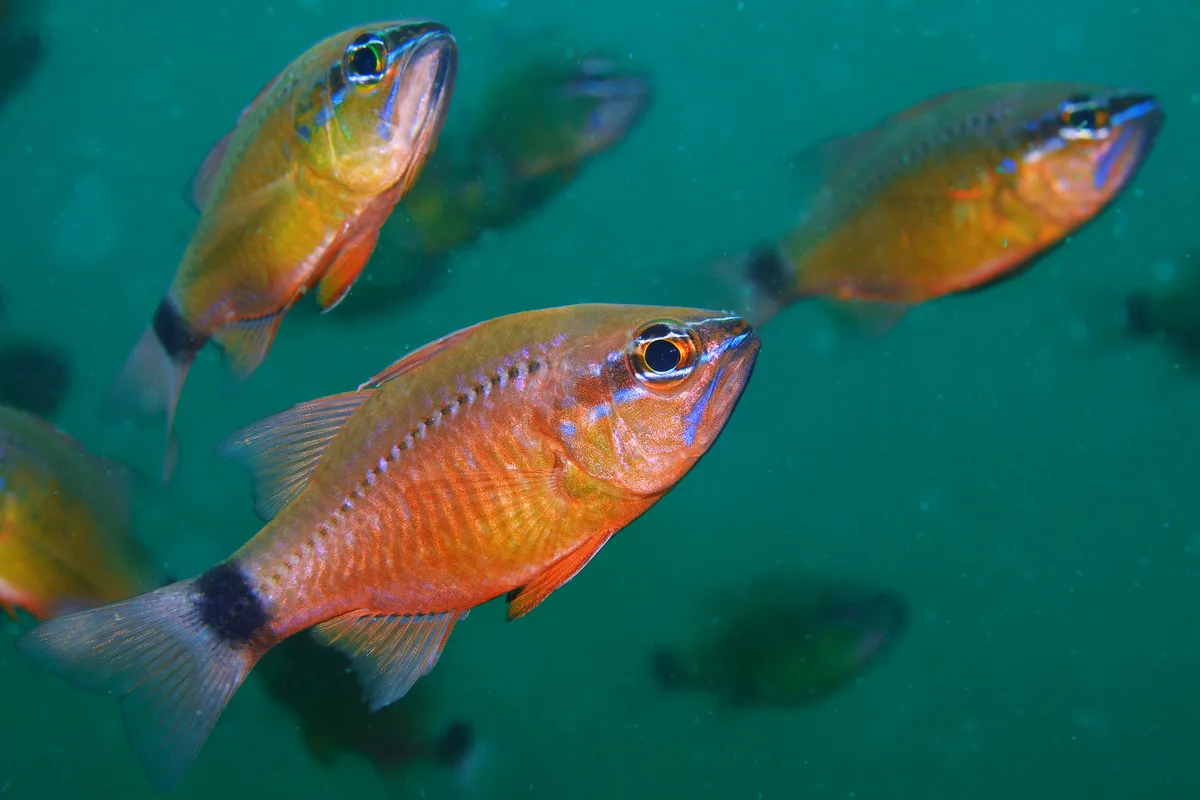
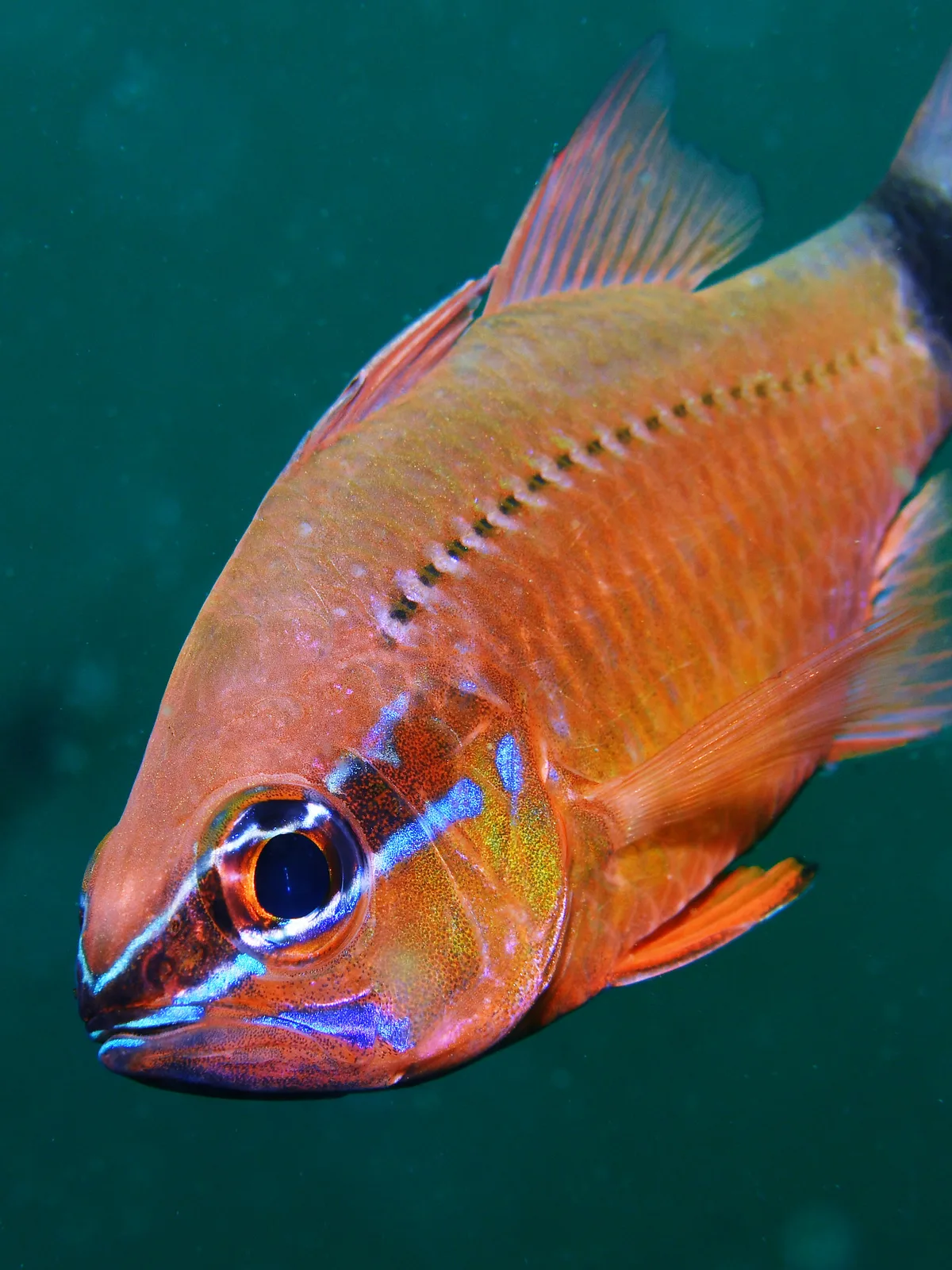
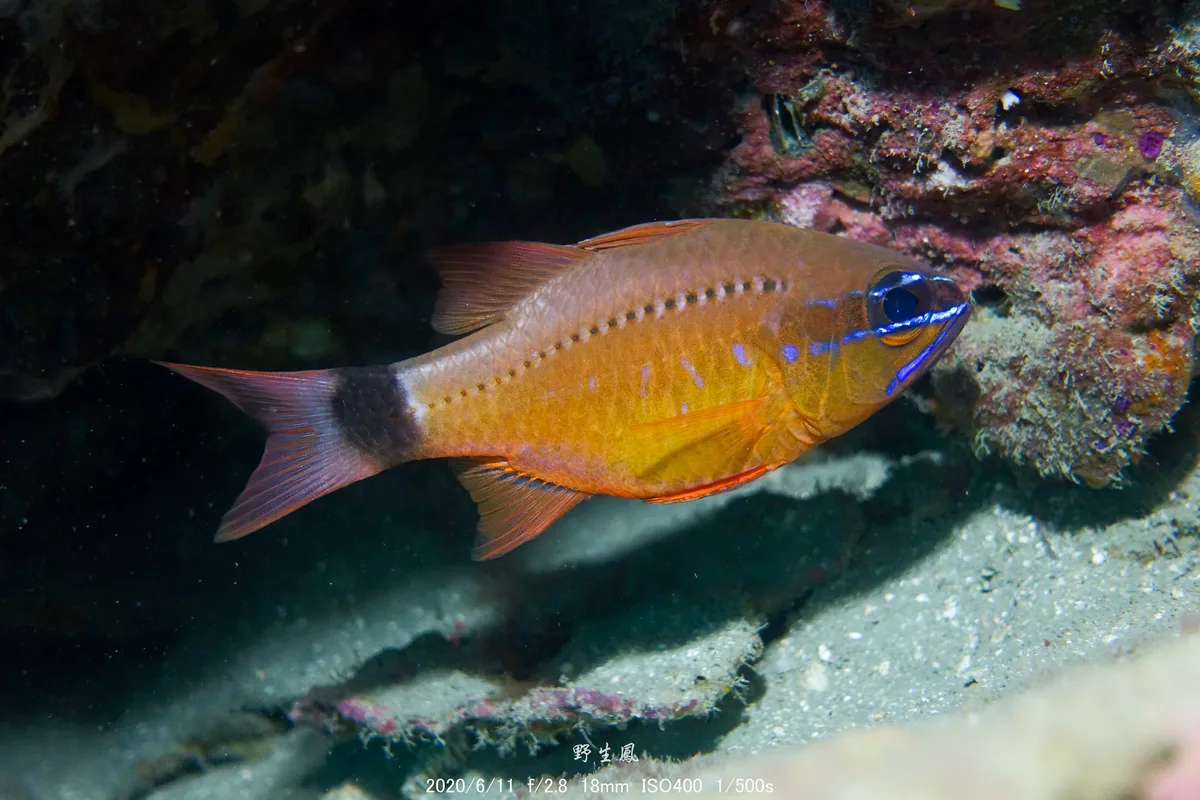
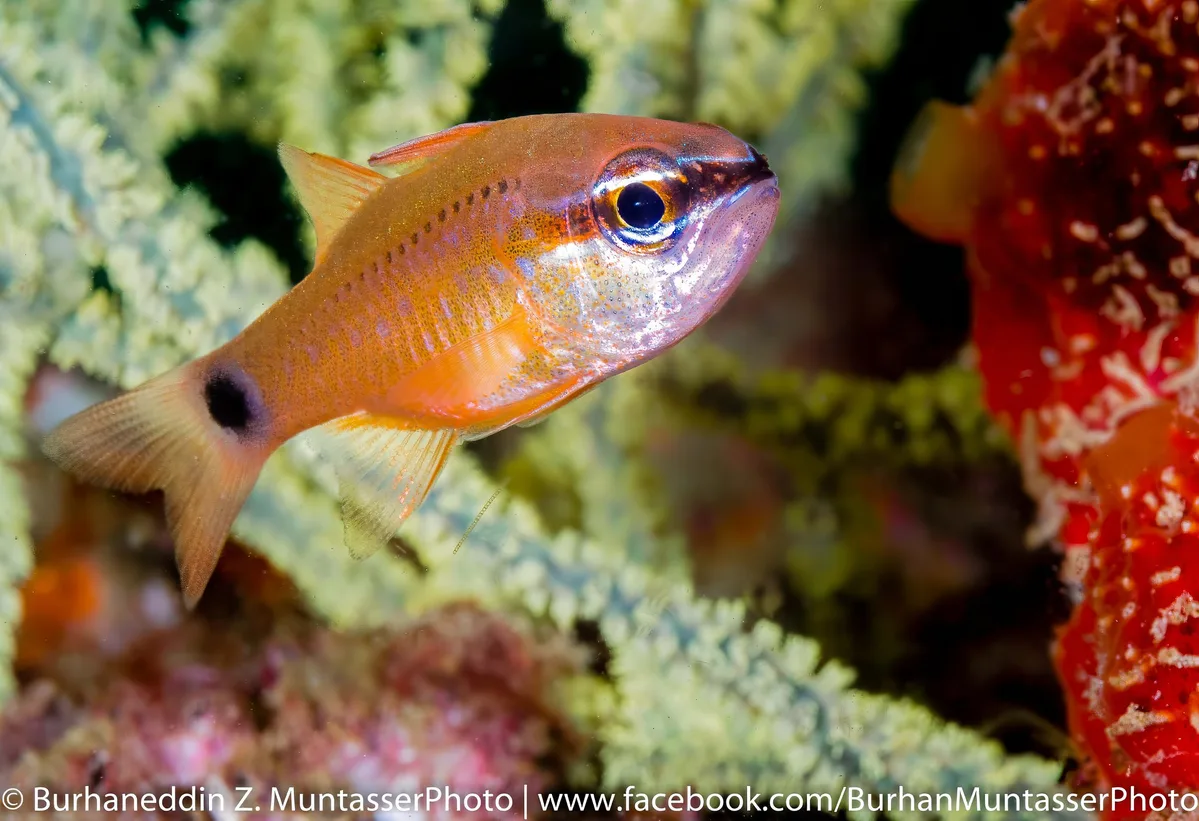
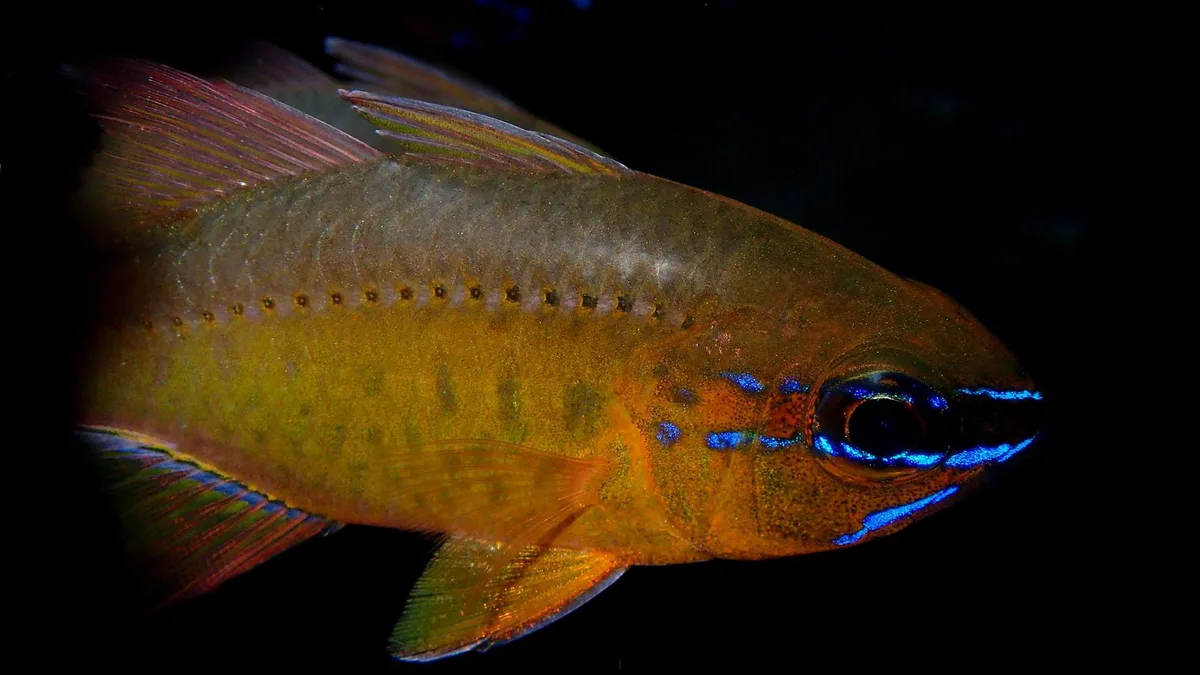
A bronze cardinalfish with a dark line through the eye, in the shade under a ledge by day, fourteen centimeters (5.5 in).
At dusk it leaves. Cardinalfish make a nightly commute off the reef into open water and over sand to feed, and return before light - a movement that happens on every reef, every night, and that transfers a great deal of food from open water back into the reef in the form of fish that eat out and come home. On a night dive the water above the sand is full of them.
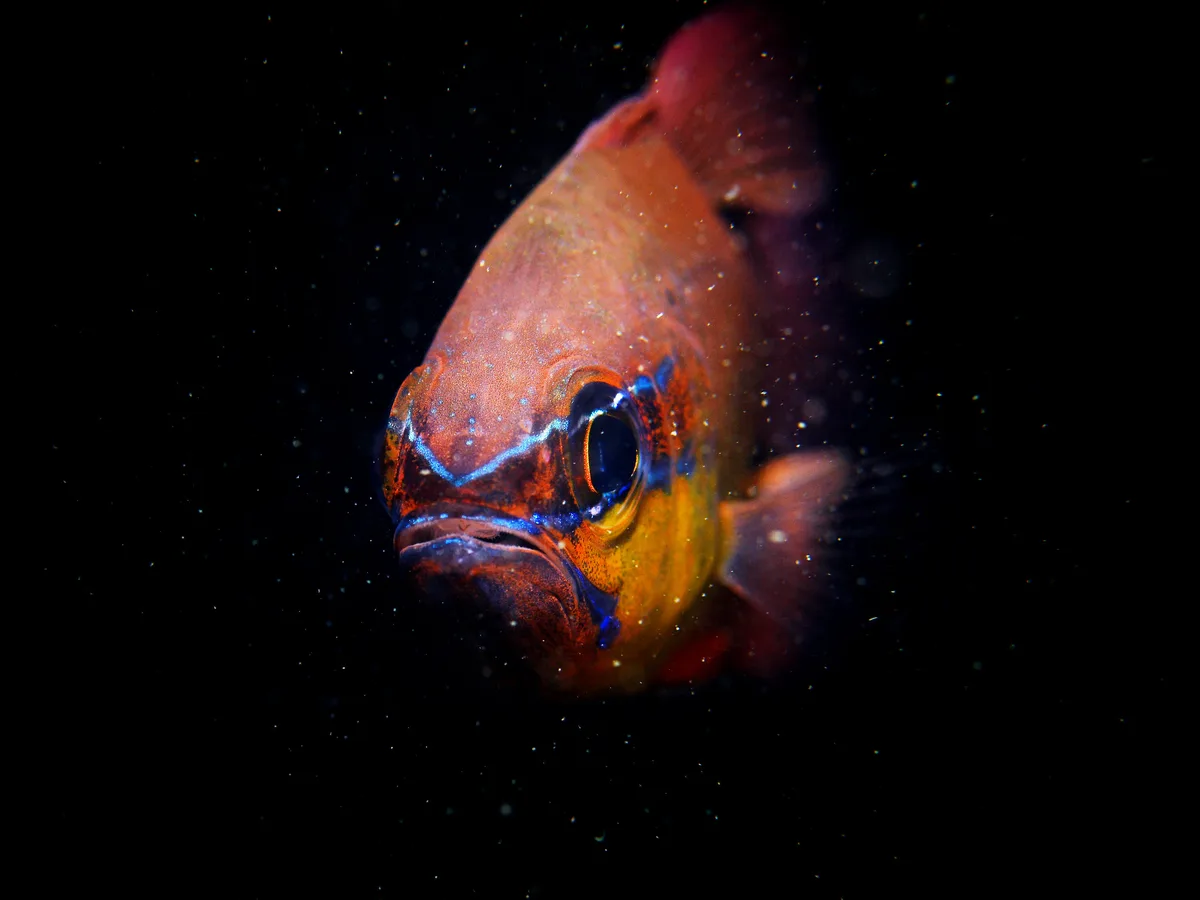
The big eye is the equipment for that. Everything about this family is built for working in low light: large eyes, a reflective layer behind the retina, and colors that read as black at night.
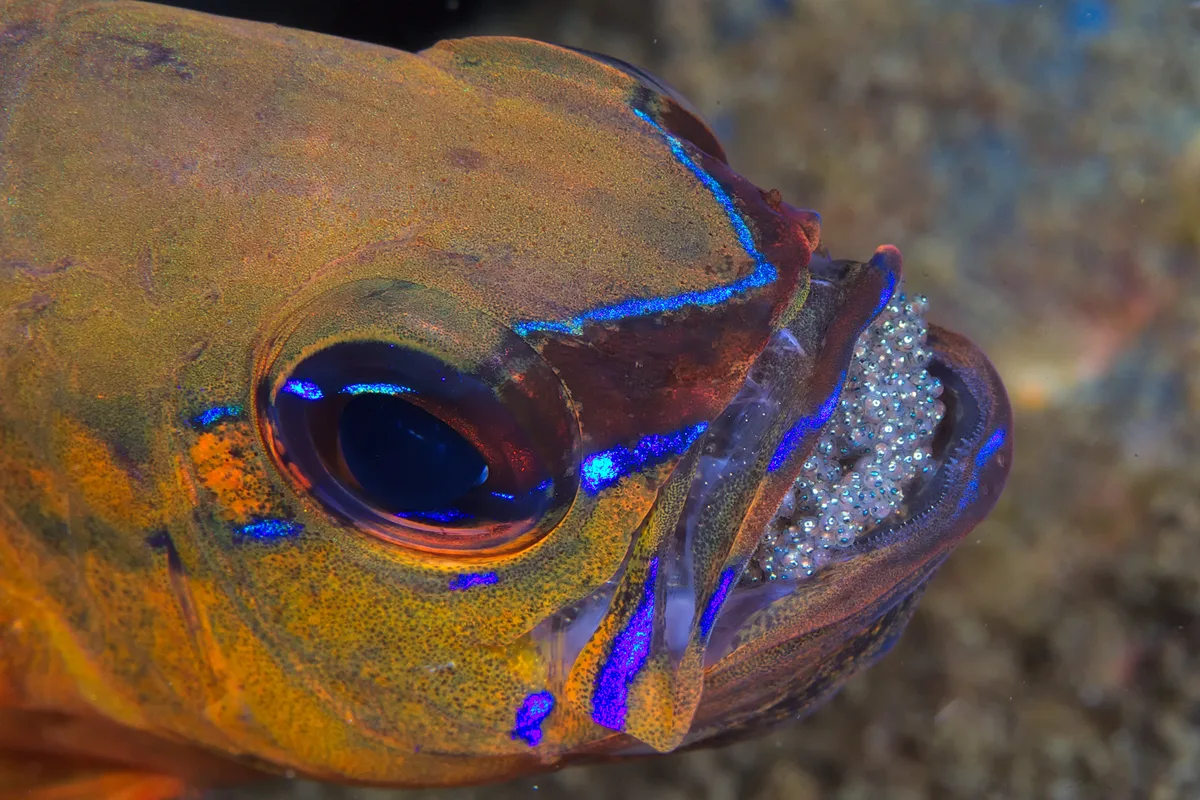
It is a mouthbrooder like the rest, and the males fast while they carry. Where a colony is big enough, a diver can find a brooding male on almost any dive - look for the fish with the swollen jaw sitting apart from the group.
The genus. Ostorhinchus Lacepède 1802 - osteo- (bone) + rhynchus (snout). ETYFish
- pale bronze body with a dark line through the eye and a dark spot on the tail base
- large eye, typical of the family
- in loose groups in the shade by day
- length up to 14 cm
Why it's threatened
Threat classification from the IUCN Red List.