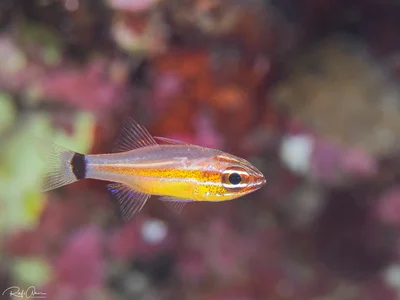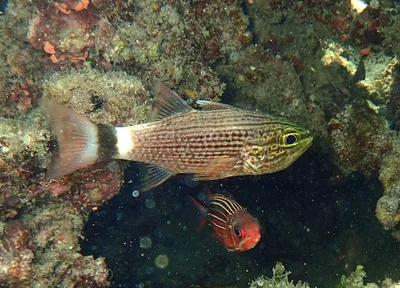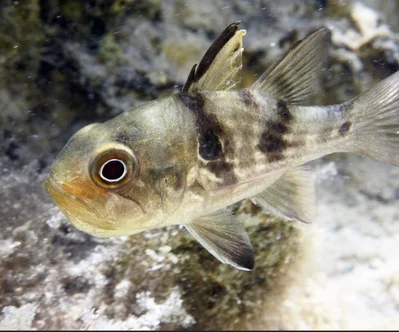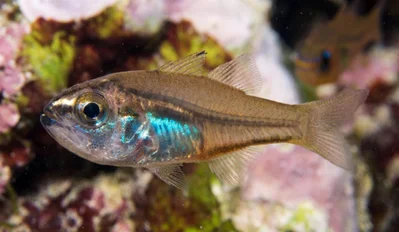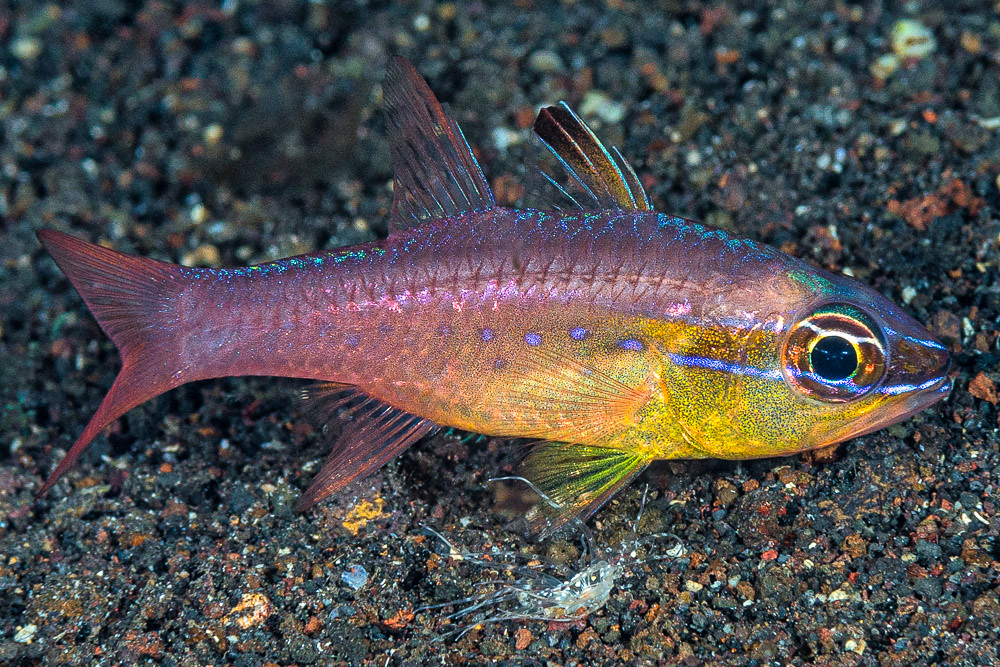

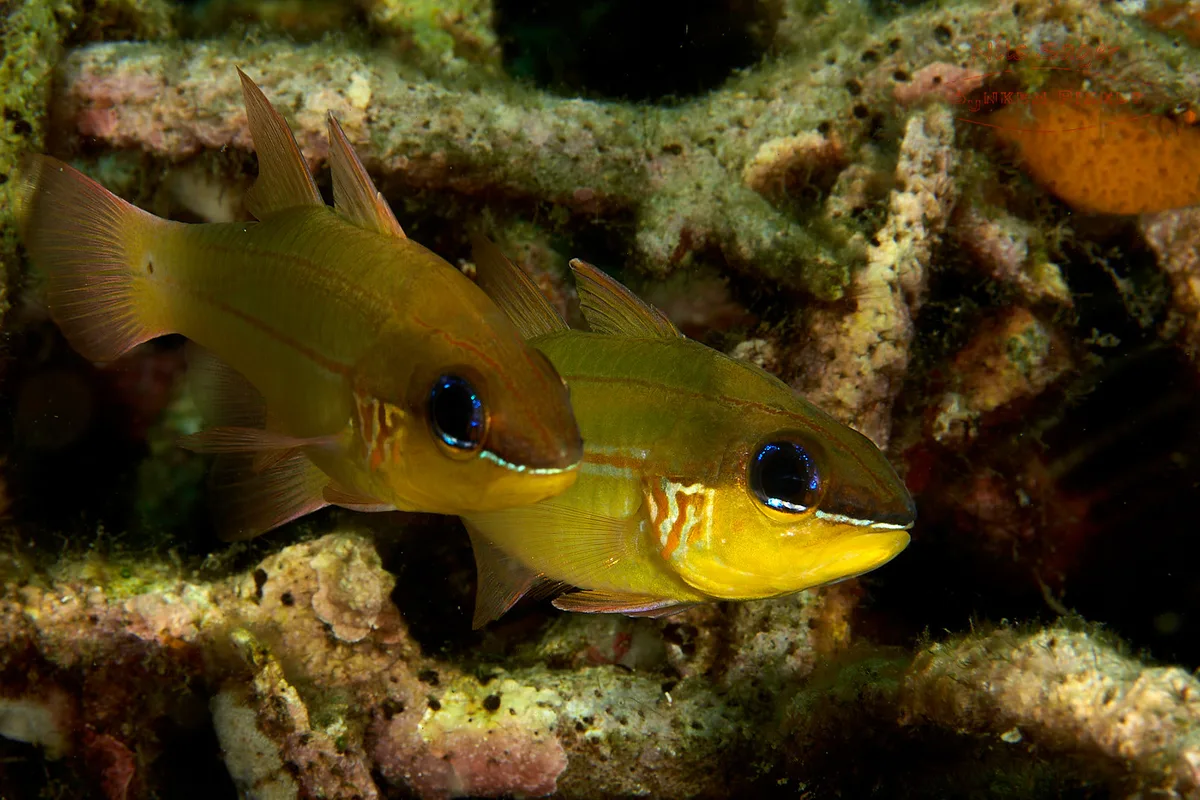
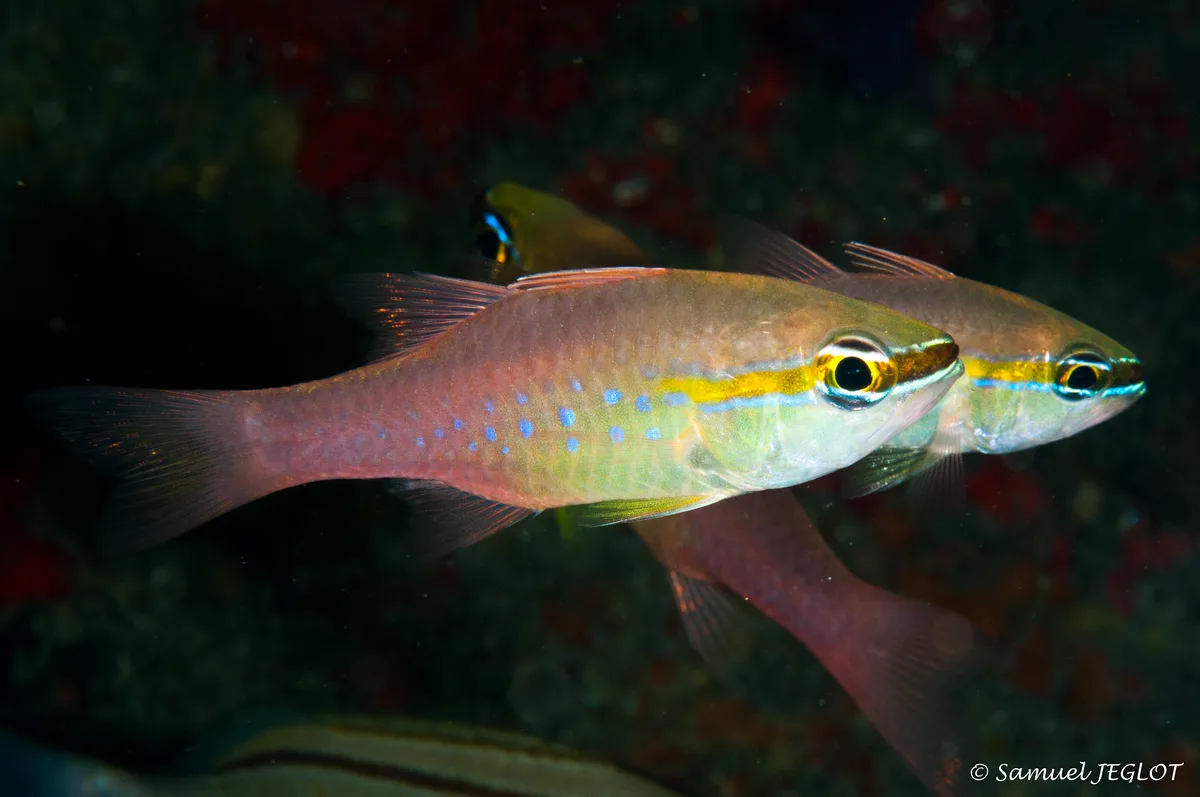
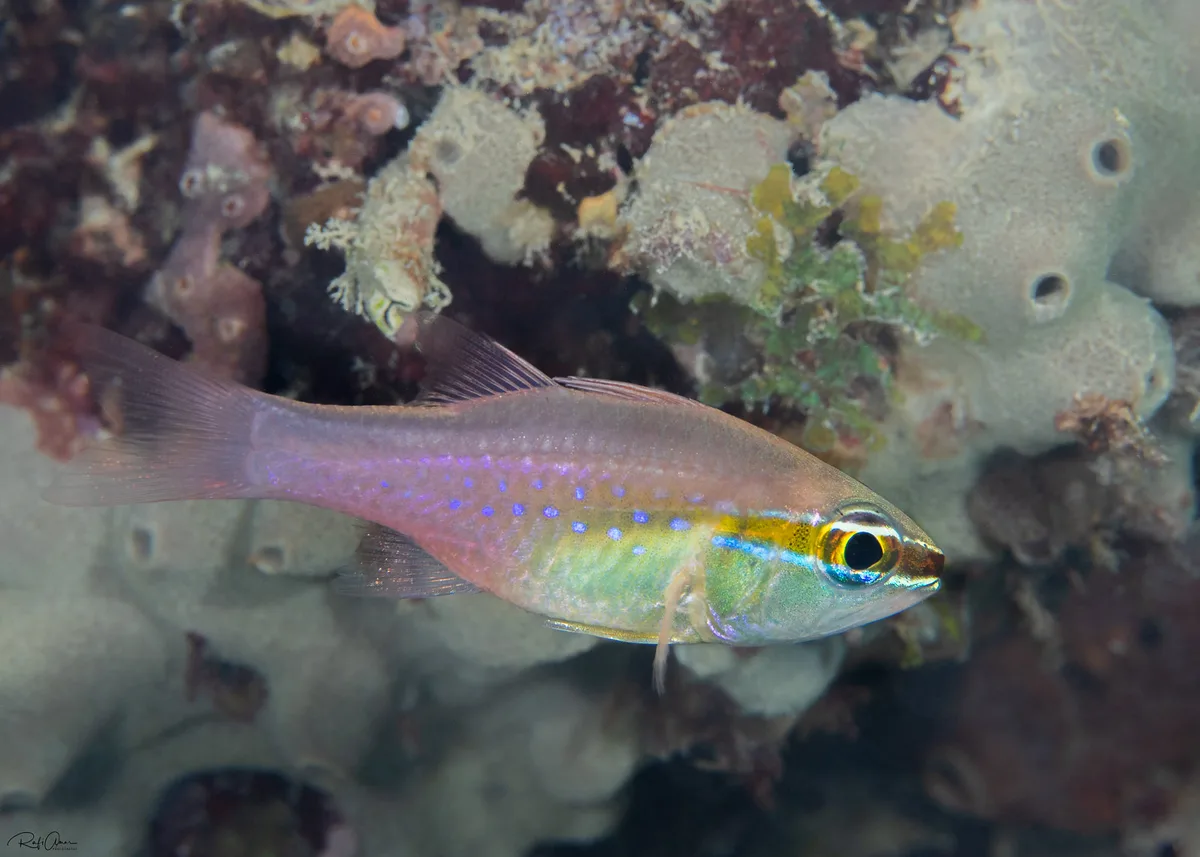
The belly is a mirror, and that is the point.
A fish hanging in midwater is lit from above, which means its underside is in shadow and shows as a dark shape to anything looking up at it from below. Countershading fixes that by making the belly pale, and the extreme version of pale is silver: a mirrored surface reflects the water around it and effectively cancels the animal's outline from underneath. Herring do it, sardines do it, and so does this cardinalfish, whose belly carries a bright silver-gold sheen against an otherwise translucent body.
It matters most at exactly the hours this fish works. At dusk and through the night, when the surface still carries some light and the water below is black, a predator hunting from beneath is looking at a bright ceiling with silhouettes on it. A mirrored belly is the difference between being one of those silhouettes and not.
By day it holds under ledges and along drop-offs in loose groups, at night it spreads into the water column for zooplankton, and the male broods the eggs in his mouth.
The genus. Ostorhinchus Lacepède 1802 - osteo- (bone) + rhynchus (snout). ETYFish
- translucent body with a bright silver-gold belly
- fine dark line along the flank
- large eye, dark bar through it
- up to 10 cm
Why it's threatened
This species is a component of the marine ornamental trade, but the potential impact is unknown.
Threat classification from the IUCN Red List.