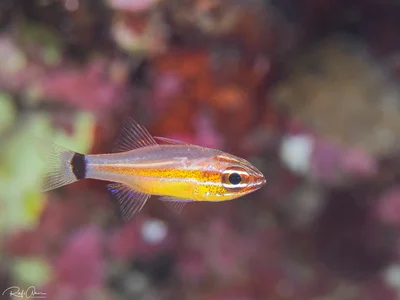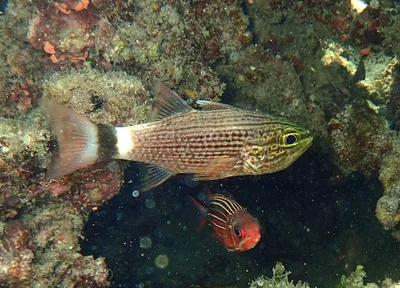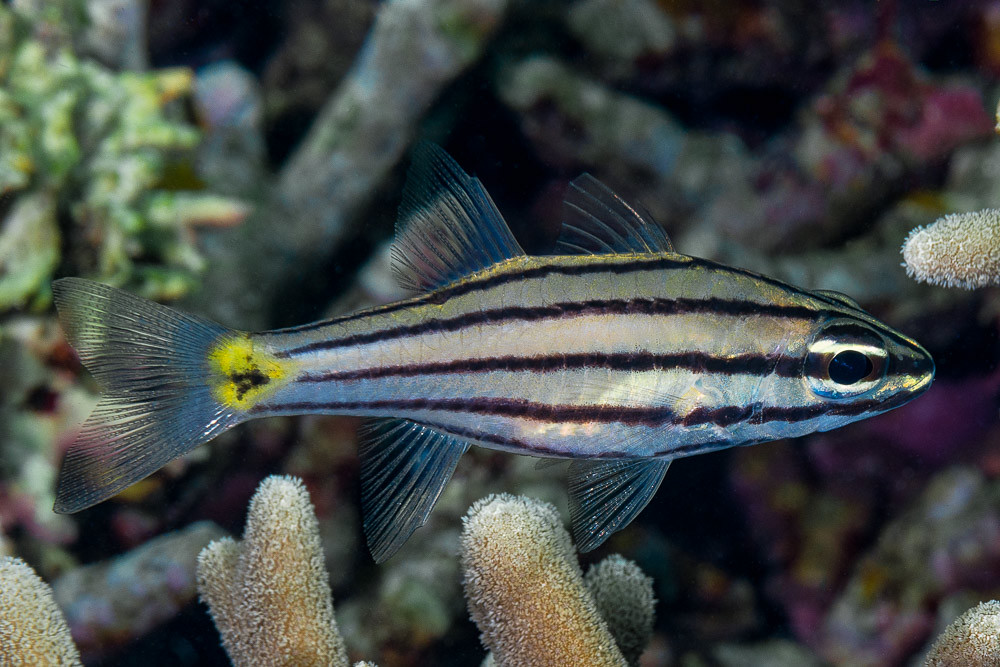
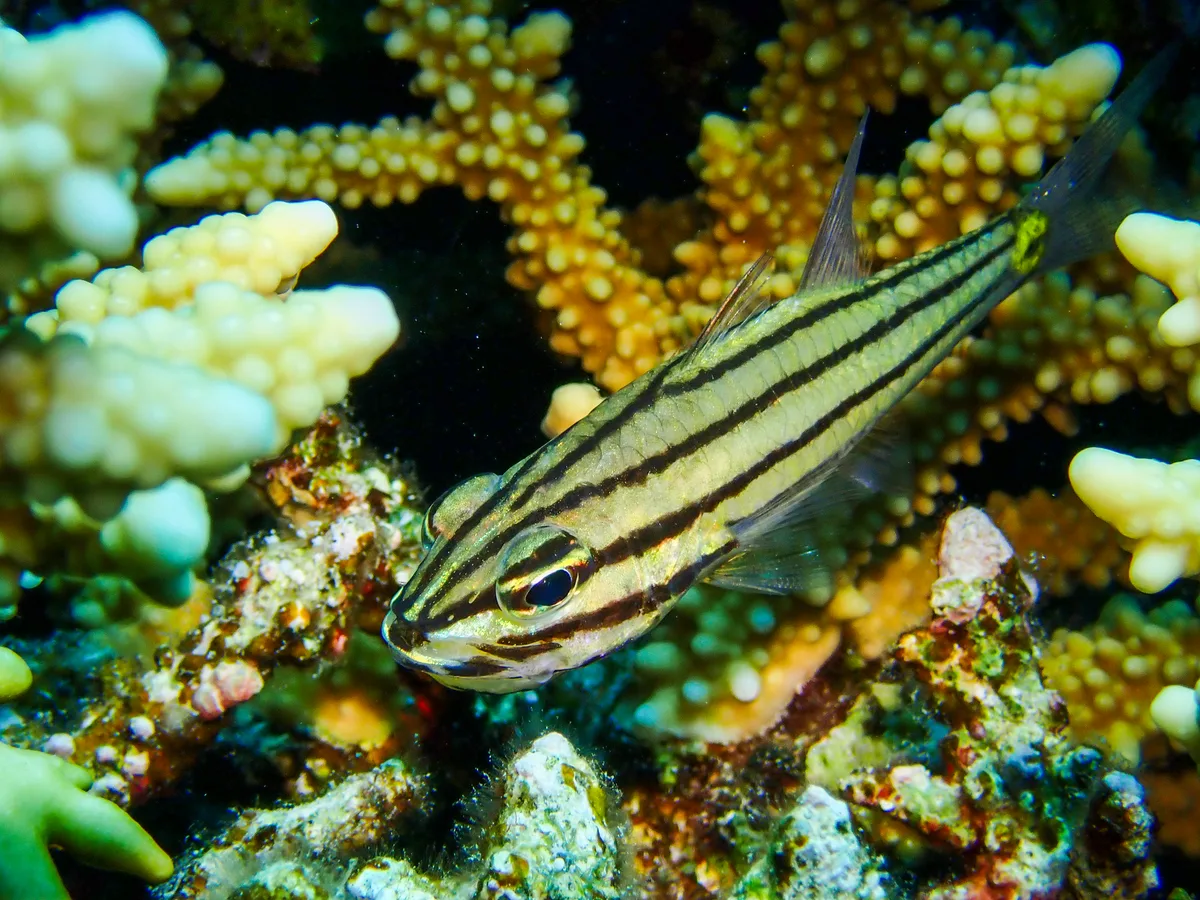
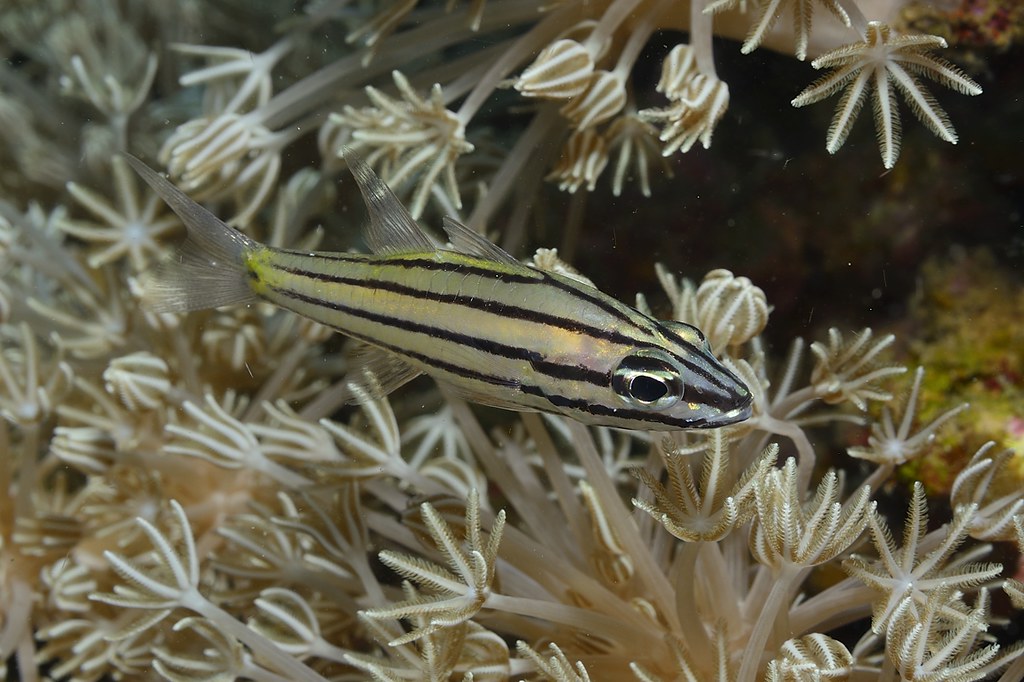
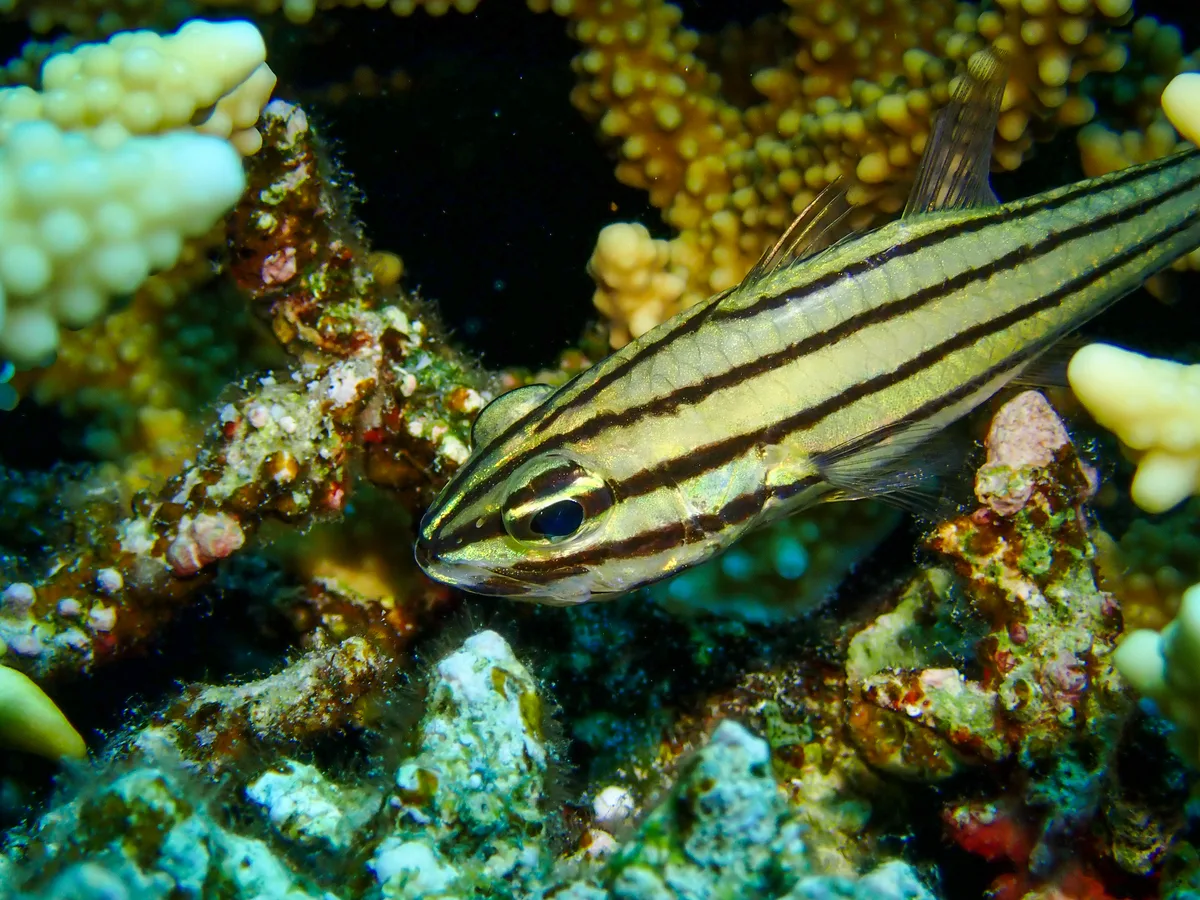
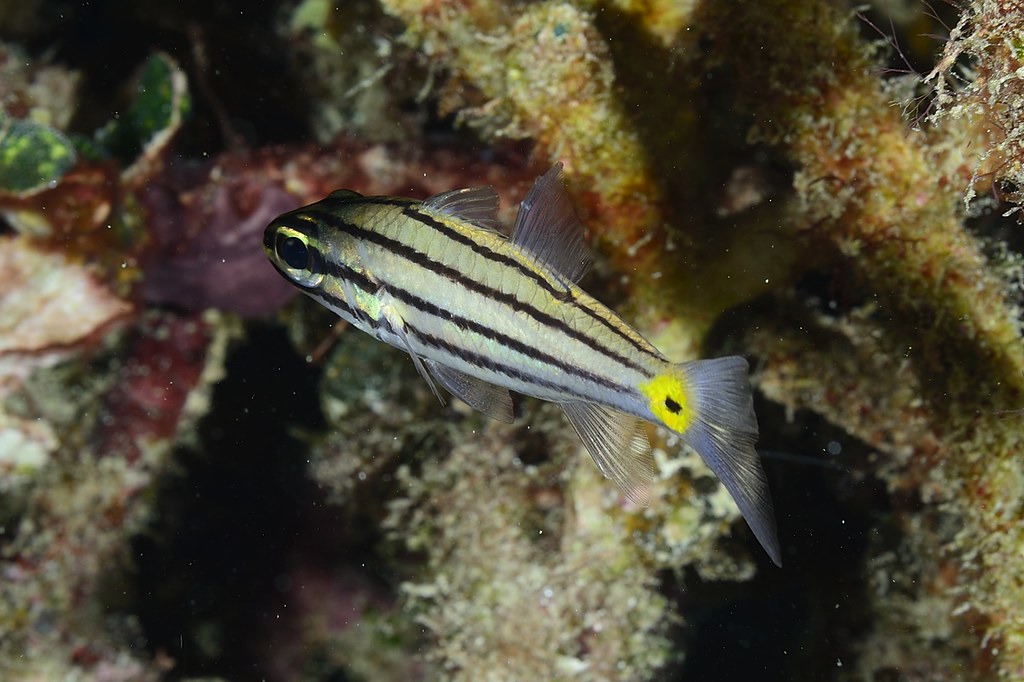
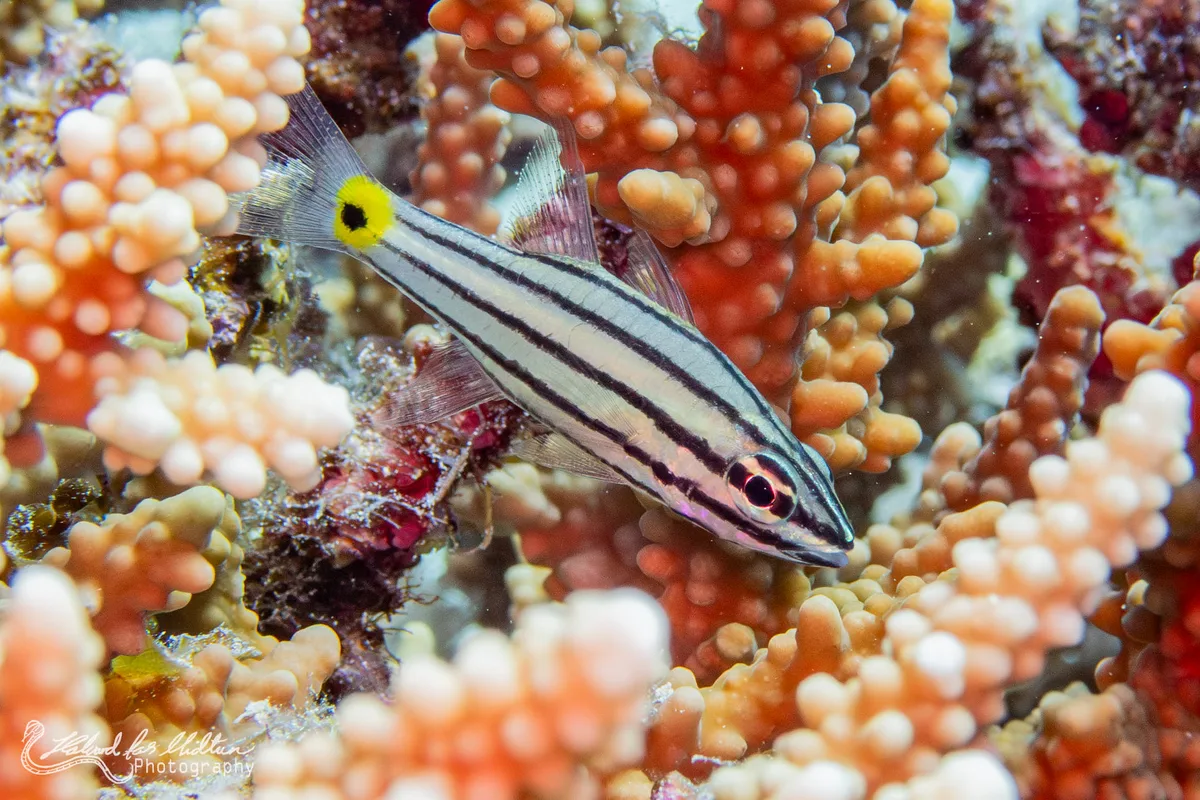
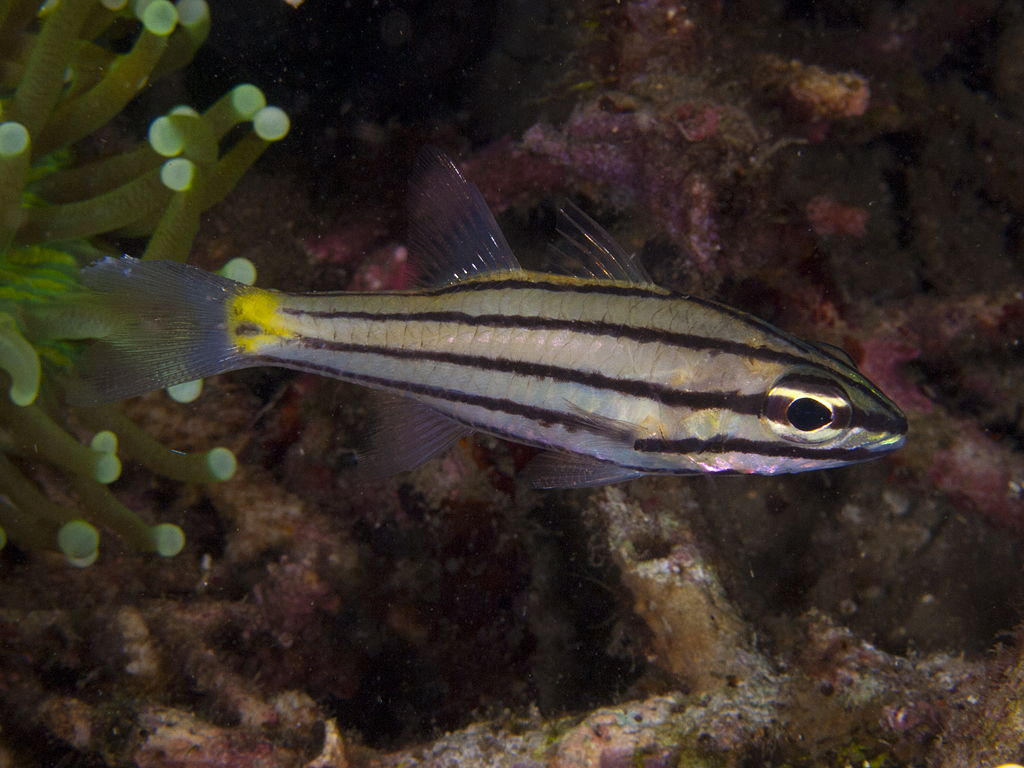
The cardinalfish a diver sees most: silver with five dark stripes and a black spot on a yellow tail base, hanging in the shade under a coral head with a dozen others, doing nothing at all until dark.
The male carries the eggs in his mouth. The female produces a clutch, he takes it in, and for the week or so until they hatch he holds it there - rolling and rotating the mass to keep it oxygenated, and eating nothing whatsoever. A brooding male is visible if you look: his jaw is distended and slightly open, and he refuses food a diver would expect any fish to take.
That is the whole family's arrangement, and it explains the rest of them. Few eggs, enormous parental investment, no larval free-for-all - a strategy for a small fish in a crowded place.
At night the group breaks up and the fish spread over the reef to hunt small crustaceans and fish in the dark. By morning they are back under the same coral head.
The genus. Cheilodipterus Lacepède 1801 - cheī́los (lip) + di- (two). ETYFish
The species. Cheilodipterus quinquelineatus Cuvier 1828 - quinque (five) + lineatus (lined). ETYFish
- silver body with five dark stripes running the length of it
- yellow tail base with a black spot in the middle of it
- hovers in loose groups under coral heads by day
- length up to 13 cm
Why it's threatened
This species is a component of the marine ornamental trade, but the potential impact is unknown.
Threat classification from the IUCN Red List.