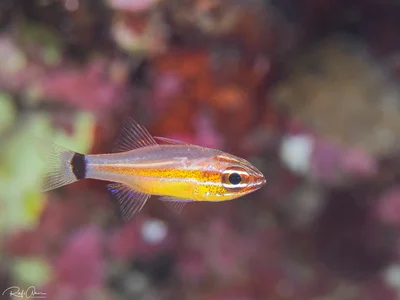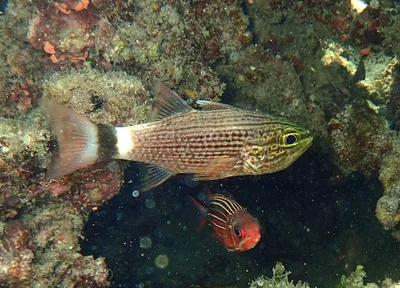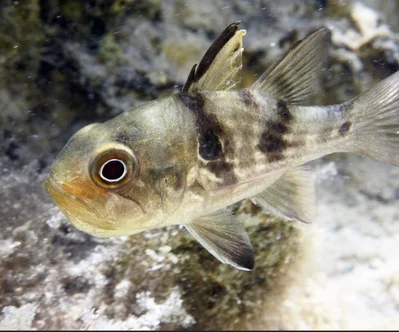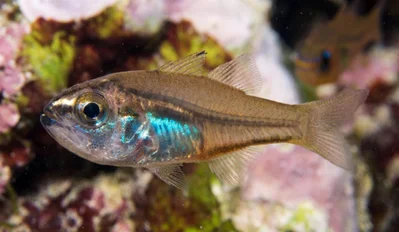
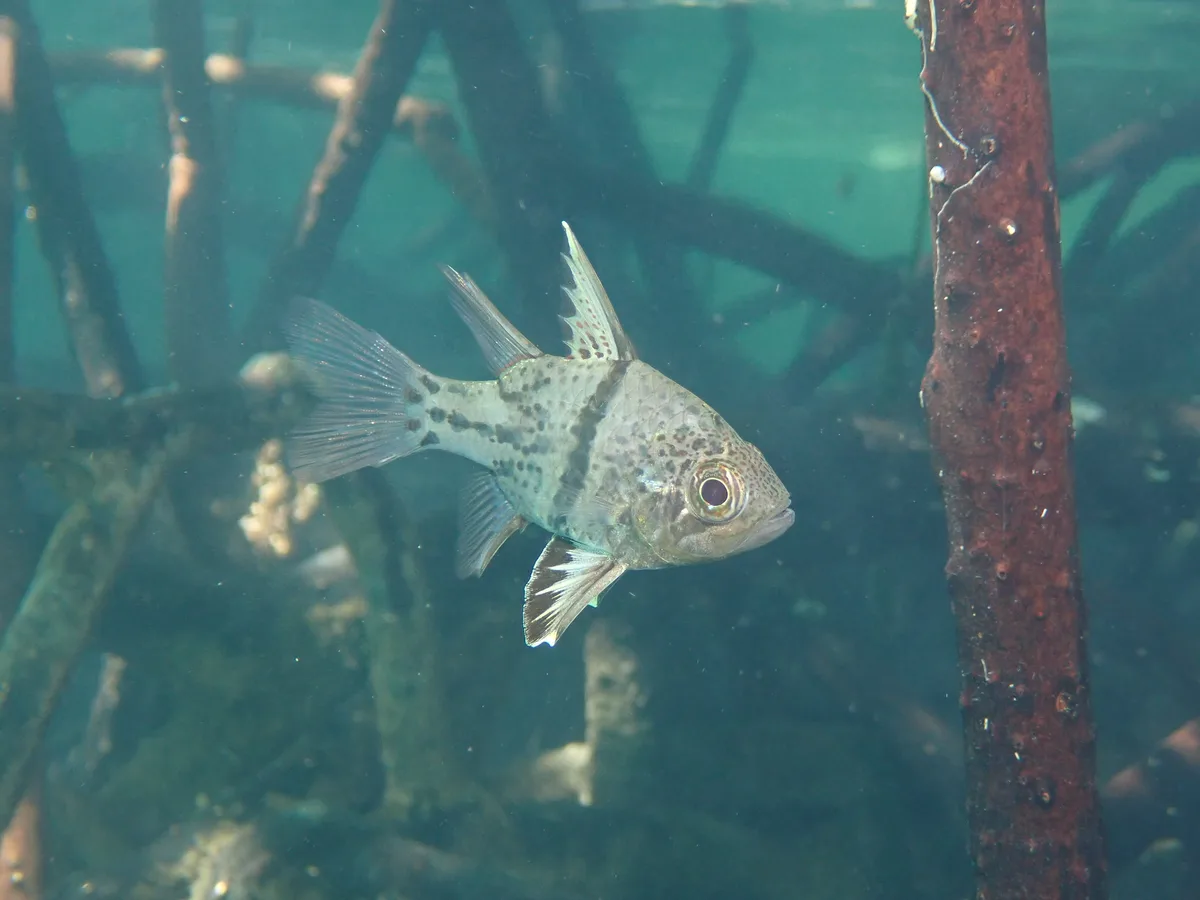
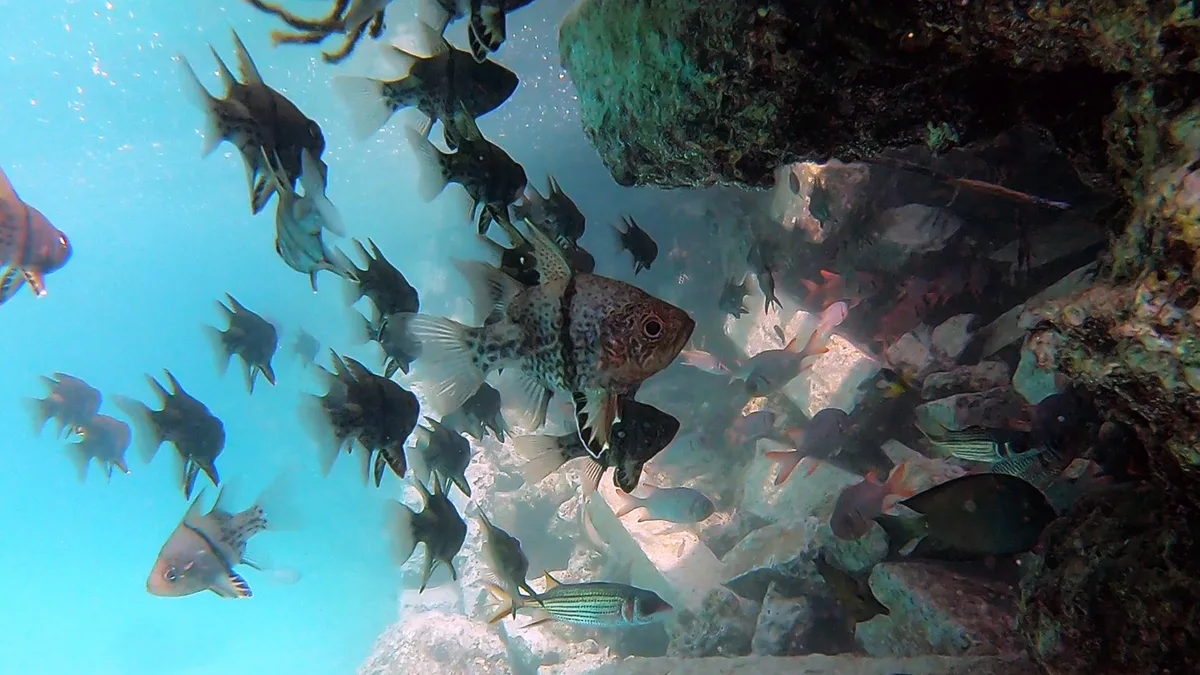
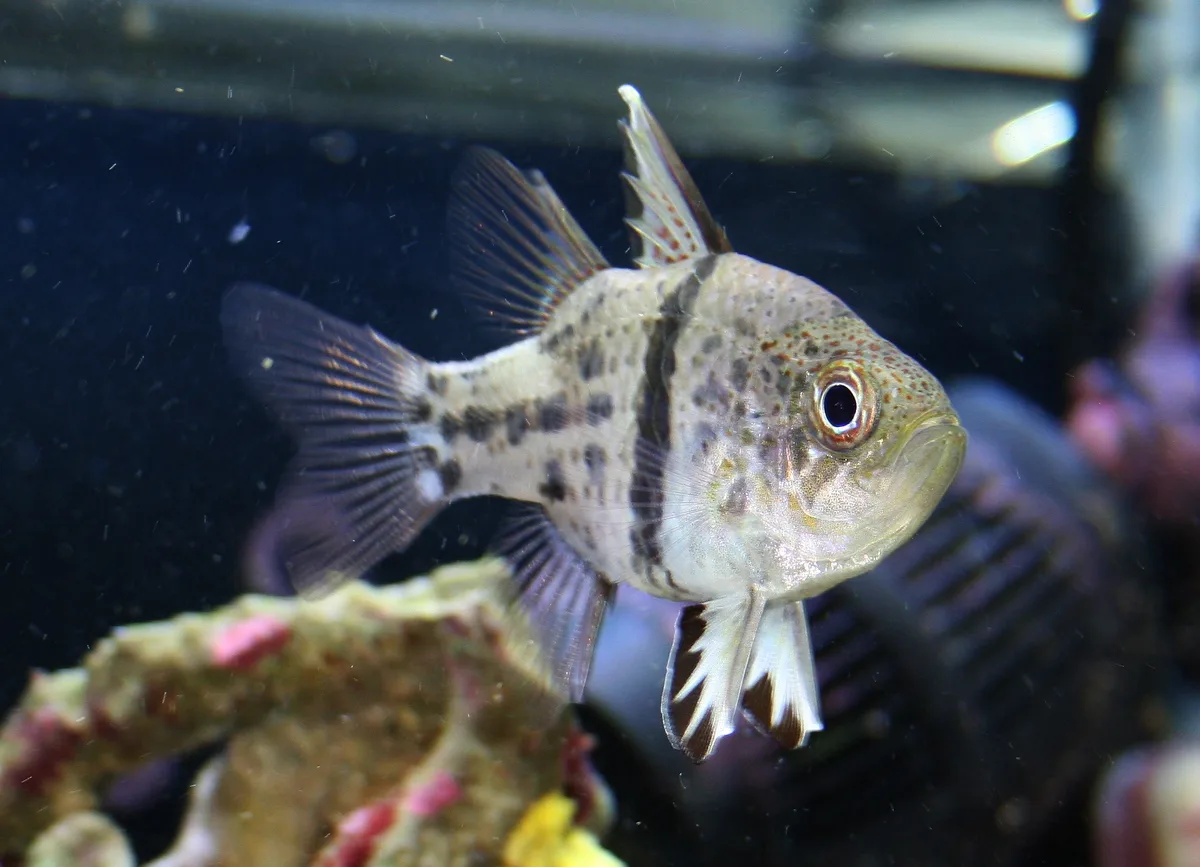
Most cardinalfish will not leave the reef. This one goes up the creek.
It lives in mangroves, estuaries and sheltered shallows where the salinity is unstable, the water is brown, and the temperature swings with the tide - conditions that most reef fish cannot tolerate for an afternoon, let alone a life. It handles brackish water routinely and has been recorded in water close to fresh.
That is a hard living and the reward is the mangroves themselves: a flooded forest of roots is the best nursery habitat on a tropical coast, thick with food, structurally impossible for large predators to hunt in, and largely unoccupied by competitors from the reef.
It is the sort of fish that quietly explains why mangrove clearance matters to a reef several kilometers away. The animals that grow up in the roots do not stay there.
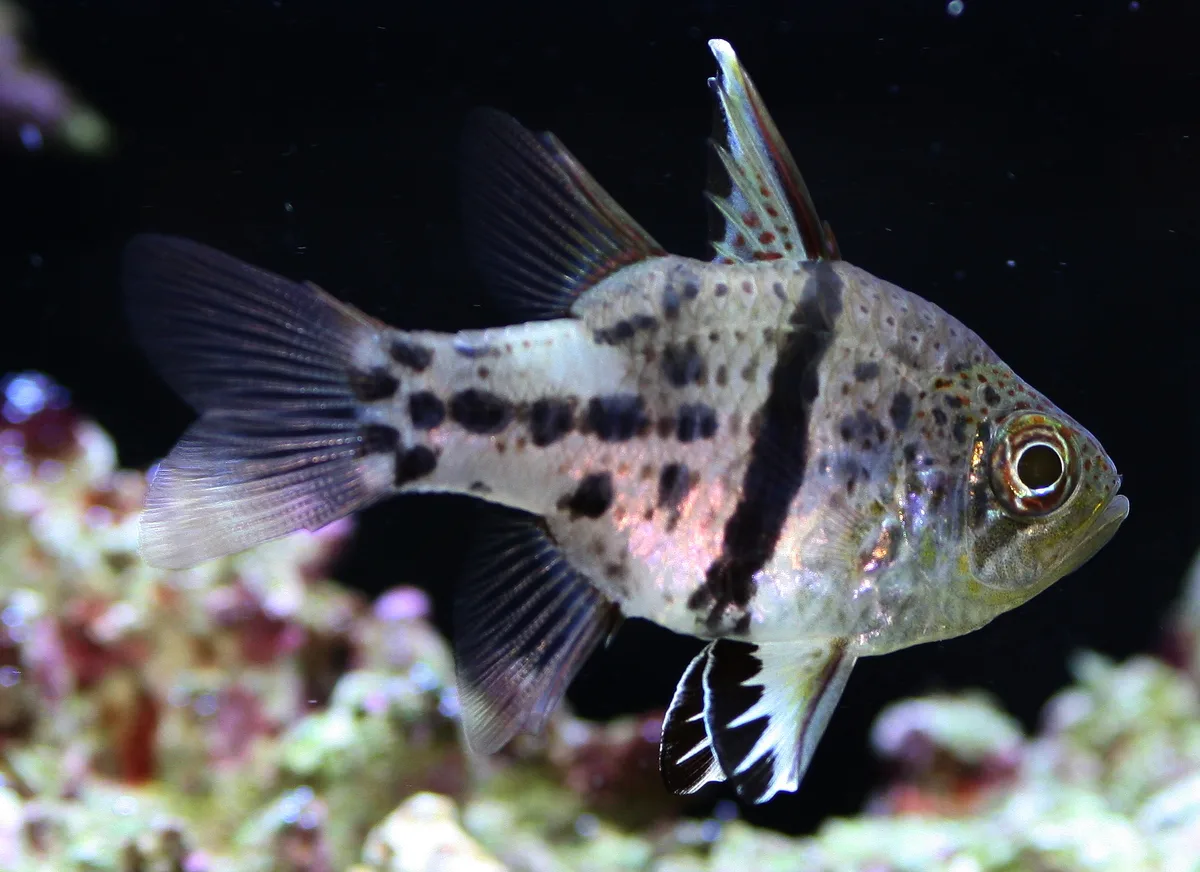
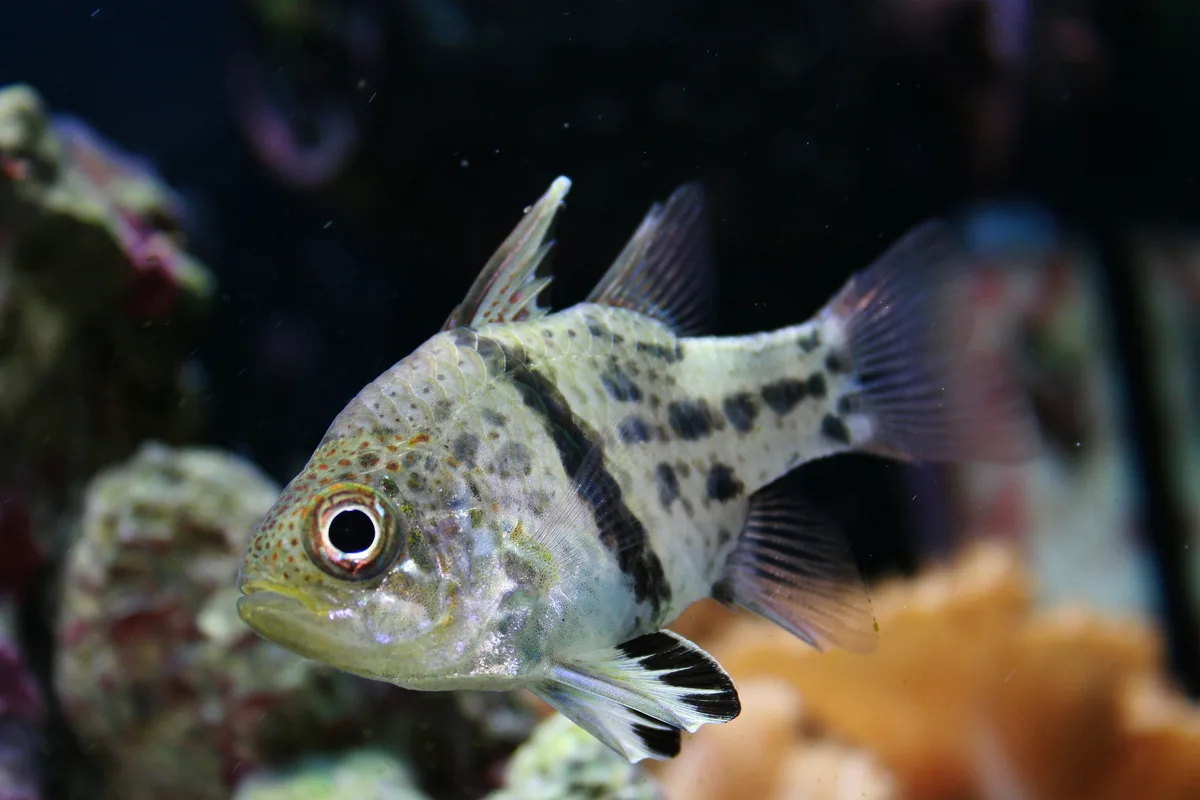
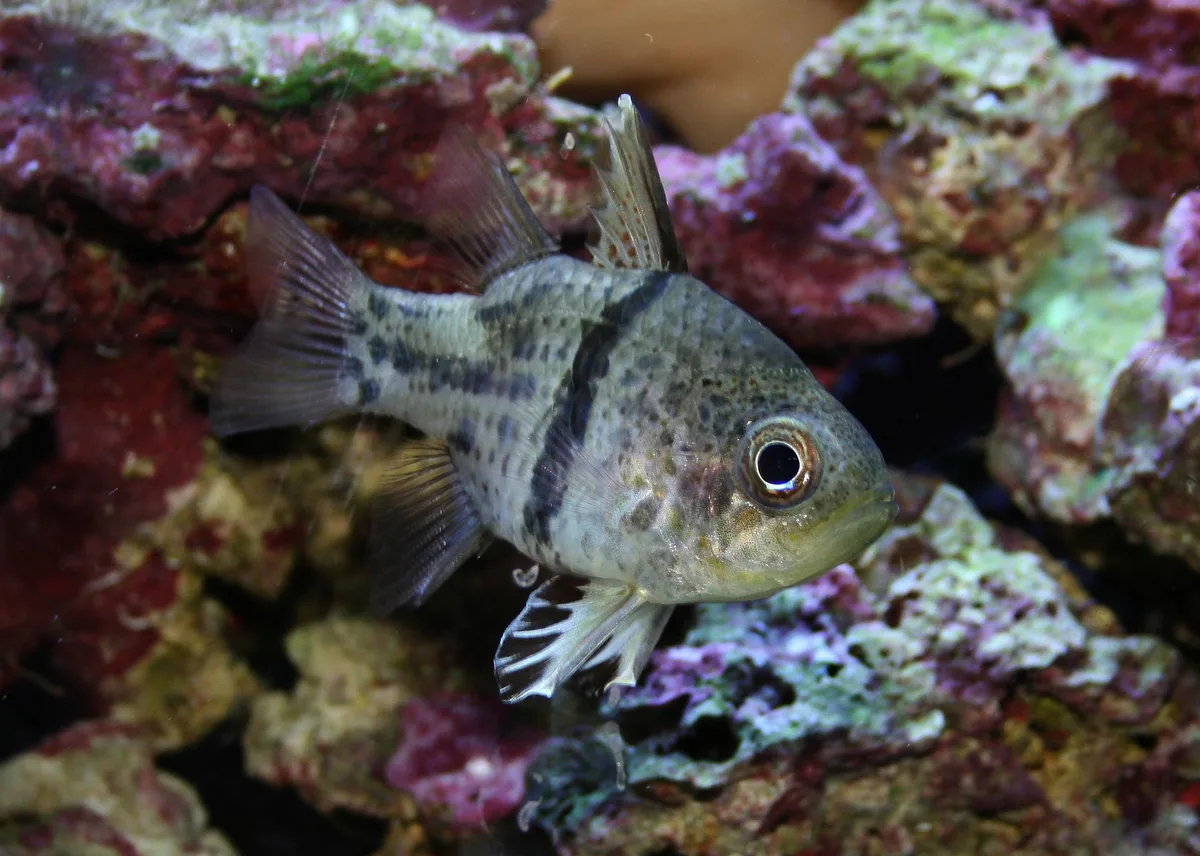
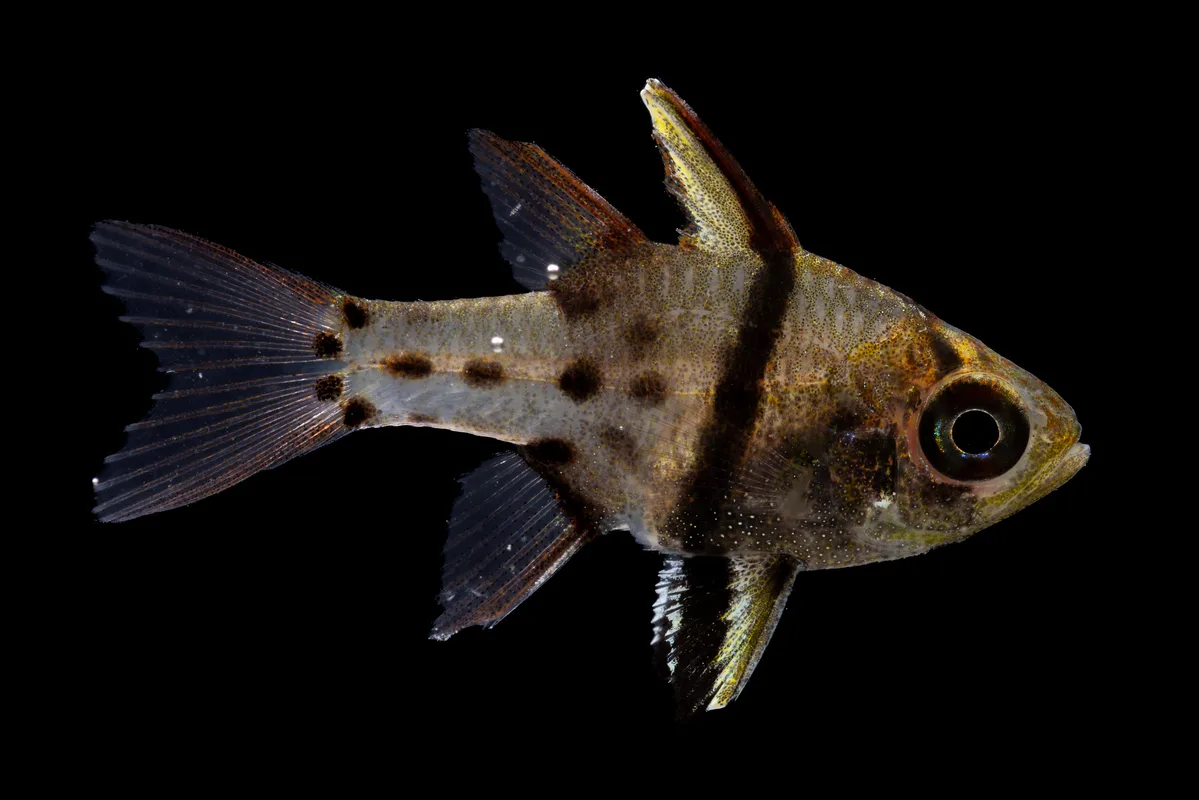
By day it hangs in small groups among the roots and under overhangs, deep-bodied and dark-barred with a heavily spotted rear end, and at night it works the shallows for small crustaceans. The male broods the eggs in his mouth like the rest of the family.
The genus. Sphaeramia Fowler & Bean 1930 - sphaero- (ball). ETYFish
- stocky, deep-bodied, with a dark vertical bar across the middle of the body
- rear half peppered with dark spots on a paler ground
- very large eye
- in mangroves and murky shallows rather than on clean reef
- up to 10 cm
Why it's threatened
Threat classification from the IUCN Red List.