
35 species in Combtooth blenny
Alloblennius
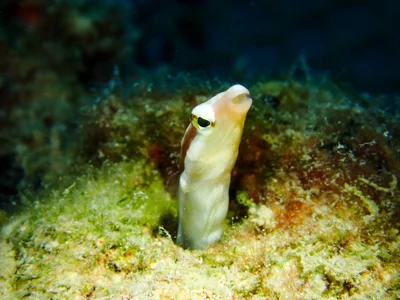
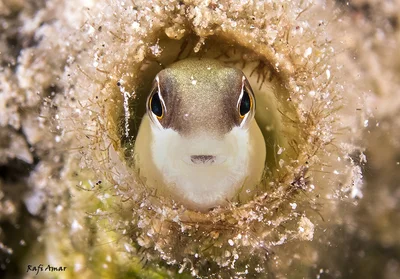
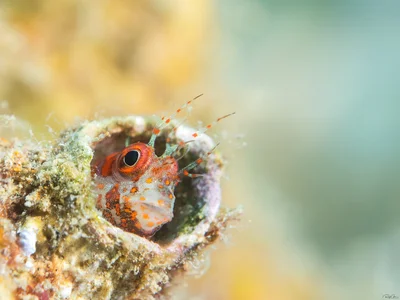
2The smallest blennies on this page, one of them under three centimeters. They live in abandoned worm and barnacle holes barely wider than their own heads, with nothing but the face showing, and the males carry a colored throat.


Antennablennius
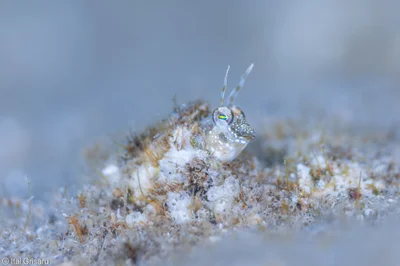
2A branched tentacle stands over each eye like a raised eyebrow, which is where the name comes from. Small barred fish of shallow rock and surge, usually in the top couple of meters.


Aspidontus
2The copyists. One of them reproduces the cleaner wrasse closely enough that fish line up to be cleaned and are bitten instead. The tells are the mouth, which opens underneath the snout rather than at its tip, and the swimming - a whole-body undulation, where the wrasse rows with its pectoral fins.

Cirripectes
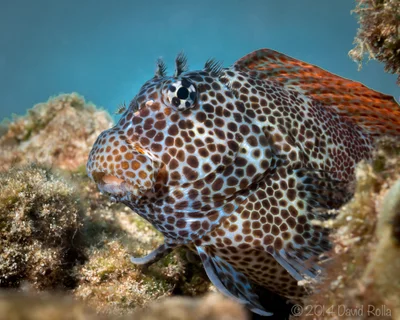
2Named for the fringe. A row of fine filaments crosses the nape in two groups, which is the character the genus is defined by and one of the few here that shows in an ordinary photograph.


Ecsenius
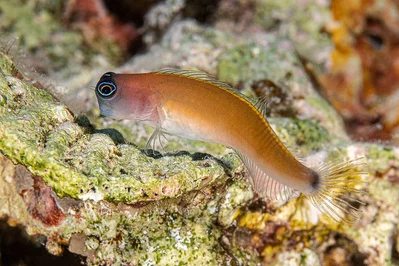
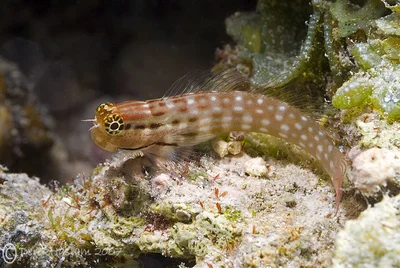
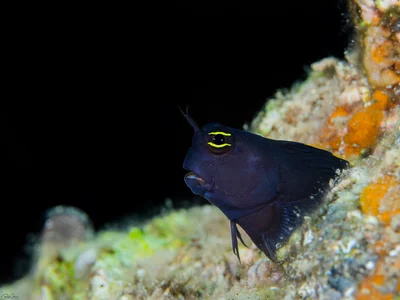
6The perching grazers, and the largest genus in the family. Blunt-faced fish that prop themselves on their pelvic fins and move in short hops rather than swimming, with a smooth head over the eyes - which is the quickest way to separate one from a rockskipper on the next rock. The genus also holds both ends of the family mimicry: one species wears the costume of a venomous fangblenny and does nothing with it, another gave up perching to swim in midwater among anthias.



Istiblennius
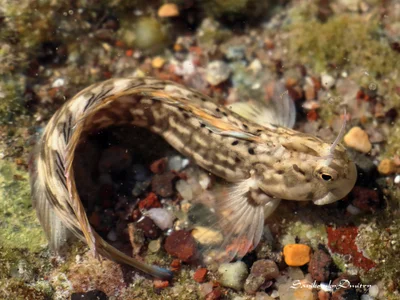
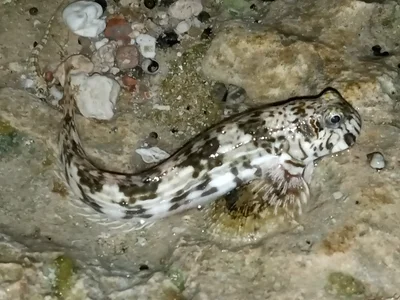
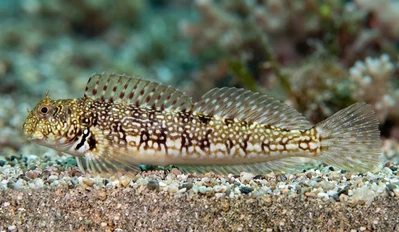
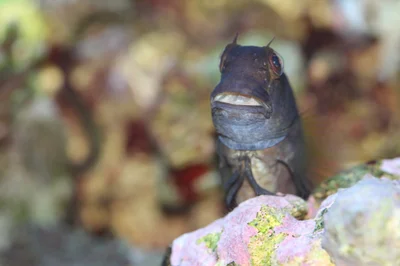
4The rockskippers, and the name is literal. These live in the top few centimeters and in the splash zone above it, out of the water as often as in it, clinging to wet rock and skipping between tide pools when something comes. Every one of them carries branched tentacles over the eyes.

Petroscirtes
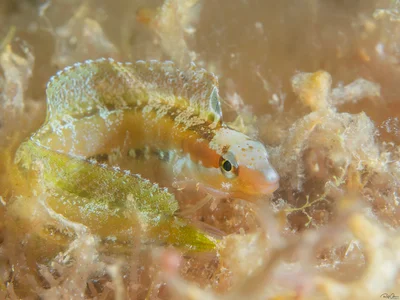
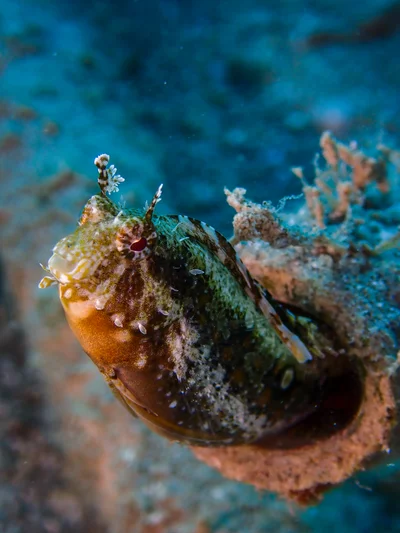
2The fangs without the habit. They carry the same pair of curved canines as the scale-eaters and wear the colors of the venomous fangblennies, but they feed mostly on algae, diatoms and small crustaceans, and they live in weed, seagrass and drifting debris rather than on coral - often inside an empty shell.
Plagiotremus
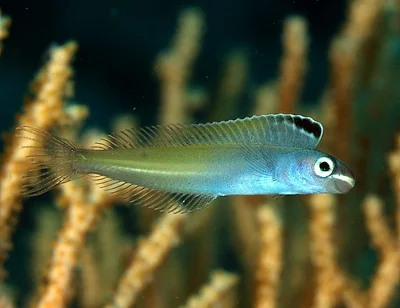
3Fangblennies that make their living off other fish. They hover in open water instead of perching, dart in for a piece of scale, skin or mucus and are gone before the victim can turn, and they sleep reversed into an empty worm tube with the head watching the entrance.


Other genera
12




Other bottom-dwellers
Similar silhouette underwater - worth a look if this was not your animal.


Last Update: August 23, 2026