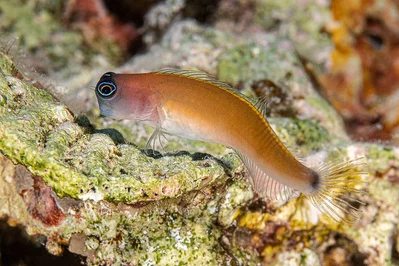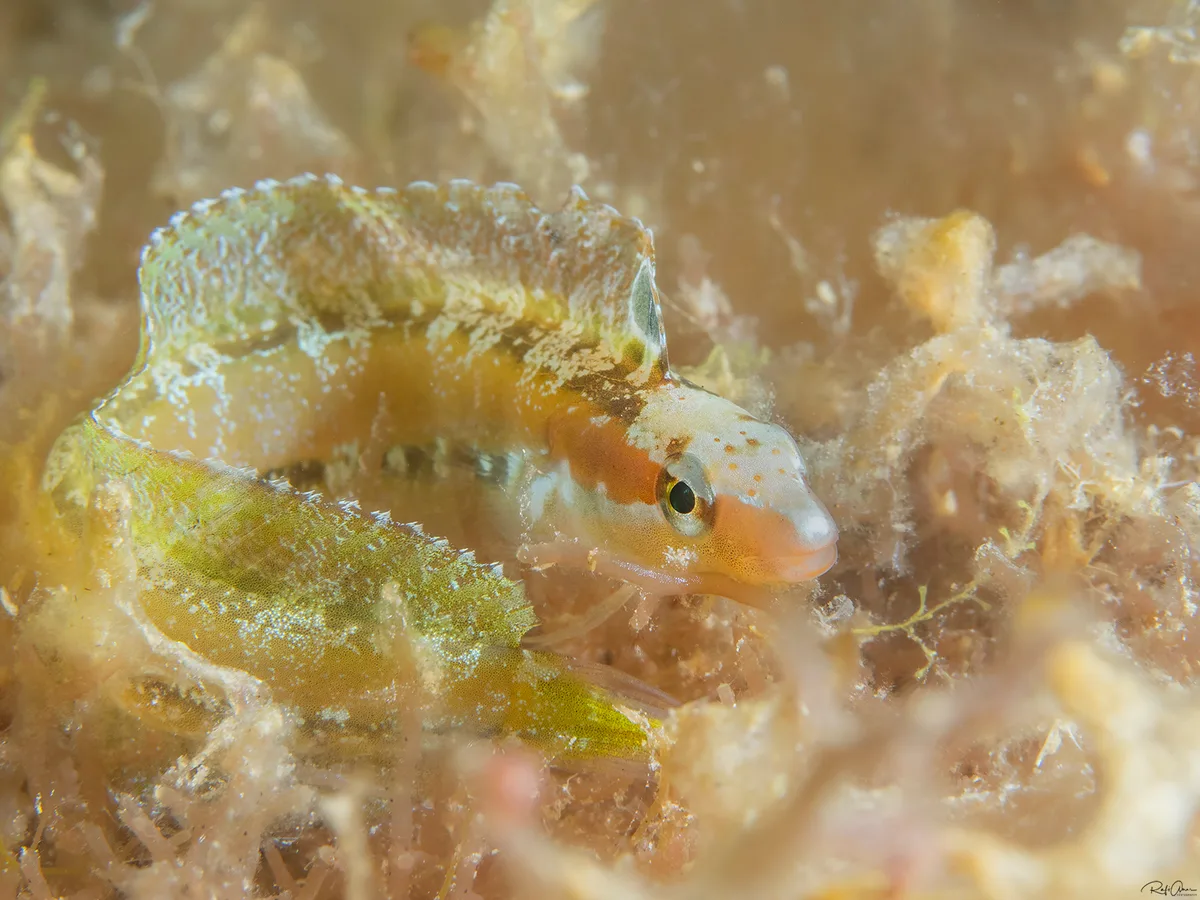
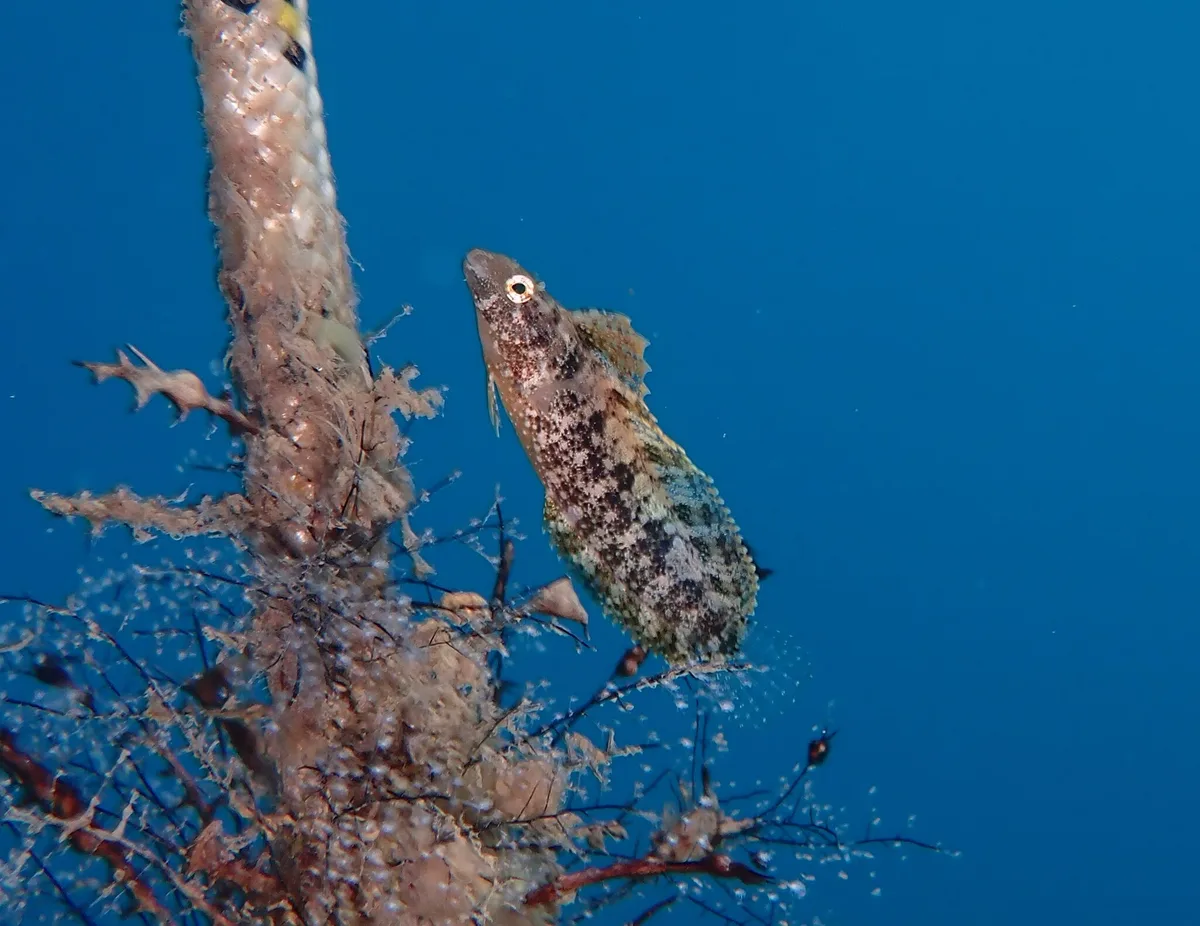
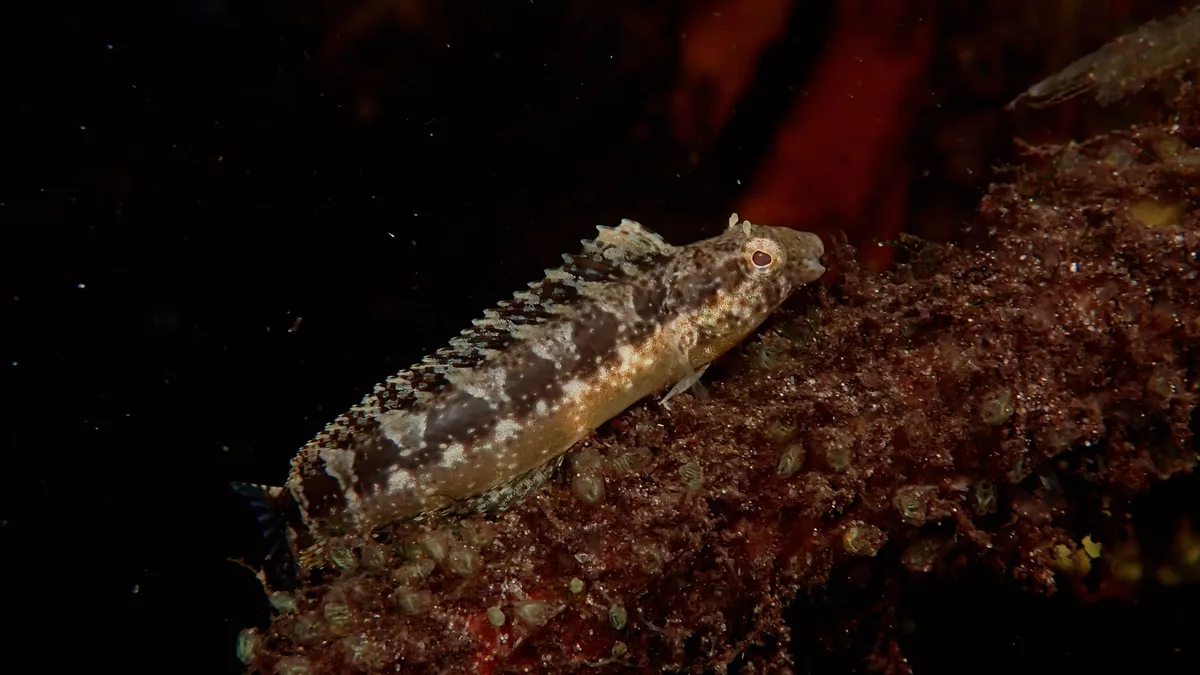
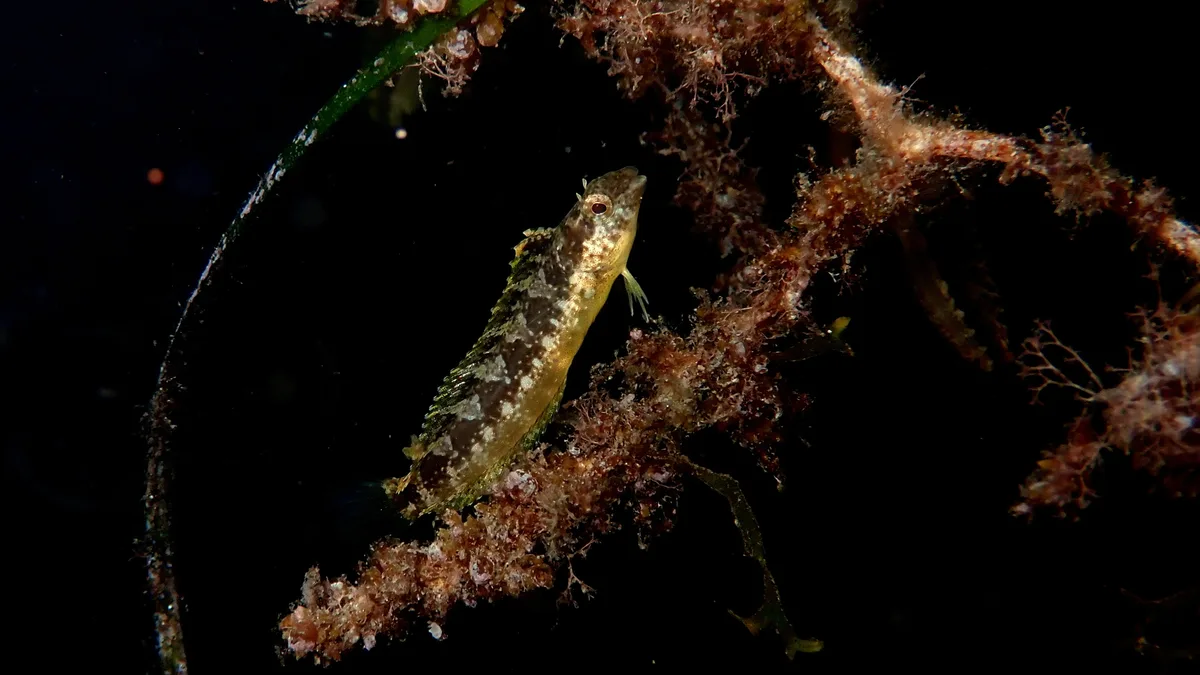
It travels by hitchhiking. This blenny lives in seagrass and weedy shallows and spends a good part of its time around anything drifting: mats of torn algae, floating fronds, planks, plastic. Small fish that cannot swim across open water get carried across it instead, and a raft of weed moving with the current is a working vessel with food, shade and cover attached.
That is how a weak-swimming, hole-dwelling animal ends up with a range running from the northern 🌊 Red Sea to the 🌊 Persian Gulf, and how it turns up in places nothing walked to. It also explains why this species keeps appearing in new locations: rafting is one of the main ways coastal fish extend a range, and it has become considerably easier since the sea filled up with floating debris that does not rot.
The fangs are real and the venom is not. Like the rest of Petroscirtes it carries a pair of long lower canines with no glands behind them, borrowing the reputation of the venomous fangblennies it resembles.
On the bottom it is a seagrass animal, pale with a dark eye stripe, and it nests in whatever hollow object it can find.
The genus. Petroscirtes Rüppell 1830 - petro (stone) + scirtes (to leap). ETYFish
The species. Petroscirtes ancylodon Rüppell 1835 - ankylos (bent) + odon (tooth). ETYFish
- slender pale body with a dark stripe from the snout through the eye
- tall front dorsal fin
- pair of long curved canines in the lower jaw
- in seagrass and under drifting weed rather than on coral
- up to 11.5 cm
Why it's threatened
Threat classification from the IUCN Red List.