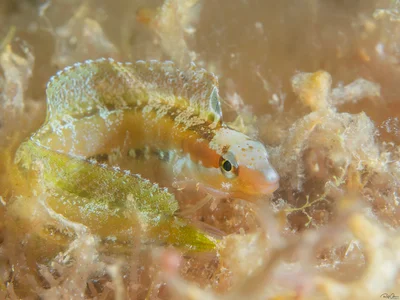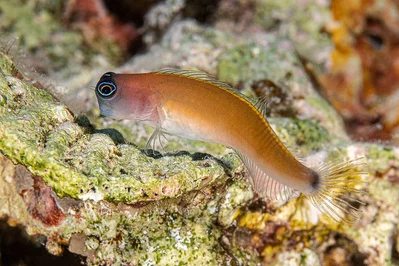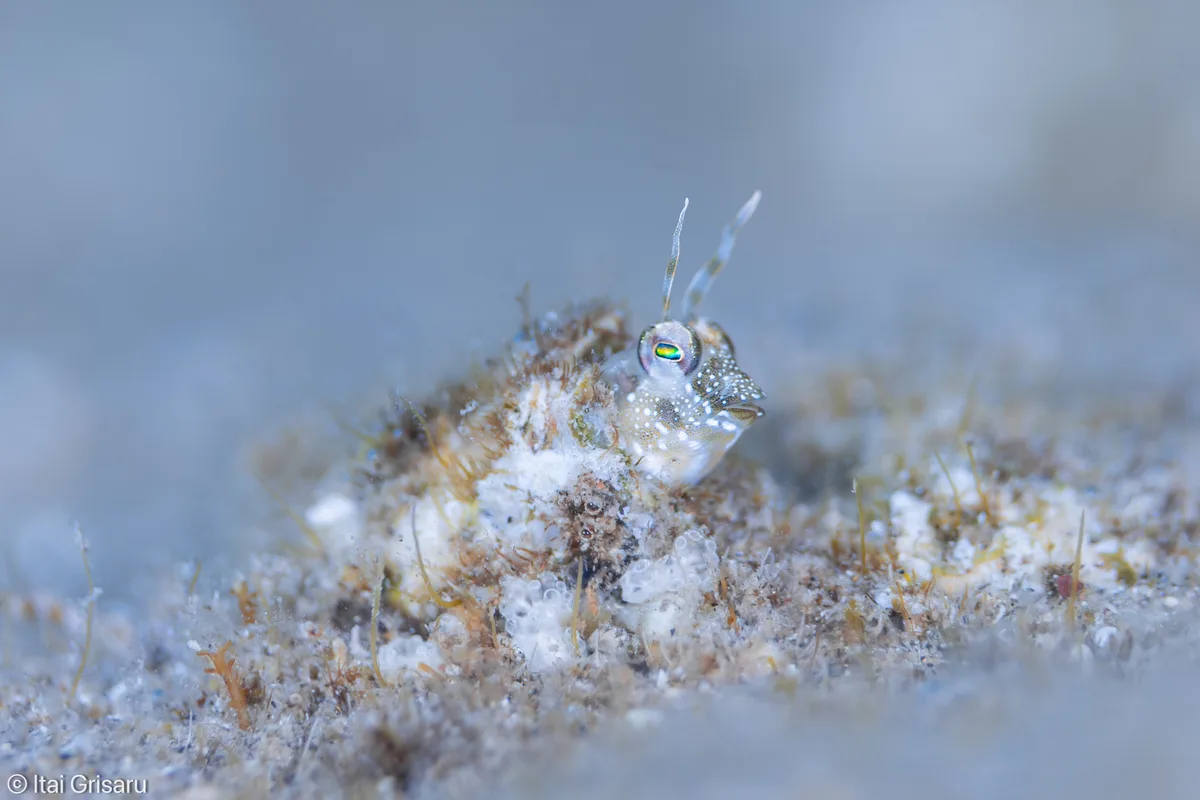


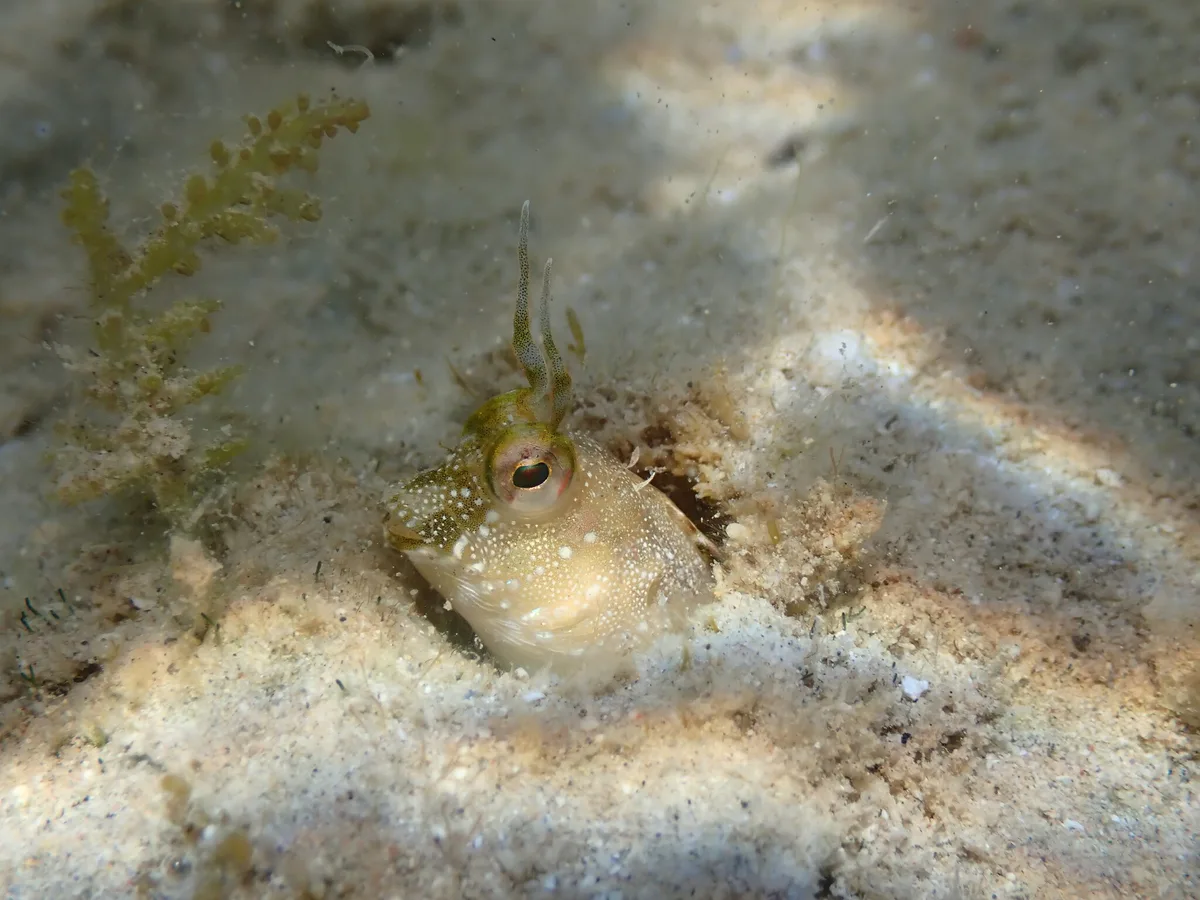
The horns are the name and they are not only camouflage.
Most blennies carry cirri: branched flaps of skin above the eyes, sometimes on the nostrils and the nape as well. The usual explanation is that they break up the outline of a head sitting in algal turf, and that is part of it. But in a good many species the male's are conspicuously larger than the female's, and males raise and display them at rivals and at females, which is not what a camouflage structure does. A feature that is bigger in one sex and waved about during arguments is a signal.
Which puts the blenny face in a different light. The tufts, the steep forehead, the high-set eyes: a large part of what makes these fish look characterful is display equipment, aimed at other blennies looking out of holes a few centimeters away.
This one carries the tentacles far enough forward and high enough to have been named for them, and it lives in the surge on shallow rock and reef flats, where it grazes algae and wedges itself into a crack when the water pushes.
The genus. Hirculops Smith 1959 - hircus (goat) + ops (appearance). ETYFish
The species. Hirculops cornifer (Rüppell 1830) - cornis (horn) + fero (to bear). ETYFish
- prominent branched tentacles above each eye, larger in males
- high steep forehead
- mottled brown and cream, wedged into rock
- up to 6 cm
Why it's threatened
Threat classification from the IUCN Red List.