
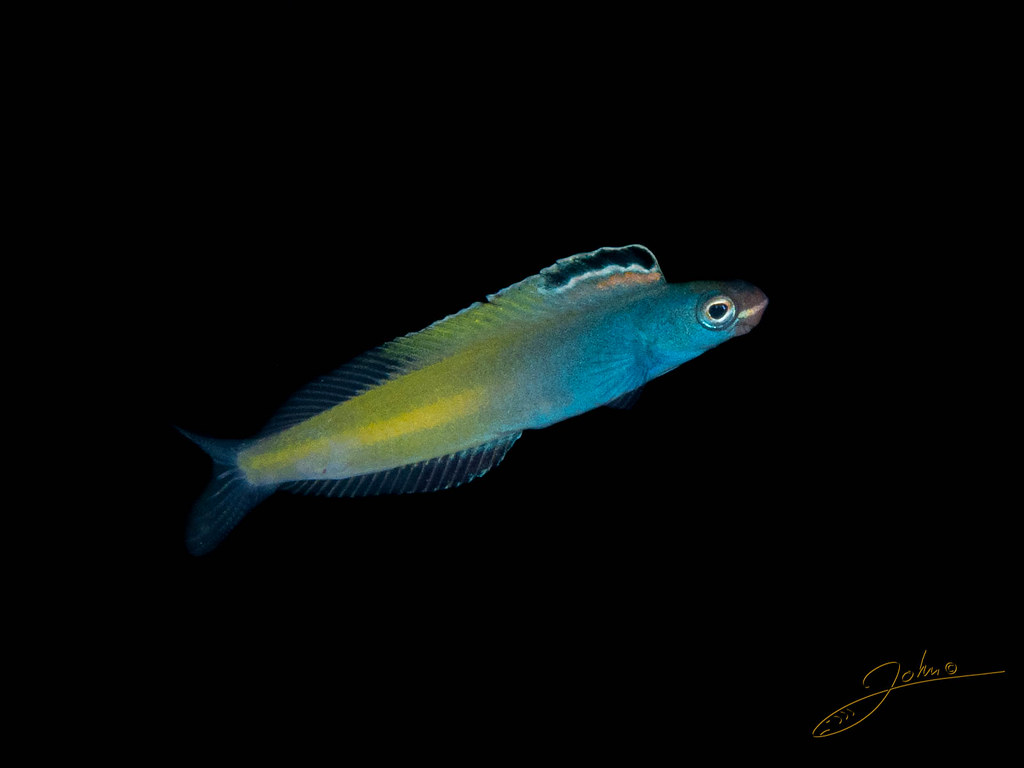
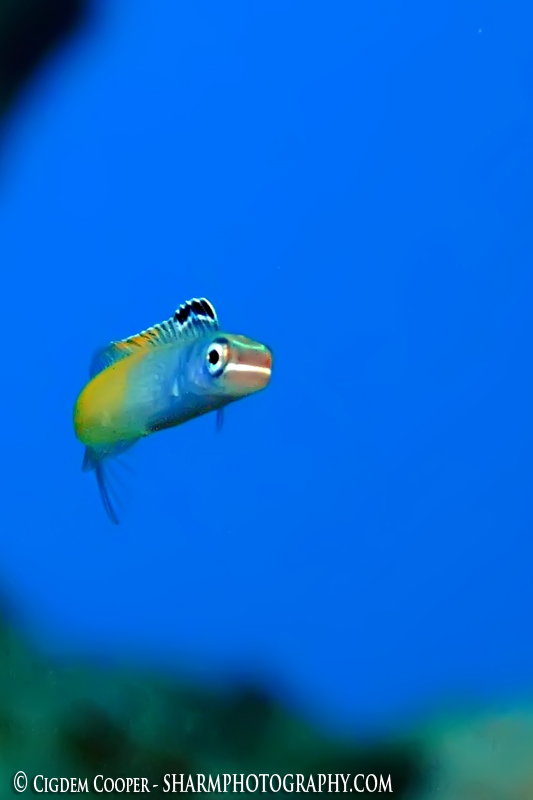
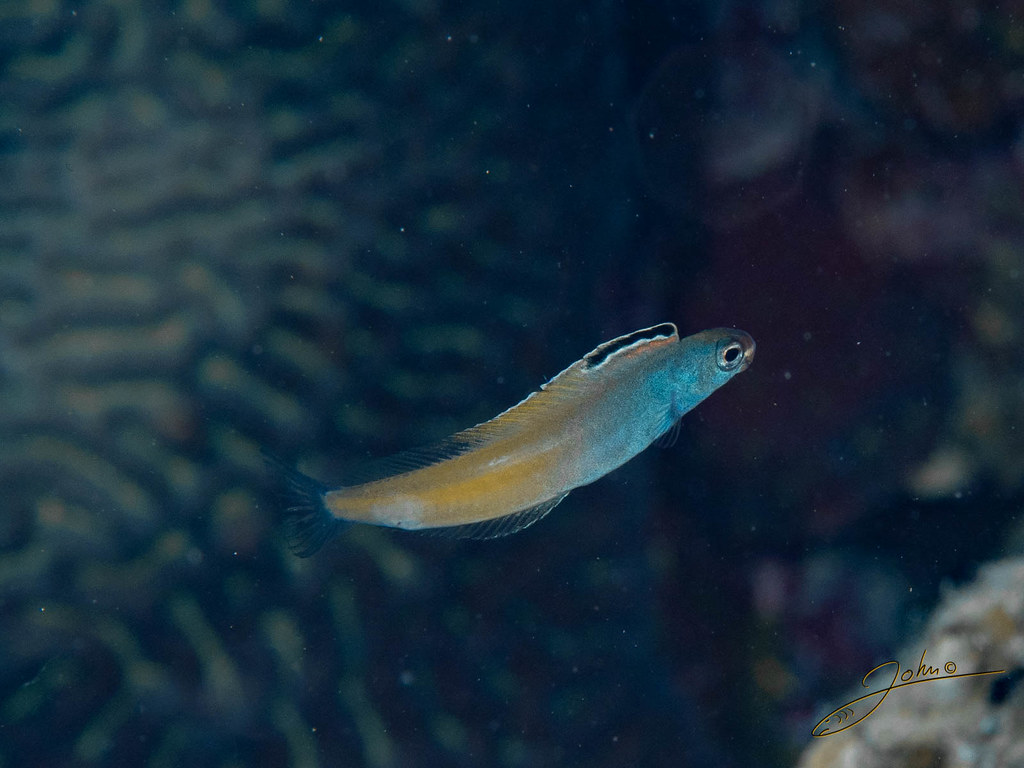
This is the one that bites people.
Plagiotremus makes its living by taking pieces out of other fish: it darts out of a hole, strikes a passing animal from behind or below, tears off a mouthful of mucus, scales or skin, and is back in the tube before the victim has finished flinching. The strike is aimed at the flank or the tail, away from the eyes, and a single blenny can hit dozens of fish an hour.
It does not distinguish between a fish and a diver. Bare skin gets nipped, hard enough to feel and occasionally hard enough to draw a bead of blood, and swimmers who have been hit usually never see what did it. The favorite targets are the backs of legs and anything pale.
Home is a hole it did not make. It backs into an abandoned worm tube tail first and watches from the entrance, which puts the whole animal out of reach with only the head exposed and pointing at the traffic.
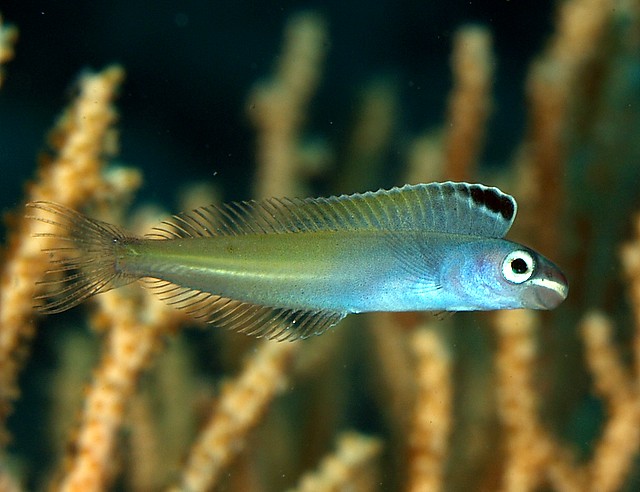
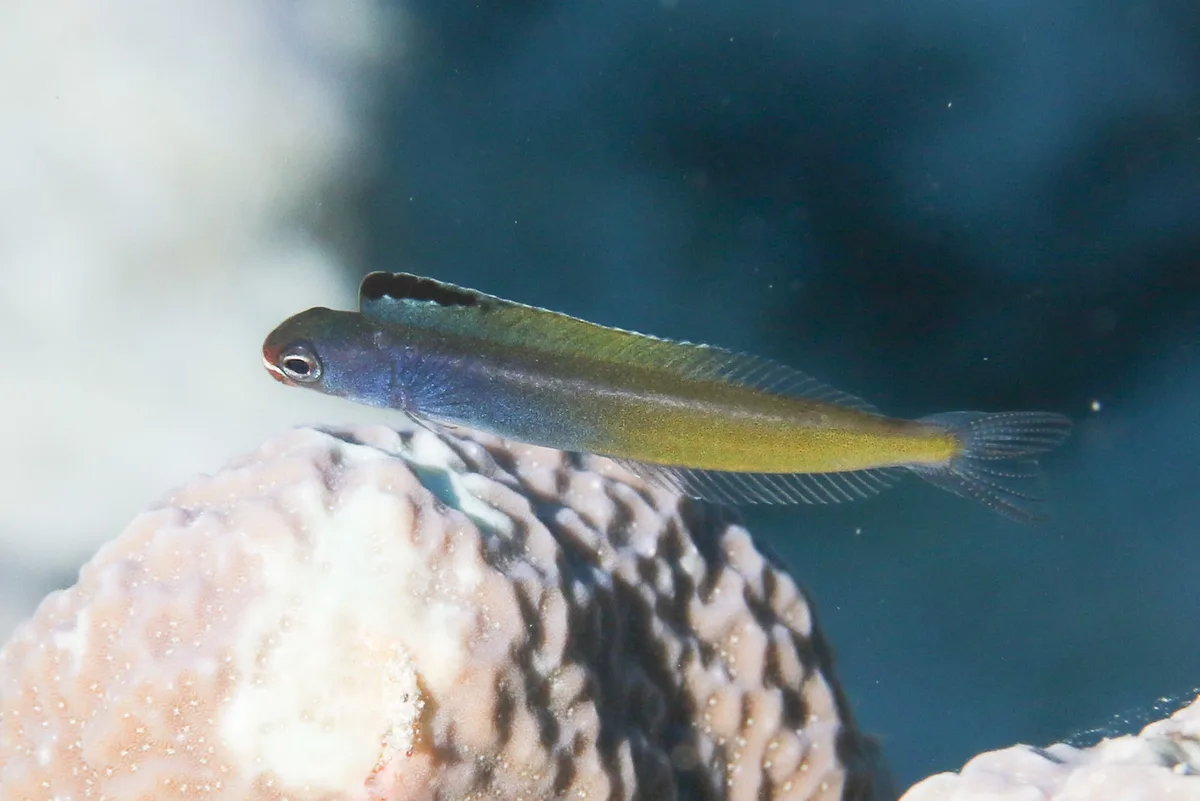
At six centimeters, dark-striped on pale blue, it is small enough to be mistaken for a cleaner wrasse from a distance, which is not a coincidence: several members of the genus trade on exactly that resemblance.
The genus. Plagiotremus Gill 1865 - plagio- (oblique) + trema (hole). ETYFish
The species. Plagiotremus townsendi (Regan 1905) - Honours Capt. Frederick William Townsend. ETYFish
- small, slim, fast, with a dark stripe along a pale blue body
- swims in midwater in short darting runs rather than perching
- reverses into an empty worm tube tail first, head watching from the opening
- up to 6 cm
Why it's threatened
There are no major threats known for this species.
Threat classification from the IUCN Red List.