
Blennies do not scatter their eggs. Almost every large reef fish here spawns into open water and abandons the result to the current, but a blenny lays a flat patch of eggs on a hard surface inside a hole, each egg anchored by a pad of sticky filaments, and then the male stays with them.
His job lasts one to two weeks. He fans the clutch with his pectoral fins to keep oxygenated water moving over it, he eats any eggs that fungus, and he attacks anything that comes near the entrance regardless of size. Males will hold several clutches at once from different females, so a single hole can contain the output of a small harem, all of it depending on one fish not leaving.
The trade is obvious. Broadcast spawning is cheap and produces millions of eggs with a survival rate close to zero; guarding produces a few hundred with a decent chance each. A fish that already lives in a defensible hole is well set up for the second strategy.
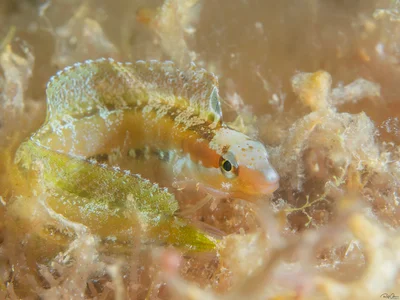
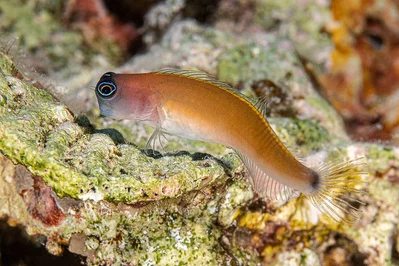
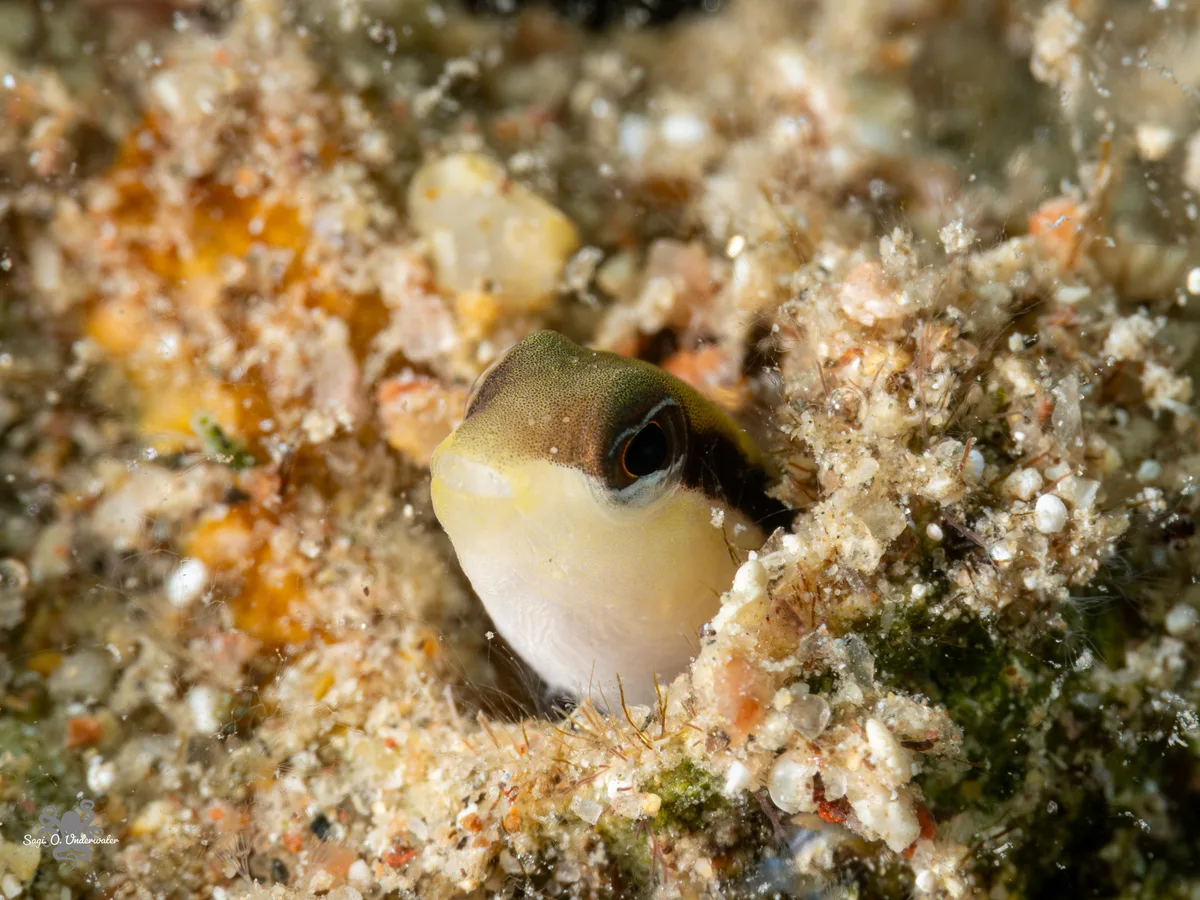
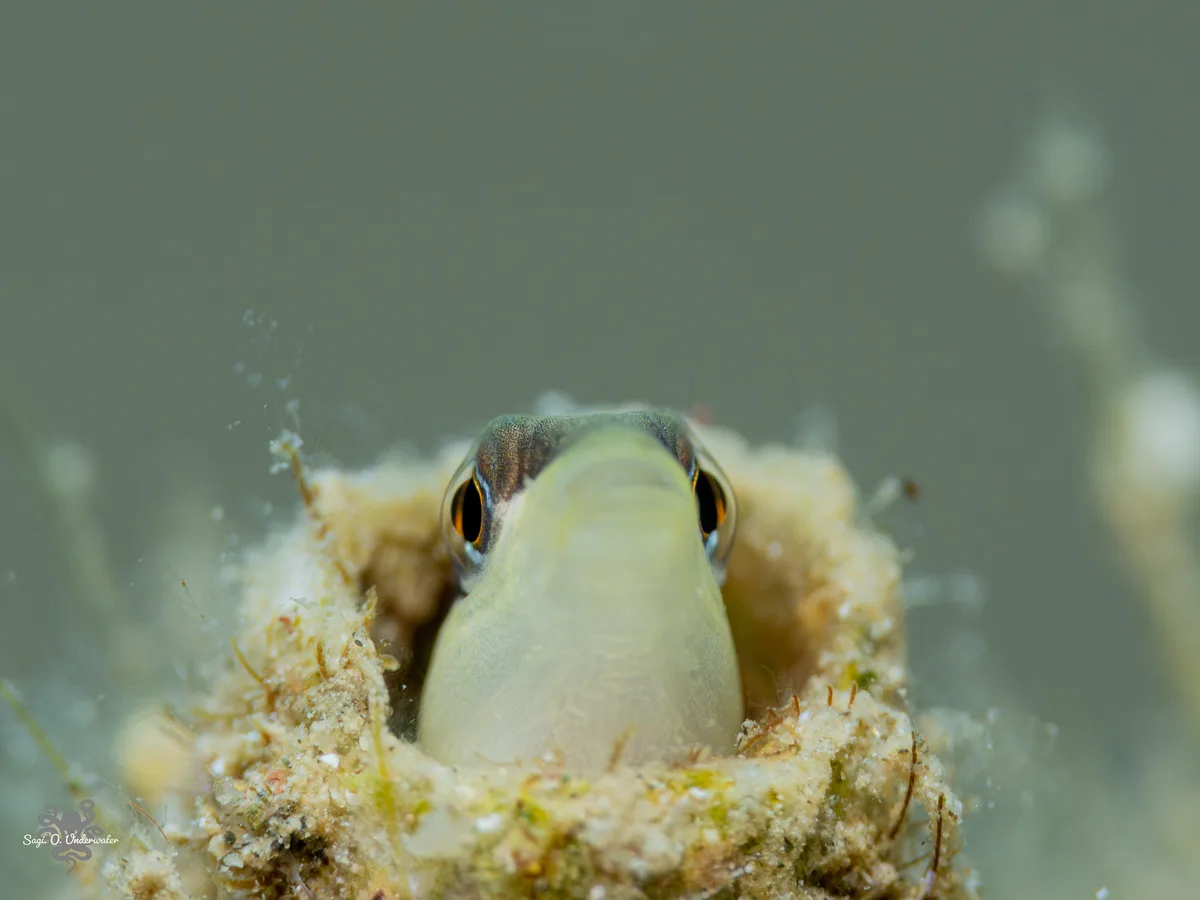
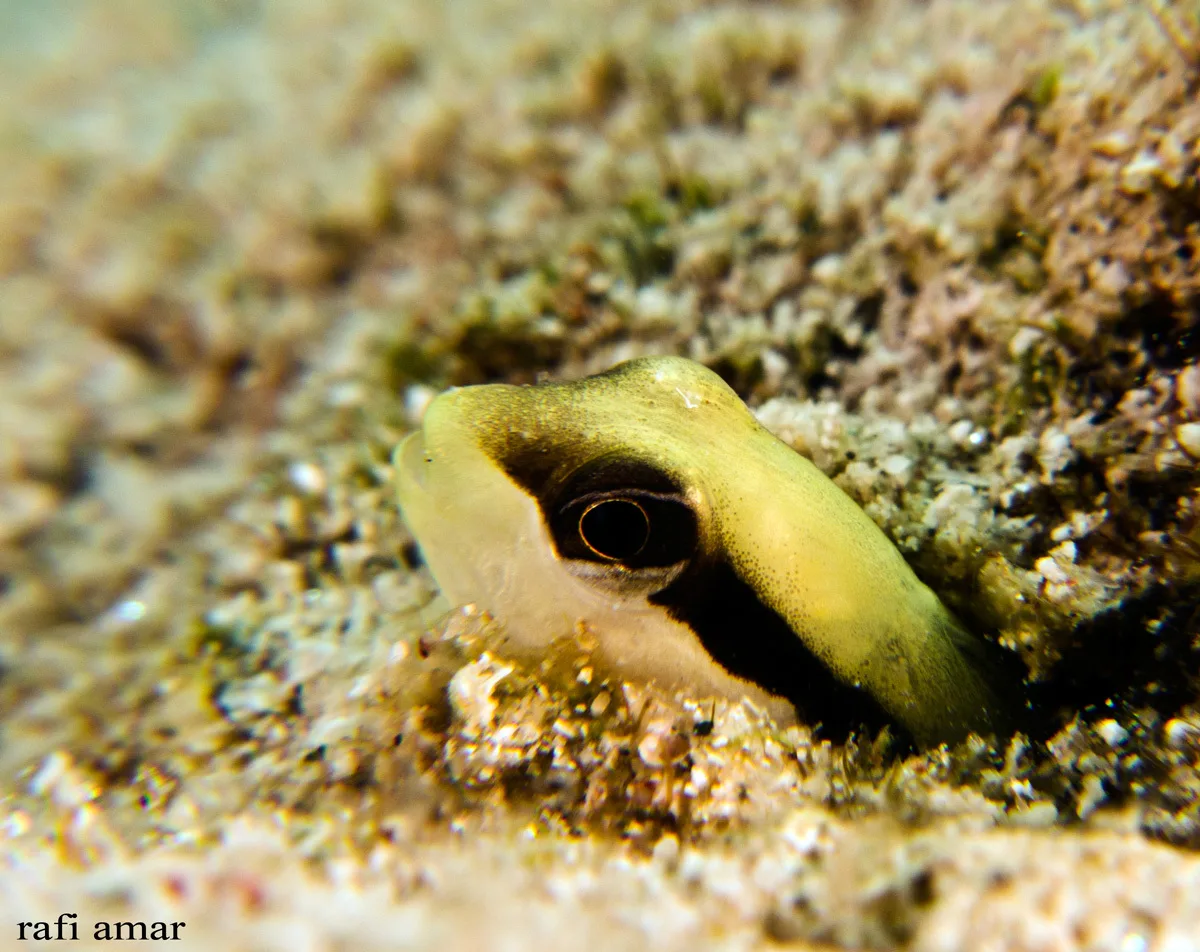
This one is a small dark blenny of dead coral and rock, yellowish on the back, with a blunt head and no tentacles over the eyes.
The genus. Enchelyurus Peters 1868 - enchelys (ancient Greek for eel) + oura (tail). ETYFish
- dark body with a yellowish back
- blunt head, no tentacles over the eyes
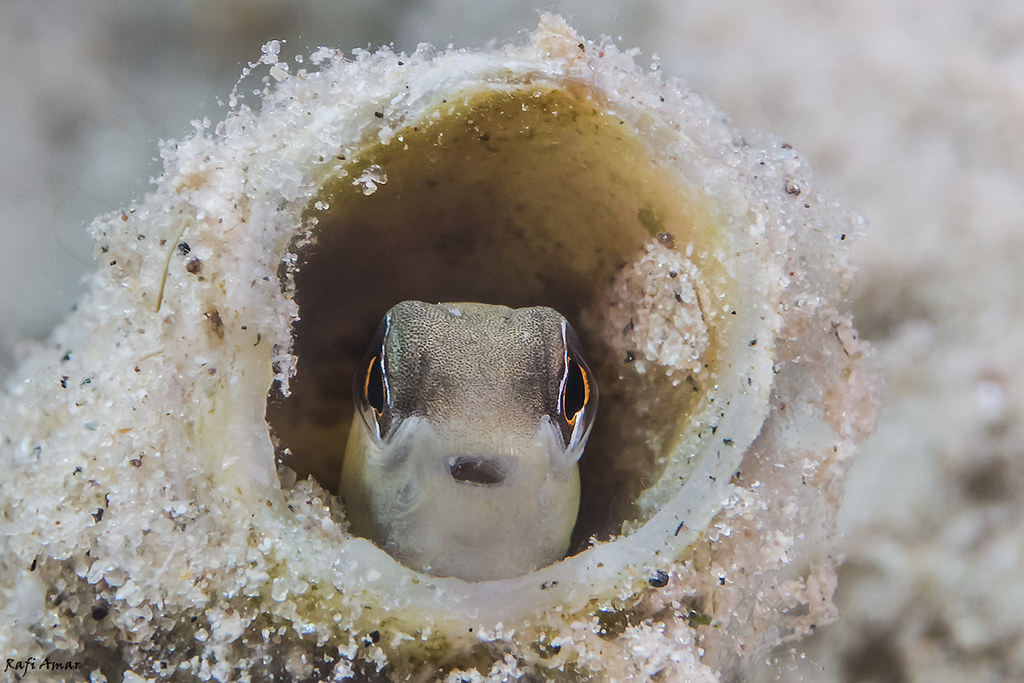
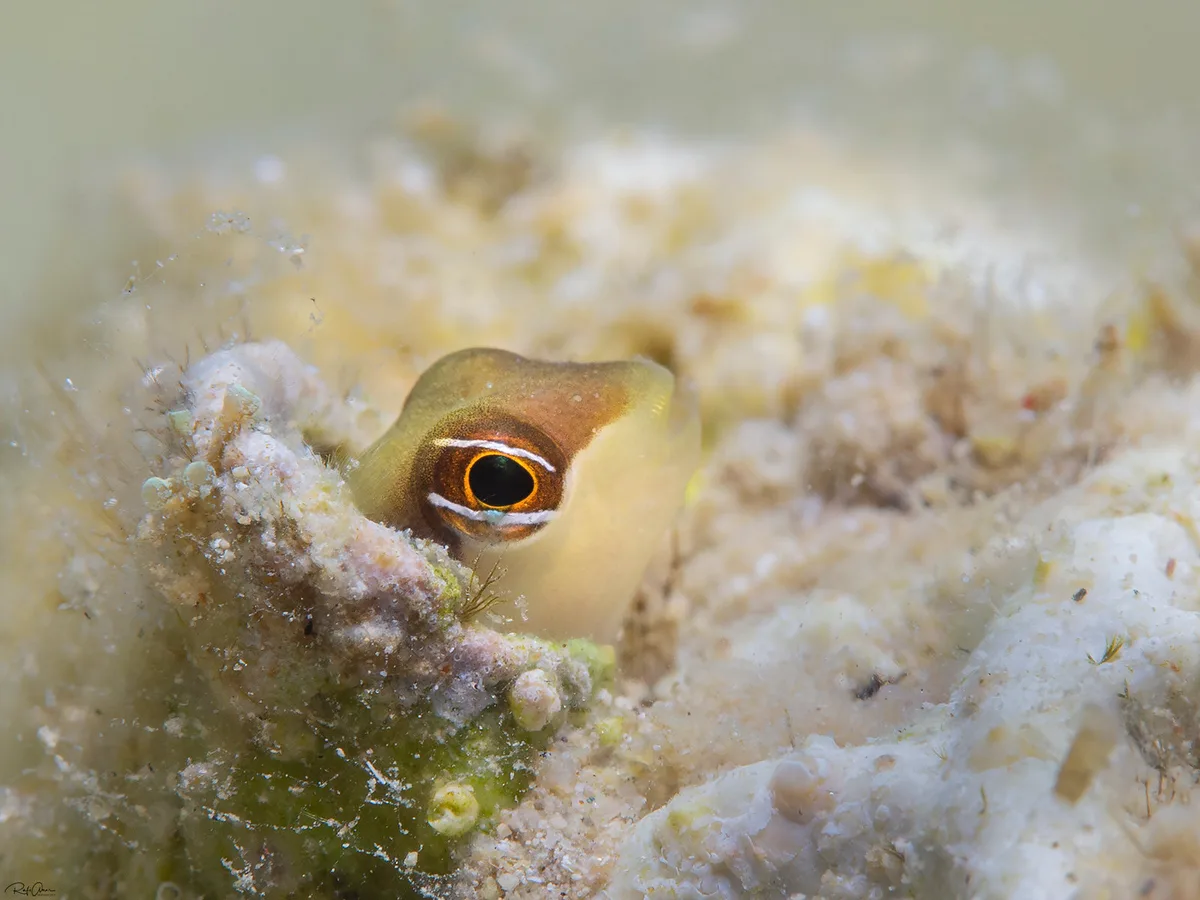
- in a hole in dead coral, head out
- up to 5.4 cm
Why it's threatened
There are no major threats known for this species.
Threat classification from the IUCN Red List.