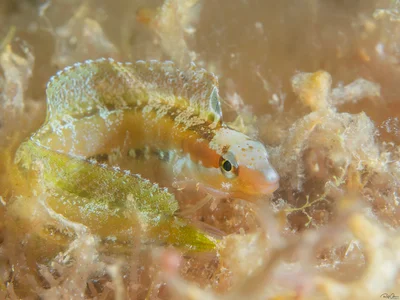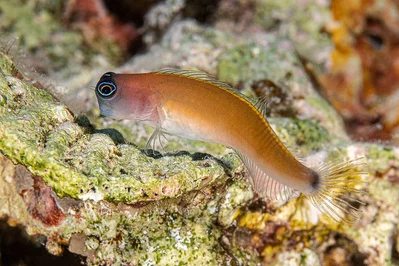
This fish lives in the last two meters of water before the shore, which is most of the reason nobody has seen it. Divers pass through that layer on the way to somewhere else, and it is the worst place on a reef to be holding a camera: surge, backwash, and rock a meter from the port.
Blennies do well there. This one has no swim bladder, like the rest of its family, so it is not fighting to stay down. It sits on the rock propped on its pelvic fins, lets the water wash over it, ducks into a hole when the surge comes through and is back out immediately afterwards.
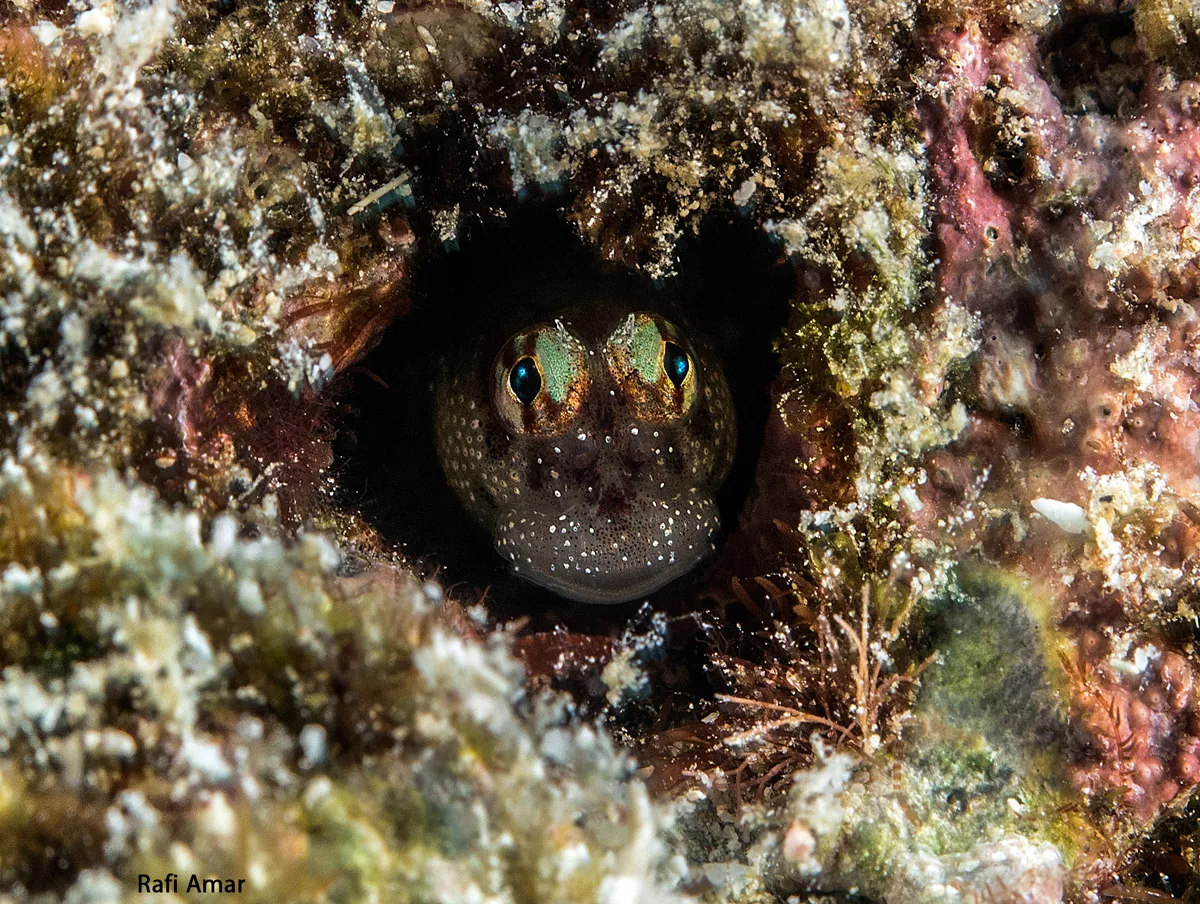
The tentacles above the eyes are what the genus is named for, and most of the family carries some version of them: branched flaps over the eye, sometimes on the nape as well. They are not dramatic sensors. They break up the outline of a head sitting in a tuft of algae, which for a five-centimeter fish in bright shallow water is worth a great deal.
The eggs go into a crevice, stuck down on a pad of filaments, and the male stays with them until they hatch.
The genus. Antennablennius Fowler 1931 - antenna (tentacle). ETYFish
- small gray fish crossed by about eight purplish bars
- rows of bright dots across the cheeks
- a pair of branched tentacles above the eyes
- in the top two meters over rock, in the surge
- up to 5 cm
Why it's threatened
Threat classification from the IUCN Red List.