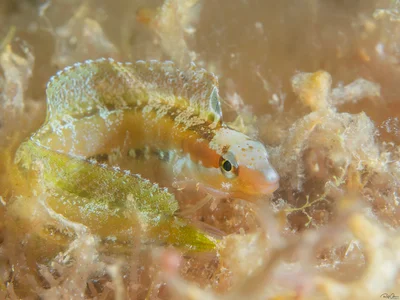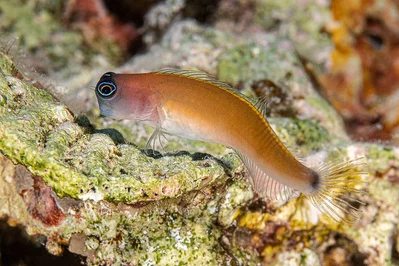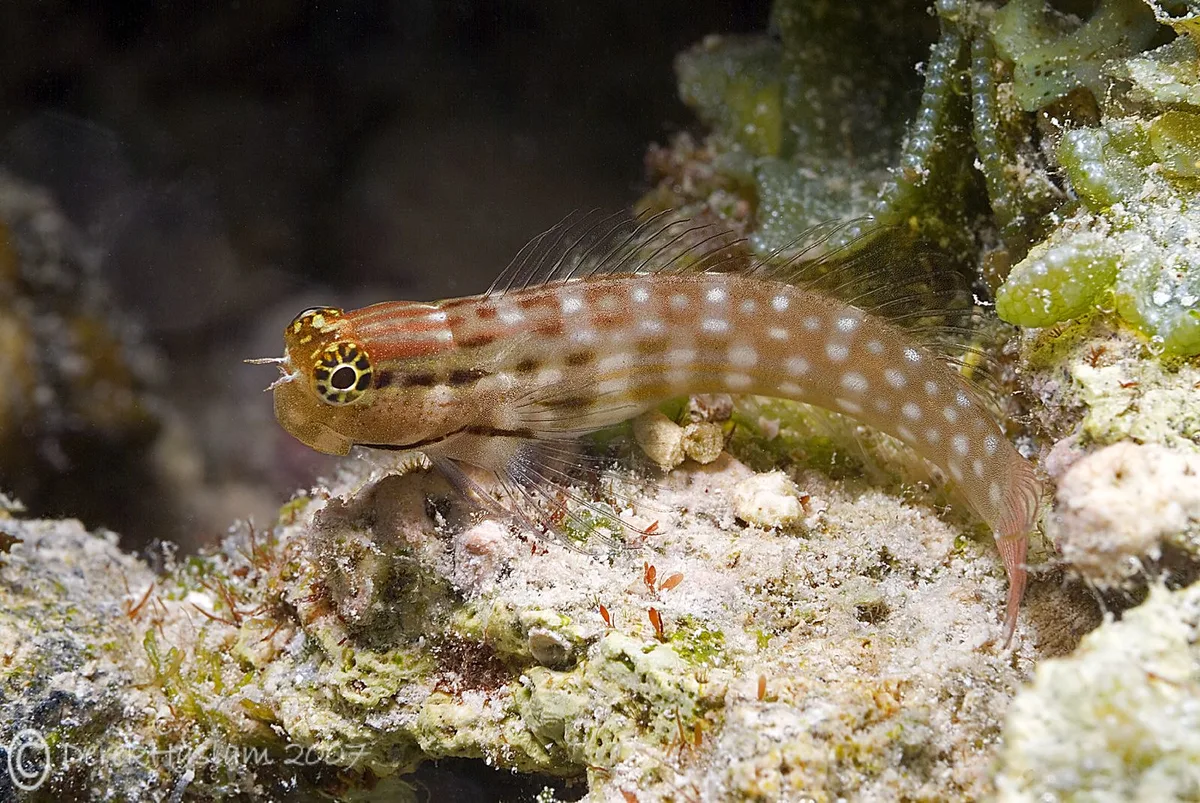
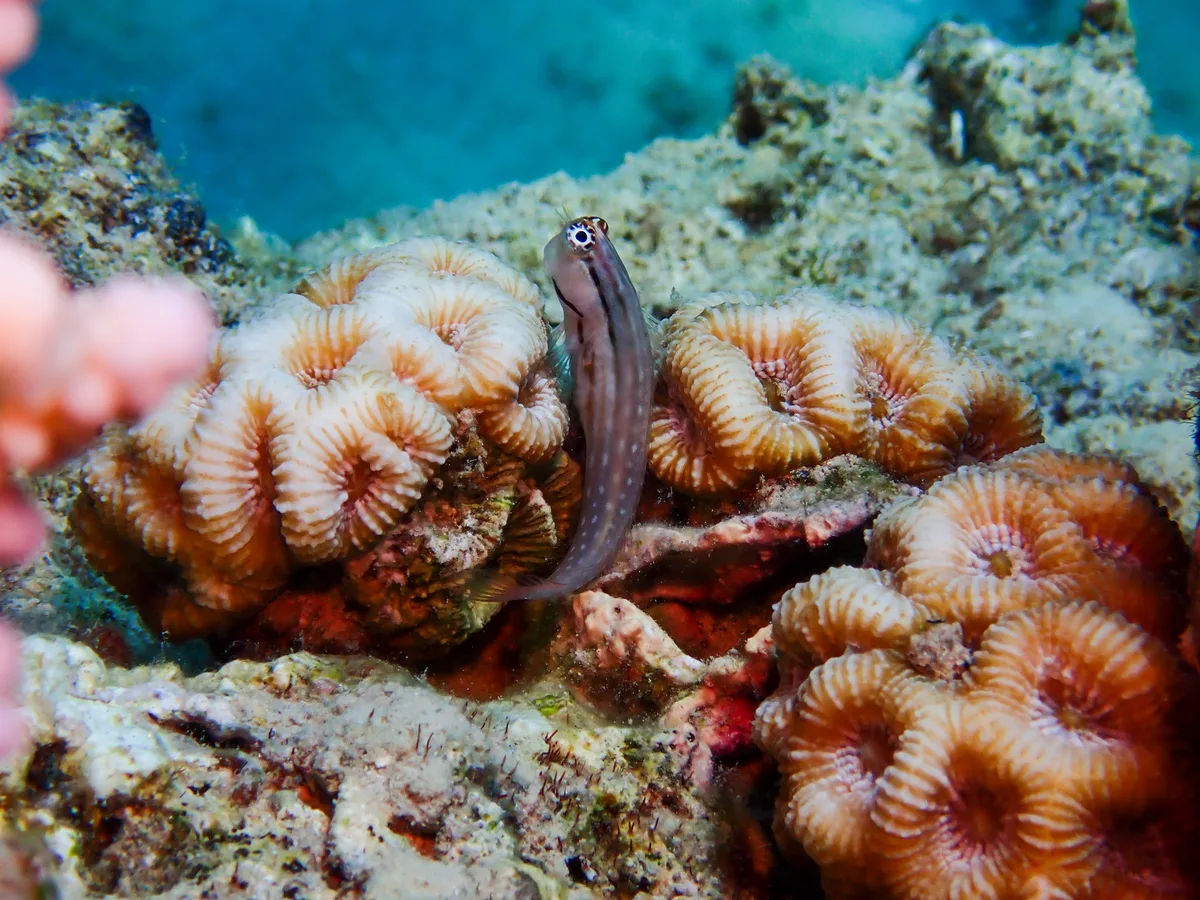
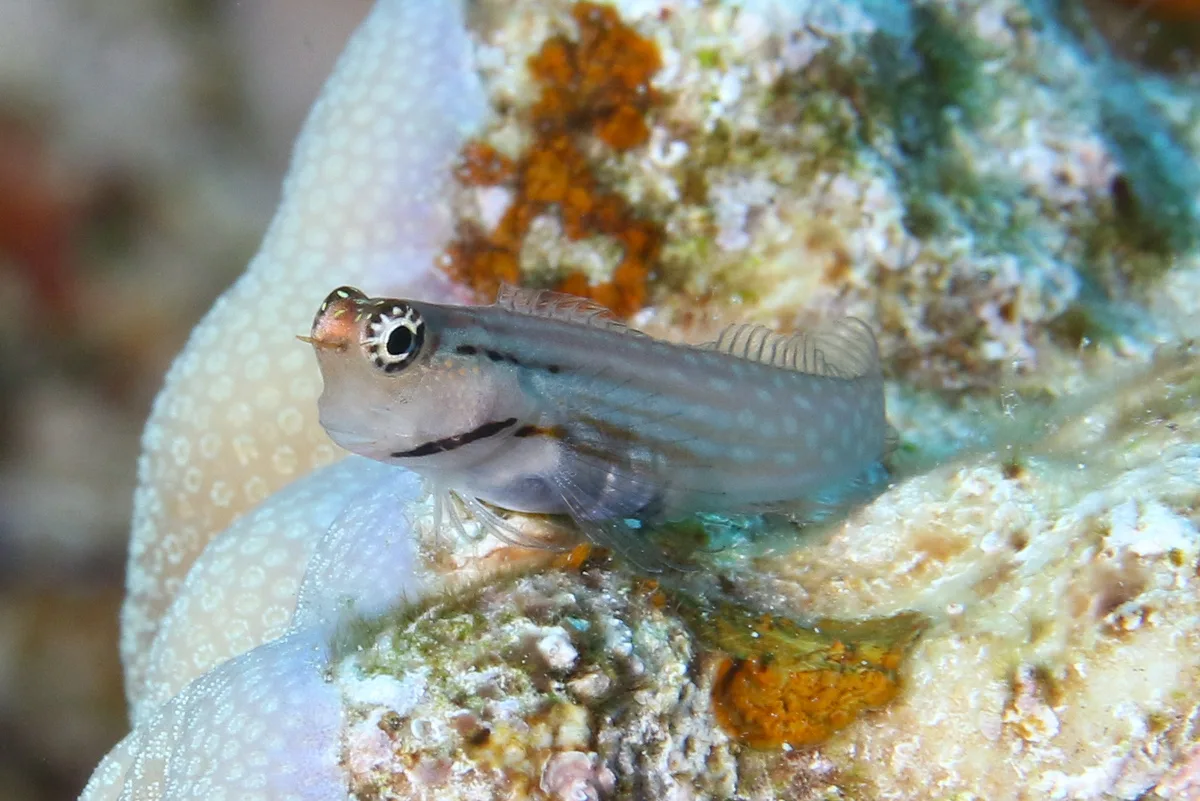
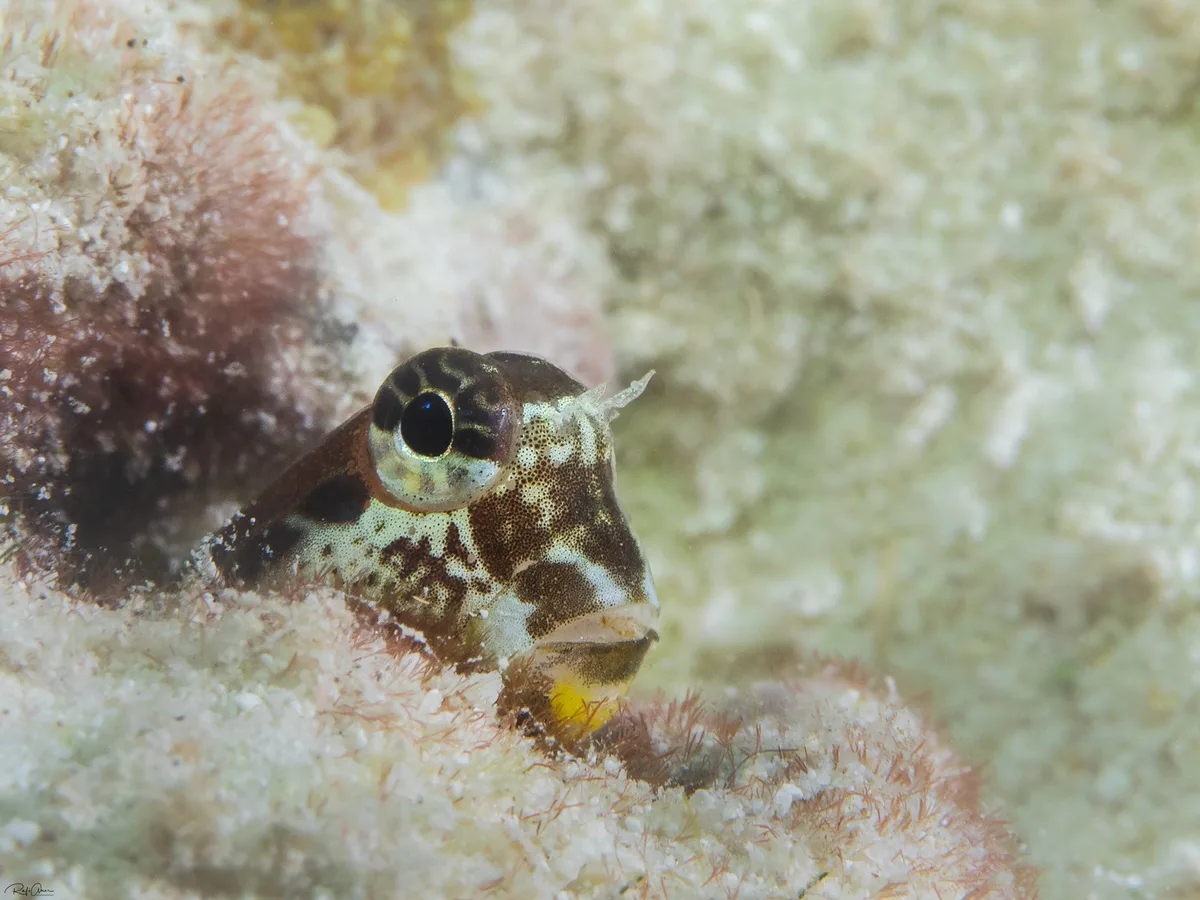
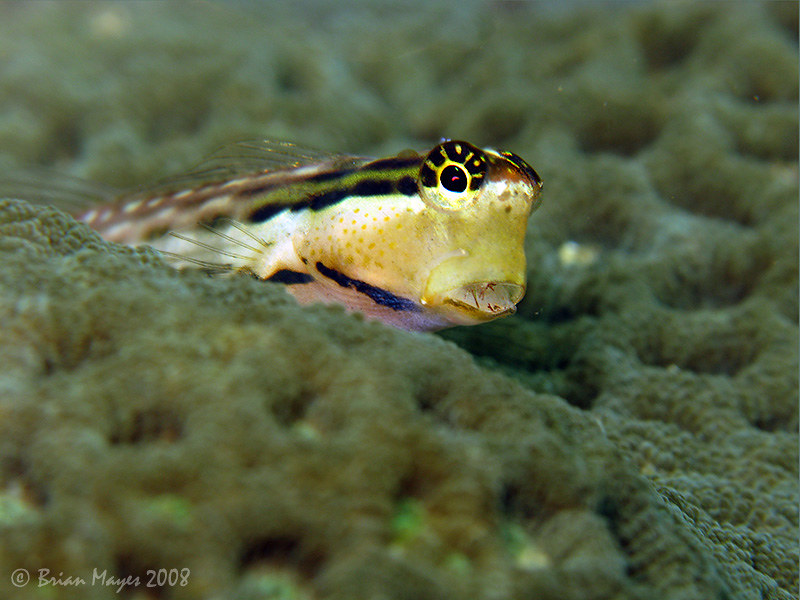
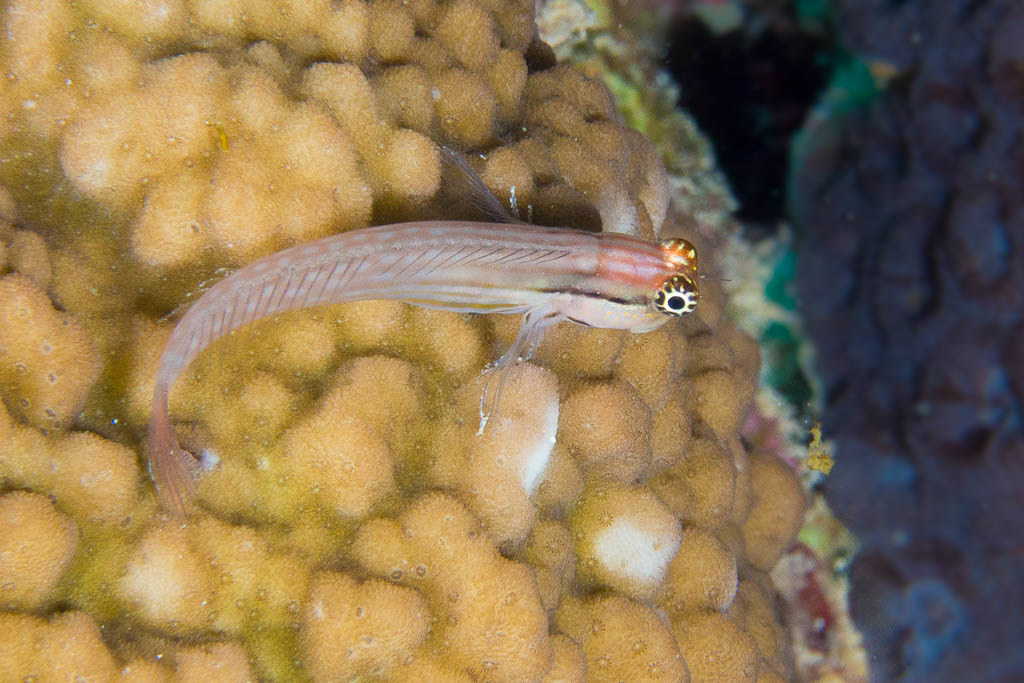
Blenny comes from the Greek for slime, and the name is the description. These fish have no scales at all: the body is bare skin under a heavy coat of mucus, which is why a blenny in the hand is impossible to hold and why an empty hole that has had one in it feels greasy.
The other missing part is the swim bladder. Almost every reef fish carries a gas bladder that lets it hang in midwater without effort. A blenny has none, so it cannot hover, and everything about how it moves follows from that: it sits, propped upright on its pelvic fins like a small tripod, and when it wants to be somewhere else it hops, in a short burst that ends with it perched again. A blenny caught in open water is a blenny in trouble.
What it gains is a life in places a neutrally buoyant fish cannot use. Surge, tide pools, the underside of ledges, holes the width of a pencil: a fish that sinks when it stops swimming is at home in all of them.
This one is a common shallow-water grazer, scraping the film of algae and detritus off rock with a comb of fine teeth set in the lip.
The genus. Ecsenius McCulloch 1923 - senio (six each). ETYFish
The species. Ecsenius nalolo Smith 1959 - A local name for this fish. ETYFish
- small blunt-headed fish propped upright on its pelvic fins
- body pale to olive with a dark line low on the flank
- moves in short hops from one perch to the next, never hovering
- up to 6.5 cm
Why it's threatened
There are no major threats known for this species, although most species of Ecsenius are likely to be collected for the aquarium trade.
Threat classification from the IUCN Red List.