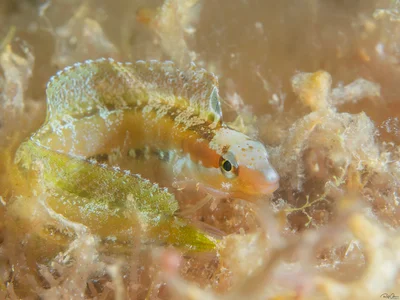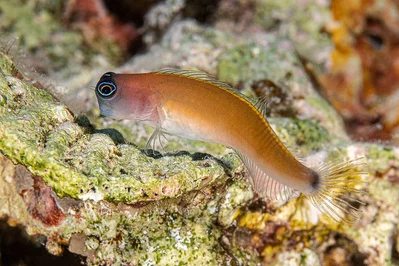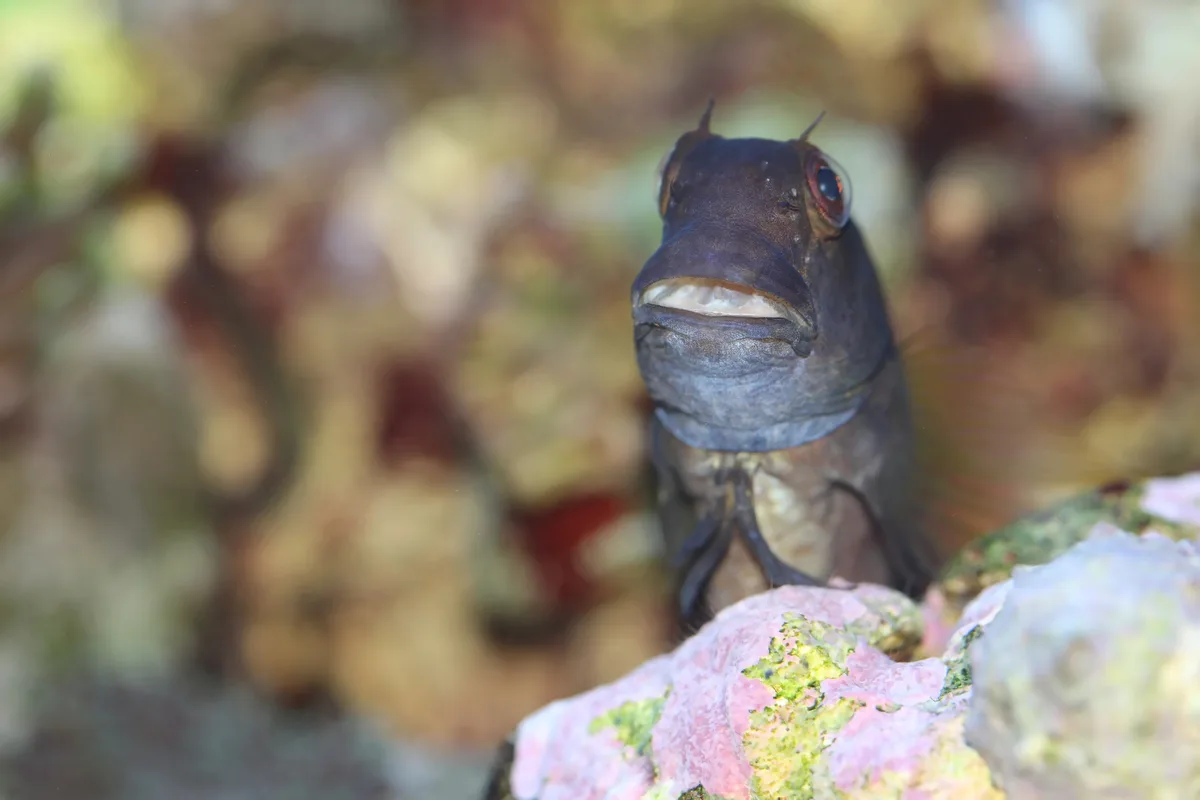
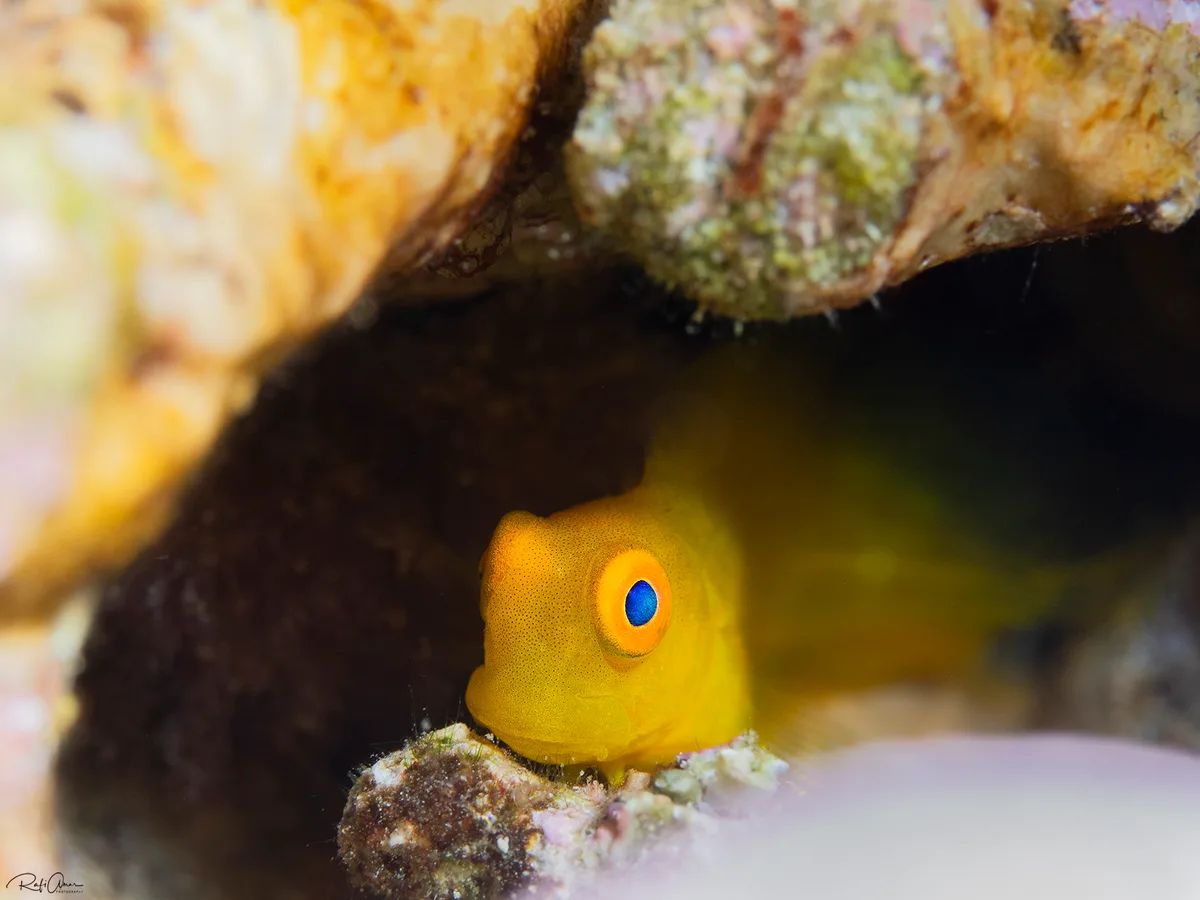
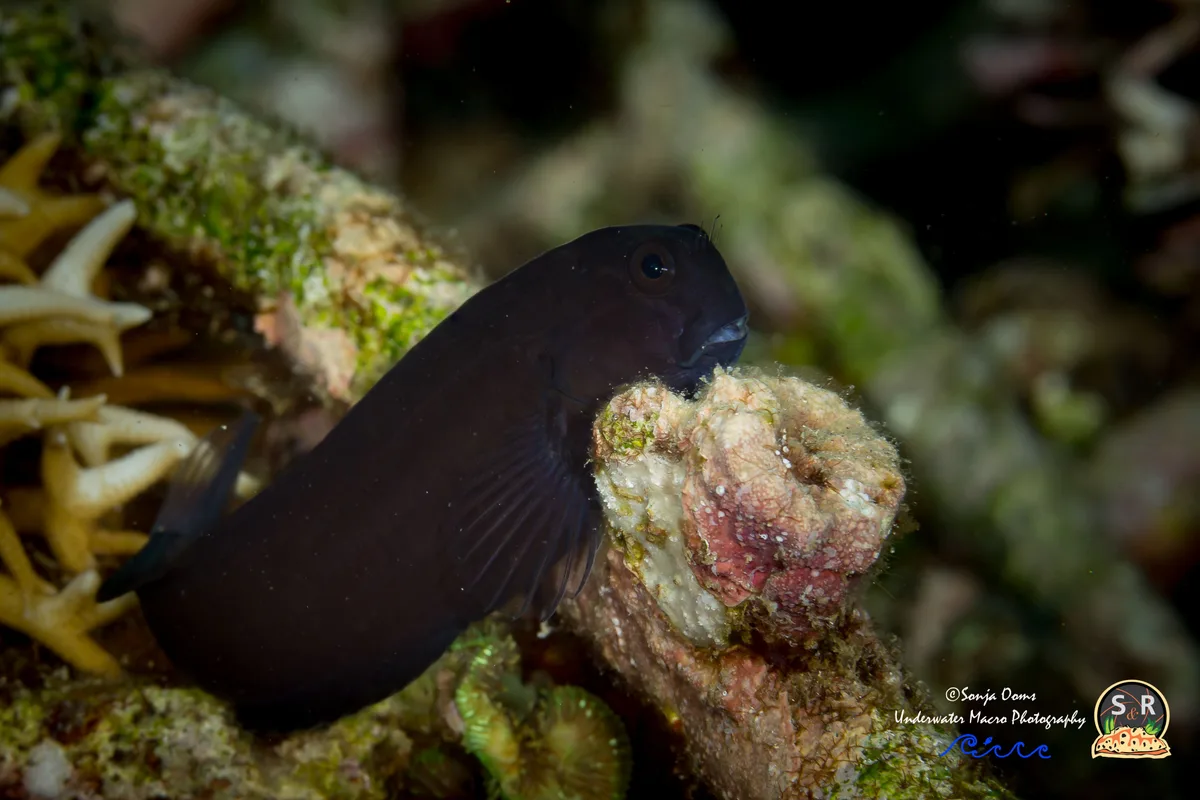
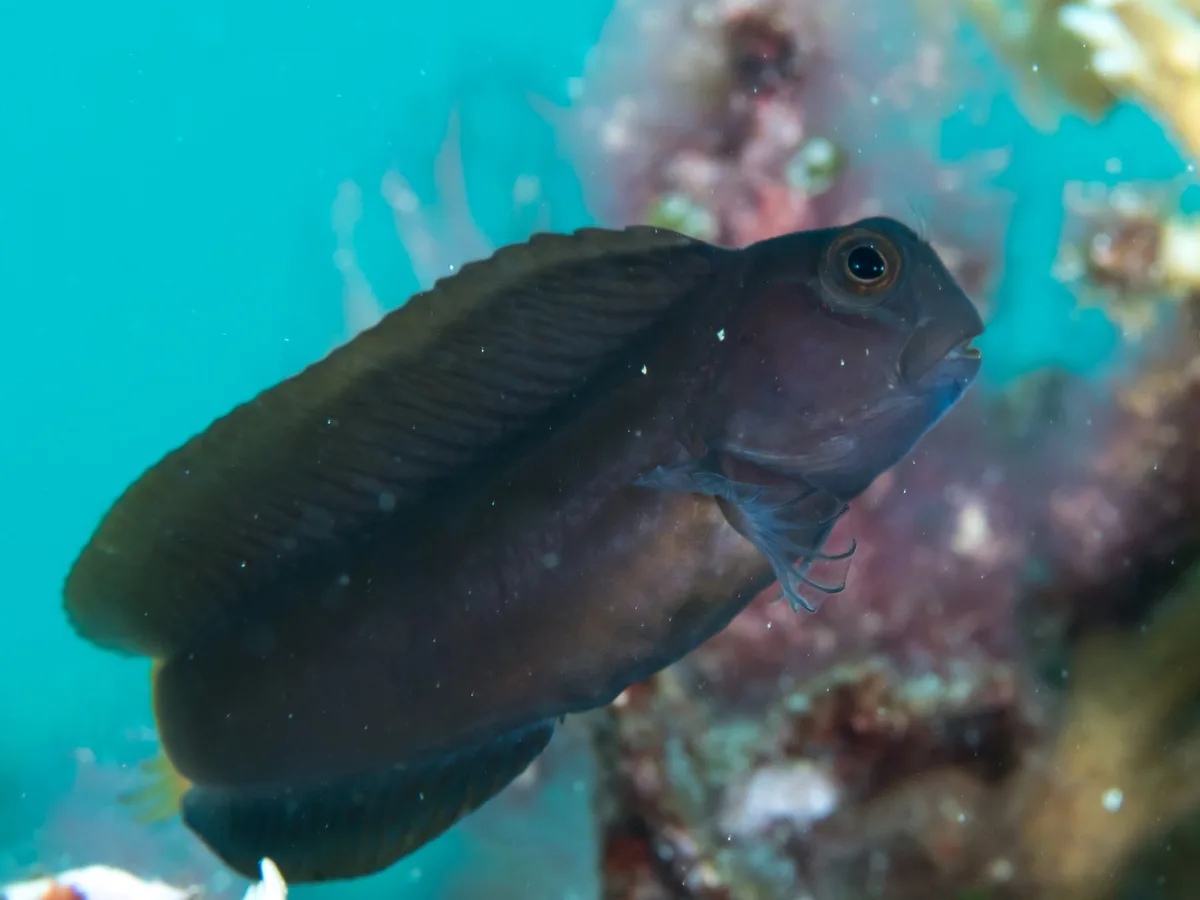
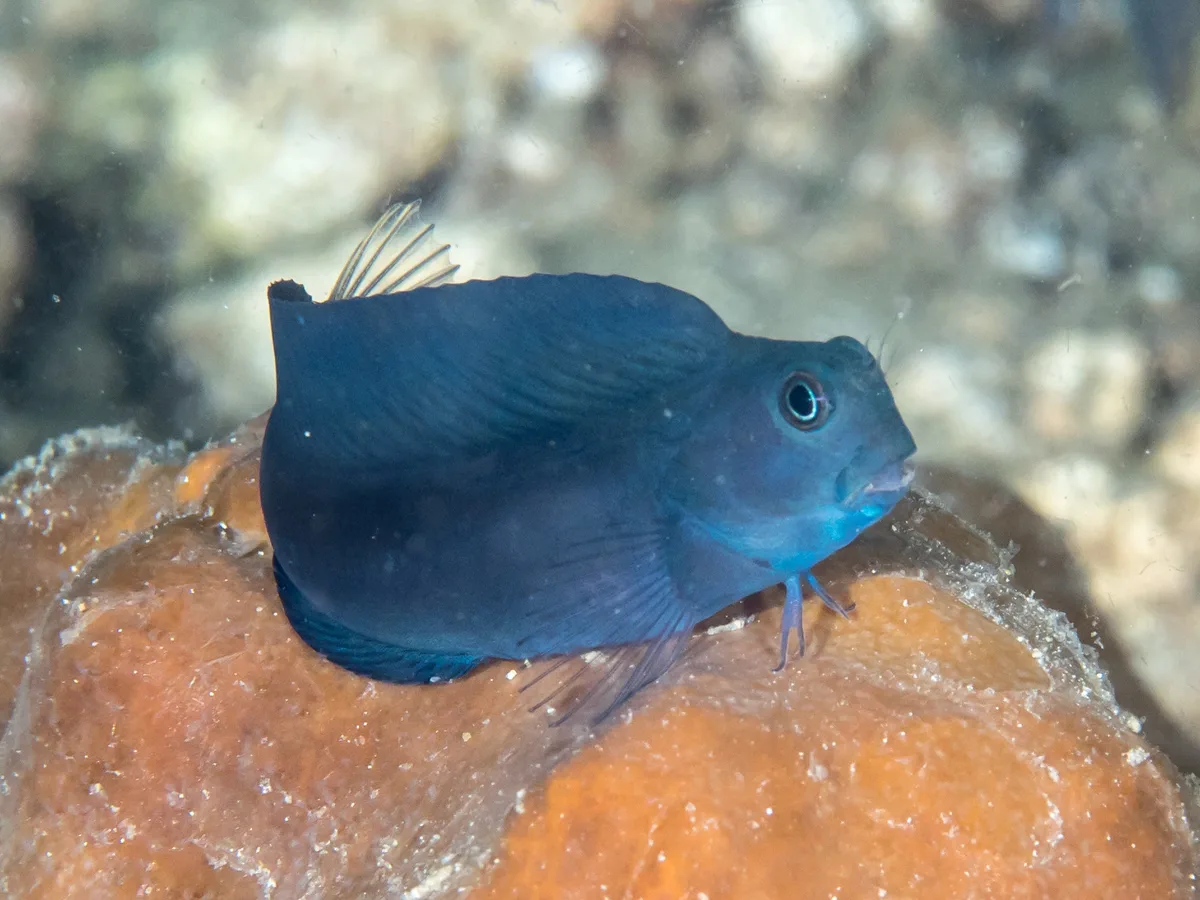
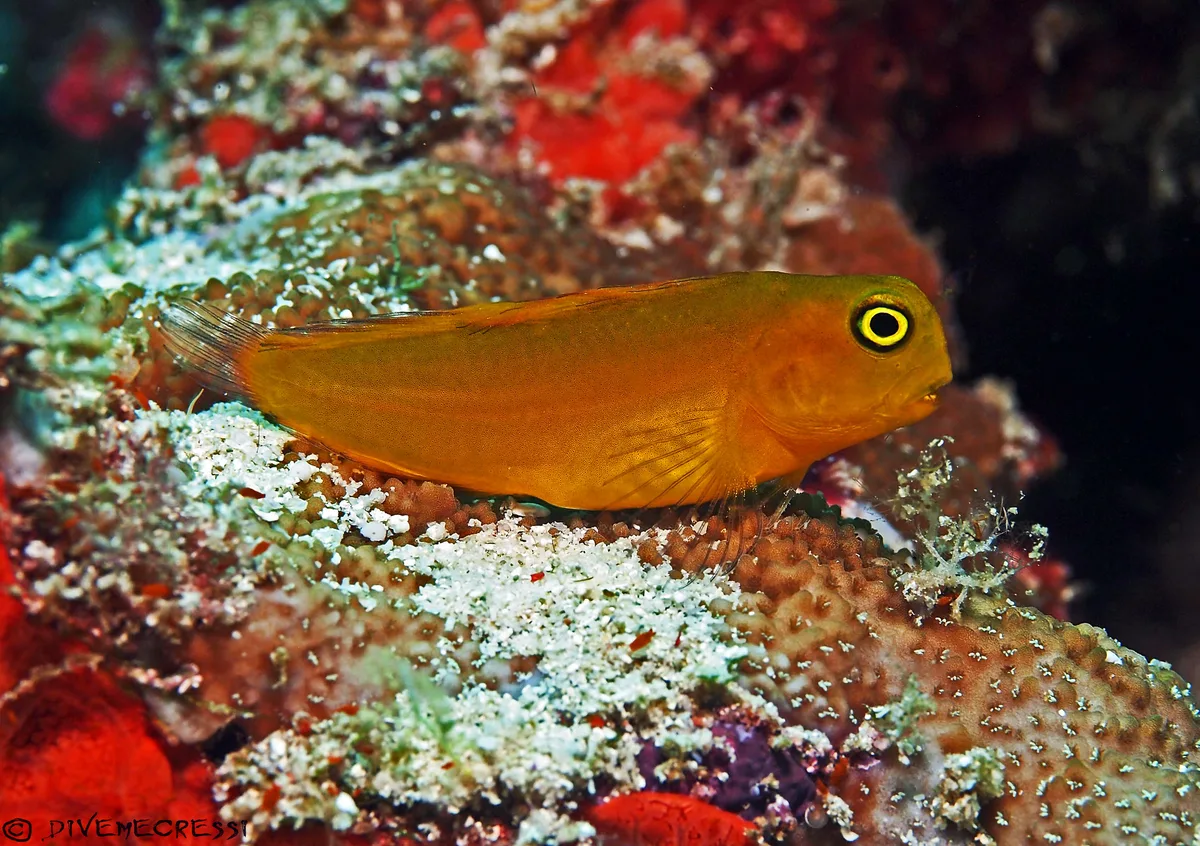
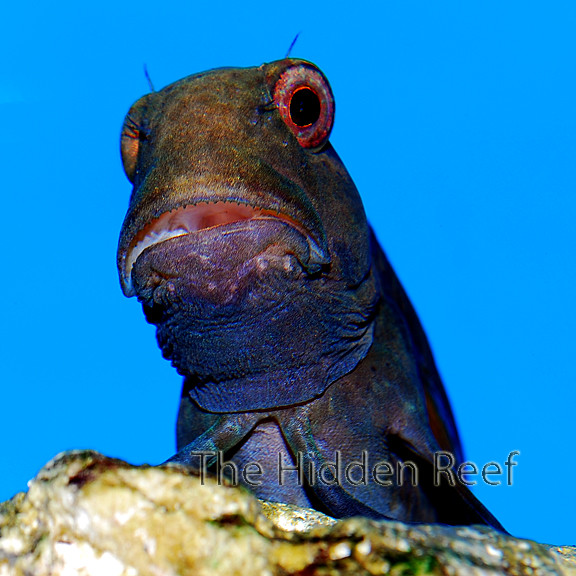
A yellow juvenile and a near-black adult, and everything in between, all inside the same coral head.
This blenny picks a branching coral colony and stays in it. It grazes algae off the dead bases and the surrounding rock, retreats into the branches at any disturbance, and can spend its entire adult life within a couple of meters of where it settled. At fourteen centimeters it is large for a blenny, and a big dark one wedged deep among branches is easy to miss entirely: what you see is a shadow between coral fingers that turns out to have an eye.
The color change with age is real and confuses people. Juveniles are a clean bright yellow, conspicuous against the coral, and as the fish grows the yellow is replaced from the head backward by dark brown until the adult is almost black. Nobody has established what the yellow is for; the usual suggestion is that a small conspicuous fish inside a coral head is advertising that it is not worth chasing into the branches.
It is a fish of sheltered reef in the top dozen meters, and it goes with the coral: no branching colonies, no coral blennies.
The genus. Atrosalarias Whitley 1933 - atro- (black). ETYFish
The species. Atrosalarias fuscus (Rüppell 1838) - dusky. ETYFish
- stout dark brown to almost black body
- juveniles bright yellow, turning dark as they grow
- always among the branches of a coral head, rarely in the open
- up to 14.5 cm
Why it's threatened
There are no known major threats.
Threat classification from the IUCN Red List.