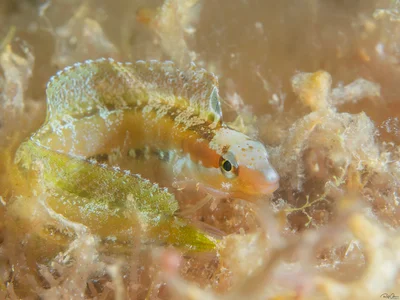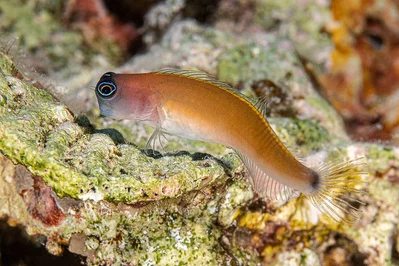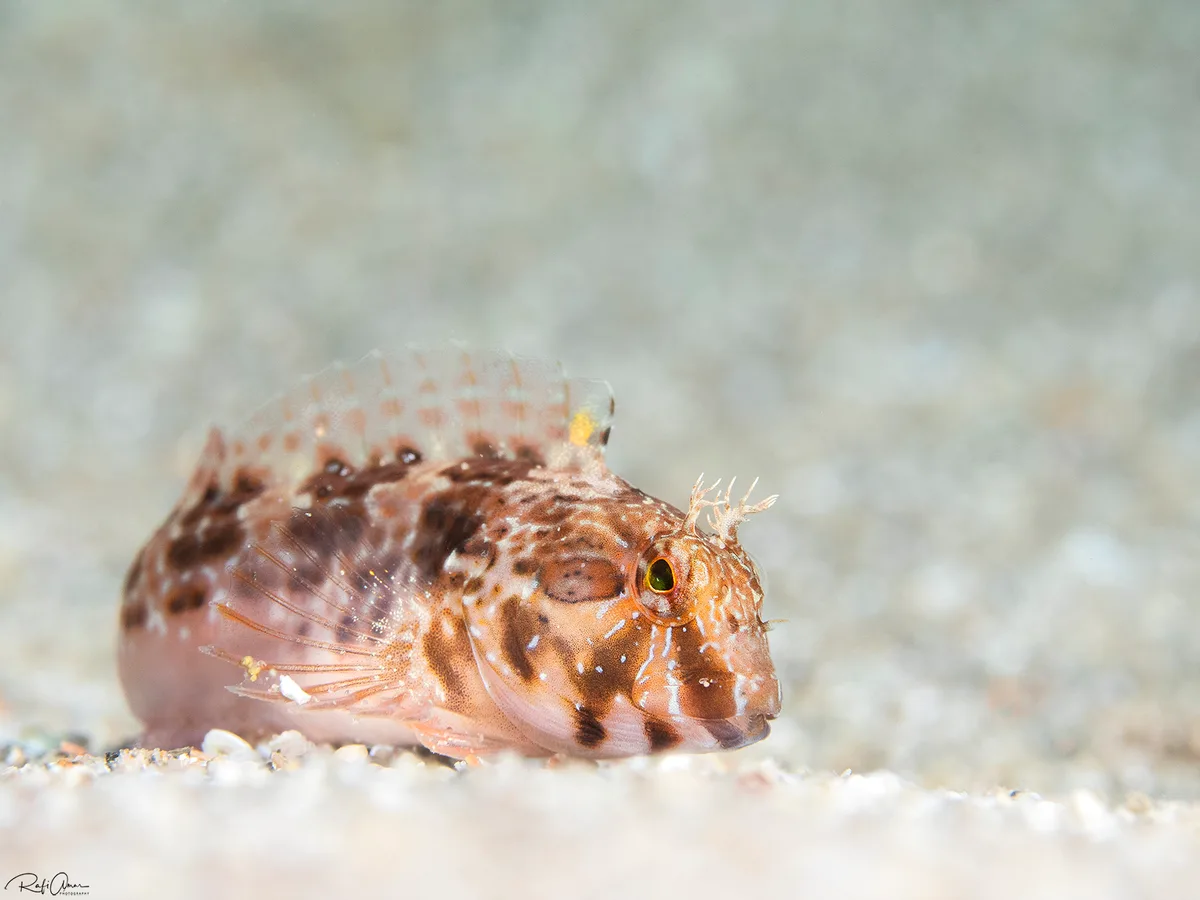
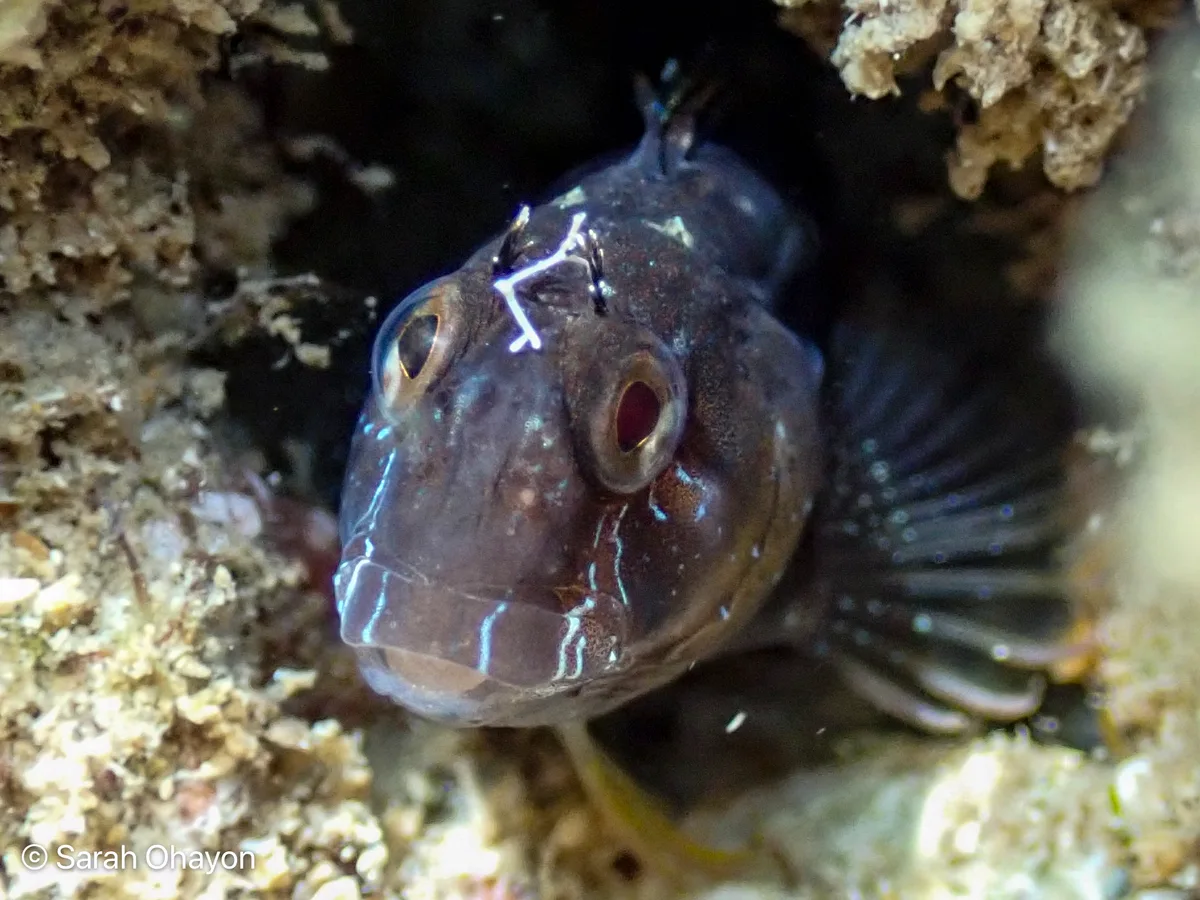
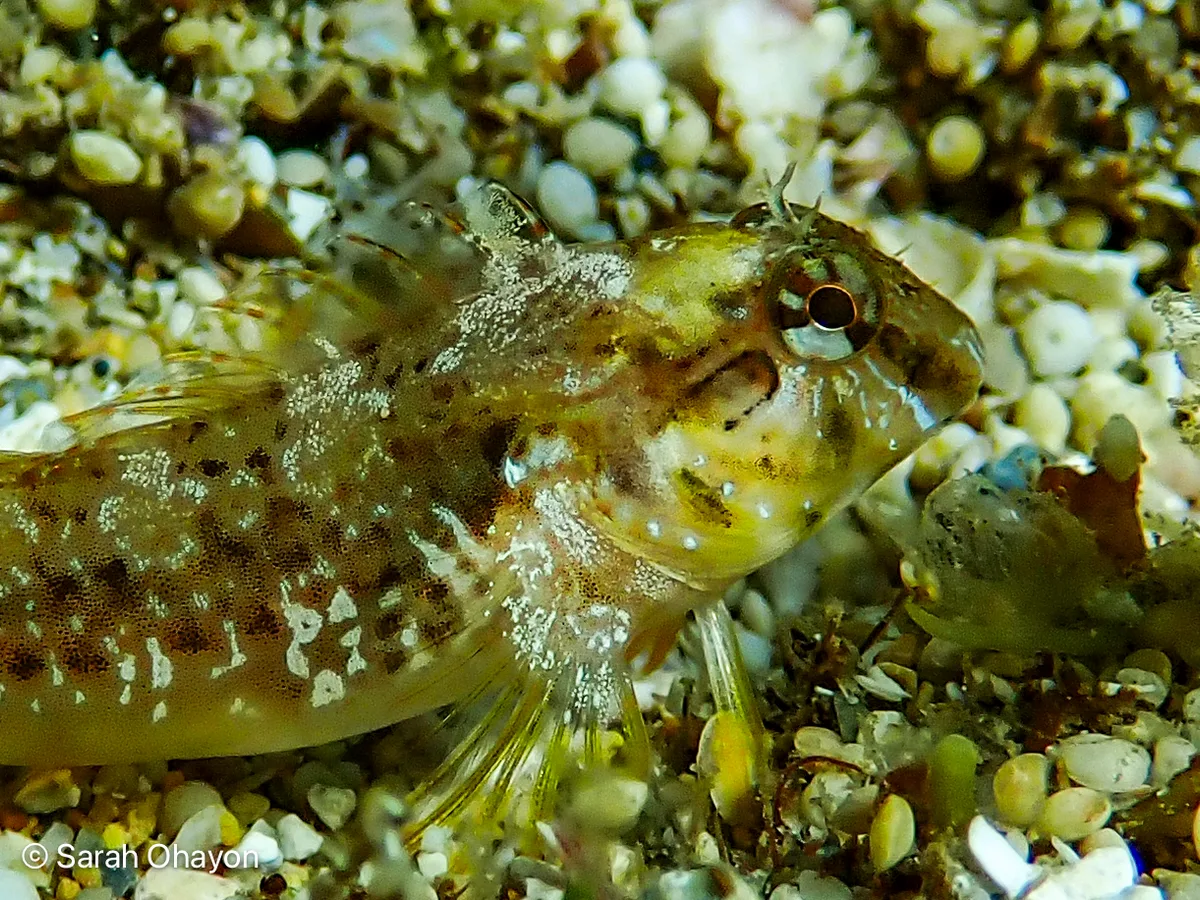
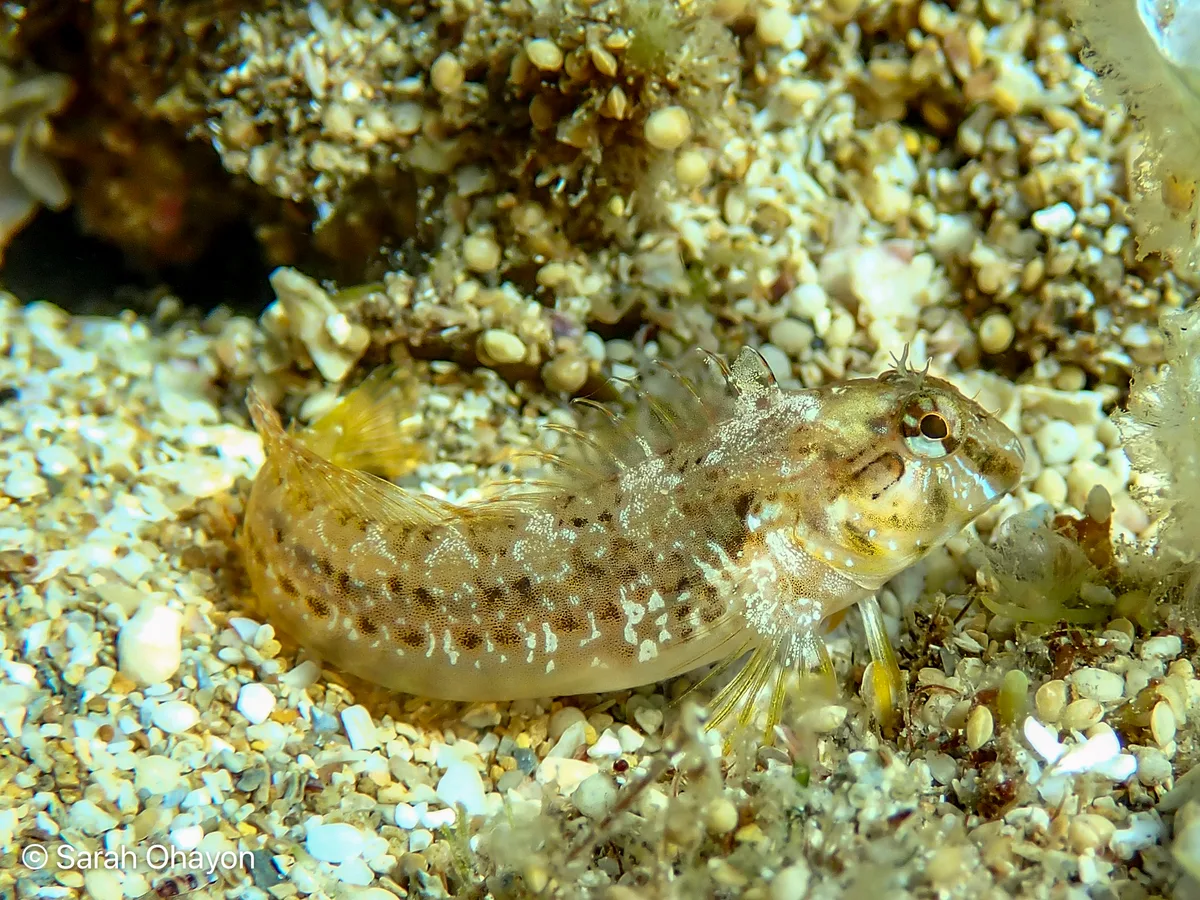
Watch the eyes. A blenny sitting in its hole swivels them independently, one scanning left while the other tracks something to the right, in the way a chameleon does and almost no other reef fish bothers with.
It is the correct solution for the life. The animal is committed to one hole and cannot afford to leave it to look around, and the two things it needs to watch are in opposite directions: food drifting past, and whatever is coming for it. Eyes mounted high on the head, bulging clear of the skull, and moving separately let it cover most of a hemisphere without moving its body at all. The cost is that the two fields overlap very little, so its depth perception is poor - which does not matter much to a fish that grazes rock at arm's length.
The eye is also why the animals look the way they do. The high blunt head that gives blennies their expression is a housing for eyes placed as high and as far apart as the skull allows.
This species lives here and nowhere else, on shallow rock, mottled brown with a dark mark behind the eye.
The genus. Parablennius Miranda Ribeiro 1915 - para- (near). ETYFish
- large protruding eyes set high on the head, moving separately
- dark spot on the head behind the eye
- mottled brown body, head out of a hole
- up to 6 cm
Why it's threatened
There are no major threats known for this species.
Threat classification from the IUCN Red List.