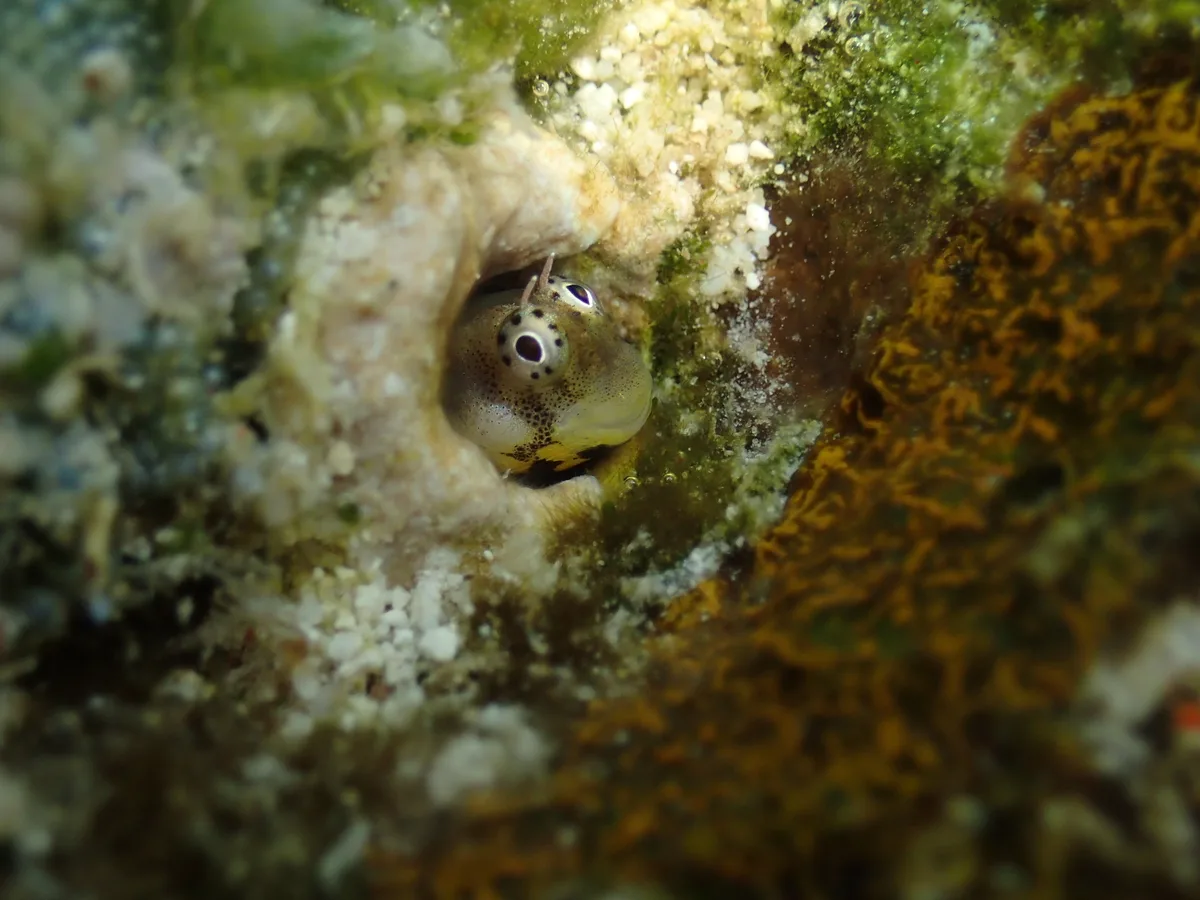
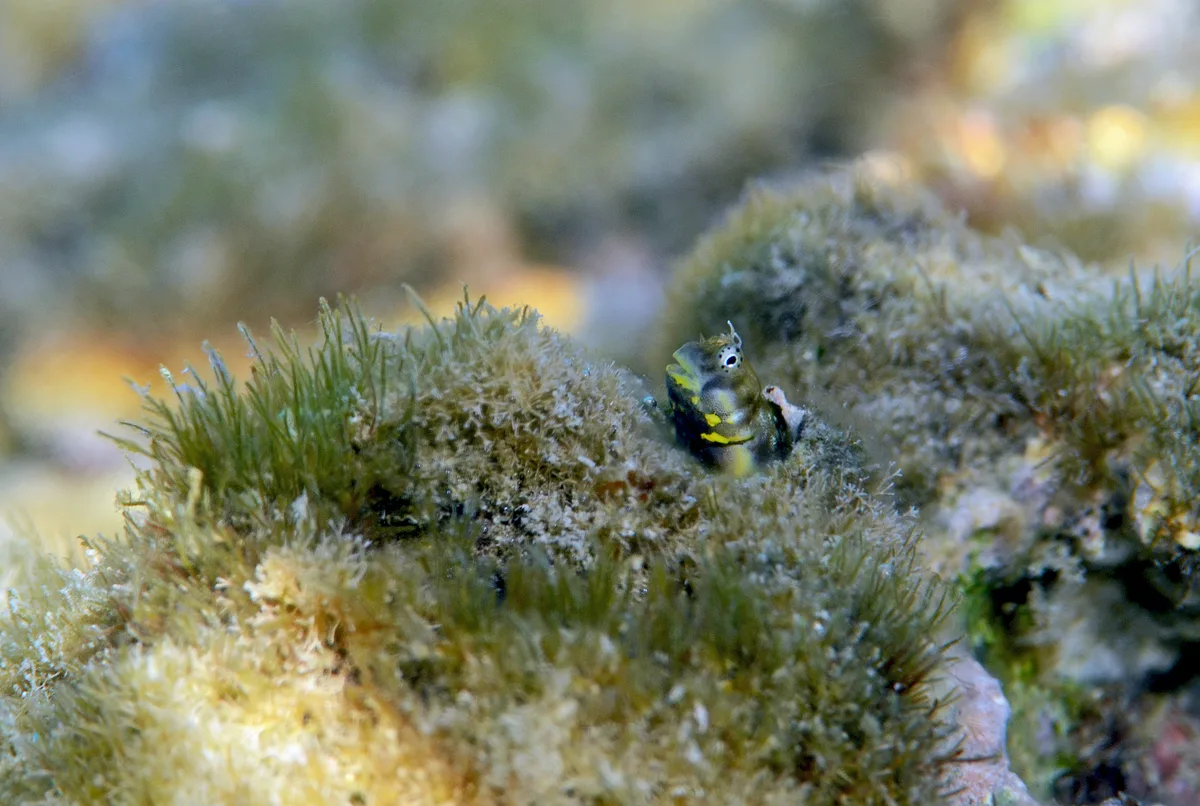
What limits a small blenny is not food. It is holes.
Algae and detritus are everywhere on a shallow reef, and a five-centimeter grazer will never run out. What it can run out of is a hole of the right size: wide enough to enter, narrow enough that nothing bigger can follow, deep enough to reverse into, and positioned somewhere with something to eat within a few body lengths. That combination is scarce, and on a well-populated reef flat essentially every suitable hole is occupied.
So blennies fight over property, and the fights are about real estate rather than territory in the usual sense. An empty worm tube, a hollow in dead coral, a barnacle shell that has lost its owner: all of it is taken within hours. Where researchers have added artificial holes to a reef, the local population of small blennies goes up, which is about as direct a demonstration as ecology gets.
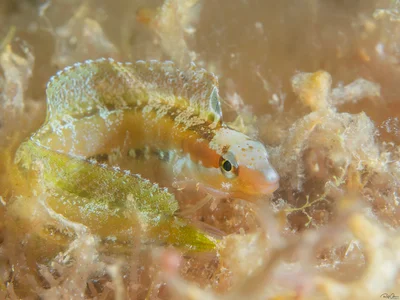
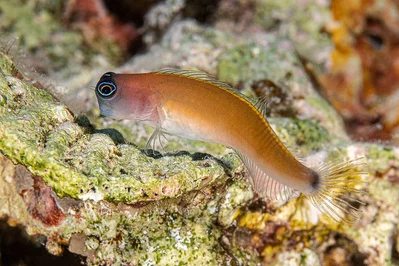
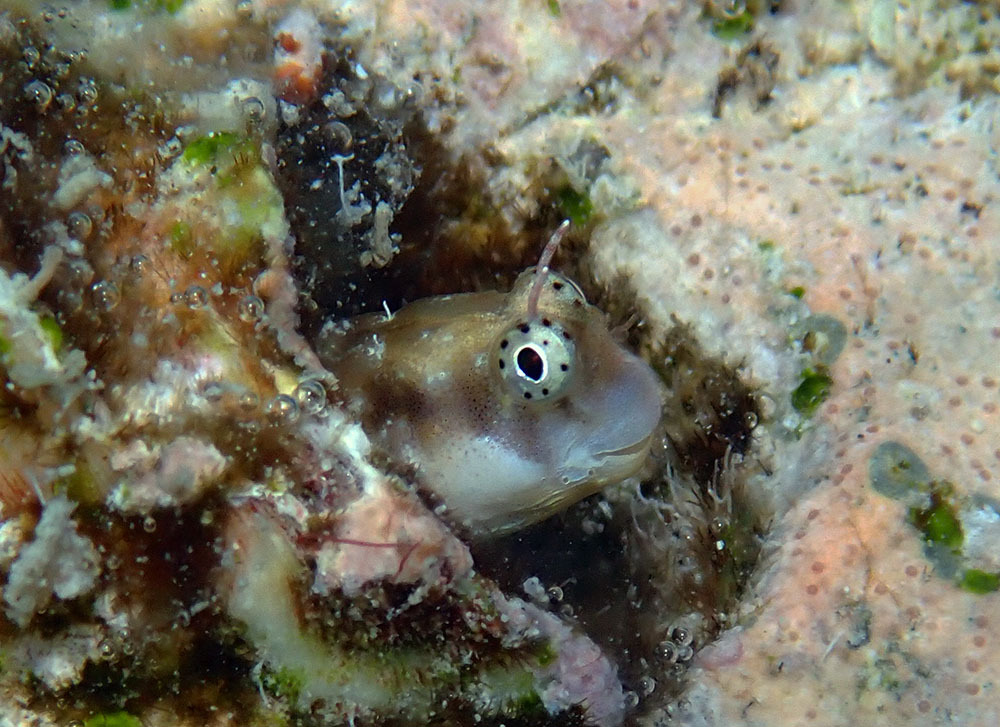
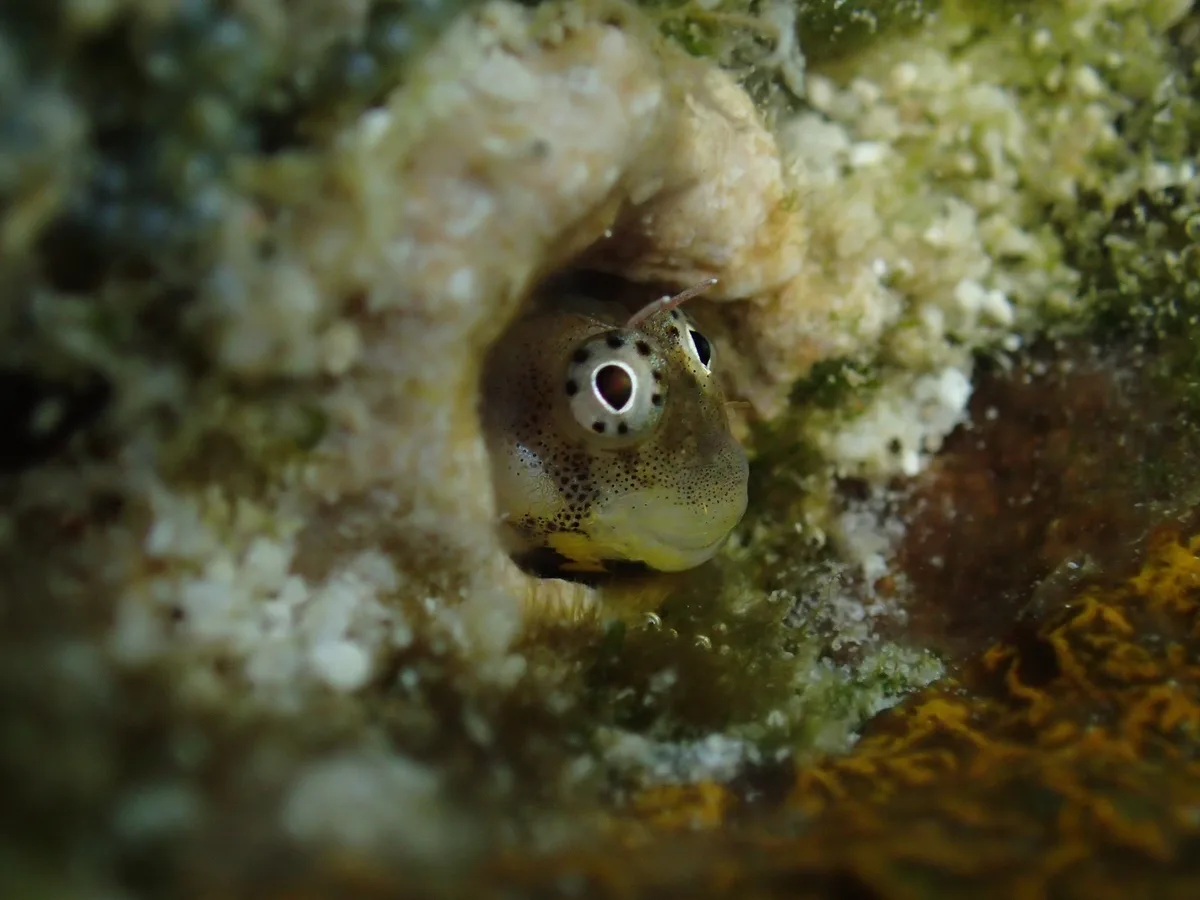
This one is a shallow-water species of rock and dead coral, pale with a yellow throat, watching the world from a hole it does not intend to leave.
The genus. Alloblennius Smith-Vaniz & Springer 1971 - allos (different or strange) + blennius (blenny). ETYFish
- small pale blenny with a yellow throat
- dark bars or blotches along the flank
- head projecting from a hole barely wider than itself
- up to 5 cm
Why it's threatened
There are no major threats known for this species.
Threat classification from the IUCN Red List.