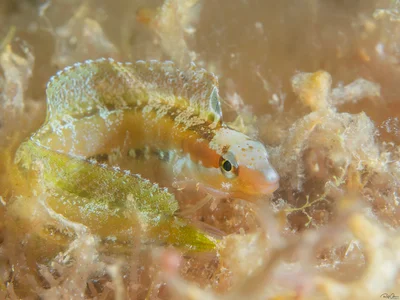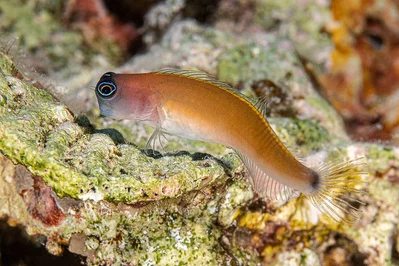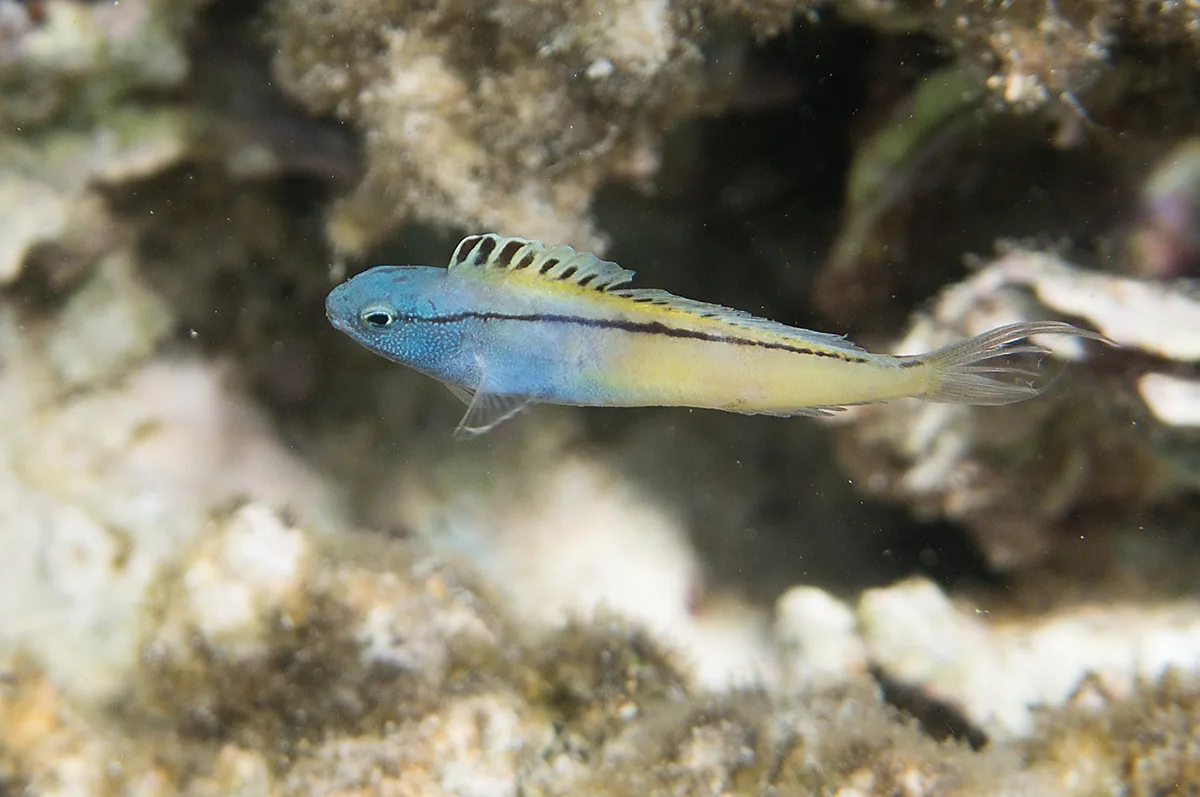
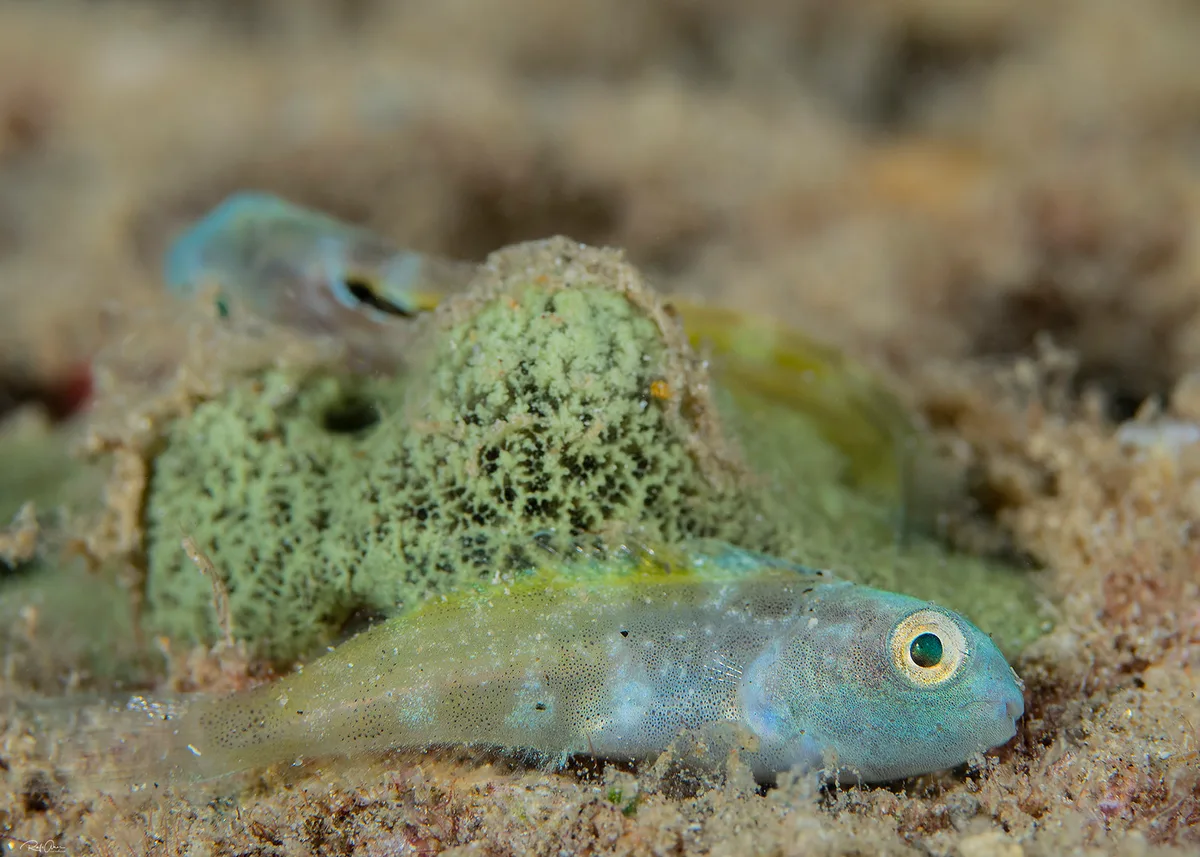
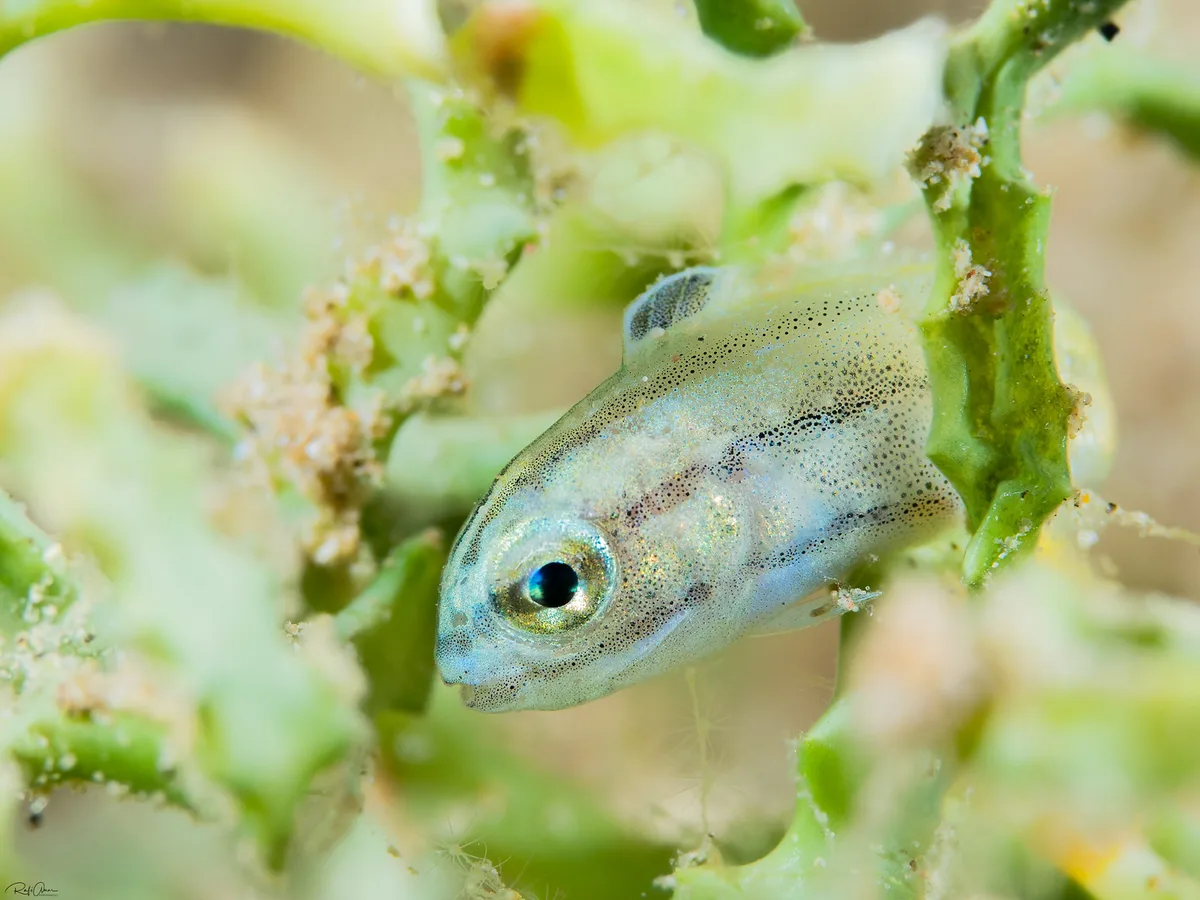
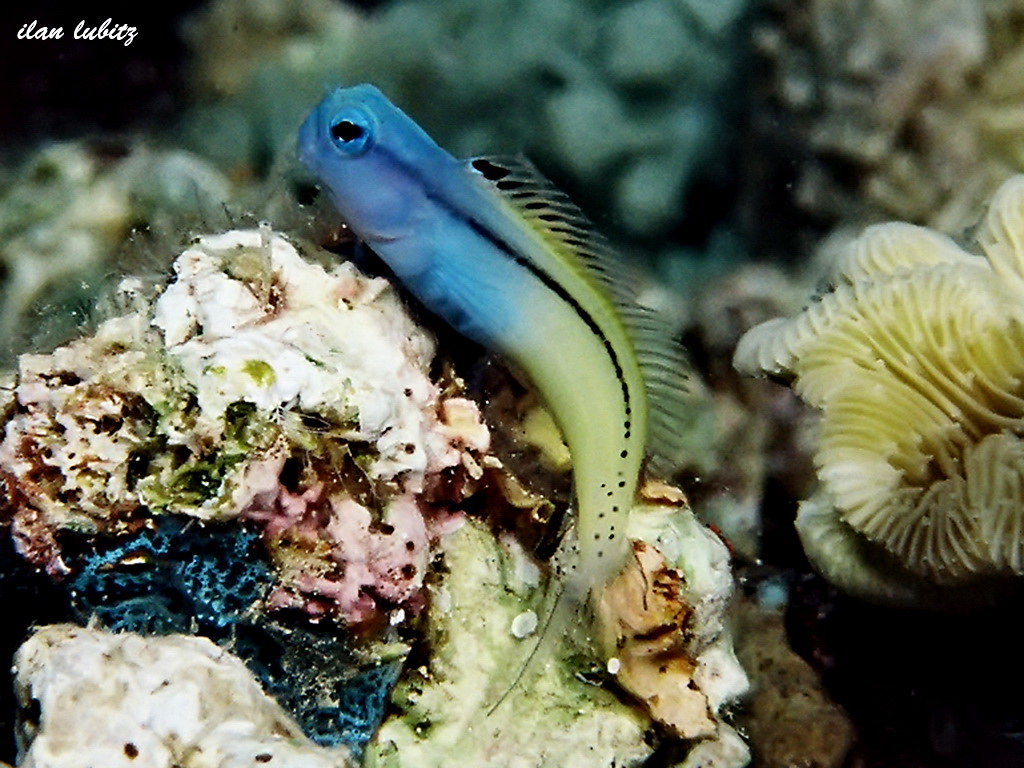
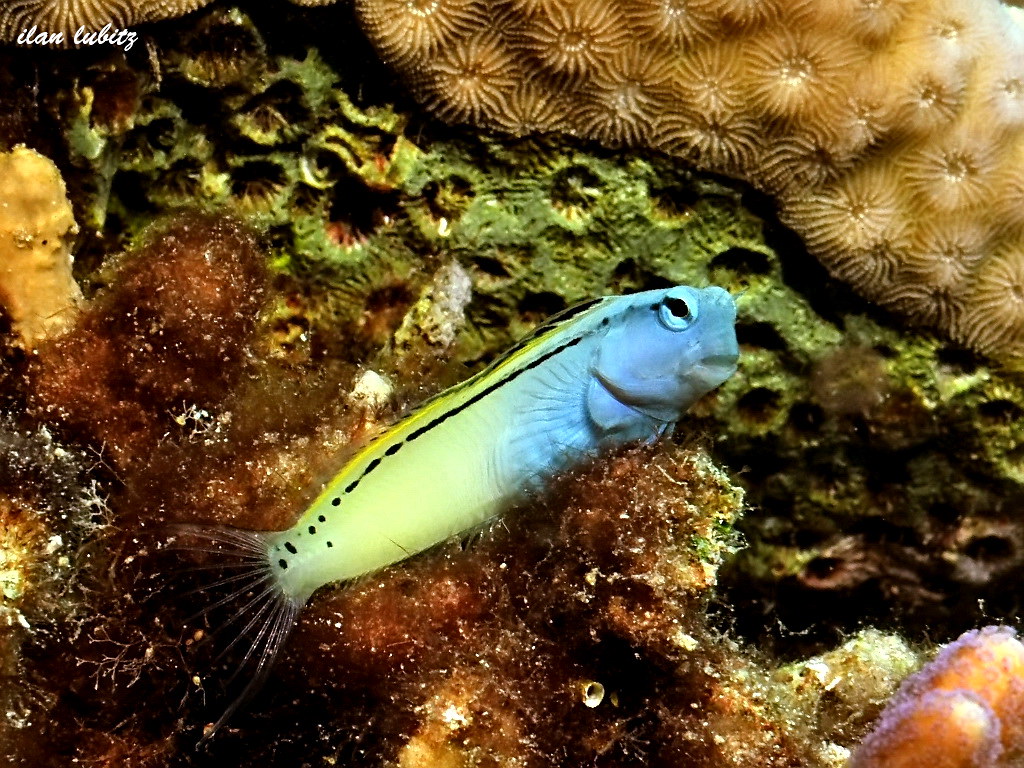
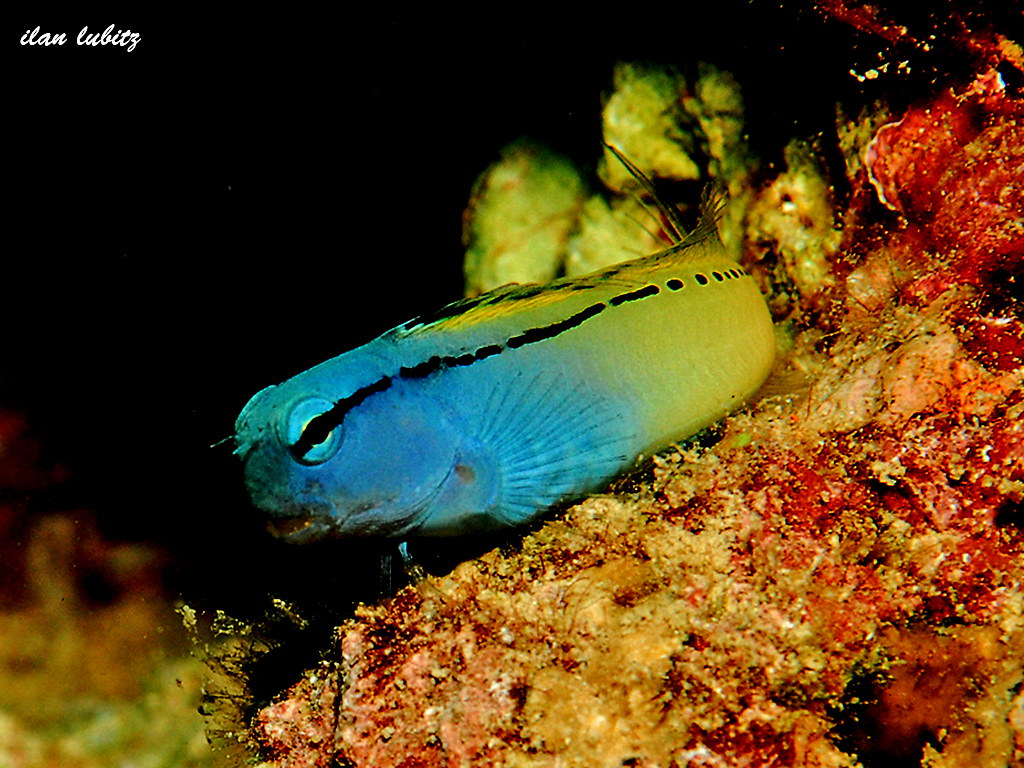
Six centimeters (2.4 in) of thin, pale, dark-lined fish hovering off a wall - the smallest of the three fangblennies here and the one most divers never notice.
It makes its living the same way as its relatives: approach a larger fish from behind at speed, take a bite of mucus, scale or fin, and be gone before anything turns around. The fangs and the venom gland come as standard in this genus, and the venom is again a getaway tool rather than a weapon.
Home is a hole it did not make - an abandoned worm tube, a hole left by a boring bivalve, a gap in dead coral. The fish reverses in tail-first and watches from the entrance, and that head sticking out of a tube is how it is usually photographed.
It is described from this sea and lives in a narrow range around it, which makes a small brown fish rather more interesting than it looks.
The genus. Meiacanthus Norman 1944 - meion (less) + acanthus (spine). ETYFish
The species. Meiacanthus nigrolineatus Smith-Vaniz 1969 - nigro- (black) + lineatus (lined). ETYFish
- very small slender blenny with a single dark line along a pale body
- hovers in midwater with the tail curled slightly downward
- shelters in abandoned worm tubes, head out
- length up to 6 cm
Why it's threatened
There are no major threats known for this species.
Threat classification from the IUCN Red List.