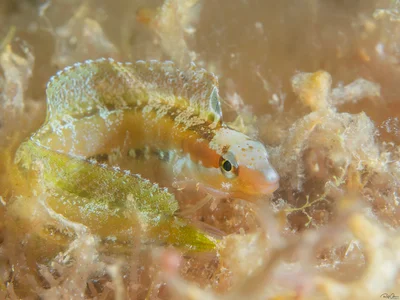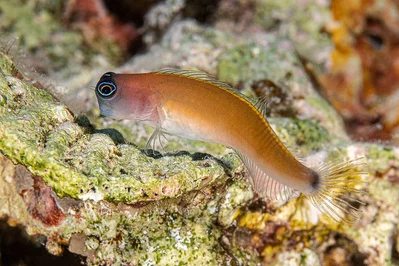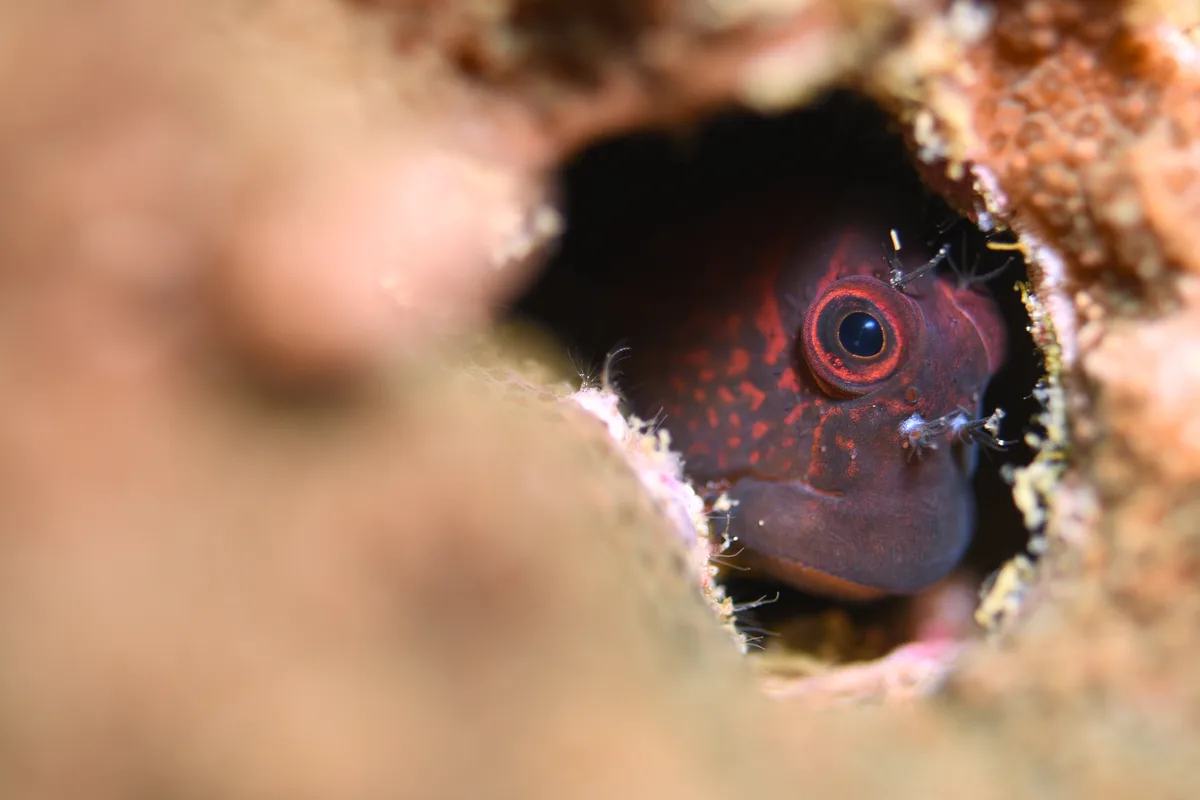
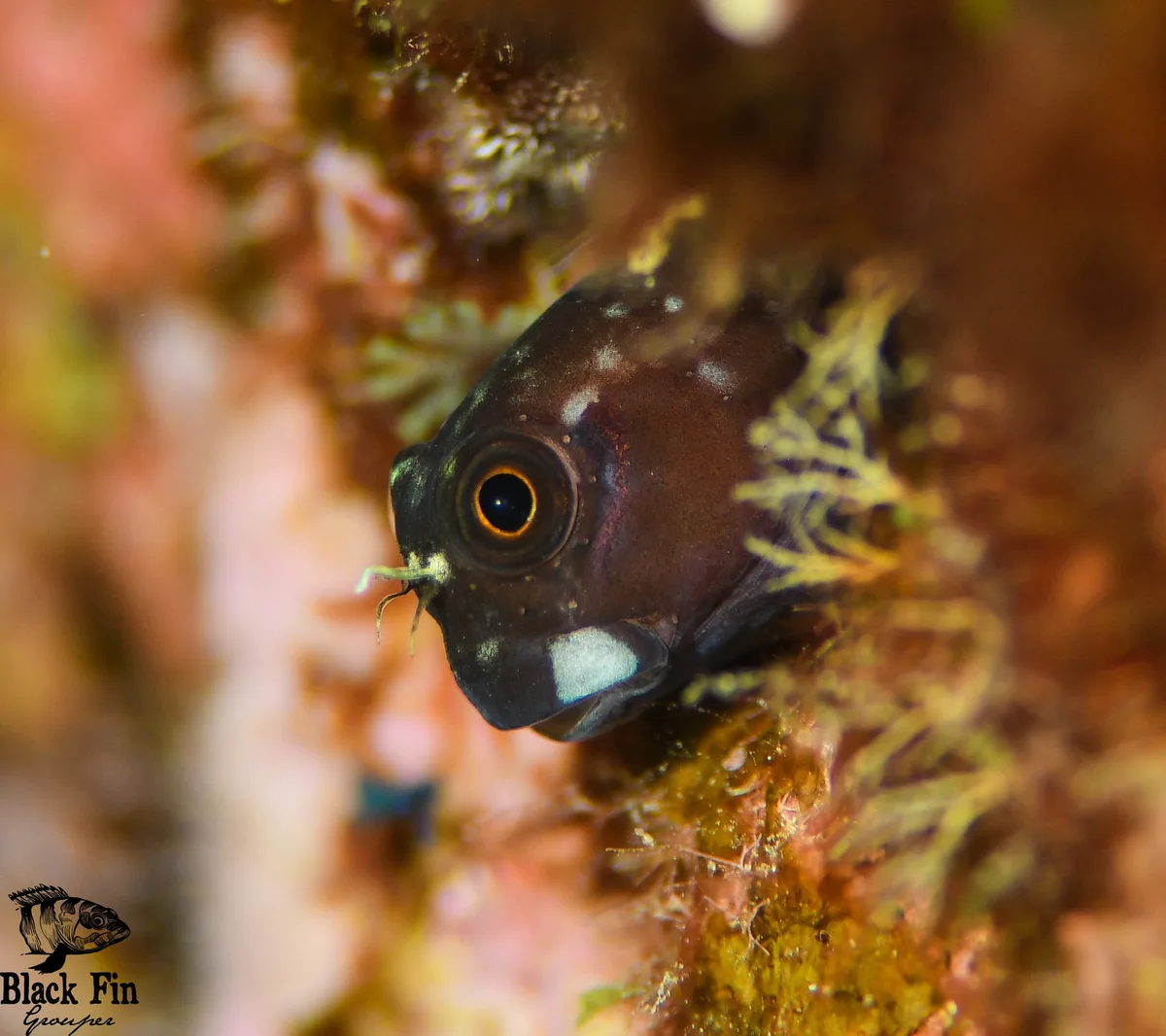
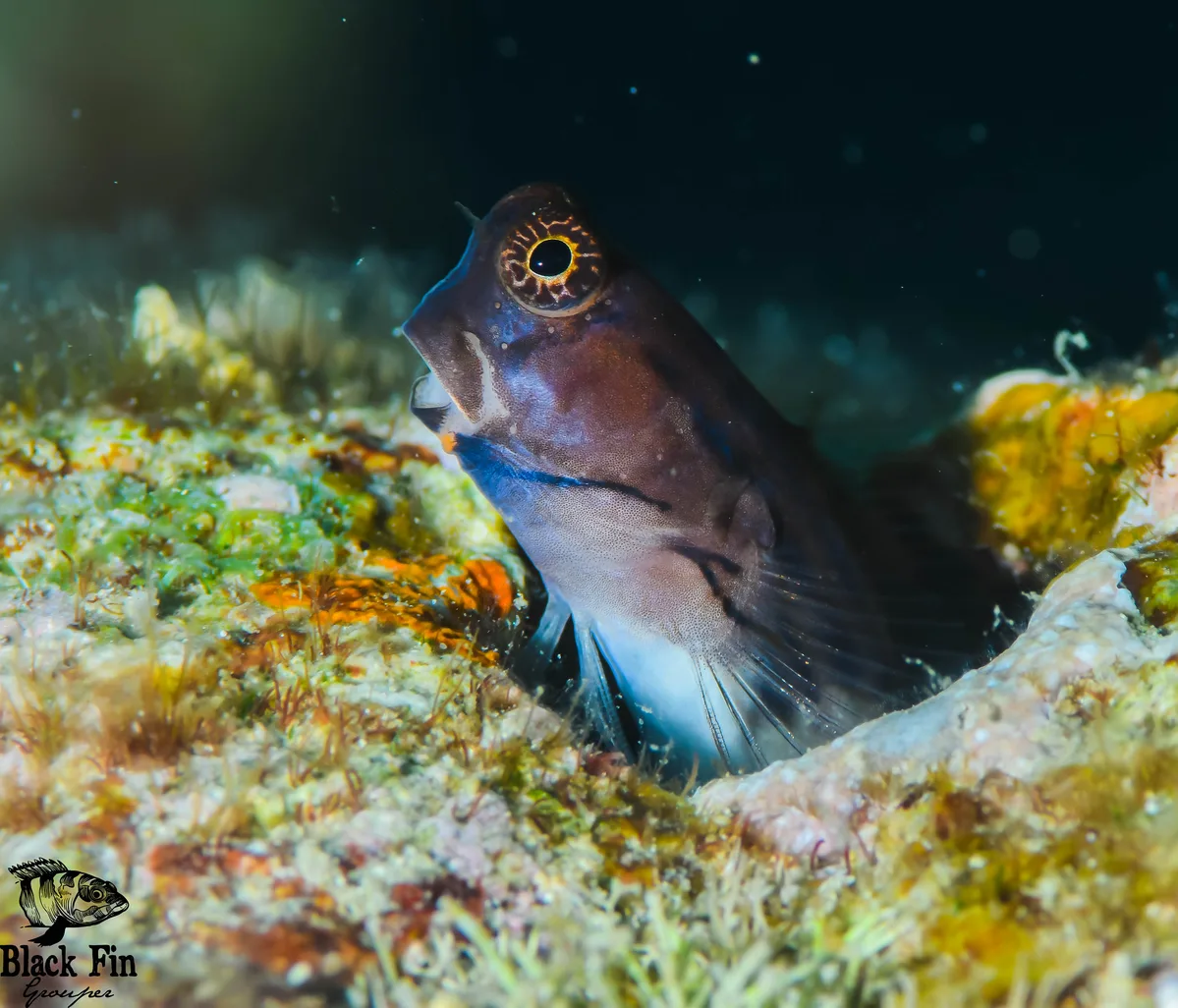
A dark little blenny with a fringe of fine filaments running across the back of its head like a comb - the field mark of the whole genus, and the only reliable way to name one underwater.
Eight centimeters (3 in) of algal grazer, scraping turf off rock with comb teeth in fast downward pecks. Its territory is a few square meters and it knows every hole in it.
Males guard the eggs. The female lays a sheet of them on the roof or the floor of a crevice, and the male stays with the clutch, fanning it and driving off anything that comes close, until they hatch - which is the standard blenny arrangement and one of the reasons these fish sit tight instead of fleeing.
It is the sort of species a diver swims past a hundred times. Once you start looking at the nape rather than the body, the genus becomes findable.
The genus. Cirripectes Swainson 1839 - cirrus (curl or tendril). ETYFish
- dark blenny with a row of fine filaments across the nape, like a fringe
- red-brown with pale speckles, darker head
- perches on coral rock, propped on its pelvic fins
- length up to 8 cm
Why it's threatened
Threat classification from the IUCN Red List.