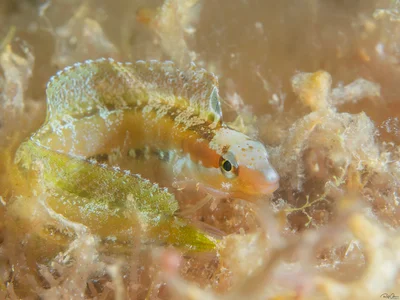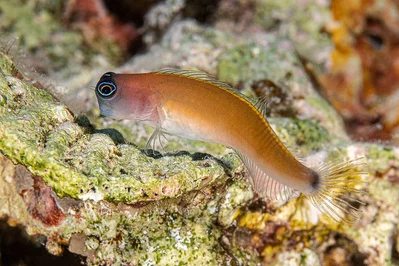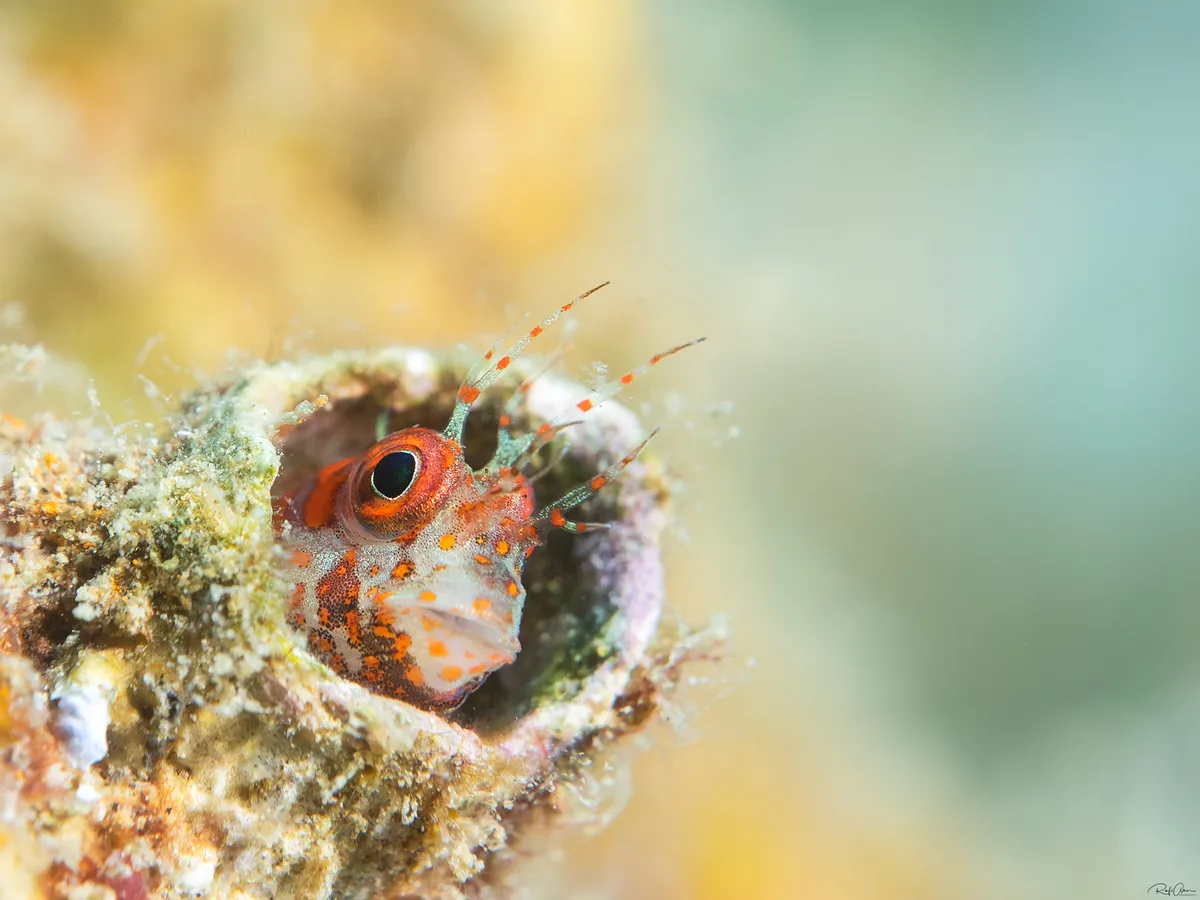
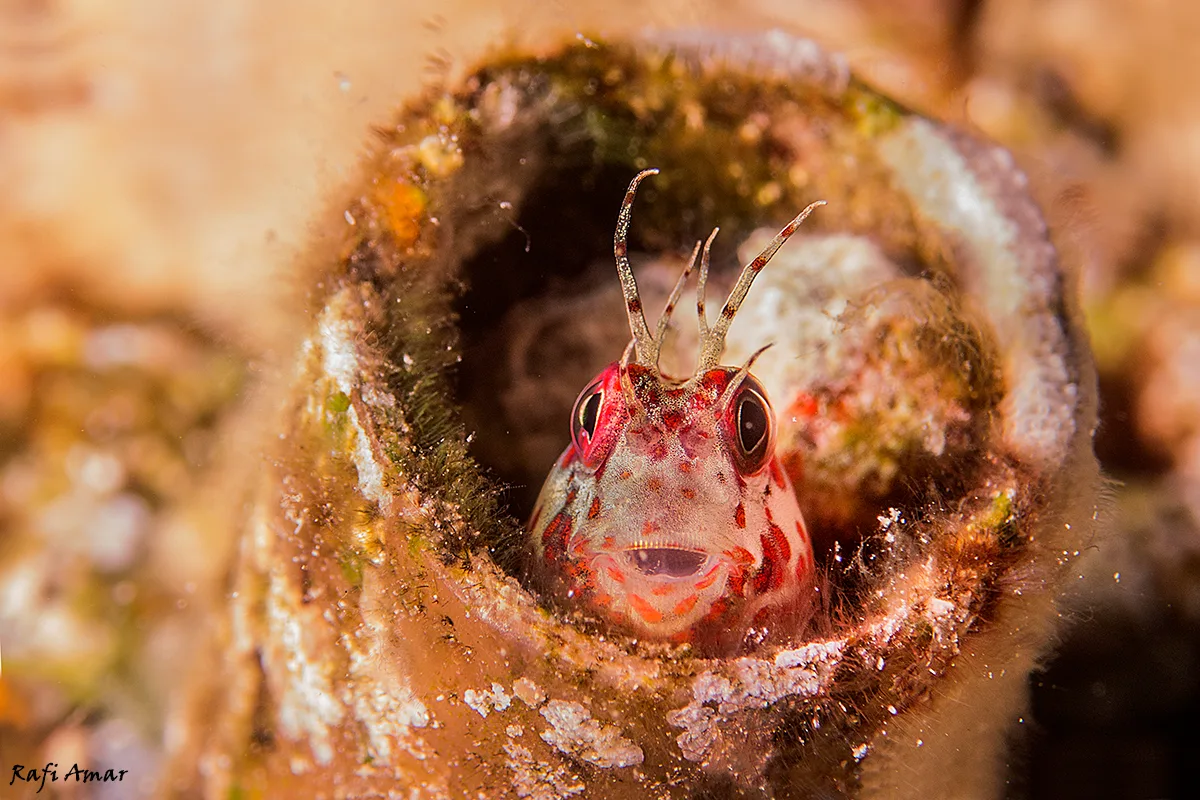
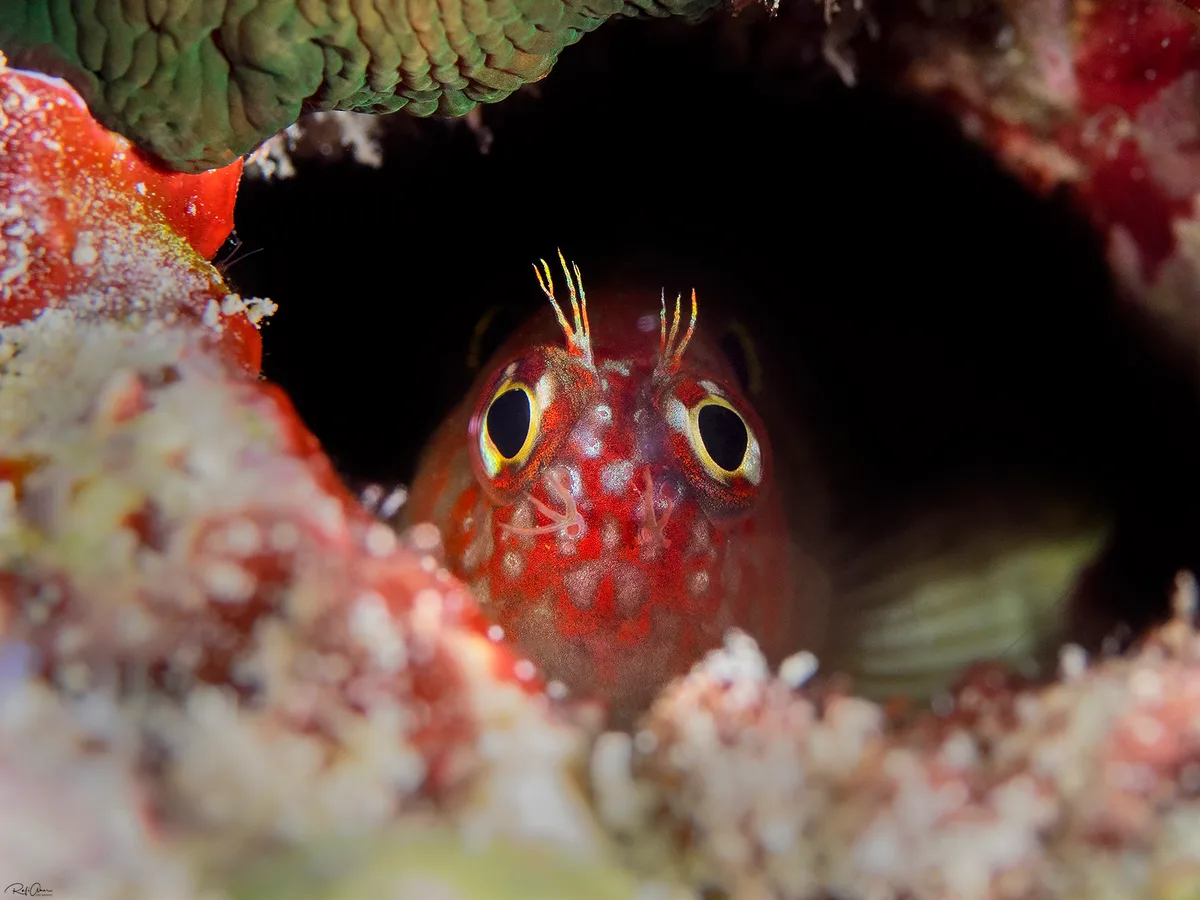
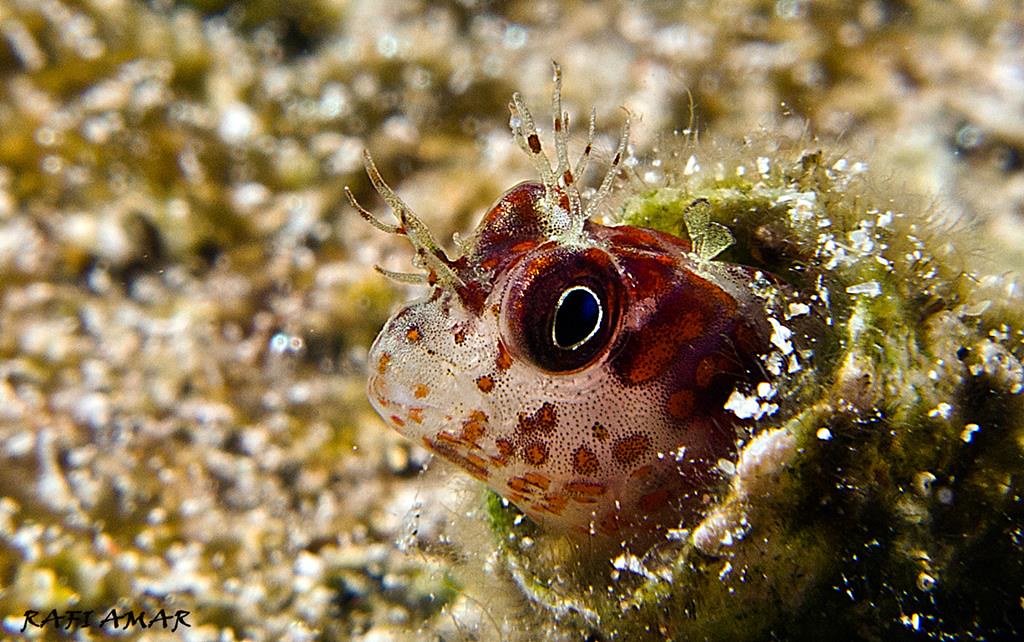
It is mostly fringe. Tentacles over the eyes, tentacles on the nostrils, a row of them along the nape, and a mottled brown and cream body behind, and the effect is that the fish has no outline at all.
That is the specific problem being solved. An eye scanning a reef is not looking for a fish, it is looking for a fish-shaped edge: a smooth continuous line where the animal stops and the background starts. Color patterns hide the surface, but they do not hide the edge. Fringes do, by pushing bits of the background across the boundary and breaking the line into fragments, and a blenny sitting in algal turf with its cirri up is a piece of turf until it moves.
So the trick only works in the right place. This animal is committed to algae-covered rock and rubble, and on bare sand or clean coral the same fringes make it more visible, not less.
At five centimeters it grazes the film it hides in, and it is one of those species that a photographer finds by noticing that a piece of the reef blinked.
The genus. Mimoblennius Smith-Vaniz & Springer 1971 - mimos (mimic). ETYFish
The species. Mimoblennius cirrosus Smith-Vaniz & Springer 1971 - bearing cirri. ETYFish
- branched tentacles over the eyes, on the nostrils and along the nape
- mottled brown and cream, broken up by the fringes
- sits in algal turf and is invisible until it moves
- up to 5.4 cm
Why it's threatened
Threat classification from the IUCN Red List.