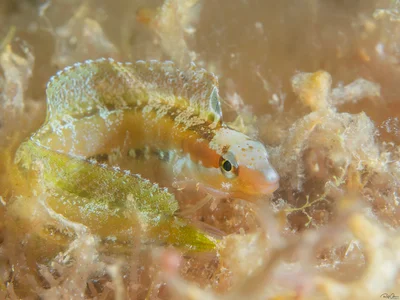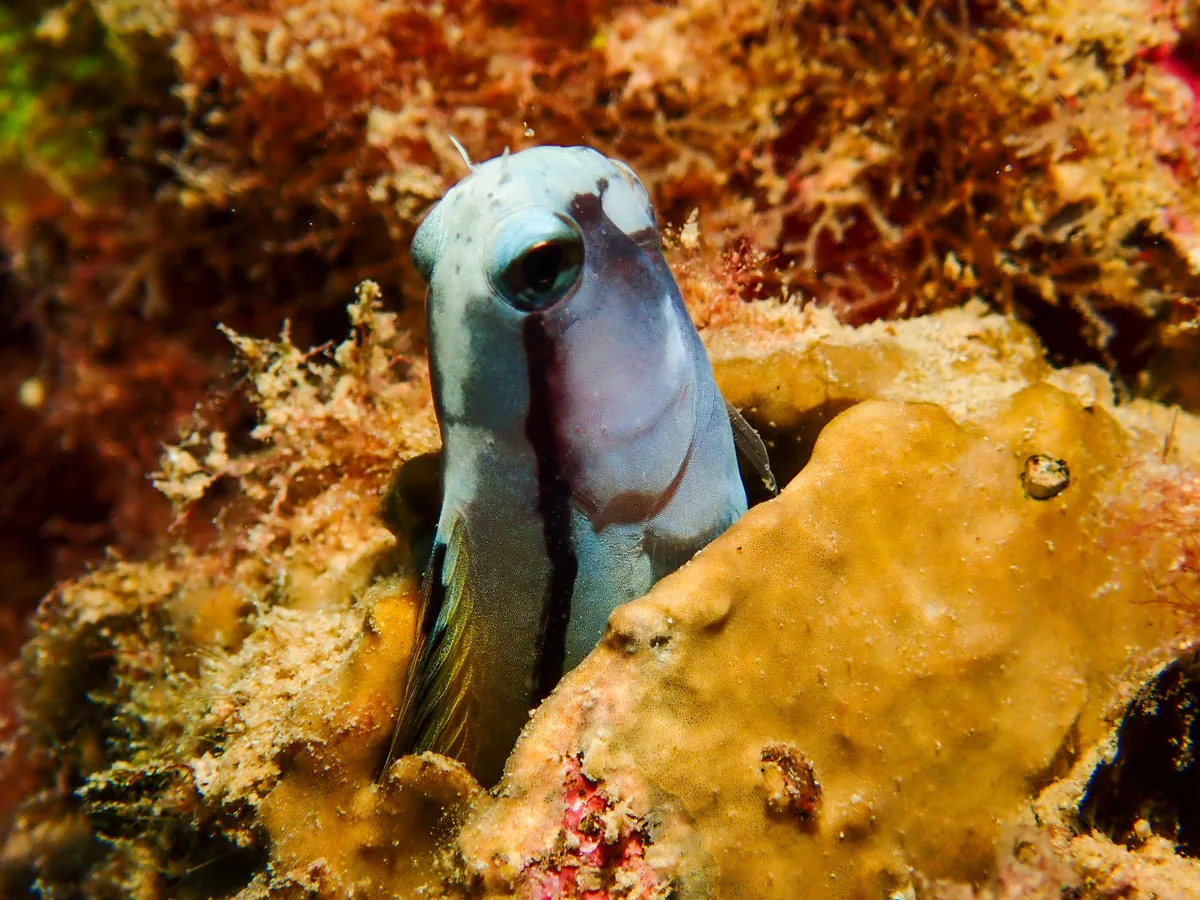
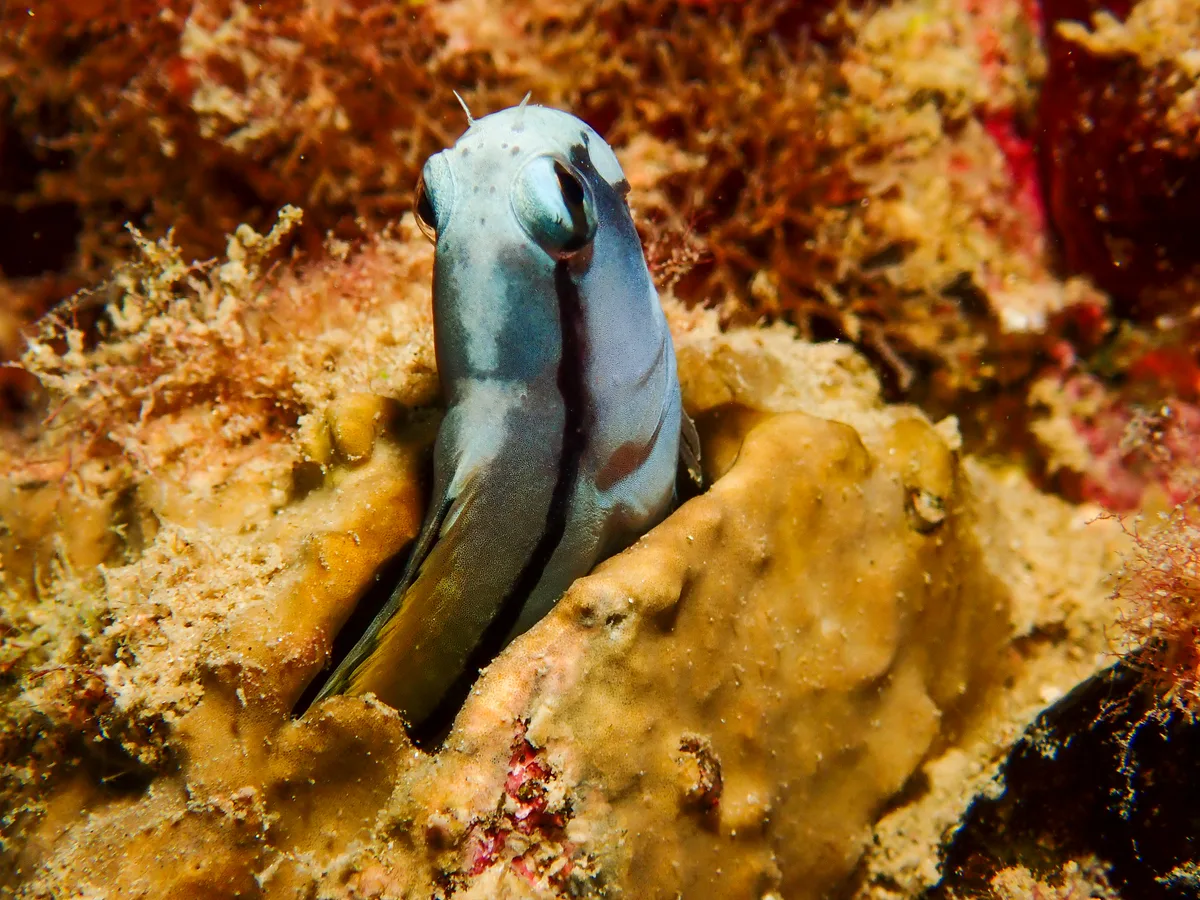
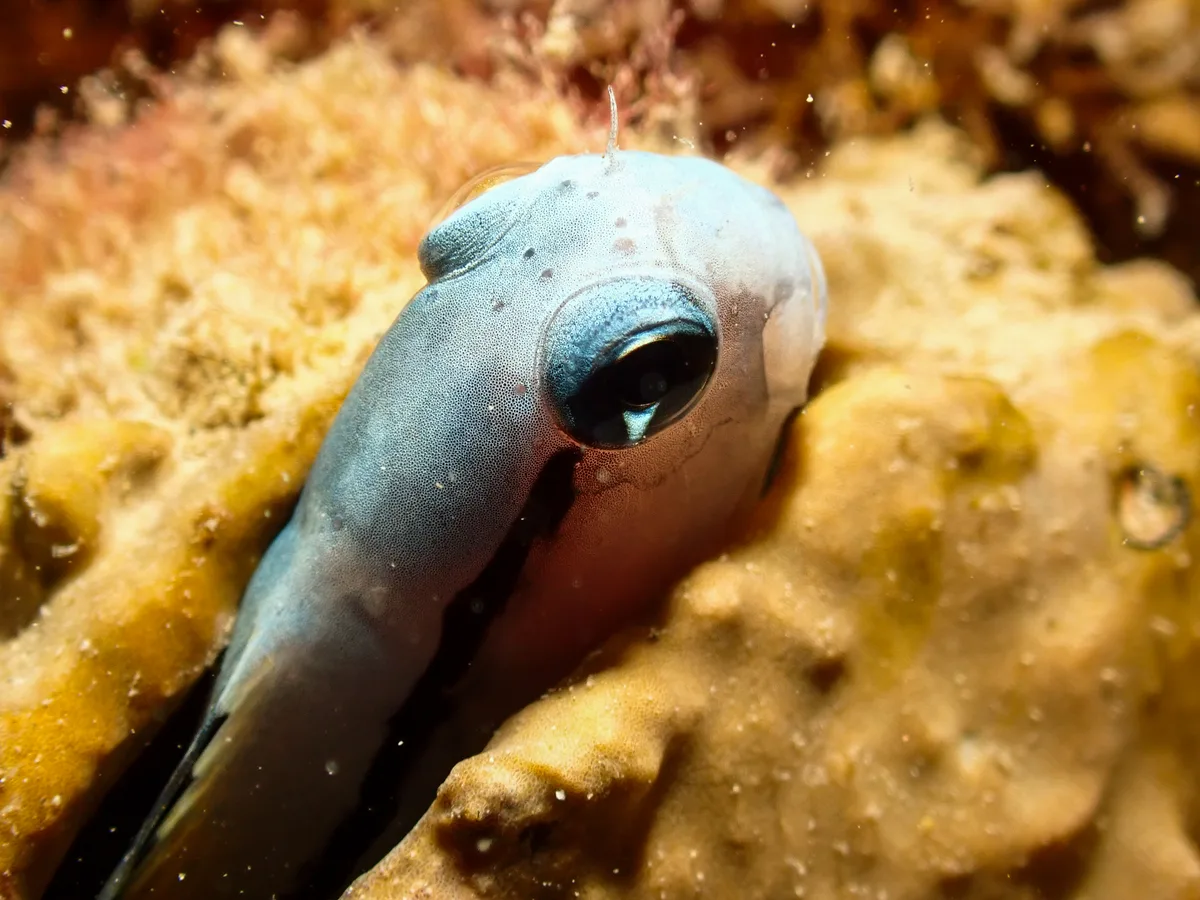
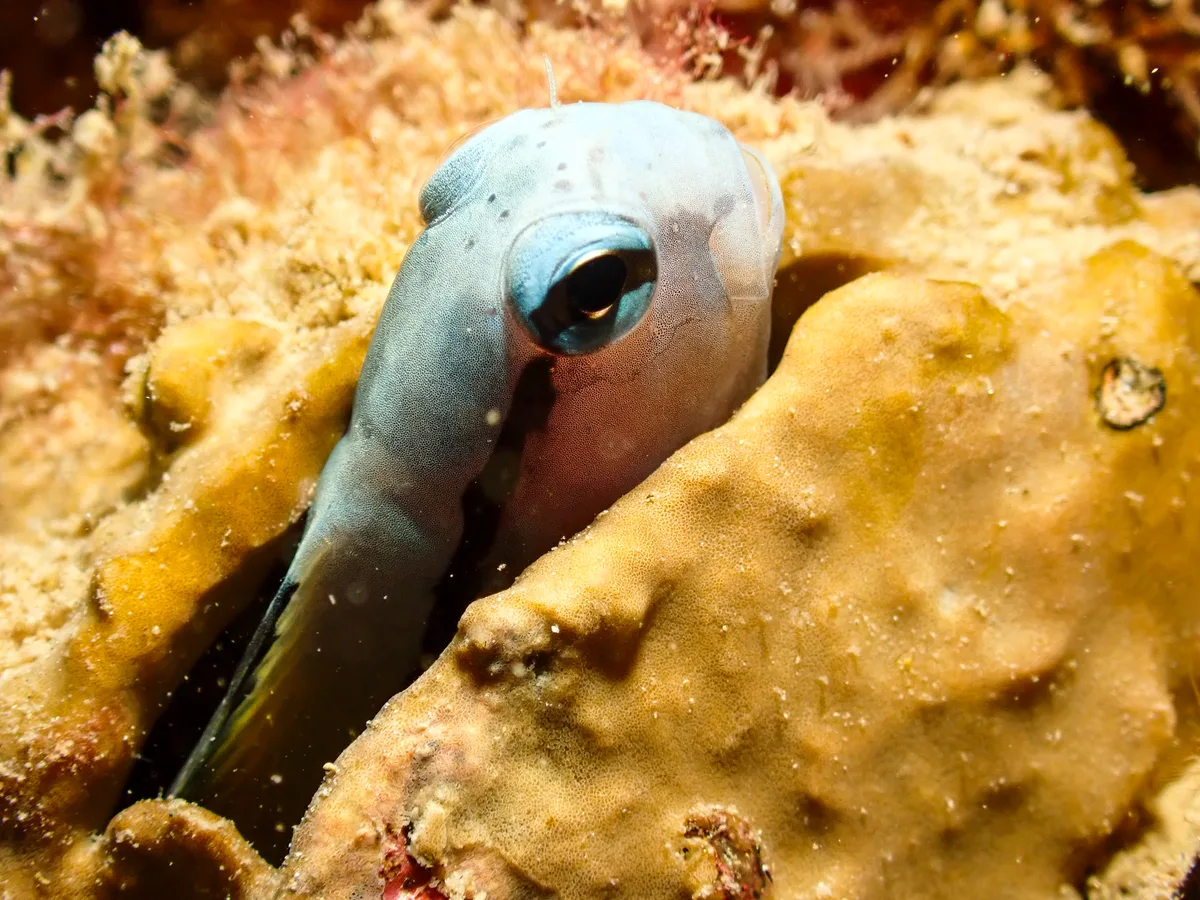
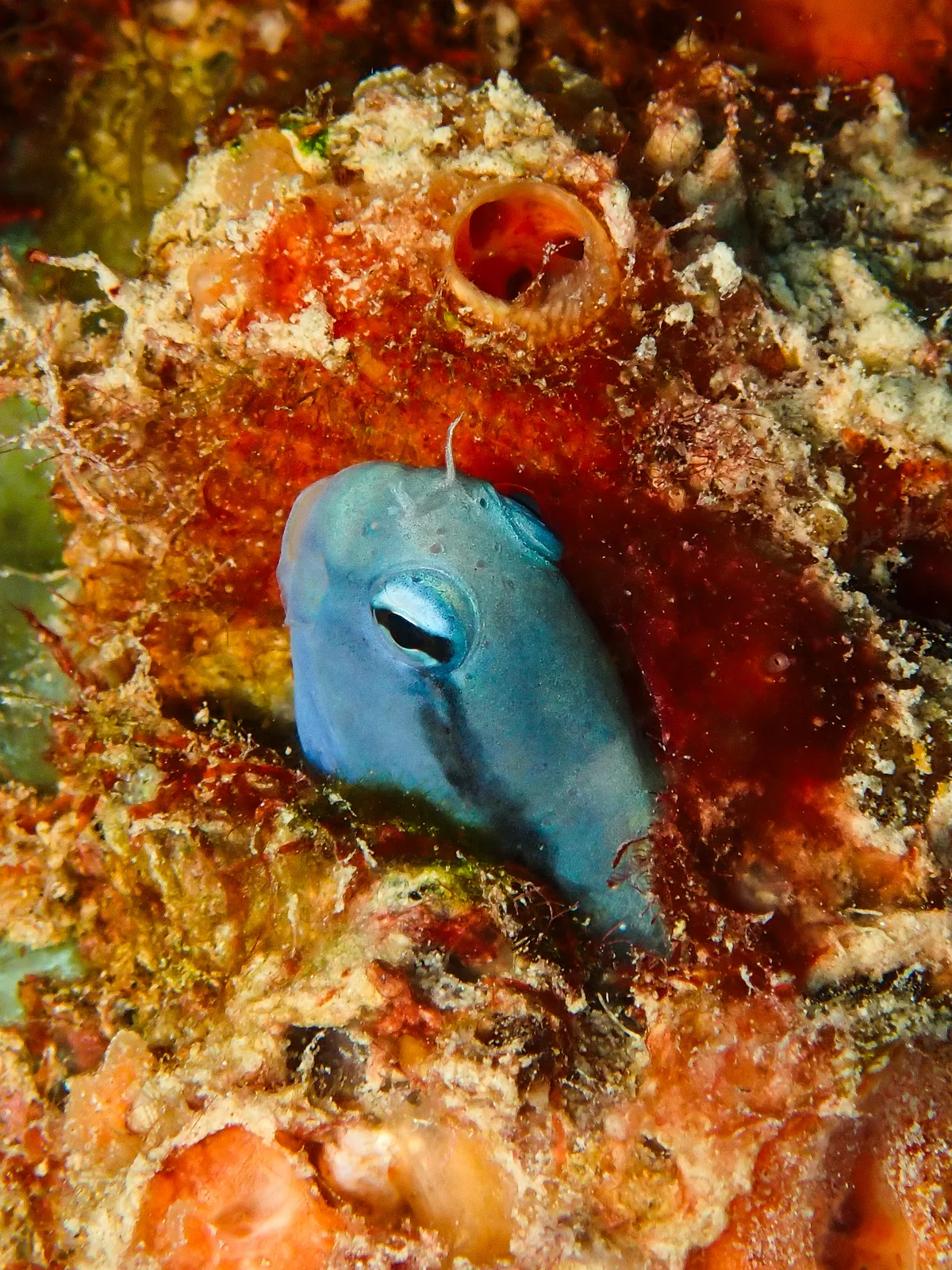
There is a fish in this sea with venom glands at the base of two long teeth in its lower jaw. When something swallows a blackline fangblenny, the blenny bites the inside of the predator's mouth, the venom goes in, and the predator gapes, shakes its head and spits it out alive. Fish that have done that once do not do it again, and what they remember is the pattern: yellow at the front, blue-gray at the back, one black line down the side.
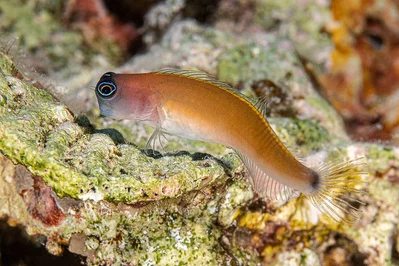
This blenny copies that pattern exactly, and it has no venom whatsoever.
It is one of the cleanest examples of Batesian mimicry in the sea, a harmless animal wearing the warning colors of a dangerous one, and it works well enough that the mimic can sit out in the open on bare coral and graze algae and detritus while everything else its size stays in a hole. Both fish live in the 🌊 Red Sea and the 🌊 Gulf of Aden and nowhere else on earth.
Telling them apart underwater comes down to movement. The fangblenny swims out in the water with a loose undulating motion and has a forked tail. The mimic perches, propped on its pelvic fins, and moves in short hops from one spot to the next.
The genus. Ecsenius McCulloch 1923 - senio (six each). ETYFish
The species. Ecsenius gravieri (Pellegrin 1906) - Honours French zoologist Charles Gravier. ETYFish
- front half of the body yellow, rear half blue-gray
- one black line running from the snout through the eye to the tail
- blunt rounded head with comb-like teeth
- perches on the bottom on its pelvic fins and moves in short hops, where the venomous fish it copies swims loosely in midwater and has a forked tail
- up to 8 cm
Why it's threatened
There are no major threats known for this species, although it is collected for the international aquarium fish trade.
Threat classification from the IUCN Red List.