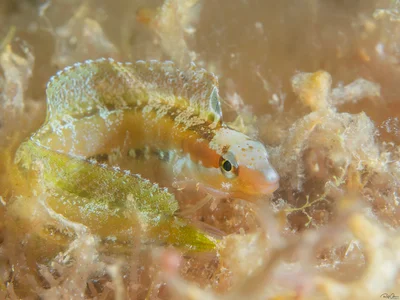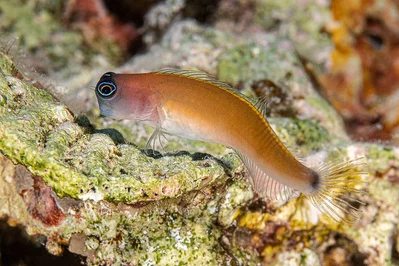
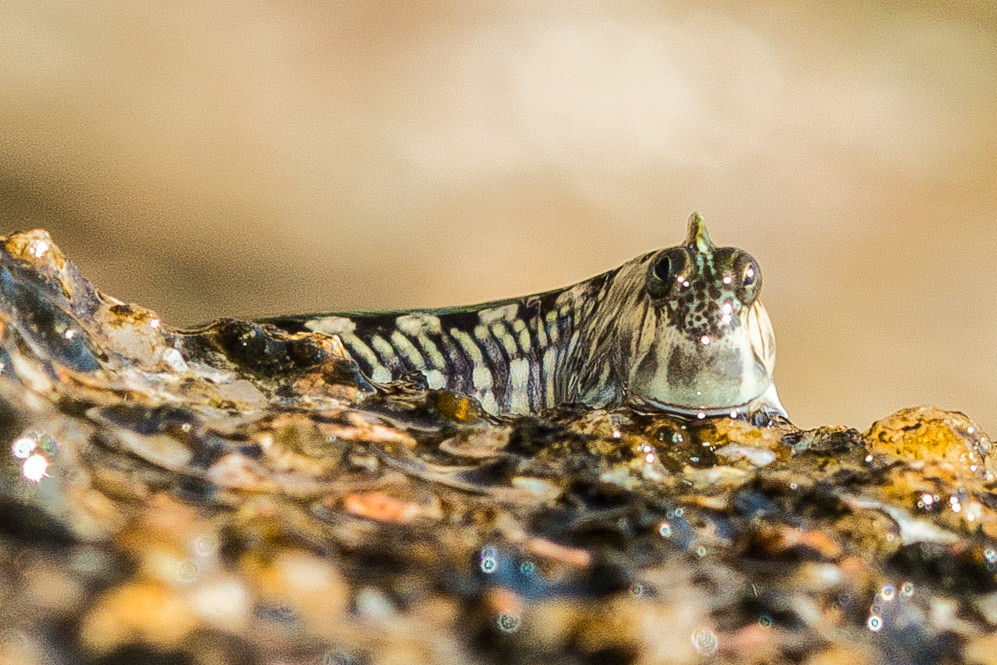


You will not find this fish by diving. It lives on the rocks above the water.
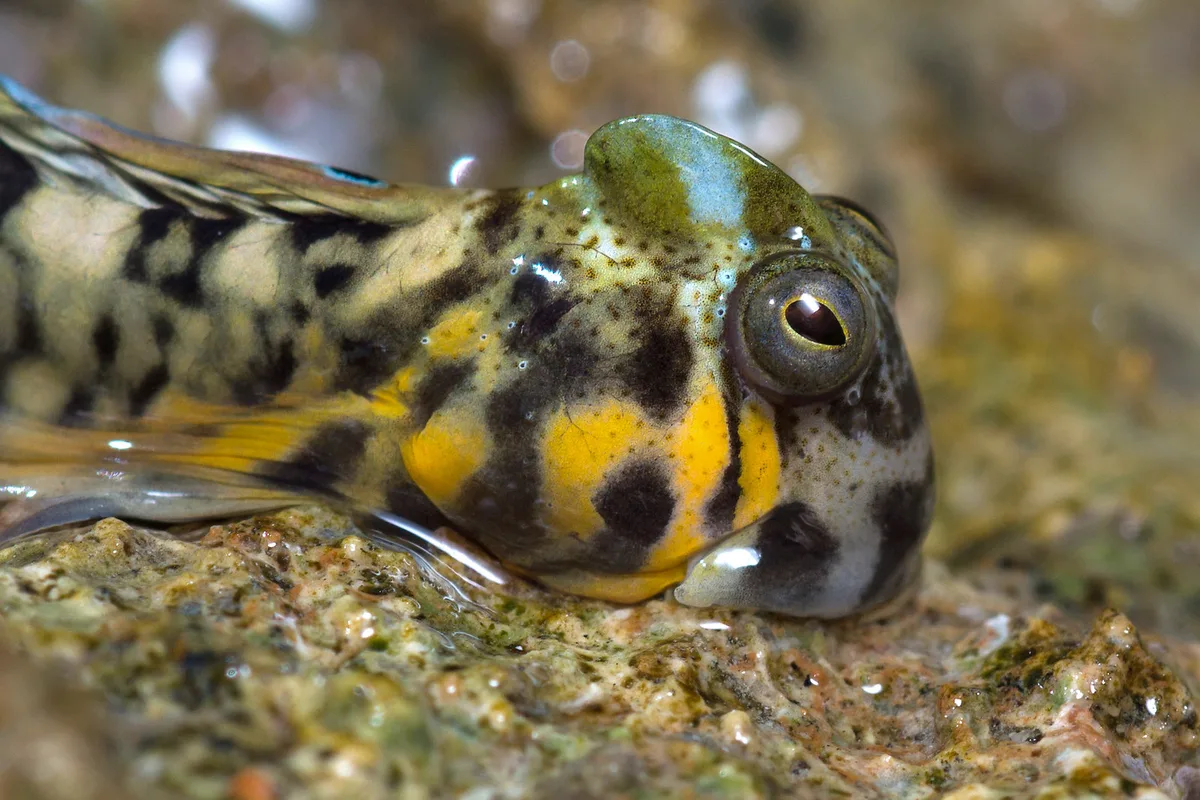
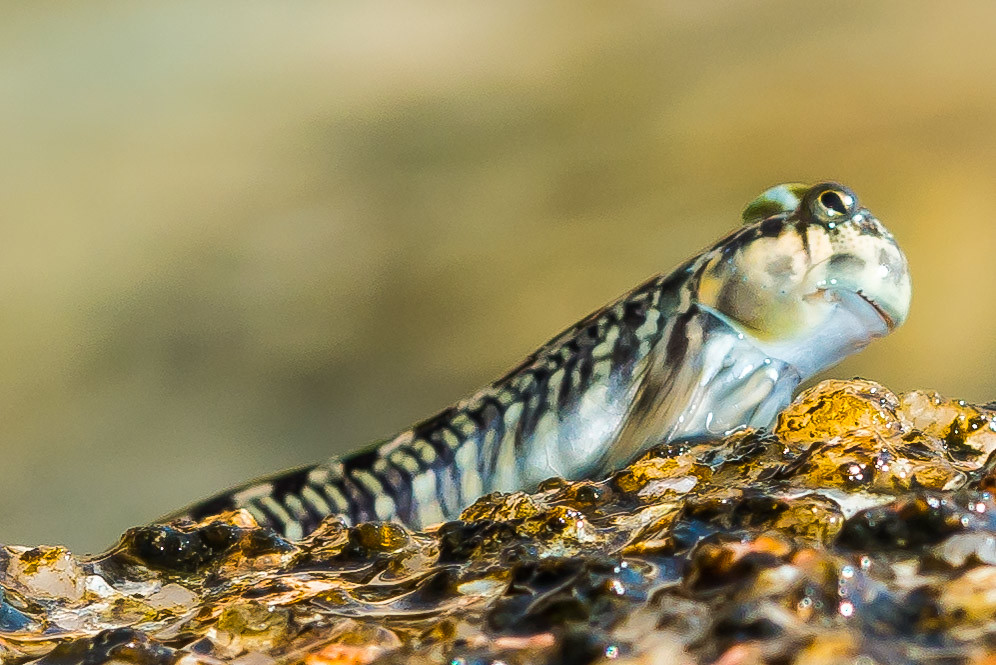
Rockskippers have taken the intertidal to its logical end and left the sea. They spend hours out of it, grazing the algal film on wet rock in the splash zone, moving in flicking hops driven by the tail, clinging with modified pelvic fins and a body pressed flat to the stone. Approach one and it does not swim away; it skips sideways across the rock and into a crack, or drops into the water and comes straight back out.
Breathing is done through skin and through the lining of the mouth, and it works as long as both stay wet, which is why the animal keeps to the splash zone and returns to a wave every few minutes. Out of water for too long it dries and suffocates. In water for too long it is a slow fish in a place full of fast ones.
So the choice is deliberate. Almost nothing hunts on wet rock: the fish that would eat it cannot get there, and the birds that could are hunting elsewhere. Being an amphibious fish on a coast full of gaps is a way of living in a place with no competition at all.
- found out of the water, on wet rock above the sea
- moves by flicking the body and tail, in hops rather than crawls
- high blunt head with the eyes set on top
- up to 7 cm
Why it's threatened
There are no major threats known for this species.
Threat classification from the IUCN Red List.