
54 species in Gobies
Amblyeleotris
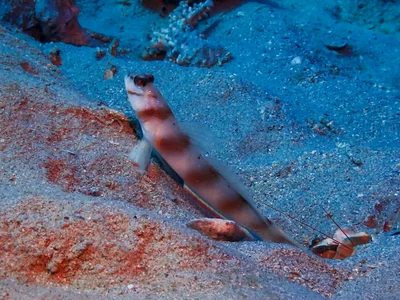
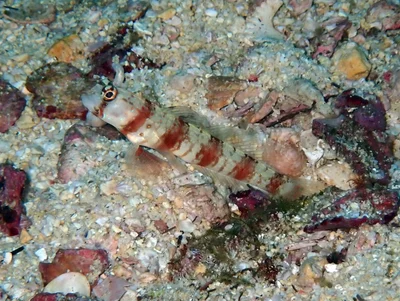
5Shrimpgobies, and the slim pale end of them: whitish bodies crossed by five to seven red-brown bars, eyes set high, sitting at the mouth of a burrow that a blind shrimp digs and they watch over. Slimmer and paler than the Cryptocentrus on the next patch of sand.


Amblygobius
3Sand-sifters, almost always in pairs. The fish takes a mouthful of sand, sorts out what is edible inside the mouth and blows the cleaned grains out through the gill covers, working a patch over methodically.


Bathygobius
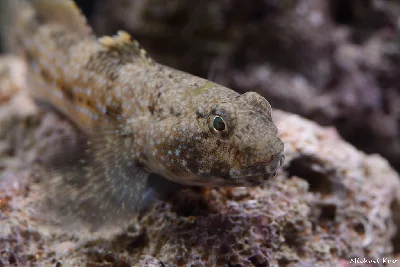
2Frillgobies of rocky shore and tide pools, where the water is warm, shallow and half the time barely there. The upper pectoral rays end in free filaments, which is the character the group is named for.
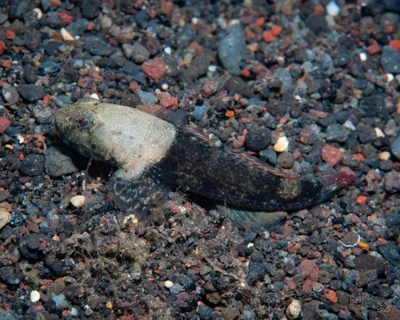
Bryaninops
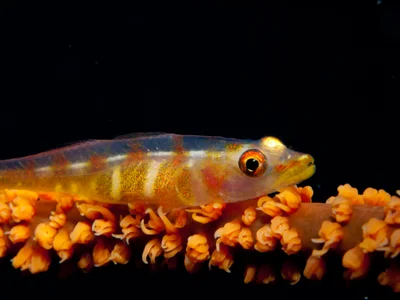
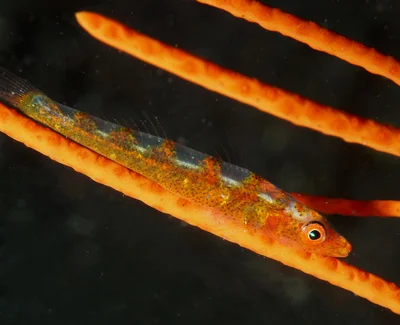
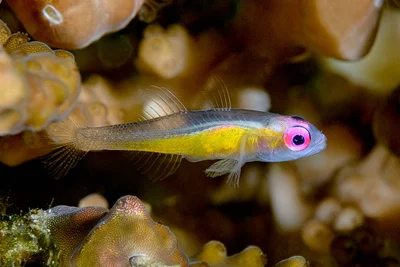
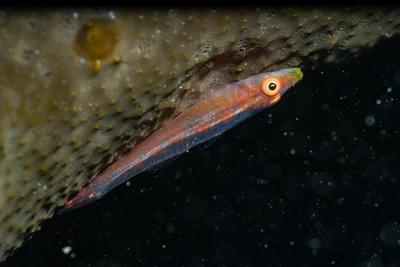
5Gobies that live on other animals - a whip coral, a gorgonian, a black coral bush, a sponge - clamped to the host by a sucker formed from the fused pelvic fins. Most are close to transparent, so what you actually see against the host is the eyes, the gut and a line of marks along the spine.

Cryptocentrus
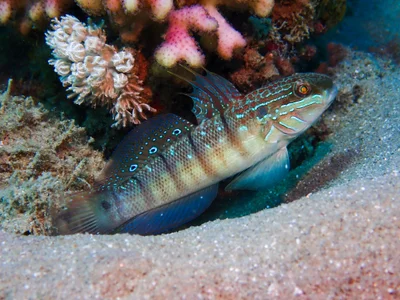
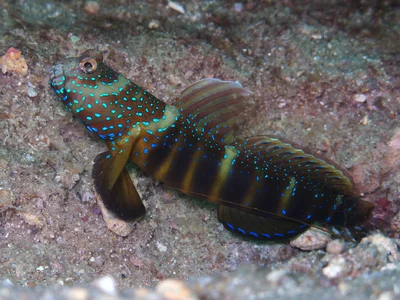
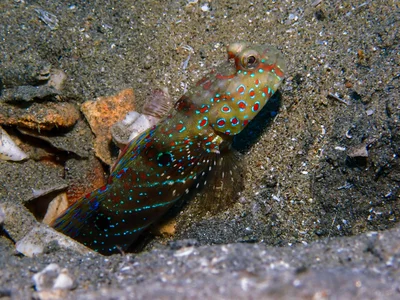
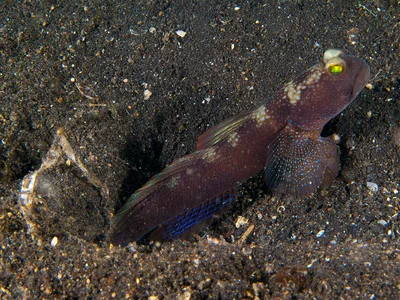
5The heavy shrimpgobies. Stockier and blunter than Amblyeleotris, darker, and covered in blue or green spots over the head that carry back onto the body. Same partnership with a shrimp, same burrow at the same kind of sand, a different-looking fish at the door.

Ctenogobiops
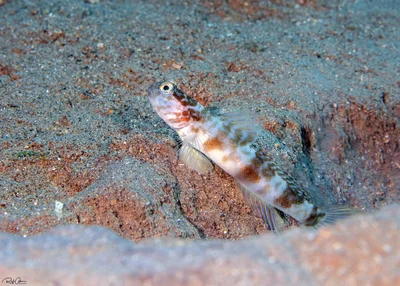
3The small shrimpgobies of clean open sand: under eight centimeters, pale, finely speckled, and quick to drop into the burrow. Easy to miss entirely, because at that size the fish reads as a mark on the bottom.


Eviota
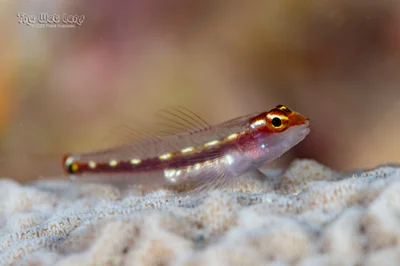
5Dwarfgobies, and the genus holds the shortest-lived vertebrate known - under two months from hatching to death. The ones here run from one to three centimeters, translucent, propped on their pelvic fins, hopping between perches rather than swimming.



Fusigobius
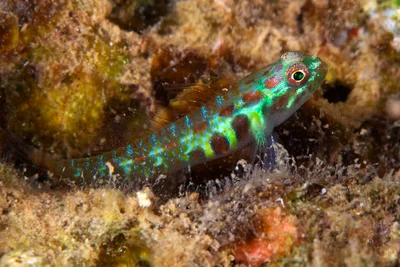
3Sandgobies: semi-translucent fish sitting out on open sand and rubble rather than in a burrow or a hole, holding still until something comes too close. Marks on the dorsal fin and the tail base do the identifying.


Gnatholepis
2Told by the face: a dark bar runs straight down through the eye, and a small orange spot sits just above the base of the pectoral fin. Both marks hold on a fish that is otherwise pale and lightly speckled.


Gobiodon
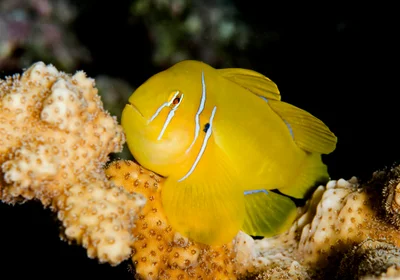
6Coral gobies: stubby, scaleless, and living permanently inside a branching coral head, usually in a pair. The skin gives off a bitter toxic mucus that makes them foul to swallow, which is what lets a three-centimeter fish sit in the open among the branches.




Gobius
2The Atlantic and Mediterranean genus, on rock and under stones rather than on coral - stocky brown fish resting on fused pelvic fins in shallow, often surge-swept water.


Periophthalmus
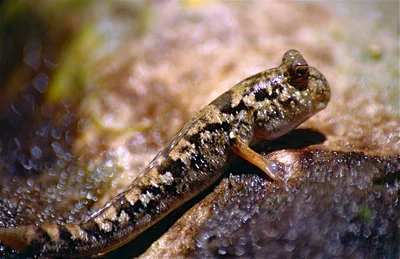
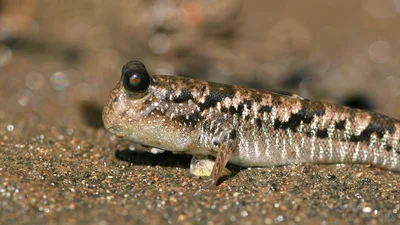
2The mudskippers, and they spend more time out of the water than in it. Eyes mounted on top of the head like a frog, pectoral fins used as legs, and a habit of climbing onto mangrove roots and rock above the waterline.
Vanderhorstia
2Shrimpgobies of silty sand rather than clean, marked with orange bars and rows of blue spots, and carrying a tall first dorsal fin they hold raised at the burrow mouth.
Other genera
9


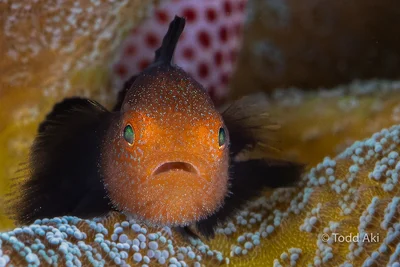
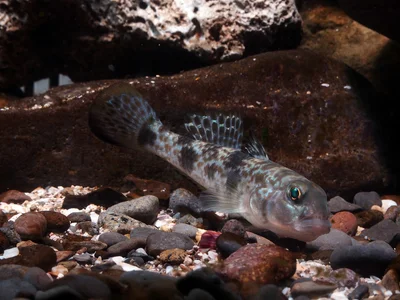
Other bottom-dwellers
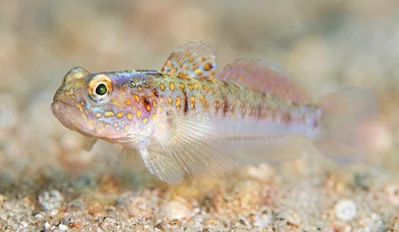
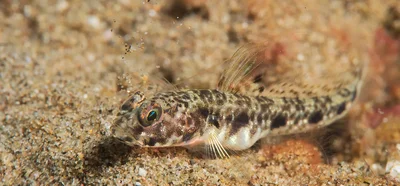
Similar silhouette underwater - worth a look if this was not your animal.


Last Update: August 23, 2026