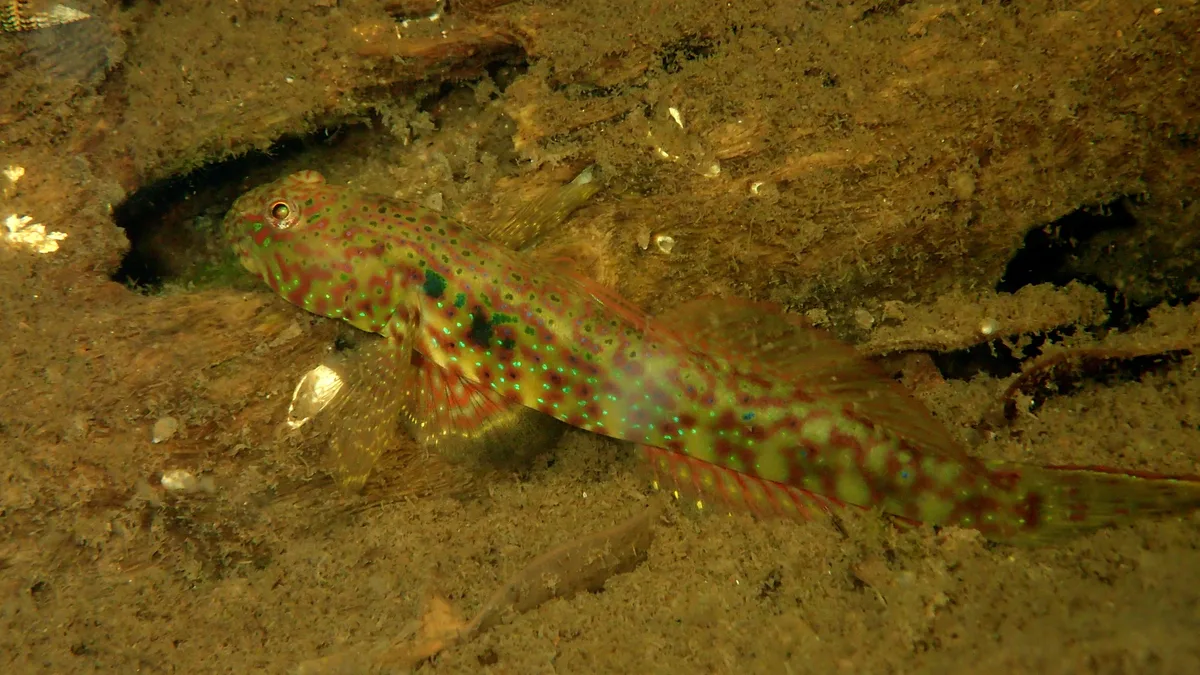
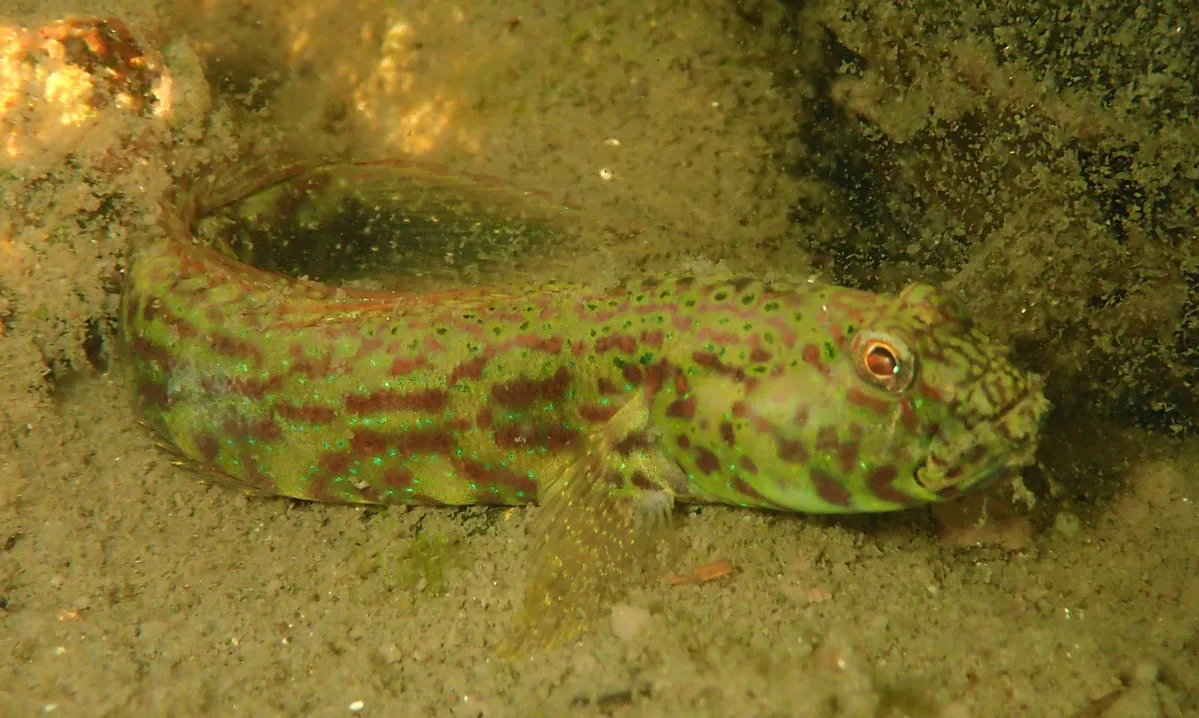
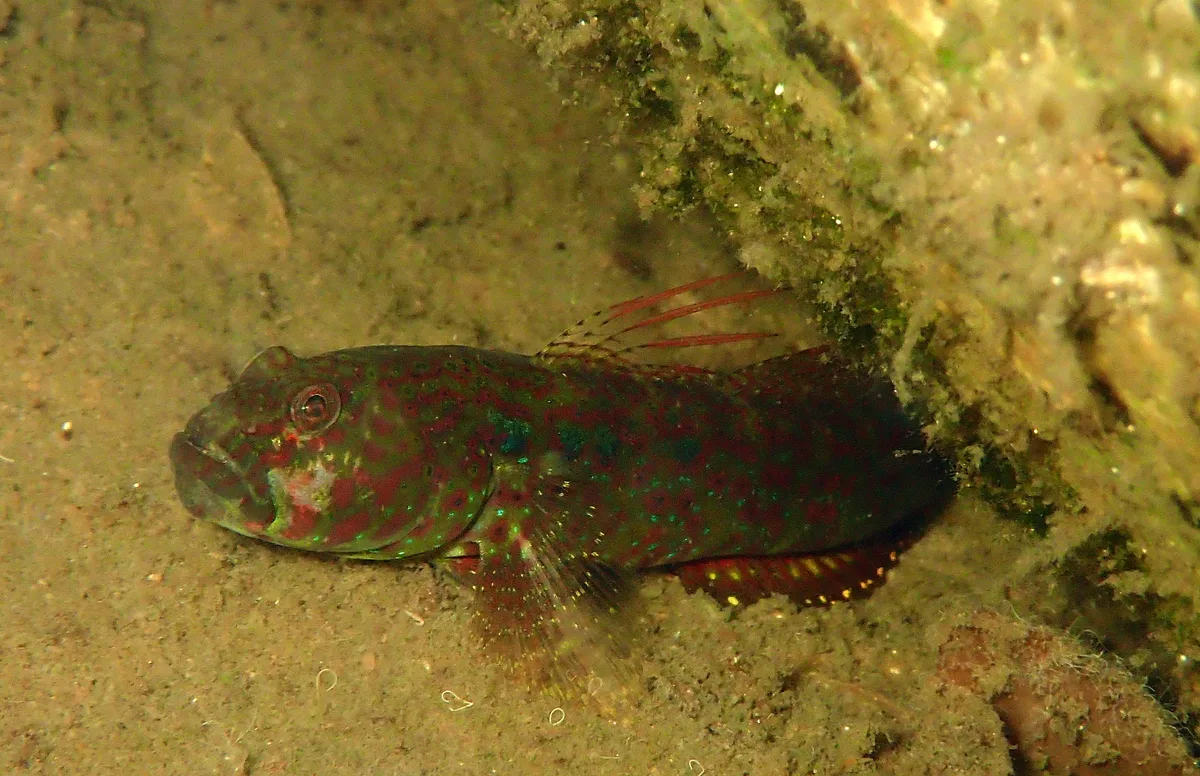
Gmelin named this fish in 1789 from the coast of Jeddah. That makes it one of the oldest scientific names on the 🌊 Red Sea fish list, older than most of the reef animals a diver can recite, and it belongs to an animal that almost nobody in this sea has seen.
The reason is the address. It lives in soft mud around mangroves, in water shallower than two meters and usually shallower than one, in the sort of turbid backwater where there is nothing to dive and nothing to see if you did. It burrows into the sediment, and like its relatives among the shrimp gobies it is thought to share the hole with an alpheid shrimp, though nobody has published the partner species.
In 2021 it turned up somewhere no marine goby was expected. A survey of Wadi Al-Bahayes, a shallow creek running out of the mountains about 35 kilometers north of Muscat, collected 85 of them between 55 and 95 millimeters long. The water there is fed from underground and runs from nearly fresh to weakly brackish, and the fish were living alongside killifish, a cyprinid, and introduced sailfin mollies. It was the first record of the species outside fully marine water, and it means the animal tolerates a range that would kill most reef fish in an afternoon.
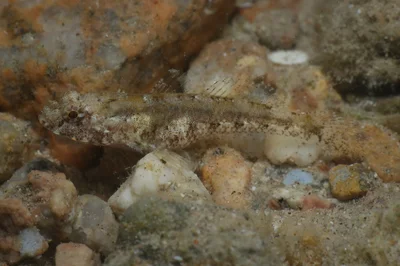
At up to 13.5 centimeters it is a substantial goby. The dorsal, pectoral and tail fins are yellowish, the head and body carry no spots, and two dark bands run along the flank in a zigzag rather than as straight bars. That combination separates it from its Pacific relative C. insignis, which is spotted blue all over.
Set expectations low. On the 🌊 Red Sea coast this is a mangrove and estuary animal, not a reef one, and the photograph in the regional guide for this sea was taken in 🇰🇪 Kenya.
- two dark bands running the body in a zigzag
- yellowish dorsal, pectoral and tail fins
- head and body without spots
- large for its build, in water too shallow to dive
- up to 13.5 cm