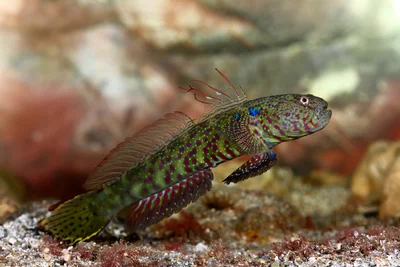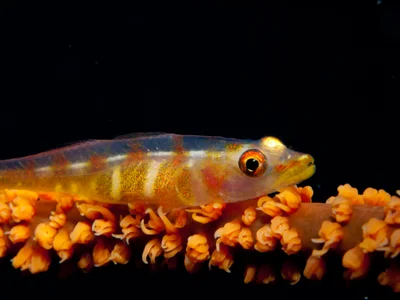
The scientific name on this page looks like a spelling mistake, and in a sense it is one. J.L.B. Smith named the fish anomolus in 1958; the Latin word he was reaching for is anomalus. Zoological naming does not allow later authors to tidy that up, so the original spelling stands and the fish carries it forever, while the English name is usually written the other way. If the two look inconsistent to you, they are, and both are correct.
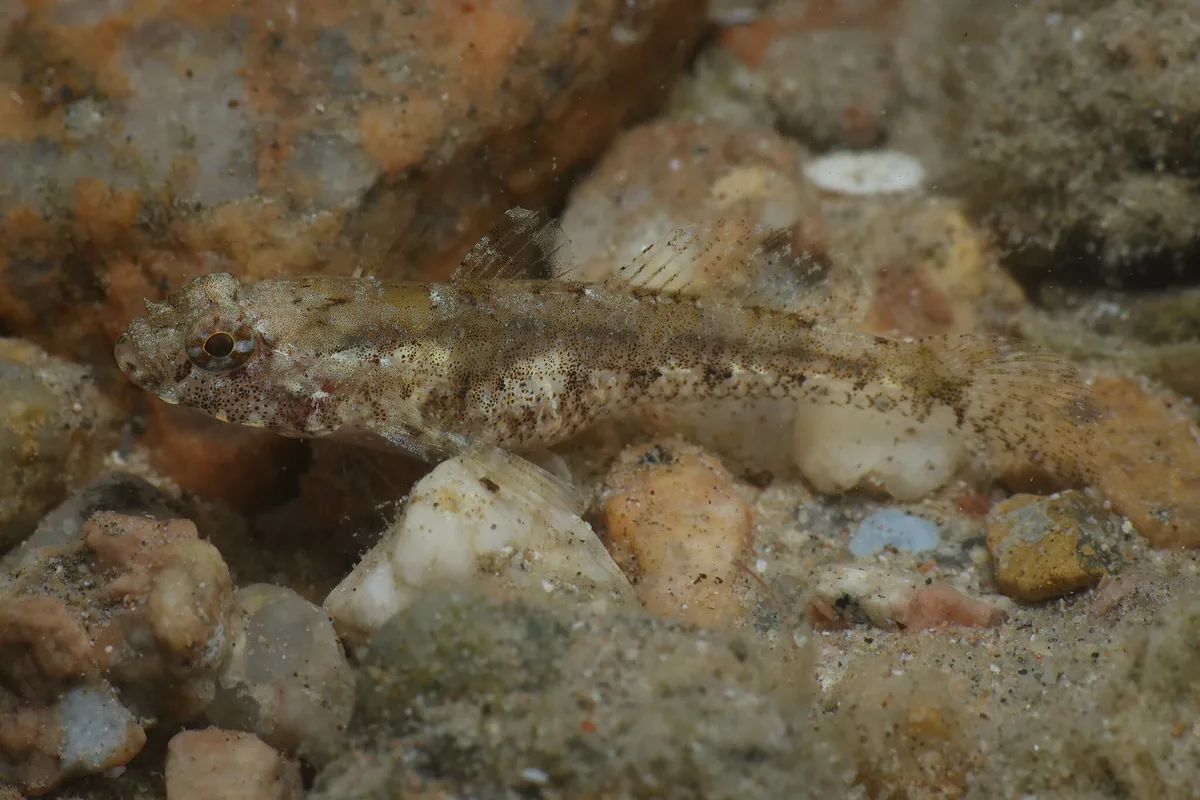
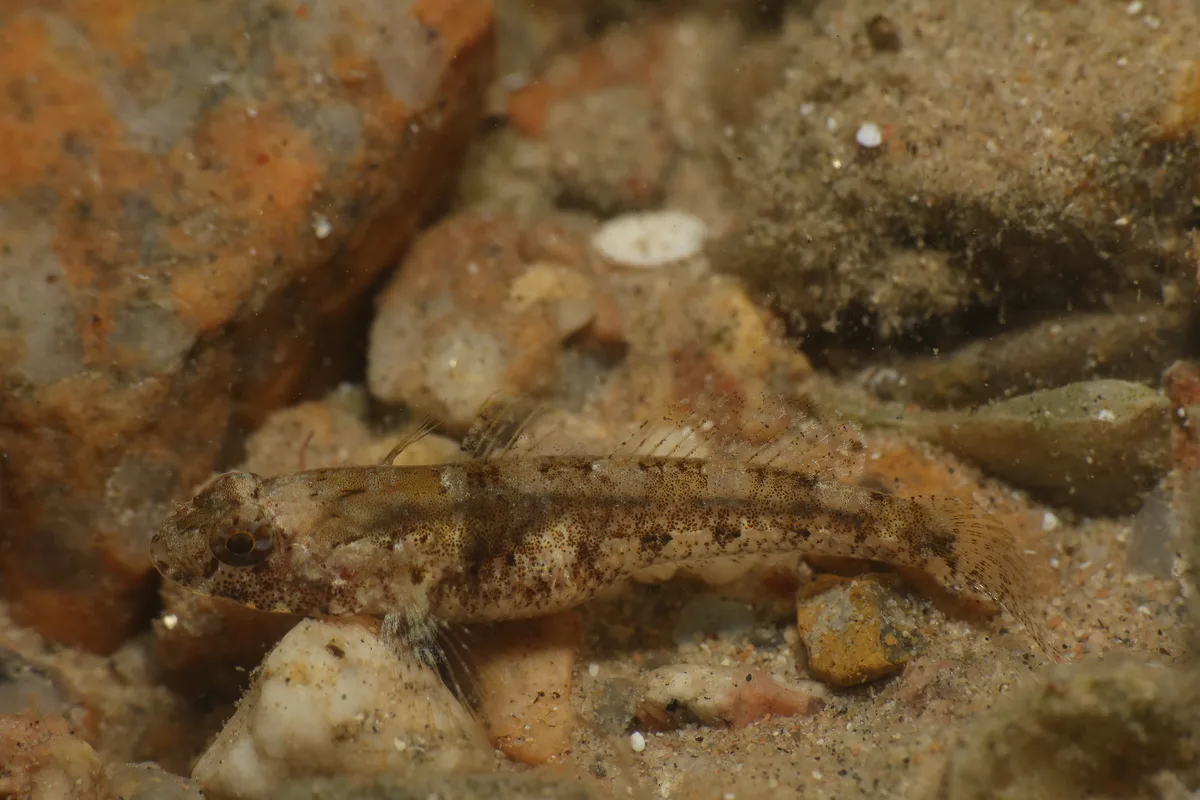
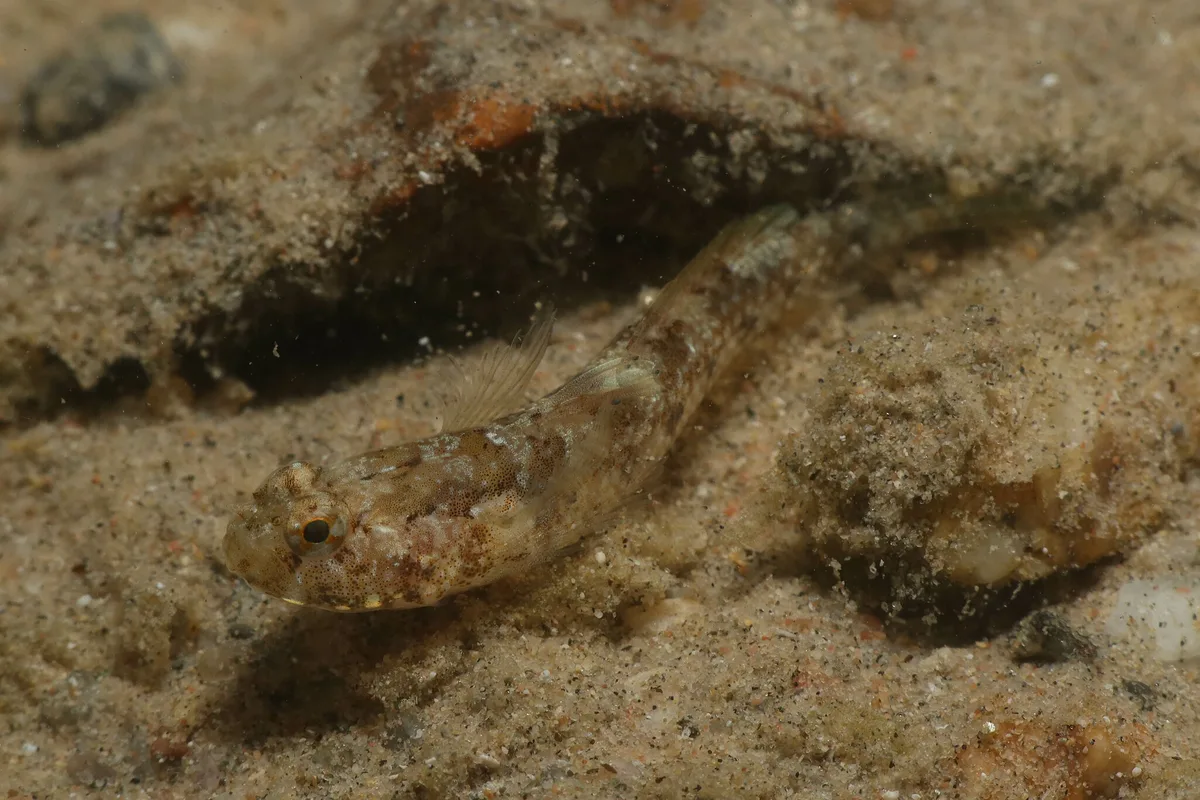
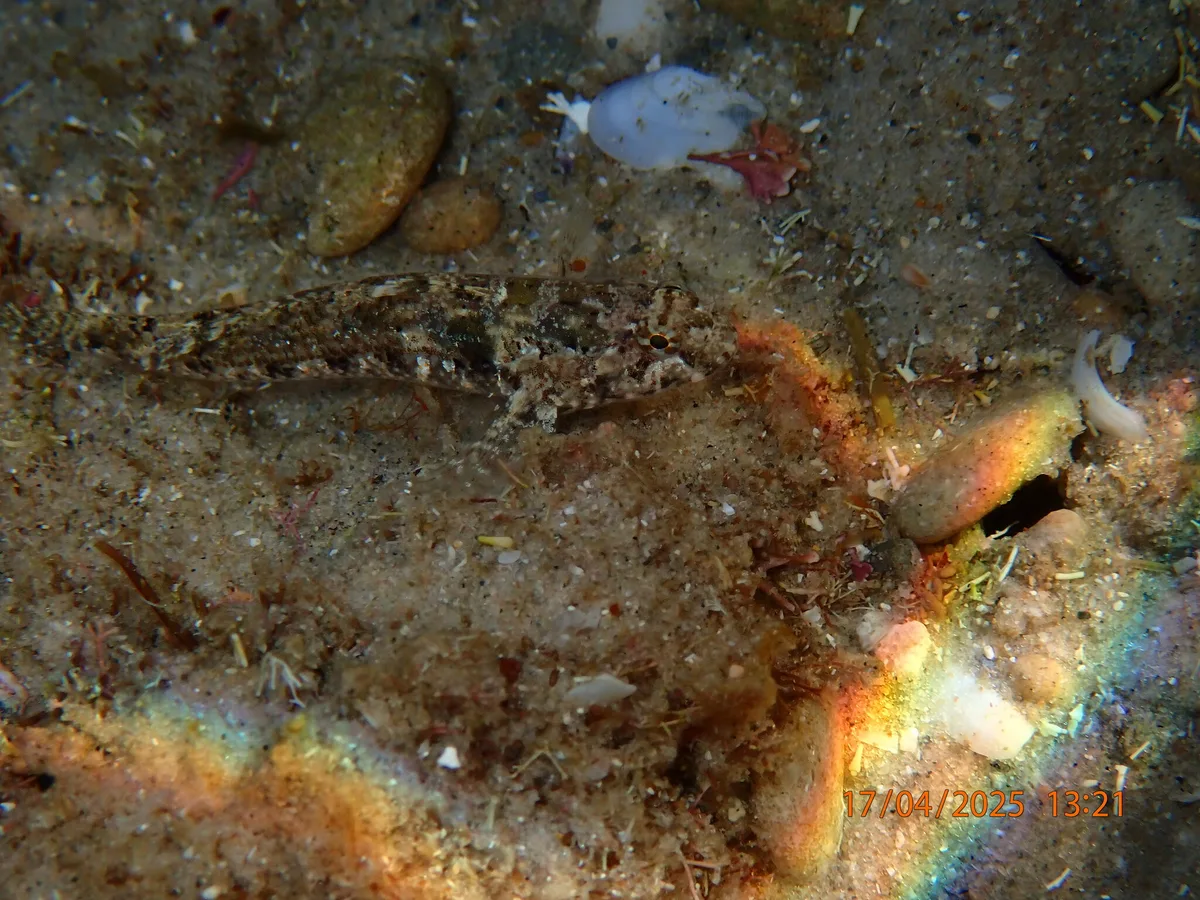
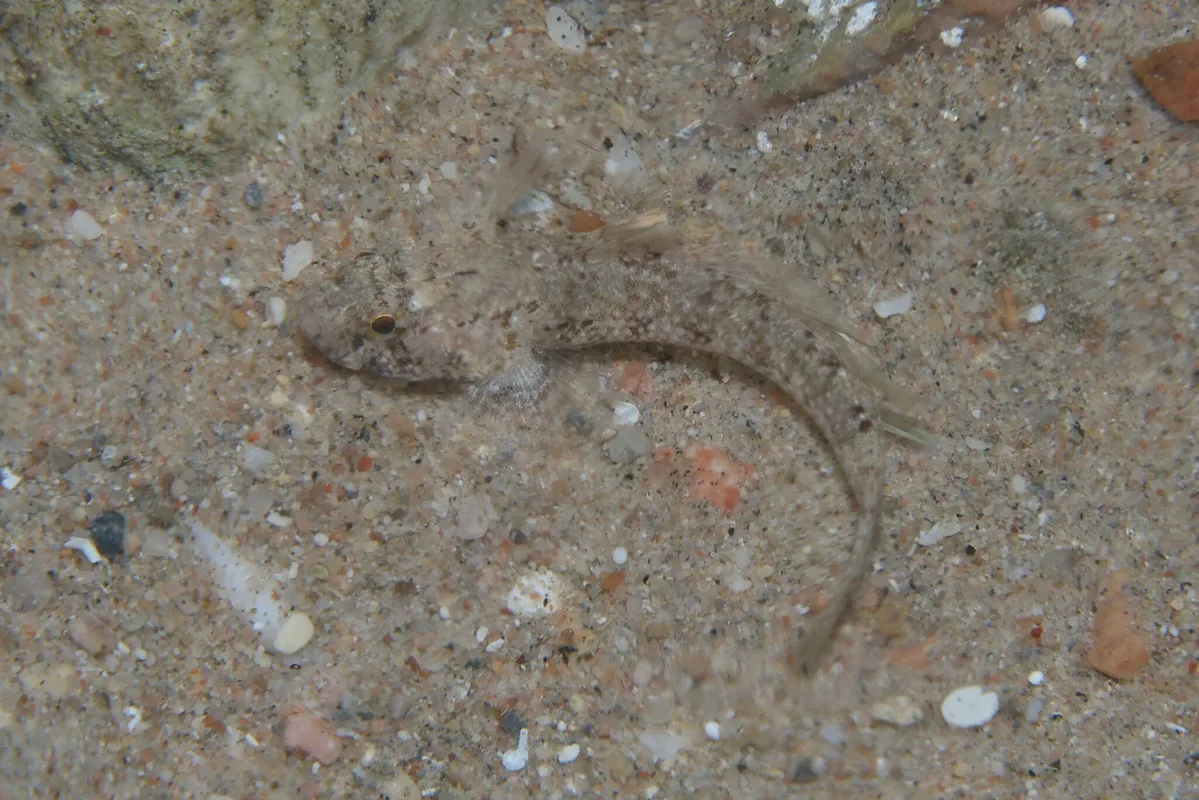
Underneath the name is a small mottled goby of the places divers swim over. Silty sand, rubble edges, thin seagrass, from about a meter down to 16, from the 🌊 Red Sea south to Tanzania and east into the 🌊 Persian Gulf. It is whitish, blotched and barred with brown, with a rounded tail shorter than its own head and pelvic fins that join only at the base rather than forming the full cup most gobies have.
Size is one of the things the sources disagree on. FishBase gives a maximum of 5.8 centimeters total length; the regional guide for this sea puts the animal at 3. Either way it is small, and either way it is the same color as the sediment it sits on.
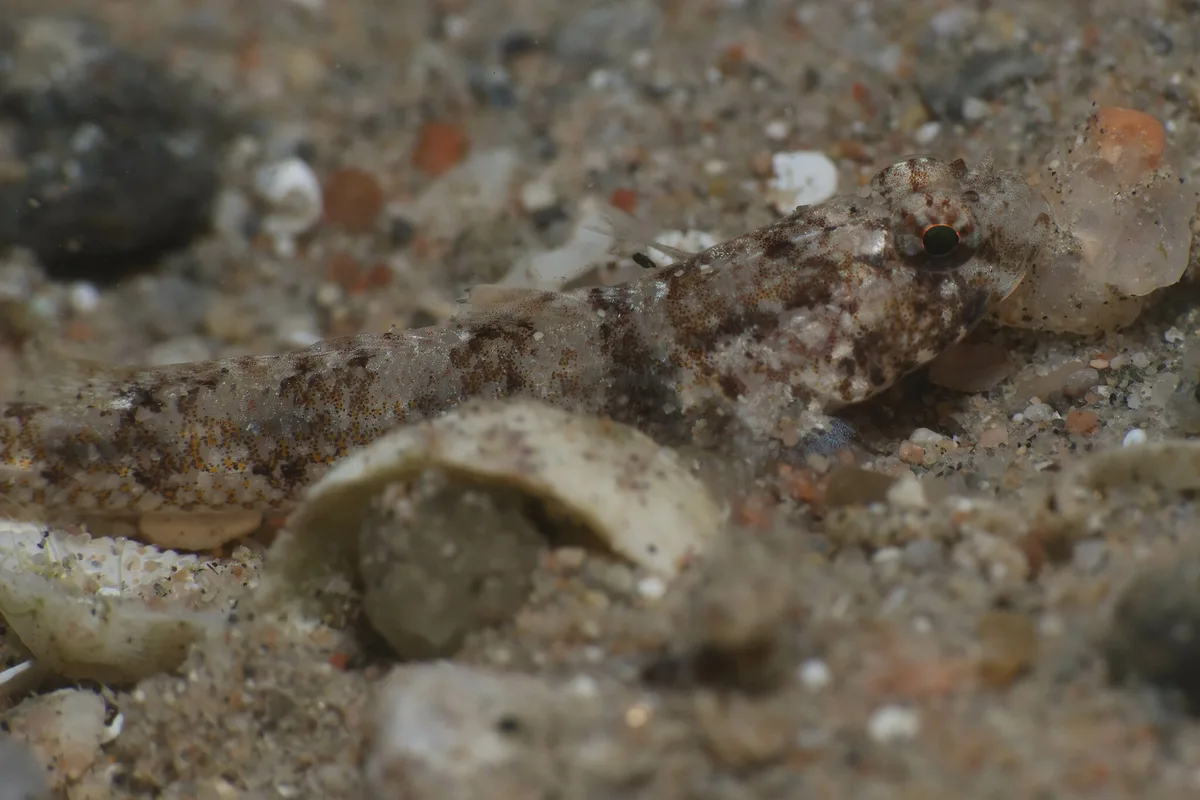
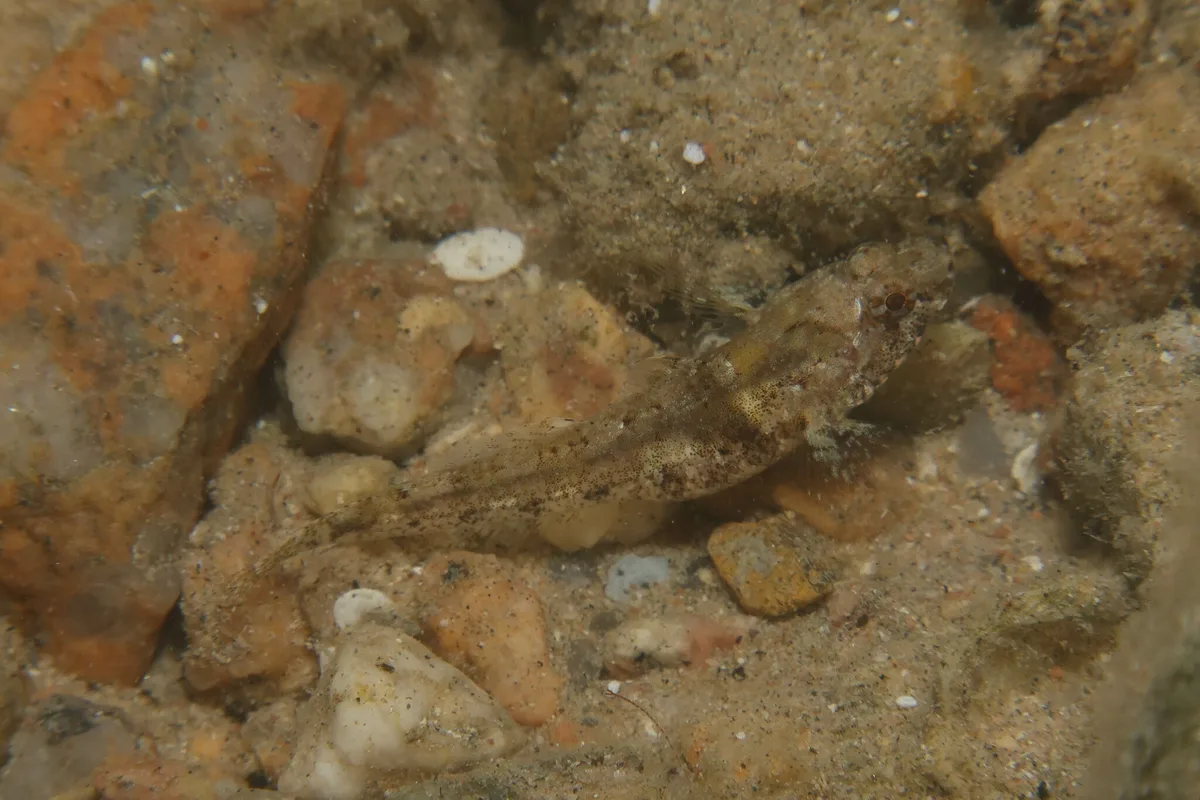
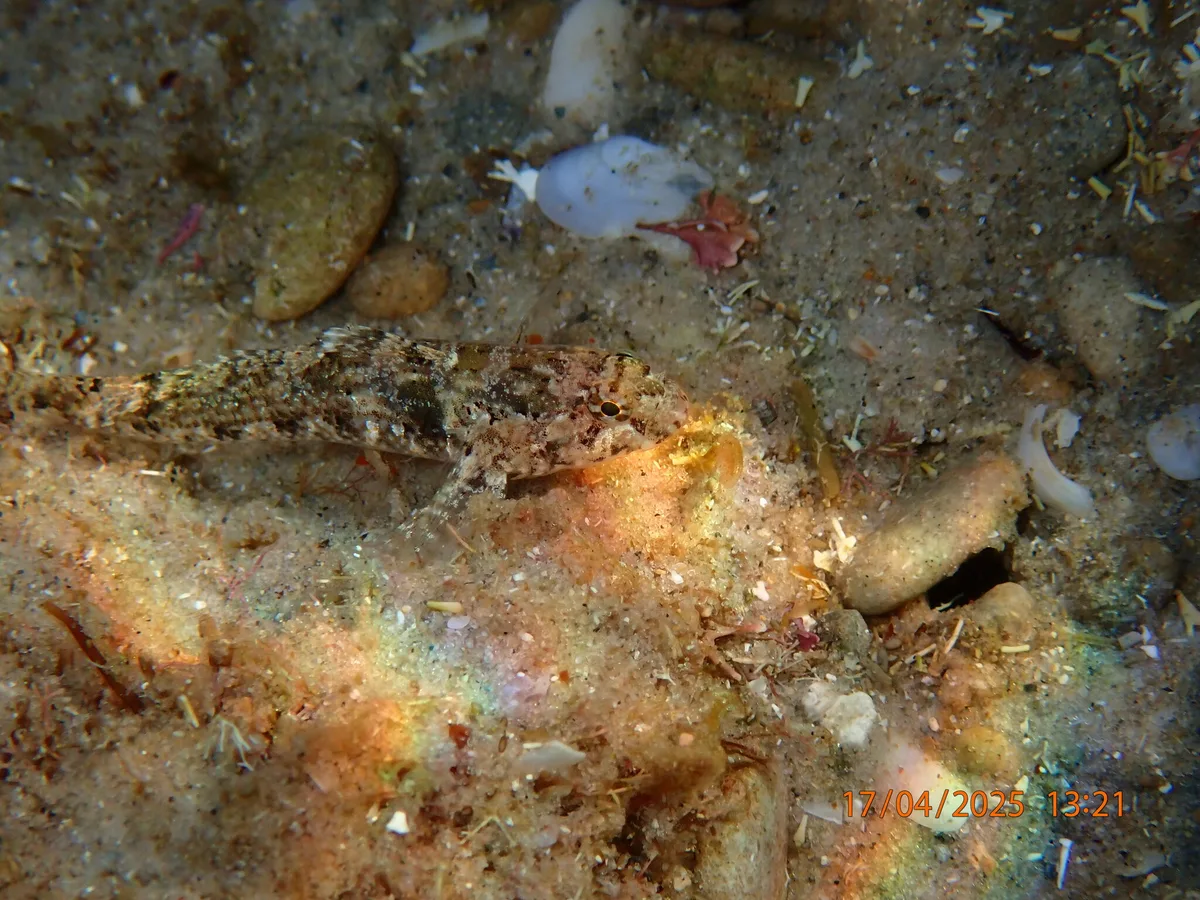
Seeing one is a matter of technique rather than luck. It does not flee across open ground the way a sandgoby does; it holds still and relies on matching the bottom, so a diver kicking past creates nothing to catch the eye. The way to find it is to stop over a patch of silty sand or a seagrass edge, get low, and give the ground a minute.
Its genus is still being sorted out. Coryogalops species are separated on things a few millimeters across - whether a tentacle stands above the eye, what shape the nostrils take - and new ones have been described from the 🌊 Red Sea within the last decade. Fish like this one are why the sea's goby list keeps getting longer.
The species. Coryogalops anomolus Smith 1958 - anṓmalos (ἀνώμᾰλος). ETYFish
- mottled whitish body with brown bars
- rounded tail, shorter than the head
- pelvic fins joined only at the base
- sits still on open sediment rather than on the reef
- up to 5.8 cm