Almost every goby in the sea sits on something. Most of the family gave up the swim bladder and settled onto rock, sand, coral or sponge, and even the coral gobies perch rather than swim.
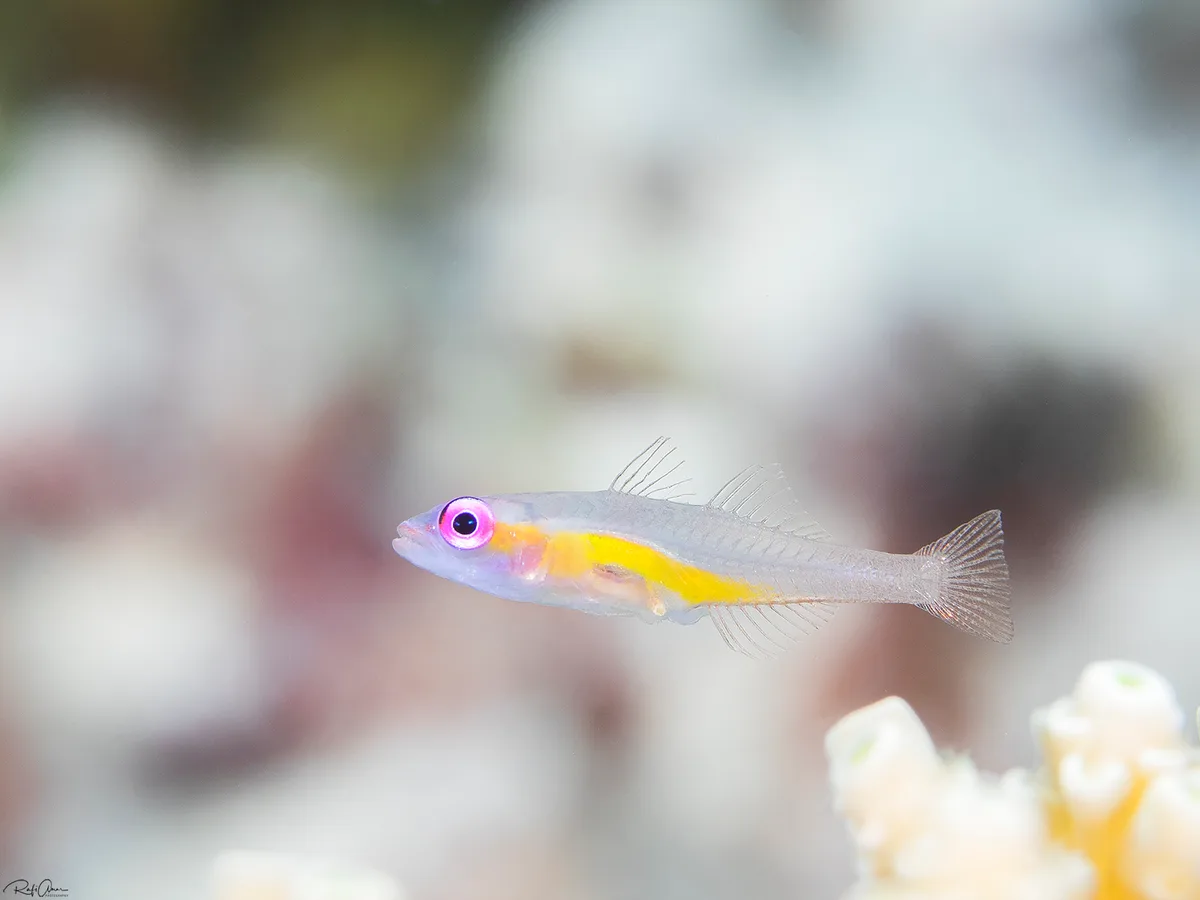
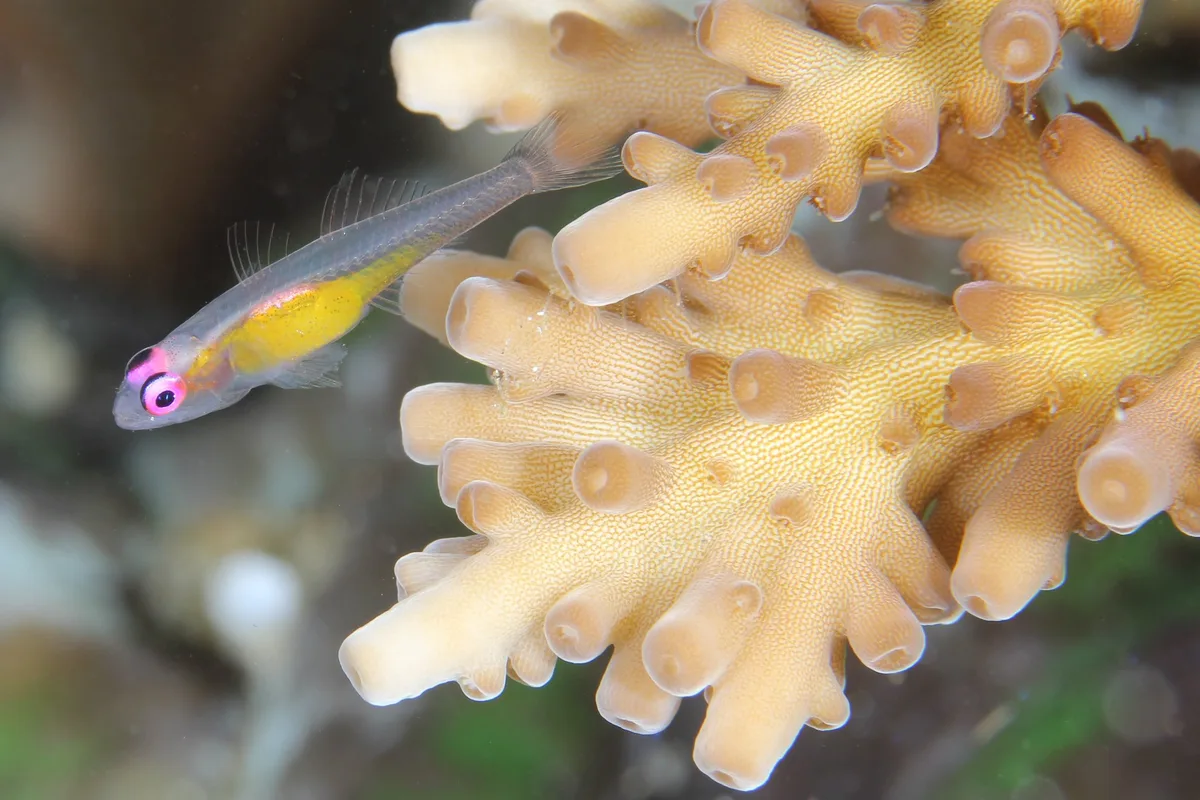
This one hovers. It hangs in small groups a few centimeters above the branches of an Acropora, holding station against the current all day, which is why Larson gave it the name natans - swimming.
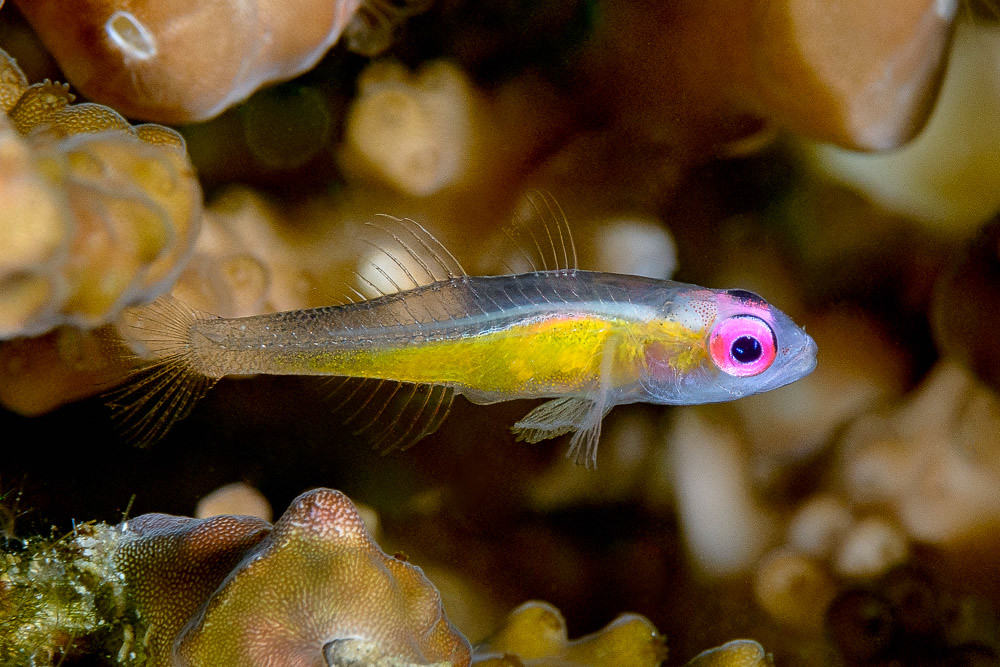
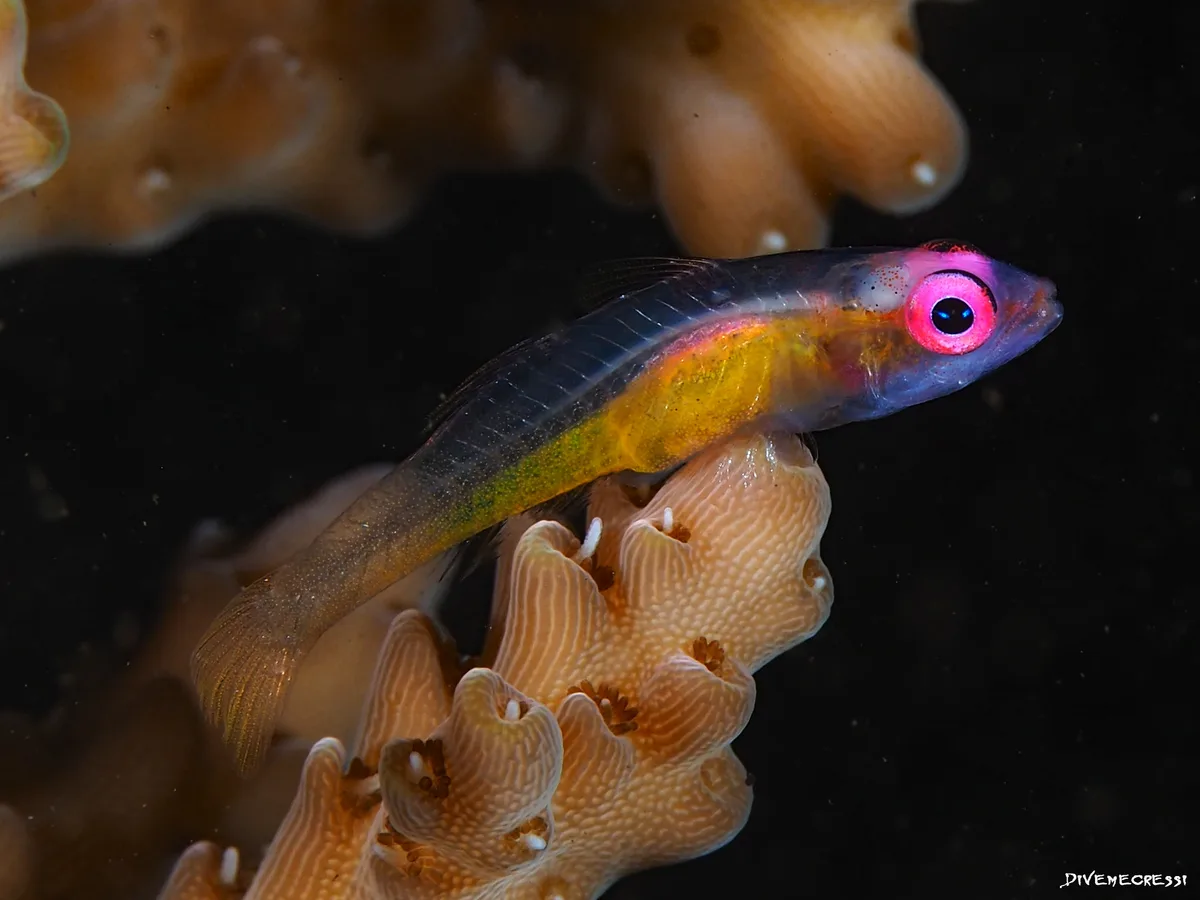
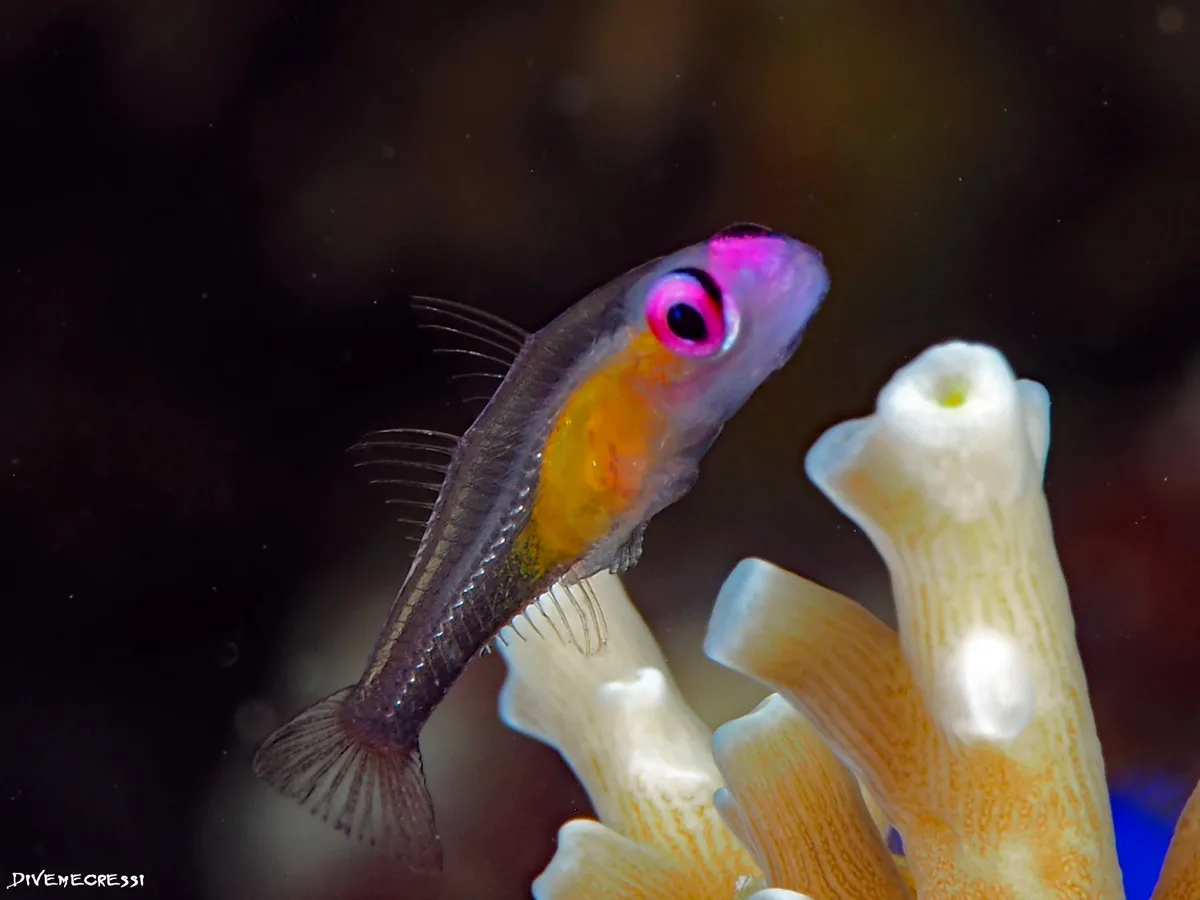
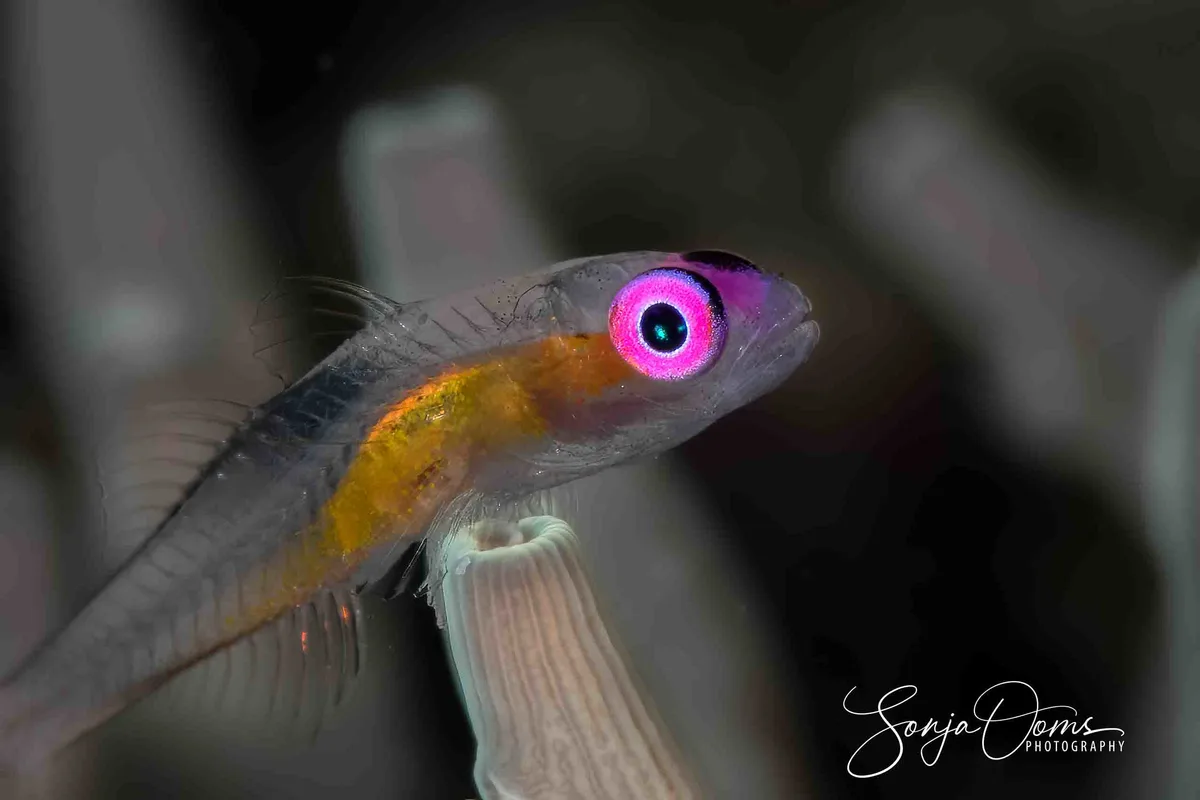
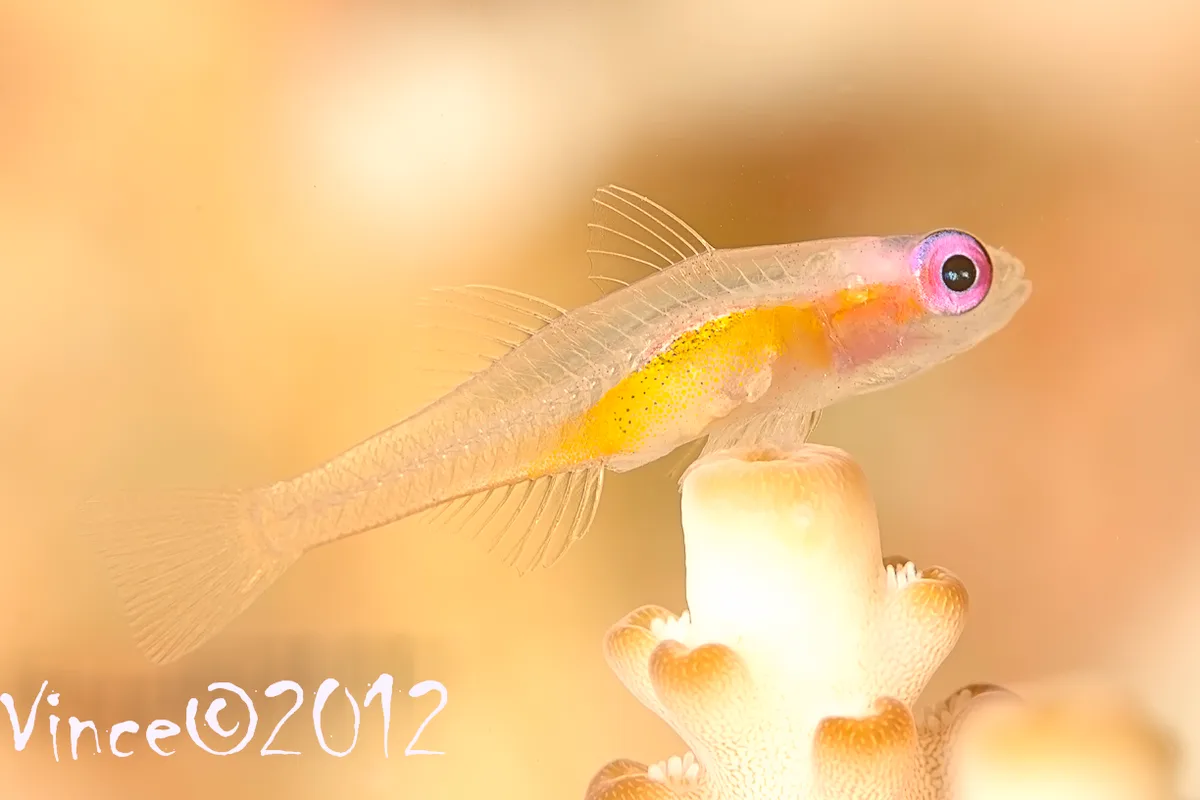
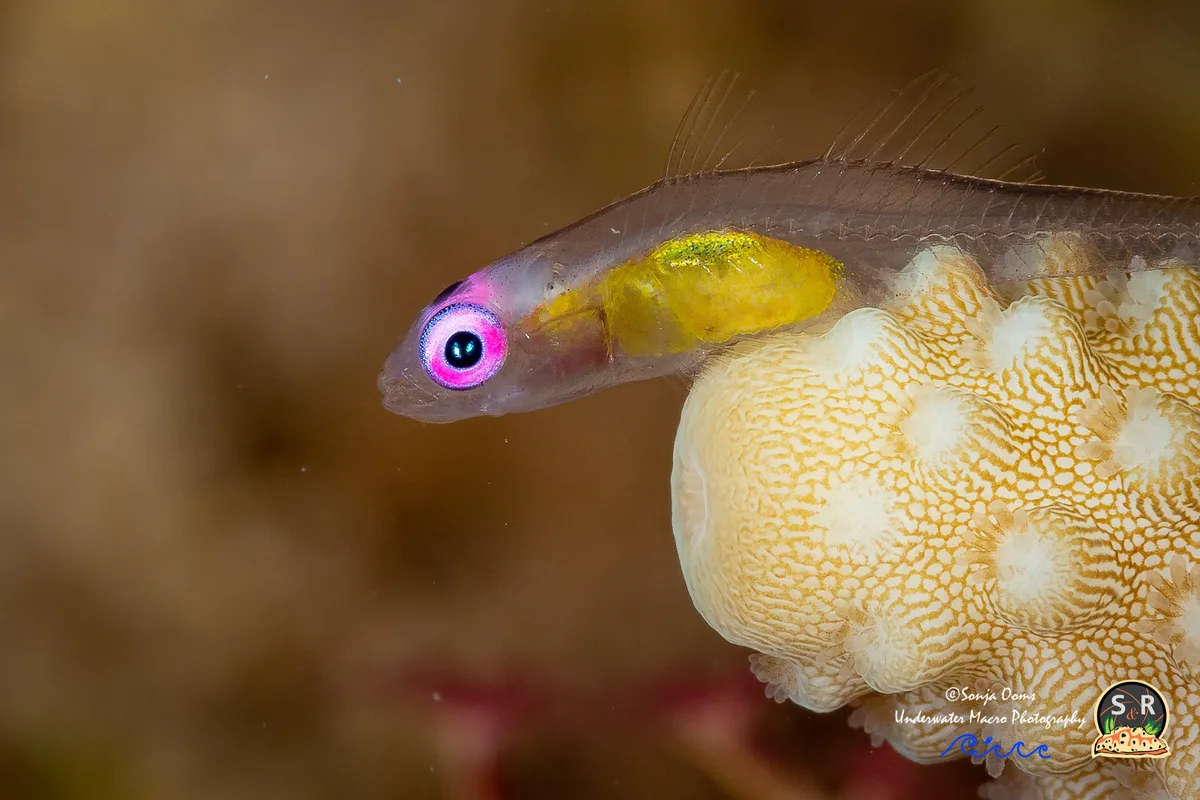
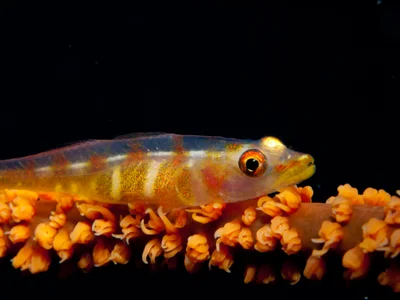
It is two centimeters long and nearly transparent. What you actually see first is a pair of bright pink-red eyes apparently floating on their own, and a yellow-orange smear where the gut is.
The eggs go onto the coral. The pair cleans a patch of a branch and the clutch is stuck down on it and guarded until it hatches.
That complete dependence on live branching coral is why a fish this obscure carries an IUCN listing of Near Threatened. Nobody fishes it and nobody collects it in numbers. It only needs the Acropora to bleach.
The genus.Bryaninops Smith 1959 - ṓps (eye or face). ETYFish
How to recognise it
almost completely transparent body about two centimeters long
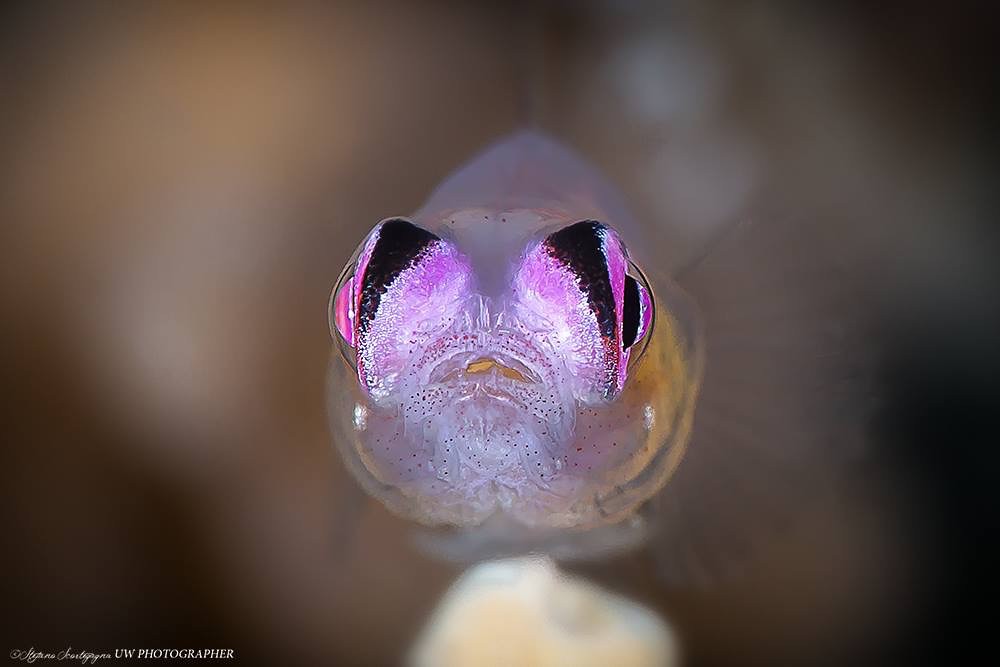
bright pink-red eyes, the first thing visible
yellow-orange gut showing through the body
hovers in small groups above coral branches instead of perching on them
This species is dependent upon tall branching Acropora species habitat to depths of around 33 m within its range. More information is needed on the specific Acropora coral species this goby is primarily associated with, as well as how dependent it is on live coral. However, Acropora species within the Indo-West Pacific have declined on average, between 25 and 35% from the 1990's to 2010, with bleaching events increasing over the past 10 years (Wilkinson 2008, Hughes et al. 2018). This species is also harvested and sold in the aquarium trade (Burgess et al. 1990).
Threat classification from the IUCN Red List.
Comments
Please, sign in to leave a comment
Continue with a social account - yours will be created automatically.